Yingge Ceramics Museum(No positioning service)
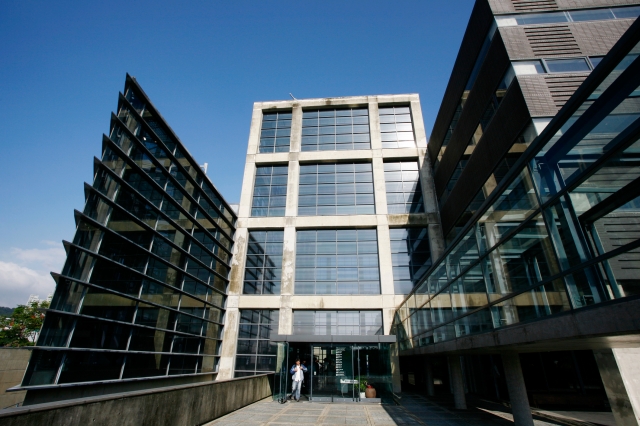
Lobby
Hello, and welcome to Taipei County Yingge Ceramics Museum. The Ceramics Museum, which opened in 2000, is Taiwan’s first museum focusing primarily on ceramics. It is dedicated to preserving and promoting Taiwan’s cultural heritage in ceramics, upgrading the ceramics industry, promoting ceramic art, conducting surveys on ceramics in Taiwan, as well as collecting and preserving ceramics. The exhibits here are mainly of two kinds: permanent exhibits that introduce the development of Taiwanese ceramics and its characteristics, and special exhibitions, which are located in the galleries on the third floor. The special exhibitions include international exhibitions, prizewinning works from competitions, themed shows featuring works from contemporary Taiwanese artists, and so on. And besides the galleries, we also have a kids hands-on workshop and ceramics studio where members of the public are encouraged to come into contact with clay for themselves. The Museum also holds lively activities such as the “Salt Plum” event and the International Ceramics Festival. Meanwhile, the “Ceramic Park,” which was formally opened in 2008, provides a large natural space where you can get close to public art in the ceramic medium. Now, let’s take a leisurely stroll through the museum, and may you have an enjoyable tour!
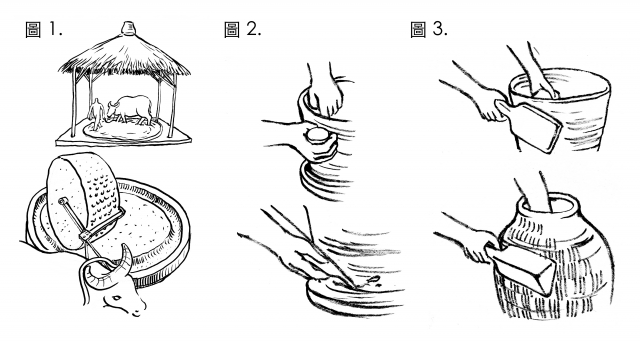
Taiwan’s Traditional Ceramic-making Techniques
【Taiwan’s Traditional Ceramic-making Techniques】
Welcome to Gallery 115. As you can see from the diagram before you that illustrates the making of ceramics, this gallery introduces the procedures and techniques that were used in the traditional manufacture of ceramics in Taiwan. As you scan from left to right, you will see six parts. First you will see ceramics in its original aspect: clay. After processing, the clay is shaped by hand or machine, and then the unbaked form is decorated and glazed. Finally it is placed in the kiln and fired. It may seem that there is nothing really remarkable about this process, but it is in fact the crystallization of centuries of wisdom and development. After learning how rich the content of this traditional ceramics technology is, you will certain be able to understand that each work in clay represents the hard work and artistry of its maker and deserves to be appreciated and cherished.
【Nature as Teacher】
Clay is the most important element in pottery. In the early days, potters had to rely on their experience to find the most suitable clay for their work. Take a look at the traditional tool used for extracting and examining clay.
After obtaining the clay, potters then had to kneed the clay in order to remove air bubbles and ensure uniform consistency. This gave the clay a desirable degree of plasticity and made it suitable for shaping.
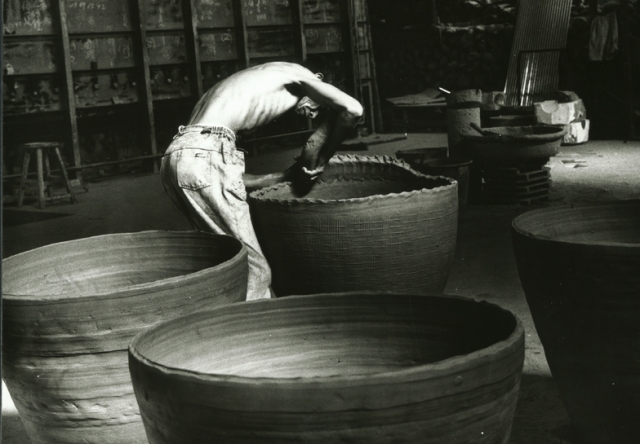
115
【Form】
After the clay is processed, one can begin shaping it into objects by either of two methods—by hand, the traditional way, or by machine, the more modern way. The most commonly-used manual methods are called “coil building” and “throwing.” coil building consists of rolling the clay into strips, coiling them upward layer by layer into the approximate shape, then melding the strips together. In the end, one uses a anvil or paddle to pat it into shape. These techniques are often used for larger objects, like cisterns or wine jars.
Throwing consists of placing a lump of clay at the center of the potter’s wheel, then using both hands to pull the clay upward as the wheel turns at
a particular speed. One also presses down in the middle to make an opening. This shaping process continues until the desired shape is attained.
Mechanical techniques were not introduced to Taiwan until the Japanese colonial period. Automated machinery and molds made mass production possible and brought Taiwanese ceramics into the modern age.
【Chinese and Japanese Style Potter’s Wheels】
On the left is a Chinese potter’s wheel. It has a low, bulky profile, like that of a stone wheel. Despite its bulk, the wheel rotates at high speed. This type was traditionally used by potters from Fuzhou.
The two other smaller potter’s wheels are Japanese-style wheels, which were brought to Taiwan during the Japanese occupation. There were two types of Japanese wheels: hand-driven and foot-driven. Due to their difference in size, the Chinese-style wheel is commonly referred to as the “big wheel” while the Japanese wheel is called the “small wheel”.
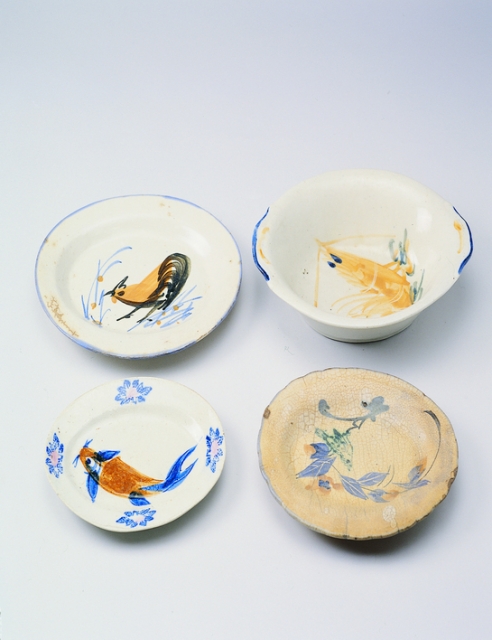
115
【Decoration】
Whether hand molded or using a potter’s wheel, the basic form of the ceramic after it has been created is then often decorated. To do so, the potter naturally has to add patterning to the outside, either by directly engraving the surface, using a mold to create impressions, or even painting. All of these many techniques of decoration can make a ceramic even more beautiful.
【Glaze】
After potters create beautiful forms for their ceramics, the next step they often use for decoration is the application of glaze. A plain glazed ceramic that is fired has a glass-like surface both durable and beautiful, a quality that has become one of the defining characteristics of ceramics.
【Glazing Methods】
The basic methods of glazing include dipping, sprinkling, spraying, and brushing. Dipping involves immersing the biscuit into glaze, which then adheres to the surface. The biscuit is then removed, resulting in the layer of glaze being relatively even. Sprinkling means putting glaze liquid onto the surface of the biscuit, a technique mostly used for objects that cannot be dipped. Spraying involves using an aerator to spray glaze onto the biscuit, being appropriate for creating layered effects. Brushing means dipping a brush into the glaze and then directly applying it to the surface, the extent, shape, and thickness of the glaze depending on the size of the brush and thus making it suitable for detailed decoration.
Firing
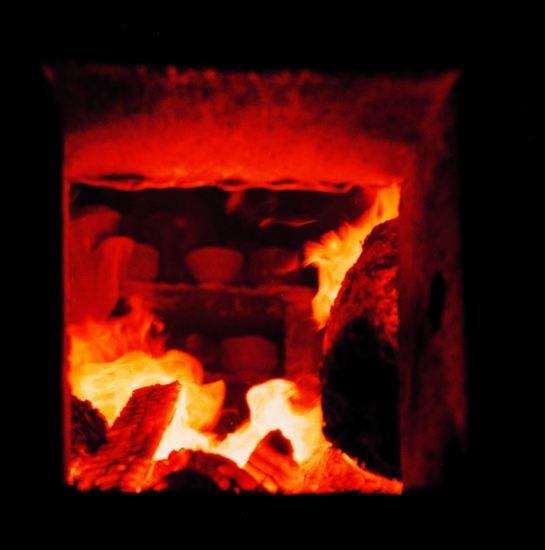
After each of the aforementioned steps, the biscuit can be placed into the kiln. After firing at high temperatures, such as 900 to over 1,000 degrees Celsius, the glaze melts and fuses to form the colors that people all over the world admire so much. Due to differences in kiln structure, various methods of firing produce different results.
When ceramics are being fired in the kiln, not only physical and chemical changes are taking place, for the oxygen level inside also has an important influence on the clay and the glaze. Firing in an oxidizing environment means providing a continuous source of air, allowing the clay and glaze to chemically fuse. A reduction environment involves intentionally controlling the air inside the kiln. The reduction in oxygen during the firing process is used to create changes in the coloring.
Over the centuries, Taiwan’s ceramics industry has undergone many changes. In the early days, bun, snake, chain, and nishiki kilns were the major types. After the 1950s, there appeared rectangular, eight-trigram, gas-fired shuttle, electric, tunnel, and roller kilns. In the 1970s, the smokestacks of rectangular kilns could be seen everywhere in Yingge. The display case in this section features models of various kilns along with an interactive installation explaining the firing process for you to learn about and appreciate.
201
【Tracing Our Past】
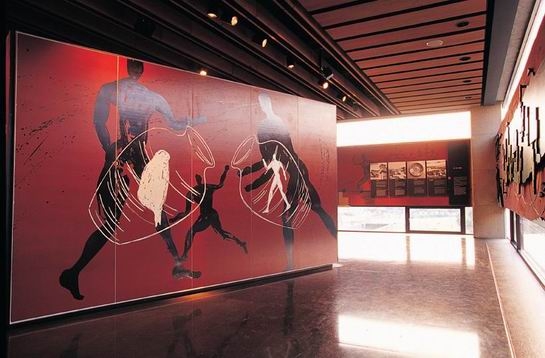
Welcome to Gallery 201. This gallery will guide you through a review of the development of Taiwanese ceramics from a cultural and lifestyle perspective.
【Ceramics During Different Periods】
Old photos offer insight into the development of ceramics in Taiwan during the Dutch, Ming and Qing periods. Records of Taiwanese kilns and ceramics date back over 300 years. Shortly after the eviction of the Dutch and the conquest of Taiwan by the Ming loyalist Koxinga in the mid-17th century, the new government educated the residents of Tainan in the techniques of firing pottery. This marked the beginning of the ceramics industry in Taiwan.
【Religious Beliefs】
Ceramics are frequently used for producing the many images of gods and goddesses that play a vital role in traditional Chinese religion. These figures are shaped in molds with finishing touches added by hand. Can you recognize the images of the Boddhisattva Guan-yin, the red-faced Guangong, the local Earth God, the sea goddess Mazu, Maitreya, and Boddhidharma?
201
【Sanitary Ceramics】
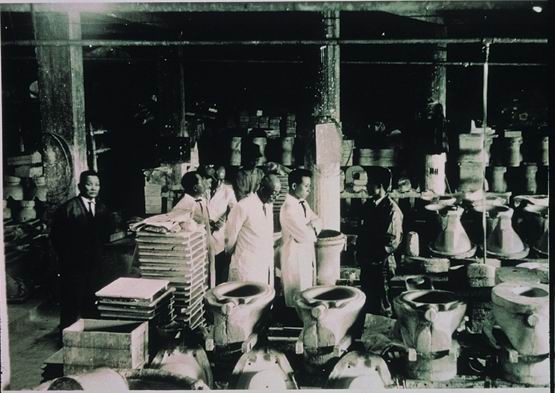
The development of sanitary ceramics in Taiwan is presented here. In the early days, latrines in Taiwan were simply pits in the ground that resembled ditches. At most what was used indoors was the night-pot, kept on hand for “emergencies” in the middle of the night. In the Japanese colonial period, the Japanese authorities promoted improvements in health and sanitation and mandated the installation of ceramic washbasins and toilets everywhere. In line with this policy, many local kilns began mass-producing various kinds of squat toilets and urinals, mostly for use in government buildings, office buildings, or schools. After World War II, the HCG Co., which was established by Ho-cheng Chiu, took the lead in developing Western-style flush toilets, the first batch of which went to the offices of the Taiwan Provincial Government. Today, Taiwan produces a wide variety of sanitary ceramic wares that are both aesthetically appealing and very practical. They enable us to live our lives from day to day in cleanliness and comfort.
【Architecture and Ceramics】
Architecture and Ceramics
There are a tremendous number of ceramic products used in construction, from the most basic bricks and tiles to openwork windows and the splendid Koji figurines on temple roofs, and behind each one there are at least a few interesting stories.
【Cochin Pottery】
The lovely Cochin wares belong to the family of low temperature, multi-color glazed earthenware. They are one of Taiwan’s specialty crafts and the product of polychrome potting techniques that craftsmen in the Tainan and Chia-i region of Taiwan borrowed from mainland China.
202
【Pottery Town】
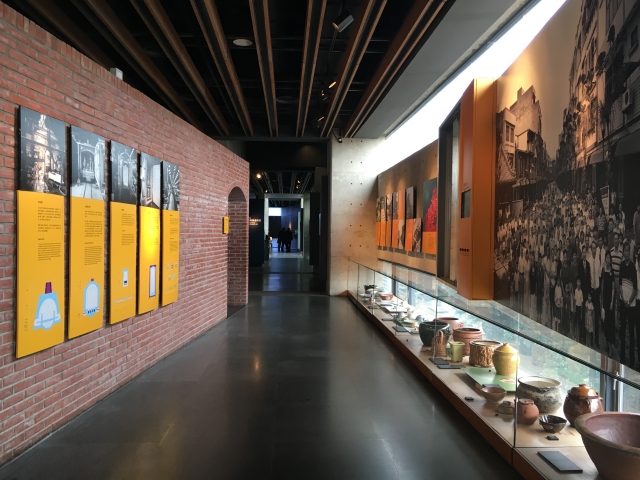
Welcome to Gallery 202. This room will lead you through the approximately 200 years of Yingge ceramics, from the Qing dynasty to the present. The pioneer who brought ceramics production to Yingge was a migrant from Fujian province of China named Wu An. He discovered that Yingge’s clay was suite to ceramics manufacture, and that there was abundant fuel as well as a river making transport of the products convenient. Thus he was the first to build kilns in the Jianshanpu area, and this became the Wu family’s industry. When the Japanese colonial government built the railroad and highway to Yingge, transport became even easier. After the start of the war between China and Japan, many local kilns started to import automatic machinery to speed up production, to meet the huge orders coming from the Japanese military. This also served to push Yingge ceramics manufacturing into more specialized areas.
【Clay Pot for Stewing Meat】
The heavy earthenware pot seen here is known colloquially as a “Dog Mother Pot,”These pots were placed directly over an open fire, and therefore needed to be able to withstand sudden changes in temperature. Typical ceramics crack when they encounter fire, and so to avoid this sand or some heat resistant agent was added to the clay.
【The Fire Basket】
This vessel, typically known as a “fire basket” in Chinese, was used to keep warm during winter. These baskets consist of a small ceramic pot wrapped in braided bamboo, into which smoldering charcoal embers were placed on a bed of ash.
【Tunnel Kiln】
This kiln presents the early style Tunnel kiln in Yingge. Kilns like this were used to fire tiles, and they could be as more than 100 meters long. There are three sections in this kiln: the front end for preliminary firing, the middle to complete the firing, and the back end for cooling. The finished tiles would be piled on pallets that were sent one after the other into the kiln, and when it was finished the pallets would come out the other end.
203
【Shuttle Through Time】
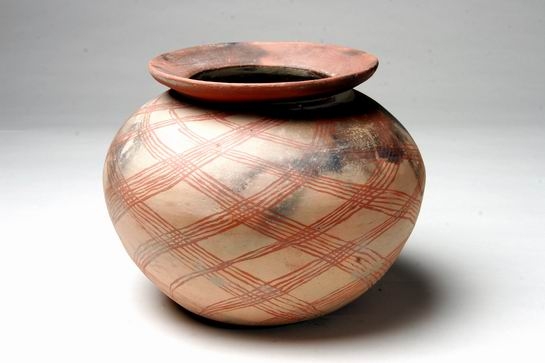
Welcome to Gallery 203. Here you will travel through time and experience the ceramic cultures of the prehistoric, aboriginal, and contemporary periods. The dim lighting may make you feel as if you are an archaeologist examining and photographing artefacts at the site of a dig. The displays are specially arranged to illustrate the various layers of culture: that is, the lowest level shows prehistoric pottery, the middle level that of the aboriginal peoples, and the top level that of the Han Chinese starting from the Ming and Qing dynasties. In the next display, you may try developing a deeper understanding of the various aspects of these ceramic cultures from the textures, ornamental patterns, and functions of the objects. It turns out that Taiwanese ceramics were already quite colourful as early as the prehistoric period.
【Practicality 】
These are the three-legged tripod and pot of the Niaosong culture. The Niaosong people used ceramic tripods like this to support their pottery while cooking. Another cooking vessel displayed here is divided into upper and lower sections. Food was placed in the upper section and the lower section was filled with water. When the water boiled, the steam rose through perforations in the base of the upper section, steaming the food. This is the Ami tribe equivalent of a modern-day steamer.
204
【Ceramic Figurines】
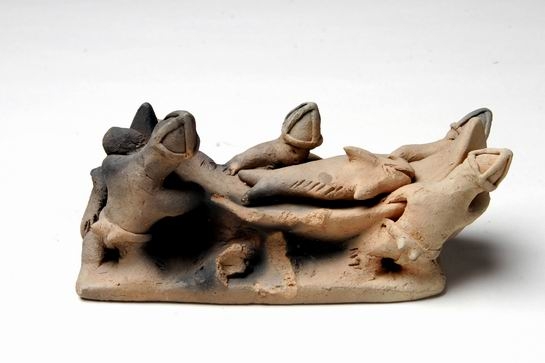
Here we see ceramic figurines unearthed at Shih-san-hang, as well as examples scultped by the Ta-wu people. Since only a few figurines were discovered at the archaeological site, these pieces are particularly valuable. They reflect much about the lives of prehistoric people. For instance, do you notice the pierced earlobe of the female figurine? It suggest that the female inhabitants of Shih-san-hang pierced their ears. In addition, the figure’s beautiful necklace implies that this is a representation of a young and beautiful girl.
【The Ta-wu People】
Look closely at the figurines. They are those of the Ta-wu, or Ya-mei, people of the Orchid Islands. Of all the indigenous people in Taiwan, the Ta-wu are one of the very few whose pottery making traditions have survived into the present. One of their traditional crafts is the sculpting of clay figurines, which serve as a record of their customs and lifestyle. Here we see two men, garbed in loincloths, grasping one another. On their heads are the traditional silver hats worn by the inhabitants of Orchid Island. These simple and lively are a fine example of indigenous art. In addition to the figurines, this display also includes a variety of clay wind instruments.
204
【Future Prediction】
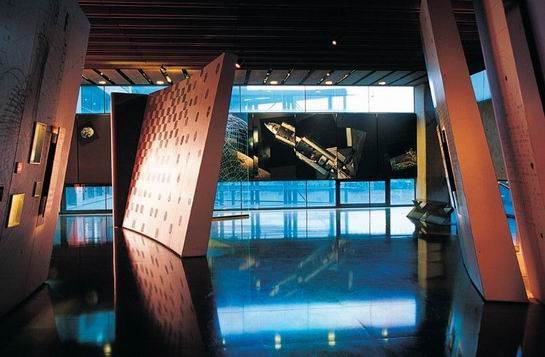
Welcome to Gallery 204. Have you realized that there is a close connection between ceramics and high-tech developments? In fact, ceramic materials may be found in electronics, aerospace engineering, and biomedicine. In this futuristic gallery, you will learn about the structural, electrical, magnetic, and optical properties of ceramics, which are genie-like in their variability. They are hidden in many everyday hi-tech products where we would not expect to find them. For instance, there are electronic ceramics in your cell phone! As you enter this gallery, you will find that ceramic ware, from the traditional pottery of old to the new products of today, has always been an inseparable friend of ours.
【Traditional Industrial Ceramics】
High temperatures transform the loose molecular structure of clay, welding its course particles together into a strong, tightly vitrified substance. Ceramic clay is thus an excellent inorganic, non-metallic material with structural stability.
Ceramic materials are acid and base resistant, good insulators, and can withstand high temperatures and corrosion. Because of their structural stability and integrity, they have played an important role in industry, and are a symbol of Taiwan’s industrial development.An example of traditional pottery that takes advantages of the acid and base resistant properties of ceramics is the wine-making jar.
Here we also see an example of an old-fashioned ceramic lamp fixture. () With their excellect insulating properties, electric devices such at this provided lighting to many older homes. Medicines were also traditionally stored in ceramic jars like the one seen here.
204
【Intelligent Ceramics】
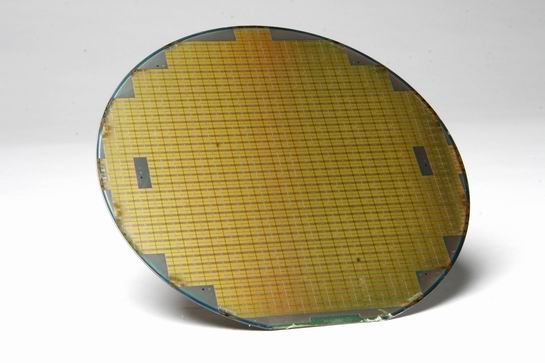
This is the popular semiconductor wafer.
Are you familiar with semiconductor companies such as TSMC and United Micro Electronics? Silicon is the most important element in the semiconductor industry. This 12-inch shiny wafer is made up of perfectly aligned arrays of silicon cells. It is indeed difficult to imagine that wafers with such a high degree of purity are made from silicon, a material also used in the making of ceramics.Rods of single-crystal silicon are extracted from up to 99.9999% pure polysilicon rock during a three-day process. Each wafer can be sliced into hundreds of rectangular chips. These silicon chips are intelligent in so far as they acquire smart functional abilities to record huge amounts of information, process data, and carry out computations.
【e-Ceramics】
Look at the PDAs, cameras, and mobile phones. We are now entering the e-ceramics and optical ceramics section of our tour. Ceramics are at the forefront of rapid technological advances. They are omni-present in our everyday modern lives. Our mobile phones used to be big and heavy. Now they are smaller and lighter, close to the size of a business card. All of this is thanks to the development of ceramic electronic components. In the early days, mobile phones required large, bulky metallic resistors. Smaller size metallic resistors created interference with the phone signal. However, these problems were eliminated with the introduction of ceramic electronic components. Thanks to the use of ultra-small ceramic resistors, buzzers, and chips, we now have smaller, lighter, and better performing mobile phones. Ceramics indeed play an important role in our modern electronic age.
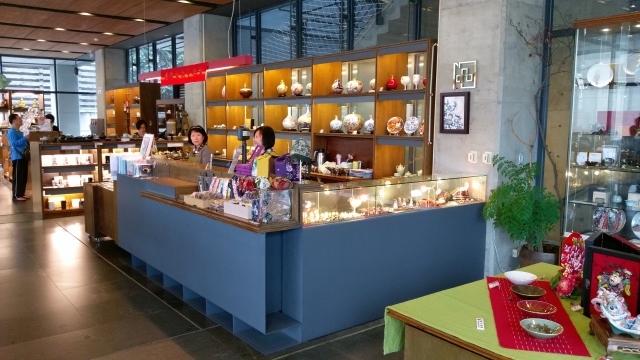
Tao shop
“Tao Shop” at the entrance, which opened a new era for the gift shops in the Museum, and thus become one of the must-see scenic spots for those ceramics and culture merchandize lovers.

202
【Three Most-treasured Prizes】
Try to guess what the “three most-treasured prizes” are in Yingge. They were essential for Yingge’s early success in ceramics. Have you guessed what they are? They are: clay, coal, and the railroad. We all know by now that Yingge’s clay was suitable for ceramic ware, but in fact it also had a lot of coal that could be used for the kilns and exported abroad. When local coal production was at its height, the Yingge train station was the third-largest coal depot in Taiwan, as well as the point through which most of Yingge’s ceramic products were shipped. In those days, the station was usually filled up by daybreak with small dealers in ceramics getting ready to board the train, along with the wares they are going to peddle, to other locales. However, before the railroad was built, Yingge’s ceramics were shipped via the Dahan River to Dadaocheng in Taipei, where they were then sold. The old dock may still be seen by the Dahan River. All these things are witnesses to the heyday of the Yingge ceramics industry.
【Post-war Ceramic Products 】
This train is loaded with a variety of daily necessities such as eating bowls, ceramic tiles, ceramic outlets, and toilets. On the far right side of the train are protective covers used with high-tension wires. These covers are specially made to prevent the salt in the air from corroding the wires. To the left of the covers are what the Chinese refer to as business, or sheng yi, bowls. These bowls, whose broad mouths make them appear much larger than they actually are, are primarily used in food stalls.
This is a cross section of the many different ceramic products manufactured at Yingko since the end of World War II. During the 1970s and 80s Yingko grew to become one of the most important ceramic manufacturing centers in Taiwan. Although the trains are still in service, the use of ceramic products in everyday life has declined. Instead, ceramics are now used in high-tech applications, or are appreciated as fine pieces of art. This transformation of the industry is evident to anyone strolling the streets of Yingko.