Museum of Kaohsiung Medical University Historical Archives and Southern Taiwan Medical History
Western Medicine in Taiwan Started in Kaohsiung
Welcome to Museum of Kaohsiung Medical University Historical Archives and Southern Taiwan Medical History. Opened in 2014, the museum is a showcase of the history of Museum of Kaohsiung Medical University and medical developments in Southern Taiwan.
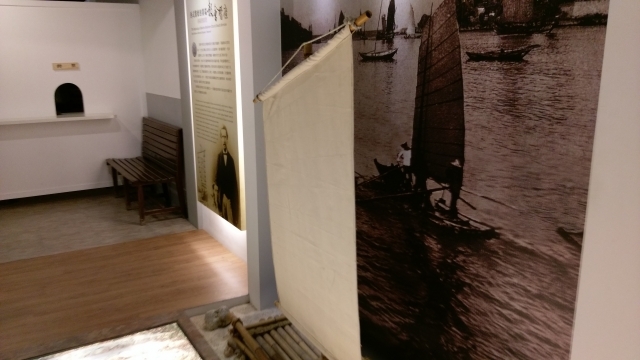
Not many people know that modern medicine was introduced to Taiwan via Kaohsiung. In fact, Kaohsiung was the birthplace of tropical medicine in the world. On the two sides of the walls in the entrance are old pictures of Kaohsiung Harbour. On the floor are the old-style stone steps and bamboo boats, leading to a journey back to the second half of the 19th century. It was the late years of the Qing Dynasty. Medical missionaries and the customs medical personnel brought western medicine to Kaohsiung. This was where western medicine was first practiced in Taiwan.
David Manson Memorial Hospital
Western medicine has long been the predominant medicine system in Taiwan. In the early days of Taiwan, medicine was practiced by spiritual mediums, Chinese medical doctors and herbalists. In 1865 when harbours were developed during the later years of the Qing Dynasty, Dr. James Laidlaw Maxwell from Scotland was the first medical missionary that came to Taiwan. He introduced western medical techniques and tools such as stethoscopes into Taiwan and opened up the history of church medicine on the island.
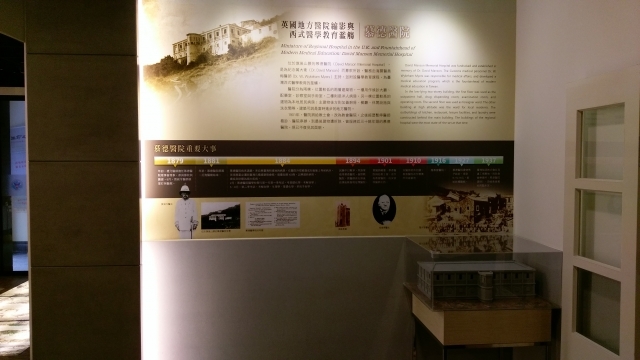
David Manson Memorial Hospital, one of the western medical institutions in Taiwan at that time, was restored here. David Manson Memorial Hospital was constructed in memory of Dr. David Manson and led by Dr. W. Wykeham Myers from the customs medical personnel. The hospital also ran a western medical school, the earliest of its kind in Taiwan.
Clinic
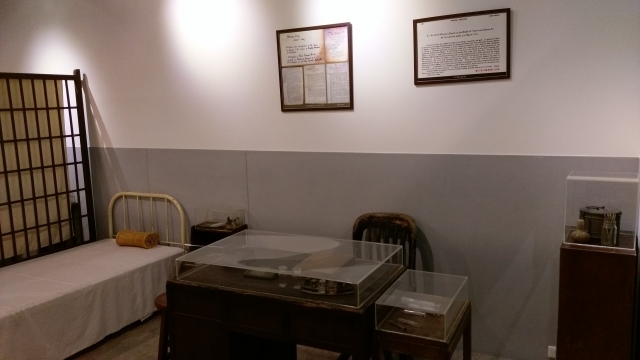
Medical apparatuses were on displayed in this restored clinic. Due to resource constraints, glass syringes and metal tongue depressors were all reused after sterilization.
If you look around, you will see the sterilizing pan. There is very little information left regarding David Manson Memorial Hospital. On the wall were pictures of Dr. David Landsborough, a medical missionary who came to Taiwan in the 19th century and established Changhua Christian Hospital. At the back of the screen was a restored surgery room, with an operating table and apparatuses.
Display Cabinet
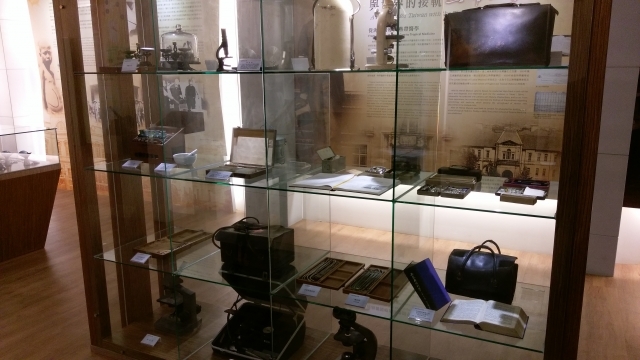
The display cabinet in the middle showcases many medical tools of the past. There is a physician's bag, with a drug jar inside. The inspection box and the balance used by Ma-chiang Chuang, the first Western doctor in Kaohsiung, are also here.
The old catheter no longer in use today is a testimony of the rapid evolution of medical apparatuses. However, some tools are still much the same, such as slides.
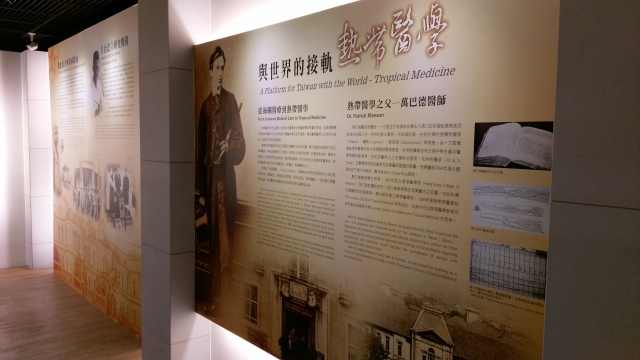
Connecting the World: Tropical Medicine
Tsung-ming Tu, the first medical doctor in Taiwan, said that Kaohsiung was the birthplace of tropical medicine in the world. In fact, tropical medicine is considered one of the largest contributions from Taiwan to the world of medicine.
Dr. Patrick Manson, the father of tropical medicine and a physician from the customs offices in the second half of the 19th century, embarked on the studies of tropical medicine in Taiwan. The medical doctors under the Japanese Occupation laid out a solid foundation. After the end of the Second World War, medical professionals from Taiwan picked up the mantle by sharing research findings and experience to the rest of the world. Tropical medicine has always been one of the focus areas for Kaohsiung Medical University since inception.
Former Dean Hsien-chen Hsieh and Professor Eng-Rin Chen were known for their research work on parasites. Their research findings underpinned the efforts to prevent parasites all over Taiwan. Former Dean Hsien-chen Hsieh also served as a consultant to the World Health Organization.
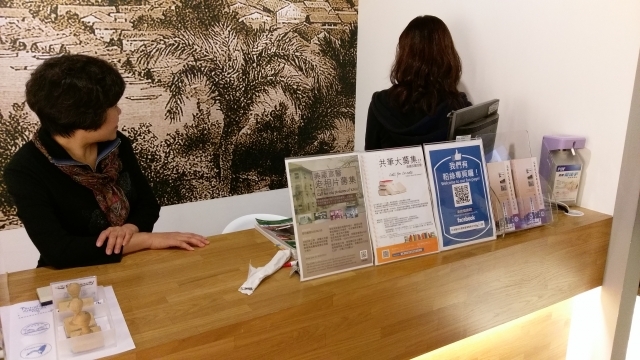
The Front Desk
The museum organizes both permanent and special exhibitions, as well as events and activities. Immediately after the opening, we organized a competition for our logo by inviting students, teachers and university employees to participate. We used the best design from the competition as our museum logo. We also offer logo chops to everybody. Please visit our Facebook page to learn more about our activities.
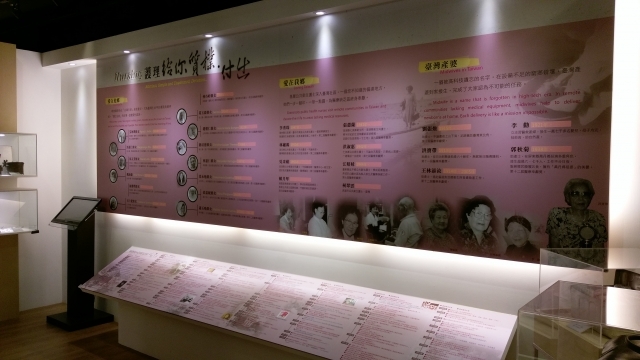
Nursing Science in Taiwan
This area introduces the development of nursing education in Taiwan and the local personalities who have made great contributions to nursing in Taiwan. The collection of artifacts in relation to midwives includes essential tools for delivery and bicycles used for traveling to soon-to-be mothers.
Midwives played an important role in the early days of Taiwan, particularly in rural areas where medical infrastructure was insufficient. The majority of deliveries were handled by midwives from the Japanese period to the early 1970’s. In fact, midwives were among the earliest career women in Taiwan.
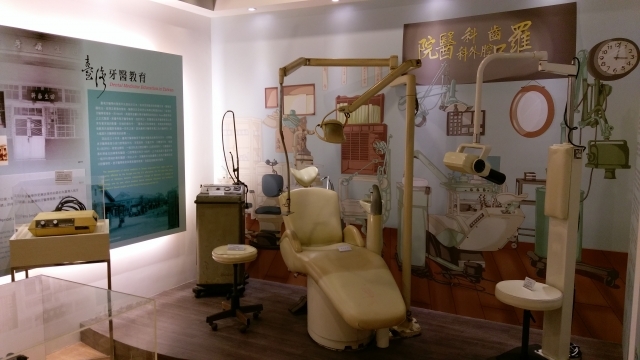
Dentistry in Taiwan
Today, there are a large number of dentist clinics all over Taiwan. Dentistry was introduced to Taiwan by the missionary George Leslie Mackay. However, regular dentistry education was available in Taiwan during the Japanese period.In 1953, the establishment of Department of Dentistry, National Taiwan University embarked on the gradual development of dentistry education and the improvement of dentistry practice in Taiwan.
This exhibition area details the development of dentistry education in Taiwan and the dentistry tools used in Kaohsiung Medical University throughout its history. In front of you are the articulators arranged from left to right in the chronical order. We also introduce to you a number of local dentists in Kaohsiung in the early days. In 1954, there was a competition for ladies with beautiful teeth held in Kaohsiung.
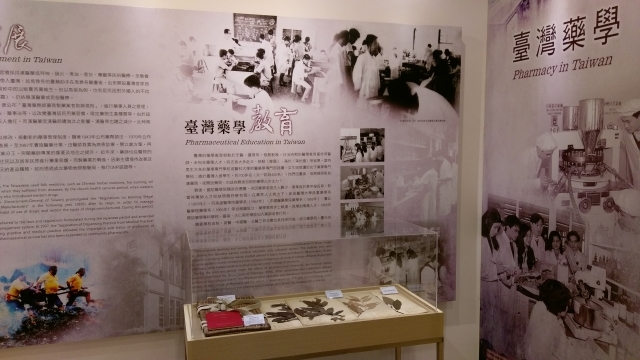
Pharmacy in Taiwan
Before the introduction of western medicine, local Taiwanese relied on Chinese medicine, folk medical techniques or religious practices such as fire walking or fortune sticks for medical advice.
The introduction of western medicine in the second half of the 19th century also brought western medicine to Taiwan. The herbarium specimens for research purposes were all collected from fields with the tools in display.
Three specimens were collected by former president of KMU Tsung-ming Tu, who was known for his studies in herbal medicine. In fact, the achievements of Kaohsiung Medical University in the research of natural medicines are built upon the basis of his heritage.
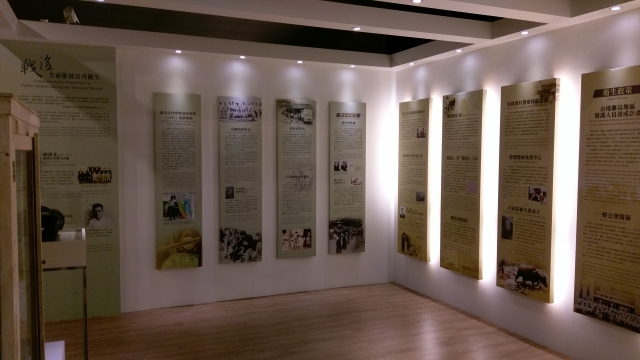
Public Heath in Taiwan
Once plagued by communicable subtropical diseases, Taiwan is now known for high-quality public health and reasonably-priced medical services. This is the collective achievement of medical professionals under the Japanese period and after the end of the Second World War. This exhibition area showcases the communicable disease prevention and medical policies during these two periods.
In the early days under the Japanese period, many Japanese people in Taiwan died of endemic diseases such as plague, cholera and malaria. The Japanese government hence prompted public health in Taiwan by extinguishing communicable diseases and improving the public health and medical system by building hospitals and schools.
The National Government arrived in Taiwan after the end of the Second World War continued the efforts by learning from the experience in the US and Europe. During the U.S. Aide Period, malaria was successfully put to an end in Taiwan. In 1995, the National Health Insurance system was implemented to the benefit of all the citizens in Taiwan.
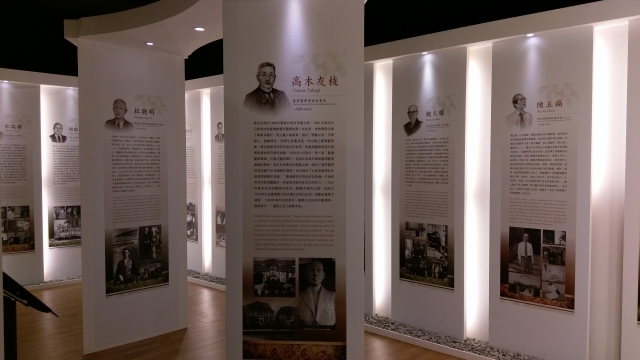
Role Models in Medicine in Taiwan
This exhibition is dedicated to a total of 30 medical doctors who have made significant contributions to the medical development in Taiwan, from western reverends in the late Qing Dynasty, Japanese physicians under the Japanese period and local doctors post the Second World War.
The contributions from these medical doctors reach beyond medicine and extend into literature, politics, education and philanthropy.
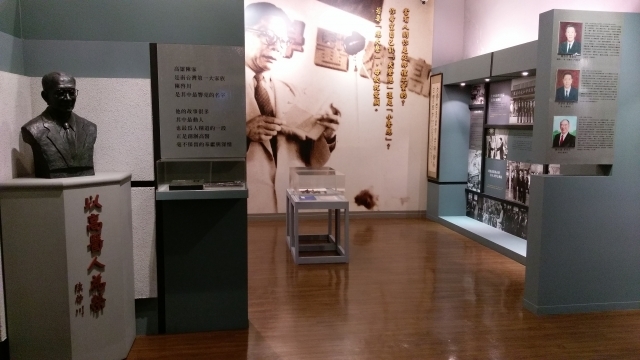
Founding Chairman Chi-chuan Chen and Board Directors since Inception
Former mayor of Kaohsiung City, Chi-chuan Chen donated the land in 1954 and established the first private college of medicine with the first medical doctor in Taiwan, Professor Tsung-ming Tu. This laid out the foundation of medical education in Southern Taiwan and marked the creation of Kaohsiung Medical University.
Founding Chairman Chi-chuan Chen was from the Chen Family in Kaohsiung, one of the five elite families under the Japanese period. He donated the land without asking for anything in return. He studied in Keio University in Japan and encouraged students to take Kaohsiung Medical University proud by learning from Harvard in the U.S. and Keio from Japan.
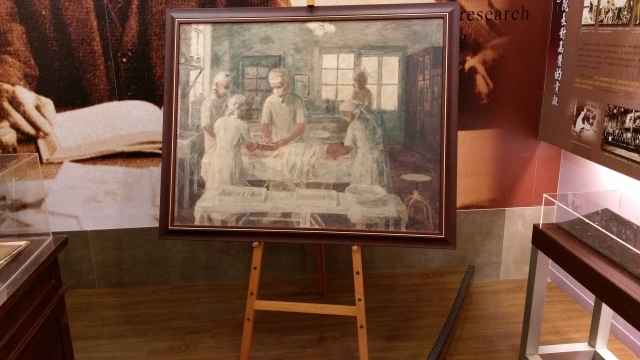
Treasury of the Museum – Skin Graft with Love
This painting depicts what happened in Changhua Christian Hospital in 1927. A 13-year-old Taiwanese boy’s life was at risk due to severe wounds in his leg. To save this child, Dr. David Landsborough took four skin tissues from his wife Marjorie Landsborough and transplanted them to the young boy.
Dean Tsung-ming Tu was deeply touched so he invited Shih-chiao Lee, a famous painter, to tell this story. This painting is an important part of teaching materials on medical ethics in Kaohsiung Medical University.
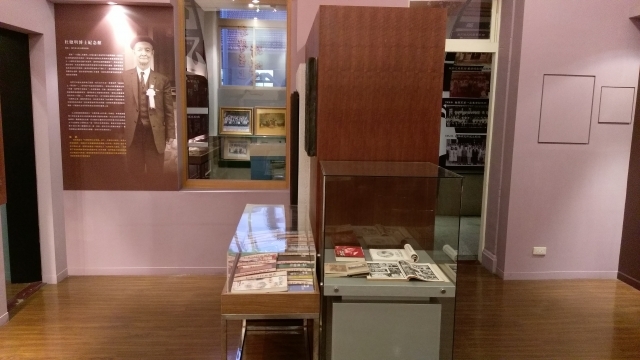
In Memory of Dean Tsung-ming Tu
Professor Tsung-ming Tu was the first dean and one of the founders for Kaohsiung Medical University. His desk and personal belongings are on display in the exhibition hall. Whilst he served as the dean, he implemented an honor system and imposed heavy punitive measures on cheaters by asking them to repeat a year or leave the university.
He encouraged students to study not only English, but also Japanese, French, German and Spanish. Professor Tsung-ming Tu also emphasized the importance of art, music and literature. Professor Tu entered Kyoto Imperial University in 1916 to study pharmacology. He obtained a medical doctorate degree in 1922, the first foreigner that received the honor in this university. Professor Tu was not only the first medical doctor from Taiwan, but also the founding father of medicine in Taiwan. His words “ joyful learning and research as the first priority research” has a profound impact on the students of Kaohsiung Medical University.
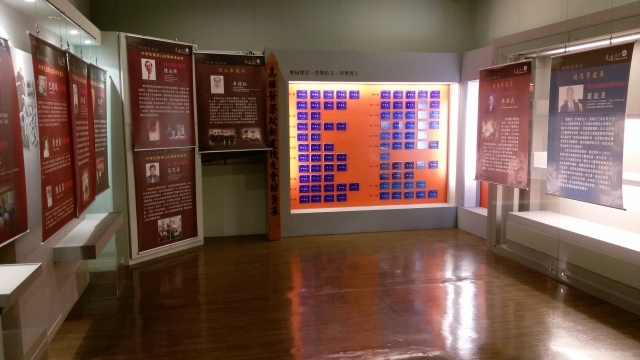
Medical Contribution Awards
The Health, Welfare & Environment Foundation under the Legislative Yuan started to issue Medical Contribution Awards in 1990 to medical professionals for excellence or hard work in rural regions (such as aboriginal tribes and mountains), remote areas and off-islands and impoverished countries. The purpose of these awards is to promote the integrity and compassion of medical professionals by bringing the dedicated practitioners to the fore.
A total of 31 alumni from Kaohsiung Medical University have received this award, the highest number among all the universities in Taiwan. This exhibition presents the stories of these 31 alumni who either studied or worked here.
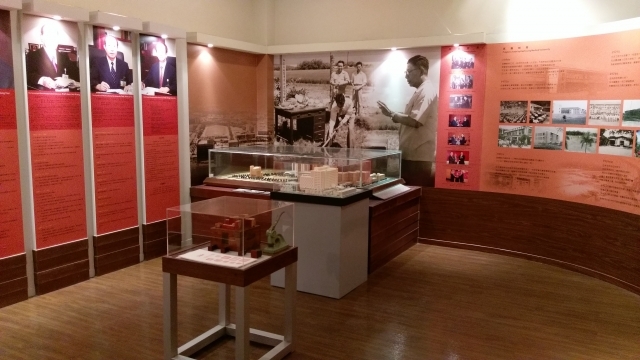
Chronicle of Events and Line-up of Past Presidents
The campus was nothing but paddy fields in 1954 when the university was founded. The opening ceremony was held at the auditorium of Aiguo Elementary School nearby. The classrooms, dormitories and offices were all borrowed. Today, Kaohsiung Medical University has a total of seven colleges and four hospitals, after the collective efforts from presidents, teachers, employees and students throughout the years.
This exhibition hall introduces prior and current presidents of the university, their contributions and management philosophies. This exhibition also presents the chronicle of events and the achievements of internationalization.
Our university crest on the flag was designed by the first president, Dr. Tsung-ming Tu. The triangle represents moral, intellectual and physical development as integrated education. The four Chinese characters, “高雄醫學” represent Kaohsiung Medical University and highlight our ambition to develop medicine in Kaohsiung. The two Chinese characters “大學” (literally meaning “university”) embodies our research philosophy centring on pharmacology and efforts to become a top-notch medical university.
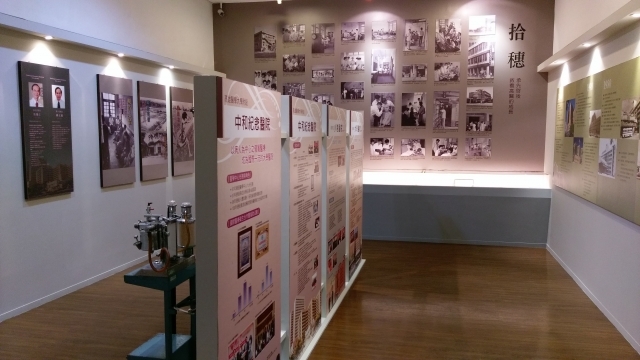
University Hospital
This section is dedicated to former and current deans of Kaoshiung Medical University Chung-Ho Memorial Hospital by presenting a collection of old photos and medical equipment of the university hospital. This exhibition also showcases the achievements of Kaohsiung Municipal Hsiaokang Hospital and Kaohsiung Municipal Ta-Tung Hospital under the management of Kaohsiung Medical University.
Kaohsiung Medical University Chung-Ho Memorial Hospital was established in 1957 for teaching, research and servicing purposes. It allows students and teachers to accumulate clinical experience. When the hospital was first established, doctors had to practice elsewhere too just to build up the reputation of our medical standards. Today, Kaohsiung Medical University Chung-Ho Memorial Hospital is the medical hub and teaching center in Southern Taiwan.