National Science and Technology Museum |English Audio Tour
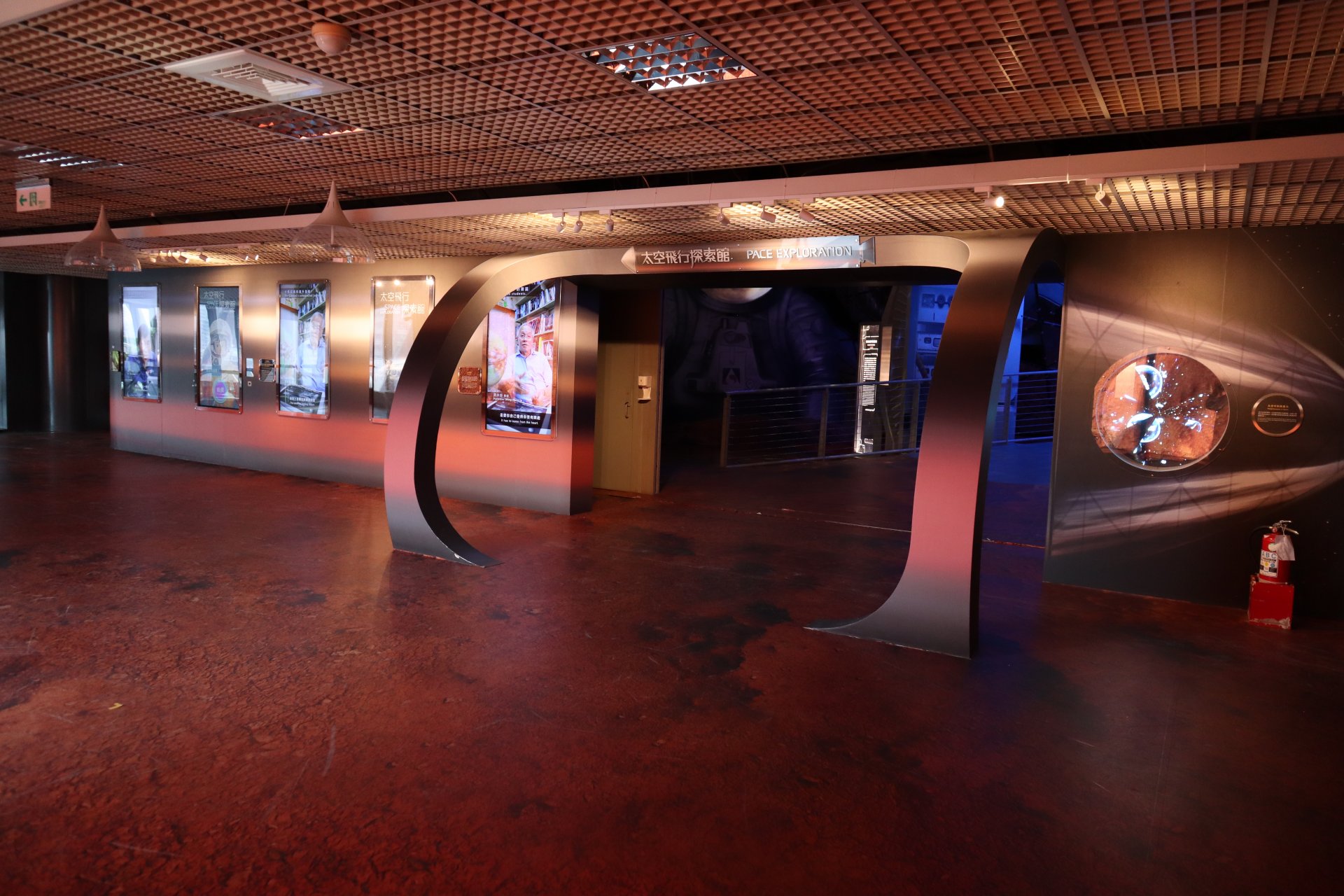
SPACE EXPLORATION :Introduction
Good afternoon! I am Lin, an astronaut (No. BT127). Today is the first day of my video journaling.
Let me introduce myself. I’m Lin, an astronaut who is about to enter the International Space Station. I’m from Taiwan, and I’m 25 years old. As I was assigned a last-minute investigation mission by the captain, I’ve continued to stay here for the past few days. What is the mission? It is to make an introductory video on space knowledge. I heard that the Captain has been entrusted by a museum to collect exhibition materials.
Oh no, the recorder seems to be running out of power. Let’s call it a day.
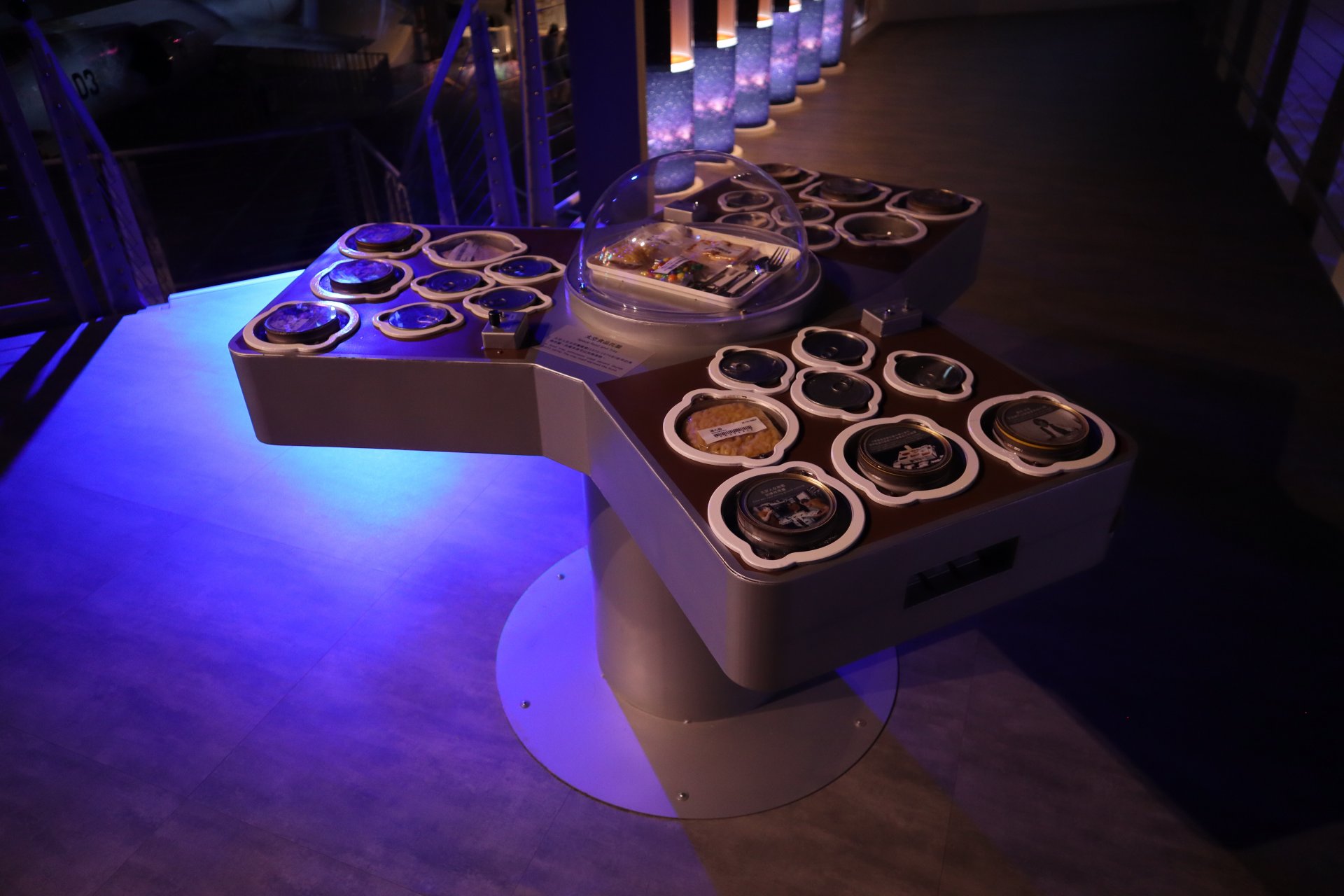
SPACE EXPLORATION : Space food
Good evening, I’m Lin, an astronaut (No. BT127). The topic I’m going to introduce today is space food.
The main difference between Earth and outer space is that the latter has no gravity. Hence, the Captain often sticks space food, together with the packaging and cutlery on Velcro tape to prevent the food from floating away and accidentally getting caught in important machinery parts.
Although it’s fun to select the food, the content tastes almost the same. We have no choice. As the Captain says, in order to save space and reduce the weight when the rocket launches, space foods are designed to be lightweight and small in size. All of them are instant foods like nuts, cereal, pancakes, etc., which can be eaten after removing the packaging. Some space food contains fluid which acts like glue in space; through its surface tension, the food clumps together and does not fly around.
There’s an extra packet of chocolate chips for this evening’s dessert. That’s great. I’m going to save it and present it to the aliens as a gift if I ever see them.
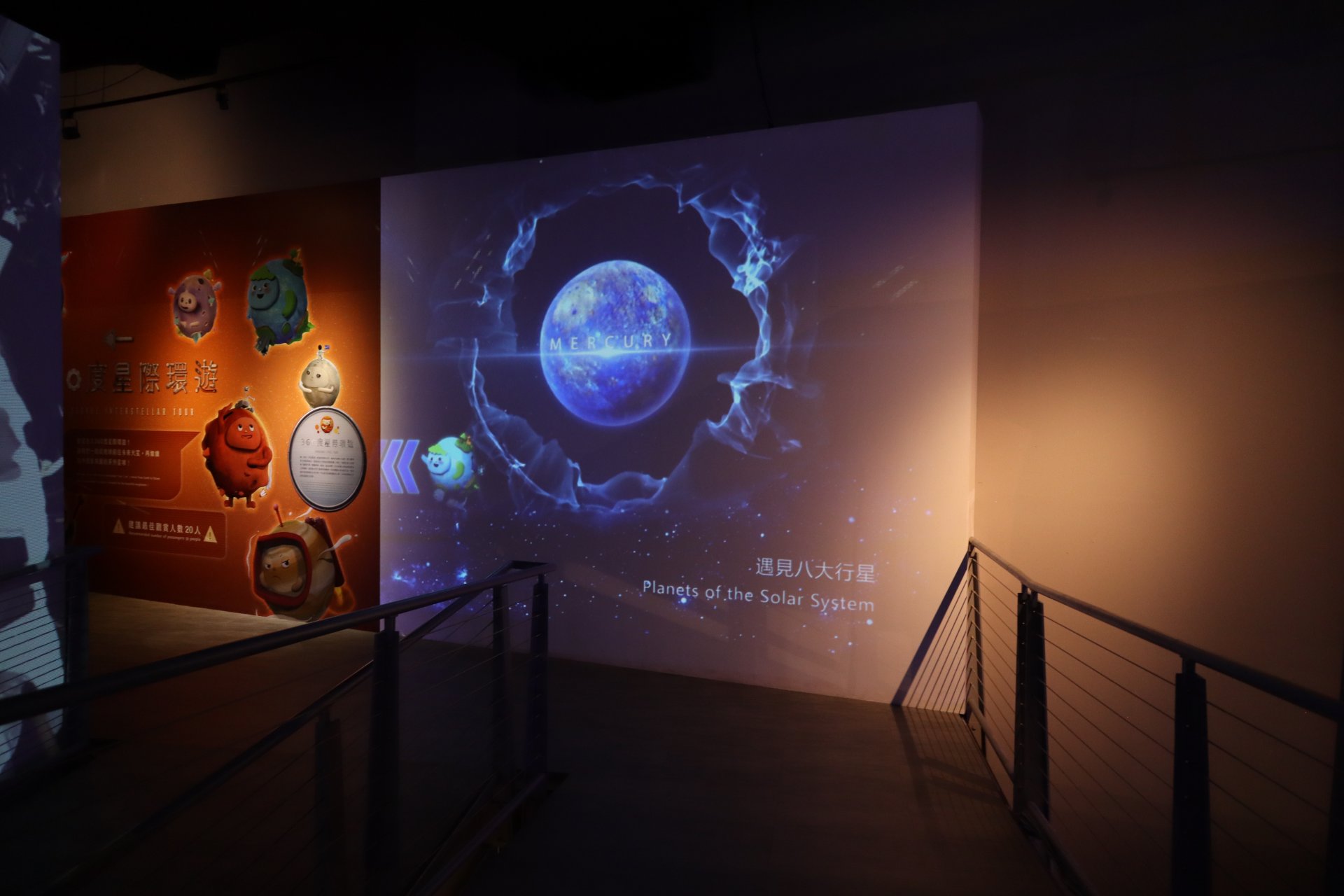
SPACE EXPLORATION:The Eight Planets
Good morning, I’m Lin, an astronaut (No. BT127). Today, I’m going to introduce to you the famous eight planets.
In our solar system, besides the bright star, the Sun, there are eight large planets. They do not emit light but can only reflect sunlight. We normally divide the eight planets into two categories: the terrestrial planets which comprise Mercury, Venus, Earth, and Mars are nearest to the Sun, and have rocky outer layers and metallic cores, similar to the living environment of Earth; these are followed by the Jupiter-like planets, comprising Jupiter, Saturn, Uranus, and Neptune. Their main composition is hydrogen and helium; perhaps even the aliens would not be able to live on them.
Because of the gravitational force of the Sun, the eight planets revolve around the Sun in their own orbits at different speeds. Another characteristic of the eight planets is that they can clear the neighborhood near their orbits. Jupiter is the largest in size while Neptune, which is furthest from the sun, has the lowest surface temperature.
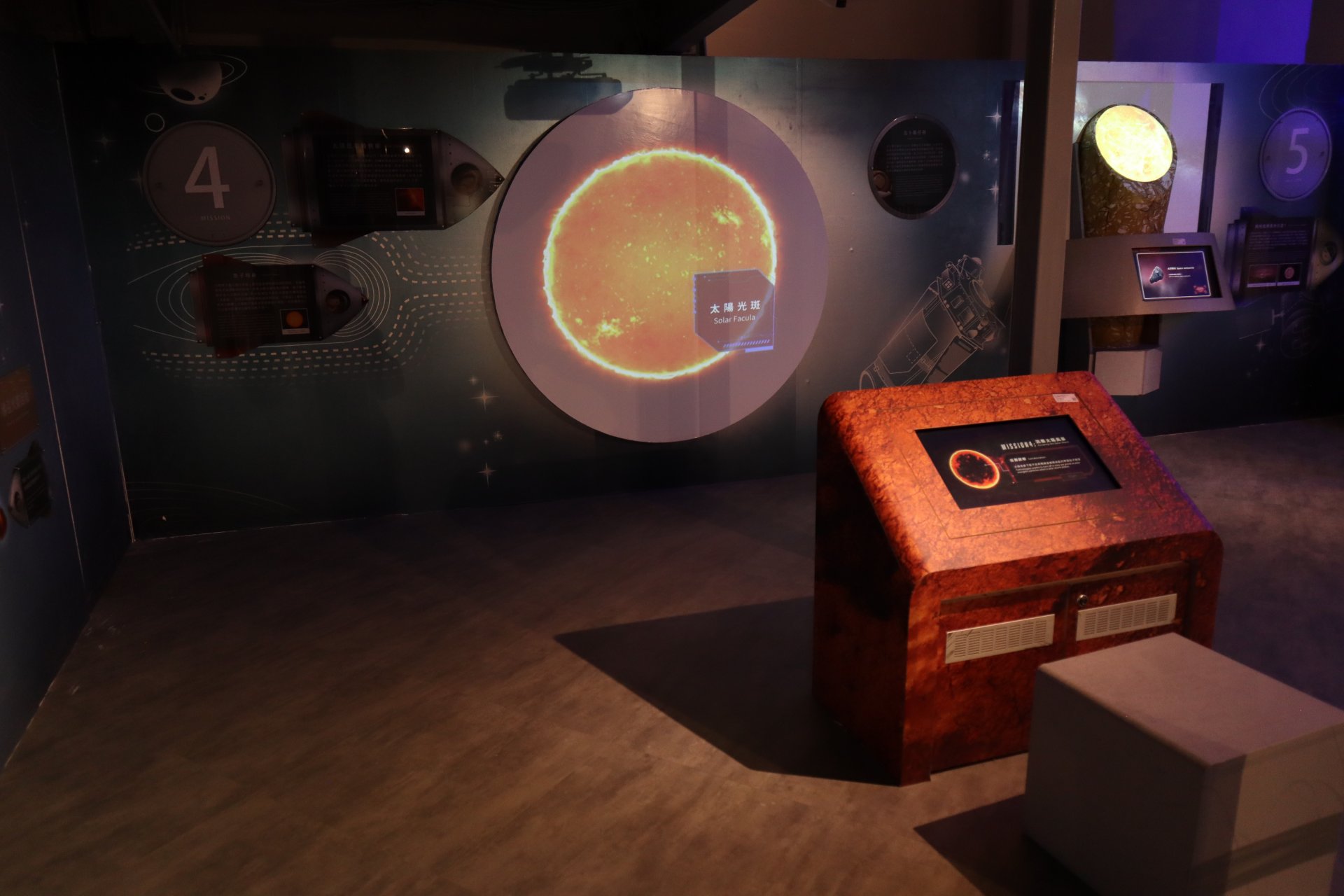
SPACE EXPLORATION:Solar Storm
Good afternoon, I am Lin, an astronaut (No. BT127). The topic I’m going to introduce today is the solar storm.
Many sci-fi disaster movies often mention the term, “solar storm”, which is like a big crisis comparable to the end of the world. Besides providing light and heat, the Sun also generates radiant energy of other wavebands and large amounts of plasma. When the Sun suddenly releases large amounts of plasma and spreads it outward, it forms a solar storm. Just like the simulation of this exhibition, when a solar storm moves towards the Earth, the extremely high energy plasma takes only less than half an hour to reach the vicinity of the Earth, impacting the Earth in one to four days, and sometimes causing serious damage to the Earth’s electric power infrastructure.
It seems that even though the Sun is very far from the Earth, it does have a great impact on our life!
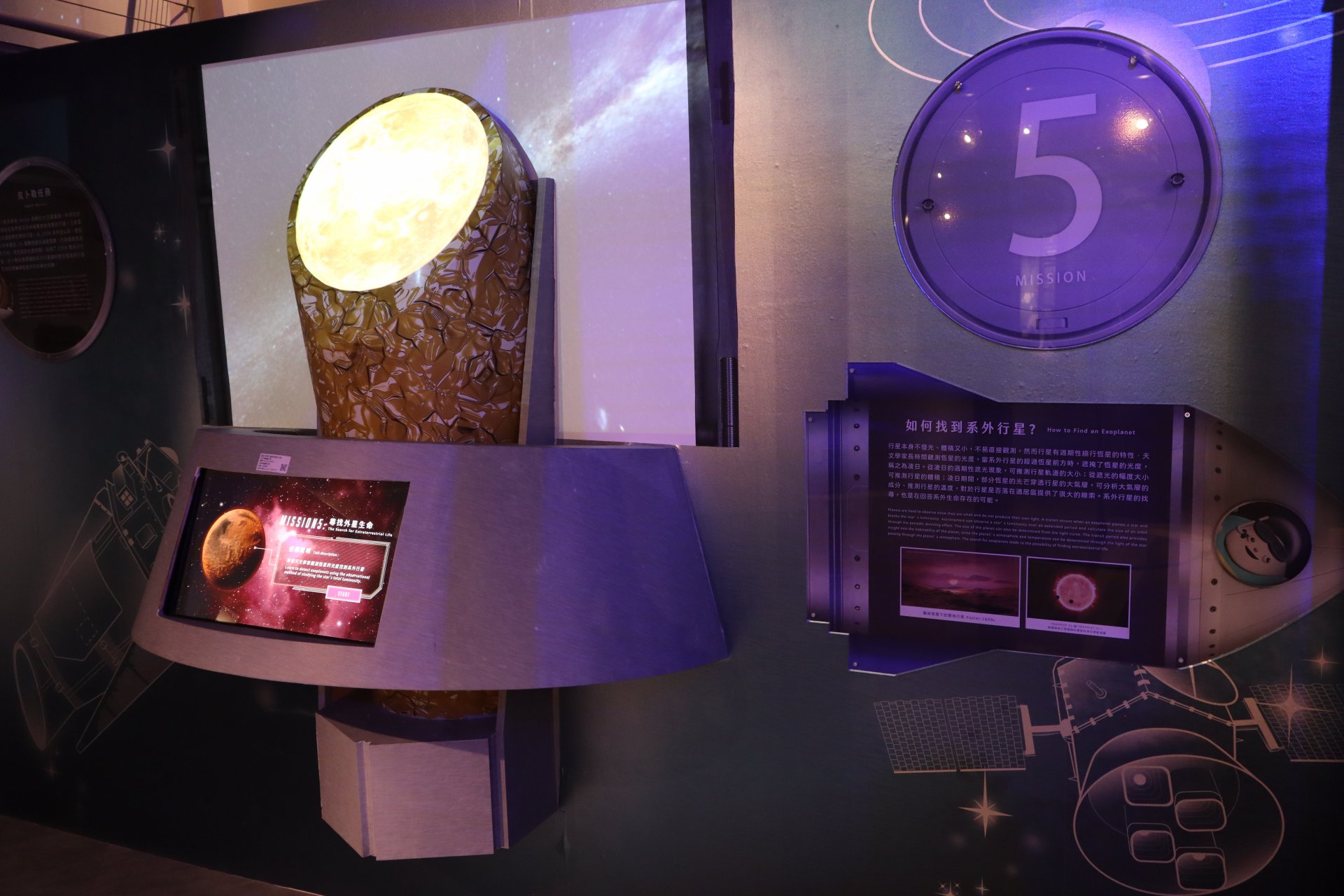
SPACE EXPLORATION:Exoplanet Exploration
Good evening, I am Lin, an astronaut (No. BT127). Today, I’m going to introduce to you the method of finding exoplanets.
First of all, we have to know that some of these planets may be small in size and do not emit light; hence they cannot easily be directly observed. Astronomers then make observations when the exoplanet passes in front of the fixed star, a phenomenon known as “solar transit”, blocking the fixed star’s light.
From the periodic dimming phenomenon of solar transit, the size of the planetary orbit is inferred, and from the magnitude of the dimming, the size of the planet is inferred. During solar transit, some light of the fixed star penetrates the atmosphere of the planet, and by analyzing the composition of the atmosphere, we can infer the temperature of the planets.
Astronomers are really amazing!
There’s another thing which I’d like to share with you; that is, one of the reasons why I dreamed of becoming an astronaut when I was a child was to meet alien creatures, and searching for exoplanets is also exploring the possibility of the existence of life on exoplanets. Could the Earth be the only planet in the galaxy to host life?
I hope through the study of exoplanets, I can find the answer soon!
SPACE EXPLORATION: Rockets from Around the World
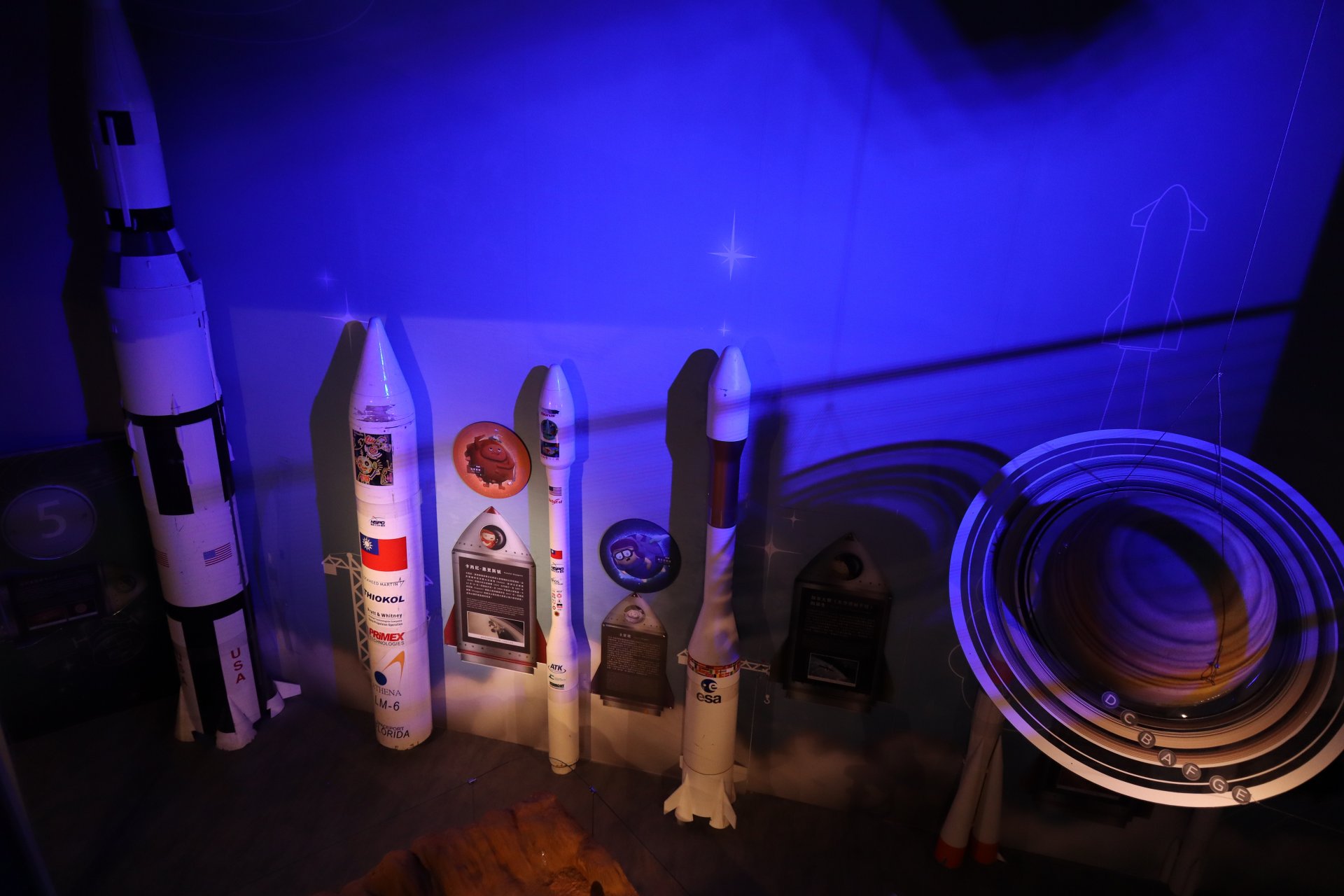
Good morning, I am Lin, an astronaut (No. BT127). Today’s topic is rockets from around the world.
I have loved to watch the process of rocket launching since I was young: After burning the propellant to produce gas, the expanded gas will be ejected from the nozzle of the rocket’s tail, pushing the rocket forward. Whenever I watch it on television, I always feel so excited.
My favorite rocket is “Saturn V”, the rocket which sent the first man to the moon, Armstrong. The rocket which can carry people, is about 110 meters in height and weighs 3,000 tons, and is the tallest, heaviest and largest rocket ever used. It is also an “expendable multistage liquid-propellant rocket” which automatically discards excess parts in space to reduce weight to enable the rocket to accelerate.
My other favorite rockets are all related to Taiwan’s satellites, such as “Athena” and “Minotaur-C” which launched the Republic of China’s “Formosat-1” and “Formosat-2”, respectively; they are all developed and constructed by the United States.
But don’t underestimate the aerospace technologies from other countries. Look at “Ariane” which is full of the European countries’ flags. It is an expendable launch system developed by the European Space Agency.
SPACE EXPLORATION:Moon Exploration
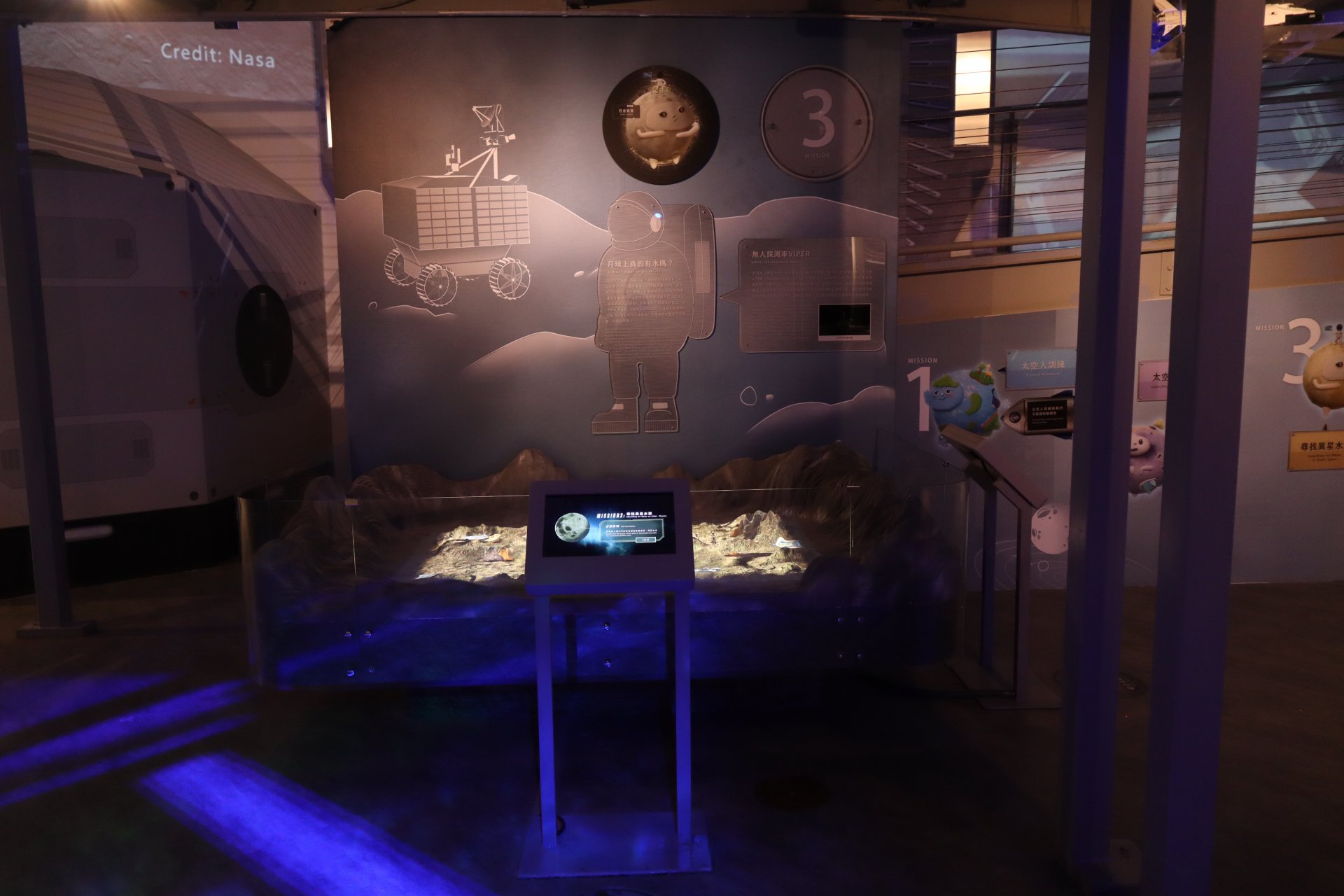
Good afternoon, I am Lin, an astronaut (No. BT127). Today, I’m going to introduce to you moon exploration.
Seniors from the space station often share with us their past work experiences. According to them, during a space mission in the late 2000s, they detected “hydration” on the surface of the moon but were unable to identify if it was hydroxyl or water as both are composed of hydrogen and oxygen.
When scientists discovered water in the rock samples from the moon, a series of space missions to “find water on the moon” was launched.
Searching for water sources on the moon is a long and tough mission. Luckily, NASA developed the unmanned rover, VIPER. From the information provided by it, we know the source and distribution of water on the moon. This natural satellite (namely the moon) may be able to provide astronauts with drinking water in the future, or even become an important source for manufacturing rocket fuel.
Perhaps this is the reason why the seniors and I sincerely hope the mission will succeed.
SPACE EXPLORATION:Bernoulli's Principle
Good evening, I am Lin, an astronaut (No. BT127). Today, I’m going to introduce to you Bernoulli's principle.
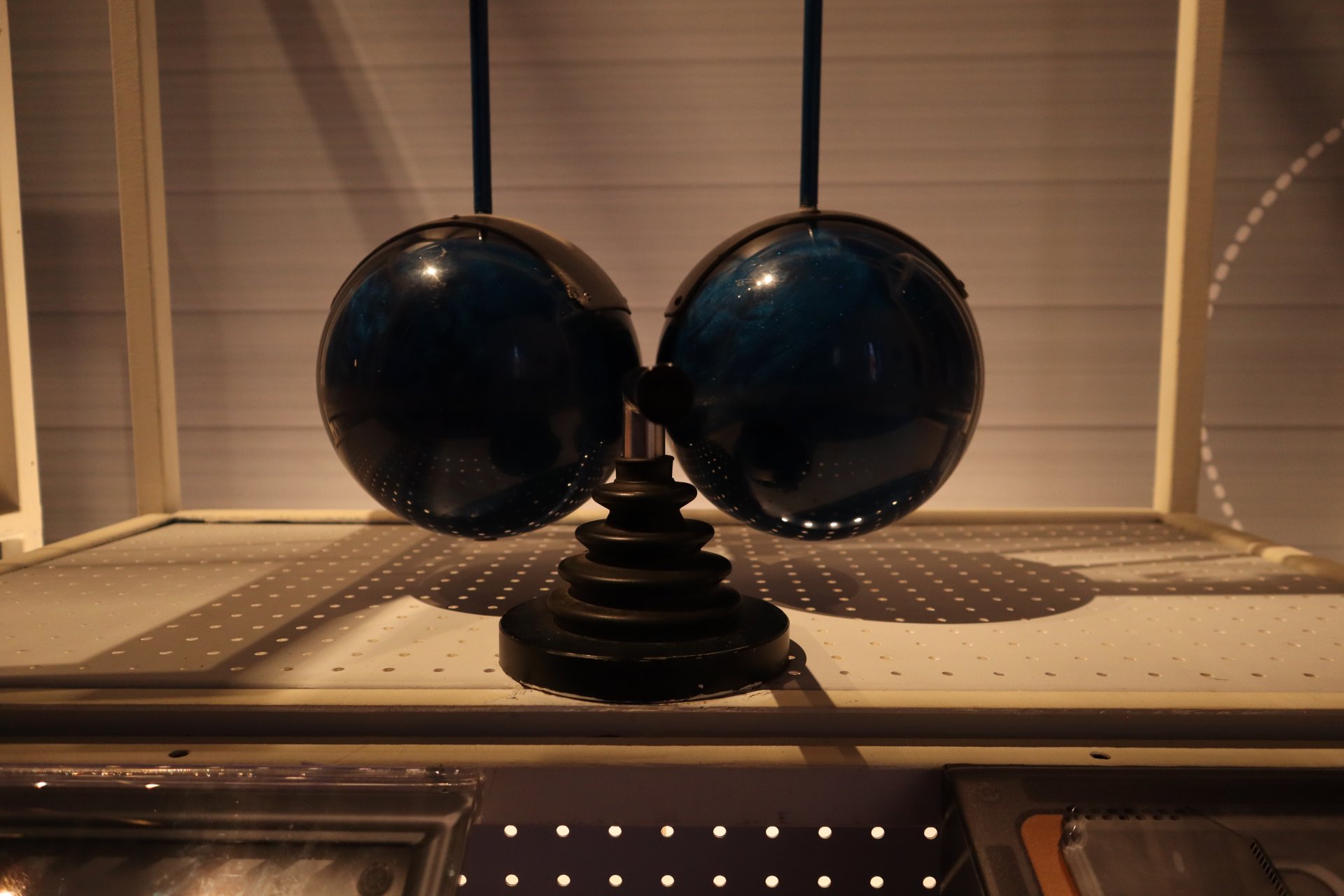
The research and development of aerial vehicles such as airplanes, space shuttles, etc., make use of Bernoulli's principle. The device I’m holding is the Bernoulli ball. Look, when I activate the air gun and blow into the void between the two balls, the pressure between the balls will decrease, and the higher atmospheric pressure around them pushes these two balls closer. Isn’t it amazing?
The basic concept of Bernoulli's principle is that when fluids flow at different speeds, they generate a change in pressure, and the higher the speed, the smaller the pressure.
Just like this blowpipe I’m operating; when I blow at the center of the ball, it will cause the ball to float in the air. Even if I move the blowpipe slowly, it does not affect the ball’s balance causing it to fall because the uniform flow forms a stagnation zone of high pressure below the ball, just like a piece of transparent air mesh, catching the ball firmly.
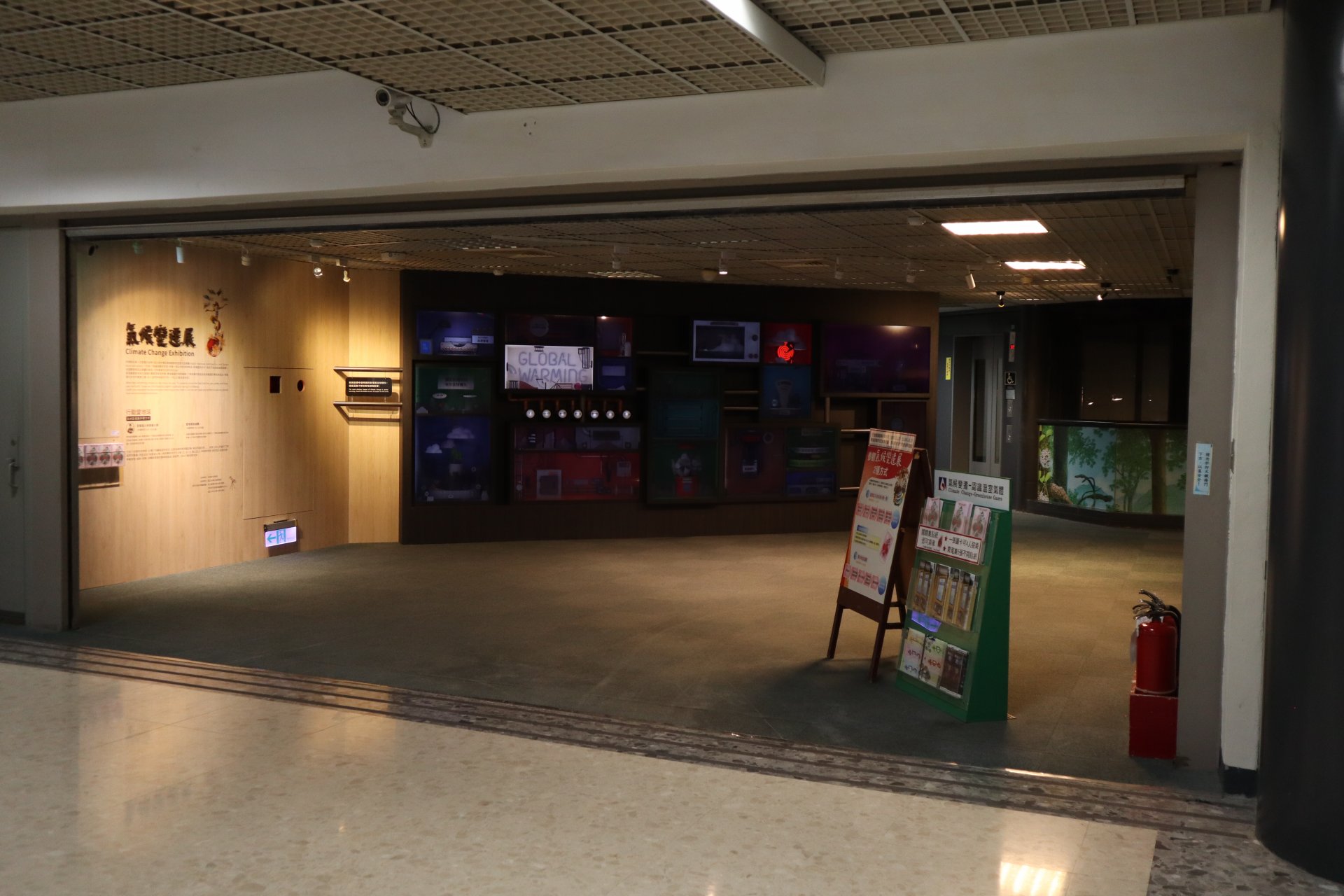
Climate Change Exhibition:Introduction
Hi everyone on live stream. I am Eco! Can you see me? Great!
By the way, have you heard of the "Earth Fire Fighting Squad"? It is now the most famous environmental protection organization. In addition to observing the climate change phenomenon, the squad also performs various tasks to protect the Earth. Hehe, sounds cool, right?
I am now at the "Climate Change Hall", the venue where you are tested and selected for the "Earth Fire Fighting Squad"! Why am I here? It’s embarrassing to say. I failed my test last time, so I'm here today to study. I want to invite you to help me pass the test. What are we waiting for? Let's get started!
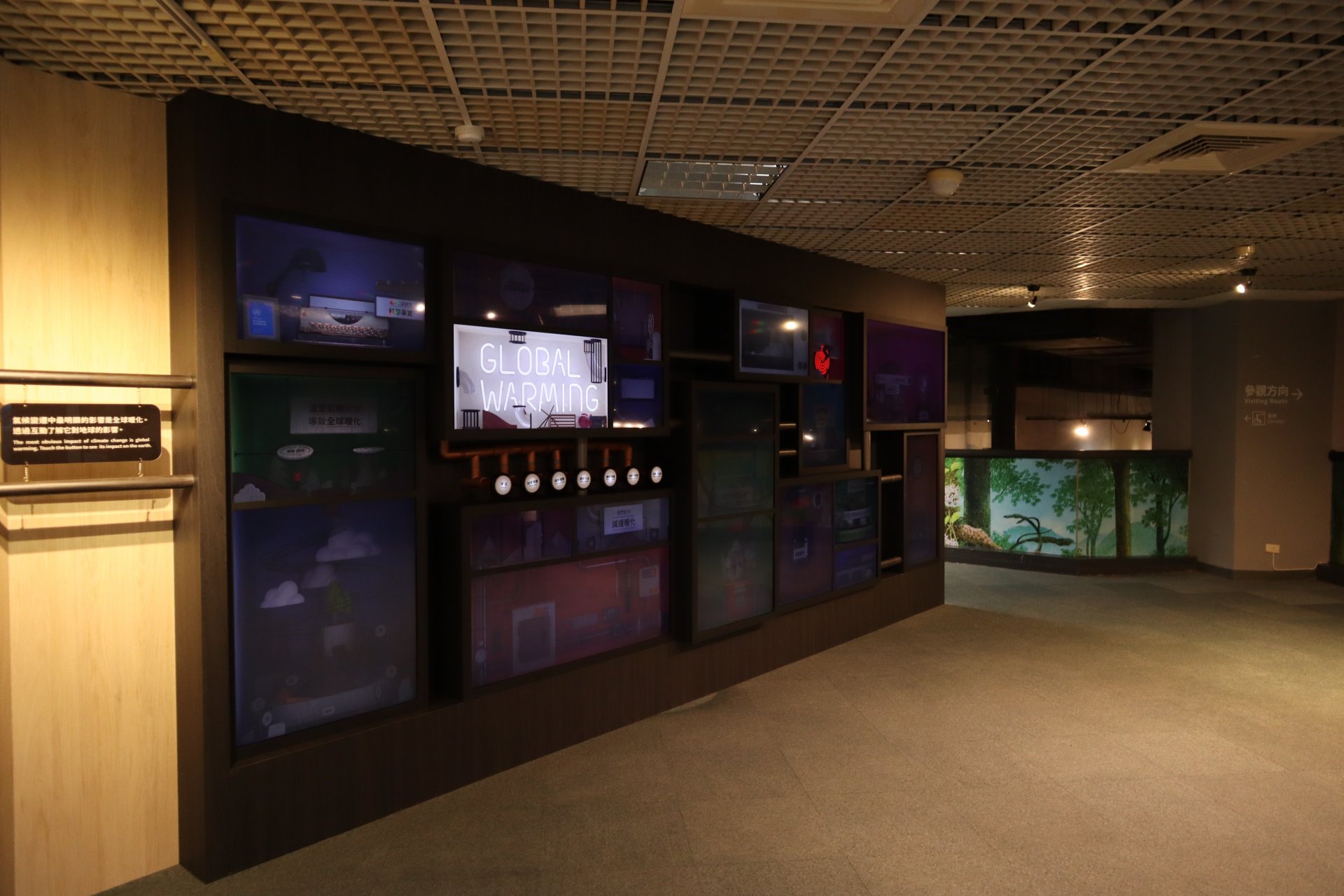
Climate Change Exhibition:DPSIR
Does anyone know what DPSIR is? DPSIR is a framework commonly used by scientists to study society and the environment in recent years. D refers to Driving forces, P refers to Pressures, S refers to State, I refers to Impact, and R refers to Response. Let’s take climate change as an example: the phenomenon of "global warming" is the Driving force. Pressures, State, and Impact correspond to the scientific facts concerning climate change, such as the rise of global average temperature, the changes in ocean currents, the melting of Arctic ice, etc. What actions should we take to combat climate change?
Take a closer look at the "Climate Change DPSIR" exhibit in front of you. There are clues!
The answers are "mitigation" and "adaptation". When I press the adaptation and mitigation buttons, the ball will roll in different directions triggering the mechanism. Look! Mitigation refers to the reduction of greenhouse gas emissions. Adaptation emphasizes the cooperation of different departments, for example, the cooperation between the energy sector and the waste sector, which converts waste into energy and therefore reduces waste.
If you are watching this right now, let us save energy and reduce carbon emissions. Let’s love the earth with action!
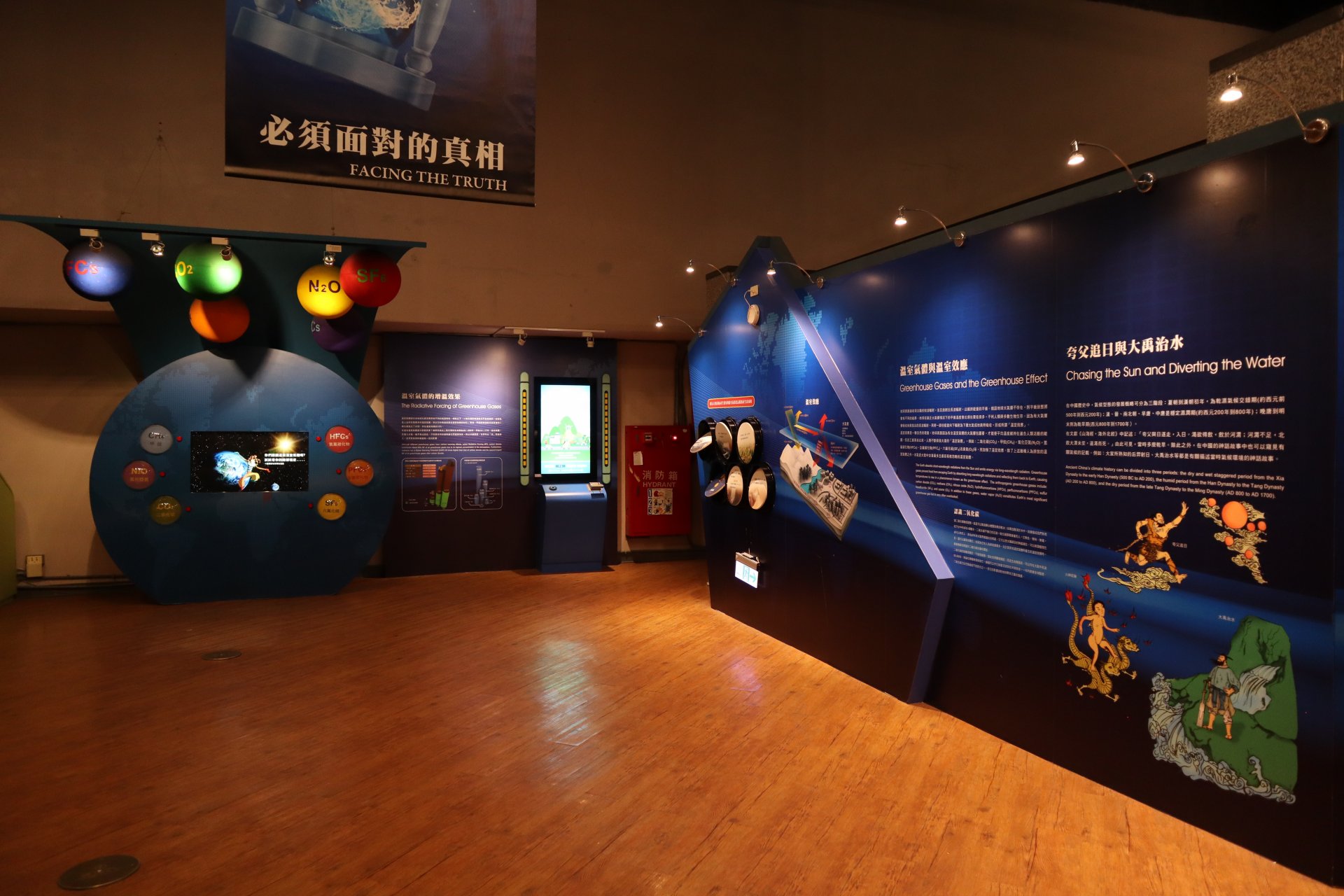
Climate Change Exhibition:Greenhouse Effect
You have all heard of the greenhouse effect. Imagine the atmosphere as a giant quilt covering the Earth; that's the idea of the greenhouse effect. It is a natural phenomenon where the Earth's surface receives heat from the sun and emits heat back to maintain an energy balance.
However, human activities emit a lot of "greenhouse gases", causing the greenhouse effect to intensify and leading to "global warming". It's like you are warm with a quilt, but you are also stuffing the quilt with many heat packs.
Yet, without the greenhouse effect, the global average temperatures would be much lower, and they would be too low for most living organisms to survive.
Hey, here comes the question. During the last selection test, the examiner asked me to list all the greenhouse gases, but all I remembered was that cow farts emits "methane" gas. I forgot everything else! (laughs)
Through operating the exhibiting models and by reviewing the explanatory texts, I learned that different greenhouse gases have different lifespans in the atmosphere. There is a greenhouse gas called "sulfur hexafluoride" that stays for 3,200 years. Wow, that's way too long! It is also stated here that the lifespan of carbon dioxide is from 50 to 200 years. Although it is much shorter than that of sulfur hexafluoride, its contribution to global warming cannot be underestimated because of the huge amount of emissions!
Ever since the Industrial Revolution, with the rapid development of science and technology, the amount of greenhouse gases produced by humans has soared year by year, and alas, the problem of global warming has also become more and more serious! (sigh)
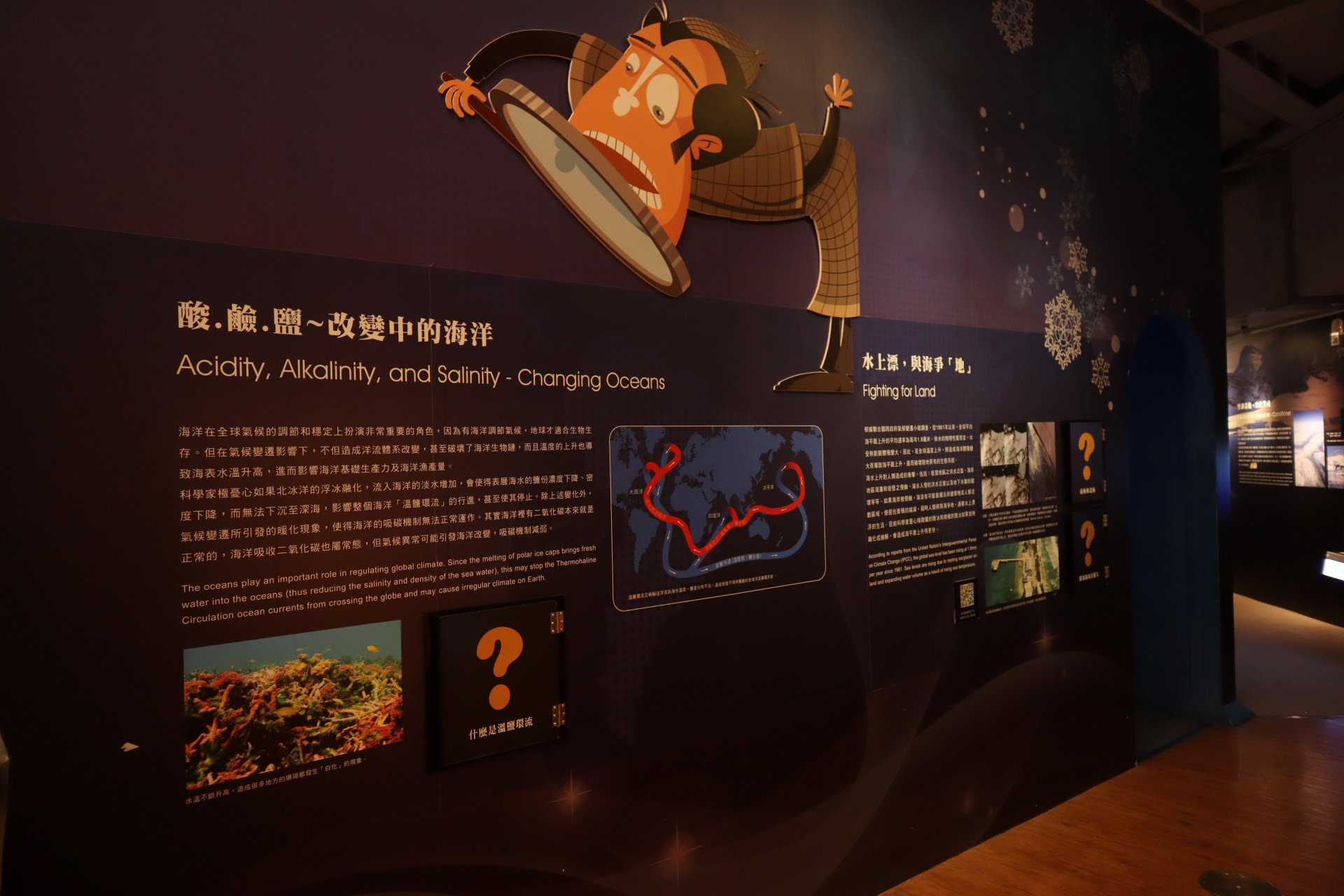
Climate Change Exhibition:Thermohaline Circulation
Fortunately, I previewed this lesson, so I understand the ocean currents like the back of my hand. The instructor of the Fire Fighting Squad once said: “the ocean plays a very important role in stabilizing the global climate. Because the ocean regulates the climate, the Earth is suitable for living organisms. In recent years, the ocean currents have been changing due to climate change.”
The "thermohaline circulation" is the global ocean current circulation system created by differences in salinity and temperature between the upper and lower layers of the ocean, resulting in different water densities. What happens to the ocean environment if the circulation system stops working?
Let me give you an example. This cup of Coke is originally dark brown, and now I add some ice cubes. When the ice cubes melt, the color of the Coke becomes lighter, right? Imagine the ocean is this cup of Coke. If the continental ice melts, the density of the sea water changes, which affects the entire "thermohaline circulation". The result may be disruption of the marine biological chain, affecting basic marine productivity and fishery production.
If the ocean cannot regulate the climate, the world will continue to warm up. All life on the Earth will face dramatic changes.
Climate Change Exhibition:Albedo
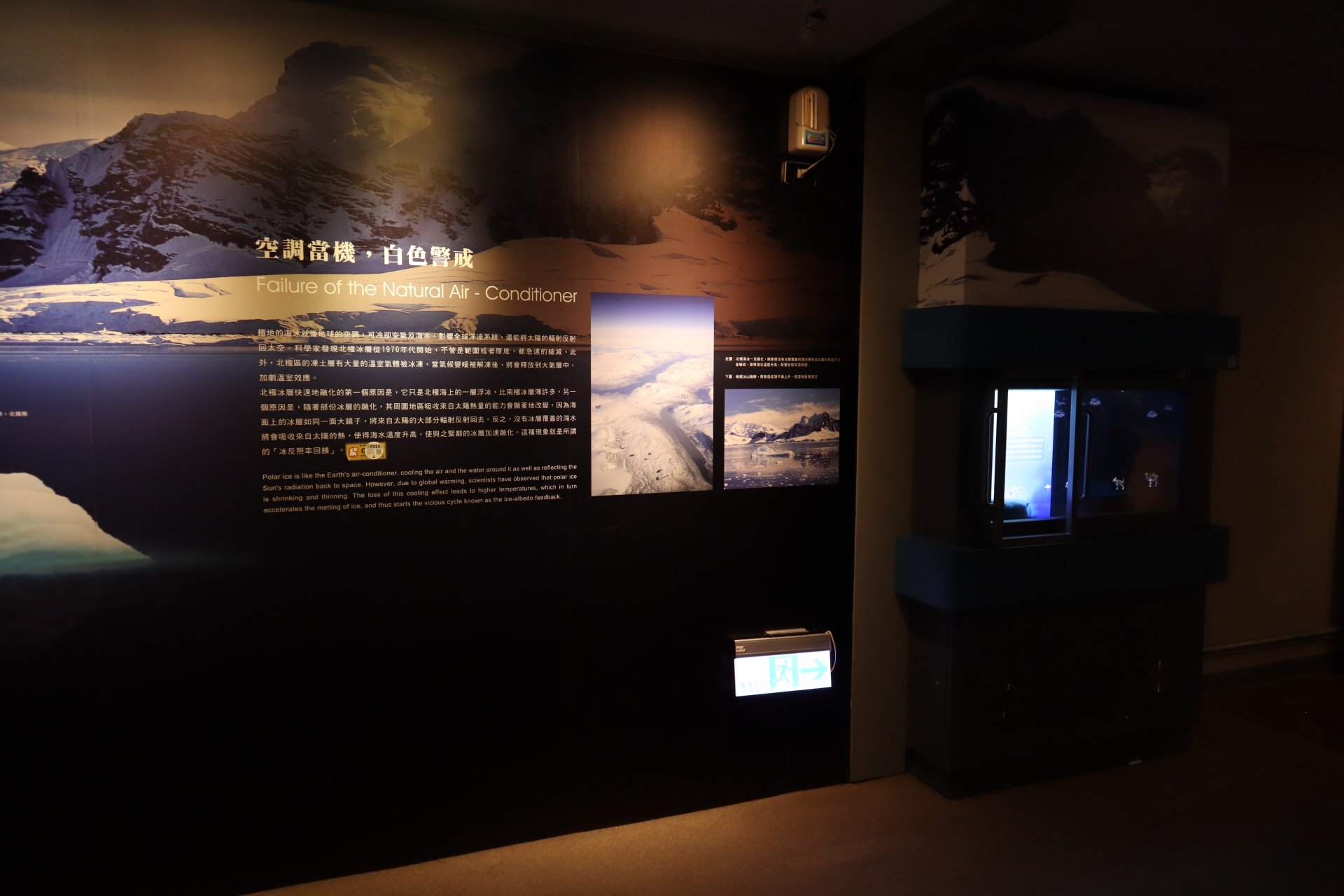
If the greenhouse effect is like covering the Earth with a quilt, then the Arctic sea ice is like the Earth's air conditioner! "Albedo" refers to the solar radiation intensity reflected by an object.
Look closely at this exhibit. If you move the handle to the white snow area, you will see that the albedo is very high because the snow and ice reflect most of the sunlight back into space. It’s just like wearing white clothes in summer, which reflect more sunlight, so the body stays cooler. If you move the handle to the desert area of the camel pattern, the albedo decreases.
What is alarming is that scientists have discovered that the Arctic ice has been shrinking rapidly since the 1970s. When the ice melts, the sea water that is not covered by the ice will absorb heat from the sun, and the temperature of the ocean will increase, which will accelerate the ice layer around it to melt. This is called "ice-albedo feedback".
If the ice layer melts and all the greenhouse gases trapped in the ice layer are released into the atmosphere, the consequences will be disastrous!
Climate Change Exhibition:Chain Reactions
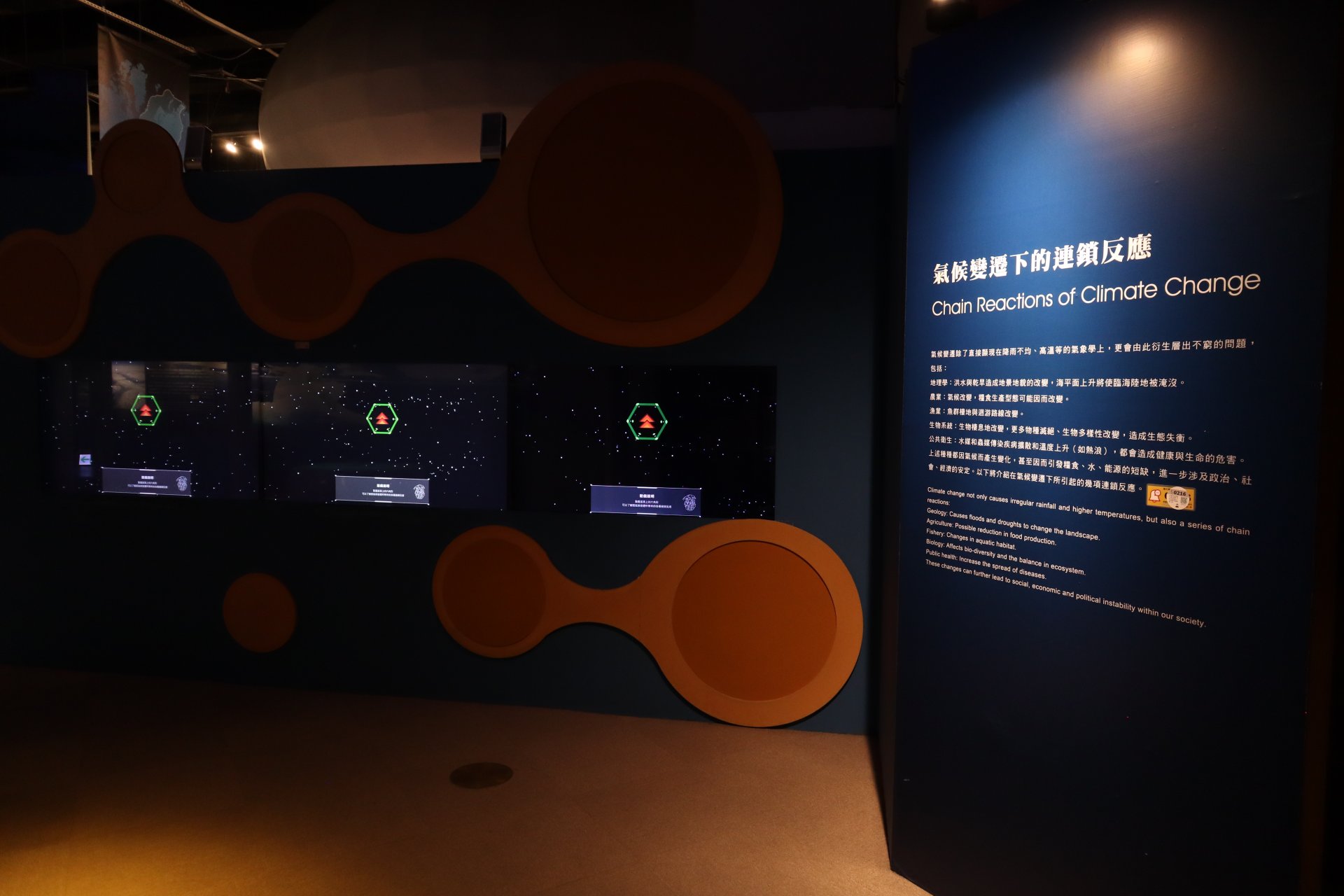
Hi, everyone! Do you see the various hexagons on this screen? They represent the chain reactions of climate change.
The instructor emphasized in the test questions that climate change reflects more than the weather problems. The problems are like endless exploding firecrackers that will never stop. The rise of sea level submerges the land and drastically changes the life patterns of animals and plants, which results in an ecological imbalance and food crisis. Humans also face a series of diseases and disasters.
All the reactions are linked together one by one. I can't remember them all. The most prominent example is dengue fever in Taiwan. Mosquitoes are the vectors of malaria and dengue fever. Before the 1970s, they usually lived in the areas of low altitudes and low latitudes. However, as the temperature has increased, the range of mosquitoes has expanded to the high latitudes. The dengue fever epidemic in Taiwan has gradually spread to the northern part of the country.
The gradual expansion of the infectious diseases’ transmission areas and extension of the epidemic seasons is very scary!
Climate Change Exhibition:Global Warming of 1°C-6°C
Finally, we are at the checkpoint of global warming! I remember when I took this test, I was frightened by the simulation machine in front of me. Every night I had nightmares of my home being washed away by seawater.
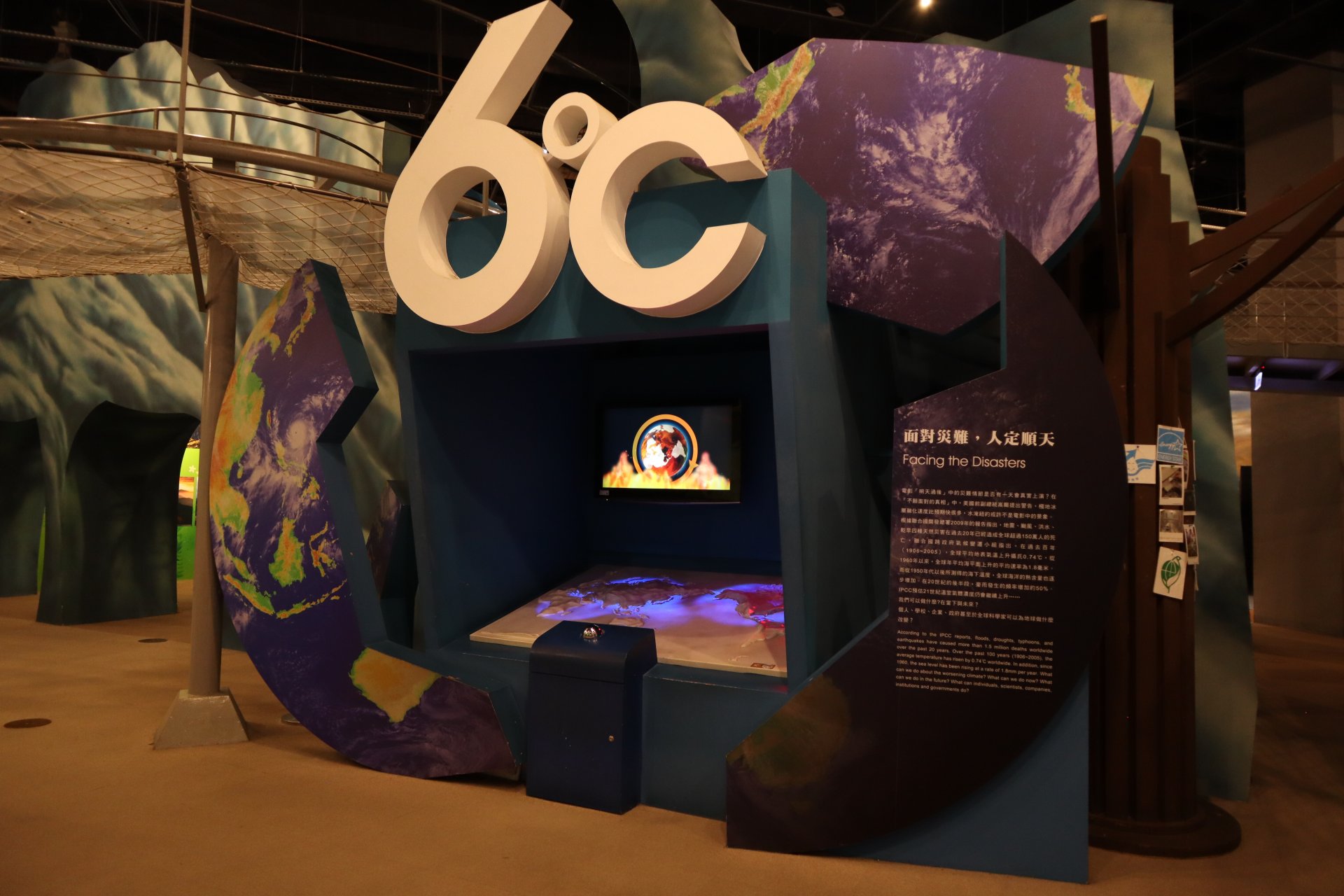
Global warming, broadly speaking, refers to an increase in the average global temperature. Let me use my hand to warm up the metal ball in front of me to demonstrate it for you:
If the global temperature rises by 1 degree Celsius, a large-scale drought will cause food shortages. If the temperature rises by 2 degrees Celsius, the ocean current system will be disrupted, and more than one million species will become extinct, including polar bears. If the temperature rises by 3 degrees Celsius, 40 percent of the Amazon rainforest will be destroyed. When the temperature rises by 4 degrees Celsius, scorching high temperatures will dominate everything, and the ocean will submerge important cities. With an increase of 5 degrees Celsius, the world will stop functioning, and human civilization will collapse. Lastly, if the global average temperature rises by 6 degrees Celsius, 95 percent of species will go extinct!
According to the United Nations Intergovernmental Panel on Climate Change, the global average temperature has risen by 0.74 degrees Celsius over the past 100 years, which means that we are not far from the days of food shortage!
Climate Change Exhibition:Carbon Footprint & Water Footprint
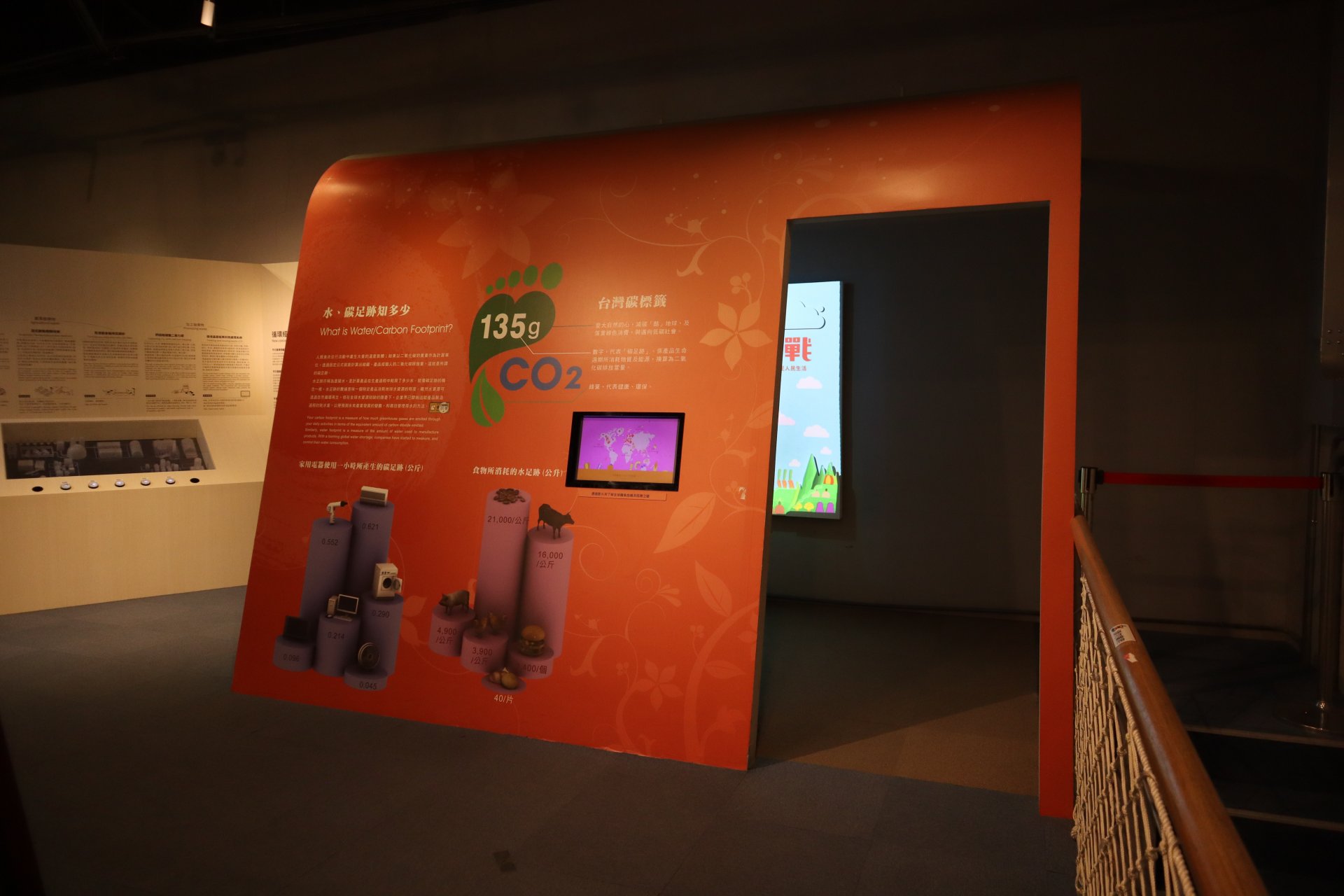
Guys, have I told you that I hate math problems the most? Well, these questions are as follows: our activities of daily living produce a large amount of greenhouse gases. If the weight of carbon dioxide is used as the measurement unit, the carbon dioxide emissions of organizations, products or individuals can be calculated through formulas. This is the carbon footprint. But I am terrible at math, and even if I memorize the formula, I will still make mistakes!
In addition to calculating the carbon footprint, there is also a water footprint math problem for virtual water. It calculates how much water a product consumes in its production process.
Through these calculations, I realized the importance of energy saving and carbon reduction:
The carbon footprint of running an air conditioner for an hour is so high; no wonder my mother told me to run it less often.
The water footprint of beef is several times more than that of chicken and pork. It seems that we should eat less beef!
Thank you all for the encouragement. I will try my best to practice the math problems!
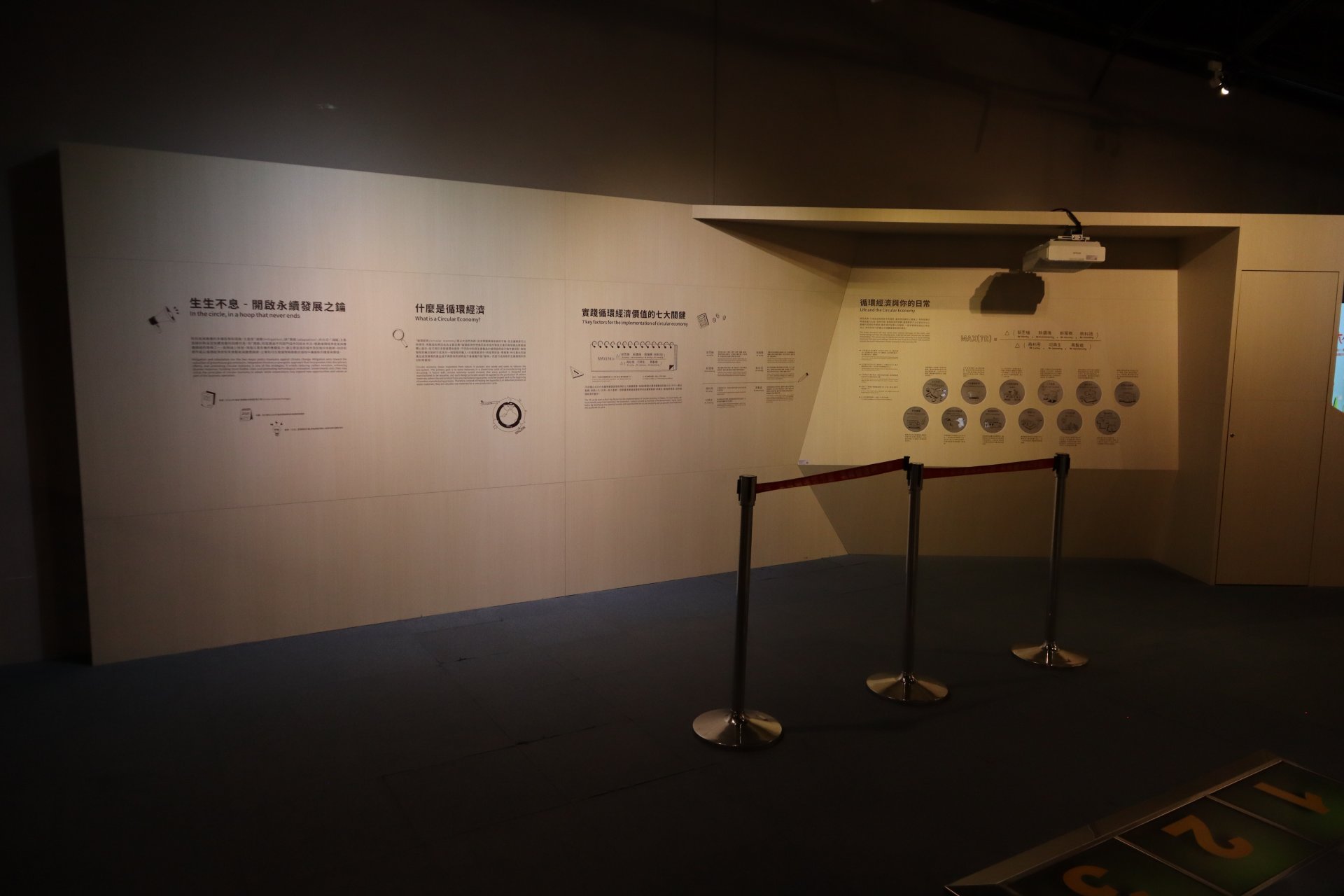
Climate Change Exhibition:Circular Economy
As expected, the "circular economy" will be tested in the end! Compared with the old linear economy, the concept of throwing things away when finished, the circular economy is the trending hot topic nowadays!
Modern consumer habits have changed, and more people are willing to pay for "the concept of environmental protection"; the circular economy is a concept that pursues zero waste and system balance. It is hoped that resources can be remanufactured and reused, and the by-products will not become "waste" but rather new raw materials.
For example, the commonly seen "YouBike" in Taiwan uses the idea of re-thinking, re-servicing, and re-cycling. It not only makes up for the insufficiency of buses and MRT, but also helps reduce carbon dioxide emissions and provides city residents with a green and healthy lifestyle.
If you want to learn more about other examples of circular economy, you can touch the exhibits and there will be animated introductions!
Thank you all for watching my live stream today. I will do my best to prepare for my test! If you are interested after today’s introduction, you are welcome to join the Earth Fire Fighting Squad!
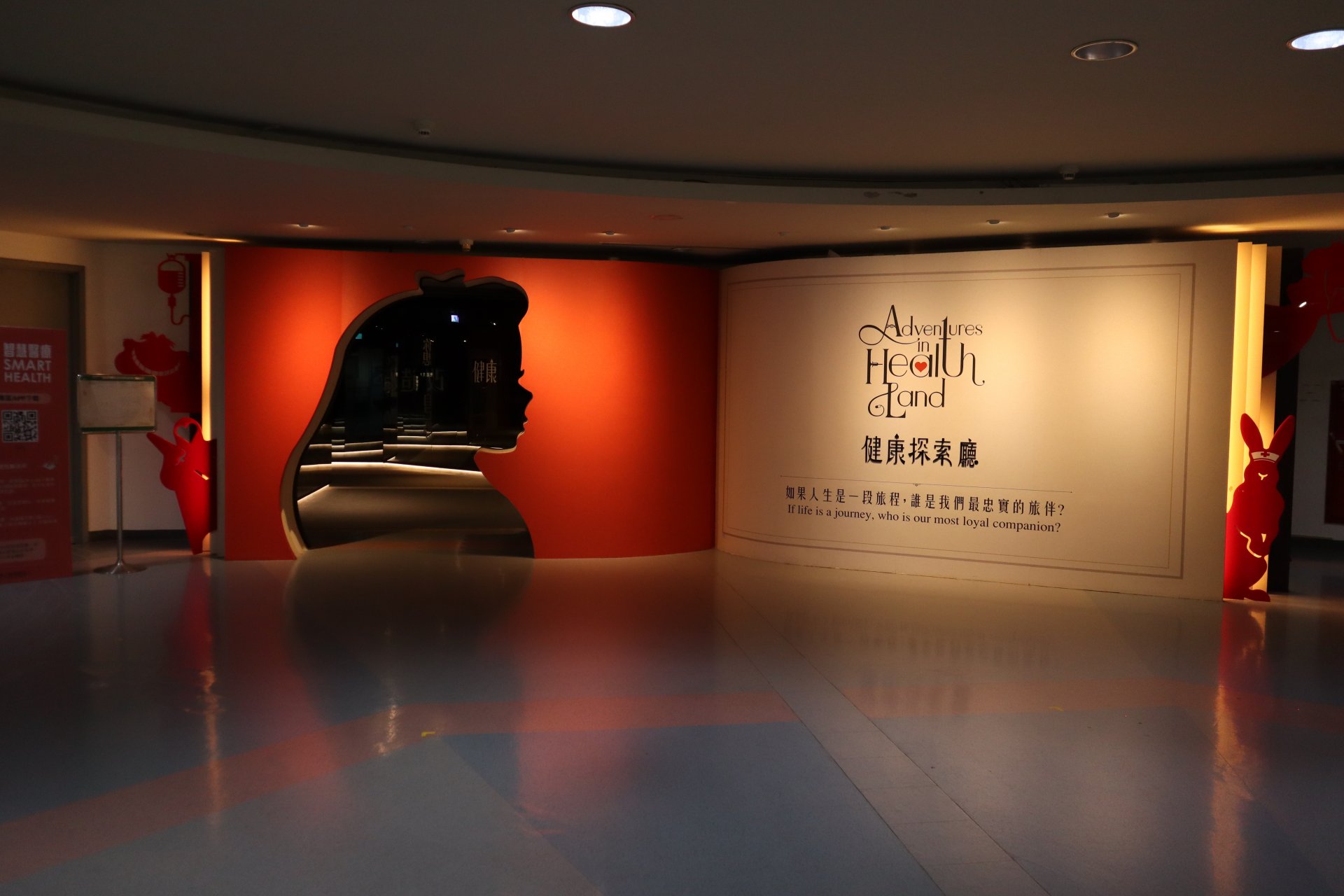
ADVENTURES IN HEALTH LAND:Introduction
Oh my God, I must have been insane to jump into the hole with Mr. Rabbit at my age!
No way, Alice. You must follow your psychiatrist's instructions and remain calm! This is not the same Wonderland anymore. I just passed through a magical forest of mirrors. I have no idea where Mr. Rabbit has gone since I was so busy with reading the text on the mirrors.... The only thing I can do is keep going.
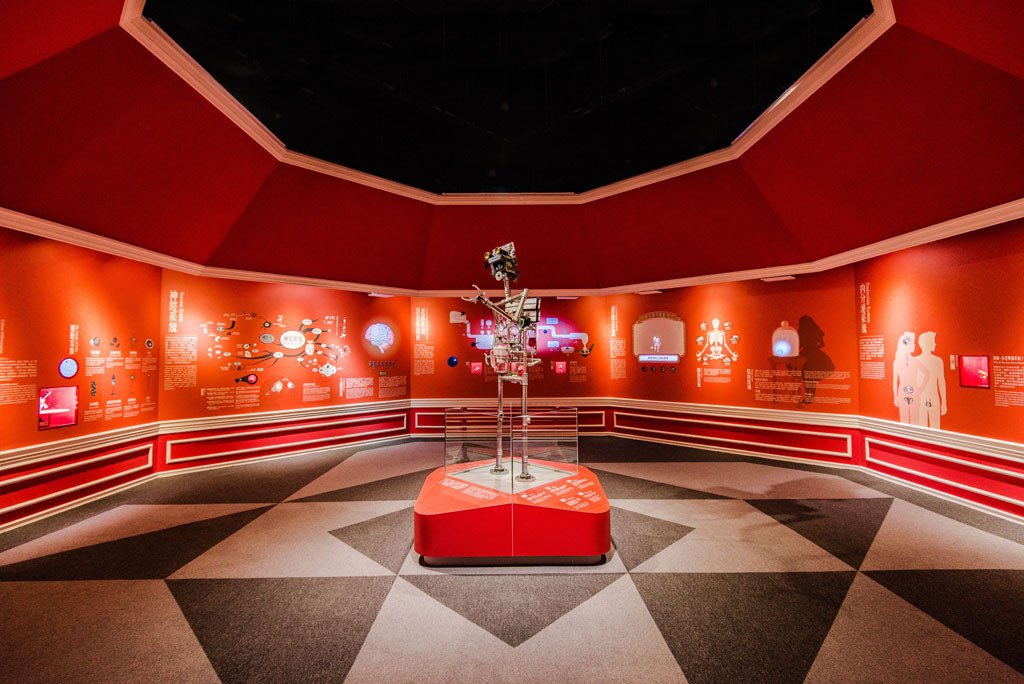
ADVENTURES IN HEALTH LAND:Nervous System
Hmmm? Is it the Queen of Hearts standing in front of the red wall of the hall? And the disordered stack of Card Soldiers beside her...... She seems to have an even worse temper. She loved to cut people's heads off, and now she just ripped the Card Soldiers to pieces. I should just go around her discreetly.
But the red wall is covered with texts, …….and some complicated drawings! Let me see....it says here that the nervous system is an information network made up of hundreds of billions of nerve cells and tissues, including the brain, spinal cord, and peripheral nerves.
My doctor once told me that the nervous system has three main functions. “Sensory function” is the first one. Sensory neurons transmit stimulation information to the central nervous system through the body's sensory receptors, much as humans experiencing pain when poked by needles. The second function is “analysis function”, which analyzes and organizes sensory receptor input and makes appropriate decisions. This is the function of the brain! The brain is the commander of the human body, in control of all actions such as sensation, movement, reasoning, memory, and emotion. The spinal cord functions as a relay station, conveying signals and instructions between the body and the brain. "Motor function" is the third one. The brain sends the sorted information to the periphery through motor neurons for execution, exactly as we would disinfect a wound after verifying it.
What a valuable lesson! Even though we cannot see it, the nervous system is extremely important.
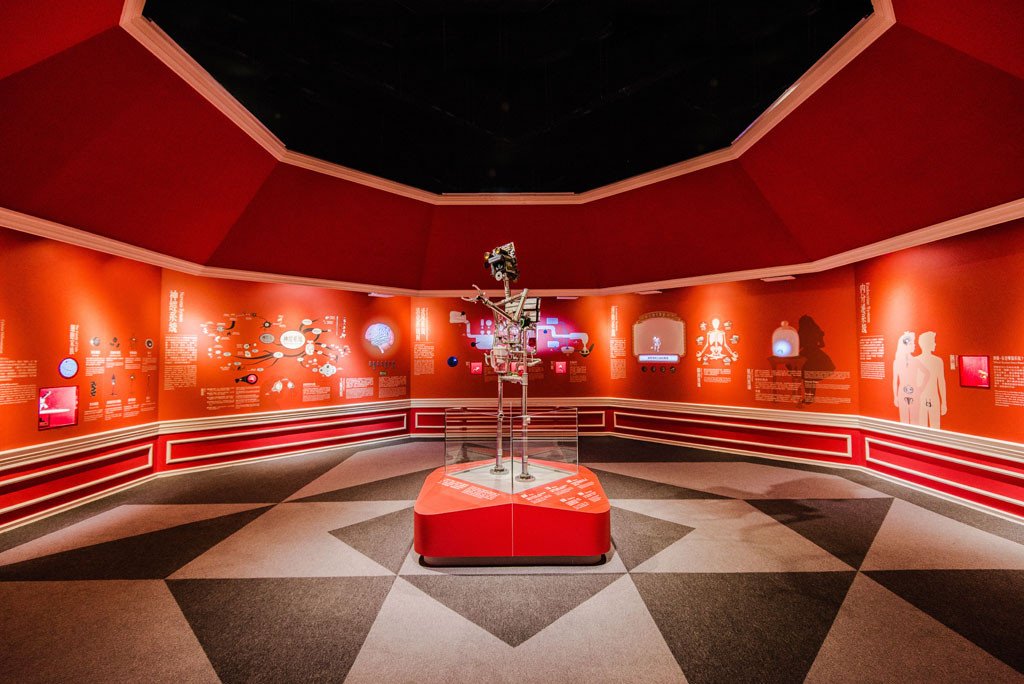
ADVENTURES IN HEALTH LAND: Digestive System
I ran into several escaped Card Soldiers. They complained to me that the Queen of Hearts had mistreated them and forced them to eat a lot of dice snacks, which gave them indigestion.
This reminded me of the time when I had regular diarrhea and asked my doctor about it; the doctor explained that the digestive system is similar to the production chain of a factory. The food I eat will travel through the esophagus, stomach, and small and large intestines, where it’s gradually broken down into numerous nutrients for the body to absorb, such as amino acids, glucose, fatty acids, and other molecules.
In addition, the liver of the digestive system and the kidney of the urinary system are of great help.
The liver controls immunity and metabolism. A normal person's liver is believed to be able to function regularly even if three-fourths of it is removed. It's truly incredible!
The two busy kidneys in the human body filter more than seven liters of blood every hour and release 0.5 liter of fluid every minute into the bladder for temporary storage. Since the human body functions so well, the doctor told me not to be concerned about food poisoning unless there was a special circumstance, and that stress was probably the primary cause of my diarrhea.
Before I left, I stressed the importance of eating a well-balanced diet to the Card Soldiers. I really wish they regain their health soon.
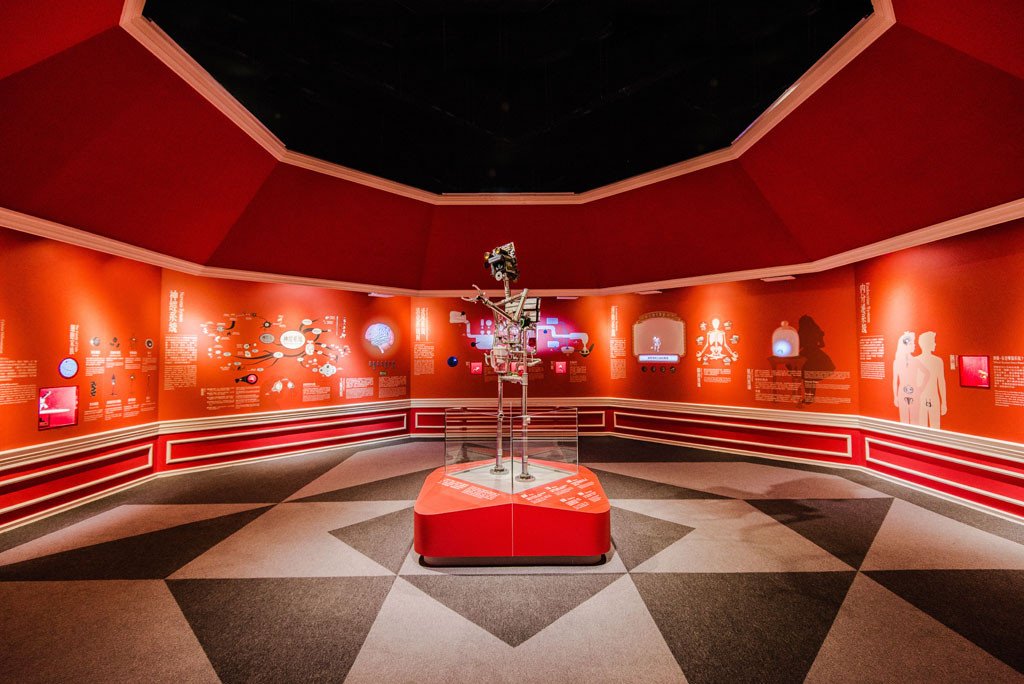
ADVENTURES IN HEALTH LAND: Model of Human Organ
I never expected to return to Mad Hatter's tea party. He has this strange obsession with tea, and at the last tea party, he didn't eat anything and only drank a lot of tea. Will his body be able to handle such a large amount of caffeine? I noticed that he frequently visited the bathroom. Excessive urination should be one of the side effects!
Mad Hatter proudly showed me the tea party's coolest installation art—a robot model of human organs. He excitedly explained the artwork, and I realized he had made the robot himself. Mad Hatter believes that humans build machines, but the human body is also like a factory, with each organ functioning like a precise component twenty-four hours a day while cooperating with one another at the same time.
For example, the kidneys maintain the electrolyte balance and filter impurities from the blood. Mad Hatter even installed the water purifier from the last tea party on the kidneys, which was truly appropriate. There was also this glowing plasma ball, representing the continuous pumping of the heart that delivers blood to various organs and tissues. Other components had their respective features as well. Look! The robot's eyes were decorated with a telescope! Indeed, the artist see things differently!
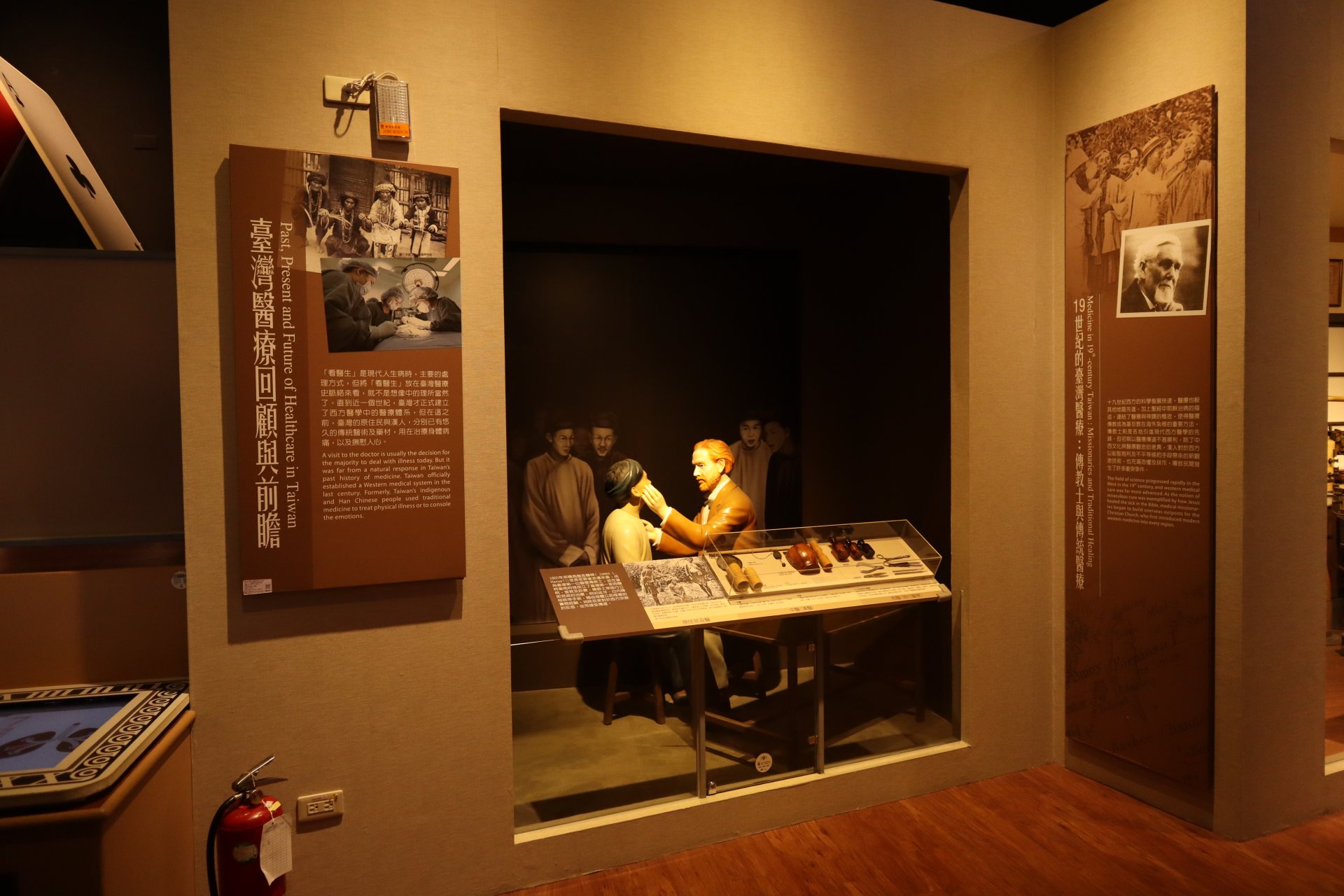
ADVENTURES IN HEALTH LAND:Medicine in the 19th Century Taiwan
Unbelievable! The cunning Cheshire Cat dragged me into its nightmare! What's the big deal if I stepped on its tail by accident? The setting for this nightmare, most likely in the nineteenth century, was even more incredible. We encountered three different kinds of doctors.
First, we met Doctor James L. Maxwell of the English Presbyterian Mission, who traveled from Kaohsiung to Tainan, Taiwan, to undertake missionary work and practice medicine. According to the Cheshire Cat, missionaries at that time were often involved in charity medical care and performed surgery with immediate therapeutic results, such as tooth extraction and cataract removal, in order to lessen Taiwanese hostility to western religions.
Work is Cheshire Cat's worst nightmare, so it transferred the disinfection of medical equipment entirely to me while doing nothing itself. It's outrageous!
We came across Han Chinese traditional doctors at a traditional Chinese herbal pharmacy after fleeing the Western hospital. To determine the source of disease, they apply the “four diagnostic methods”: observation, auscultation and olfaction, inquiry, and pulse feeling and palpation. As the Chinese traditional doctors used needles to stimulate acupressure points on the human body and bamboo sucking tanks to perform cupping on the patient, Cheshire Cat was so terrified that its trademark smile vanished.
Meeting the aboriginal witch doctor, however, was our most scary experience; aboriginal people believe that everything in the world has a spirit. Since it is the ghost that causes illness, the witch doctor's magic power is required to expel the evil spirit from the human body. After a series of complicated prayers to and communicating with spirits, I took the herbal medication and hid aside, watching Cheshire Cat dart around as the witch doctor tried to extract its bones for the ritual's animal bone sacrifice. Cheshire Cat finally gave up on its revenge scheme and pulled me out of the nightmare.
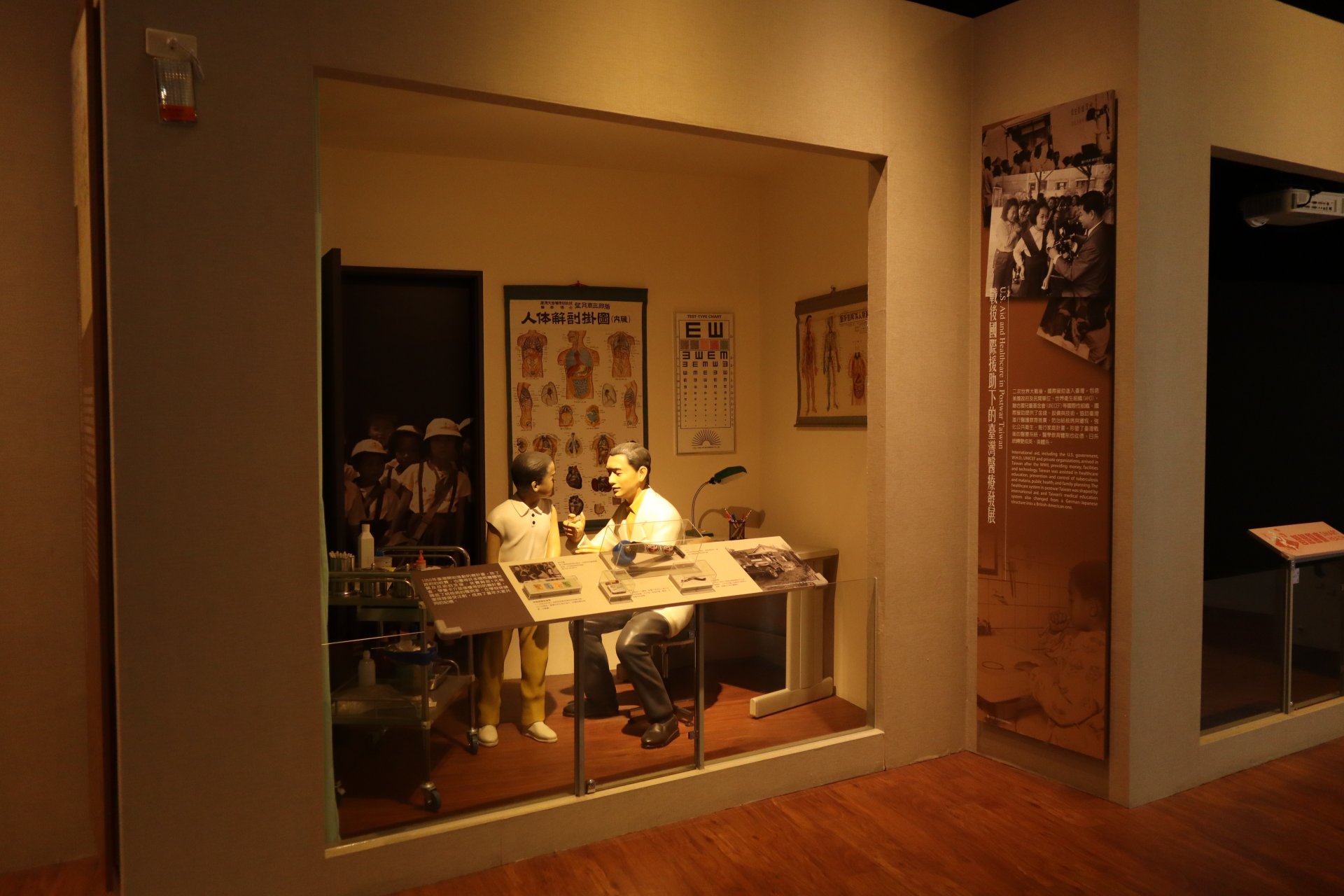
ADVENTURES IN HEALTH LAND:Medical Care System in Post-War Taiwan
I seriously underestimated the kitten's desire for vengeance. Cheshire Cat led me into a more chaotic nightmare, post-war Taiwan. I recalled my history teacher telling us that after the Second World War, international aid flowed into Taiwan to assist in the development of the post-war medical care system, which changed medical education in Taiwan from the German and Japanese systems to the British and American systems, in addition to improving public health.
Cheshire Cat dumped me at a school medical office to assist physicians with chest X-Rays and injections of Bacillus Calmette-Guérin (BCG) for young children: this is a vaccine used to prevent tuberculosis (TB), which has been incorporated into the regular vaccination program for enhanced control and monitoring. Doctors gave Cheshire Cat special attention by making it the mascot at the school entrance to promote a charity stamp sale for tuberculosis prevention. Because of the significant increase in population after the war, I was also tasked with promoting the contraception-based "Family Project".
I'm completely exhausted! No way! I need to grasp Cheshire Cat’s tail and force it to get me out of this nightmare!