Puppetry Art Center of Taipei
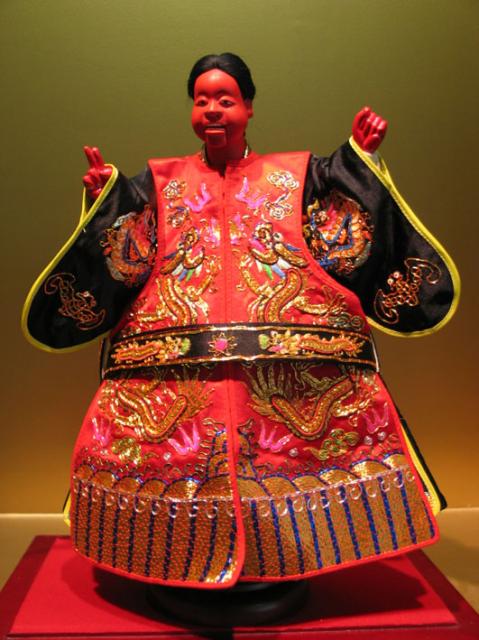
Theater Gods
Theater gods are protective deities of the world of drama, and traditional troupes usually worship either “Marshal Tian Dou” or “Lord Xi Qin”, or both. Emperor Xuanzong of Tang dynasty in China later summoned him to the palace because of his musical talent, and there he mainly managed the theater, becoming regarded as its patron god. Others say that Marshal Tian Dou was a famous general during the Tang dynasty. During a battle he and his soldiers were captured, but he organized a group theater performance for the enemy troops, which distracted them enough for his allies to stage a victorious raid, prompting the Emperor to call him the “Great Marshal”. The other figure is Lord Xi Qin, who legends say was Emperor Xuanzong himself. Because of his love of music and dance, he created the “Pear Garden” to train the theatrically talented, and is revered as a pioneer in the world of drama. After occupying the land of Xi Qin, he became known as Lord Xi Qin among the people.
As a result of differing religions, different taboos have arisen within theater troupes. Those who worship Marshal Tian Dou refuse to eat crab, as a mark of gratitude towards the crab that saved the Marshal. Similarly, Lord Xi Qin was said to have once been trapped by a snake, and so those who worship him always use the word “slide” in place of “snake”.
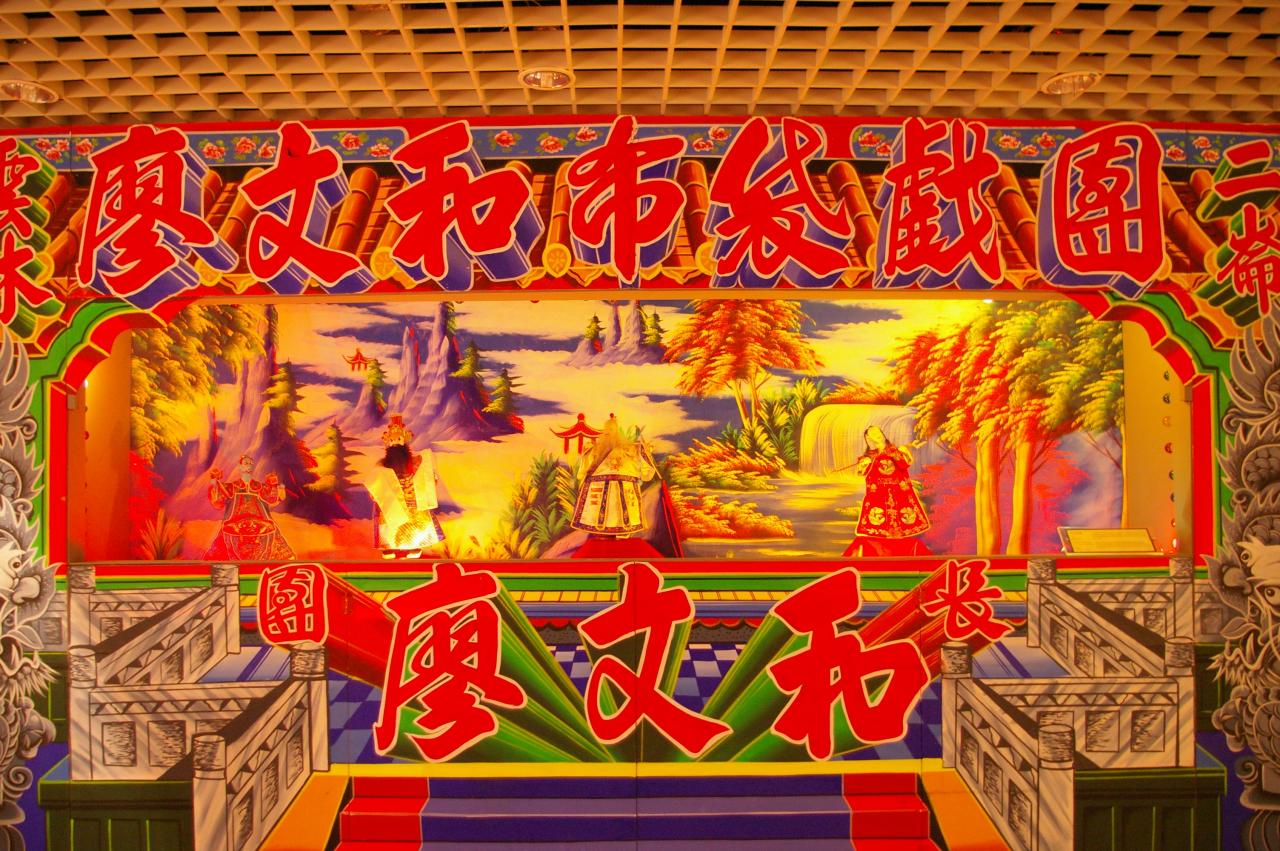
The Stage
The Shoulder Stage
On the right is a shoulder stage, for an early form of glove puppetry where a two or three square foot platform is draped with a piece of cloth on all four sides, leaving just enough space on the inside for a performer to animate the puppets. This type of stage is very portable and only requires one person to complete the entire performance; it is an easy and convenient show.
Rainbow House
After glove puppet shows became widespread, stages resembling small earth deity temples began popping up; they were called “Four-Sided Canopies”. Later even more elaborate “Hexagonal Canopies”, commonly known as “Rainbow Houses”, appeared. Their structure is very similar to that of temples, with lavish gilding as well as intricate woodcarvings.
“Golden” Glove Puppet Stage
After glove puppetry made its way into indoor theaters, traditional wood-carved “Rainbow Houses” began to feel too small and the stage too narrow, so to accommodate the size of the theater and puppets, stages were enlarged, widened and decorated more vividly, brightly and three-dimensionally with realistic and hyper-realistic backdrops, to attract a wider audience to performances.
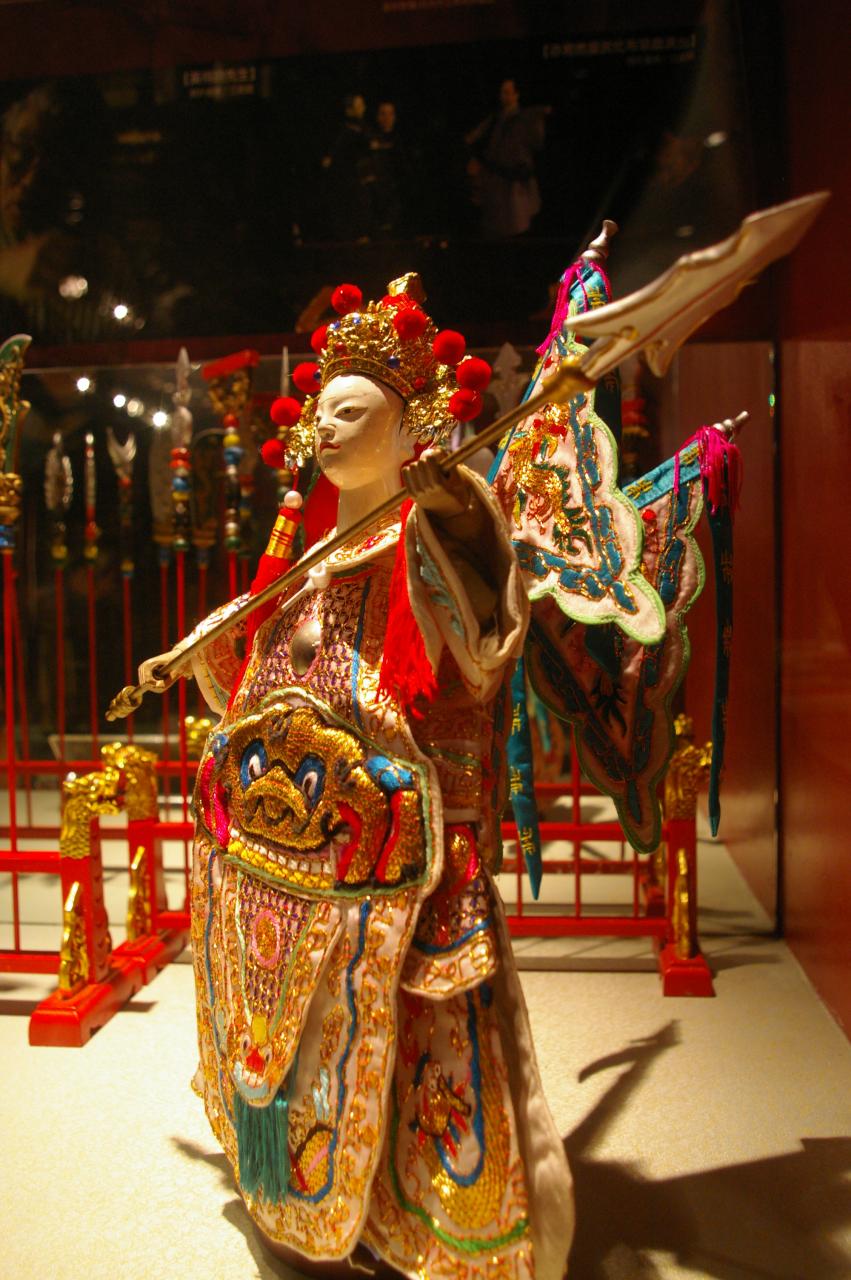
The Evolution of Glove Puppetry
The glove puppetry reached Taiwan in the middle of the Qing dynasty from Quanzhou, Zhangzhou and Chaozhou. At first, masters of glove puppetry would sail from China to Taiwan for performances; only later on did Taiwan gradually develop its unique style of puppetry.
During the Japanese occupation, under the implementation of “Japanization”, puppetry saw several major changes. Background accompaniment had to be western music or recordings, and costumes had to be a combination of Taiwanese and Japanese styles, the lines had to partially be in Japanese, and even the plot had to somehow be related to Japan.
After the Nationalist Government moved to Taiwan, a period of anti-communist and anti-Soviet sentiment began; as a result, the plays were mainly used as 20-minute preludes to a main show, with plots promoting government agendas and puppets depicting the military or police.
After the 228 Incident, outdoor performances were strictly limited, and so puppetry turned to actual theaters for shows. To keep audiences continually buying tickets for Golden puppet shows, scriptwriters casually wrote stories with never-ending plots; the sound and light effects were incredible, the puppets large and their costumes ornate. Around the 1960s, these shows were one of the main leisure activities for Taiwanese people.
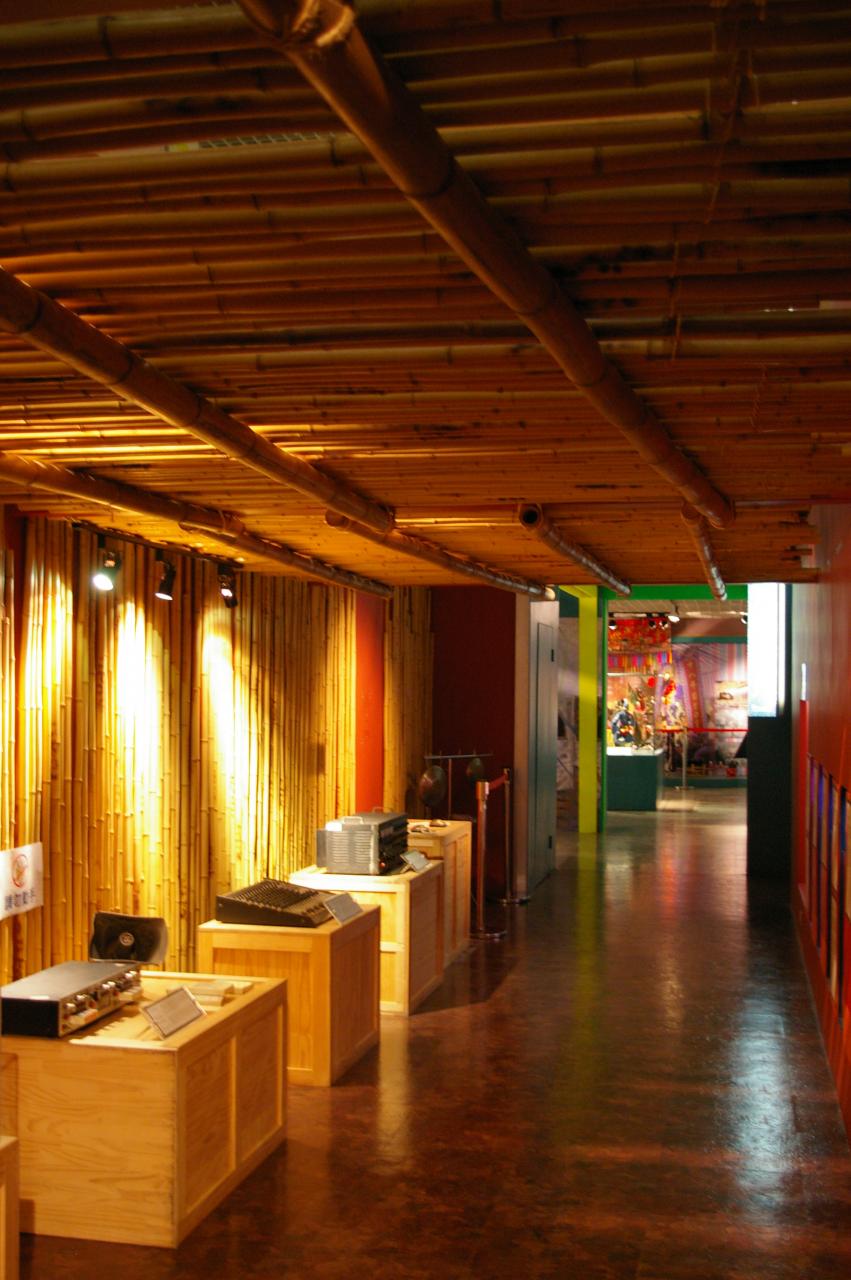
Music Hallway
Theater music is divided into Beiguan and Nanguan. Beiguan refers to music from Northern China, which has a noisier style and uses instruments, including jinghu, kezaixian, suona, gongs and drums. Played at a variety of occasions like god-welcoming processions, temple festivals, birthday celebrations and weddings, Beiguan can be said to be an early form of popular music for Taiwan, loved among the people of agricultural society. Nanguan refers to music in the languages of Southern China, and Taiwan’s Nanguan comes from the Quanzhou area in Fujian Province, brought to Taiwan by Min-nan immigrants. This style of music is elegant and melodious, using mostly wind and string instruments, including sanxian, erxian, clappers and more. More recently, because backstage musicians have become increasingly difficult to find and troupes want to reduce costs, Jun-Ran Chen of the New World group took the initiative to cancel the backstage accompaniment, using recordings as a soundtrack for his puppet show. Before long almost all of the troupes in Taiwan began to use prerecorded music as soundtracks.
Puppet Theater Area
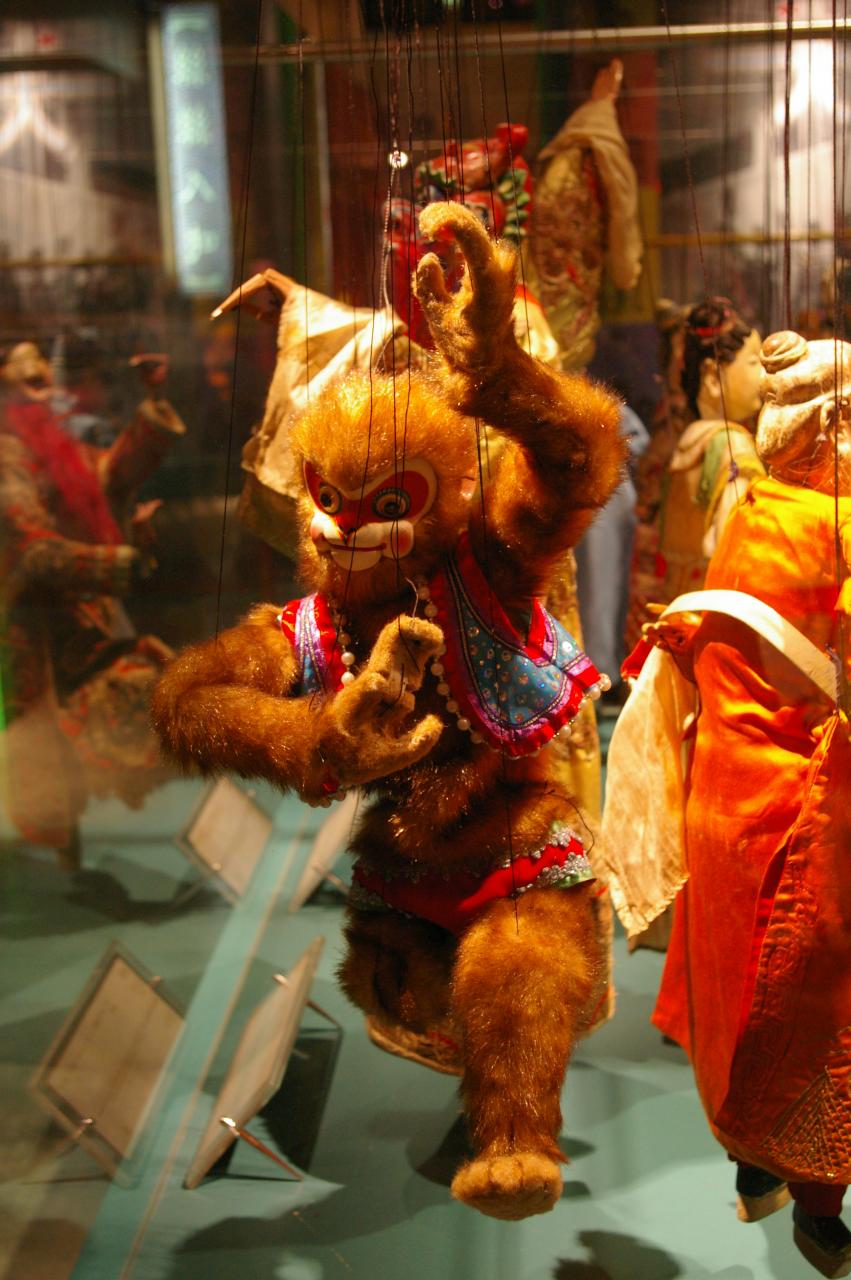
Taiwan’s puppet theater is commonly known as “Jia Li Theater”; Southern Taiwan’s puppet shows focus on festive ceremonies to ask for blessings and give thanks to the gods, while northern puppet shows emphasize religious functions like exorcism; both have their unique characteristics.
All genres of traditional plays comprise the following common roles: Sheng, Dan, Jing, Mo, Chou, Za and Beast.“Sheng” refers to male characters in general, and is further categorized into scholar type Wen Sheng, or Wu Sheng who practices martial arts. “Dan” refers to female roles of varying backgrounds, personalities, and ages, such as young Dan, Wu Dan and elderly Dan. “Jing” are characters with painted faces, which use different patterns and colors to indicate a particular personality. For instance, black represents recklessness, red loyalty, and blue malevolence. “Mo” refers to elderly roles: Sheng, Dan, Jing and Chou all include Mo characters; for example a Gong Mo is an elderly man. “Chou” are funny, jovial characters who serve as comic relief in performances. “Za” are characters who don’t fit into the Sheng, Dan, Jing, Mo and Chou categories, with roles like immortals, monsters and sprites. “Beast” refers to characters that are animals.
Leather Shadow Puppetry
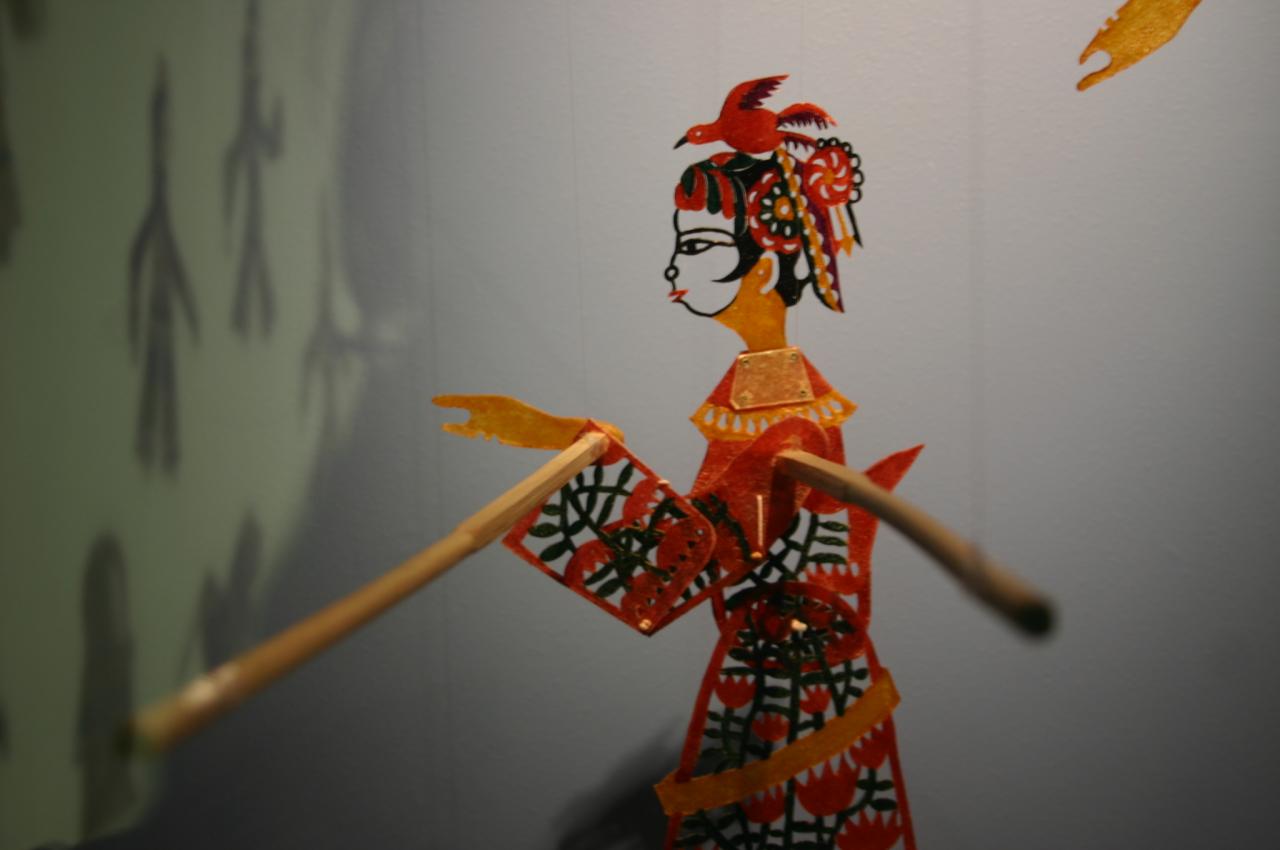
Leather shadow shows are a form of shadow puppetry, where shadow and light are used to perform a play. Chinese shadow puppetry can be grouped into three major categories: hand, paper and leather puppetry. Because leather lasts for a longer time, artistic achievements in carving leather are higher. Different areas in China use different types of leather, usually the most easily accessible material for the locals: cowhide, sheepskin, donkey skin and pigskin have all been used. Leather puppets are made with positive or negative carvings. For roles like Sheng and Dan, faces use lines to form facial features, with the rest of the leather carved out, giving the puppets a pale and beautiful look, an example of positive carving. Jing and Chou characters usually have large areas of leather remaining so that they can be colored, an example of negative carving. Leather shadow puppets also differ in perspective: upright characters will be shown as a profile, while antagonists will show both eyes and 60 or 70 percent of their face. In addition to the various roles, leather shadow puppetry makes use of many props, with the styling of animal and sprite characters giving the performance a vivid feel.
一生懸命-黃憲章創作展
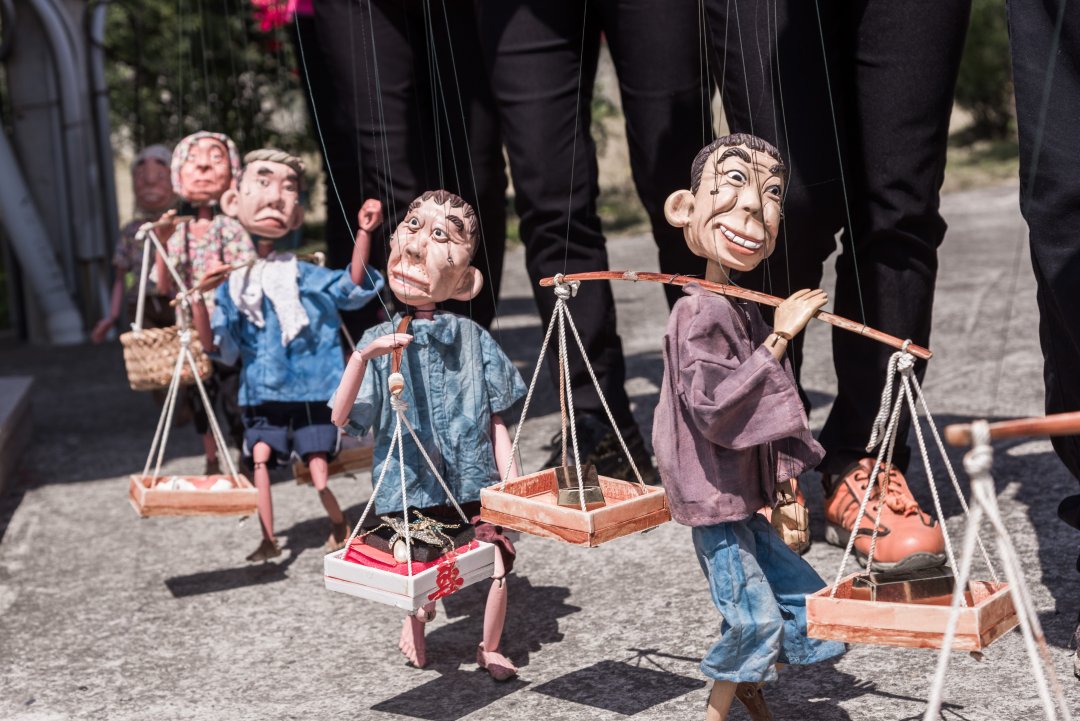
懸絲戲偶是歷史悠久的傳統文化,因為操作不易,致使現在越來越少人了解這項傳統技藝,有感於此,來自台灣嘉義朴子溪畔蒜頭村「立青藝坊」的偶藝師黃憲章不斷鑽研、加以改良,擅長將情感注入戲偶靈魂,以貼近生活的概念出發,甘草人物造型為其一大特色,加入細膩的演繹方式,找到全新的偶戲創意,並在創作之外,致力於將偶戲藝術結合地方文化深耕推廣,無論是開設工作坊、美學講堂、或偏遠學校的藝術教育等等,透過多元管道與學員建立雙向交流,每每讓參與者收穫良多。
製偶大師-黃憲章,投入提線木偶製作已經十多年,對他來說戲偶不只是一塊沒有生命的木頭,而是可以對應到人生,並蘊含老祖宗的智慧。有別於其他偶戲,懸絲戲偶比其他種類的戲偶看起來更像真人。要讓戲偶做出什麼動作,演出的舞臺設計,在製作之前都要思慮清楚,正因為表演道具與操偶更需要運用豐富的創意,讓黃憲章的創作獨具巧思。本次展覽為黃憲章老師首度於台北舉辦個展,內容將結合台灣在地文化故事,結合台灣傳統5、60年代農業社會廟口風情及結婚迎娶習俗等辦桌文化,不僅呈現出台灣在地農村生活,更能勾勒出長輩們對童年的美好回憶,使民眾與展覽零距離。同時並結合西方童話故事為襯,加入西方馬戲元素,打造充滿童趣的異想世界,都將透過懸絲偶一一呈現。此外,並首度完整公開黃憲章老師戲偶製作過程,能近距離貼近偶藝師創作歷程的奇幻世界,將藉由展覽帶領觀眾一同沉浸悠遊於偶戲的奧妙趣味之中!