【English】Gold Museum, New Taipei City Government
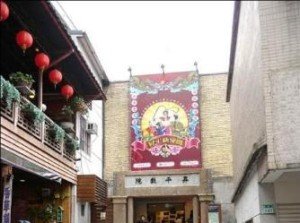
Shengping Theater
I. The story of Shengping Theater
Shengping Stage
The Shengping Stage was built during Japanese Occupation. The facilities located in the main floor including entrance, offices, canteen, auditorium, screening room, police officer supervising seats, movie storage room, bathrooms and toilets, stage, backstage, kitchen, and etc. On the second floor, the facilities were restrooms, reception room, audience seats, stage cloister, and etc.
Shengping Theater
It was re-named as “Shengping Theater”after World War II. In 1970, the mining industry declined so the local population dwindling. Moreover, when the televisions became popular to the families, the theater closed in 1980s.
In the heyday, the monthly program was fully booked, including Taiwanese operas, movies, films, modern dramas and puppet shows. The theater was packed, even the aisle were filled with audiences. There were too many customers in the theater that the number of toilets was not enough for those customers to take turn using them. The theater had to provide urine buckets for emergency on the walkway. Shengping Theater was one of the main entertainment locations in Jiufen, Jinguashi and Ruifang.
II. The memorial building of remodeled Shengping Theater
In 1994, because of typhoon, the roofs of Shengping Theater were blown away. After years of idleness, the remained of the building were façade, four walls, the air-shaped floor and gable on the second floor. The building of Shengping Theater was donated to the New Taipei City Government and recognized as memorial building on June 28, 2010. In Oct. 2010, the Shengping Theater was under renovation to repair and reinforcement. So the scene in 1960s can be reproduced. The theater was opened to public again in August 2011.
III. Shows and Program
The monthly program can be found on the website http://www.gep.ntpc.gov.tw/.
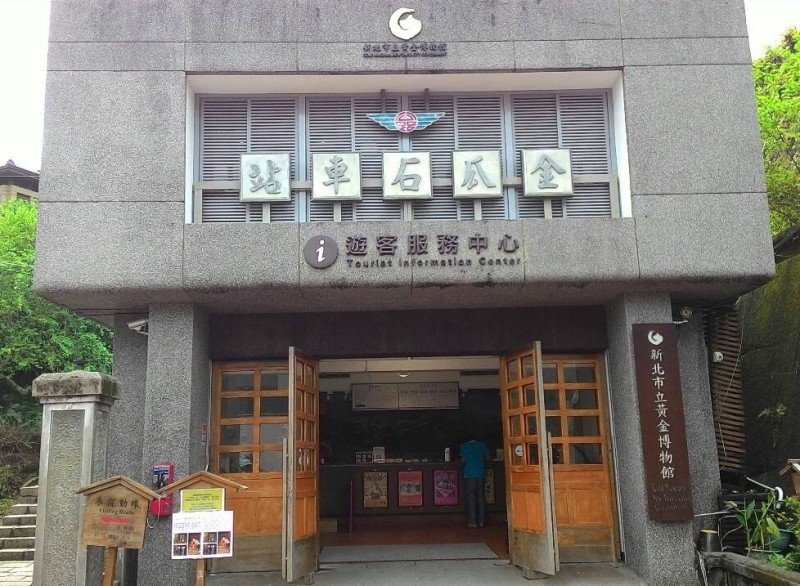
Tourist Information Center
The Tourist Information Center locates at the main entrance. It used to be the bus terminal of the Taiwan Motor Transport Co., Ltd. It provides tourist information, brochures and advisory services on the first floor. It is also the gathering place for museum tours. Baby sling carriers and wheel chairs are available for rental.
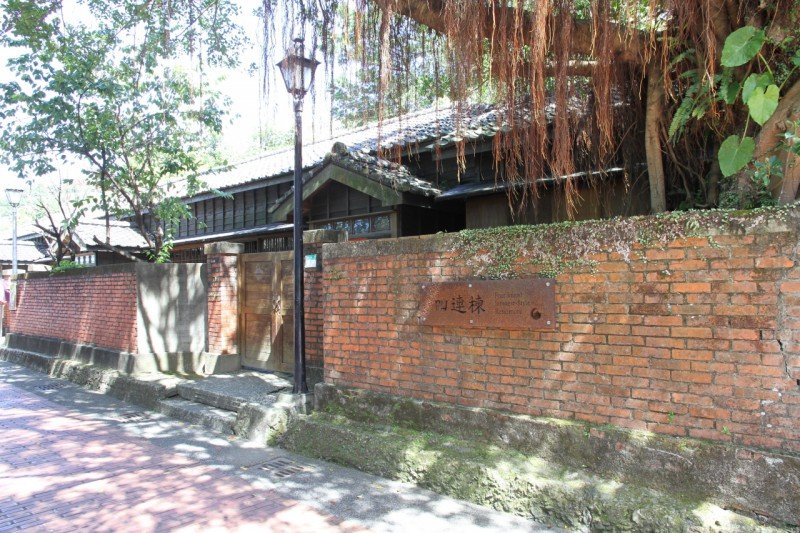
Four-Joined Japanese Style Residences
Jinguang Road that you are stepping on was the main communicating route for Jinguashi when gold-copper mining industry was in its heydays.
Walking on the bricked Jinguang Road, you will see the Four Joined Japanese-Style Residences on first sight. The Four Joined Japanese-Style Residences have been the well-preserved and intact Japanese dormitory in Jinguashi area. The Japanese dormitories in Jinguashi can be categorized based on the sizes and styles, roughly in four categories: single-family house, duplex, townhouse, and longhouse. The identity or position of the residence could be distinguished by which houses he or she stayed.
It is assumed that the Four Joined Japanese-Style Residences were built in 1930s by Japan Mining Company and provided to the Japanese staffs and their family. Currently what you have seen is four connected townhouses. Each of the houses has its own entrance, sitting room, living room, kitchen, bathroom, toilet and etc. Each house also owns a front yard and a back yard.
The Four Joined Japanese-Style Residences were built along with the slope land, with herringbone pattern base, the red-brick wall and black tiles for the roofs. The houses have become landscapes in the area.
The decorations inside the house have referred to the time when people lived in Japanese Occupations and in Taiwan Metal Mining Corp. So the visitors can image the living styles in two periods of times.
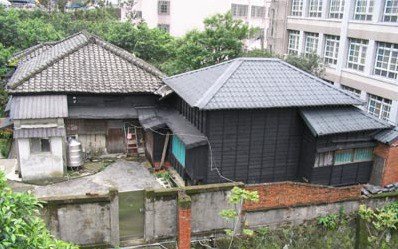
The Residence of Mike Kikujiro
The Japanese dormitories in Jinguashi are distinguished based on the sizes and styles. The identity or position of the residence in the company can be told according to which house he or she stayed. The largest building in Jinguashi is the Crown Prince Chalet. The second largest building is the residence of Mike Kikujiro.
The residence of Mike Kikujiro underneath of brick wall used to be the director dormitory of Japan Mining Company Mike Kikujiro was second director inversely. He was remembered by many people because he, as the director, donated to the local schools on behalf of the company in order to build school buildings.
The area of the Mike residence itself is spacious. In the past, the courtyard was wider and there was nothing blocked visually. The Mike residence has been assigned to be city-wide historical site in New Taipei City in 2015.
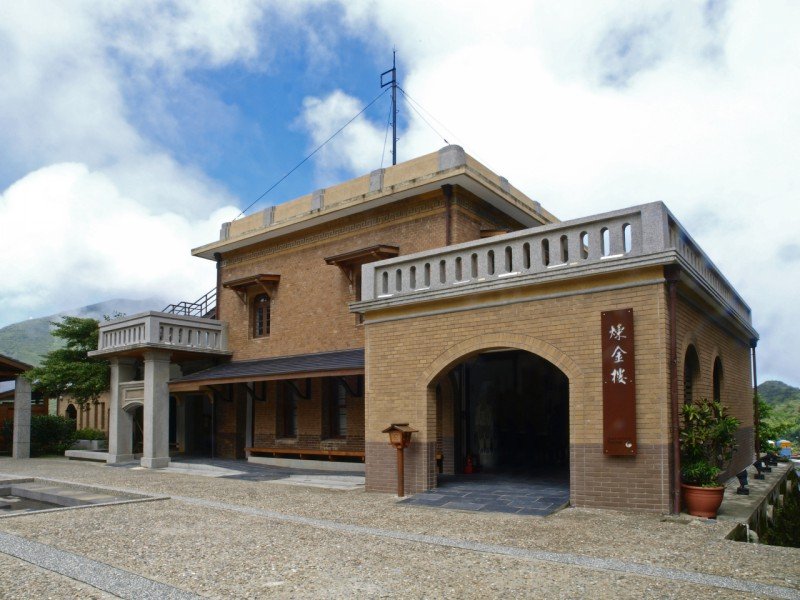
Gold Refining Building
The Gold Refining Building in Japanese Occupation is said to be the place to store gold. After World War II, Taiwan Metal Mining Corp was in the preparation period. The building was used as an alchemical factory. Later the refining factory was relocated to Shuinandong. The Gold refining building was then converted to other uses. This overall space is so-called “club” by the residents.
The shape of the Gold Refining Building was special and unique. It has a western-style appearance with carved railing and terrazzo decoration. It is quite different in the Japanese dormitories and Taiwan residence houses. Because the building was used to store gold then for alchemy purpose. After the establishment of the Gold Museum, it was renamed “Gold Refining Building.”
The main body of the building is a two-floor structure. The meaning of the decoration “GC” on the top of the wall is unclear. Some said that these two letters are the abbreviations for Gold and Copper. The wall of the building was collaged with thirteen-ditch tiles. Its unique style has made it special and the building is surrounded by wooden dormitories in Jinguashi.
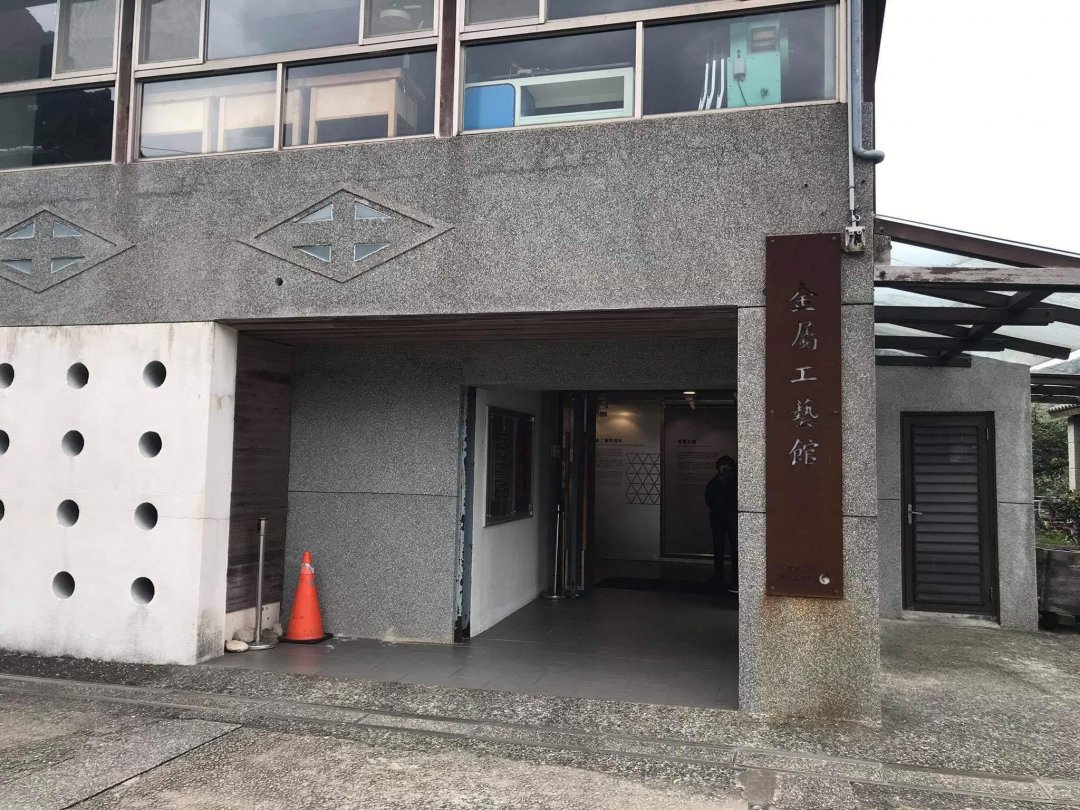
Metal Art Building
According to the recollections of the local elderly people, the predecessor of the Metal Art Building was the "No. 55, Jinguang Road" which was built around 1974. It was the club and the restaurant of the Taiwan Metal Mining Corporation. Later, a portion of the building’s first floor was converted into a restaurant while half of the space of its second floor was used as a library. It was the leisure and food center of the residents of Jinguashi during that time.
In the spirit of reusing old buildings, the Hall was renovated in 2009 and became a permanent exhibition hall. It was given the name, “Environmental Building” and showcased the cultural environment and natural ecology of Jinguashi.
In 2018, in response to the mission of the New Taipei City Government and the Museum to continuously promote Taiwan’s metal crafts, the Environmental Building had been adjusted to become the Metal Art Building. After revisions and updates, the original contents displayed in the Environmental Building will be incorporated into the permanent exhibits plan of Gold Building in 2019.
The exhibits found inside the Metal Art Building include the Museum’s classical collection of traditional gold ornaments and metal craft pieces, basic knowledge on metal craft, a profile of Taiwan’s gold and metal artists, among others. Through exhibits and their descriptions, as well as the use of digital technology and other interactive media, the public is able to further understand the aesthetics and creativity behind Taiwan’s metal crafts.
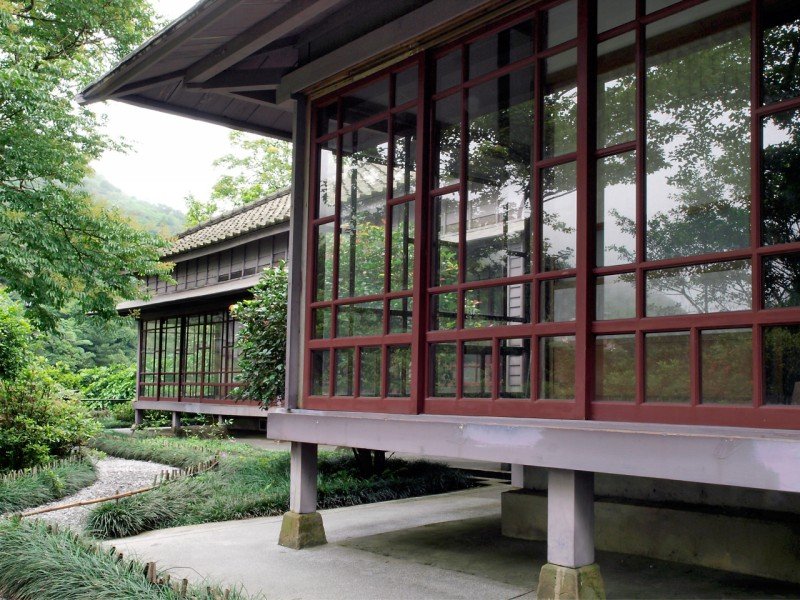
Jinguashi Crown Prince's Chalet
It was said that the Jinguashi Crown Prince Chalet was built by Tanaka Mining Co. in Japanese Occupation in anticipation of a trip for Japanese Crown Prince, later the Emperor Showa as a temporary travel lodge for inspection in Taiwan in 1923. Although Crown Prince did not visit the mine area, the folks still call the building Crown Prince Chalet.
The area of Crown Prince Chalet is 1,190 square meters and the housing floor space is about 468 square meters. There is a water pond in the courtyard with beautiful scenery. In the backyard, there were ruins of archery and mini golf course. The Crown Prince Chalet is a mix and eclectic architecture in between Japanese and Western styles. The surrounding trees have made the building private. The building itself is more like a Japanese style academic building but with western formation. It was the most modern Japanese-Western eclectic building during that time. When walking in the chalet, the visitors can experience the delicate aesthetics of Japanese space.
After World War II, the Crown Prince Chalet was transferred to and operated by Taiwan Gold and Copper Mining Bureau. The building was renamed as the First Guest House. Later the building was operated by Taiwan Power Company and renovated in 1995.
In March 2007, Jinguashi was designated as the city-wide historical site. The monuments include the building, walls, garden, area outside of the wall and etc. Only the outer garden is opened to public at present.
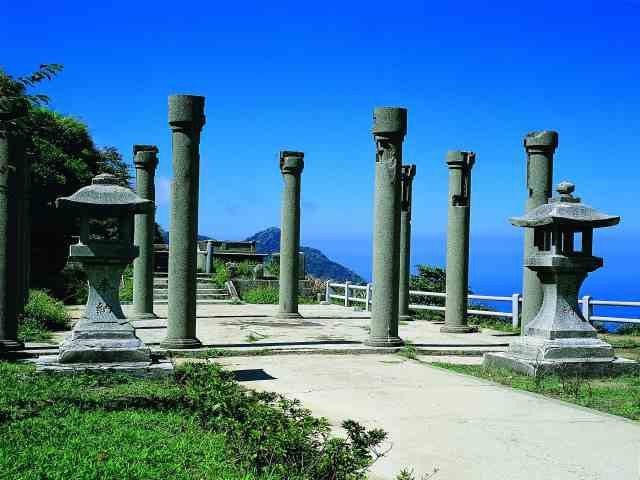
Jinguashi Shinto SHRINE
If you walk upward for 20-30 minutes, the ruins of Jinguashi Shinto Shrine would be found. Jinguashi Shinto Shrine was also named as Jinguashi Shrine, Yama Jinja, or the Ogon Shrine.
The Jinguashi Shinto Shrine was found in March 2, 1898. When the mining industry started in late 18 centuries, robbers infested frequently so the miners were troubled and uneasy. In order to comfort the miners’ minds, Chobe Tanaka, the leader of mining company decided to found a place for enshrining three gods in Shinto religion: Okuninushi no Mikoto, Sarutahiko no Mikoto and Kanayamahiko no Mikoto.
On April 8, 1936, Taiwan Mining Corp. paid to reconstruct the shrine, plant ornamentals and set resting places. The shrine was re-inaugurated on July 15, 1937.
On March 14, 2007, Jinguashi Shinto Shrine was designated as one of the city-wide historical sites in New Taipei City.
The original buildings of Jinguashi Shinto Shrine included a main hall, a worship hall, a water booth to wash hands before going into the temple, the stairs, three torii along the walk way, five stands for flags or banners, and a cupper bull statue. Unfortunately, most of the buildings of the Shrine were destroyed after the World War II. Two torii, couple of stone lanterns,stone pillars and base of the main hall were left.
If you get a chance to climb along the way to the Shrine, you will appreciate the beauty of the Keelung Mountain and Teapot Mountain. If you keep walking upward, you will meet the ruins of Benshan No.4 Tunnel and Geological Park.
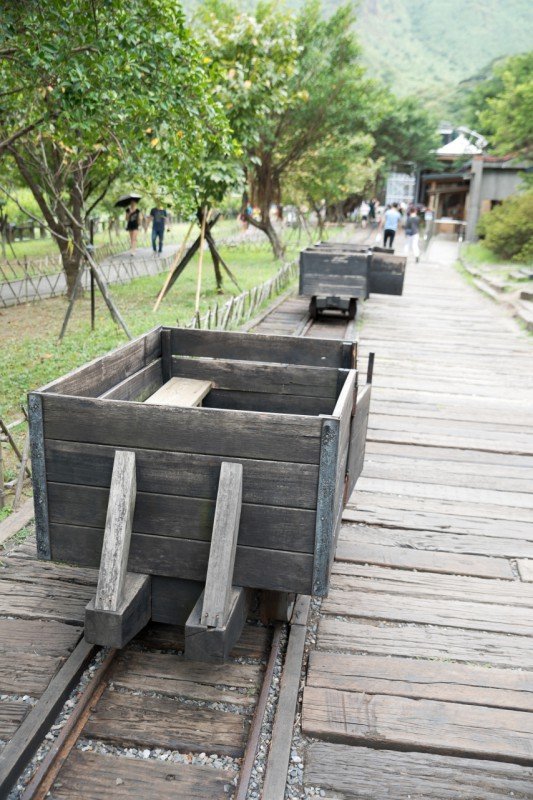
The Transportation System in Mining Industry
In order to transport ore and mining materials, there were many relics of ore tracks left in Jinguashi.
The miniature rail which we are standing now was used to transport the ore and mining materials and highly representative in transportation of mining industry.
The mining cart track for delivering ore starts from the entrance of Benshan No.5 Tunnel tills the Cyuanji Iron Bridge and the extended elongated roads. The track runs toward east and it will meet to the incline cable ways. When the track runs toward west, it would meet another miniature rail toward Jiufen. The ore was deliver from here to the processing plant in Shuinandong for selection and refine. The Gold Museum especially keeps the rail in order to let the visitors imagine the trajectory in old days.
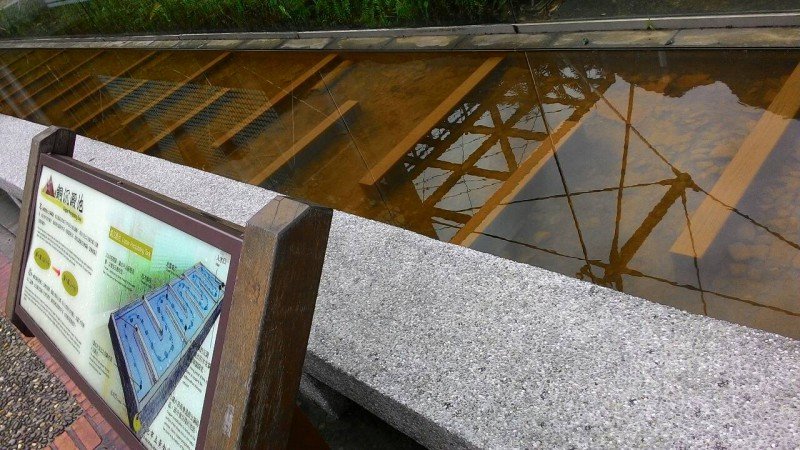
Copper Precipitating Tank
This is a smaller and simpler copy of copper precipitation tank.
In addition to gold production, copper was also produced in Jinguashi. Extracting and refining from enargite was one of the methods to produce copper in Jinguashi. Another method, collecting copper from mineral water was adopted in Jinguashi as well. A variety of water running underground and through all kinds of ores. The water dissolved the oxidized copper and made copper sulfate. When the water came out of mine tunnel, it is so-called “mineral water.” Those mineral water then pulled into a wooden container that fills with scrapped iron. The redox reactions were happened. The copper precipitation would attach on the surface of iron. If washing the surface of iron, the copper would be flowing into the tank. The miners drained and collected the copper precipitation mud once a month. The copper precipitation used to be shipped to Japan for further refining. The shipping was ended until Taiwan Metal Mining Corp. built a refining factory. The yield rate of copper precipitation runs up and down due to rainfall. The annual production rate of copper could be up to 600 tons.
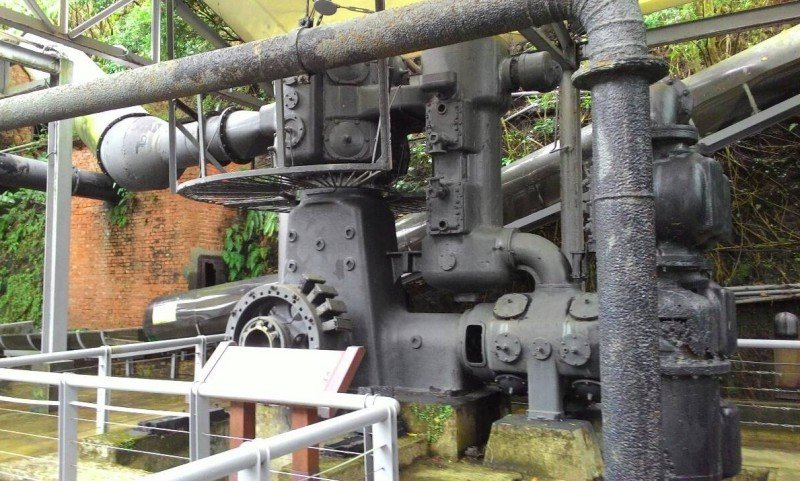
Air Compressor used in Tai-Metal Period
The two air compressors near the gate of Benshan No. 5 Tunnel were purchased during Taiwan Metal Mining Corp., with 500 and 600 horsepower respectively. They were used to pressurize the air and bring air flow into the main and branch tunnels in the mine tunnels. The air flow had to be strong enough to make the drills work so the exhaust gas could be swap out. Besides providing power to the drills, the air compressors bring air flow into the mine tunnels in Benshan No.4, 5, & 6. There would be enough oxygen in the mine tunnel and the air could be circulated. So the life safety of hard-working miners could be protected.
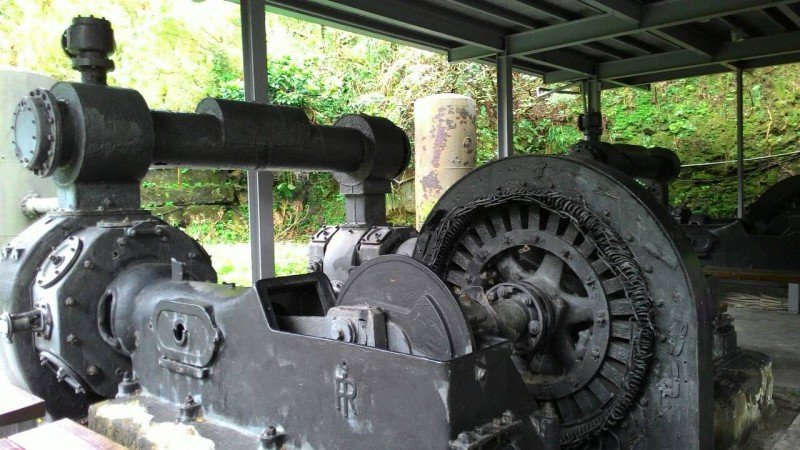
Air compressor used in the Japanese Occupation Period
The function of the air compressors is to pressurize the air and bring air flow into the main and branch tunnels in the mine tunnel. The air flow has to be strong enough to make the drills work. The air pressurized by the compressors will also bring air flow into the tunnels in mine tunnel No.4, 5, & 6.
The two air compressors were purchased during Japanese Occupation. Both machines were 400 horsepower. After years, the efficiency got worse and worse so the frequency of use was reduced.
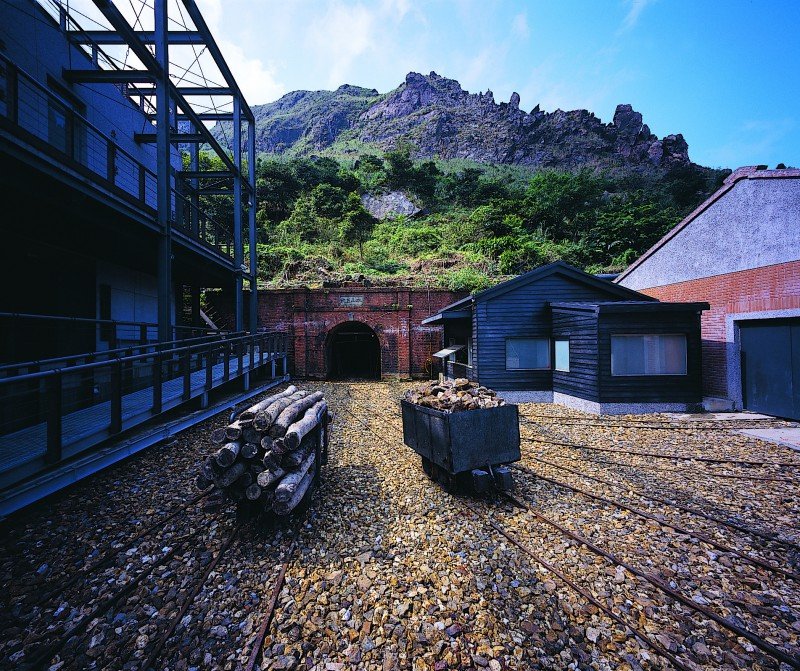
Benshan No. 5 Tunnel
The total area of Jinguashi mining area is less than five square kilometers. But the sum of the lengths of the tunnels is more than 600 kilometers, which is 1.5 times longer than the length of Taiwan. In order to let visitors experience the gold mining process for themselves, a new one of cerca 110 meters was dug from one of the old branches inside Benshan No. 5 Tunnel. A total length of 180 meters of these two tunnels was designed to the experience zone. The wax figures are placed in different part of the tunnels to simulate the mining process at that time. So the visitors would know more about how the miners work (such as digging and moving the ore out) in Jinguashi in old days.
In addition to let the visitors glimpse the working environment in mine tunnels, the visiting process adopts the idea in accordance with the standard process when the miners entered the mine tunnels: Enter the ready room and listen to safety notes. Then go to the mine tunnels and experience mining immersive. The visitors would be impressed and get to know about mining work.
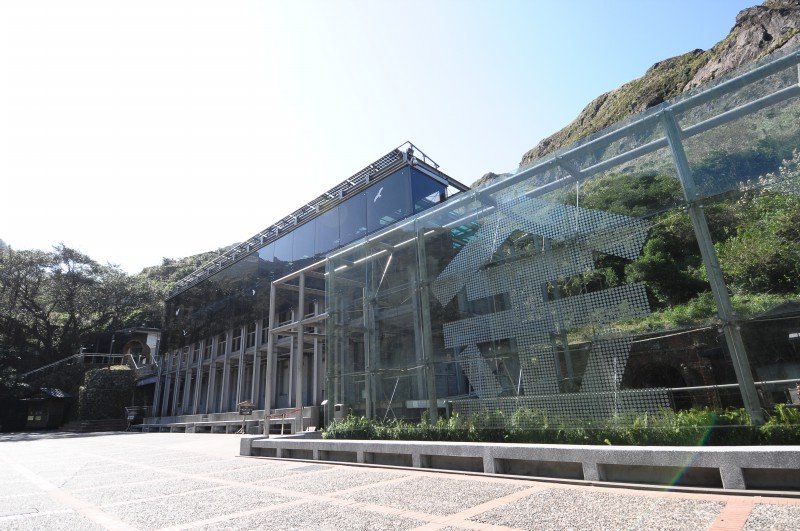
The Gold Building
The Gold Building used to be the mining office of Taiwan Metal Mining Corp. After the Gold Museum was founded. The building was renovated and converted to exhibition hall. Besides adding additional steels to reinforce the structure of the building, terrazzo and glass were chosen as wall exteriorly.
In the Gold Building, permanent exhibitions were presented to introduce the history of mining industry in Jinguashi, the old photos of mining life, the profiles of the mining tunnels, tools, literatures, personal belongs and heritages, models of private alchemy and etc.
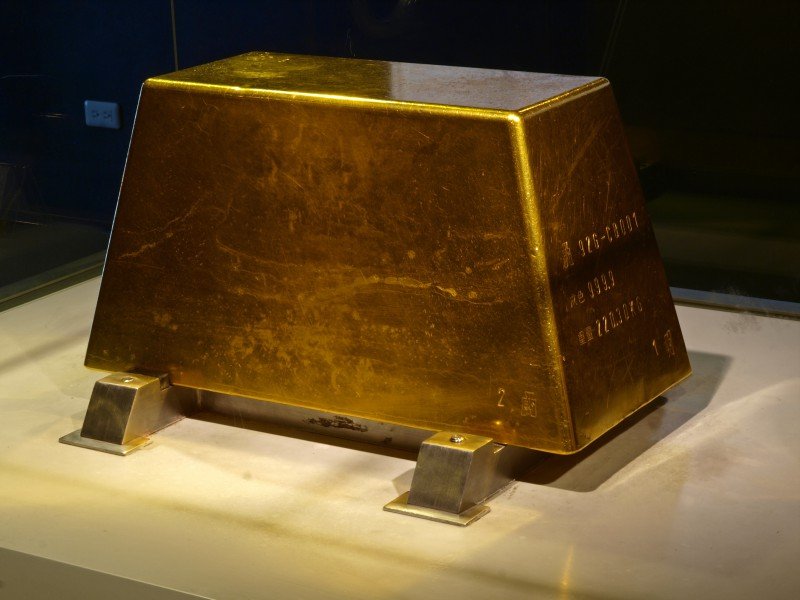
In addition, the topics of the exhibitions also cover the gold application in technology and life, and the characteristics of gold. There are also gold exhibitions and metal crafting that are rare to be seen. A 220-kg golden brick is presented for the visitors to take a close look.
Moreover, an experience area for gold panning locates on the third floor.
Introduction to the Exhibitions on second floor of Gold Building
The theme of exhibitions on the second floor of Gold Building is “Gold,” introducing from history, culture, art and science. The exhibitions contain rich and diverse information. The most eye-catching and famous one is the 220-kg 999 pure golden brick!! It is also the greatest treasure of the Gold Museum.
This golden brick which weighs about 220 kg has been recorded in the Guinness World Records as the largest gold bullion in the world in 2005. The gold-bearing ore has to go through various steps, crushing, grinding, heating until it is melting and refining repeatedly in order to make pure gold. That’s how treasure and precious the 220-kg is.
The golden brick was made from a hollowed stone mold which was use of special materials and shaped as a brick. The 220-kg melting gold by high temperature was pouring into the mold. The brick is beautiful because the gold is integrally formed with unprecedented technology.