Postal Museum(English)
Jan Du&Seals and Seal Clay&Pai Fu&Chinese Letters of Early Days
【Jan Du】
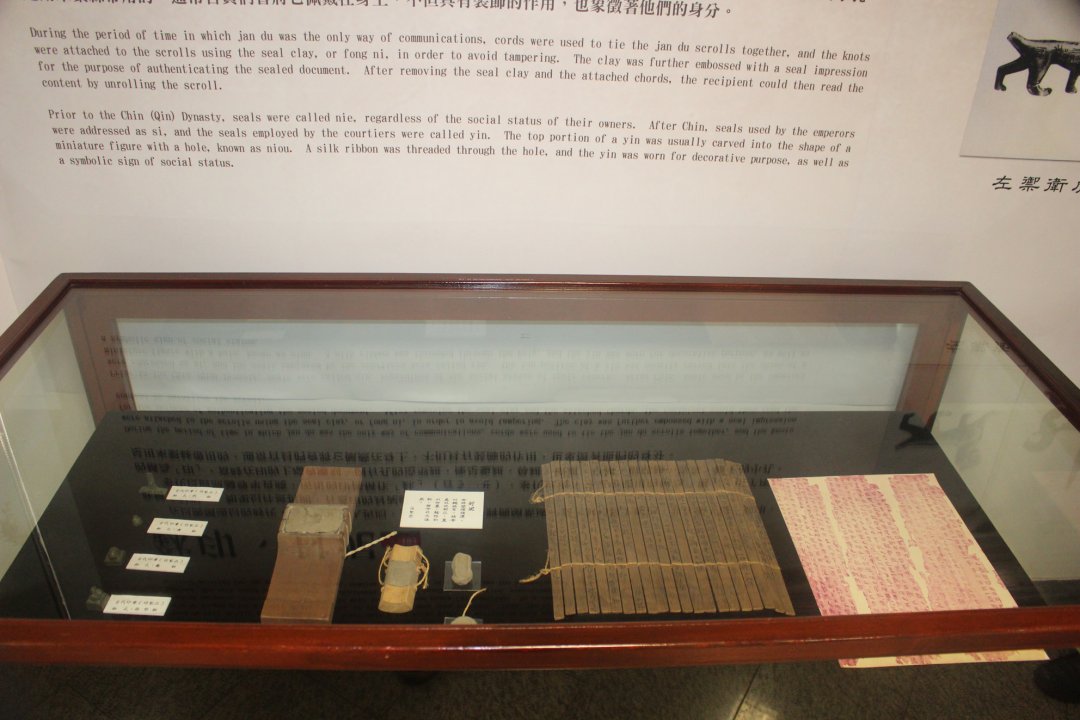
In modern times, paper is generally acknowledged as the universal material for writing and recording. Prior to the invention of papermaking technique by Cai Lun of the Eastern Han Dynasty, documents, or letters, were generally written on materials, such as bamboo, wood, silk, etc. Chinese characters written on bamboo strips were called jan, and du was named for the documents recorded on wood tablets. The bamboo jan and wood du were jointly referred as jan du. Since only a few words might be written on each wood tablet, or bamboo strip, a volume, or ce, could only be formed after a number of the tablets, or strips, had been sewn together. Then, the ce were rolled together into scrolls and unrolled for reading purposes. Nevertheless, the scrolls were too bulky and heavy for handling. As a result, the lightweight material of silk was adopted instead. The silk could be folded into any desirable forms and handled, or carried, conveniently. Hence, silk was once considered to be the most suitable material for the purposes of writing, reading and storage. Still, silk was too expensive and could only be afforded by the riches and nobles.
【Seals and Seal Clay】
During the period of time in which jan du was the only way of communications, cords were used to tie the jan du scrolls together, and the knots were attached to the scrolls using the seal clay, or fong ni, in order to avoid tampering. The clay was further embossed with a seal impression for the purpose of authenticating the sealed document. After removing the seal clay and the attached chords, the recipient could then read the content by unrolling the scroll.
Prior to the Chin (Qin) Dynasty, seals were called nie, regardless of the social status of their owners. After Chin, seals used by the emperors were addressed as si, and the seals employed by the courtiers were called yin. The top portion of a yin was usually carved into the shape of a miniature figure with a hole, known as niou. A silk ribbon was threaded through the hole, and the yin was worn for decorative purpose, as well as a symbolic sign of social status.
【Pai Fu】
The ancient Chinese courier system was operated by the central government and was employed exclusively for conveying political and military documents. As the documents forwarded by the couriers were of significant importance, they had to be accompanied by official warrants, or fu hsin. Fu hsin were issued to request the post stations, or i chan, en route for implementing couriers, or horses.
The fu hsin issued to the couriers were also known as pai fu. These pai fu were called differently and applied to different situations in different dynasties. For example, in the Han Dynasty, pai fu were divided into two categories: syu were used as the travelling passes at the military outposts, and mu chuan hsin were warrants issued to request for horses at the i chan. Chuan fu and yi cyuan were the names used in Tang. In the Sung Dynasty, the pa fu were also addressed as si pai. In Ming, fu yan were adopted. In addition, kan he and huo pai were the types of pai fu used in both the Ming and Ching (Qing) Dynasties.
The pictures of some ancient pai fu, or fu hsin, are shown in the display case. Yu fu and guei fu, which might be known as the fish and turtle tallies, respectively, were the identity proofs of government officials. Hu fu, or tiger tallies, were used as the orders for military movements.
【Chinese Letters of Early Days】
In ancient Chinese wording, letters were sometimes referred to as chih su. It was described in a Chinese musical poem written in the Wei Dynasty (220~265 A.D.,) titled “Horses drinking spring water from a hole by the Great Wall,” that
A guest came from a distant place,
gave me a gift of two carps.
My son was called to cook the carps,
a chih su was found in the fish.
In this sentence, chih su was regarded as a letter written on a piece of silk. Silk was lightweight and soft, but tough. Therefore, the written piece could be rolled into a scroll. The sender’s name was usually signed on the joint, and the sealed scroll, also known as jyuan du, was sent without a protective cover.
In fact, ancient Chinese letters were usually dispatched with covers in order to protect the secrecy of the written content. A few protective covers, made in different styles and used at the beginning of last century, are presented in this exhibit.
Nowadays, urgent mail matters may be sent by means of speedpost, or express, in order to be received within a short period of time. In the early days, similar services were offered, but fashioned in much more interesting ways. As an indication of urgency, a corner of the letter would have to be burned. This was simply known as the “burnt corner letter.” Also, if a letter required prompt delivery, this could be signified by affixing a feather to one of the corners, as in the case of “feather mail.” Seemingly, a feather might mean “delivered at flying speed.” Isn’t that interesting?
Some envelopes were stamped with the instructional markings of “Wine Money as Usual.” This meant the recipient should reward the letter courier with tip for the service. The words of “Wine Money” were used, instead of “Labor Cost,” representing a Chinese traditional and polite way of asking for money.
Wooden Identity Badge of Ching (Qing) Dynasty&Pillar Boxes of Chinese Imperial Post
【Wooden Identity Badge of Ching (Qing) Dynasty】
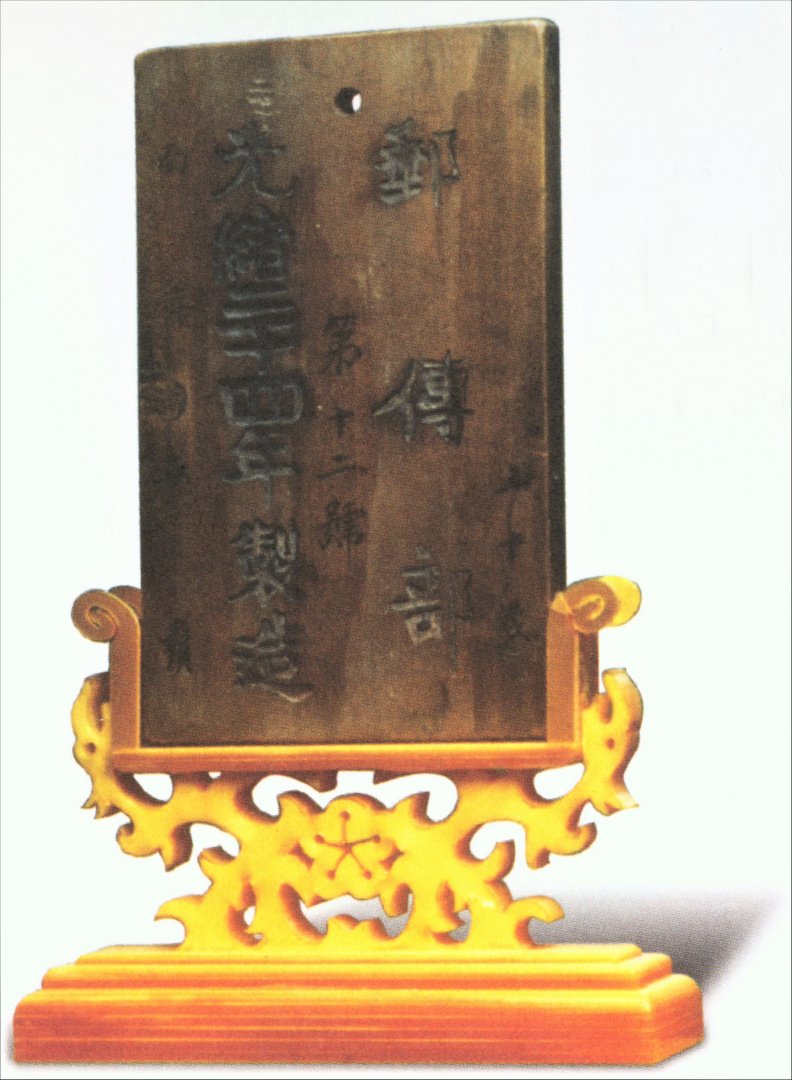
This aged wood tablet, which does not seem to worth much, was the badge issued for a courier by the Bureau of Civil Affairs of the Ching (Qing) Dynasty in 1908. This piece was assigned with a serial number of 12 and branded with Chinese seal-type characters. Additionally, information concerning the name, age and special facial features of the courier was properly written on the badge. The courier had to show the badge, as the practical application of today’s identity card, for boarding, as well as for passing at the official checkpoints. Some of the Chinese characters written on this antique badge had faded over time and were not easily readable. However, the calligraphic words, such as “thirty year old” and “sickly appearance without beard,” could still be identified. Based on the information given, can you image just how the courier should look like?
【Pillar Boxes of Chinese Imperial Post】
The very first pillar boxes used by the Chinese Imperial Post were installed in 1906. The cylindrical pillar box was topped with a bowl-like cover which was decorated with an elegant pattern of two dragons playing with the shining pearl and four Chinese characters representing the Chinese Imperial Post. The exhibited pillar box is an imitation of its Imperial version and consists of two sections. The upper part is the pillar box itself and was made of iron sheet, rolled into the shape of a cylinder. The lower portion is the cylindrical solid wood stand. A mail bag is hanged inside the hollow pillar. Hence, letters are dropped directly into the mail bag, and then the postman is able to collect them easily by removing the mail bag from the pillar box.
Huo Piao and Pai Dan&The Min Hsin Chu
【Huo Piao and Pai Dan】
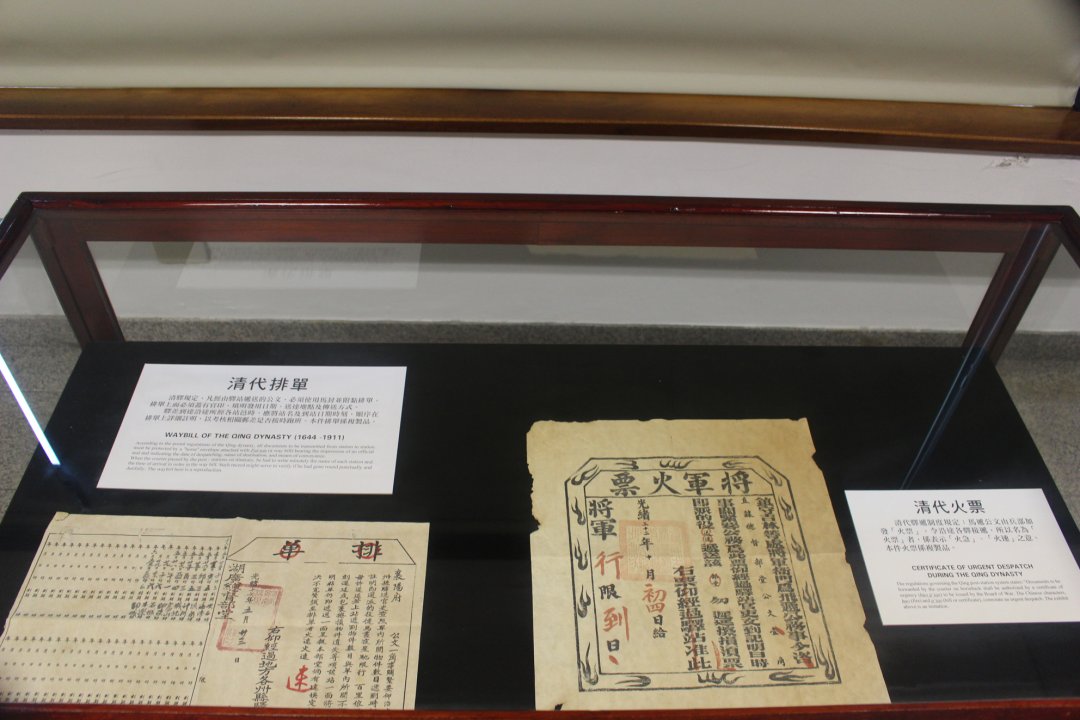
In the Ching (Qing) Dynasty, horses were only arranged for transporting documents of extreme urgency, and this was called the “delivery by horse,” or ma di. For the same reason, an express warrant, or huo piao, issued by the Ministry of Military Affairs, was used as an indication of urgency and also as an order addressed to the officials of i chan en route for providing couriers and horses, without the distinction of day, or night. The Chinese character of huo means fire. Therefore, the accompaniment of huo piao also implied the document should be delivered at fire speed.
As one of the regulations issued in Ching, documents dispatched using the courier service provided by i chan had to be placed inside the officially inscribed envelopes, or ma fong, as well as accompanied by the waybills, or pai dan. The pai dan was impressed with the proper official seal, on which information, such as the issued date, destination, type of delivery, etc., was registered. Additionally, the exact dates and times that the document arrived at each station had to be recorded in sequential order. Any abnormality, like carrying delay, possible tampering, etc., observed by the i chan officials would be reported.
【The Min Hsin Chu】
In a poem written by Du Fu, the famous Chinese poet of Tang Dynasty, it was described as
During three months of war,
a letter from home was worth ten thousand taels of gold.
This meant a letter from home was absolutely invaluable during the prolonged period of warfare. The implication also pointed to the fact that mail transportation was very inconvenient and inefficient at the time and was even worst during the war. The ancient Chinese i chan, or post stations, were set up exclusively for transporting official mail matters. Private letters could only be entrusted to messengers for delivery en route. As some professional legal secretaries from Shaohsingfu, Chekiang, always traveled around China with their masters, they occasionally took the job as part-time messengers. This activity gradually evolved to become a private courier system. There was no record of min hsin chu, or private letter agencies, prior to the reign of Emperor Yung Lo of the Ming Dynasty(1368-1644 AD). Oddly enough, Shaohsingfu was later destined to become the headquarters for the nationwide min hsin chu courier system.
The min hsin chu were usually owned and operated solely, or jointly, by responsible and reputable merchants. Posted items were delivered by foot couriers overland, or carried by trading vessels on water. Subsequently, private enterprises specialized in the transportations of mail matters by ships were founded and known as the steamer hsin chu, or steamer letter agencies. The mail transportation process had since been improved by the employment of small steamers. Besides the conveyance of letters which included the burnt corner and feather ones, bulk mail, registered letters, etc., the min hsin chu also involved in the handlings newspapers and remittances.
By 1894, the prosperity of min hsin chu had reached its zenith. After the inauguration of Chinese Imperial Post in 1897, they were still allowed to continue because the livelihood of a well-size population was heavily dependent on the well being of this traditional business activity. Nevertheless, the final suppression for min hsin chu came in 1934. The photos of min hsin chu covers and their related markings are exhibited in this section.
Modernized Postal System Introduced by Liu Ming Chuan&The “Dragon and Horse” Stamps
【Modernized Postal System Introduced by Liu Ming Chuan】
In 1888, Liu Ming Chuan, the Governor of Taiwan, issued 16 regulations as the guidelines for establishing a new postal system. The Directorate General of the Taiwan Post was set up in Taipei, and the Taiwan Post was responsible for tasks, such as stamp issuances, mail collection and delivery, etc. The new system introduced had been considered as the pioneer in the modernization of Chinese postal service and had also been exercised for 8 years before the founding of Chinese Imperial Post.
The administrative entity of in Governor Liu’s postal system was the Directorate General of the Taiwan Post. At the same time, two main post stations were installed in Taipei and Tainan, respectively, which also acted as the mail exchange offices for items transported between Taiwan and China.
Additional post stations were set up along the main roadway between the two main stations. The main stations might also be regarded as the regular post stations. Basically, similar services were carried out by the post stations, except for handling the mail exchange. Furthermore, a sub-station was operated in the middle of two post stations and was only responsible for the collection and delivery of mail. Then, there were the side stations sited by the branch roadways. Both the post stations and side post stations functioned similarly, and the side post stations only transported mail to and from the post stations. Consequently, all these stations formed a closely knitted mail transportation network.
【The “Dragon and Horse” Stamps】
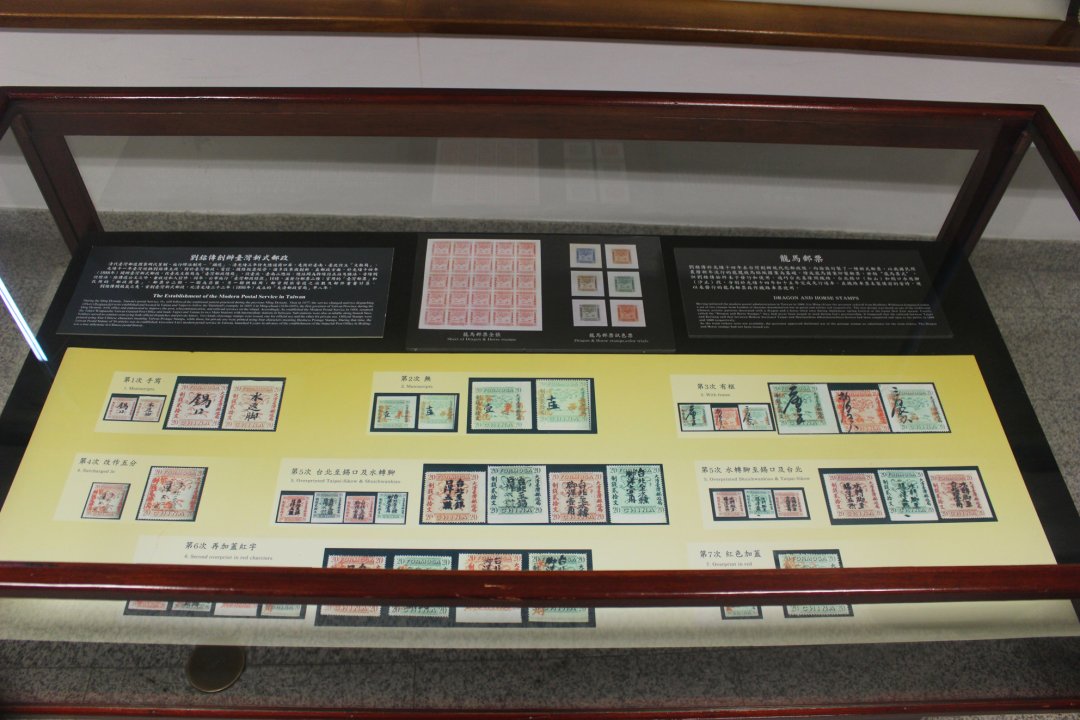
After Taiwan Governor Liu Ming Chuan had installed the new postal system, chan stamps were issued, but were coarsely printed in larger than usual formats with wood dies using solely black ink. In order to improve the quality of the stamps issued, the Governor finally decided to employ Bradbury, Wilkinson & Co. of London, through the help of the British Consul, for printing the new issue. Consequently, a set of two stamps were printed with a central pattern of dragon and horse, thus so-called the “Dragon and Horse” stamps. Actually, the design was based on the popular folk symbol, illustrating Chinese auspicious creatures, like dragon, phoenix and horse, often printed on decorative stickers used during the celebration of Chinese New Year.
Ironically, these finely printed stamps had never been officially issued and used as postages. Coincidentally, the railroads connecting Taipei and Sikow (today’s Sungshan, Taipei,) as well as connecting Sikow and Shuifanchiao (today’s Hsichih of Taipeishien,) were completed in 1888 and 1889, respectively, and were way ahead of the schedules, hence the tickets were unable to be printed in time. The “Dragon and Horse” stamps, however, were overprinted and temporarily used as the train tickets, instead. These London printed stamps were indeed used, but certainly not for the designated purpose.
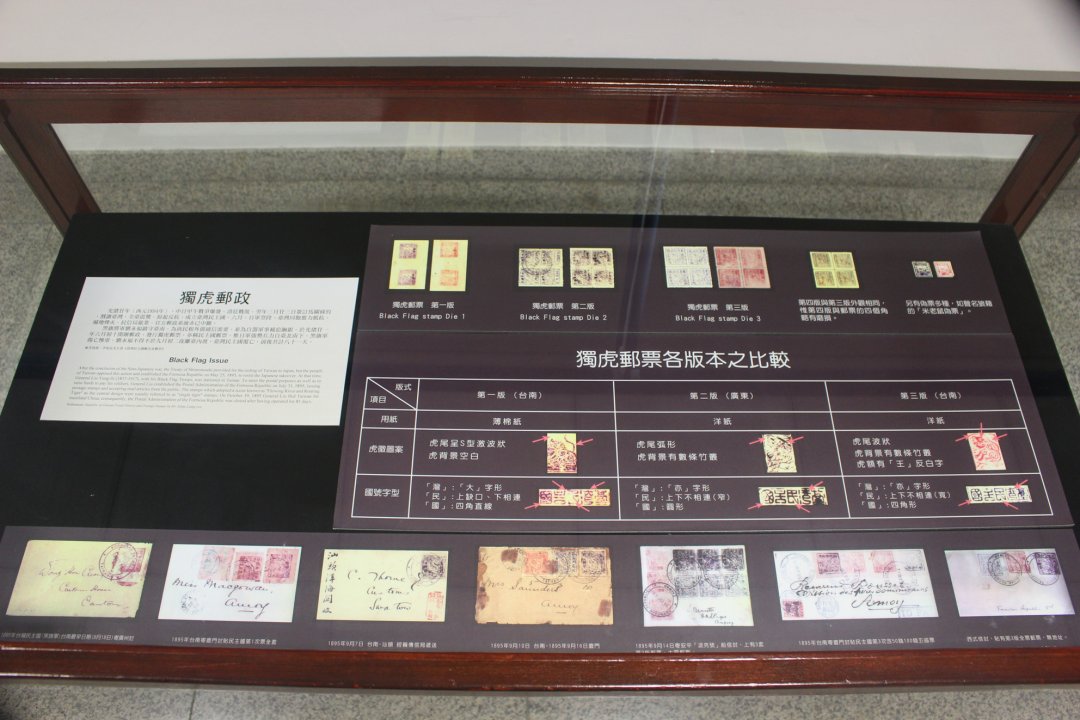
The “Black Flag” Post
The Sino-Japanese War began in July 1894. Unfortunately, the Imperial China was defeated and, as a result, was forced to sign the infamous Shimonoseki Treaty in April 1895. Under the terms of the Treaty, the Imperial China had to cede the Islands of Taiwan and Penghu to Japan. When the Japanese troops arrived at Taiwan, the militia fought fiercely to defend Taiwanese sovereignty. The upheavals were all over the Island so that the letter couriers, or min hsin chu, and official postal services stopped operating. At the time, the “Black Flag” General Liu Yung Fu was stationing in Tainan. In order to restore the postal services for the local business communities and foreigners and, more so, to raise funds for military purposes, Liu Yung Fu adopted the suggestion, as proposed by C.A. McCallum, a British customs officer at Anping, of stamp issuances for the Republic of Taiwan. As the Republican flag was represented by an oil-painted canvas with a yellow tiger on blue background, a single tiger was, therefore, used as the central figure for the “Black Flag” issue. The “Black Flag” stamps, or the stamps of the “Republic of Taiwan,” were released in June 1895. These stamps have also been known as the “Single Tiger” stamps in Chinese philately.
The “Black Flag” troops carried out strong resistances against the Japanese invaders, but still suffered immense losses. Finally, Liu Yung Fu fled for China in September, 1895. This basically applied a full stop to the “Black Flag” Post which only lasted for 81 days after its establishment.
This exhibit presents only the pictorial replicas of the genuine stamps and covers which are treasured by the Museum. This is due to the unfortunate fact that the “Black Flag” stamps were printed on paper of great fragility and with inks which fade easily when exposed to light.
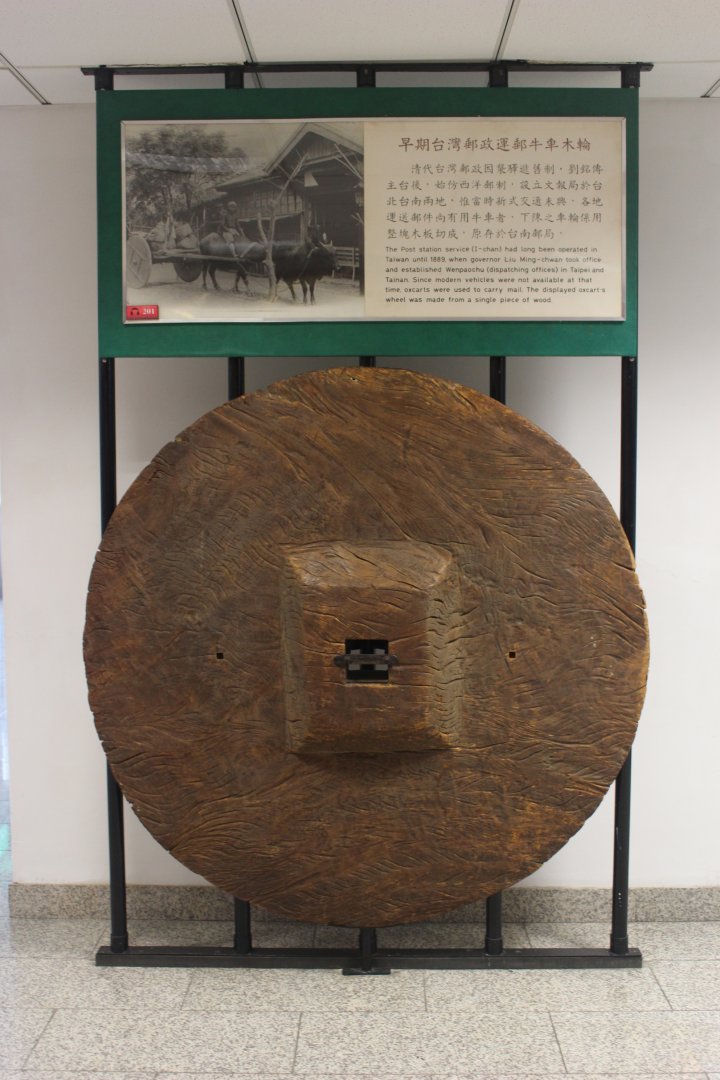
The Wheel of a Postal Ox-Wagon
In the early days, transportation vehicles, like motorcycles, cars, etc., were quite unusual. The two-wheel carts, or four-wheel wagons, pulled by one, or two, draught animals were generally employed. Horses were normally used in the northern provinces of China, and oxen were usually employed in the south as the draught animals. The ox-wagons were common street scenes in Taiwan some fifty years back. Therefore, it was not unusual that the ox-wagons were occasionally used by the Post Office for transporting mail matters. The wheel displayed, belonged to a postal ox- wagon, was made of a single large piece of wood and was kept in the Tainan Post Office originally.
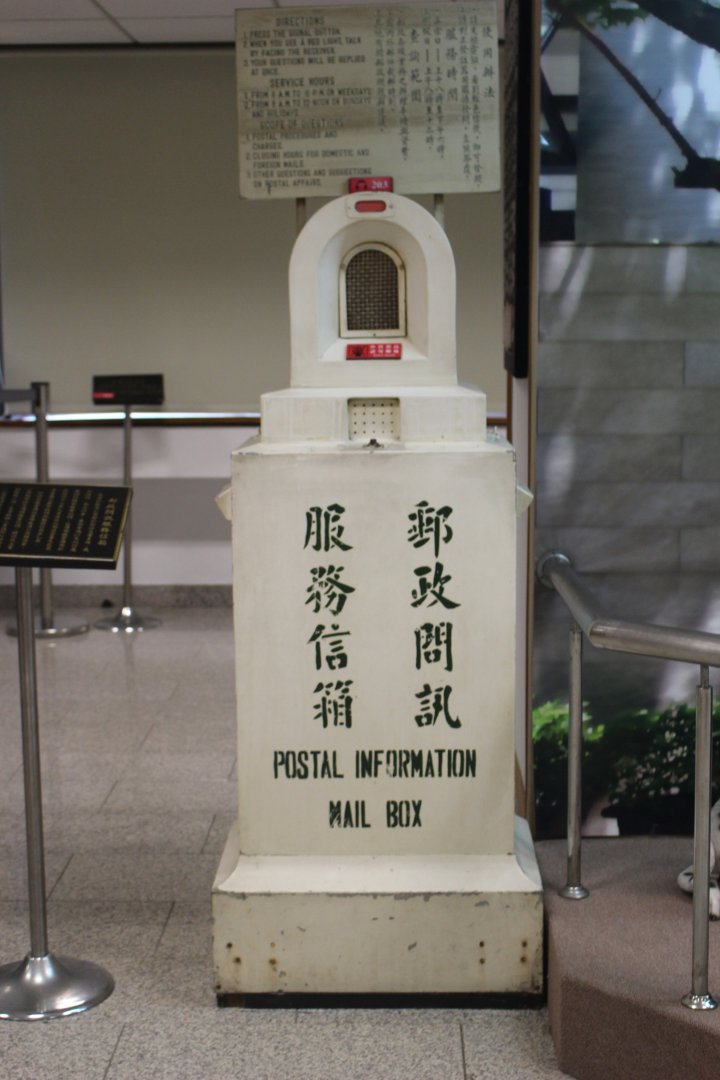
Postal Information Service Mail Box
In order to instantly answer questions raised by the customers, with regard to the postal services, the Taiwan Postal Administrative Office, the forerunner of the Post Office, installed the so-called “Postal Information Service Mail Box” in the business area, as well as in the parcel service area, of the Taipei Post Office, respectively. The “mail box” was actually an intercom linked directly to the Department of Public Relation. By pressing the button on the mail box, the staff would be speaking, usually in a pleasant tone, from the other end and ready to answer any questions related to the postal services, or to accept any meaningful suggestions for future improvements. By adopting the progressive measurement as such, the Post Office has been enabling its customers to feel more comfortably and conveniently in using the services offered.
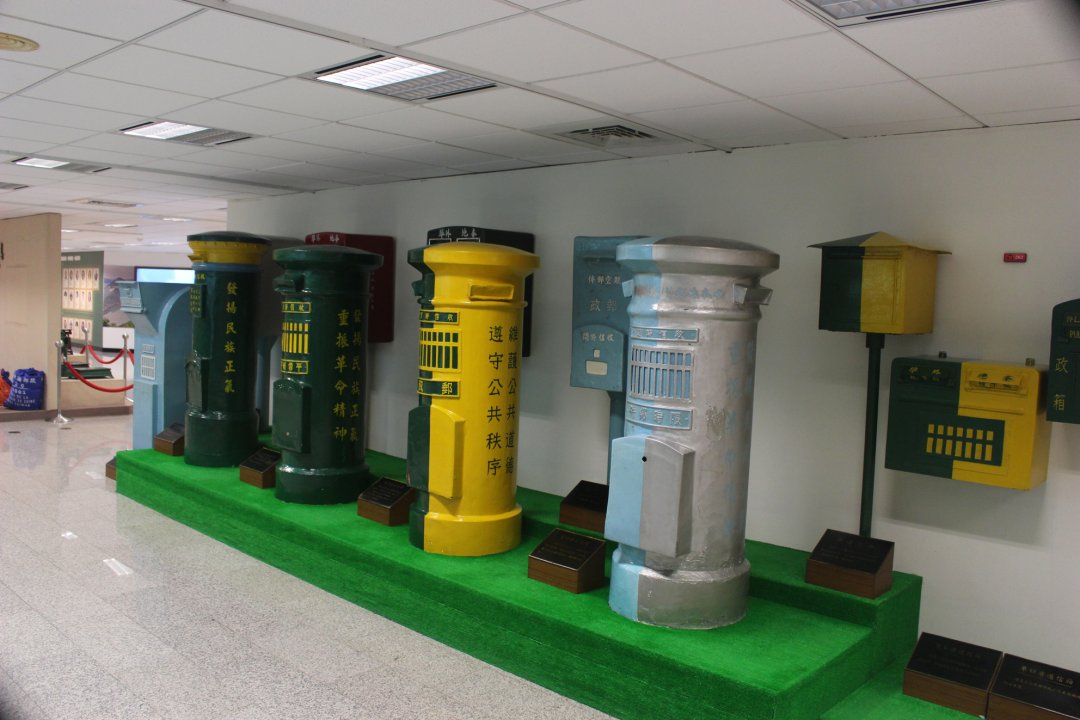
Various Chinese Letter and Pillar Boxes
In Taiwan, the pillar boxes have been erected by the main streets, as well as by the small alleys alike. Regardless of the weather conditions, these pillar boxes always stand silently to protect the letters kept inside their hollow bodies. Without doubts, the pillar boxes are the “guardians” of the posted mail. Therefore, the Post Office has always been paying much attention to the durability of the material used to fabricate the pillar boxes, and their colors and styles have continuously been studied and improved.
Before China was overrun by the communist regime, the pillar boxes installed were in cylindrical shape and painted in green. After the retrocession of Taiwan, the pillar boxes erected in Taiwan were of different styles. A variety of letter and pillar boxes are displayed in this exhibition, which may bring back the old memories from some of you.
Let’s check out the pillar boxes used for regular and express mails. In 1956, these boxes were made of cast iron in a cylindrical shape. By 1973 and ’74, the boxes, in the shape of square column, were made of glass fibers. As the tops of these pillar boxes were painted in yellow, thus so-called the “yellow-cap pillars.” In 1947, pillar boxes designated for accepting urgent mail were set up in some major cities. The “surface parcel” pillar boxes were designed with a relatively larger capacity, but were rarely seen. They were installed specifically for handling surface parcels in 1958 and were abandoned due to the termination of the service.
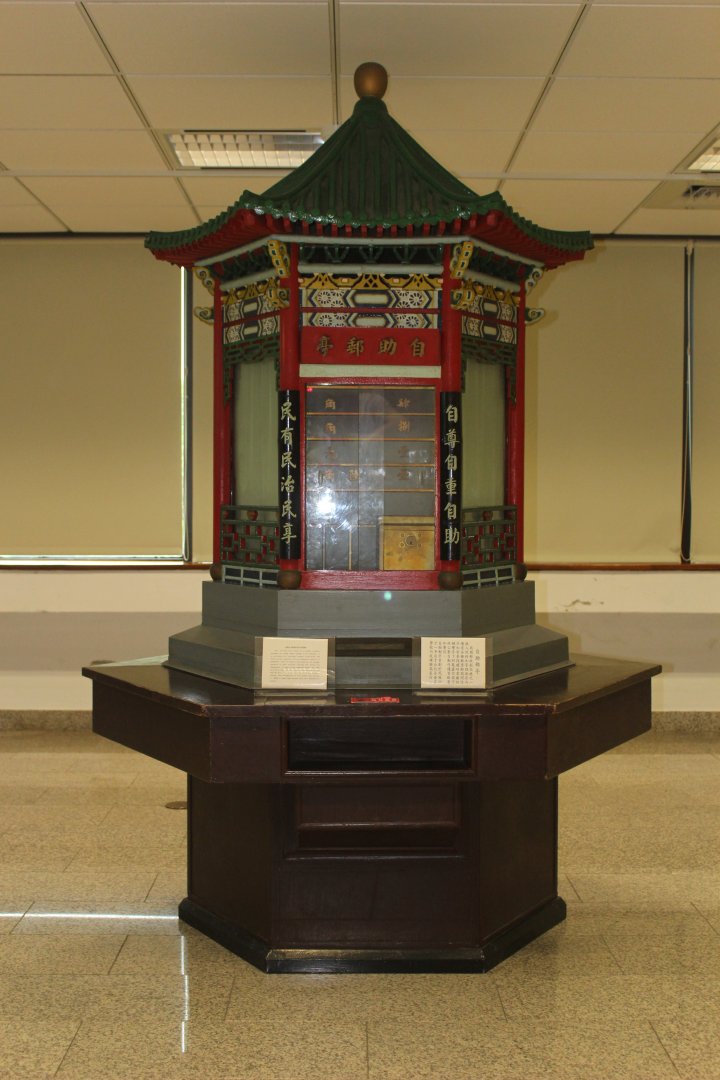
Self-Service Postal Kiosk
This archaic kiosk is the “self-service postal kiosk.” The self-service kiosk was furnished with stamps of different denominations and coins of different values. Basically, the sender picked up stamps of the needed values, paid the appropriate amount, received the proper change, if necessary, and, finally, dropped the letters into the mailbox beneath. The staffs of the nearby post office would replenish the kiosk with stamps and coins, as well as collect the mail, daily. These unsupervised self-service postal kiosks were operated based on the senses of honesty and morality of people, thus called the “Conscience Post Offices.”
In 1952, the Post Office set up the first self-service postal kiosk in the campus of the National Taiwan University. Subsequently, two more kiosks were installed at the Provincial Taiwan Teachers College and the Taipei Women Teachers School, respectively. These kiosks were later replaced by branch post offices, or agencies. By May, 1967, the last of these three kiosks was finally removed from the campus.
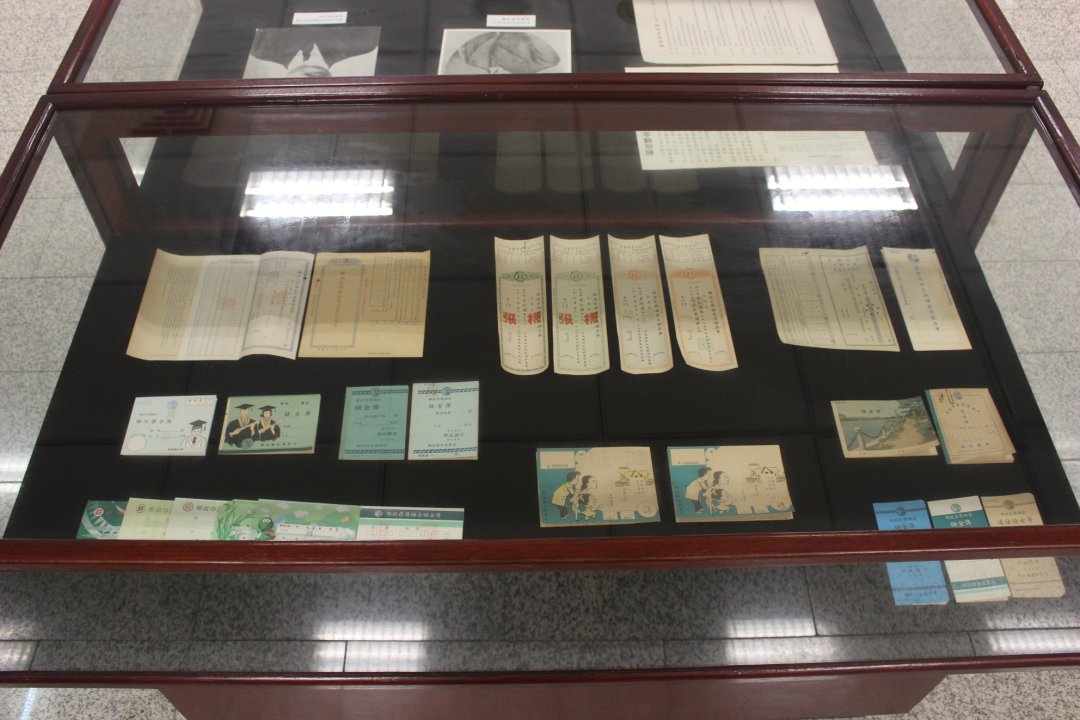
Postal Savings
The scheme of postal savings was officially established in 1919. At the beginning, only passbook savings were exercised. To make small, but not too small, deposits possible and easier, the Post Office issued savings stamps in denominations of 5 and 10 cents. The customers were encouraged to buy and accumulate these saving stamps. After having reached to the minimum amount of 1 silver dollar, they might bring the stamps back to the post offices and make the deposits in their passbooks, or accounts.
The Directorate General of the Postal Remittances and Savings Bank was founded in 1930 and provided services in both postal check and fixed savings. Additionally, postal giro saving was in preparatory. In 1931, the regulations applied to postal savings were issued and officially stipulated the postal savings should be divided into four categories, namely passbook savings, check savings, fixed savings and postal giro savings, and the issuances of savings stamps should still continue. As checks were issued for the postal giro accounts, check savings were finally terminated by 1963. By January, 1966, the Post Office stopped selling savings stamps altogether. Presently, the postal saving services offered by the Chunghwa Post Co., Ltd. are postal passbook, postal fixed and postal giro savings.
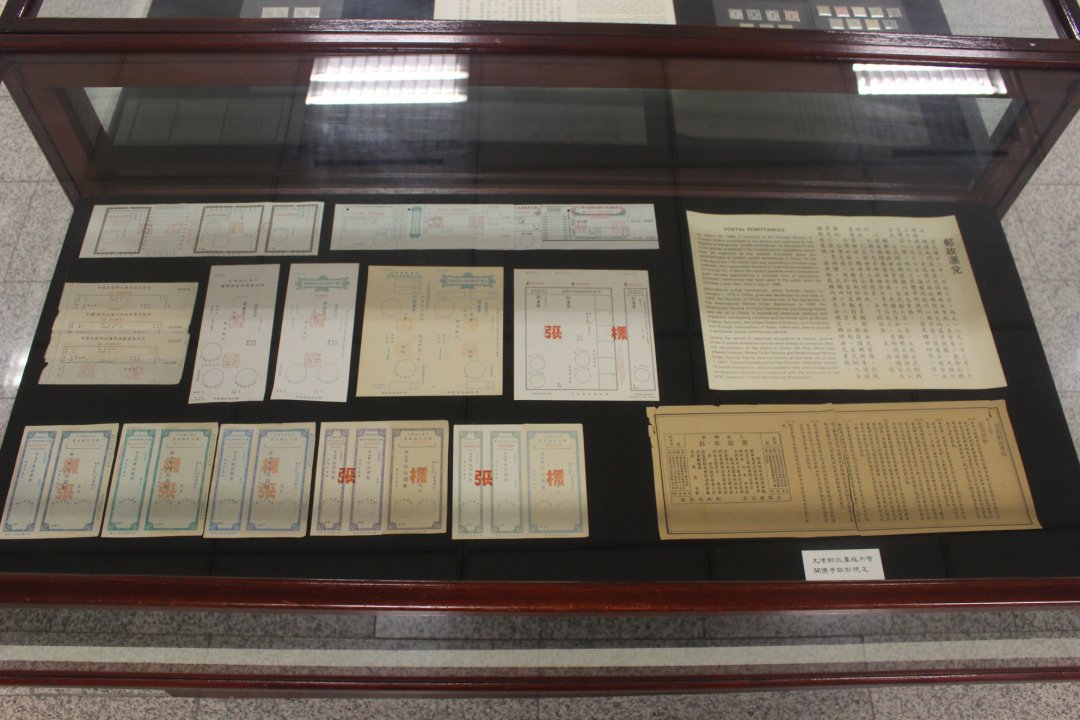
Postal Remittances and Stamp - like Labels For Remittances
The service of domestic remittances was formally operated on January 1, 1898, and the service for international remittances did not begin until January 1, 1918. In 1920, China became the member nation of the International Convention of Remittances Exchange. After the founding of the Directorate General of the Postal Remittances and Savings Bank in 1930, international remittances might be made to a number of principal countries, and, moreover, remittances might also be transferred through the post offices of countries, such as Great Britain, United States of America, France, Germany, Hong Kong, etc., to other countries throughout the world.
A variety of remittance services were exercised in Taiwan under the Japanese occupation. After the retrocession of Taiwan, the Post Office only offered two types of remittances, namely ordinary and petty amount remittances. Since June 1, 1947, the remittance services have been handled by the National Remittance System of the Post.
Since the post offices are set up nationwide, the remittance issuances and their subsequent payments must be closely monitored and controlled, as well as be easily identified, otherwise frauds may be resulted. At the beginning of its operation, the remittance certificates were affixed with postage stamps of the total values needed to be remitted. In 1925, the post offices were often the targets of armed robbery, due to social turbulences. In order to avoid the use of robbed stamps on remittances, Stamp-like labels for remittances were released. The “tear-off type” remittance certificates were also introduced in 1962. By August 16, 1966, the remittance certificates and labels were abolished, and only the “tear-off type” remittance certificates were allowed.
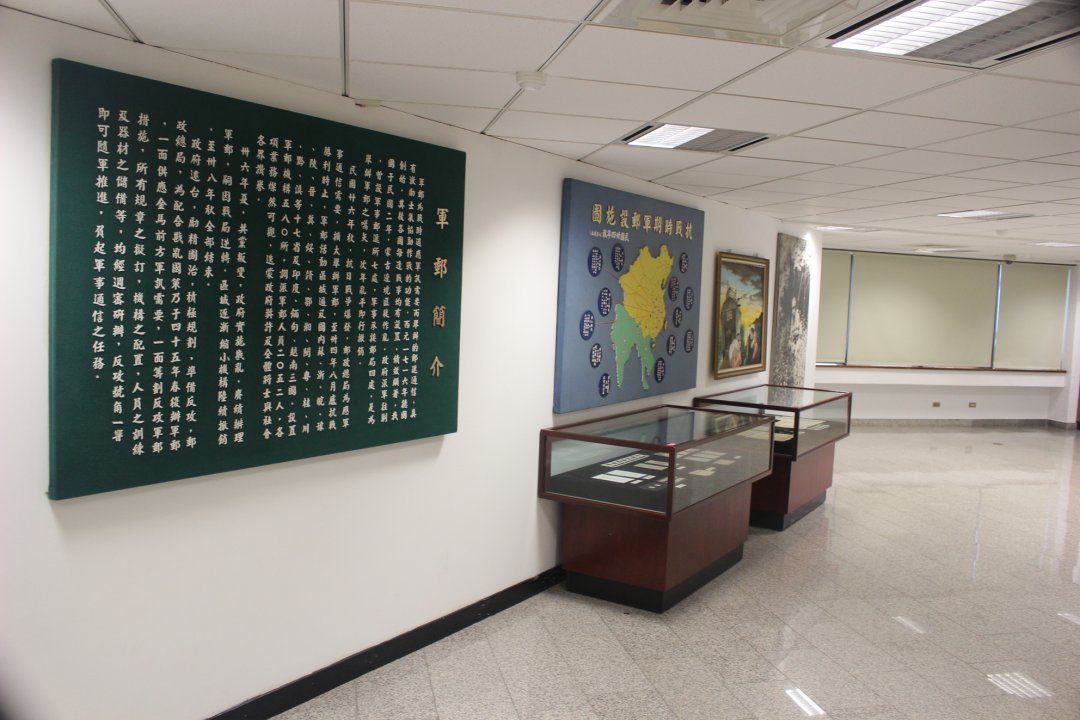
Military Post
The military post was set up in order to fulfill the needs of transporting urgent and important military documents during wars and, at the same time, to boost the morale of the military servicemen. As early as 1716, Germany had pioneered in the establishment of military mail service, known as the Field post. Since then, the different forms military post had been adopted by almost every country when engaged in wars.
The first military post installed in China was in 1913, as the Republican expeditionary forces were sent to suppress the large-scale armed uprisings at the Mongolian border. As the national liberation movement of Inner Mongolia was finally under control in 1914, the military post was withdrawn shortly after. In 1937, the outburst of the Second Sino-Japanese war on the Chinese soil led to the expansion of military post. Nevertheless, the service terminated with the surrender of Japan in August, 1945. In 1947, China’s full-scale civil war resumed between the communist liberation army and the nationalist troops, hence, the needs for military post service continued. During these years of hostilities, the nationalist government lost most of its controlled area, resulting in the continuous reduction in the number of military post offices. By the autumn of 1949, the nationalist military post diminished completely after the Koumintang forces had retreated to Taiwan.
After having proclaimed Taipei, Taiwan, as the temporary capital of the Republic of China, President Chiang Kai Shek continued to assert his government as the sole legitimate authority in China and viewed Taiwan, Penghu and several outlying islands as vital for any future campaign to defeat the communist regime and to retake Chinese Mainland. To comply with the then political stand point, the Post office restored the military postal system in the spring of 1956. The First Military Post Office was set up right beside the Dawu Mountain on the Island of Kimen. In 1957, the Second Military Post Office was founded in Nangan on the Island of Matsu. Additionally, mobile military post offices were installed in the stationed military units. Due to the improved relationship between both sides of the Strait, all military post offices stopped operating by December 31, 2006, and the services have since been provided by the replaced branch post offices. The military post served in these battle zones for over half a century had finally gone into history.
The basic equipments carried by the military postal workers on duty are displayed in the show case at your left. The tatter pillar box, as hit by numerous gun fire, unexplored bombshell and fragments are also exhibited in the other show case. These are the historical evidences of the battle engaged in Kinmen on August 23, 1958.
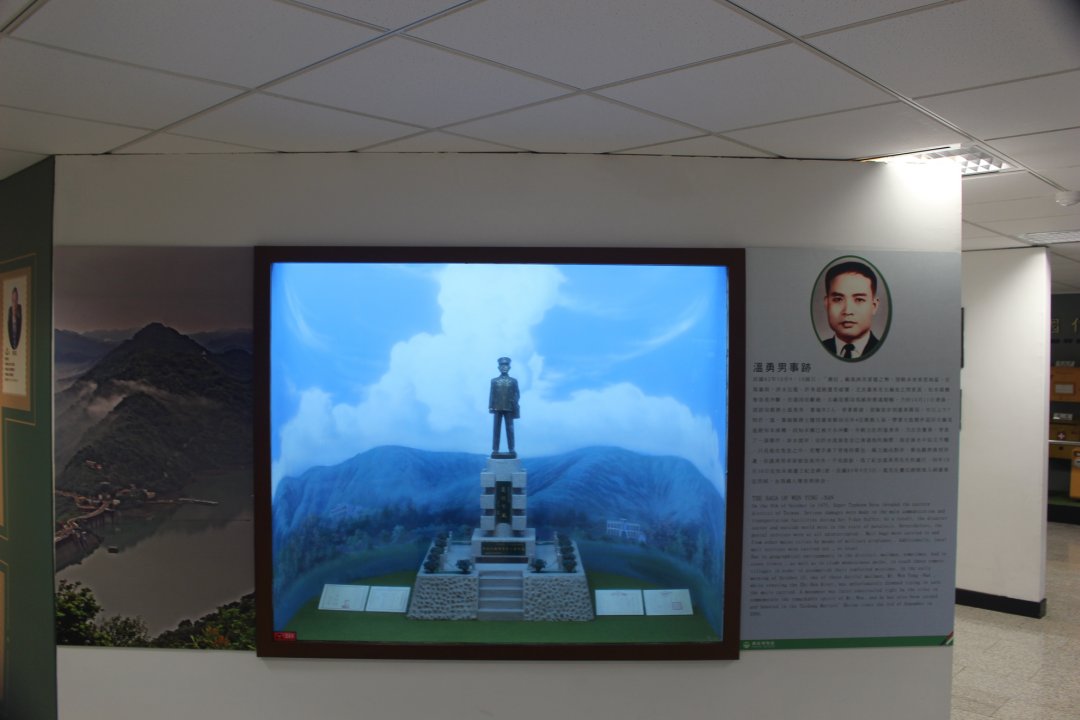
The Deed of Mr. Wun Yong Nan
The main duty of a postman is to deliver mail by all means and to ensure the mail will reach its final destination both safely and speedily. For achieving this objective, many heart stirring stories could be told.
The eastern part of Taiwan was invaded by Typhoon Nora on October 9, 1973. Floods were resulted due to the severe storm. Local traffics were also paralyzed because some bridges were simply washed away. In order to maintain the transportation of mail without obstruction, the local post offices employed a number of emergency measures. The military planes, as well as the commercial flights, were used to help shipping mail to destinations outside Taitung. On the other hand, the local mail matters were all carried laboriously by the postmen who might have to climb the mountainous paths and walk over rivers into order to reach the destined locations.
In the early morning of October 12, Wun Yong Nan, a postman of the Taimali Post Office, and his colleagues were in the process of transporting mail matters to the awaiting south bound postal railcar. They left Taitung due south and stopped by the waterfront of Chihpen River. Then, they could not go any further as the Chihpen Bridge had been destroyed by the rapid river water. Regardless, Wun Yong Nan insisted on crossing the river with the mailbags and, unfortunately, was drown..

The Model Section
Before each letter may arrive safely at the hands of the recipient, it must have experienced a series of processing stages, like collecting, closing, transporting and delivering of mail, in which the contributions of tremendous amount of efforts from the related postal workers and the employments of various transportation means are necessary in order to accomplish this meaningful task. In this section, scaled-down models are used to illustrate the complete mail processing procedure.
To post a letter, one usually drops the letter affixed with sufficient postage into the pillar box. Then, the postman collects mail from the pillar box, based on the planned schedule. If the mail matter is oversized, or requires special service, such as registration, value declaration, parcel post, etc., it must be handled at the counter in the post office. The letter will be carried to the nearby responsible post office, or mail processing center, for further processing. Nowadays, for certain mail services, the postman may collect mail at your doorstep, upon request. In some remote locations on the Island, like Yuli Village of Hualien, the full postal service provided by mail cars is available.
The mail matters collected by postmen are separated into two groups, local and nonlocal. The local mails are arranged, cancelled and, then, sorted based on zip codes. The sorted mail for a particular area is subsequently directed to the responsible postman for delivery. As for the nonlocal mail matters, they are carried to the responsible mail processing centers, or to special units for handling prompt delivery, or express, in which the mail matters, again, are arranged, cancelled and sorted. The sorted mail is then transported to the designated post offices nationwide for further delivery.
After departing from the processing center, the sorted mail matters are carried by a 15-ton truck to other delivery, or transit post offices, or local processing centers. For domestic speedpost, the mail matters are first carried by rails, airplanes, or high-speed rails, to the nearest stations, or airports, and then redirected to the destined responsible post offices. The international airmail and surface mail are transported by airfreights and ocean liners, respectively.
Upon receiving the nonlocal mail matters, the post office sorts them accordingly and passes to the postmen for delivery. Different vehicles are used for delivering mail of different types. For regular letters, they are delivered by postmen on motorcycles. The parcels are carried and delivered using minivans.
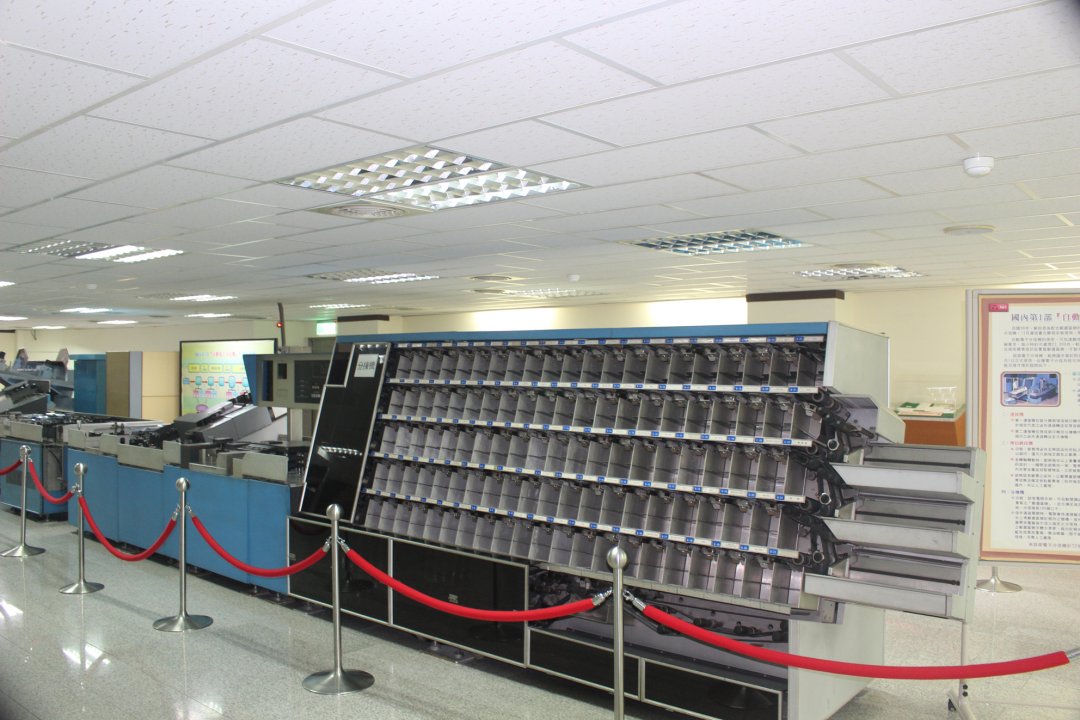
The Introduction of the First Electronic Automated Letter Sorting Machine Used by the Post
This piece of equipment exhibited was the first electronic automated letter sorting machine used in the country. It was acquired from Toshiba of Japan and installed in the Taipei Post Office in November, 1970. This facility helped the Post Office to step into a new era in which the mail processing was able to be handled efficiently by mechanical means. This sorting machine was finally retired in October, 1984.
Structurally speaking, the sorting machine consists of three main sections:
1 The separation section may automatically separate mail, one by one, from a stack and, simultaneously, select mail with sizes which are suitable for the subsequent processing steps.
2 The processing and cancelling section arranges the mail in an orderly fashion and cancels the affixed postage stamps.
3 The sorting section sorts mail based on the written zip, or postal codes, which were identified using an optical character reader and, then, directs the sorted mail matters to their designated compartments.
Generally speaking, the machine might select, cancel and sort mail at a high throughput, thus greatly improve the overall mail processing efficiency. However, the functional purpose of the sorting machine would only be carried out to its full extent, unless envelopes of standard size were used, along with well written zip codes. Otherwise, the mail failed to be sorted because of bearing no zip codes, which would have to be processed manually. In order to cooperate with the future mail processing technologies, a system of 3-digit zip codes has been practiced in Taiwan since March 20, 1970.
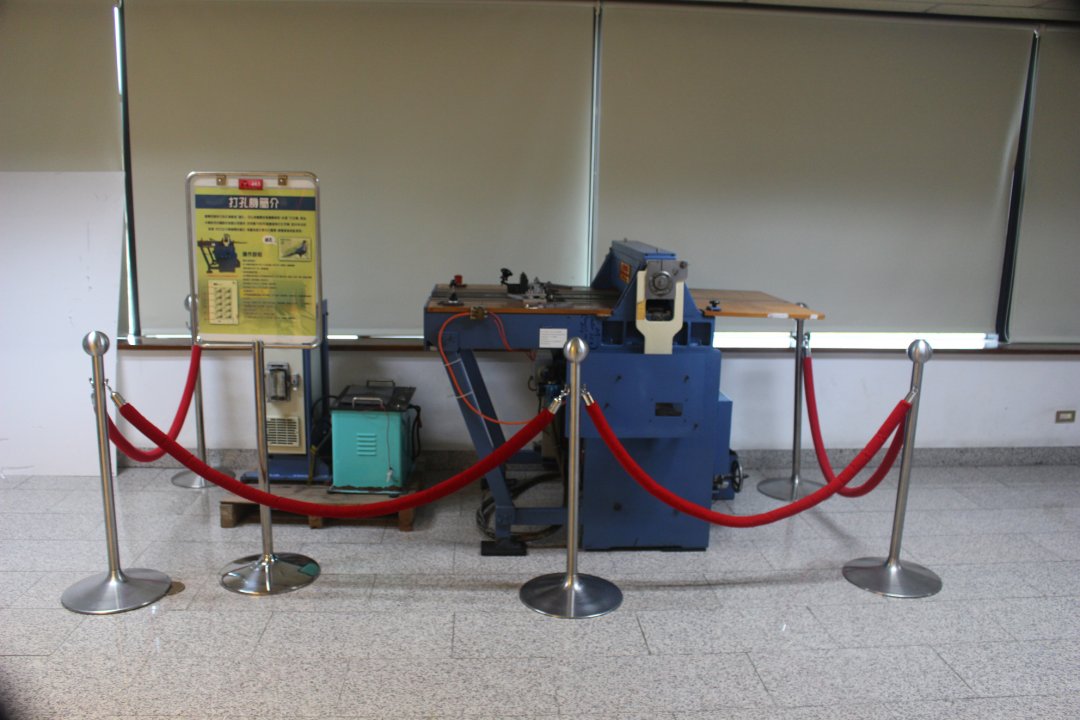
The Perforating Machine
The tiny holes punched along the four sides of a stamp are known as “perforations.” The existence of perforations makes the separations of stamps much more conveniently. However, most of the early stamps were issued without perforations. Like the world's first postage stamps, the Penny Black, they were without means of self-separation, thus called "imperforate." While selling these imperforated stamps, the postal officials had to cut each stamp apart from the others with scissors, or some other means. Finally, the Irishman Henry Archer invented the first stamp perforating machine to facilitate stamp separation, and the machine was patented in 1848. The copyright and patents were sold to the British Ministry of Finance in 1853, and, subsequently, Great Britain issued the world’s first perforated stamps, also known as the perforated version of Penny Red, in February 1854. Since then, the perforating technique has been further modified and adopted by post offices throughout the world.
The perforator exhibited is provided by the China Color Printing Co., Ltd. This piece of equipment was installed in February, 1986, and retired in 1993. For a period of seven years, it had been used to perforate 116 sets of stamps for the Post. This machine may start perforating again by simply replacing the worn out parts.
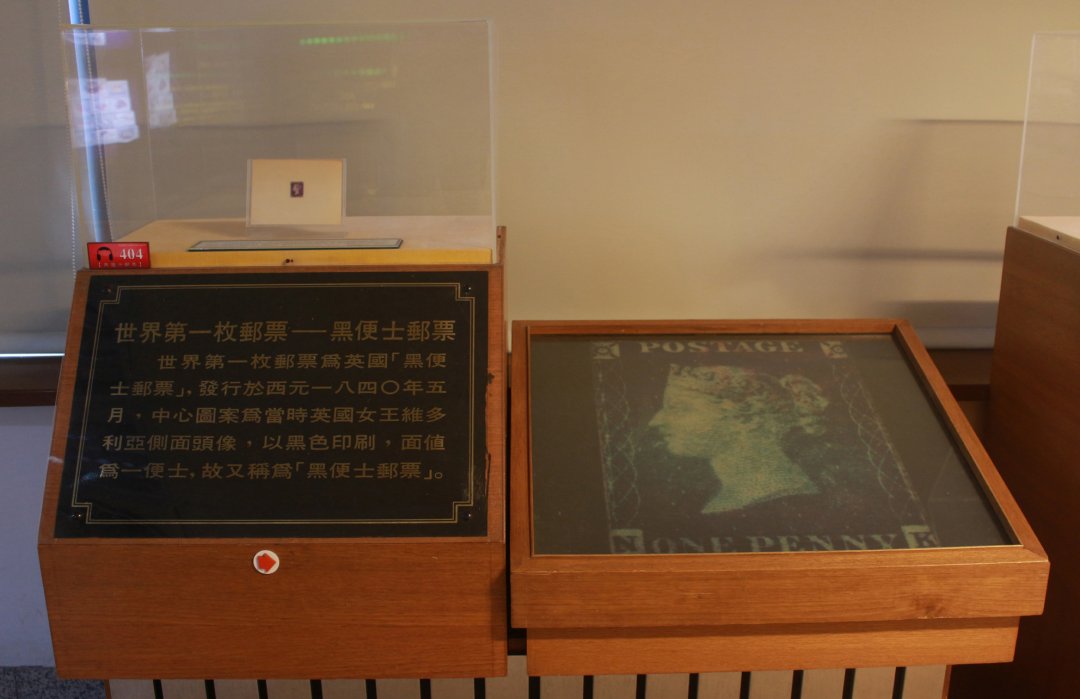
The Penny Black
Before the introduction of the Penny Post System in Great Britain, the fees charged for sending letters were normally paid by the recipients. Additionally, the procedures used to calculate postal rates, based on the distance travelled and the number of letter sheets contained, were complex. Hence, the postal system was unpopular with the general public, as it was simply unaffordable.
There was a well-known, but probably apocryphal, story about this beautiful young lady residing in Scotland. A large quantity of letters for proposing marriage was forwarded to her every day. As she could not afford the tremendous amount of fees involved for redeeming all letters, she simply refused deliveries. This also implied the Post Office would have to be responsible for returning all mails intact to the addressors. As a result, frauds were commonplace. For example, pre-arranged coded messages might have been written on the letter covers, and the recipient would only need to examine the cover to gain knowledge of the transmitted information upon receiving and then refuse delivery to avoid payment. Consequently, the Post Office had done all the laborious works and collected not even a penny. Accordingly, Sir Rowland Hill proposed a number of vital postal reforms, such as greatly lowering the postal rates, introducing prepayment of postages and uniform postal rates, etc. Furthermore, he invented the world’s first postage stamp, the Penny Black, in May 1840.
The portrait of Queen Victoria used on the world’s first stamp was based on the medal issued to commemorate the visit of Queen Victoria to the City of London in 1837, the year of her coronation. The cameo-like head was modeled for the 15-year-old Princess by William Wyon in 1834. The word "POSTAGE" appeared at the top of the Penny Black denoted its intended usage, and the value of "ONE PENNY." shown at the bottom indicated the amount that had been pre-paid for delivering the letter to which the stamp was affixed. As the name “Penny Black” suggests, the stamps were printed all in black on watermarked paper sheet, with its reverse side coated evenly using water soluble gum, and each sheet consisted of 240 imperforated stamps. On May 8, stamps, printed with a denomination of 2 pence and essentially with the same design and format as the Penny Black, but in blue shade, were also issued. These stamps are the so-called “Tuppence Blue”.
The Penny Black was in use for a little over a year. It was soon found that a black Maltese Cross cancellation was hard to distinguish on a black background. On the other hand, cancellation using red ink was easy to be removed and making it possible to re-use the cancelled stamps. On February 10, 1841, the Penny Red was issued, and cancellation devices with black ink were used.
The Tuppeny blue and Penny Red, apart from their shades, were similar in their designs and formats to the Penny Black. These penny issues, therefore, have been treated as members of the same family by philatelic scholars in identifying plate numbers and varieties, alike. The issuances of postage stamps have not only greatly improved the postal service provided by Royal Mails, but transformed the ways that the world communicated. The reformed postal service has since been adopted worldwide, and, at the same time, more and more postage stamps have been issued. Hence, the Penny Black may also be addressed as the “Originator of Postage Stamps.”
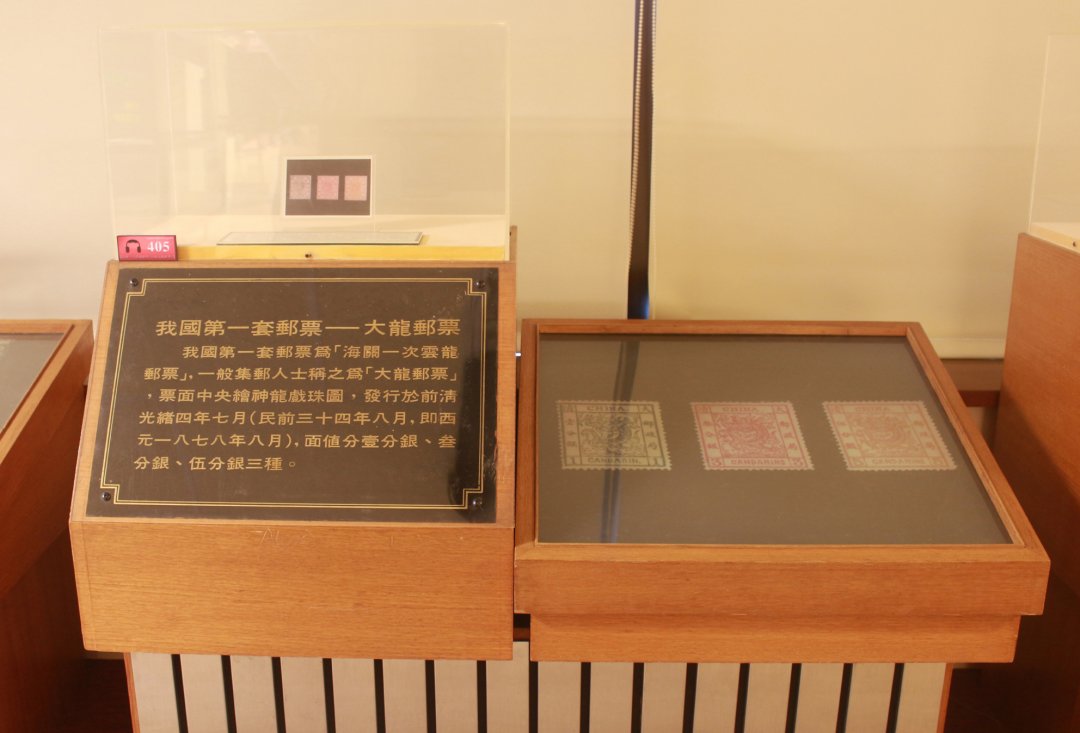
The First Customs Dragon Issue, Nicknamed the “Large Dragon” Stamps
Let’s recognize the background story regarding the issuance of Chinese first set of stamps. The modernization of Chinese postal system was initiated and engineered by Robert Hart who was a British subject, as well as the Inspector General of the Chinese Imperial Maritime Customs. Based on his recommendation, the Imperial Customs Office was approved to operate postal services to the public. In 1878, Robert Hart gave Gustav Detring, a German who was then the Commissioner of the Imperial Customs at Tientsin, considerable authorities for establishing and managing Customs postal service at five Chinese treaty ports, namely Peking (Beijin,) Tientsin (Tianjin,) Chefoo (Yantai,) Newchwang (Niuzhuang,) and Shanghai. The service was indeed offered to the public, but for delivering mail written in English only. On the other hand, Detring had set up, as an experiment, Chinese postal sections by the side of the Customs Post Offices at these five locations. They were the Chinese and foreign letter agencies, or Hua-Yang Shu Hsin Kuan, responsible for the transmissions of Chinese mail.
By July, 1878, the Statistical Department of the Customs had finished the initial printings for the set of three stamps with the denominations of 1, 3 and 5 candarins, respectively. At the time, the currency basis for all business transactions was “tael,” and one tael was equivalent to a hundred silver candarins. Each of the denominations was printed with the central design of a dragon playing with the night-shining pearl which it guarded, but the designs differed slightly in detail. Historically speaking, the dragon, or lung, had been the symbol of the ruling emperor, as well as the emblem of imperial power. Hence, the mythical creature of dragon had been selected for the central design on 11 of 20 stamps issued by the Imperial Customs Post. Similar implications may be applied to the stamps issued by Great Britain, as the issues always included the portraits of the Queens and Kings.
As these three earliest Chinese stamps featured the dragon as their central designs and were issued by the Imperial Customs Post, they have been called the “First Customs Dragon Stamps” by Chinese philatelists. Furthermore, they were printed with larger design and format by comparing to their successors, known as the “Second Customs Dragon Stamps,” thus so-called the “Large Dragon Stamps.” The “Second Customs Dragon Stamps” have, therefore, been nicknamed the “Small Dragon Stamps.”
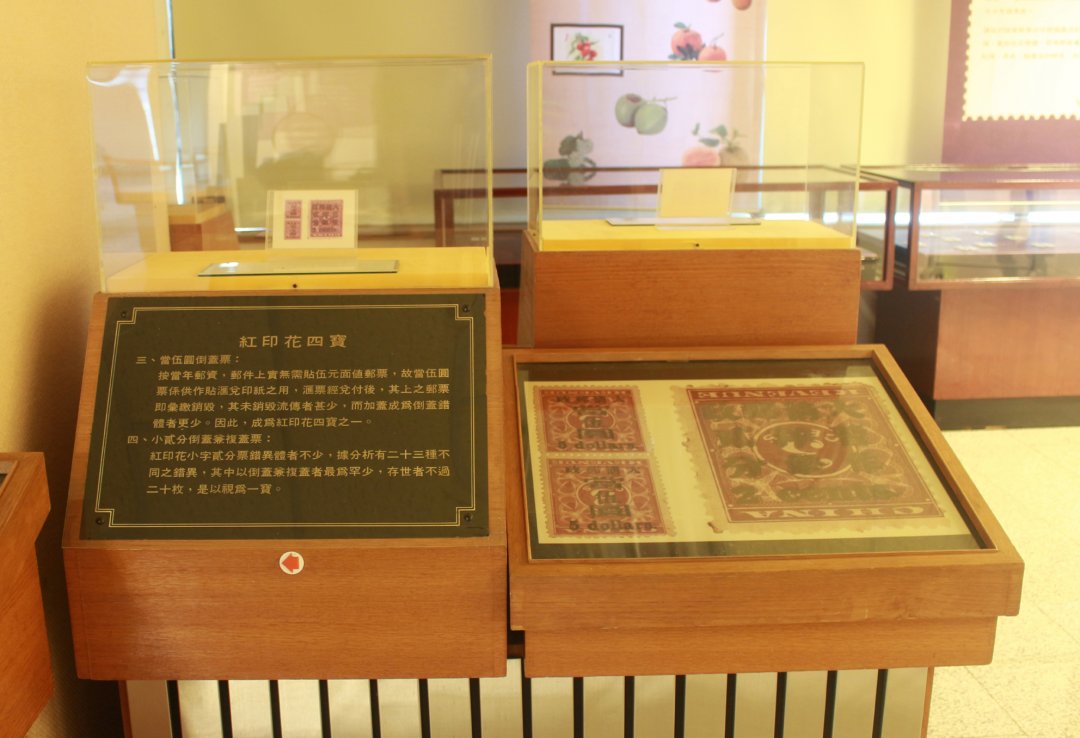
The Red Revenue Surcharge Stamps
The Red Revenue Overprinted Provisional Stamps are commonly known to the students of Chinese philately as the “Red Revenue Surcharges,” which are, without doubts, the most precious stamps in the Chinese postal history. In 1896, the Red Revenue stamps, so named due to the borne red shade, were printed by the Waterlow & Sons, Ltd., London, and then shipped to the Imperial Customs Statistical Department in Shanghai. The Red Revenues, with a denomination of 3 cents, had been considered as the unissued revenue stamps for almost a century. Until recently, philatelic studies have proved the Red Revenues were designated to be used on documents, or passes, as some kinds of stickers, for the purpose of customs declaration.
When the Chinese Imperial Post was inaugurated in 1896, the traditional monetary system, with the currency basis of silver tael, practiced in China was also transformed to the silver dollar system. The postage stamps issued by the Imperial Customs Post with denominations in silver tael, or candarins, were also about to be abolished. As the new issues were still being printed in the press, the unsold stocks of Customs stamps, like the Small Dragon and Empress Dowager Birthday Commemorative issues, were overprinted with “Temporary Use as Foreign Silver” in Chinese characters and surcharged with different denominations. In order to meet the larger-than-expected demand, the deserted stock of Red Revenues was also pulled out from the Statistical Department and surcharged with 5 different denominations. All these surcharged stamps were used temporarily as postage stamps and were also known as the “provisional issues.”
The Red Revenues were the first Chinese stamps produced abroad, and the designed pattern was delicately engraved and printed in a delightful red shade. Moreover, the overprinted characters consist of a number of interesting plate varieties. Therefore, the Red Revenues, as well as the surcharges, have long been keenly sought after by the philatelic enthusiasts. Unexpectedly, the Red Revenue surcharges have turned out to be gems in the Chinese philately.
Since three of the five denominations, namely 2¢, 4¢ and $1, were overprinted with Chinese characters in two different sizes, the Red Revenue Surcharges are generally categorized into 8 types which are 1¢, small 2¢, large 2¢, small 4¢, large 4¢, small $1, large $1 and $5.
The un-overprinted Red Revenues and the ones surcharged with $1 in smaller Chinese characters, nicknamed the “Small One Dollar,” are the most treasured stamps in the Chinese postal history, due to extreme scarcity. Along with the 5-dollar surcharge with inverted overprint and small 2-cent surcharge with inverted and double overprints, these four stamps have been known as the “Four Gems of the Red Revenues.” Nevertheless, the block of four “Small One Dollar” holds the unchallengeable position of supremacy as the most valuable Chinese postage stamps, and this piece of philatelic gem has also been respectfully addressed as the “King of Chinese Philately.”
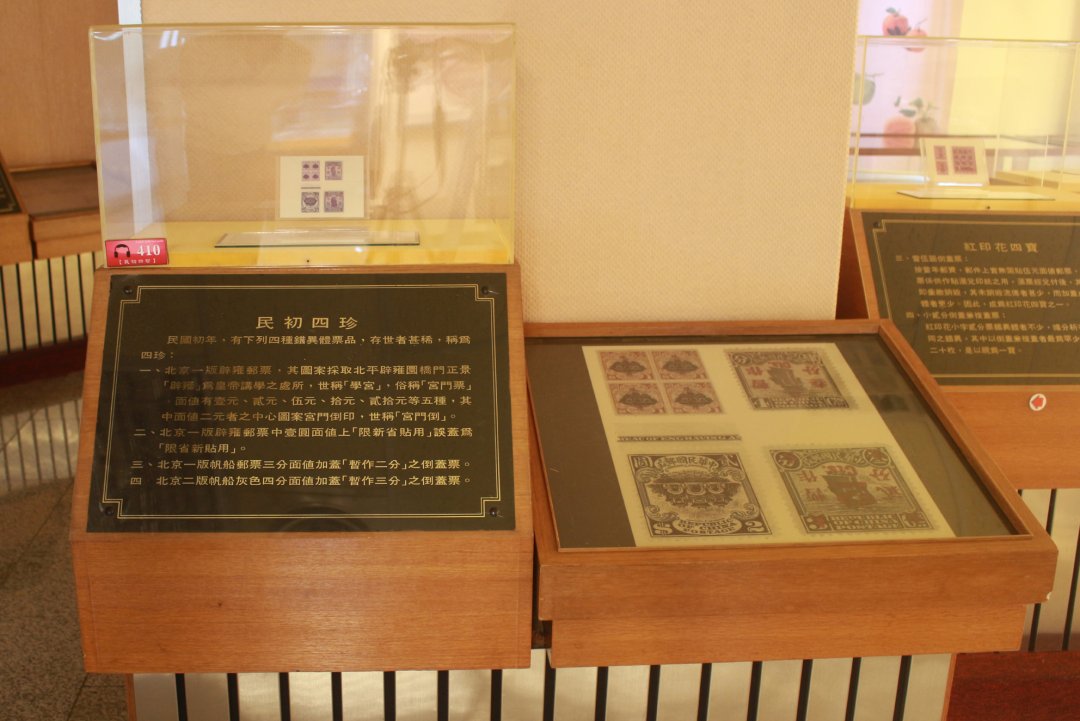
The Four Gems of Early Republic
Some significant errors with the stamps were occurred in the printing process. There were situations like the stamps were printed with the design, or frame, inverted; the designs, or overprints, were printed twice; the finished stamps were with perforations missing, etc. These are called the stamps with varieties, or errors.
In particular, there are four different issues of stamps, released in the early Republic, bearing significant printing errors. The scarcity of these stamps makes them known as the “Four Gems of the Early Republic.”
The central design of the Peking First Printing Hall of Classics stamps is the front view of Pi Yong Huan. Pi Yong Huan has also been known as the Hall of Classics and was the location where the emperor lectured occasionally. The stamps of Hall of Classics are usually referred as the “Gong Men” stamps by the Chinese philatelists. The illustrated 2-dollar stamp was printed with the central design of the Hall of Classics inverted, which has been nicknamed as the “Gong Men Inverted.”
There is the other Hall of Classics stamp with the denomination of $1 which was supposed to be printed with five Chinese characters, meaning “ Restricted for Use in the Province of Sinkiang.” Oddly enough, the second and third of the overprinted Chinese characters are transposed in this copy.
Furthermore, the 3-cent Peking First Printing Junk stamp was overprinted with the characters of “Temporary Use as Two Cents,” and the overprint was inverted. Likewise, the 4-cent Peking Second Printing Junk stamp was with the inverted overprint of “Temporary Use as Three Cents.” These rarities are commonly called the “Stamps with Inverted Overprints.”