「Discovering Taiwan─Re-visiting the Age of Natural History and Naturalists of Taiwan」
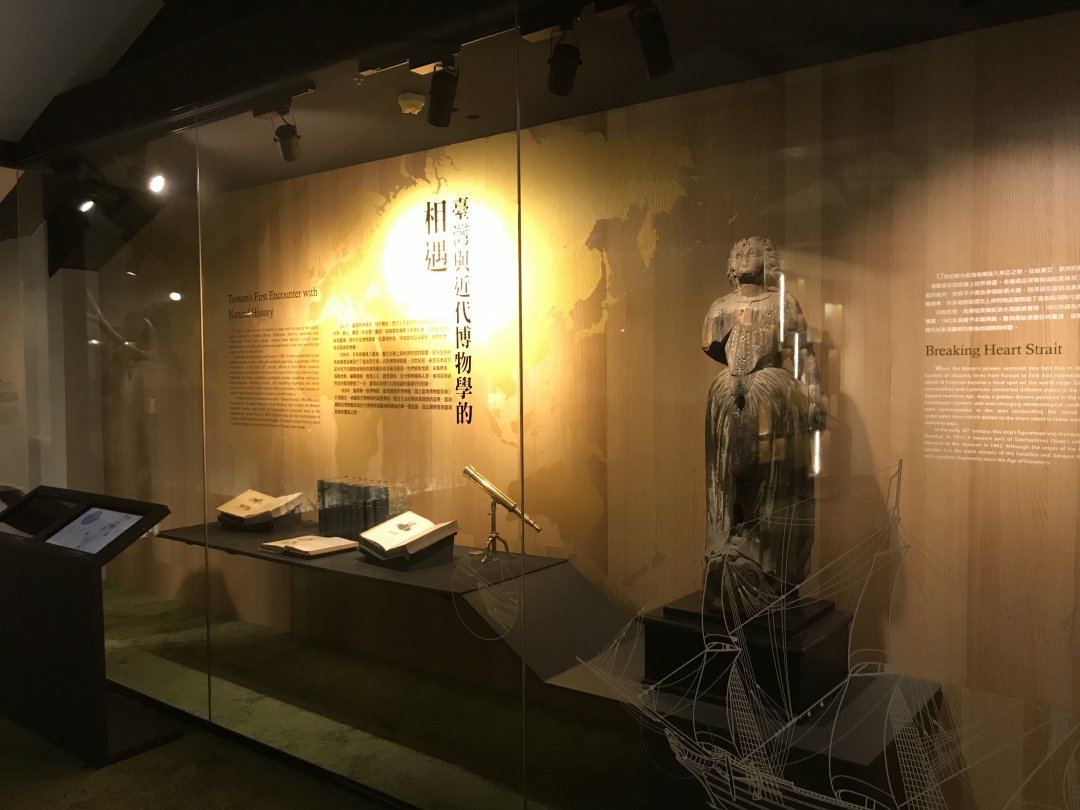
1. General
In 1862, Taiwan opened its ports for trade to foreigners, increasing western presence in Taiwan. Sailors, businessmen, military officers, diplomats, doctors, explorers, and missionaries came to Taiwan or passed by the island by boat. Among them, there were naturalists that came to the island to take samples of fauna and flora in low and medium elevations, where they named and introduced new species to the world.
In 1895, Taiwan was ceded to Japan. Systematic research supported by the government gradually replaced western individual research because of government and economic development policies. In the early 20th century, official or semi-official researchers from Japan conducted research in almost every part of the island-country. They drew maps, took samples, conducted geological investigation, compiled graphs, conducted censuses, researched customs, and categorized different species and ethnic groups. They advanced the exploration of Taiwan’s natural history and made Taiwan an important subject in modern science.
In 1908, the Taiwan Governor Museum, the first museum in Taiwan, was founded. The museum inherited the research tradition from Western naturalism and the results of the resource research conducted in the beginning of the Japanese colonial era. It was the first product after contemporary naturalism met Taiwan. It not only served as a place for first-generation naturalists to gather, but also stored the first research findings. Through the exhibits, naturalists’ new findings about Taiwan were presented to the world.
The first part of the National Taiwan Museum’s New Century Exhibition takes visitors back to the origin of the museum itself. The Taiwan Governor Museum was founded more than 100 years ago, in the beginning of the 20th century. During this “Age of Discovery”, Taiwanese naturalists reexamined the basic collections that are the foundation of today’s museum collection. They also examined the naturalist findings, discoverers and traditions that shaped the appearance of the Taiwan Museum. This is not an exhibition that introduces Taiwan’s nature. It is an exhibition that reflects on how Taiwan’s nature was discovered by contemporary naturalists. The exhibition is divided into three major themes: Discover Taiwan, Taiwan’s New Look, and The Future of the Past.
“Discovering Taiwan” has two units. Unit One focuses on the research tradition of the naturalists in the beginning of the 20th century. During on-site field studies, the museum’s researchers recorded their research findings and brought back specimens and new knowledge that contributed to the museum’s collections. Unit Two introduces how specimens became cherished evidence of natural history research through organization, identification, and classification. They are an important source for scientific research. Specimens represent different species. Different specimens form a miniature version of our big nature, illustrating the evolutionary history of different species in nature.
“Taiwan’s New Scopes” introduces the important naturalists and their findings in the 100- year history of the National Taiwan Museum. These naturalists worked hard to unveil the secrets of Taiwan’s nature. Thanks to them, we can appreciate the beauty of Formosa through different lenses.
“The Past is the Future” means that the museum does not only bring visitors to the past, but they also lead us to reflect on the current and envision the future. People often think that museum collections are evidence of history being frozen in time. The appearance of the collections may stay constant. But people’s opinions about the collections change constantly. Therefore, they may have different meanings and values in different times. In the museum, the past is the future. This is why people never lose their interest in museums.
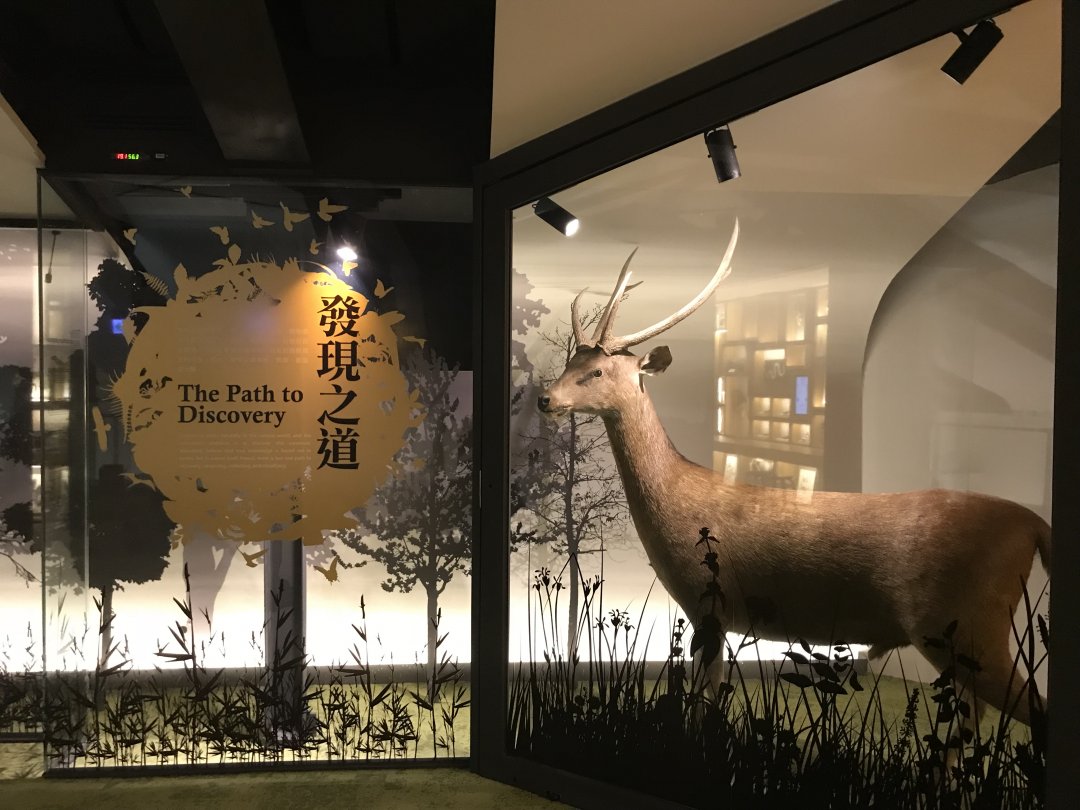
2. The Path to Discovery
In the world of naturalism, it is natural for all things to exist. But where can we find “nature”? Nature is not found in books. It is found where it truly is. And the lifelong goal of all naturalists is to find where nature truly is.
How do we discover nature? We discover it through sophisticated tasks like observation, collection, and classification. The way to discovery in contemporary naturalism is not just conducting field research, it is a way that uses scientific research to look for the truth. The message behind a discovery can have a profound meaning.
The way to discovery connects the past and the future. Many heroes behind the scenes spent their whole life showing us the nature and cultures of Taiwan and discovering the world’s order. Yoneraro Kikuchi (1896-1921), the most famous specimen collector during the Japanese colonial time, was good at collecting animal specimens. He pushed Taiwanese museums to establish animal specimen collections.
The young Yoneraro worked as an assistant collector to Professor Isao Iijima at the Department of zoology at Tokyo Imperial University, where he gained specimen-making skills. He also exchanged animal hunting skills with German businesses. In 1906 the 27-year-old Yoneraro came to Taiwan for the first time. With more than 10 years of both international and domestic field experience, he traveled to all the mountains and islands of Taiwan. He was very good at differentiating different Taiwanese bird species. The discovery of many endemic Taiwanese bird species was made possible thanks to his in-depth observation of bird population distribution and habits. When the National Taiwan Museum was founded in 1908, he was employed by the museum and worked on almost every specimen collection within the museum.
As a specimen collector, he was constantly traveling. He often lived in the mountains, collecting animal specimens. Many Taiwanese endemic species such as the Whited-faced Flying Squirrel, Formosan field mouse, Central Formosan toad, and Taiwan Mountain Pitviper were discovered by him. Many international zoologists published research papers and historical research articles according to his findings.
The many specimens collected by Yoneraro in the museum are evidence that he dedicated his entire life to naturalistic research.
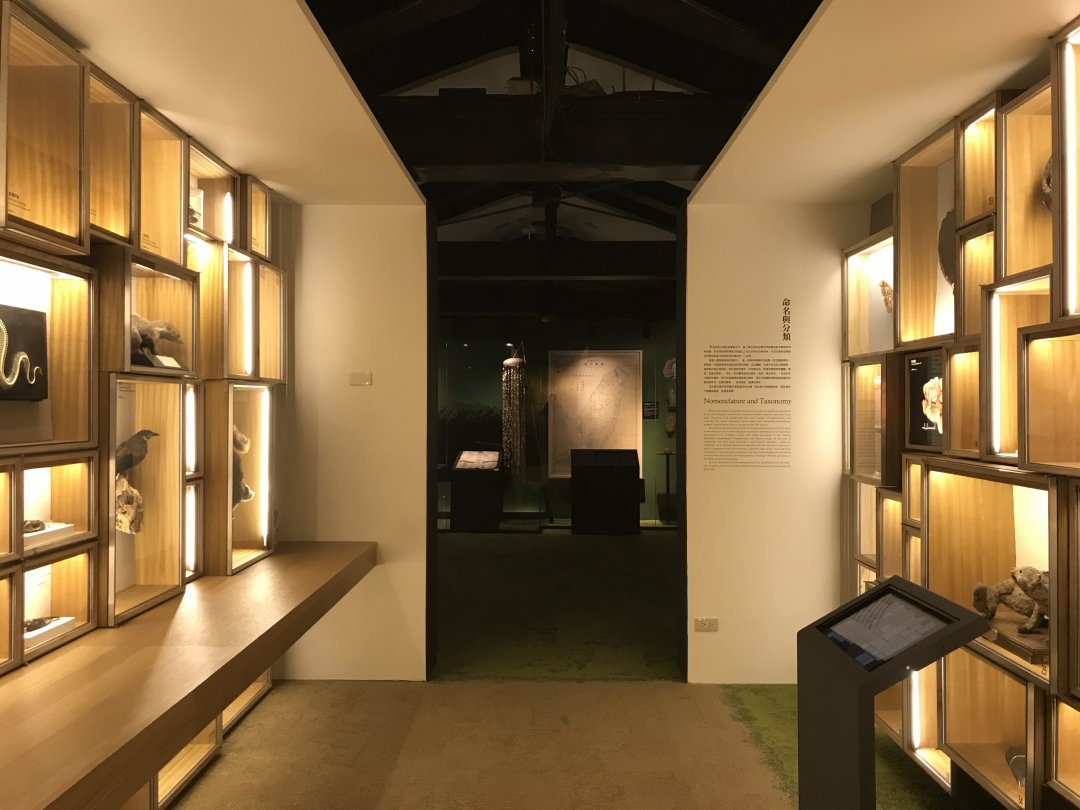
3. The World of Specimens
We make a specimen by collecting an animal, plant, or mineral in part or as a whole, and process them according to different needs in order to preserve its original shape.
Specimens can be used in education, research, and exhibitions. A museum is a world formed by different specimens. Every specimen represents one species. Different specimens form a mini-nature. Therefore, specimens are not just souvenirs made of dead animals or plants. Rather, they are proof of the existence of these beings. Through specimens, we can understand how different species interact with one another.
According to different features, production methods, and preservation methods, there are 7 types of specimen.
The first type is bone specimen, which is a way to preserve vertebrates. Through teeth, bones and other hard tissues, we can find clues to evolution and classification.
The second type is preserved specimen. It is done through rapid freeze dehydration, low-temperature dehydration, or the use of special chemicals to preserve the original shape and color of the flowers or leaves. The color was preserved so that the specimens can be demonstrated for educational purposes.
The third type is slide specimen. We preserve the specimen in microscope slides. It is usually used for bacteria, algae, or small insects that need to be examined by magnifying glass or microscope.
The fourth type is pinned insect specimen. We select stainless steel needles of different sizes according to the size of the insect, and pin them to the frame. We then spread the legs and wings of the insect. After drying them, the specimens are finished.
The fifth type is taxidermy specimen. Most of the taxidermy specimens preserved in the museum are “fake taxidermy specimens (academic specimens)”. During production, they only used basic support and stuffing and usually do not show the animal’s action or motions. This type of specimen helps researchers to evaluate, compare, and preserve. There is a different type called “motion specimen”. It shows the real behaviors of an animal, such as hunting, mating, running. It has demonstrative education purposes.
The sixth type is herbarium. It is the most common way to preserve plants. It is done through drying the plants and sticking them to specimen papers for easy examination and collection. Traditionally, this type of specimen is used for plant classification and Systematics research.
The seventh type is liquid preserved specimen. It is done by soaking the specimen in preservation chemicals. Liquids such as formalin and alcohol are commonly used. Common liquid preserved specimens include fish, amph ibians, reptiles, flowers, fruits, or animals with soft bodies or organs.
Specimens play an important role in the naming process of an animal. According to the International Code of Zoological Nomenclature, when a new species or classification is discovered, it has to be named and introduced according to specimens that can describe its shape and features, with the help of pictures. When introducing a new species, the discoverer needs to select a specimen to be the holotype as a standard of identification. If it’s a species of similar faunas, we select a specimen that is more complete and contains more features for identification as the hapantotype. The rest are paratypes. Holotypes are the basis for classification and identification. Therefore, it is good for a museum to have many holotypes. These specimens are the most valuable and receive the most attention and care.
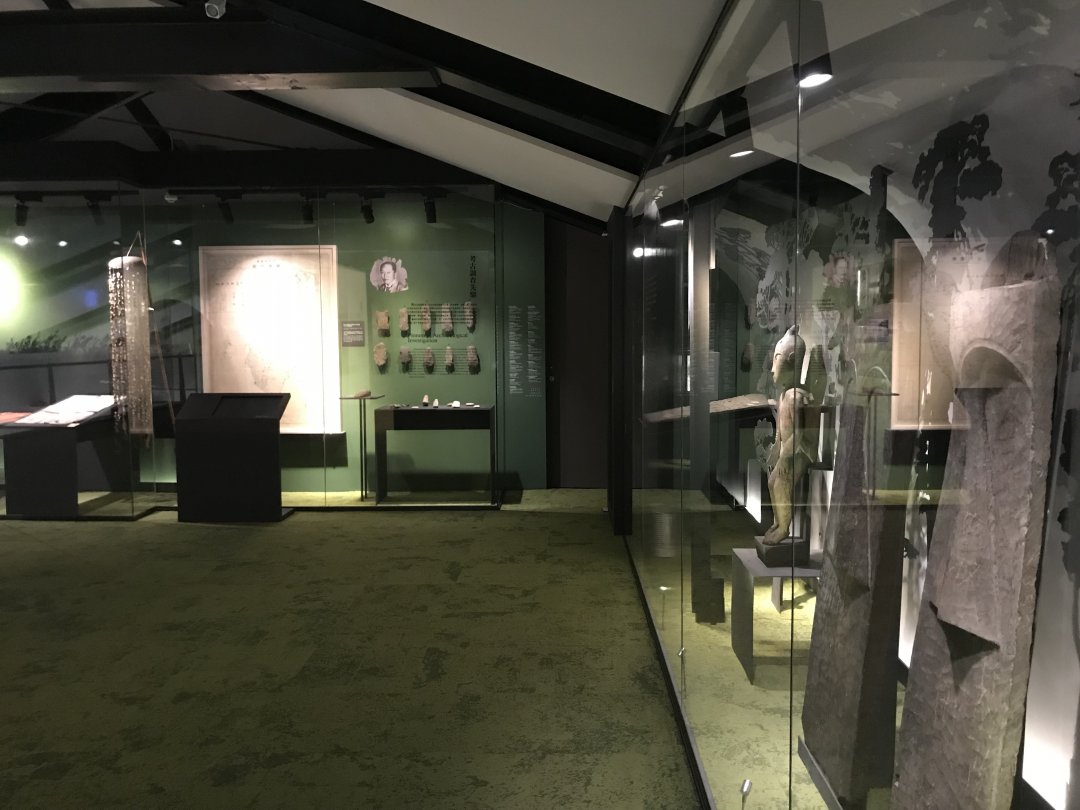
4. The Pioneer of Archaeological Study ─ Mori Ushinosuke
Ushinosuke Mori, the pioneer of field research in Taiwan, is another naturalist that loved traveling around to conduct field research in person. He conducted extensive research on Taiwanese aboriginals and recorded his observations. He collected many aboriginal items and laid the foundation for the aboriginal collection for the museum during the Japanese colonial time.
Mori often conducted research on Taiwanese aboriginals in different aboriginal tribes in Taiwan. The collections here are ceramic pottery, carved wooden poles and statues collected by Mori from the Paiwan tribe in Southern Taiwan. This old picture was taken by Mori. Photography technology has been advancing since the 20th century. When conducting field research, naturalists used pictures to describe the everyday life of aboriginal tribes in addition to in-person observation, written records, and drawings. Since pictures can vividly capture what was going on, they became an important record and evidence for research. The wooden shield held by the Paiwan kid in the picture is what you see here. Comparing the collection and the old picture, we can see the relationship between naturalists and the museum.
Another big aboriginal tribe in Taiwan is the Atayal Tribe in the north. Mori conducted the most research on Atayal and left big volumes of written records. Taiwanese Aboriginal Tribe Vol. I published in 1917 is one of his most well-known works. He appreciated the exceptional artisan skills of the Atayal and collected a lot of shell-bead garments and textile products.
Mori is also a pioneer in archaeology in Taiwan. Many archaeological sites in the aboriginal tribes were discovered by him and Torii . The megalithic culture on Taiwan’s east coast was discovered by Mori. At that time, Taiwan had not yet entered the excavation stage of archaeological research. Their research primarily included collecting samples from the surface, sectional observation, drawings and photography. These exhibits are the stone tools collected by Mori. Among them, the polished stone axe found in the Yuanshan site is the most complete and important. On the axe you can see the relevant marks written by Mori at that time.
The map next to it is the “Taiwan Neolithic Age Historical Site Distribution Map” drawn by Mori in 1920 for the museum. It recorded more than 218 historical sites that he investigated. In addition to archaeological works, his archaeological research can often be found in his talks about aboriginals.
Besides his achievements in aboriginal research, Mori was also the major collector for the “Useful Plant Research Project” under the Bureau of Productive Industries. In his report, Mori combined his knowledge about plants and observations of Taiwanese aboriginal culture to demonstrate the coexistent relationship between aboriginals and nature. To recognize his contributions, many alpine plants such as Taiwan Alpine Rhododendron and Angelica Morii Hayata were named after him. Something interesting about the naturalists at that time was that as long as they were interested in doing research, and were open about their field of expertise, they could become real “naturalists”
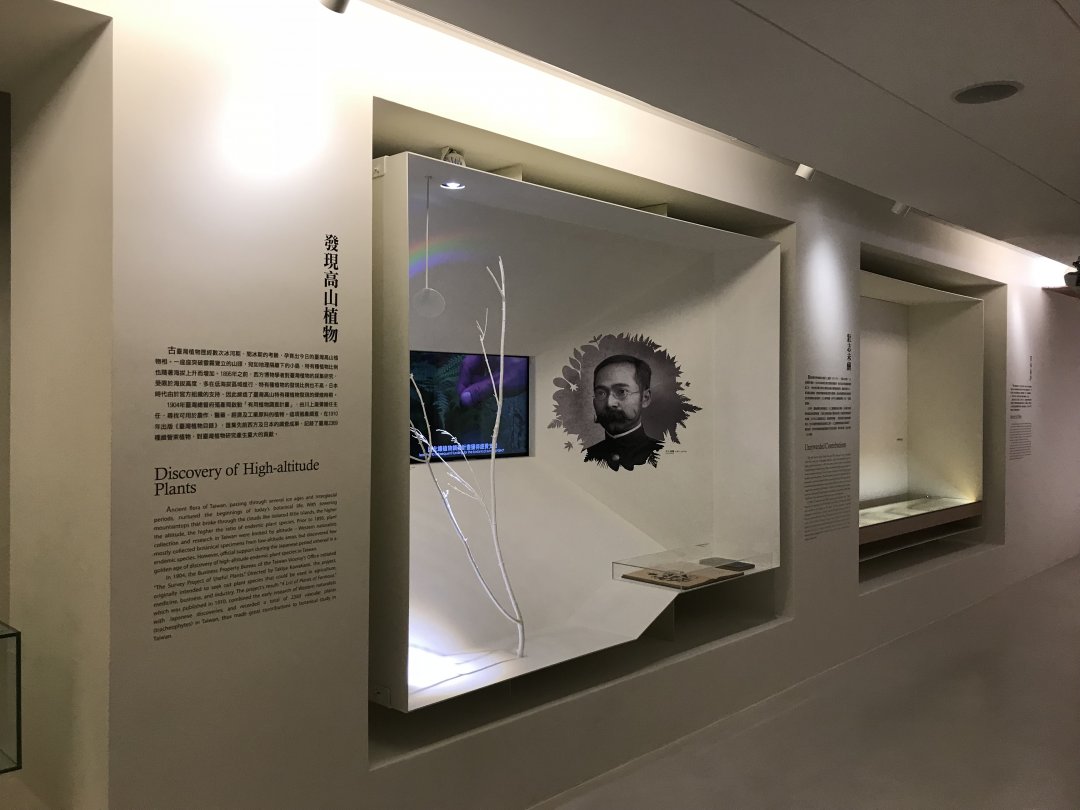
5. The Pioneer of Plant Study ─ Kawakami Takiya
Takiya Kawakami was the first curator of the Taiwan Governor Museum. He was from Yamagata Prefecture and graduated from Sapporo Agricultural College. In October 1903, he started working at the Bureau of Productive Industries of the Ministry of Civil Affairs of the Taiwan Governor-General Office, conducting research on plant diseases and insect pests. He was in charge of the “Useful Taiwanese Plant Research Project” from 1904, traveling to Taiwan’s mountain areas, islands, and even the South Pacific. In 1905, Kawakami discovered the Taiwanese endemic rubber tree with high economic value, which can be used to make rubber, in Beipu Township, Hsinchu. In March 1910, Kawakami composed the “Taiwanese Plants Index” as a presentation of his research findings for the “Useful Taiwanese Plant Research Project”. This book was published by the Bureau of Productive Industries of the Taiwan Governor-General Office. It compiled 2,067 types of flowering plants and 301 types of flowerless plants, spanning 62 families, 1,017 genera, and 2,369 species that grow on Taiwan and Orchid Island. The publishing of this book caused a sensation in the Taiwanese academic and industrial fields, bringing the general public ever closer to Taiwanese plants. The collected plant specimens were sent to be studied, identified, and classified by Professor Bunzo Hayata at the Tokyo Imperial University. He then went on to publish ten volumes of “Flora of Taiwan” that recorded many Taiwanese plants. This book gave Hayata the name of the leading scholar in the study of Taiwanese phytotaxonomy.
On May 24, 1908, the Taiwan Governor Museum was founded. Kawakami became the first curator and spent five months preparing for its grand opening at the Lottery Bureau. On August 21, 1915, he passed away after years of stress and hard work when opening and moving the museum. From 1908 to 1915, his study on useful plants paused for only a year due to a trip to the South Pacific. While he was the museum curator, the museum collection number went from 12,723 to 23,268 pieces. After he passed away, the research project was moved in 1919 to the Formosa Forest Experiment Station under the Bureau of Productive Industries. Relevant plant specimen collections were also moved to the Forest Experiment Station (known as the Taiwan Forestry Research Institute today) and Taipei Imperial University (known as National Taiwan University today). This is why National Taiwan Museum does not have a plant specimen collection now.
The Book “Flower” made Kawakami even more well-known after its publication. There were several editions added between 1902 and 1910. The book has exquisite drawings, flora information, diaries, and combines flora knowledge and prose that educate people about plants in Taiwan. Kawakami even compiled a poem to commemorate his late wife Chitose.
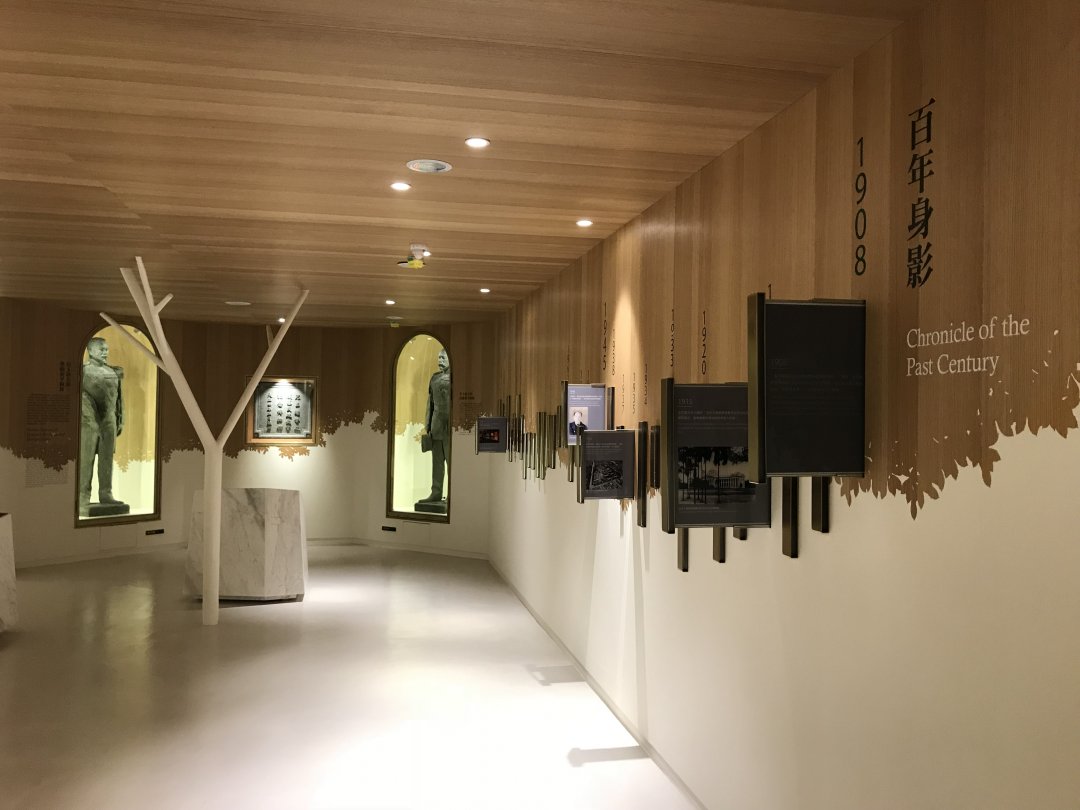
6. Chronicle of the past century & bronze statue area
“The Wall of A Century of History” compiles historical images of National Taiwan Museum. Visitors can read stories about the museum in different periods on the sliding display boards.
National Taiwan Museum is more than 100 years old. It has changed name several times. When it opened in 1908, its name was the Affiliated Museum of the Bureau of Productive Industries at the Ministry of Civil Affairs of the Taiwan Governor-General’s Office. It was known as the Taiwan Governor Museum located at the building of the Lottery Bureau, which is the BoAi Building in the current Presidential Office Building. The building we are currently at was built by the Japanese to commemorate the fourth Taiwan Governor, Kodama Gentaro, and the head of civilian affairs, Gotō Shinpei. After the building was constructed, the museum moved from the Lottery Bureau Building to this building because there was more space here. The museum was therefore named Museum of Governor Kodama and Head of Civilian Affairs Gotō. After WWII ended in 1945, the Chinese nationalist government took over the museum and renamed it Provincial Museum of Taiwan. It was not until 1999 did the museum change its name to National Taiwan Museum when the museum was set to be regulated by the council for Cultural Affairs under the Executive Yuan.
The statues that commemorate Kodama Gentaro and were placed in the western niches at the first floor lobby. After WWII, the statues were moved to the storage room and became part of the museum’s collection. In 2008, the old museum sign and the statues were brought to the first floor lobby for exhibition to celebrate the centennial of the museum.
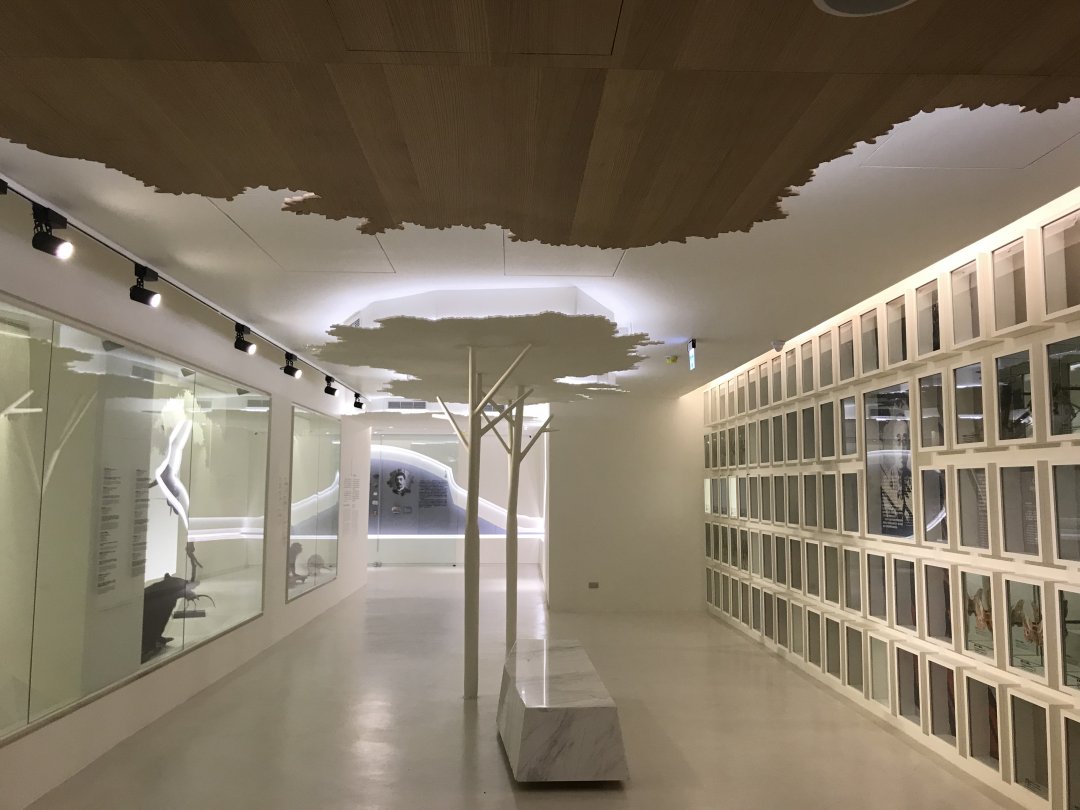
7. Animal of Taiwan and wall of insect
In the “Way to Discovery”, I have briefly introduced Yoneraro Kikuchi, Taiwan’s celebrated animal specimen collector. The reason for his first visit to Taiwan was an invitation from a British specimen seller to collect a complete specimen of a mysterious bird, the Mikado pheasant.
In 1906, British bird coll ector, Walter Goodfellow noticed the special feather on the aboriginal headwear when he was trying to collect birds on Alishan. He brought the feather back to the United Kingdom for identification and found that it was a new Taiwanese bird species. He named it Calophasis Mikado. In Japanese, Mikado is a respectful term used to address the emperor. What’s special about this discovery was that when the academia announced the discovery of a new species, a complete model specimen was usually required. This time, however, they only used the feather as evidence for the new species. This tells us how sure the researchers were about this new type of bird.
In November, 1906, Kikuchi collected the world’s first complete specimen of the Mikado pheasant. Male Mikado pheasants have a dark blue color all over and, a metallic shine, a red face and a very long tail. Kikuchi showed the world the true appearance of the Mikado pheasant, making it a world-known Taiwanese bird. However, the Mikado pheasant on exhibition here is not the specimen collected by Kikuchi.
Kikuchi’s specimen-collecting skill caught the attention of the Governor’s Office and he was hired to be a displayer to collect and make specimens at the museum’s Animal Department when it was founded in 1908. The specimens collected and made by him are still preserved at the museum up until today. They are valuable research resources and exist to show future generations the rare and valuable animal specimens in Taiwan. Many species discovered and named after him are endemic species to Taiwan. They include the Gekko kikuchii discovered in Orchid Island and the Microtus kikuchii discovered in the mountains.
Taiwan is known as the kingdom of insects and has a relatively high biodiversity given the island’s size.
Shiraki Tokuichi was a pioneer in Taiwan’s insect research. He came to Taiwan as the head of the Department of Insects at the Governor Office’s Agricultural Research Institute in 1907. He was also a member of the arts committee at the Taiwan Governor Museum when it first opened. He was in charge of the research and display of insect and animal specimens, contributing greatly to the development of the museum. In addition, his knowledge about insect taxonomy gained at the British Museum laid the foundation of Taiwan’s insect taxonomy. He recorded and introduced more than 100 insects. Many insects are named after him, making him a very important person in Taiwan’s entomology. Tokuichi established a plant quarantine system, an agricultural pest prediction system, and pest prevention methods. At that time, Taiwan’s street trees and orchards were affected by a scaly insect infestation resulting in great economic losses. From Hawaii, he introduced Rodolia cardinalis, or ladybug, the scaly insects’ natural enemy, and successfully controlled the situation. In addition, he utilized physical methods and the habits of stem borers, a pest to rice paddies, to successfully control the pest’s population size. Therefore, he was a great contributor to Taiwan’s agricultural development and pest prevention.
The most important discovery of Shiraki Tokuichi is Taiwan’s national butterfly, Papilio maraho. In 1933, he collected a male specimen of a type of butterfly with black front wings and white stripes and red circles on the rear wings. Its name Papilio maraho has an origin in Atayal, meaning “chief”. They are spectacular and the king in the butterfly world. Papilio maraho was a rare butterfly species. It was called “The Butterfly of Dreams” and “800 Yen Butterfly” at that time. It was named as the natural monument of Taiwan during the Japanese era.
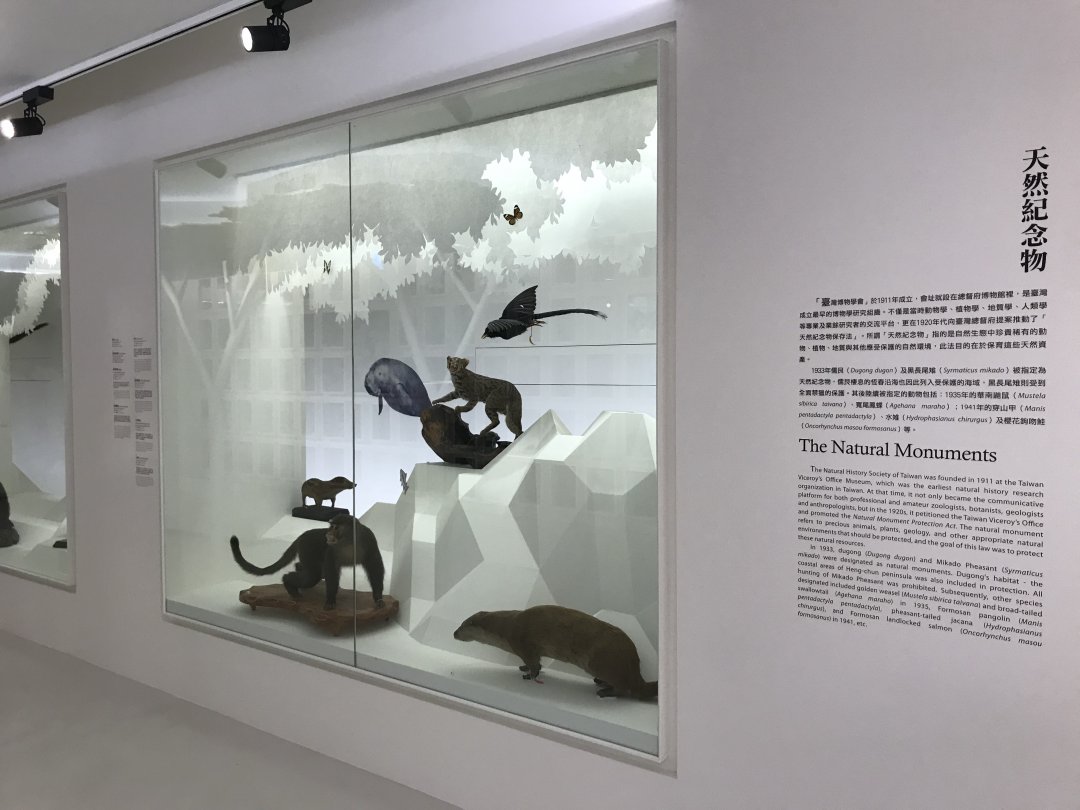
8. The Importance of biodiversity
Founded in 1911, the office of the Natural History Society of Taiwan was located in the building of the Lottery Bureau. It was the first organization about natural history, which served as a platform of zoology, botany, geology and anthropology. In 1920, the society submitted the proposal for the Preservation of the Historic, Scenic and Natural Monuments of Taiwan to the Taiwan Governor's Office.
The Preservation of the Historic, Scenic and Natural Monuments of Taiwan is about protecting the rarest animals, plants and geology in nature. The goal of preservation is to maintain these natural resources.A natural monument is a natural or cultural feature of outstanding or unique value because of its inherent rarity, representative of aesthetic qualities or cultural significance, such as animals, plants, geology or relics. The idea is to preserve and keep the heritage. The Preservation of the Historic, Scenic and Natural Monuments of Taiwan and its enforcement rules were officially enacted in 1933. A research committee was founded for research purposes and other administration businesses. Tokuichi Shiraki and Hotsuma Ozaki had been working with museums for a while and they account for reviewing the documentation of the 323 items around Taiwan. The field research started in 1933 and the report of the natural monuments was published in the same year. In 1933, 1935 and 1941, the result of the natural monument was announced, registering a total of 19 natural monuments including animal, plants and geology. This was an important contribution to nature conservation in Taiwan under Japanese rule.
In 1933, the National Taiwan Museum made dugong and Syrmaticus mikado natural monuments. The seaside area of Heng Chun, the habitat of dugong, was listed as a protected area. A ban on Syrmaticus mikado hunting went into effect. The list of the protected species includes Mustela sibirica and Agehana maraho, listed in 1935, manidae, pheasant-tailed jacana and the Formosan landlocked salmon, listed in 1941.
After WWII, the economy of Taiwan was blooming, which directly and indirectly caused severe damage to the natural environment. Some people's awareness of conservation was evoked and they called on the government to take conservation measures as well as raising the attention of the general public. However, active measures weren't taken until the 1980s.
The Wildlife Conservation Act was established in 1989. This is when the rules for the protection of wildlife habitat, the establishment of wildlife refuges and raising and utilization of wildlife were made. There are three categories according to the number of species and its scarcity: endangered species, rare and valuable, and other conservation-deserving wildlife. Those who violate the law will be penalized by the government, and will be taught the concept of conservation. The government also encouraged experts and scholars to investigate and do research on the conservation plans for wildlife in Taiwan. Now, Taiwan has made some achievement in wildlife protection.
All living things on earth depend on and affect each other, building a complex biosphere and balanced ecosystems. The tropical and subtropical climate accompanied by topography, climate, ocean currents and other factors in this limited area of land, result in a rich biodiversity not only in species but in climate, terrain, animals and plants. In addition, the mountains in Taiwan result in diverse environments. More than 50 thousand species live on this island, 1/5 of which is endemic to Taiwan or an endemic subspecies. When we live, we should protect the biodiversity in Taiwan to support the sustainability of the land so that all living creatures on this beautiful island can live together and thrive.
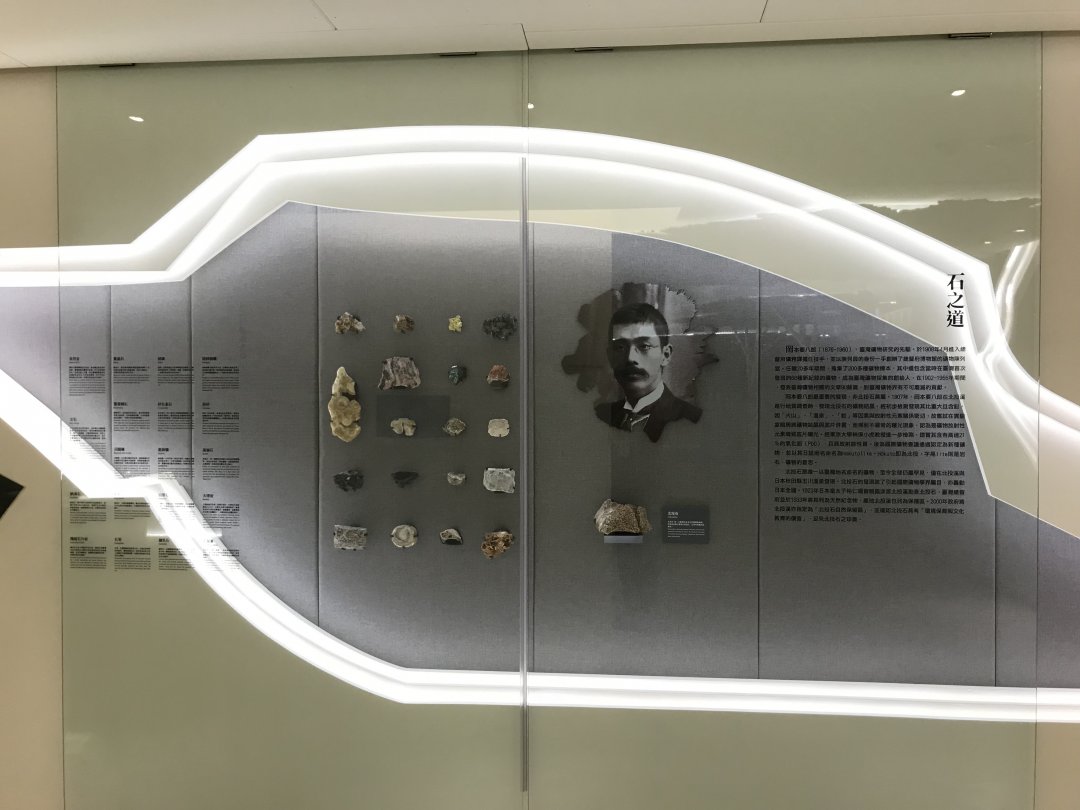
9. Geolosical survey of Taiwan
Yohachiro Okamoto, a pioneer in the study of Mineralogy in Taiwan, discovered Hokutolite. Okamoto entered the Colonization Bureau of the Taiwan Governor's Office in 1908 as a technician in the Mineralogy Office and helped with the establishment of a mineral display room with his rock samples. In 20 years working in the museum, Okamoto collected more than 200 rock samples and 68 of these were newly found. Hokutolite and Daiton Sulphur are two of the four major mineral discoveries in the Meiji period and Okamoto was highly valued in the Japanese mineralogical world because of his achievements.
Hokutolite is the only radioactive rock that is named after a place in Taiwan. Hokutolite can only be found at Beitou in Taiwan and Tamagawa Hot Spring in Japan. In 1905, Yohachiro Okamoto went for investigation in Beitou and he placed a film negative on a rock. Later, he founded that the film was exposed. He thought that the mineral may be slightly radioactive. Professor Kotora Jimbo from Tokyo Imperial University checked the mineral and found that it contains 21% lead monoxide and is radioactive. In the International Mineral Meeting in 1912, Hokutolite was regarded as a new kind of rock and was named after Hokuto, the Japanese name of Beitou.
The finding of Hokutolite drew the attention of the mineralogical world and was known in Japan as well. Okamoto had published many articles that advocate the protection of Hokutolite. In 1923, Prince Regent Hirohito visited Beitou river and saw for himself the Hokutolite. In 1933, Hokutolite was listed as a natural monument and Beitou river was in the protected area with warning bans for the public not to collect the rocks. In 2000, Hokutolite was included in the natural and cultural landscape by the government and its value in environmental protection and cultural education was established.
Entemnotrochus rumphii, or Rumphius' slit shell, appeared in the Cambrian period, which was about 570 million to 490 million years ago. It flourished in the Mesozoic and gradually disappeared in the Cenozoic period. Paleontologists thought it was already completely extinct in the third century BC, but at the end of 19th Century, the extant taxon, or living sample, was found. Hence, Rumphius' slit shell is regarded as a living fossil.
Entemnotrochus rumphii was distributed in the coast of Japan, Taiwan and Indonesia, often in the deep sea. It is the biggest one in the Pleurotomariidae family. The cone-shaped shell has yellow and red flame-like stripes on it, like a grand palace. There's a long crack at the aperture and it is moderately umbilicated, the umbilicus penetrating to the apex. Entemnotrochus rumphii is highly valued because its scarcity and primitive structure made it important in researching the development of shells.
In 1968, the live Rumphius’ slit shell was first found around Dongsha Islands by a Taiwanese fishing boat and it was only the fourth Rumphius’ slit shell ever captured in the world. On May 7th, 1969, a fishing boat from Keelung caught four Rumphius’ slit shells and two of them were sent to the museum. After being identified by professor Lîm Tiau Khè from National Taiwan University an exhibition of the living Rumphius’ slit shell was held and leading to wide popularity for the Rumphius’ slit shell. At that time, more than 10,000 people came in one day to see the Rumphius’ slit shell that appears once in a blue moon. The exhibition lasted for 36 days and attracted more than 500,000 people. It was the beginning of the popularity of studying shells.
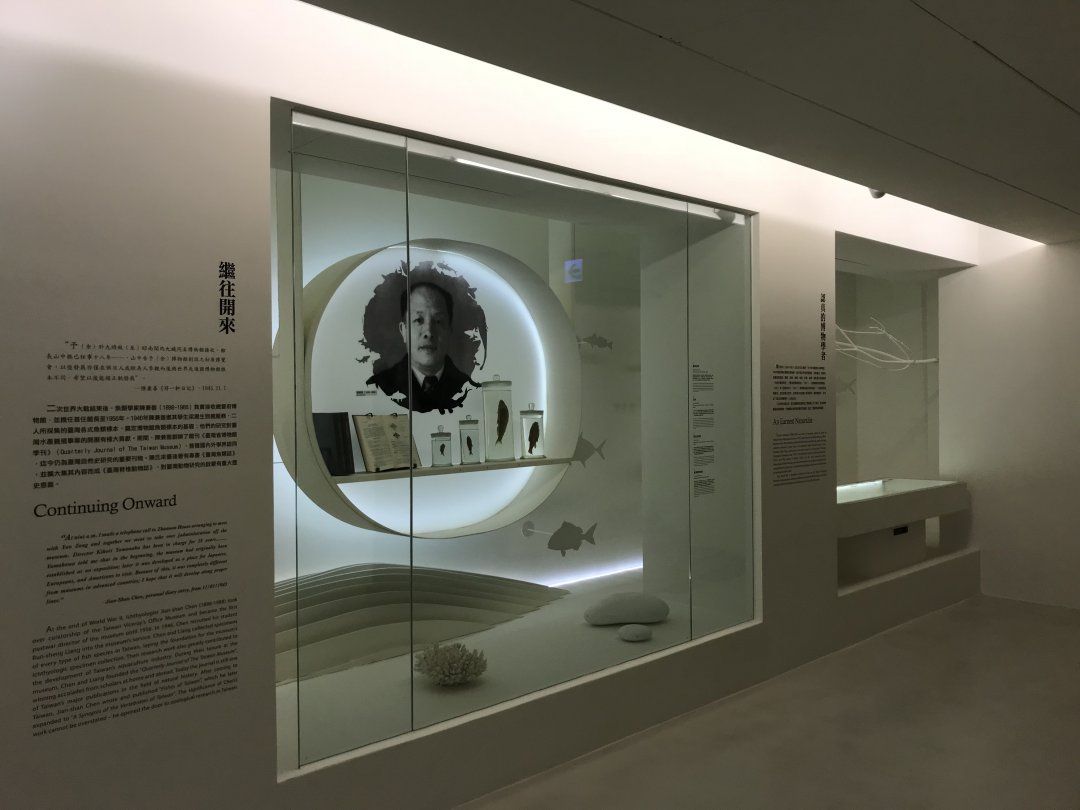
10. Fish of Taiwan
Chen Jian-Shan was the first Director after WWII. The Taiwan Governor Museum was renamed as the Taiwan Provincial Museum. Director Chen started the Quarterly Journal of the Taiwan Museum, a significant academic journal with a history that is still being published.
Director Chen graduated from the Department of Museum Studies from Beijing Normal University with a focus on fish studies. He wrote many textbooks on fish and animal genetics. Chen had also visited natural history museums in France and England. With the spirit of a naturalist that likes to conduct field studies, he and his favorite pupil Liang Run Sheng traveled around Taiwan and collected 376 samples together. A Synopsis of the vertebrates of Taiwan, published by Chen, was a really important book in this field.
Many Taiwanese and especially gourmets enjoy the taste of sweetfish. The migratory Sweetfish, or ayu, is in the order of Osmeriformes. It can be found in Zhuoshui River and the north part of Sanjhan River in Hualien. The original sweetfish in Taiwan became extinct and the fish in Taiwan today were introduced from Japan. This fish sample was collected by Chen Jian-Shan and Liang Run Sheng in Xindian in 1946. This could be the original species in Taiwan, which highlights the value of the piece.
This Hemimyzon formosanus was collected by Masamitsu Oshima. Oshima, an important fish scholar in Taiwan under Japanese rule, was from Hokkaido. Graduating from Tokyo Imperial University, his focus was on zoology. He was an important fish scholar and a pioneer of termite studies in Taiwan. When he lived in Taiwan, he published a lot of papers and visited the whole Tamsui River and discovered the Taiwanese salmon (Oncorhynchus masou formosanus). Salmon is cold-water fish that has to stay at low temperature and is more likely to be found in warm temperate zones. Judging from the geographic location of Taiwan, it is not the best place for salmon to grow, so the general belief was that there were no salmon in Taiwan. The discovery of Taiwanese salmon by Masamitsu Oshima and his assistant was revolutionary to the academic world.
Masamitsu Oshima had a diverse interest in research. He worked on reptiles, birds and also termites in Taiwan. He was employed by the Taiwan Governor's Office to do research on the investigation and control of termites.
Yasuichi Horikawa was a passionate self-taught scholar, who was never formally trained but became an authority on animal collections in Taiwan during the Japanese period. He came to Taiwan in 1917 and went to forests to collect samples of reptiles, birds, amphibians, mammals and even fish and shellfish. We have noticed from the shell samples in the museum that Horikawa kept the notes in the shell or sometimes marked on the shell with ink. Now the museum has a collection of 112 shell samples collected by Horikawa.
Among these specimens, the most special is Stereophaedusa horikawai, an endemic species from Taiwan, found in Yilan by Horikawa. In 1941, Japanese shell scholar Tokubei Kuroda named it as Stereophaedusa horikawai. Horikawa Yasuichi is one of the last Japanese scholars in the museum to leave Taiwan. He worked until the February 28 Incident in 1947 then went back to Japan. With his departure, no more major discoveries were found in Taiwan. Another group of scholars came across the sea to Taiwan to continue the work in the museum.
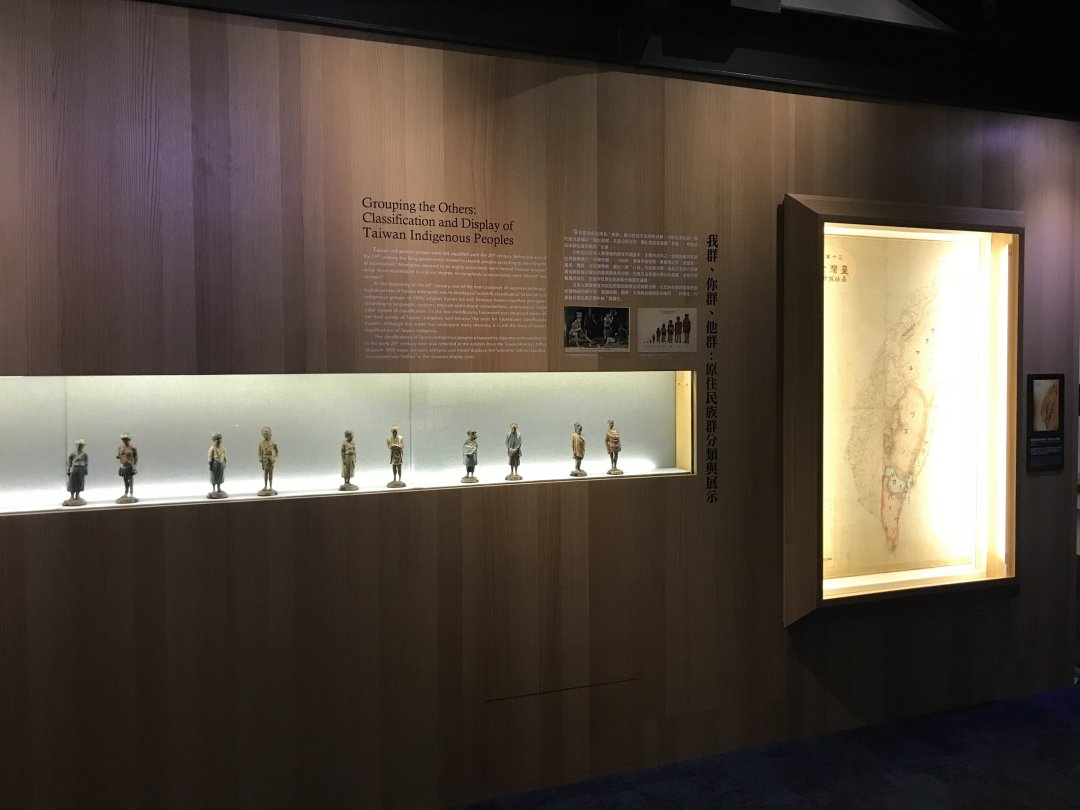
11. Grouping the Other Classification of Taiwan Indigenous Peoples
In the Qing dynasty, the authorities placed indigenous people into two categories. The term “shufen” refered to those who had more interaction with Han Chinese immigrants, and those who had less or no interaction were called “shengfan”. When the Japanese government came, they soon began investigations and the indigenous groups were classified in a more scientific way. Scholars Kanori Ino and Dennojou Awano went on a field study and proposed the idea of eight groups of aboriginals, according to their language, custom, physical appearances and culture. This was the beginning and the foundation of how the indigenous people were categorized.
After the classification was made, Hakata dolls were used as teaching aids. Various models, maps and figures were placed in the cabinets of the Taiwan Governor Museum to visualize the scientific classification of groups.
Hakata dolls, a renowned traditional art craft, are bisque-fired clay dolls featuring lively movement, coloring techniques and pigments that won't fade. Hakata-based artist Seisuke Inoue had been actively promoting Hakata dolls in many expositions in Japan and abroad during the Meiji and Taisho period. At that time, anthropology Professor Shogoro Tsuboi from Tokyo Imperial University was trying to develop dolls as teaching aids because suitable teaching aid dolls were not yet available in Japan or abroad. Hakata dolls should be good enough to meet the academic standard. Inoue took the challenge and produced a series of dolls of different physical features and various attire. The dolls are of different ethnic groups from all around the world and different ethnic groups in the Japanese Empire. Inoue provided the dolls of different ethnic groups around the world to the 3rd National Industrial Exposition, hosted by Tokyo and also the Universal Exposition in 1900, hosted by France. Hakata dolls have become well known. The above-mentioned dolls were used in tens of thousands of Japanese schools as teaching aids. The dolls of indigenous people of Taiwan, as exhibited here, were made in 1910~1913 according to the record from the field study by Ushinosuke Mori and Shogoro Tsuboi.
Hotsuma Ozaki, worked as the Mandarin editor of Taiwan Daily News, was knowledgeable and had a broad interest in Classical Chinese poetry, Japanese poetry and seal carving. Ozaki was a versatile intellectual who enjoyed art, antique collecting and had a good understanding of Taiwan’s history, customs and aboriginal crafts. During his service at the museum in 1926~1928, Ozaki proposed the idea of "The agency of a museum" and borrowed antiques from private sectors for temporary exposition purposes. With the financial support of the Sakuma Foundation, he collected goods from indigenous people. Ozaki developed a unique point of view on the history of Taiwan and wrote the Research on the History of Taiwan's Natural History based on the documentation and collections of the museum. He thought that the history and culture of Taiwan had not developed within the past two or three hundred years, as documented. Using the methodology of natural history, Ozaki assumed that the history of Taiwan can be dated back to 4000 years ago and was actively finding the sources and concrete proof all around Taiwan that supported his idea. In 1927~1929, he served on the committee of the project of the Savage Group Collection of Sakuma Foundation and went to all parts of Taiwan to collect aboriginal goods. From his collection, we can see how he constructed and provided evidence to the hypothesis of an ancient civilized Taiwan.
In addition to Ushinosuke Mori's collection, the Taiwan Governor Museum had received the sponsorship from the Sakuma Foundation in the late 1920s. The museum worked with the Bureau of Aboriginal Affairs for a huge, strategic collection of aboriginal goods and the project lasted two and a half years. Collectors went to 207 savage villages in Taiwan and took 1760 items that were called the Savage Group Collection of the Sakuma Foundation. It was a wide range and comprehensive collection, which were exhibited in the museum in the later period of the Taiwan Governor Museum. From the records on the lists, we can now trace back the journey of how these items were brought to the museum. Some of them were possessed by famous historical people; for example, a shell bead ankle ornament, collected in Mahebo, Noko District, Taichu Prefecture, has recently been discovered to have once belonged to chief Mona Rudo, who was involved in the Musha incident in 1930.
The Sakuma Foundation sponsored the project to honor the achievement of the aboriginal policy of General Sakuma and preserve the cultural items from the changing aboriginal tribes before they were gone. Before the collection was made, a proposal from the Savage Group Collection project classified the collection into three categories according to different levels of importance.
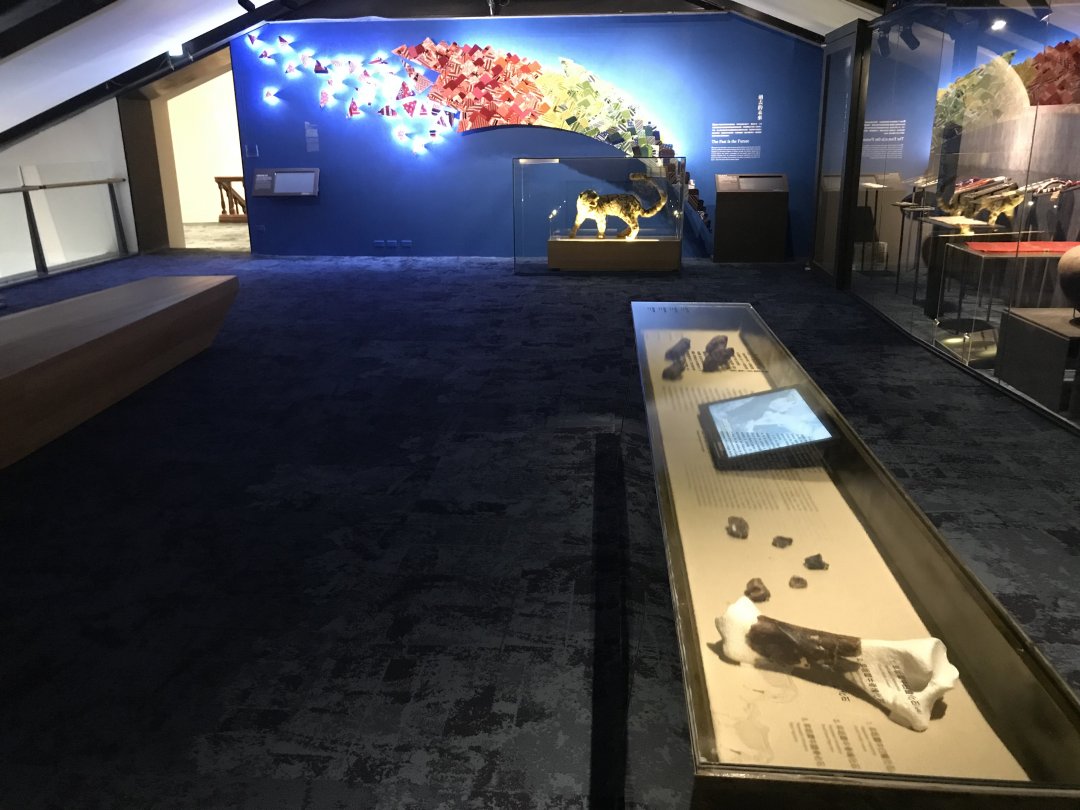
12. The past and the future of museum, Vanishing and Rebirth
In 1931, at the catchment area of the Tsai Liao River in Tainan’s Zuojhen District, professor Ichiro Harasaka discovered the fossil of a large mammal. He assumed it was a rhinoceros fossil that could be dated back hundreds of thousands of years from around that area. Later, Professor Harasaka published many papers on the subject and the popularity of fossil hunting in Zuojhen District was started.
In 1971, fossil Collector Pan Chang Wu, from Tainan, received a rhinoceros tooth from a local school kid and knew the spot where it was found. In December 1971, Professor Lîm Tiau Khè from the Department of Geoscience and Professor Sung Wen Hsun from the Department of Archeology at National Taiwan University, teamed up with the Taiwan Provincial Museum and went to Zuojhen District for excavation. In 1972, the Museum employed two Japanese paleontologists, Tokio Shikama and Hiroyuki Otsuka, to assist in the second excavation. About 40% of the rhinoceros body was found and it was the most complete rhinoceros fossil found in Taiwan. It can be dated back to between 900,000 to 450,000 years ago. Professors Otsuka and Lin named this rhino fossil Rhinoceros sinensis hayasakai to commemorate the extraordinary contribution of Professor Ichiro Harasaka to Taiwan’s research in paleontology.
The items kept in the museum are not just past memories. When looking at them, we can think of the past and look forward to the future. As new theories and ideas emerge, the collections can be of help many years later. The Formosan clouded leopard was declared extinct in 2014. The specimens in the museum are important evidence that the Formosan clouded leopard once lived in the mountains of Taiwan. The specimens are not just for observation purposes, valuable genetics and morphology information are also hidden in them. There are important clues to rebuild the species in the future which are meaningful in research.
Traditional clothes of the Atayal people are part of the museum’s collection. The techniques and patterns that are now lost in the tribe can be found on these clothes. Yuma Taru has worked with the museum for more than 20 years. She discussed the background of the items with colleagues and interpreted them in a more detailed way to analyze the meaning behind them, to develop the core of new creations. This has allowed the traditional techniques to gain new life and also a new phase of tribal culture.
Lastly, you can sit in the ark and look at the light and shadow of the collection of the museum and the shadows look like nothing. Some of the pieces became extinct, but they did exist and have an irreplaceable value. Humankind should thrive with nature and these meaningful items are just around us. In the museum, the past is the future.