Taipei Info Hub - English Audio Guide
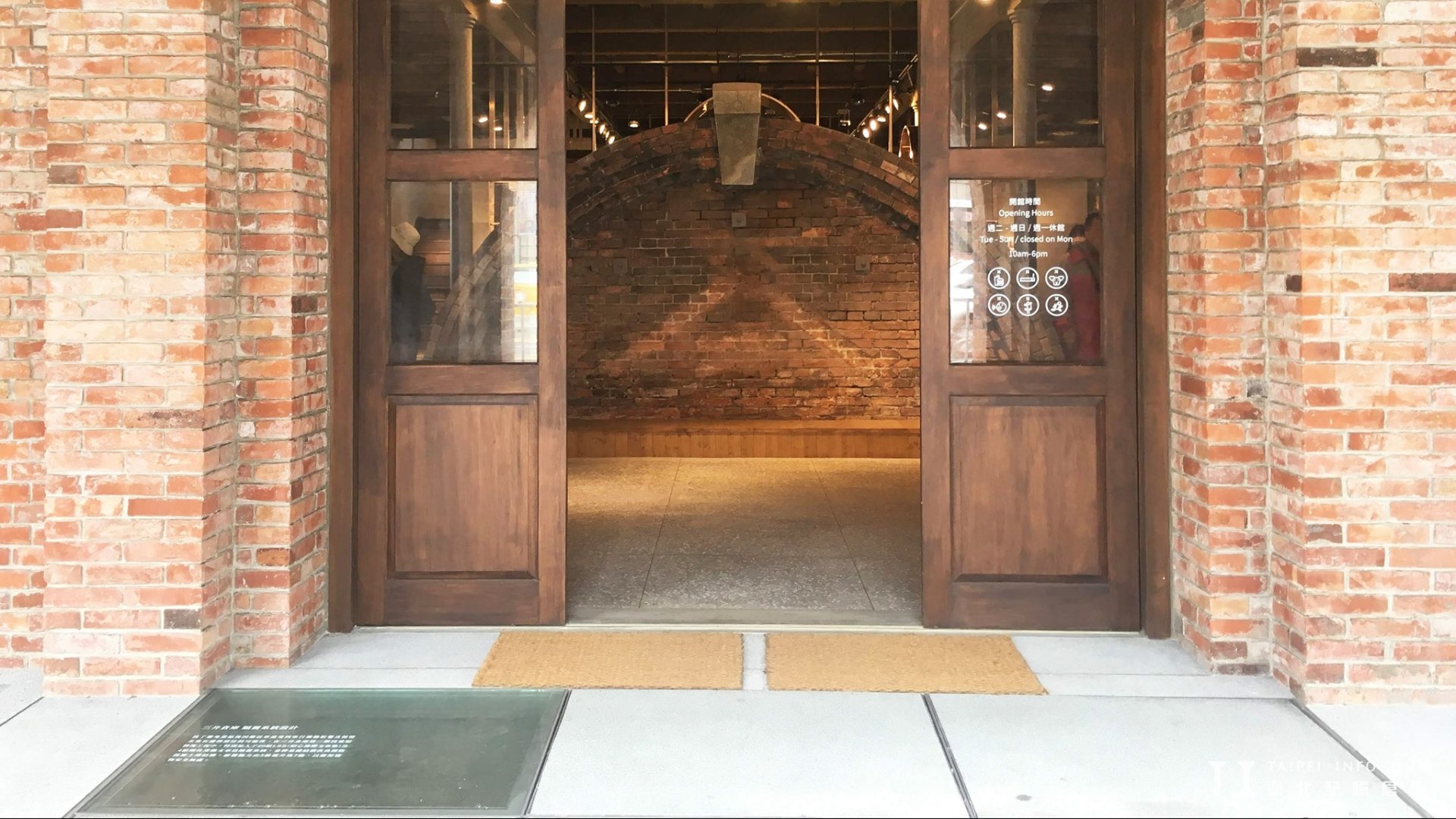
1. Welcome to Taipei Info Hub!
Welcome to Taipei Info Hub! You are now in a space that stores the rich historical memories of Taipei. Let's take a moment to slow down and travel back to Taipei over a hundred years ago!
How did this building come into existence? In 1913, Taiwan's export trade flourished, and "Mitsui & Co., Ltd." was the largest trading group in northern Taiwan at the time. As water transportation gradually shifted towards railways, the Mitsui group chose to build warehouses near Taipei Railway Station and the railroad for convenient storage and handling of goods.
Between 1914 and 1920, the Mitsui group cooperated with "Kodo Transportation Company" to store Mitsui's products here. After years of use, the building space deteriorated and underwent renovation in 1935, becoming the property of the "Nitto Shosen Group" until the end of World War II when the Taiwan Provincial Materials Bureau and the Railway Administration subsequently managed it.
However, the warehouse story doesn't end there. You can turn left towards the gable in front of the elevator and scan the QR code on the display board to the right of the gable. It will reveal more stories about the warehouse's migration.
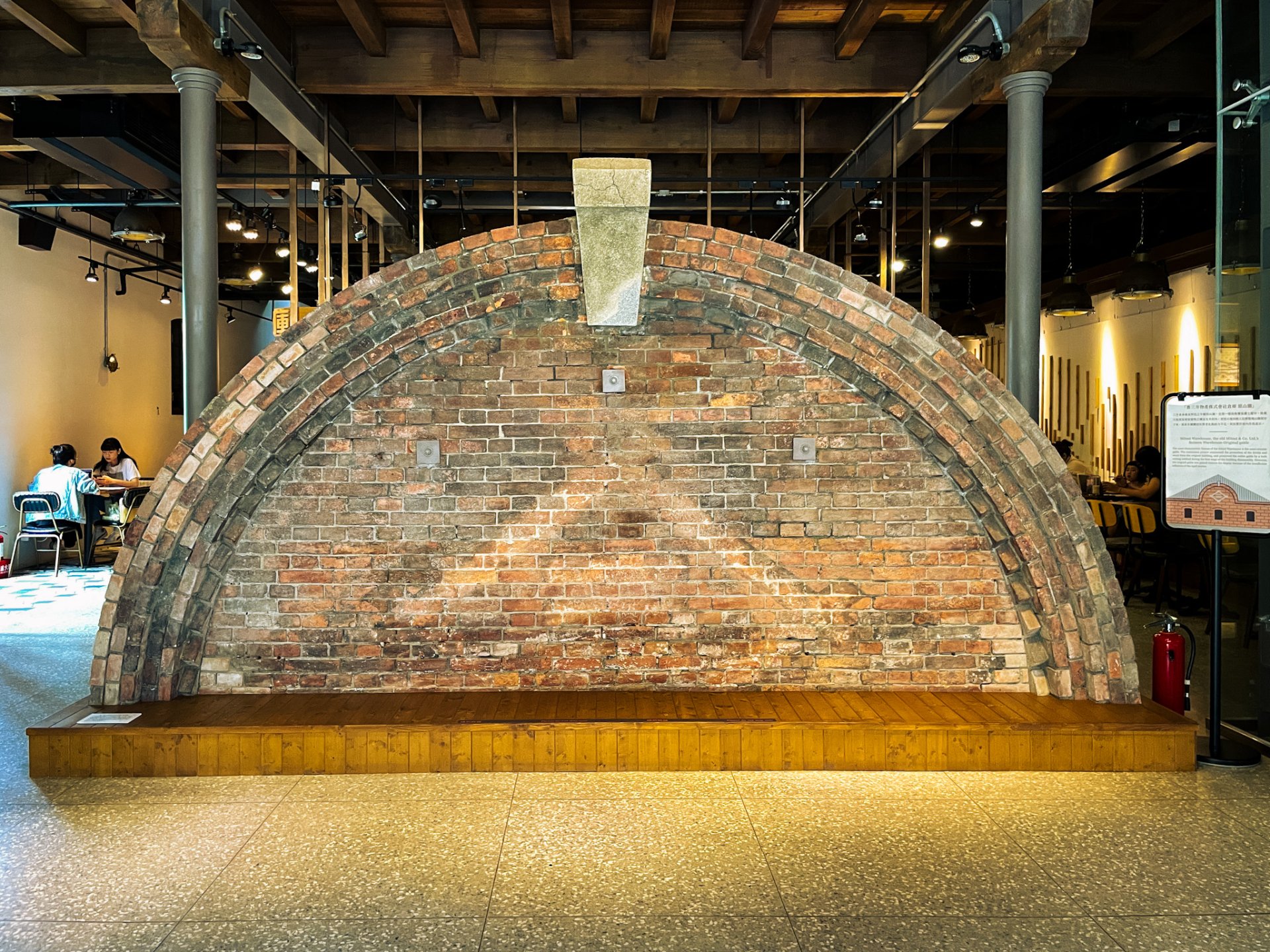
2. The story of Gable
The gable before you tells the story of this warehouse's migrations. In 2016, as part of Taipei City's Western Gateway Project, Mitsui Warehouse underwent a relocation, moving 51 meters east and being reconstructed using the same traditional wooden construction method. Due to the aging and weak adhesive strength of the original gable, a large-scale cutting method was employed during the project to preserve the intact semi-circular façade. You can use the "AR" function on your mobile device to scan the gable and find a clearer view of the Mitsui diamond-shaped logo!
During the reconstruction process, most of the remaining wooden structures were aged and damaged. As a result, 1/4 of the building was constructed using recycled wood combined with new materials. The external brick walls are a mixture of old and new, except for the side facing Taipei Railway Station, where the bricks were completely rebuilt.
The former Mitsui Warehouse, now known as Taipei Info Hub. Its first-floor space transformed into a space where it combines a bookstore, café, and exhibition area, serving as a gateway for visitors to explore Taipei's history and information.
Now, let's step inside and move towards the exhibition area behind the gable. Together, we will delve into the industrial history waiting to be discovered!
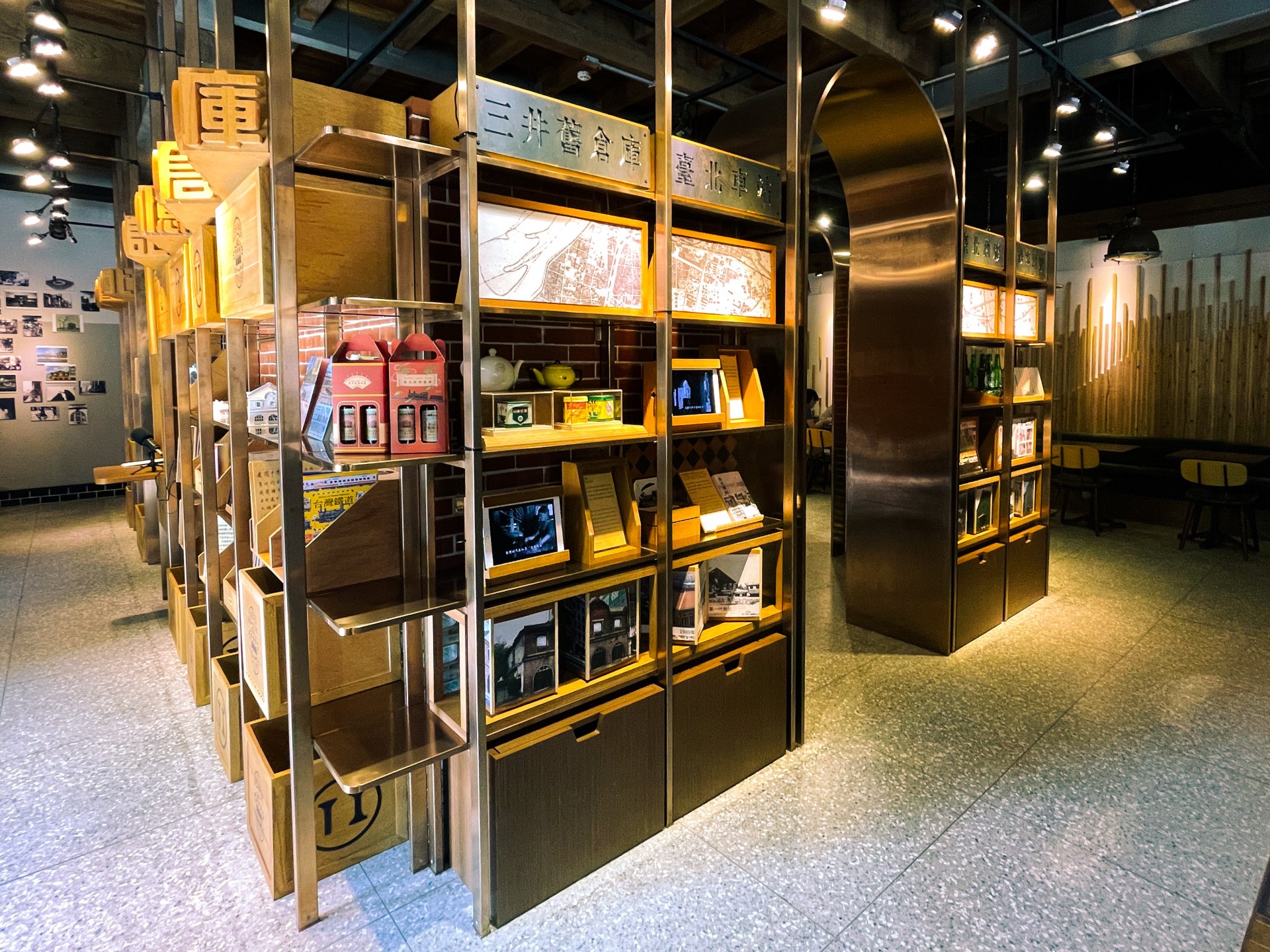
3. The Story of Mitsui Group
During the Japanese colonial period, the Mitsui Group engaged in various commodity trades in Taiwan, including tea, timber, and camphor. They specialized in exporting these products and even established a renowned international brand of black tea called "Nitto Black Tea," which was exported worldwide. Nitto Black Tea originated from the Assam tea variety introduced in 1920. It was initially cultivated in central Taiwan for experimentation and later established tea factories in the mountainous regions of northern Taiwan. The popular "Taiwan Tea No. 8" that you often encounter today is derived from the cultivation of Assam tea trees. Can you spot the old packaging of Nitto Black Tea? Additionally, if you like beer, you can try the unique Black Tea Beer available at Taipei Info Hub!
The tea export industry played a significant role in driving Taiwan's economic development, while at the same time, Taipei was undergoing changes. You can take a step to your left and move to the next station to discover more about Taipei's urban development story!
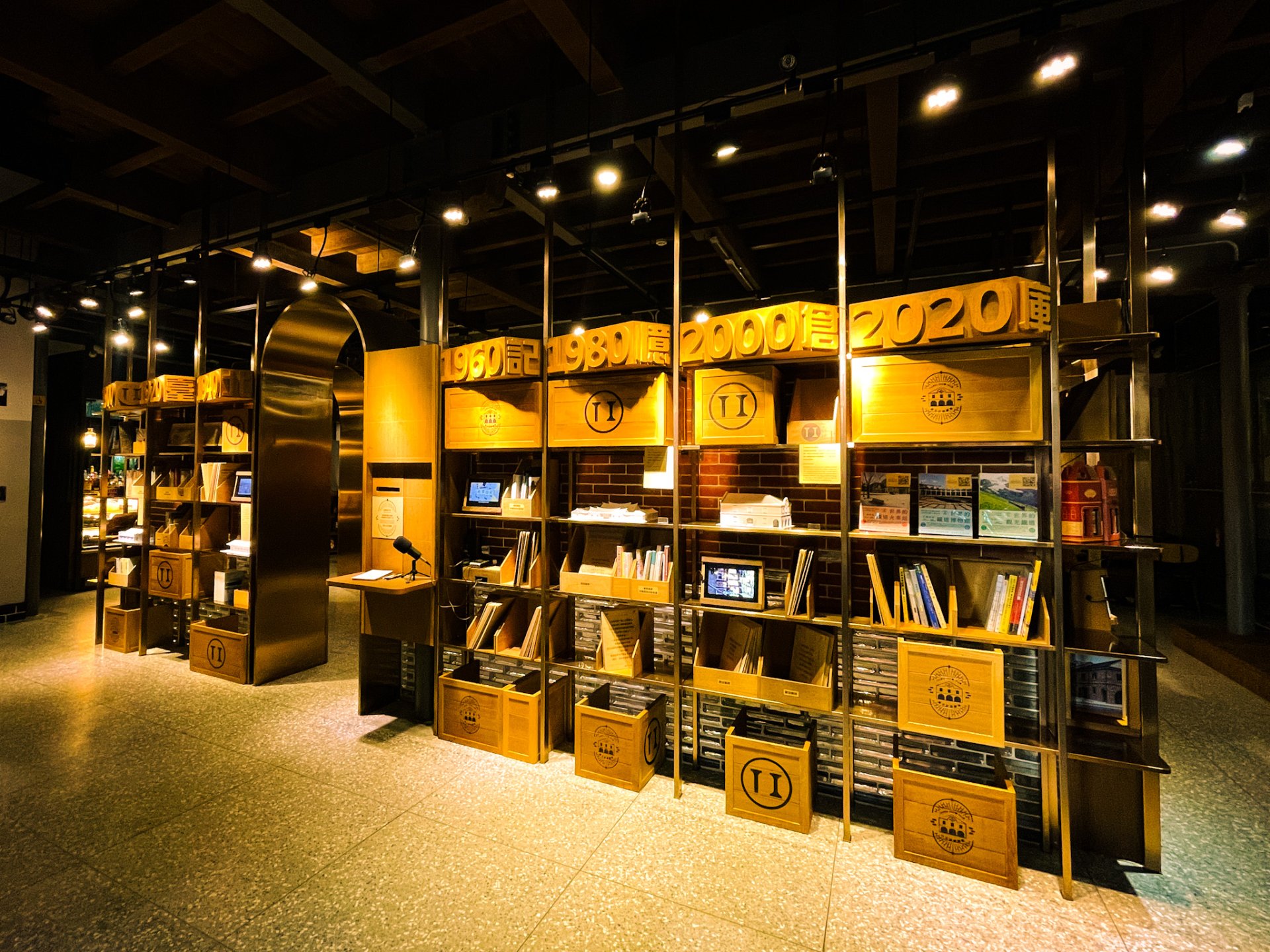
4. Memories of Taipei City
What is your first impression of Taipei City? Regardless of the reason you came to Taipei, this city is likely to leave you with different memories.
You can pick up a pen and paper, write down your memories of Taipei, and drop them into the Memory Station to preserve your memories here. Alternatively, you can visit the Information Center and purchase postcards shape in Taipei Info Hub. We can help send your memories to your future self!
Next stop, we will move to the photo wall behind us to explore the visual stories of the city.
5. Photo Wall
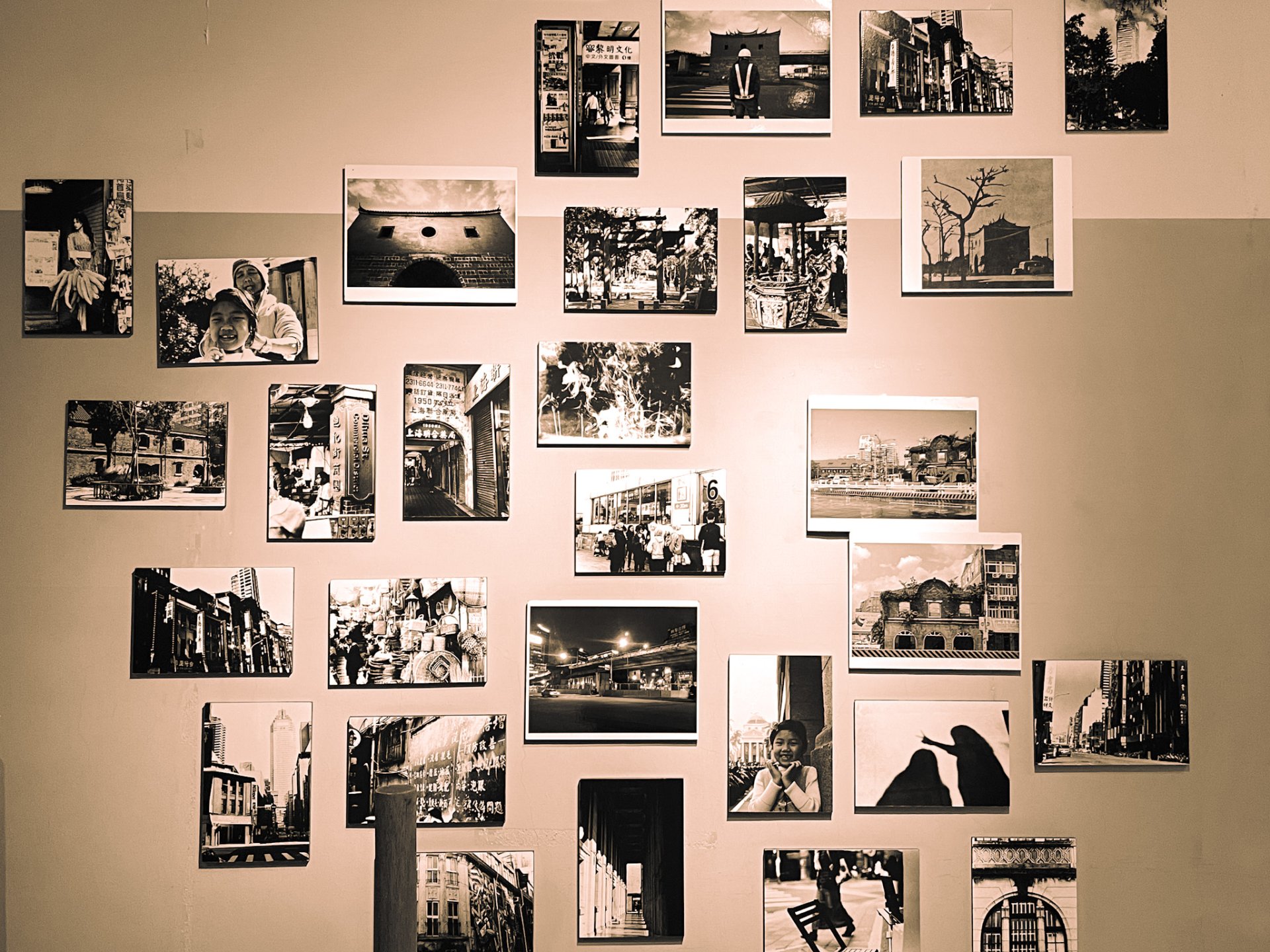
The photo wall before you is a glimpse into the rich history of old Taipei. In the center of the photo wall, you'll see an image of Taipei Info Hub before its relocation and renovation. Surrounding Taipei Info Hub are black and white photographs capturing the lives of people and streets in Taipei City.
Make a guess! Can you identify some of the buildings? Alternatively, you can activate the AR function and scan the photo wall to look for the presence of the North Gate beast!
I bet you've already noticed a café on the right side of the photo wall. Yes, it's the River Shop Café! I know you can't wait any longer, so let's move to the counter and discover what magical brews we have!
6. River Shop Café
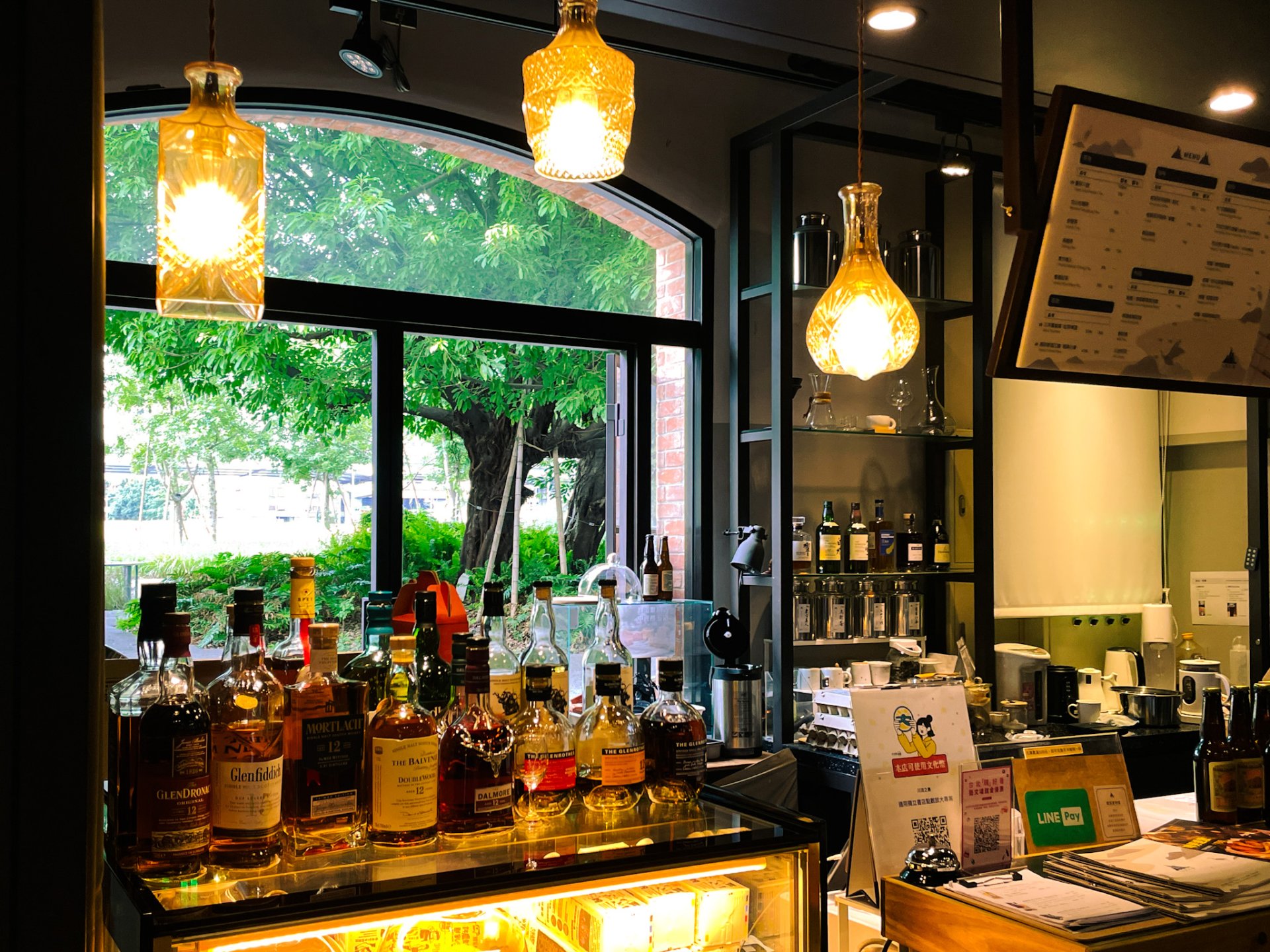
Have you noticed the huge window behind the café counter? It's not actually a window! It used to be a door that connected the warehouse to the railway, allowing for the loading and unloading of goods. The current warehouse is located in the Taipei City North Gate Plaza area, surrounded by numerous cultural heritage buildings such as the Railway Department, Taipei Post Office, and the Futai Street Mansion. In the past, this area was considered the golden zone of Taipei City! It was not only in the city center but also close to the train station and Tamsui River Pier, making it a convenient transportation hub for cargo storage.
Today, Taipei Info Hub remains situated at one of Taipei's most significant transportation junctions. It serves as a gateway for travelers to explore the city and bears witness to the historical changes and spatial transformations in Taipei's western district.
The River Shop Café in front of you offers various delicacies, including egg cakes and postcards featuring the nearby historic sites of North Gate. You can use the "AR" function on your mobile device to scan the postcards on the counter and discover the cuteness of these landmarks!
Next, we will turn right and proceed to the curated book section, continuing our exploration of different aspects of Taipei City!
7. Unrest Era
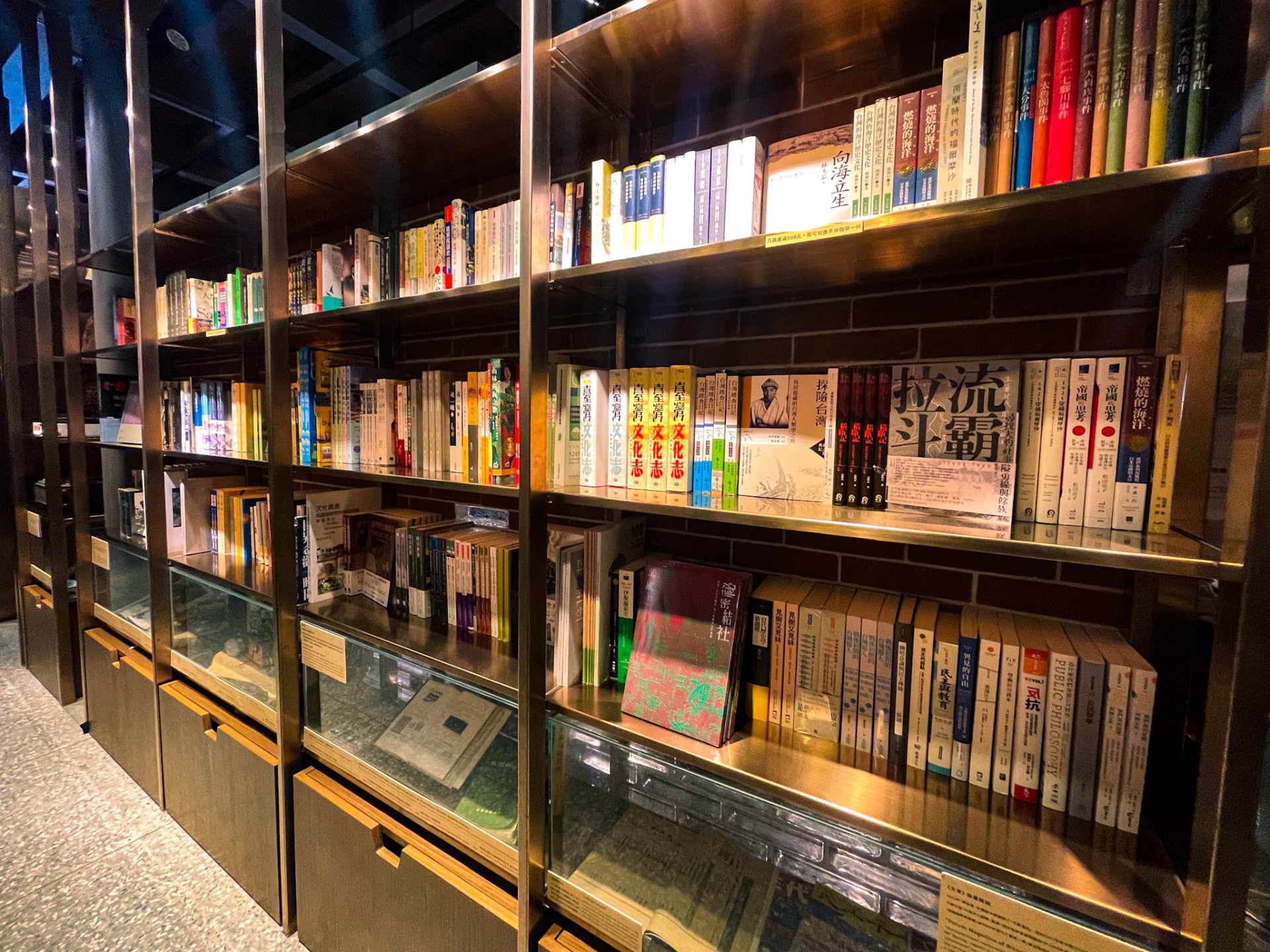
During the Age of Discovery, Taiwan served as an important stronghold of the Verenigde Oostindische Compagnie in Asia. In the Qing Dynasty, numerous port towns developed due to expanding trade. In the Japanese colonial period, the development of Taiwan's forestry resources under the leadership of the Taiwan Soutokufu, the administrative government of Japanese colonial power, transformed the lives of indigenous people and the history of the mountains and forests, sparking a series of resistance campaigns.
After the arrival of the KMT government, Taiwanese society faced the impact of Western ideologies. The establishment of the "Wenxing" magazine in 1952 triggered a wave of fierce debates through sharp commentaries.
You can browse the books on the shelves to gain insights into how Taiwanese society responded to external influences and intellectual challenges.
Don't forget to continue exploring ahead and discover a variety of urban shops along the way.
8. Urban Book Haven • Bookstore Street in Taipei
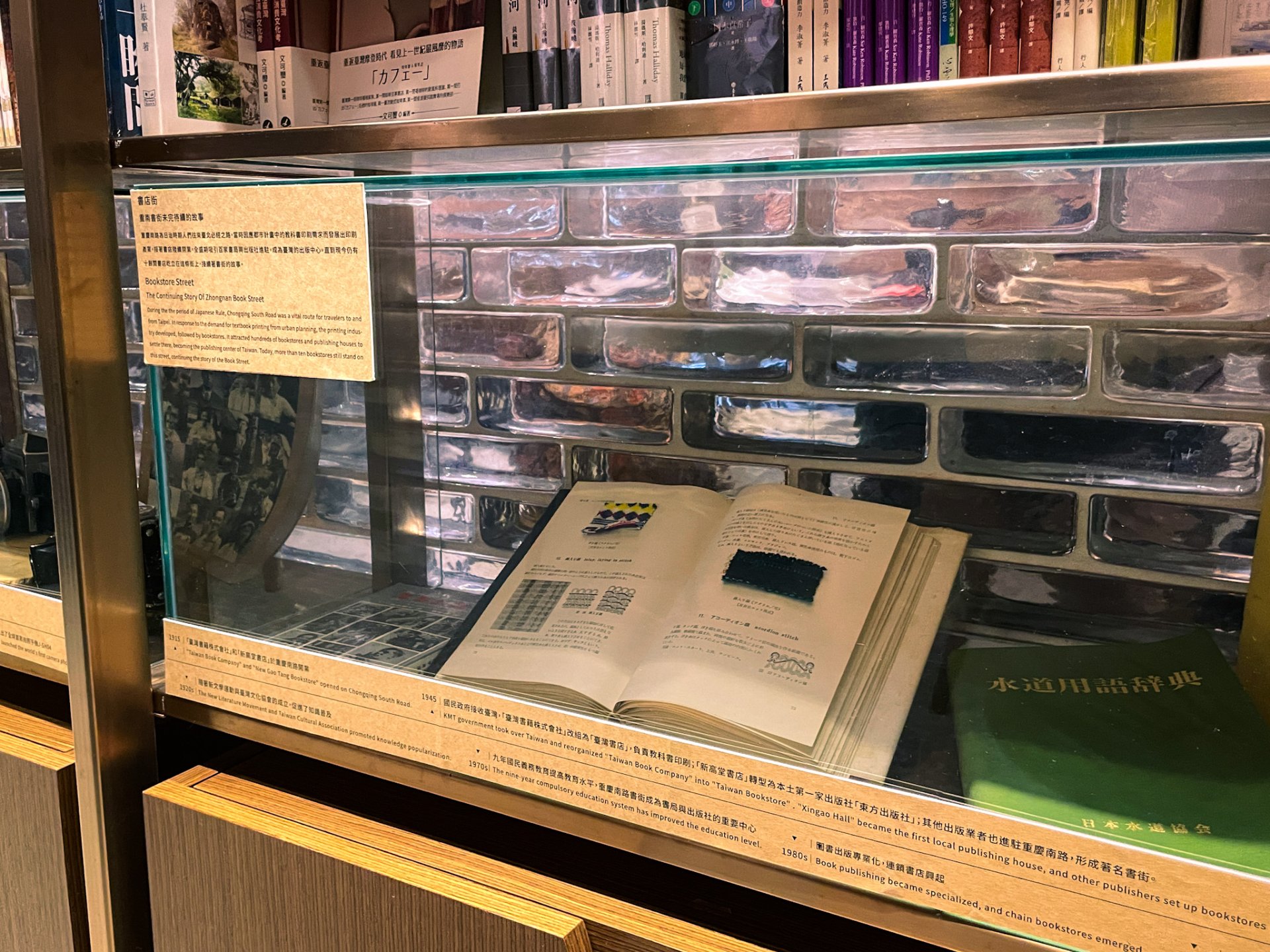
As you walk along Taipei's Chongqing South Road, have you noticed the dozen or so bookstores on both sides of the road? During the Japanese colonial period, in response to the demand for textbooks, the printing industry flourished on Chongqing South Road, making it the publishing hub of Taiwan!
Perhaps you've also noticed that the books stored in Taipei Info Hub are centered around Taiwan's trade history, forestry resources, and indigenous culture. These books serve as a microcosm of Taiwan's development and trade history, forming the foundation of Taipei's urban growth!
Keep moving forward and continue to listen to the stories of Camera Street!
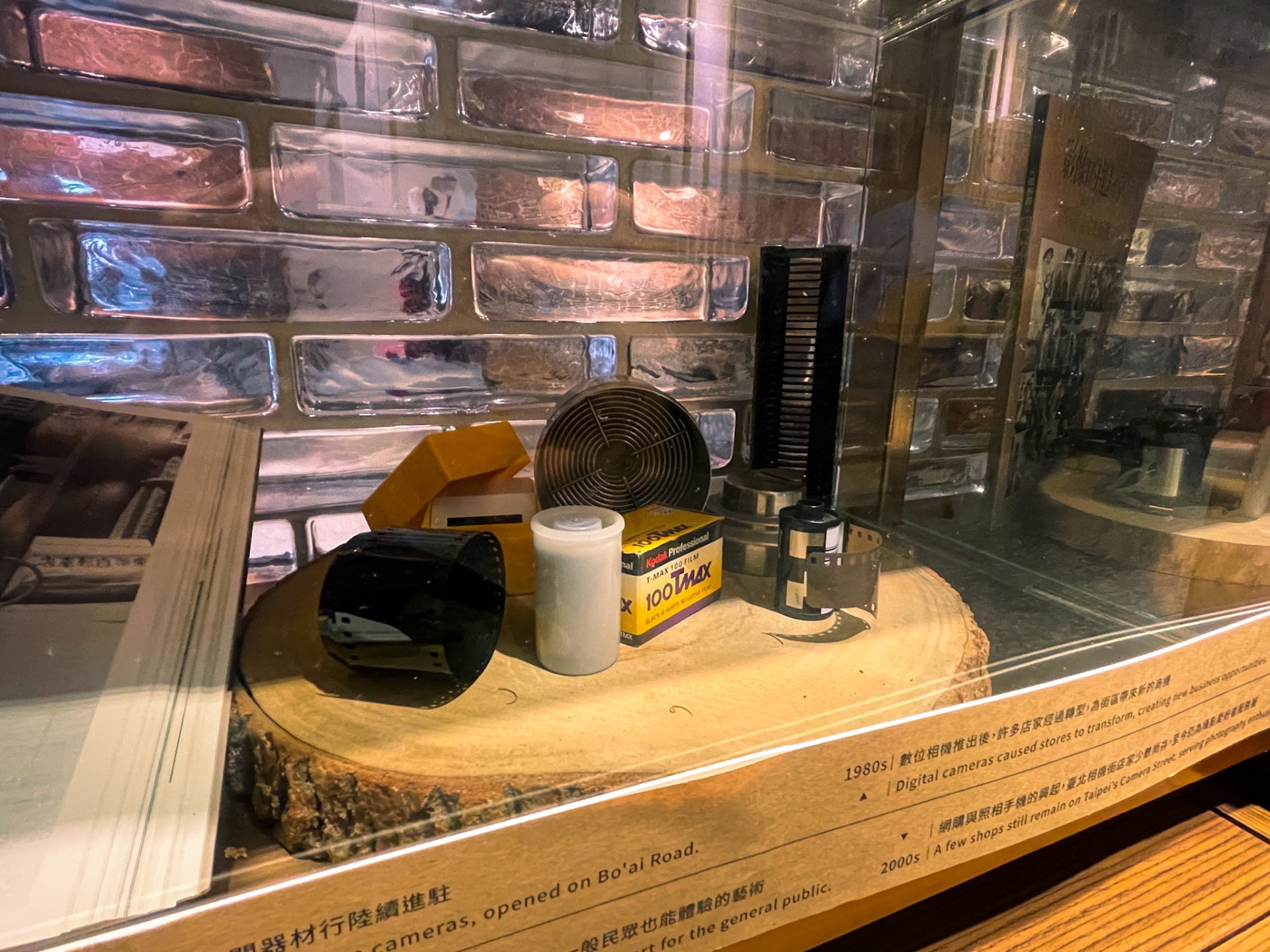
9. Urban Imagery • Camera Street
Have you ever wondered what Taiwan looked like 100 years ago? The art of photography was introduced to Taiwan during the Japanese colonial period. Thanks to its commercial demand and convenient transportation, today, the vicinity of Beimen, along Bo'ai Road, has become Camera Street, a hub for photography equipment. With the advent of imaging technology, the social customs and changing landscapes of Taiwan were able to be documented.
Before leaving Taipei Info Hub, don't forget to find your favorite angle and take a selfie to capture the moment. Let's become a part of history together!
Next stop, we'll visit the beloved Audio-Visual Street by the locals of old Taipei.
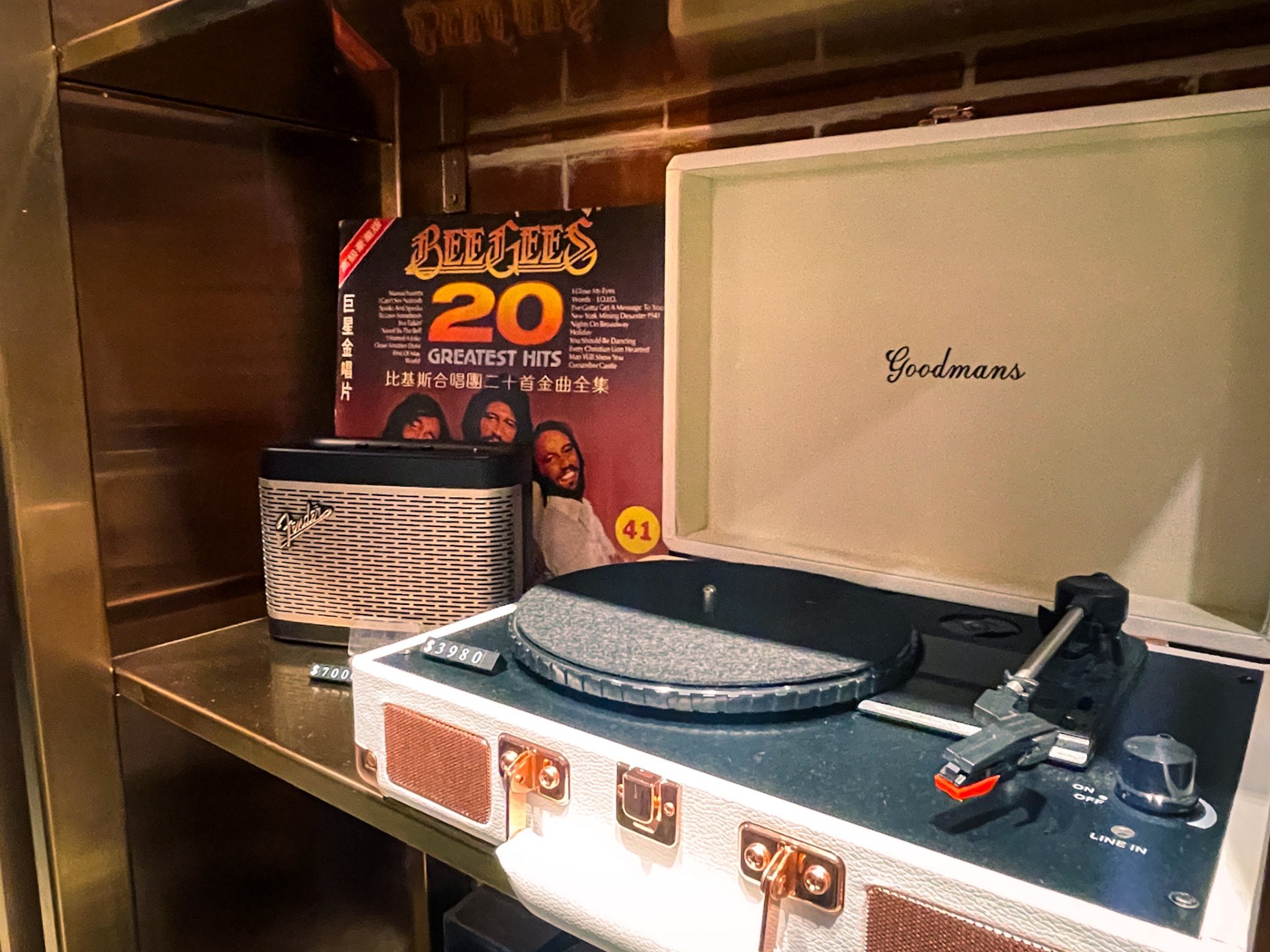
10. Urban Elegance • Audio-Visual Street
Have you ever wondered where the people of old Taipei used to shop before the advent of online stores? It's the Chung Hwa Market!
The locals would say that you could find anything at Chung Hwa Market. In the 1960s and 1970s, Chung Hwa Market was the most prosperous shopping center in Taipei. It sold household appliances, audio equipment, antiques, and various snacks. There was nothing you couldn't find there. It was only in 1992, when the downtown area was redeveloped, that the market was demolished and relocated to the vicinity of Chung Hua Road, becoming the new Audio-Visual Street of Chung Hua Road. You can click on the link below to listen to the sounds of Taipei's era!
To unlock the hidden second floor of the warehouse, you can take the stairs or use the elevator. By listening to the audio guide, you will receive clues about the architectural secrets of the warehouse!
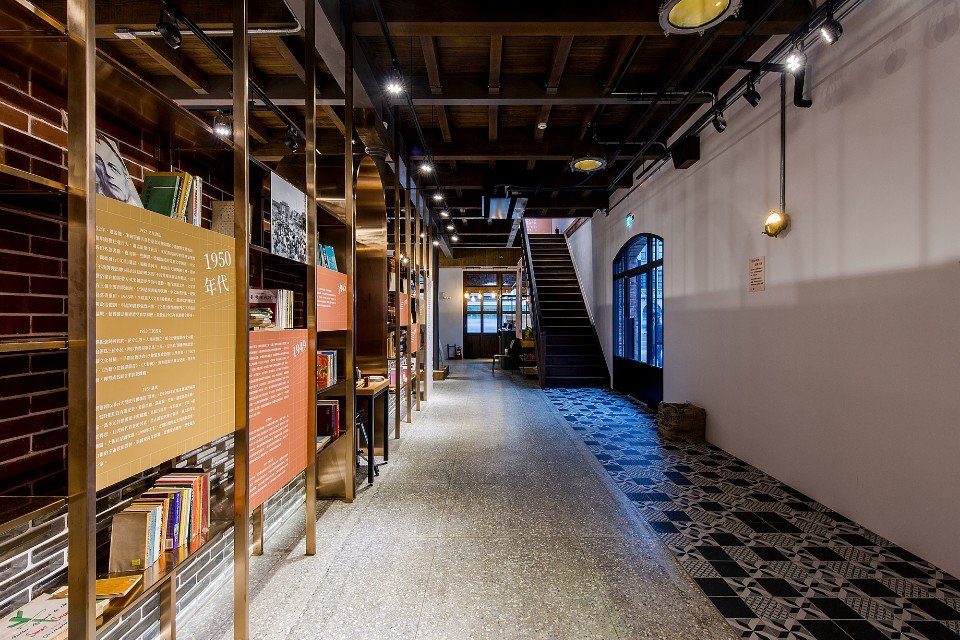
Encore: Come to the second floor for a bonus surprise!
Follow us upstairs and join us on the second floor. This is the special exhibition area of Taipei Info Hub. In addition to regular exhibitions, we often host cultural and historical lectures and related activities in this space.
Take a careful look around and you'll notice more details about this wooden building. First, on the wall next to the staircase, there are two iron beams preserved from the original structure, embedded in a wall of red bricks. Moving to the center of the second floor, if you look upward among the interlacing roof rafters, you'll find a special wooden plaque featuring Taiwanese folk deity "Guanyu" (God of War), as well as the patron deities of carpentry, "Luban Xian Shi" and "Heye Xian Shi." They serve as the guardians of this historic building, bearing witness to the passage of time in Taipei City along with the Taipei Info Hub.
If you enjoy our stories and would like to learn more about the latest information on exhibitions and events, remember to stay connected with the social media platforms of Taipei Info Hub. We will continue to host various exciting and enriching activities.
Thank you for joining us today in creating new stories that belong to Taipei. Taipei is a vibrant city that has evolved over time to become what we see today. We welcome you to visit Taipei Info Hub often, join our exhibitions, read books, enjoy coffee, and share your memories and stories about Taipei with us!
Please click on the link below to fill out a feedback questionnaire and let us know your thoughts!