眼底。沙灣-基隆沙灣歷史文化園區雙語智慧導覽 Eye on Shawan - Keelung Shawan History and Culture Park Bilingual Smart Guide
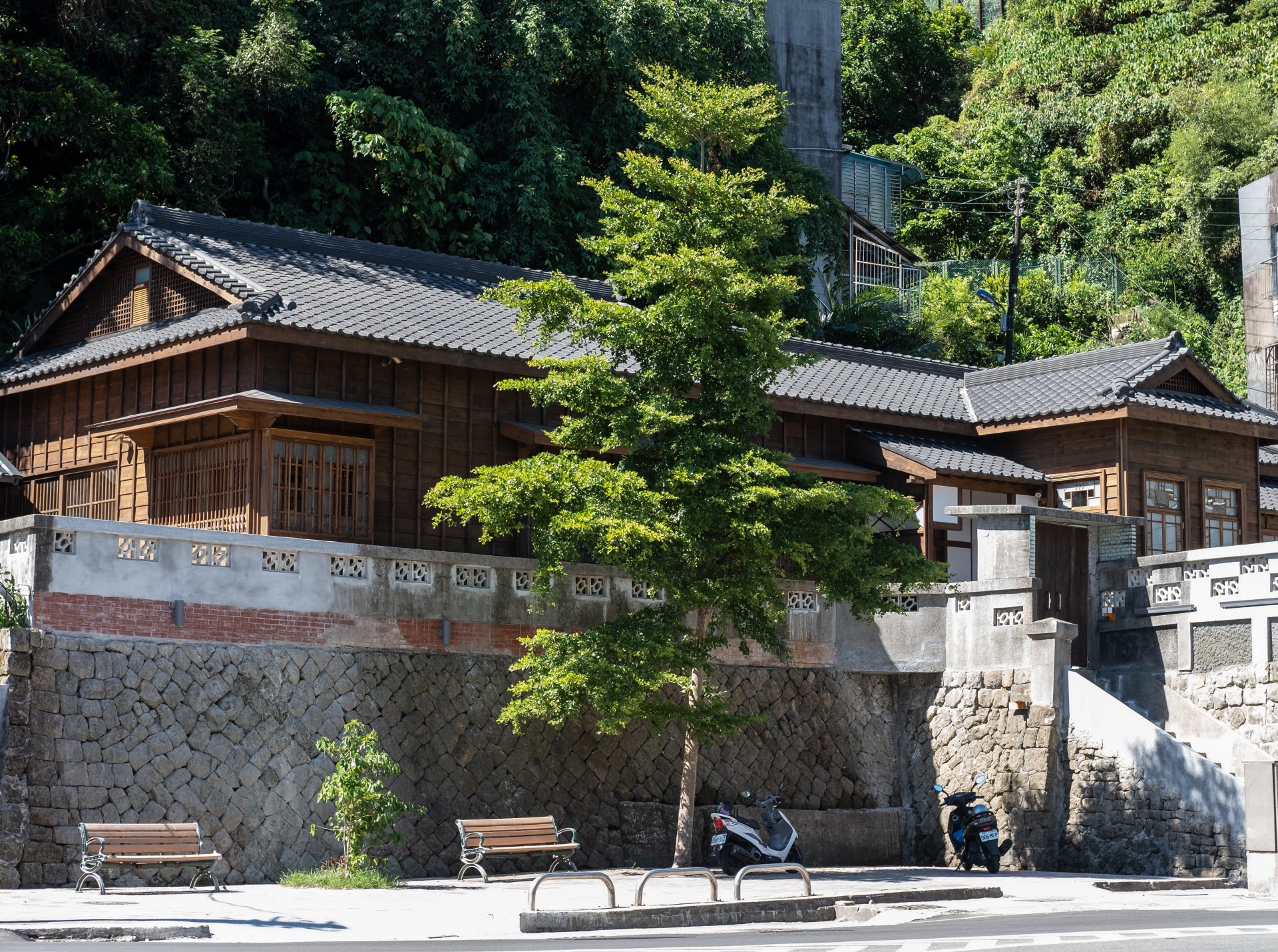
基隆要塞司令官邸 Keelung Fortress Commander's Residence
English Audio Guidance:https://ppt.cc/fSeRPx
The English text is located below.
基隆要塞司令官邸建於昭和6年(1931年),原為日治時代「流水巴士社」社長流水偉助之住家。昭和20年(1945年),國民政府接管後做為要塞司令官邸。在最後一位司令眷屬遷離後,輾轉由李姓教師頂下居住達25年(因此又被稱做「李宅」),至1998年國防部來文擬拆除而遷出。
爾後經基隆在地的文史工作者疾呼搶救,才免於被拆除的命運,並於2001年3月成立「雞籠文史協進會」,借用作為辦公室。在2006年指定為基隆市定古蹟。
其建物風格稱為「雁行型」,是為順應大自然,依山而建,不講究對稱、和諧,是具有彈性的一種建築格局,因遠看像一群在天空飛翔大雁的列隊形影,因得其名。
Keelung Fortress Commander's Residence
Keelung Fortress Commander's Residence was built in the 6th year of the Showa era (1931) and originally served as the residence of Mr. Ryusui Weisuke, the president of the "Flowing Water Bus Company" during the Japanese colonial period. In the 20th year of the Showa era (1945), after being taken over by the Nanjing Nationalist government, it was repurposed as the residence for the fortress commander.
After the departure of the last commander's family, it was subsequently occupied by a teacher surnamed Lee for 25 years (thus also known as the "Lee Residence"). In 1998, the Ministry of National Defense proposed demolition, prompting local historians and cultural advocates in Keelung to call for its preservation. It was spared from demolition, and in March 2001, the "Keelung Cultural and Historical Advancement Association" was established, utilizing the building as its office. In 2006, it was officially designated as a historical site by the Keelung City Government.
The architectural style of the building is known as the "Flying Geese Formation," designed to harmonize with nature by following the contours of the mountains. It does not emphasize symmetry or harmony but adopts a flexible layout. The name "Flying Geese Formation" comes from its resemblance to a formation of geese flying in the sky when viewed from a distance.
廣間 Guest Room
English Audio Guidance:https://ppt.cc/fRIs5x
The English text is located below.
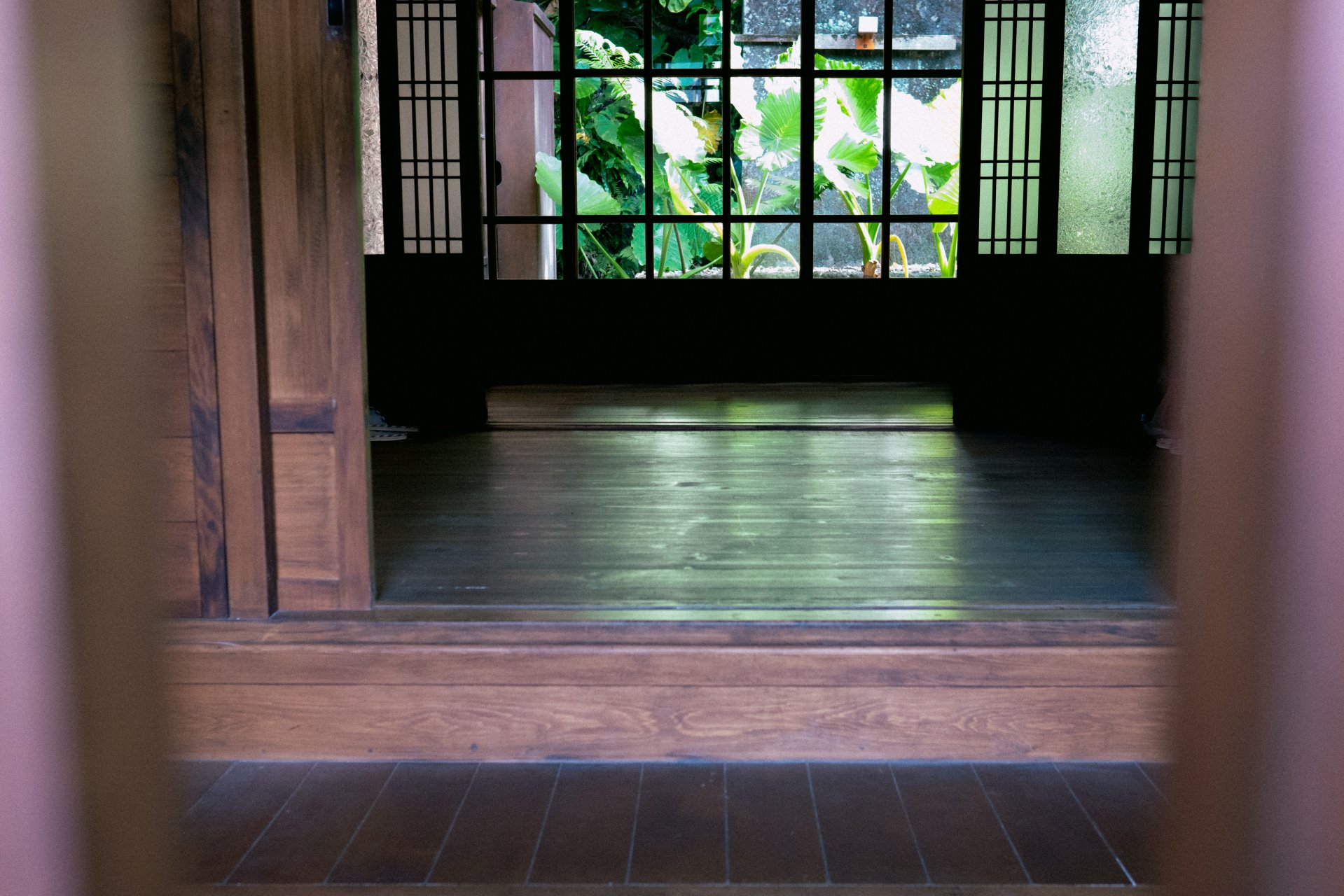
廣間(広間,ひろま)在日本的傳統建築中指建築中的開放空間,有著重要的地位,通常是開放性設計,以大開間的形式存在,沒有太多的隔斷或分隔牆壁。這種設計讓空氣和光線自由流通,營造了寬敞、明亮的氛圍。
此宅第內的廣間作為各個室內的連接中心,以這裡為中心,左邊為公共空間用(如應接室、座敷、浴室、洗面所);右邊則為私人空間(居間、台所等)。主人在應接室準備時,會請客人在廣間稍等。
Guest Room
The "hiroma"(廣間, Guest room) in traditional Japanese architecture refers to an open space within a building and holds a significant position. Typically designed with an open layout, it exists in the form of a large open space without many partitions or dividing walls. This design allows for the free circulation of air and light, creating a spacious and bright atmosphere.
Within this residence, the hiroma serves as the central connecting hub for various indoor spaces. From here, the left side is designated for public spaces such as reception rooms, sitting areas, bathrooms, and washrooms, while the right side is allocated for private spaces like living rooms and kitchens. When the host is preparing in the reception room, guests are invited to wait in the hiroma.
座敷 Tatami Room
English Audio Guidance:https://ppt.cc/fqmMxx
The English text is located below.
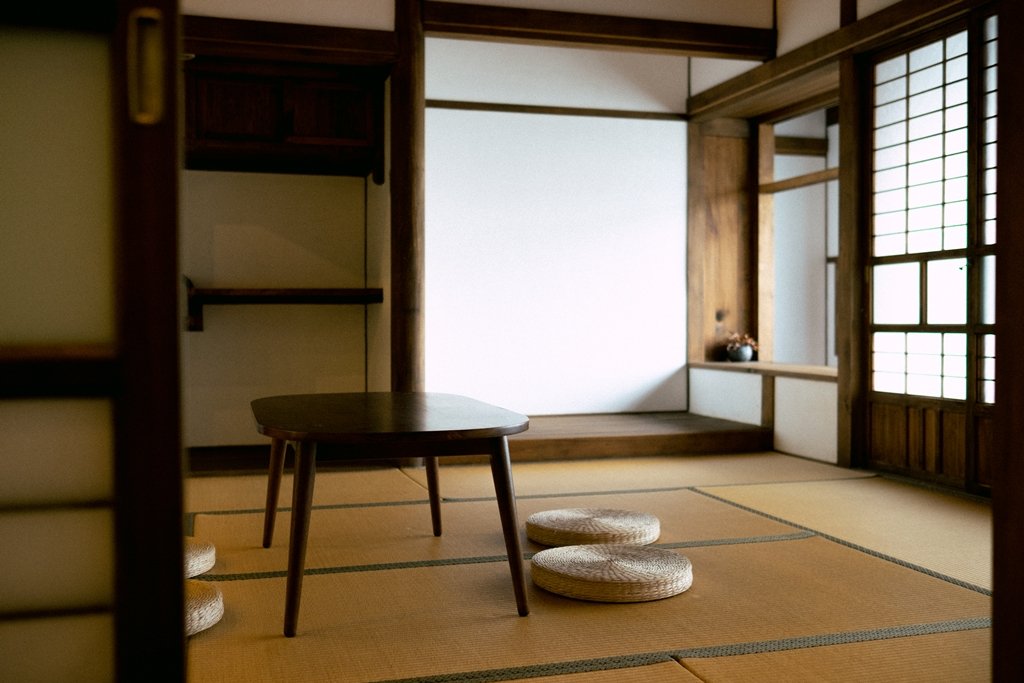
座敷(ざしき)原指鋪在地板上的座墊、鋪蓆子的房間,後來延伸為接待客人的空間,因此舉凡日常起居、婚喪儀式到接待訪客,都會在此舉行。
日本傳說中常見的「座敷童子」,就是住在家宅和倉庫裡的神,常常以孩子的姿態存在,會戲弄家裡的人,也會為見到它的人帶來幸運。
Tatami Room
"Zashiki" (座敷) the Tatami room, originally referred to a room with floor cushions or straw mats but later extended to become a space for receiving guests. Therefore, various activities ranging from daily living to ceremonial events such as weddings and funerals, as well as welcoming visitors, are conducted in this space.
The common mythical figure in Japanese folklore known as "Zashiki Warashi"(座敷童子) is a deity that resides in homes and warehouses. Often appearing in the form of a child, it is known to play tricks on the people in the household and is believed to bring good fortune to those who encounter it.
床之間 Tokonoma
English Audio Guidance:https://ppt.cc/fOuu9x
The English text is located below.
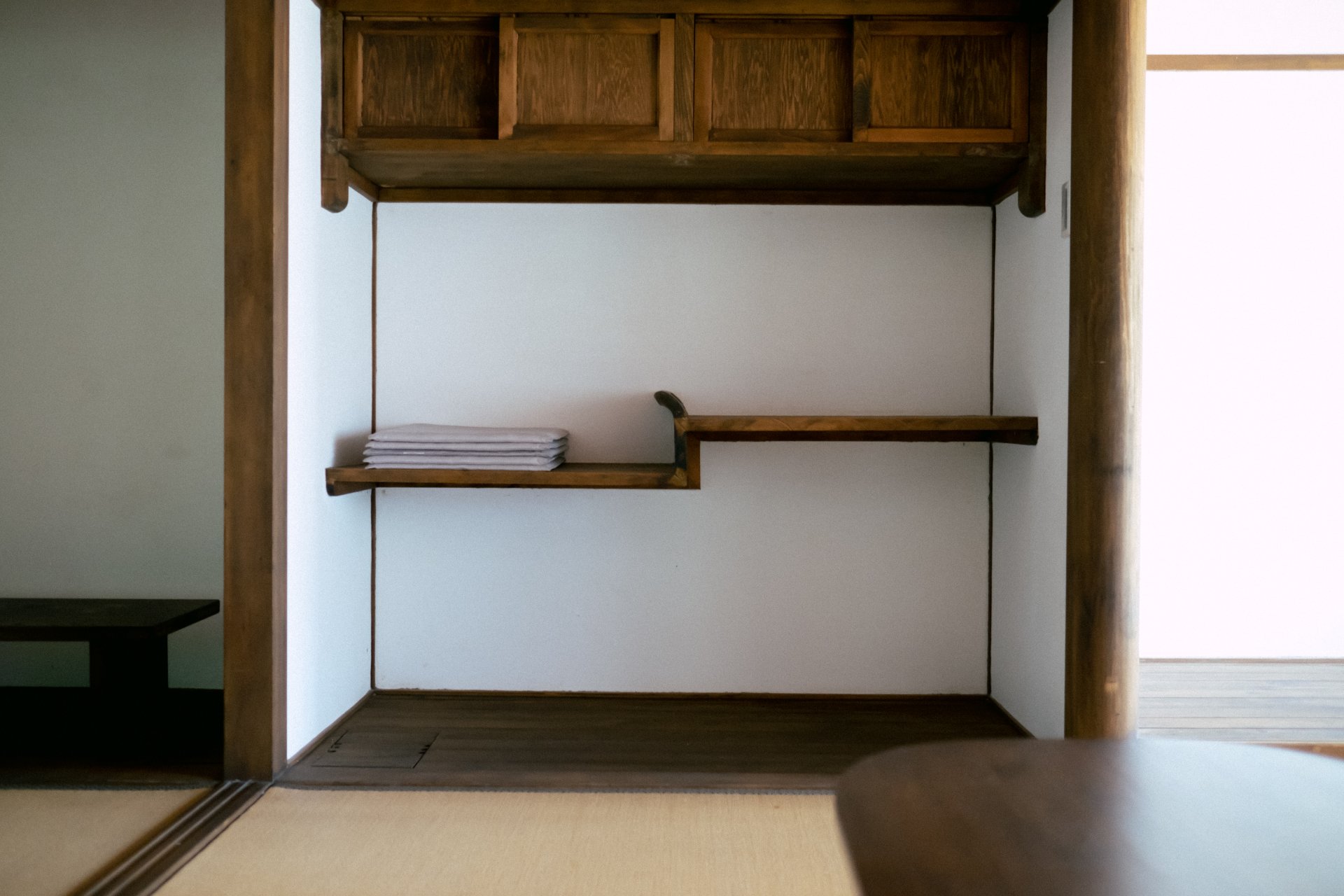
床之間(とこのま)又稱凹間,是日式傳統和室裡的必要元素,通常設於座敷內,是在房間角落做出一個內凹空間,比塌塌米再高出一些,常用來展示繪畫、陶藝或花藝,而這裡的擺設透露出主人的氣質,也代表建築的精神象徵。
組成要件包括床之柱、床板、床框、床脇、天袋、地袋,以及付書院,代表房屋的格局;若房屋主人官階越高,床之柱的木頭就越珍貴。
Tokonoma
"Tokonoma" (床の間), also known as "Tokoma," is an essential element in traditional Japanese tatami rooms. Typically located within the Tatami room, it is a recessed space created in the corner of the room, slightly elevated compared to the tatami mat level. The tokonoma is often used to display paintings, ceramics, or flower arrangements, and the items placed here reflect the owner's taste while symbolizing the spiritual essence of the architecture.
The components of a tokonoma include the bedpost, bedstead, bedframe, bedside table, ceiling pocket, floor pocket, and windowsill, representing the layout of the house. The higher the official rank of the homeowner, the more precious the wood used for the bedpost.
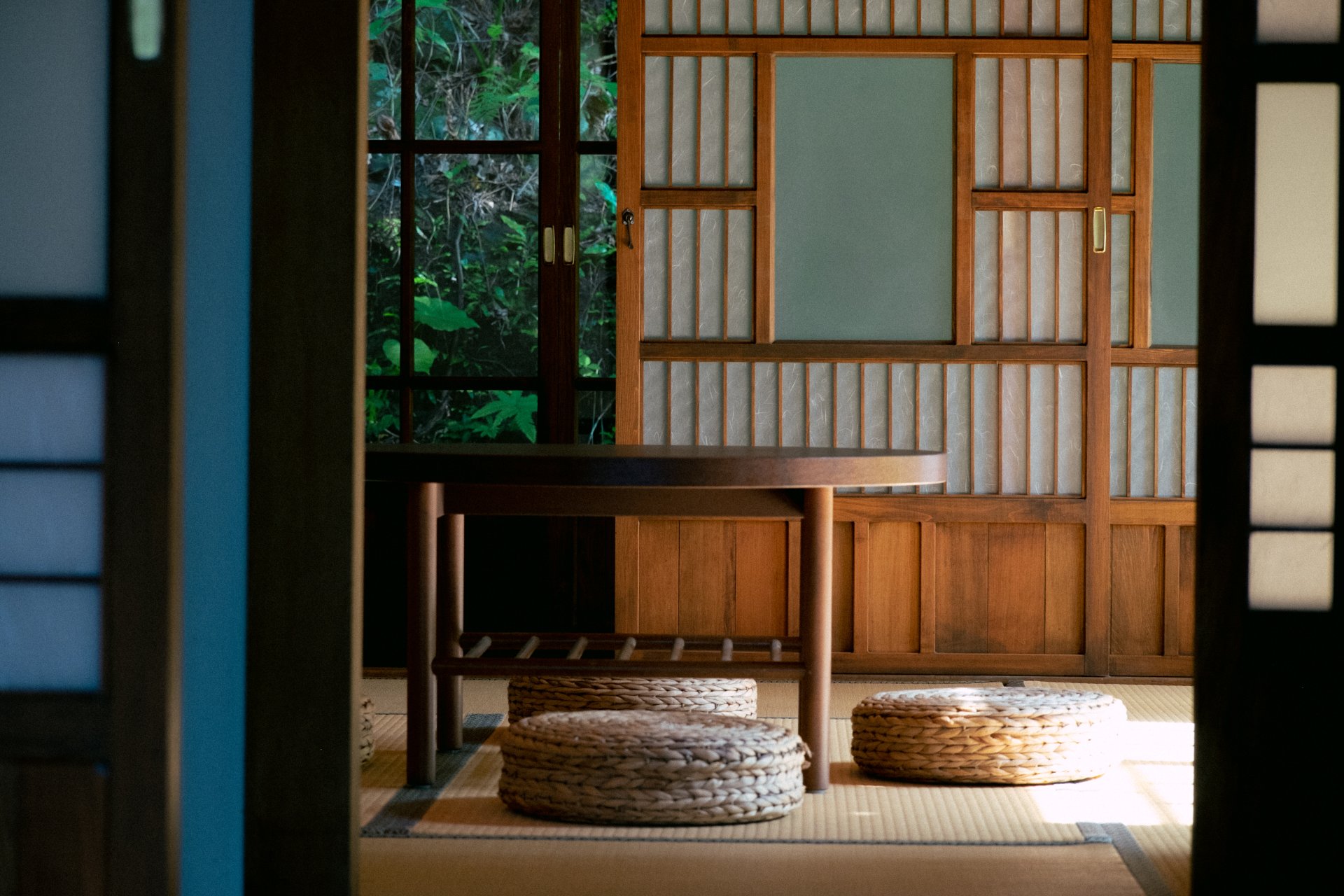
居間 Living Room
English Audio Guidance:https://ppt.cc/fahHNx
The English text is located below.
「居間」是日式的起居空間,在日本古時指的是「主人在的地方」。白天是家族活動的空間,晚上就是睡覺的地方。壁櫃內會放置棉被、枕頭以及其他財物等。通常就是待一整天的地方,也可作為家族聚會的場所及會客的備用空間。
Living Room
"Ima"(居間)is a Japanese living space, historically referred to as the "place where the head of the household stays." During the day, it serves as a space for family activities, while at night, it transforms into a sleeping area. Inside cabinets, one would find futons, pillows, and other belongings. It is typically the space where one spends the entire day, functioning as both a gathering place for the family and an additional space for hosting guests.
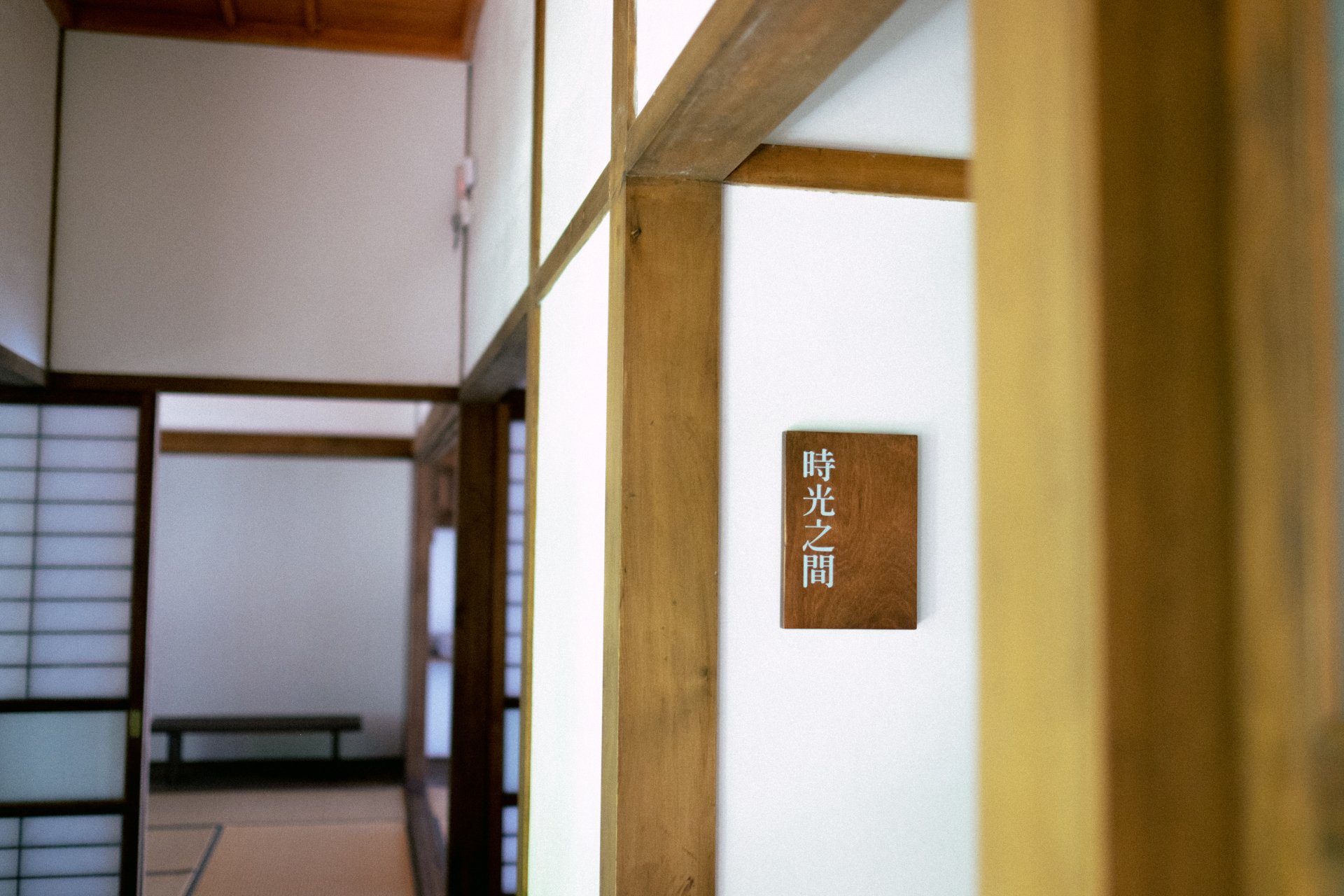
應接室 Reception Room
English Audio Guidance:https://ppt.cc/foLLHx
The English text is located below.
應接室(おうせつま)見證此建物興建於和洋風格蓬勃的昭和年代,是日式住宅受到近代西方文化影響後,而出現的空間,其空間主要定位是主人正是接待訪客的第一個空間,通常在玄關附近;這裡不同於其他架高地板、鋪設塌塌米與障子門的空間,而是使用較低的地板以及洋式家具。其備有會客座椅,不同於傳統會客場所的席地而坐。
Reception Room
"Osetsu-ma"(應接室)refers to a reception room in Japanese. It is a space that witnesses the construction of this building during the flourishing era of the Showa period, characterized by a mix of Japanese and Western architectural styles. It emerged as a space in Japanese homes influenced by modern Western culture. The primary purpose of this space is to serve as the first area where the host receives guests, typically located near the entrance. Unlike other spaces with elevated floors, tatami mats, and shoji doors, this kind of reception room features lower floors and Western-style furniture. It is equipped with seating for guests, deviating from the traditional practice of sitting on the floor in guest reception areas.
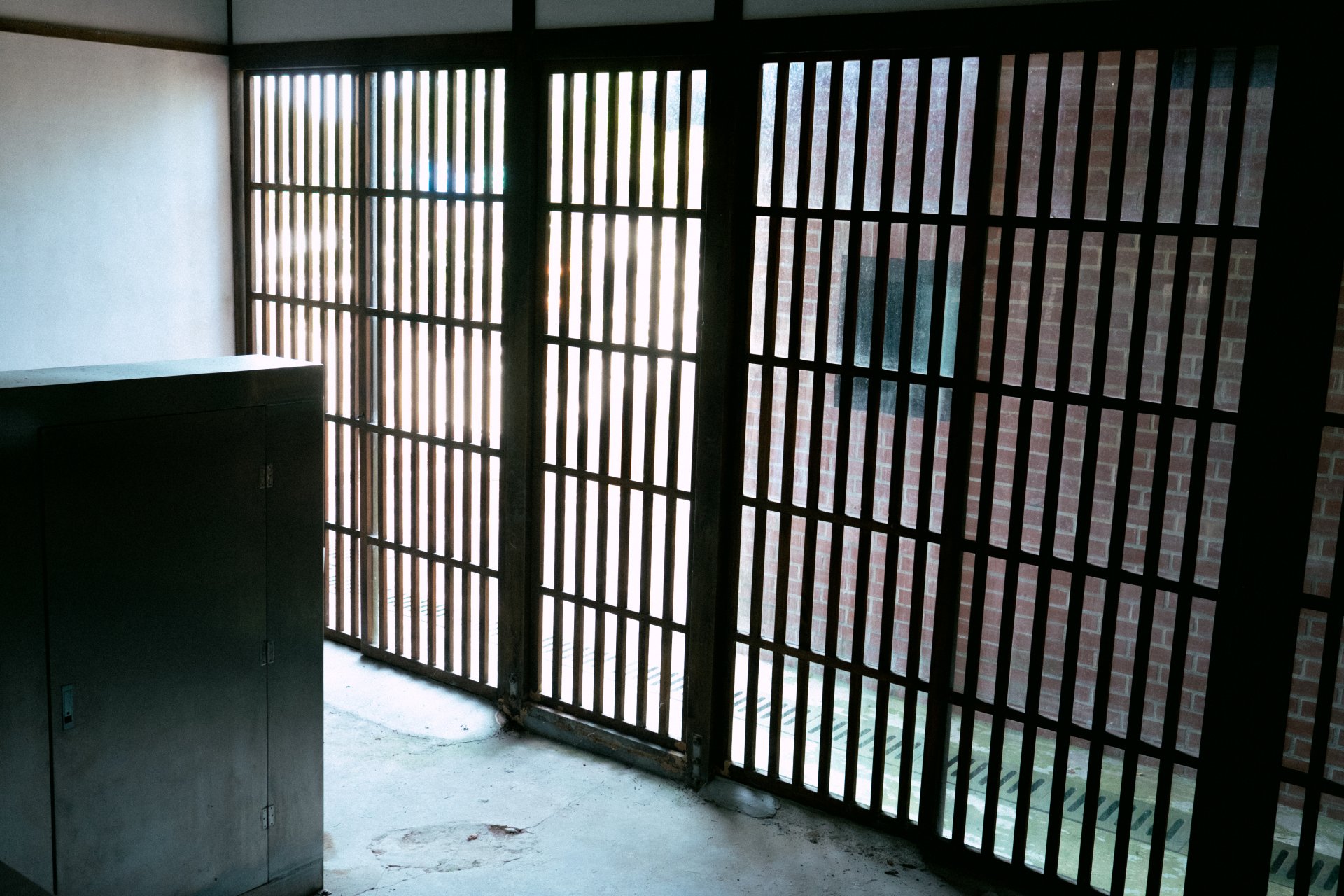
台所 Kitchen
English Audio Guidance:https://ppt.cc/f8pHzx
The English text is located below.
台所(だいどころ)是大家現在所理解的廚房,指的是家裡炊煮、料理食物的地方,尤其指瓦斯爐以及流理台附近的空間。通常與「風呂」相鄰,以方便取用熱水,且地面不架高,並且設有小門,稱為「勝手口」,亦有「裏口(後門)」之稱,可以避免打擾訪客,又能讓家庭成員進出的另一道出入口,也稱作「內玄關」。
Kitchen
"Daidokoro"(台所)is the modern understanding of a kitchen, referring to the place in a home where cooking and food preparation take place, especially in the vicinity of gas stoves and sinks. It is typically adjacent to the "furo" (風呂), the bathing area, for convenient access to hot water. The floor level in the kitchen is not elevated, and there is a small door known as a back door, which serves as an alternative entrance for family members without disturbing guests. This door is also referred to as interior foyer.
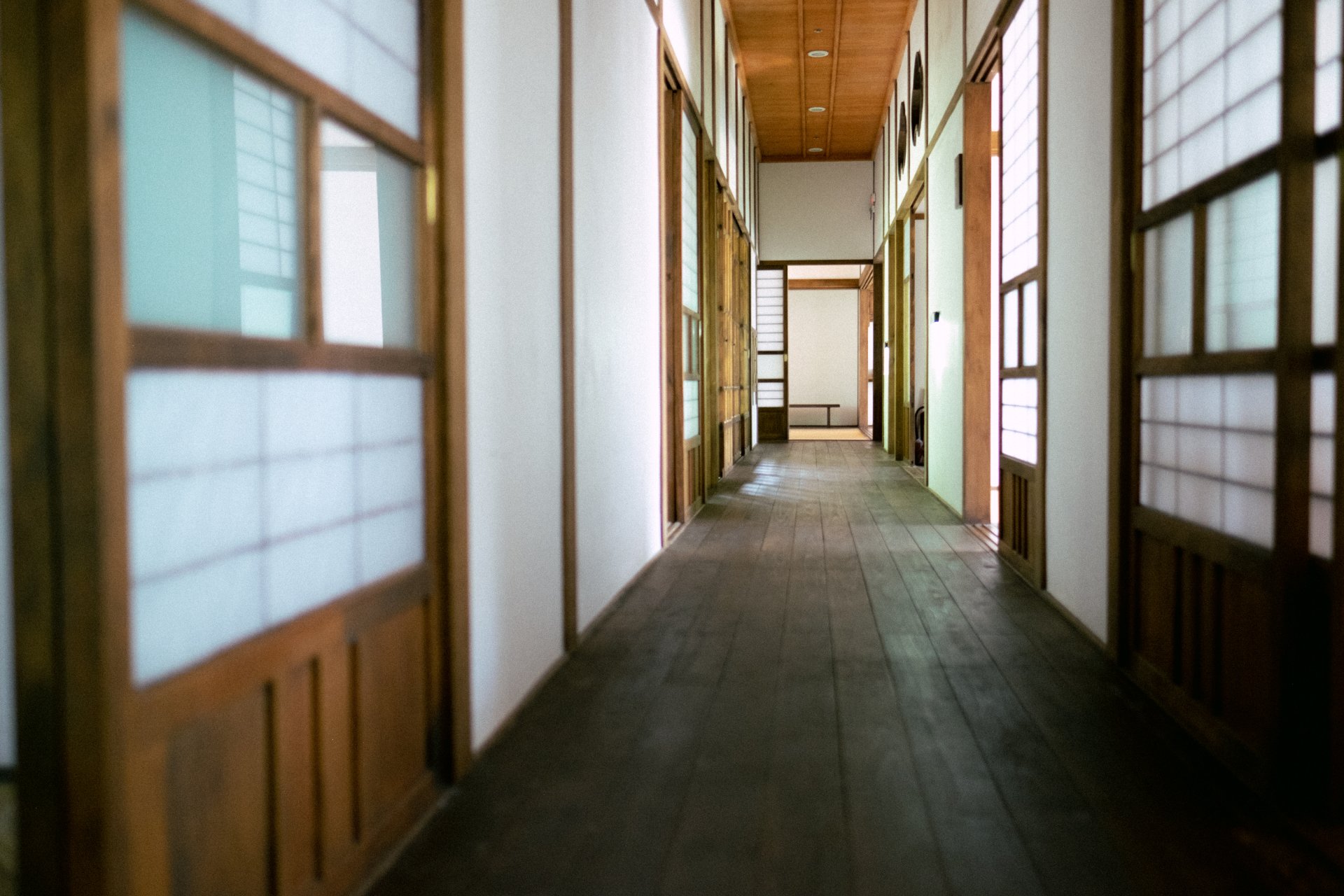
緣側 Verandah
English Audio Guidance:https://ppt.cc/fNhKRx
The English text is located below.
緣側意思為「屋檐下的架空廊」,指的是設計在房子外圍的走廊,是房子與中庭的過渡帶。而為了過渡室內與室外之中介空間,這裡的緣側與室外之間加裝了玻璃障子(橫拉門),是為調節室內溫度與防止蚊蟲的作法。
官邸內的緣側變化為雙邊型,是因應臺灣多雨暴風氣候,尋求通風性而設計之平面型式。
Verandah
Verandah refers to an open corridor under the eaves of a Japanese house. It is designed as a transitional space between the house and the courtyard. To create an intermediary space between indoors and outdoors, glass sliding doors are often added between the verandah and the outside. This is done to regulate indoor temperatures and prevent insects.
In the case of the Commander's residence, the Verandah is designed in a double-sided format, adapting to Taiwan's rainy and stormy climate, seeking better ventilation through this particular plan.
棟札 Ridge Board
English Audio Guidance:https://ppt.cc/frhUrx
The English text is located below.
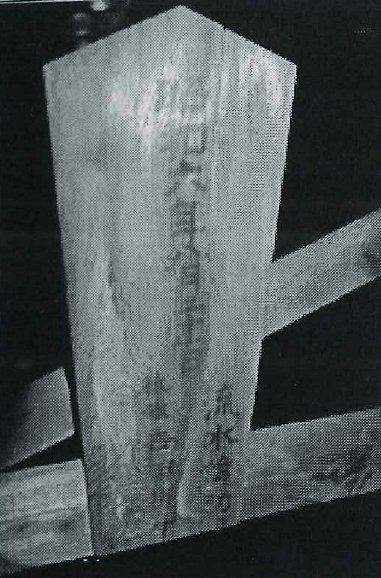
「棟札」是建築在舉行上樑典禮時,安放在屋架或樑柱上的一種「紀念物」,也被稱作日本建物的護身符。通常會在木板上以毛筆書寫,記載上樑的年月日、建物的設計人、承造者、大工,以及為建物祈願的各種神明等等,記錄了關於這棟建物的建築、修繕資訊。
2004年調查時發現屋樑棟札有流水偉助字樣,透過此文物,證明了此棟建築物的原始建造者,也具有基隆交通史的重要意義;2019年此建物舉行修復再利用工程上梁典禮,當時參與者在新棟札上簽名,成為重要的修復紀念。
Ridge Board
A "Munafuda"(棟札) is a commemorative item placed on the roof beams or pillars during a topping-out ceremony in construction, also known as a roof-raising ceremony, and is often referred to as a protective charm for Japanese buildings. Typically written with a brush on a wooden board, it records the date of the topping-out ceremony, the architects, contractors, carpenters involved, and various deities invoked for the building's blessings. It serves as a documentation of information related to the construction and renovation of the building.
In a survey conducted in 2004, it was discovered that the Munafuda on the roof beams had the inscription of "流水偉助," proving the original builder of the structure and signifying its importance in Keelung's transportation history. In 2019, during the restoration and reuse project, a topping-out ceremony was held for the building, and participants signed the new Munafuda, making it an important commemoration for the restoration efforts.
椽緣 Rafter Tail
English Audio Guidance:https://ppt.cc/foUVBx
The English text is located below.
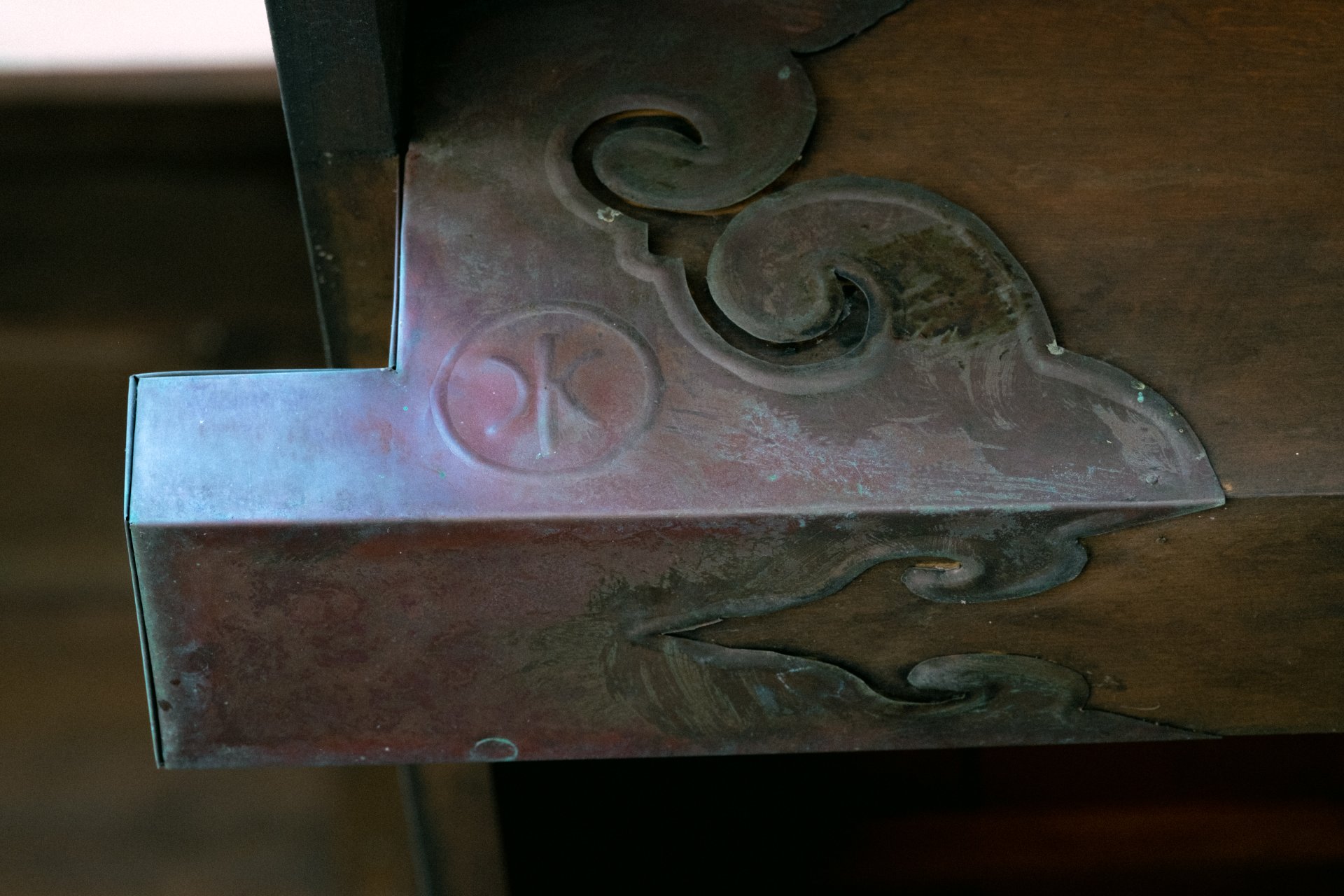
日式建築中的椽緣是一種建築結構上的元素,指鋪設與牆面平行的長木板。椽緣通常具有裝飾性的設計,可以是木雕、彩繪、雕刻或其他傳統藝術元素。
此塊木板上帶有「水」字的流水家徽,證明本建築物為流水偉助社長之宅邸。
Rafter Tail
In traditional Japanese architecture, rafter tail is a structural element referring to long wooden boards laid parallel to the walls. Rafter tail typically features decorative designs, including wood carvings, paintings, or other traditional artistic elements.
On this particular wooden board, there is a flowing family crest with the character "water" (水), confirming that this building is the residence of President 流水.
屋脊 Roof Crest
English Audio Guidance:https://ppt.cc/fnR6Ux
The English text is located below.
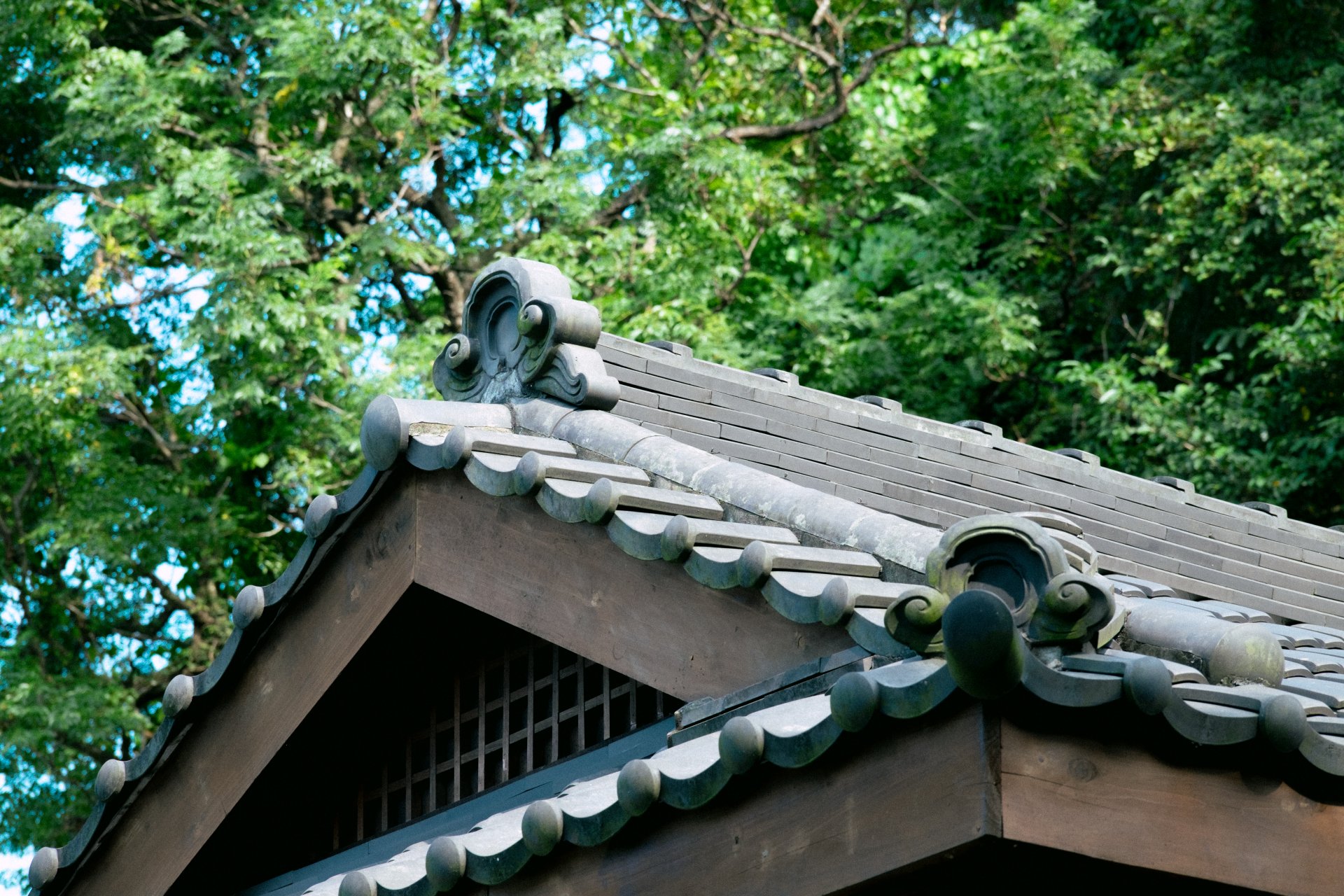
東側入母屋的屋頂,主要其特徵為一條正脊、四條垂脊、四條斜脊;而日式建築屋脊上的裝飾瓦,多見於屋脊四面尾端與主脊左右兩側,因具有闢邪之用,又稱鬼瓦,多以兇惡的鬼面或獸面製造,普通民居的鬼瓦多為雲朵圖案。這裡是以鬼頭做為屋脊收頭處理。
Roof Crest
The roof on the east side of the main house is characterized by a central ridge, four vertical ridges, and four diagonal ridges. In traditional Japanese architecture, decorative tiles on the roof ridge are often found at the ends of the ridge on all four sides and on both sides of the main ridge. These are commonly referred to as demon tiles, as they are believed to ward off evil spirits. They are often crafted in the form of menacing demon or animal faces, while those on ordinary residential buildings may feature cloud patterns. Here, the ridge end is adorned with a demon head.
天井 Ceiling
English Audio Guidance:https://ppt.cc/f5IxCx
The English text is located below.
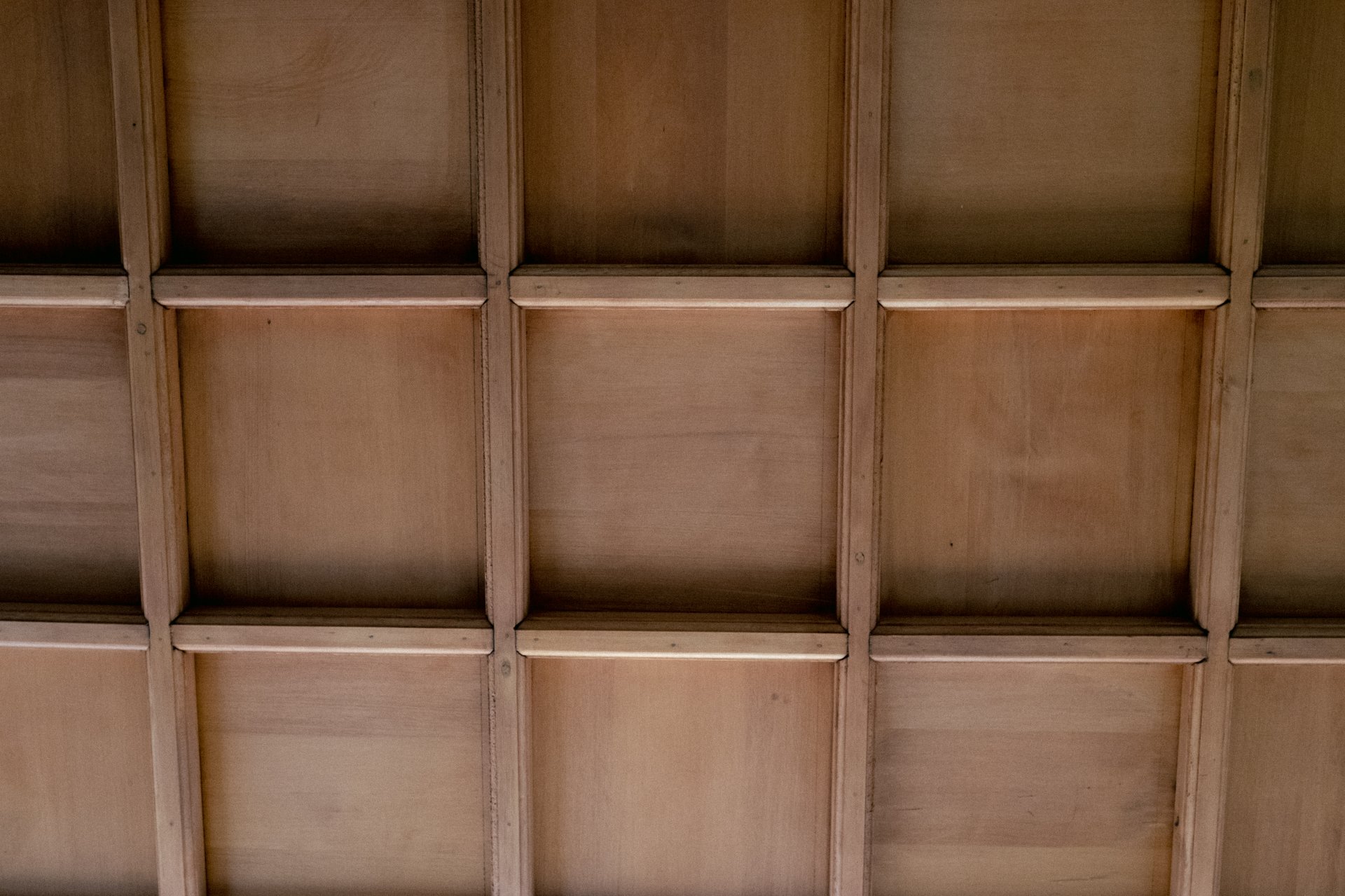
中文的天井指的是宅第內的中庭,但在日文裡是指「天花板(てんじょう)」。天井是用來遮蓋屋子的內部結構,具有改變採光、控溫、防止塵埃落下等效果。這棟建築的天井有三種:第一種為格天井;另一種是吹寄式槕緣天井;最後則是有拼花處理的方格狀天井。
Ceiling
In Chinese, " tenjou"(天井) refers to the courtyard inside a residence, but in Japanese, it means "ceiling". The ceiling is used to cover the internal structure of a house and serves various purposes such as altering lighting, temperature control, and preventing dust from falling. In this building, there are three types of ceilings: the first is a lattice ceiling, the second is a "fuki-age"(吹寄) style raised edge ceiling, and the last is a square pattern ceiling with mosaic treatment.
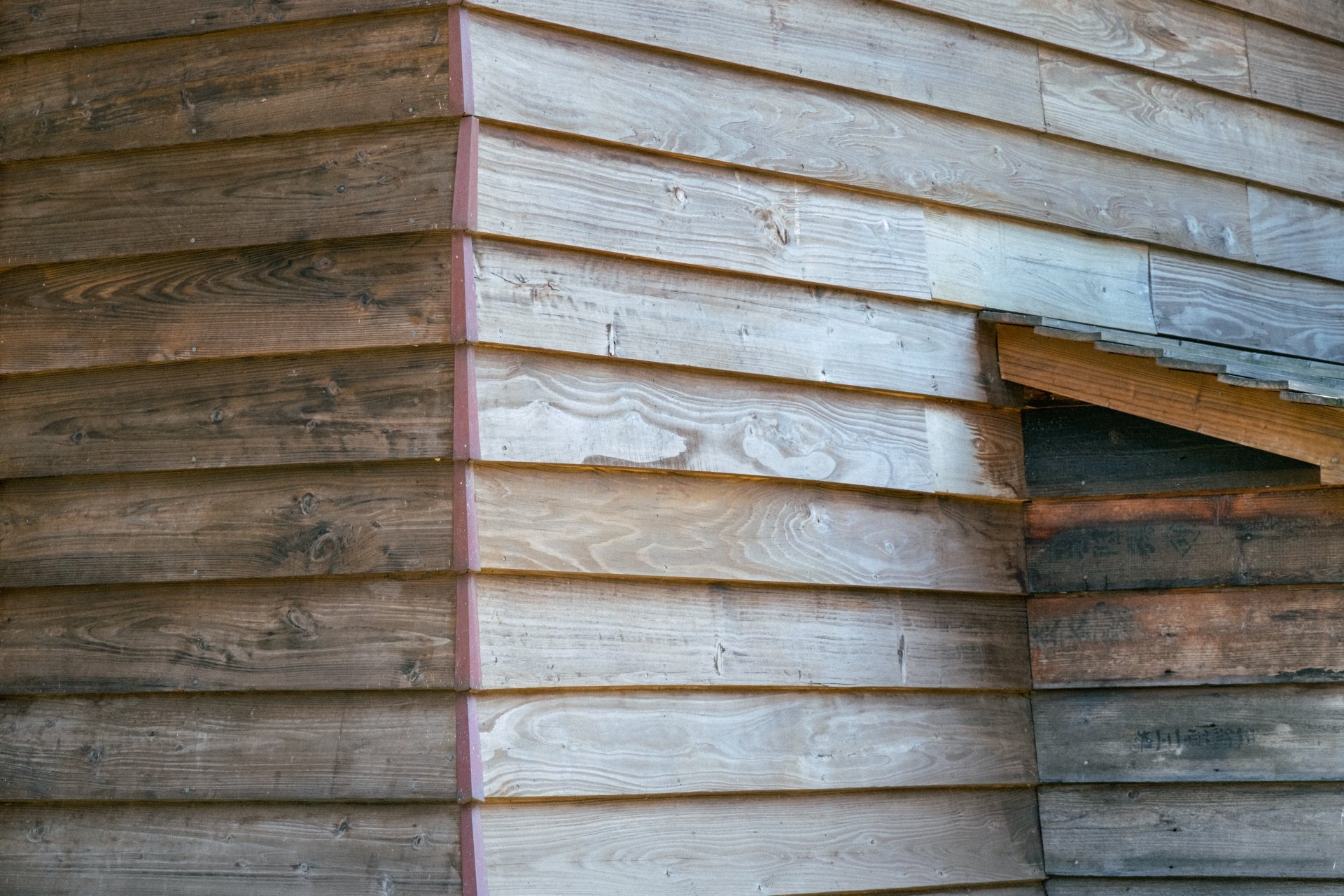
雨淋板 Rain Shelter
English Audio Guidance:https://ppt.cc/fLMBlx
The English text is located below.
雨淋板是為避免泥土和稻草敷製成的牆壁因下雨而受損,在外牆鋪設的一片一片横向木板,是日式住宅的典型外壁。此處建築之雨淋板呈現兩種形式,一種為日式,一種為英式。差異在於日式的有押緣條,可見證此建物受到西方影響的和洋風格。
Rain Shelter
Rain shelter is installed on the exterior walls to prevent damage to walls made of mud and straw due to rain. They consist of horizontally placed wooden boards, and they are a characteristic exterior feature of Japanese homes. In this building, there are two forms of rain shelters, one in Japanese style and the other in British style. The difference lies in the presence of a pressed edge strip in the Japanese style, indicating the influence of Western design elements in this building's Japanese and Western architectural fusion.
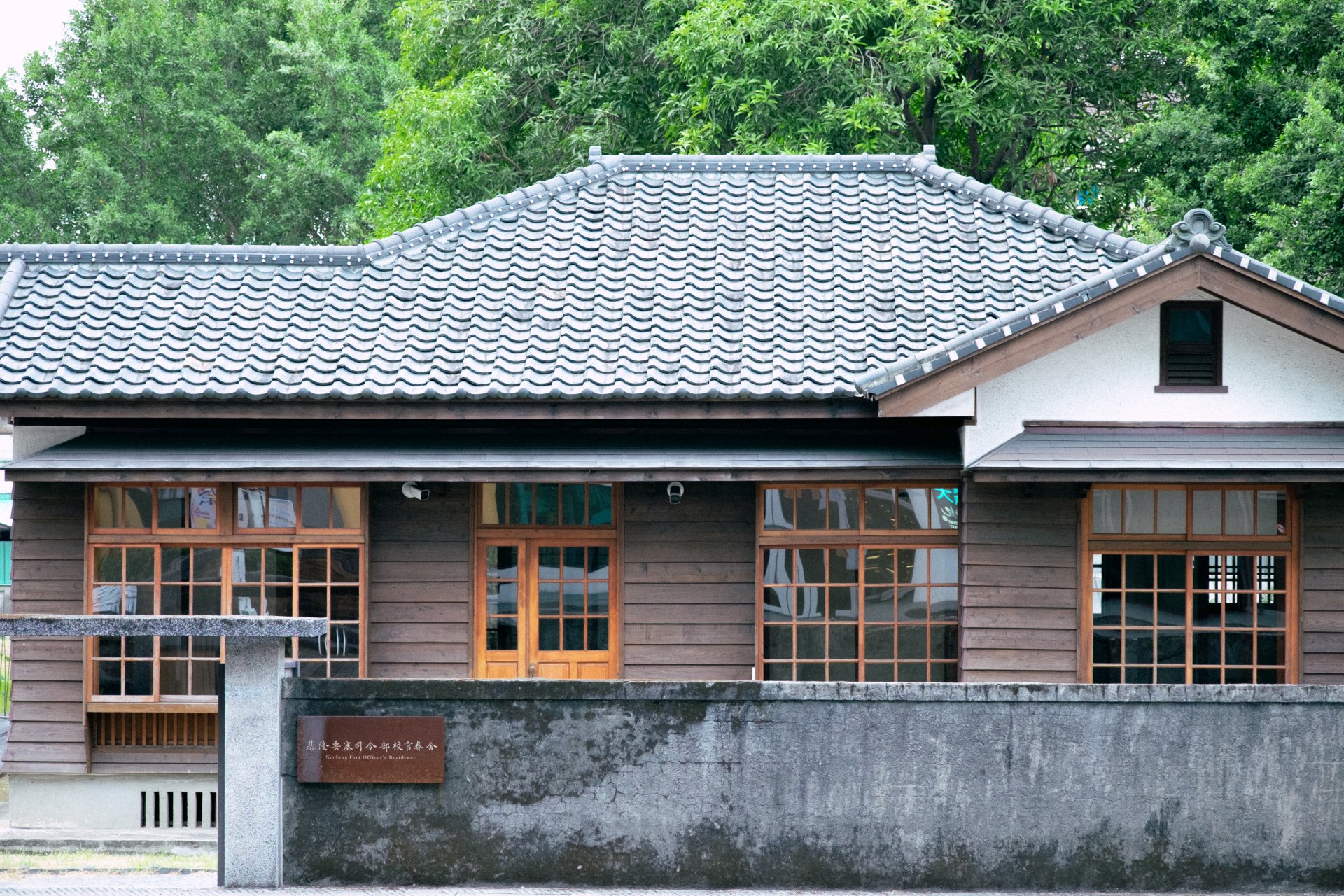
基隆要塞司令部校官眷舍 Keelung Fort Command Officers' Quarters
English Audio Guidance:https://ppt.cc/f5UQjx
The English text is located below.
要塞司令部校官眷舍落成於1920至1930年代日治期間,為當時日本人在基隆所設的軍事要塞建築群之一。數十年來,經歷過建實新村之國軍眷舍使用與拆除改建後,是目前少數僅存之日式宿舍。
昔日的校官眷舍,後方景觀是全台第一座海水浴場-大沙灣海水浴場,是北台灣夏季戲水、漫步賞景的聖地。兩幢失修荒廢的日式建築,其中一幢修復為昔日和洋風建築樣貌,另一幢刻意保留紅磚地基,室外留有過去眷舍的屋瓦、屋脊、紅磚等建材,規劃為一道文化牆。
Keelung Fort Command Officers' Quarters
Keelung Fort Command Officers' Quarters were completed during the Japanese colonial period in the 1920s to 1930s and was part of the military fortress complex established by the Japanese in Keelung at that time. Over the decades, after serving as military dependents' housing in the Jian Shi New Village and undergoing demolition and reconstruction, it stands as one of the few surviving Japanese-style dormitories.
In the past, the Officers' Quarters overlooked the first bathing beach in Taiwan, the Dashawan Seawater Bathing Beach, making it a sacred place for summer activities and leisurely strolls in northern Taiwan. Two neglected and abandoned Japanese-style buildings have undergone changes—one has been restored to its original Japanese and Western architectural fusion, while the other has been intentionally preserved with its red brick foundation. Outdoors, remnants of the Officers' Quarters, such as roof tiles, ridges, and red bricks, have been retained, creating a cultural wall.
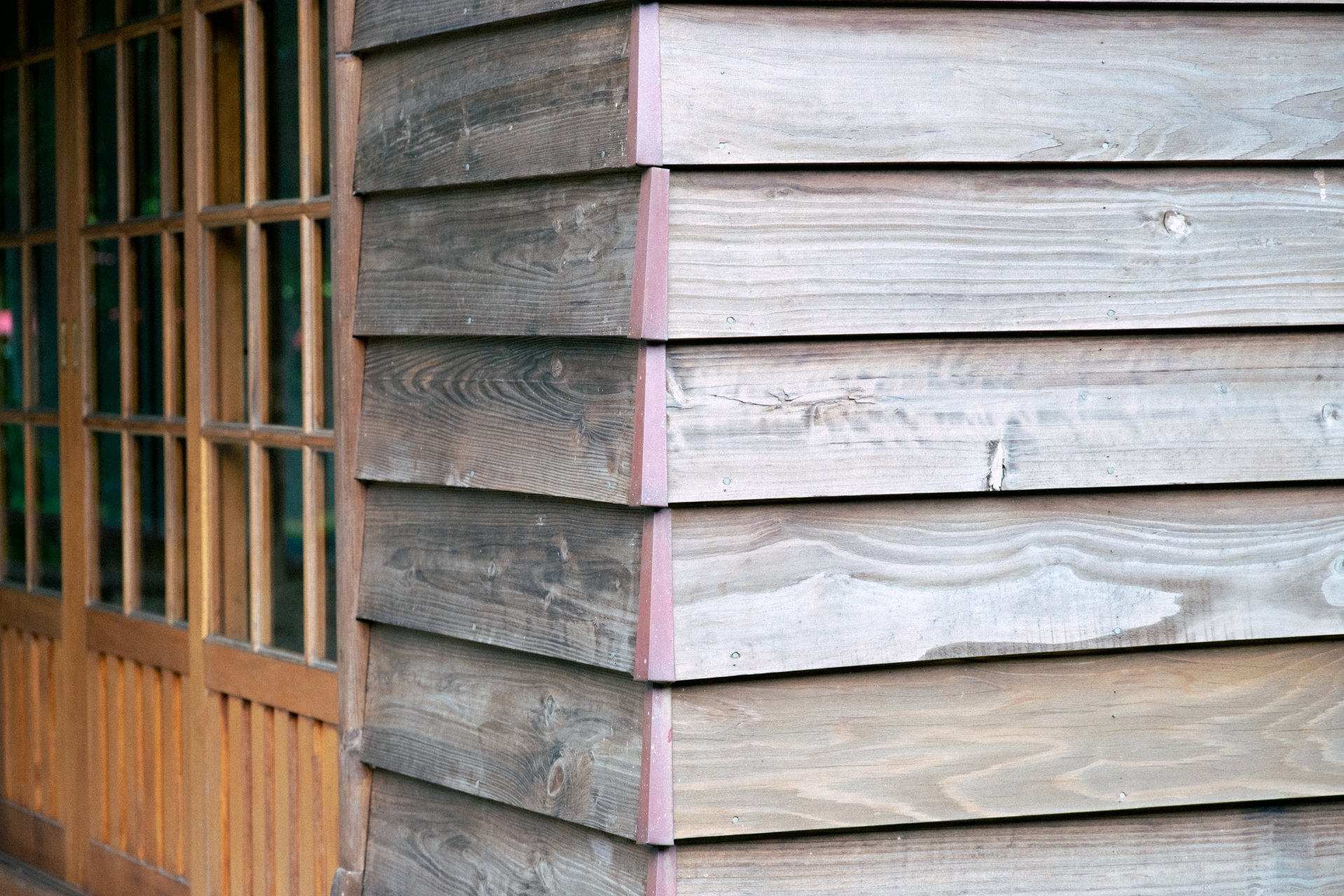
南京雨淋板 Nanjing Rain Shelter
English Audio Guidance:https://ppt.cc/fV9Tux
The English text is located below.
南京雨淋板,又稱為英式下見板,原屬於日本洋風住宅中的元素,然而日人為配合台灣多雨潮濕的氣候,將其廣泛運用,成為日治時期台灣日式建築中常見的建築方式。建造的方式是一整片木板上下斜放相疊,以鐵件加固,命名由來為外國(中國)技術傳入;此外,台灣日式建築的南京雨淋板邊角,與一般日本的工法並不相同。
Nanjing Rain Shelter
Nanjing rain Shelter, also known as English-style lower eaves boards, originally belonged to elements of Japanese Western-style homes. However, Japanese people, adapting to Taiwan's rainy and humid climate widely applied them, making it a common architectural feature in Taiwan's Japanese-style buildings during the period of Japanese rule. The construction involves placing a whole piece of wood diagonally stacked from top to bottom, reinforced with iron pieces. The name originates from the introduction of Chinese technology. Additionally, the corners of Nanjing rain screens in Taiwanese-Japanese style architecture differ from the general methods used in Japan.
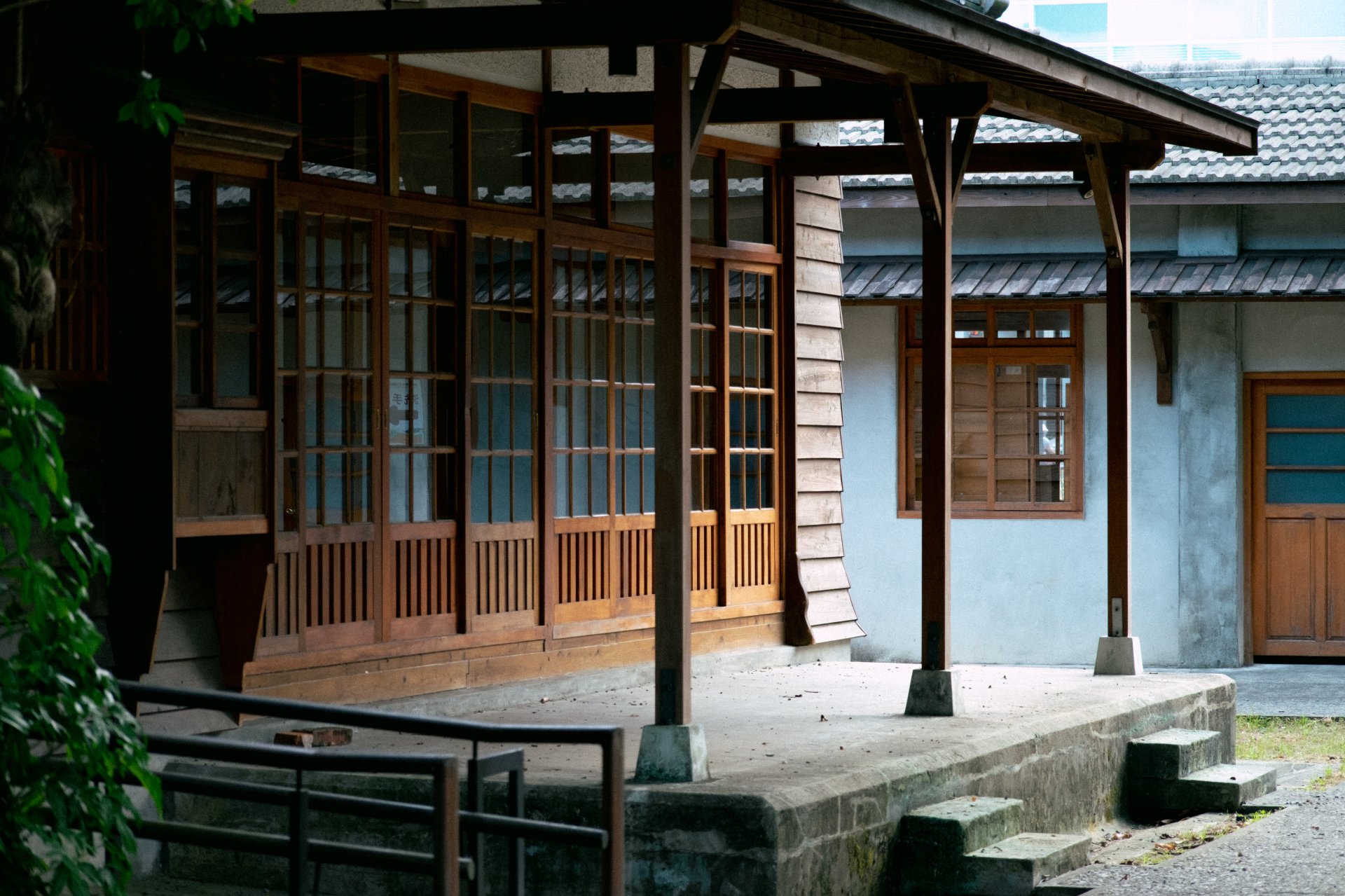
後院平台 Rear Courtyard Platform
English Audio Guidance:https://ppt.cc/f25rdx
The English text is located below.
後院平台,為日式建築緣側(えんがわ)外的空間。此種形式為日治時期台灣陸軍經理部技師淺井新一於《台灣建築會誌》所發表的家屋形式。打破過往傳統的日式建築緣側空間,以棚架、水泥粉光處理的平台,建構出額外的雨庇空間,提供屋主曬衣、乘涼。
Rear Courtyard Platform
The rear Courtyard platform is an outdoor space adjacent to the verandah in Japanese architecture. This form was introduced by the Taiwan Army Management Department engineer Shinichi Asai in the "Taiwan Architectural Journal" during the Japanese colonial period. Breaking away from the traditional Japanese architectural Verandah space, the platform is constructed with concrete ornament and canopy, providing additional space for the homeowner to hang laundry and enjoy some shade.
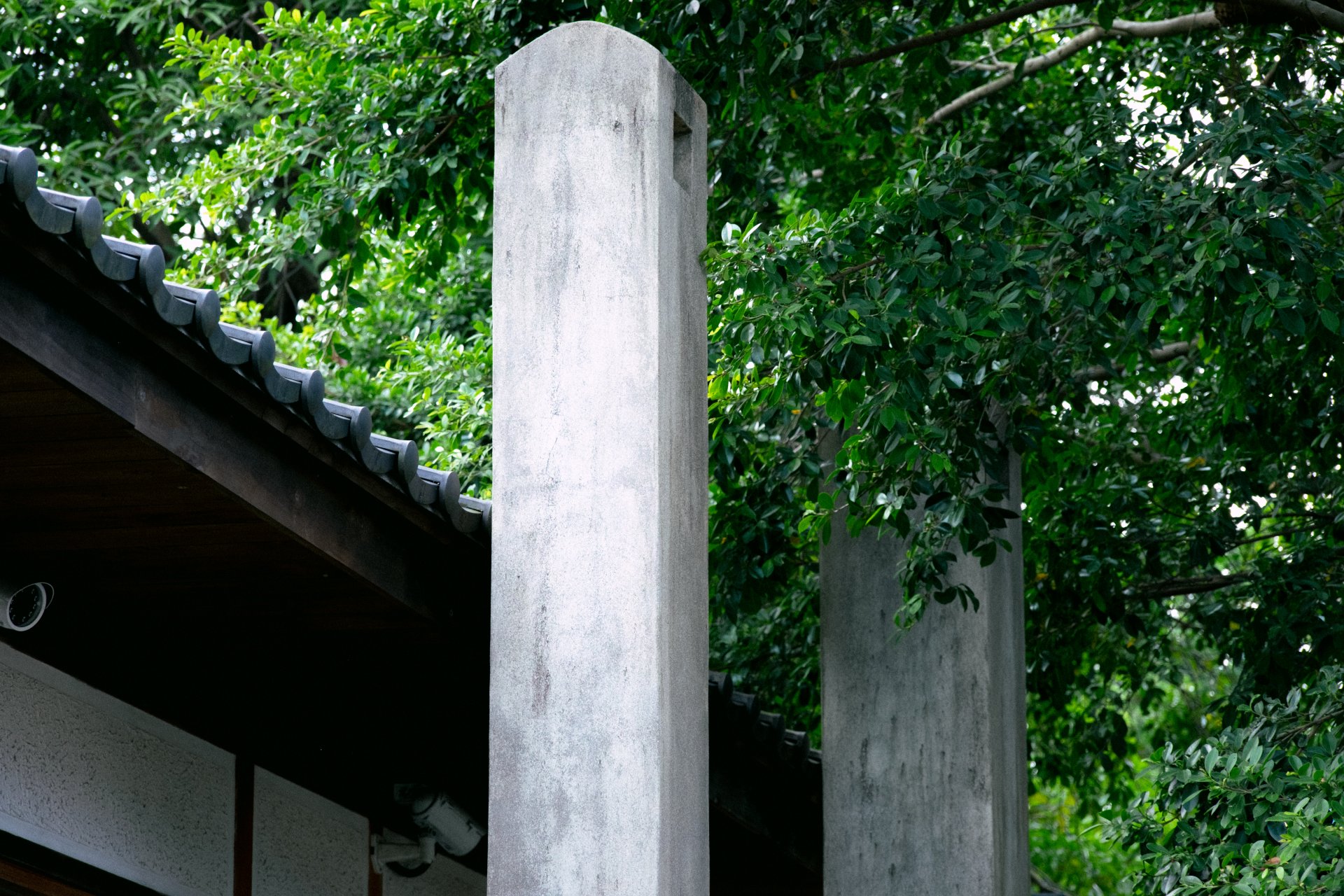
煙囪(左台所、右風呂) Chimney (Left:Kitchen, Right:Bath)
English Audio Guidance:https://ppt.cc/f1xQNx
The English text is located below.
台所(だいどころ),即為廚房。該煙囪提供室內烹飪的爐灶使用。與風呂煙囪相較下,比較細高。風呂(ふろ),即為泡澡。該煙囪提供室內浴室浴池使用。與台所煙囪相較下,比較矮肥。室內浴池依舊保有舊時拼貼的馬賽克磁磚。
Chimney (Left:Kitchen, Right:Bath)
"Daidokoro"(台所) refers to the kitchen. The chimney provides ventilation for indoor cooking stoves. Compared to the chimney for the bath, it is relatively slim and tall.
"Furo"(風呂) refers to the bath. The chimney provides ventilation for the indoor bathroom and bathtub. Compared to the chimney for the kitchen, it is relatively short and stout. The indoor bathtub still retains the mosaic tiles from the old times.
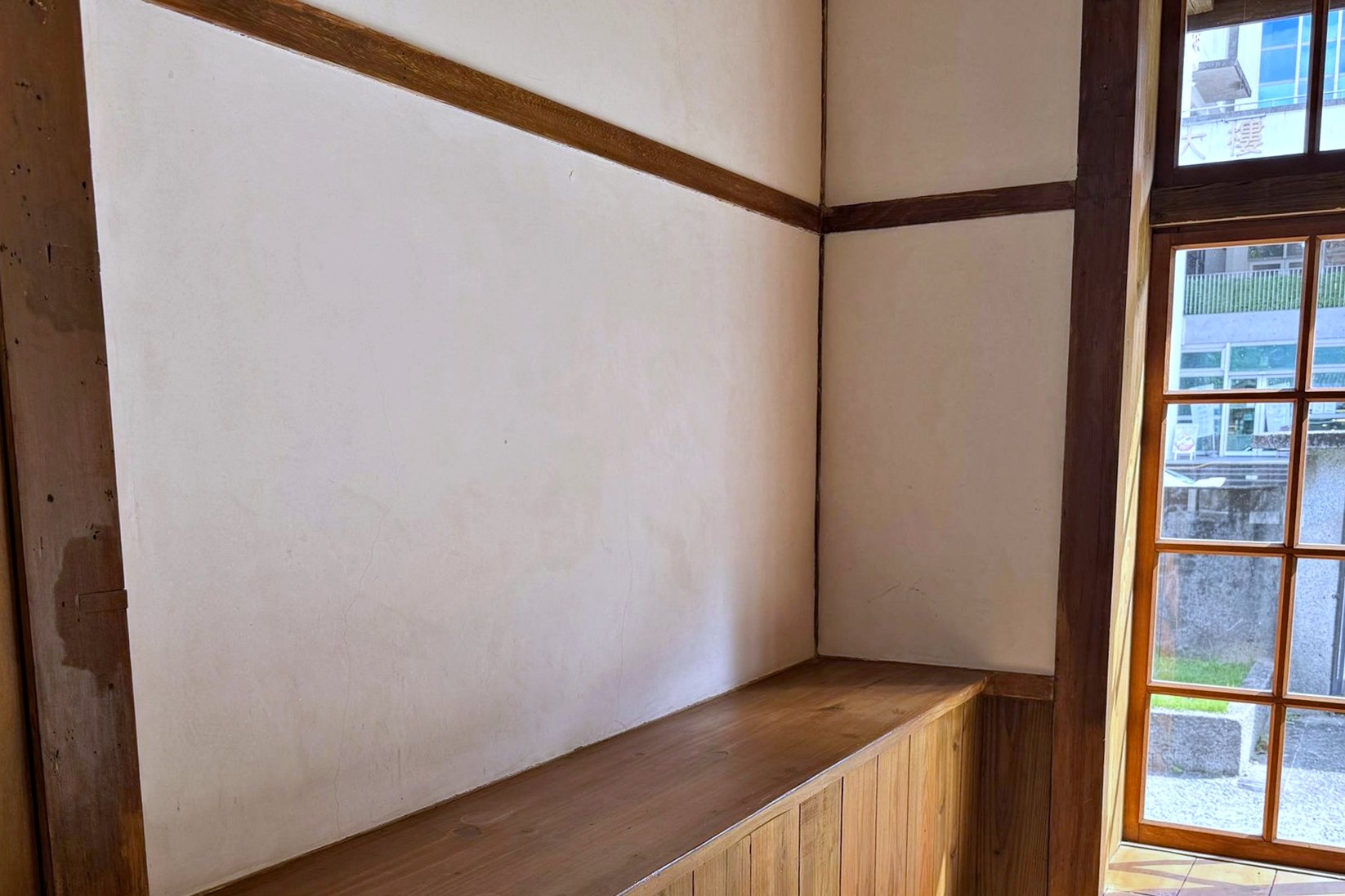
小舞壁 Bamboo-mud wall
English Audio Guidance:https://ppt.cc/f2Emjx
The English text is located below.
小舞壁,又稱編竹夾泥牆,為傳統建築中常見的工法。而此種日式的小舞壁,為梁柱間縱向的間渡竹、橫向的小舞竹以麻繩(又稱「小舞繩」)固定構成。最終表面再以土漿、石灰包覆,每塗一層都需等待完全乾燥,以預防龜裂。
Bamboo-mud wall
"Komai-kabe(小舞壁)," also known as woven bamboo and mud wall, is a common construction method in traditional buildings. In this Japanese style of Komai-kabe, vertical bamboo is woven between the beams and pillars, and horizontal small bamboo is fixed with hemp ropes (also known as "komai-ito(小舞繩)"). The final surface is coated with a mixture of mud and lime. Each layer must dry completely before the next application to prevent cracking.
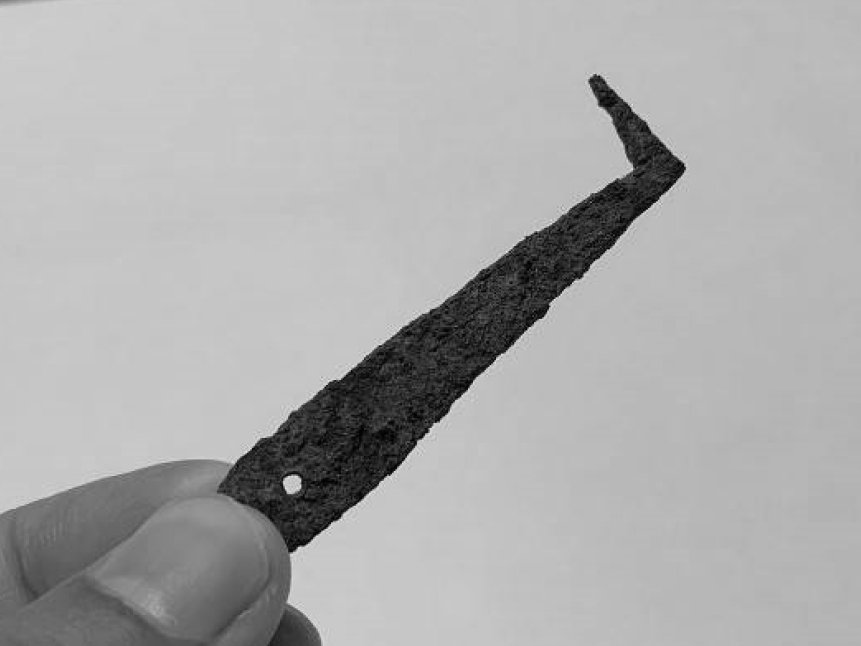
鶯板張 Nightingale Floor
English Audio Guidance:https://ppt.cc/fkpcqx
The English text is located below.
鶯板張(うぐいすばり),為一種日式的鉤釘,具有防盜功能。常見安裝於日式建築的木地板和木條之間,當有人踩踏時,就會使鐵件摩擦木頭,發出類似黃鶯鳴叫的聲音。因此又稱為「鶯聲地板」,起源於日本中世時期、西元12至16世紀,是為防止敵人入侵的一種緊戒措施,在日本的寺廟和古城中很常見。
Nightingale Floor
"Uguisubari(鶯板張)" is a type of Japanese floor hook, designed with anti-theft functionality. It is commonly installed between the wooden floorboards and strips in traditional Japanese architecture. When someone steps on it, the metal piece rubs against the wood, producing a sound similar to the call of a nightingale. Hence, it is also known as "nightingale floor," originating in medieval Japan from the 12th to the 16th century. It served as a precautionary measure to prevent intruders and is often found in temples and ancient castles in Japan.
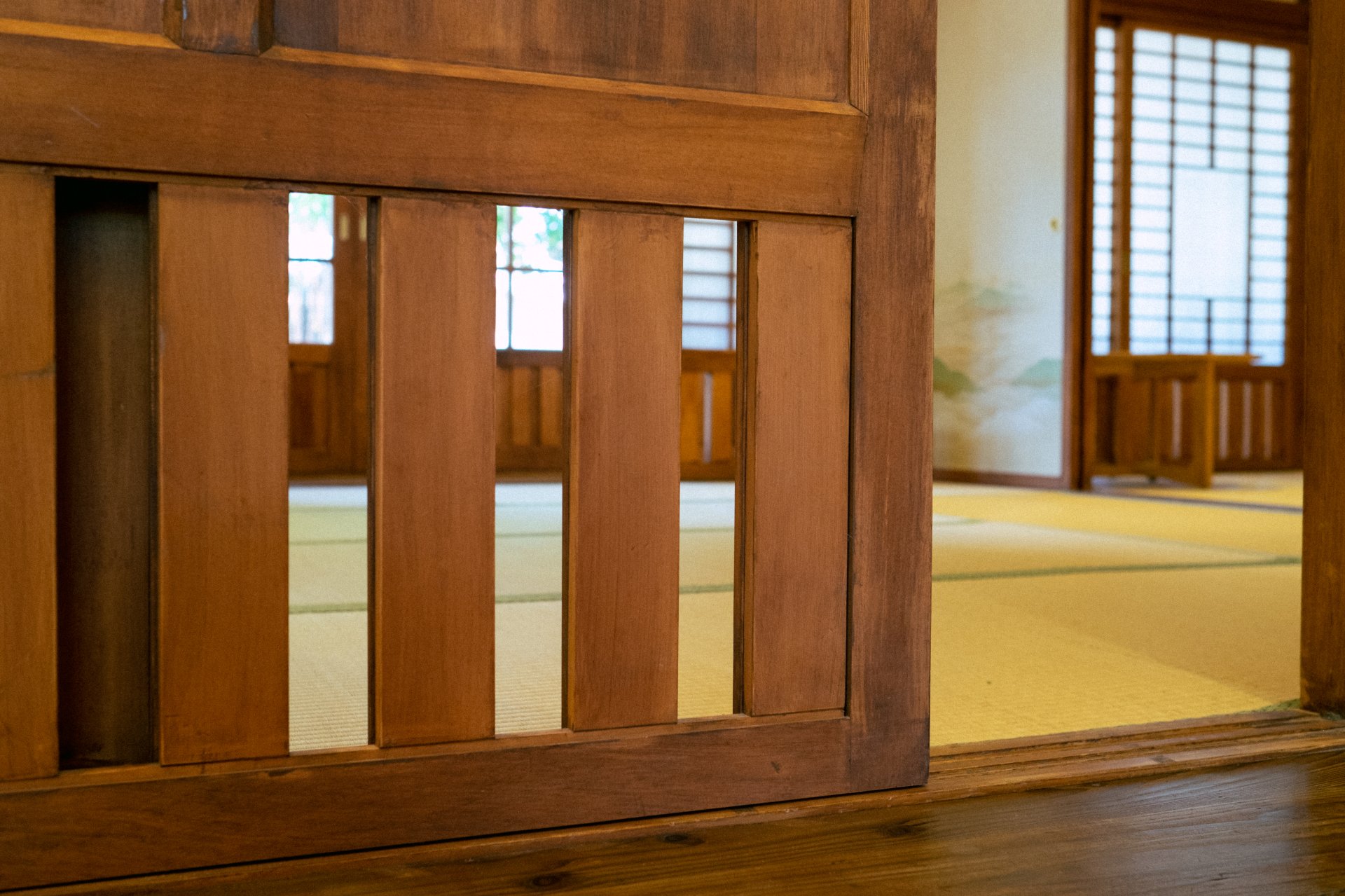
無雙窗 Musou Window
English Audio Guidance:https://ppt.cc/f7ZC2x
The English text is located below.
無雙窗(無双窓),為日式建築中常見的雙層格子拉窗,可從內部左右移動控制開口,用來提高室內通風、增加採光,位置低於小腿,可以方便將灰塵掃到外面。
Musou Window
Musou window refers to a common type of double-layer lattice sliding window in Japanese architecture. It allows for movement both to the left and right from the inside to control the opening, enhancing indoor ventilation and increasing natural light. Positioned lower than waist height, it facilitates easy removal of dust by sweeping it to the outside.
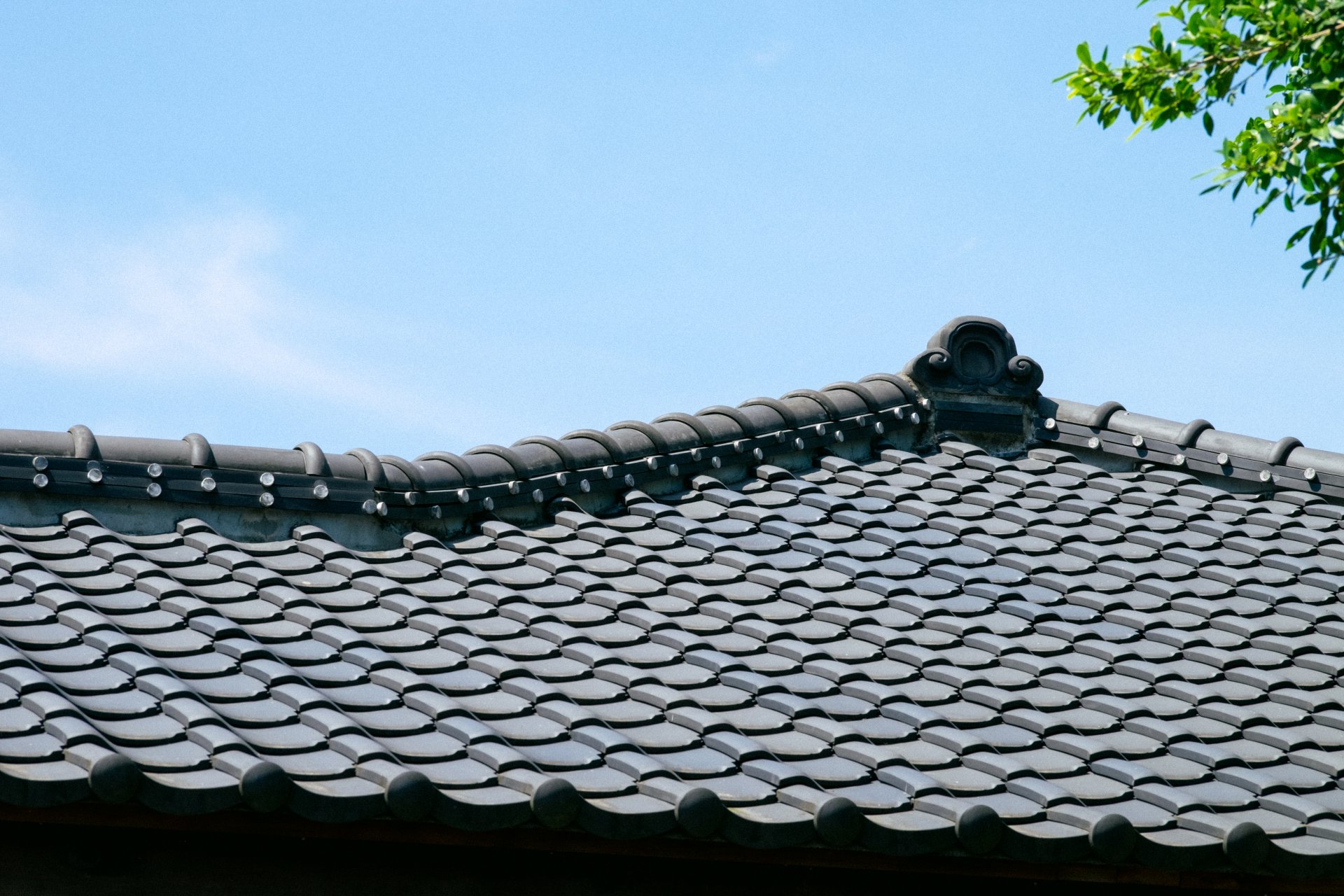
黑瓦屋頂 Black Tile Roof
English Audio Guidance:https://ppt.cc/fFyuXx
The English text is located below.
基隆要塞司令部校官眷舍屋頂,為廡殿頂 (寄棟造)、懸山頂(切妻造) 二種屋頂形式構成。瓦片採用日式黑瓦,並由棟瓦、鬼瓦、棧瓦、冠瓦、軒瓦等不同形制的黑瓦建構、收邊。
Black Tile Roof
The roofs of Keelung Fort Command Officers’ Quarter feature two different roof styles: "Kyuchu Yosumi" (寄棟造), a hipped roof, and "Kirizuma Yosumi" (切妻造), a gabled roof. Black Japanese tiles are used for roofing, and they are constructed and edged with various forms of black tiles, including ridge tiles, goblin tiles, hip tiles, crown tiles, and eave tiles.
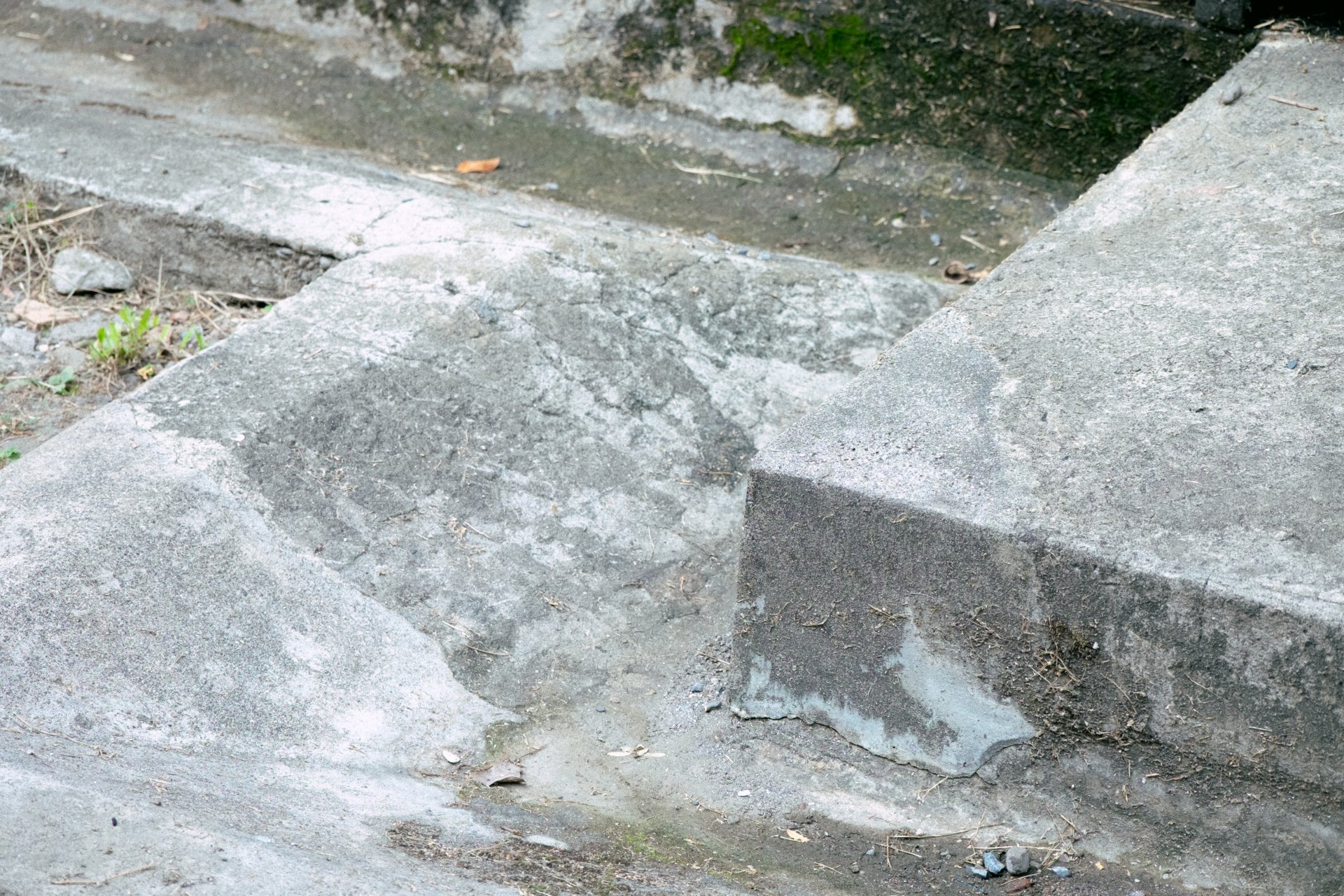
斜面犬走 Sloping scarcement
English Audio Guidance:https://ppt.cc/fkjwGx
The English text is located below.
犬走(犬走り),為日式建築外牆與排水溝間的舖面。其功用在於保護建築與地表的接觸面,將雨水順勢排入排水溝。加強排水,避免雨水直接沖刷基礎土壤,造成基礎下陷。
基隆要塞司令部校官眷舍的排水溝開口寬度極大,與一般日式建築不同。此種設計充分反應了基隆地區多雨的氣候。而階梯設計則巧妙避開排水溝流通,減少對於建築排水的影響。
Sloping scarcement
"Inu-Michi" (犬走) refers to the paving between the outer wall and the drainage ditch in Japanese architecture. Its function is to protect the contact surface between the building and the ground, allowing rainwater to flow smoothly into the drainage ditch. This strengthens drainage, preventing rainwater from directly washing away the foundation soil and causing subsidence.
The drainage ditch of Keelung Fort Command Officers' Quarter has an unusually wide opening, different from typical Japanese architecture. This design reflects the region's rainy climate. The stepped design cleverly avoids obstructing drainage, minimizing its impact on the building's drainage system.
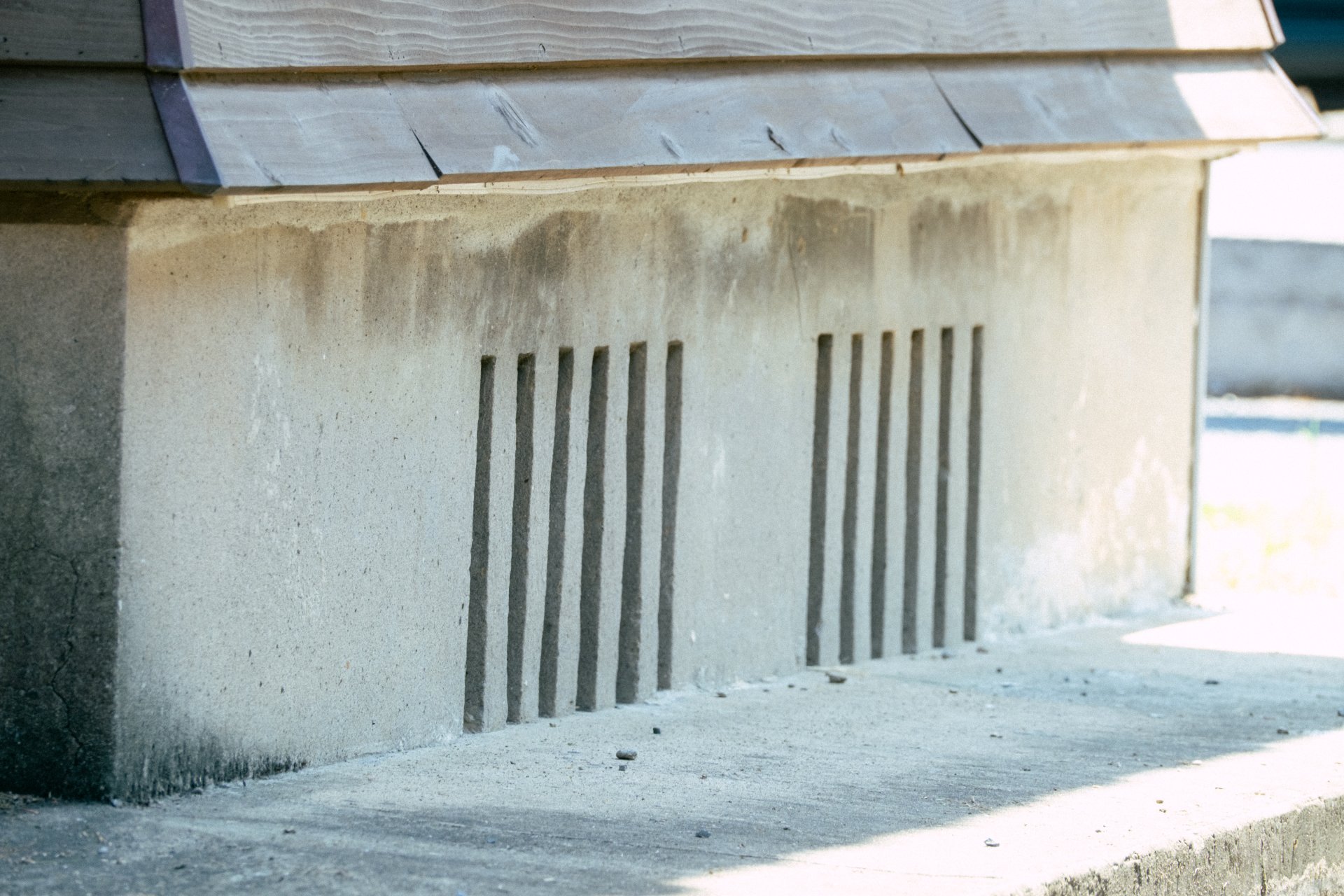
基礎、通氣孔 Foundation, Ventilation Aperture
English Audio Guidance:https://ppt.cc/fxzyfx
The English text is located below.
日式建築的基礎有不抬高與抬高兩種構法,其中抬高基礎是為了防潮與通風,一般應用在住宅、宿舍及招待所等建物中,台灣的日式住宅高約60~70公分。
而位於基礎上的通氣孔,具有調節溫溼度功能,保持基礎內乾燥通風,亦有裝飾作用。此外,通氣孔也作為基礎的進出口,方便進行維修。
Foundation, Ventilation Aperture
Japanese architecture employs two main methods for foundations: non-raised and raised. The raised foundation is utilized for moisture prevention and ventilation, commonly found in residential buildings, dormitories, and guesthouses. The foundation height of Japanese-style residences in Taiwan is typically around 60 to 70 centimeters.
Ventilation holes on the foundation serve to regulate temperature and humidity, maintaining a dry and well-ventilated environment within the foundation, while also serving a decorative purpose. Additionally, these ventilation holes act as access points for maintenance of the foundation.
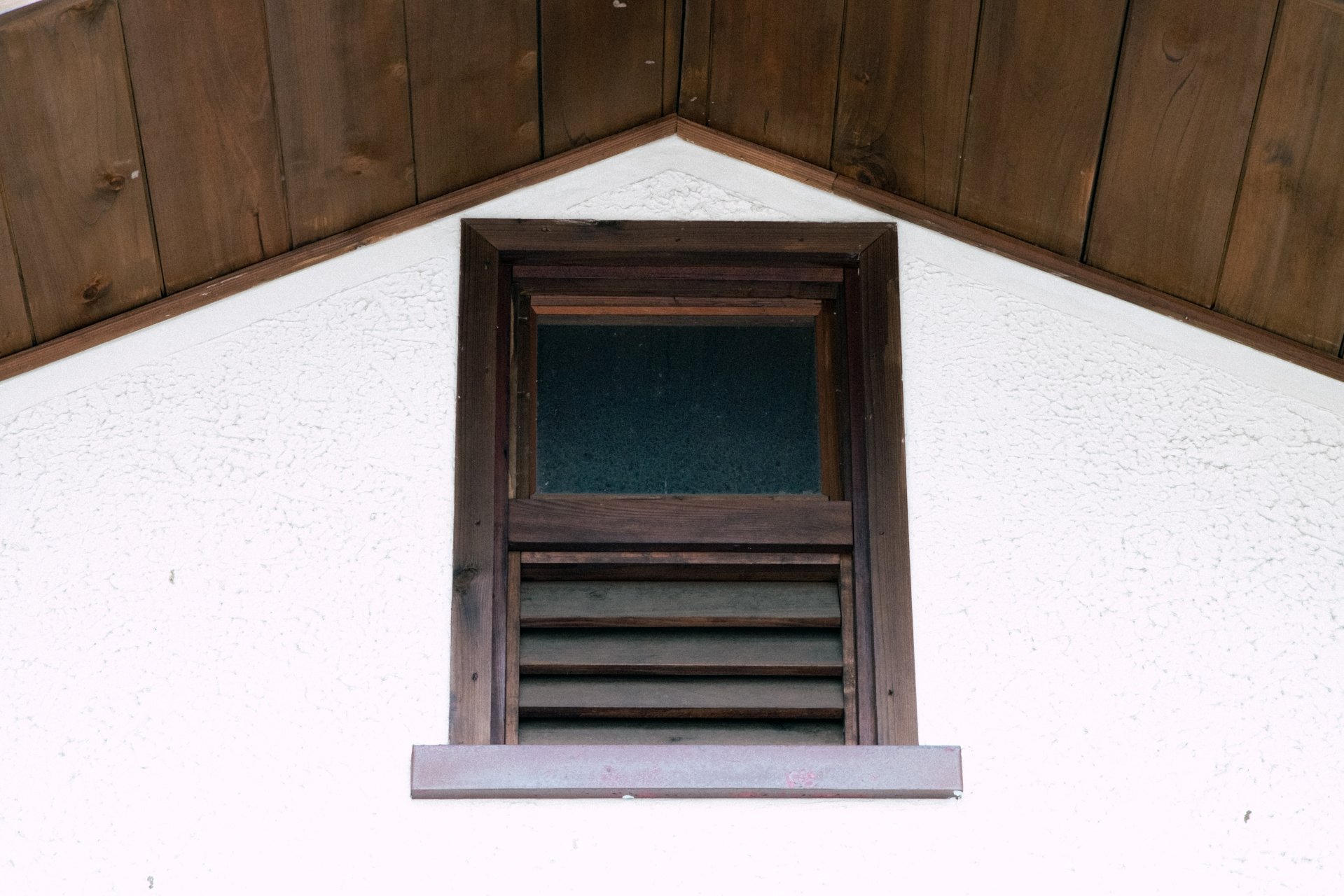
木摺壁 Folding Wooden Partition
English Audio Guidance:https://ppt.cc/fnXU9x
The English text is located below.
木摺壁,日式建築中常見之牆面作法,不同於小舞壁以竹片施作,木摺壁以木板條為結構,以便用榫接工法連接,面層施作灰泥。
Folding Wooden Partition
Folding Wooden Partition is a common wall construction method in Japanese architecture. Unlike bamboo lattice walls, wood folding walls utilize wooden strips as the structural framework, interconnected with a jointing technique and covered with plaster.
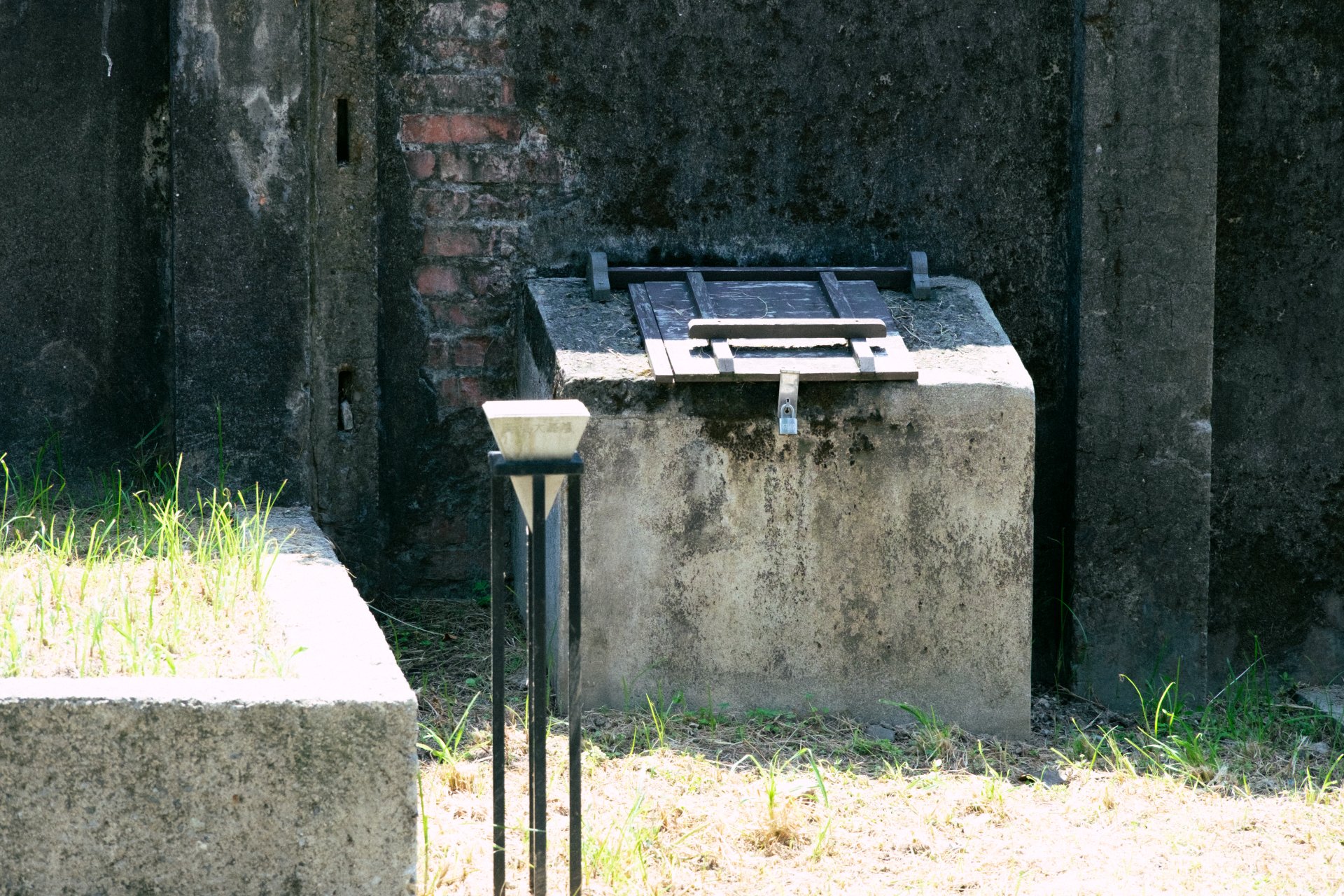
塵芥箱 Waste Receptacle
English Audio Guidance:https://ppt.cc/fhwOGx
The English text is located below.
塵芥箱,為早年人們生活中的垃圾桶。擺設位置多設在亭仔腳,大致上規定每戶都需要有塵芥箱,但有些是二三戶同住,因此允許可以共有,居民也有義務維持塵芥箱周圍整潔。
而其尺寸、材質及樣式由地方官廳規定,並依法規定民眾設置。但無論什麼材質都要有防止野狗野貓亂翻汚物的上蓋,箱內也須塗上有效不讓臭氣外漏的黑煤焦油。民眾將垃圾置於塵芥箱中,會有人協助搬運清理,費用則由地方稅收支付。
Waste Receptacle
Waste receptacle, a garbage container from earlier times, was commonly placed at the corner of pavilions. Generally, each household was required to have a waste receptacle, although in cases where two or three households shared a residence, they were allowed to have a communal one. Residents were obligated to maintain cleanliness around it.
The size, material, and style of the waste receptacle were regulated by local authorities, and residents were required to comply with these regulations. Regardless of the material used, the waste receptacle had to have a cover to prevent stray dogs and cats from scattering trash. It also had to be coated with effective coal tar inside to prevent the leakage of odors. There would be people assisting moving and cleaning the waste receptacle, and the expenses of it were covered by local taxes.
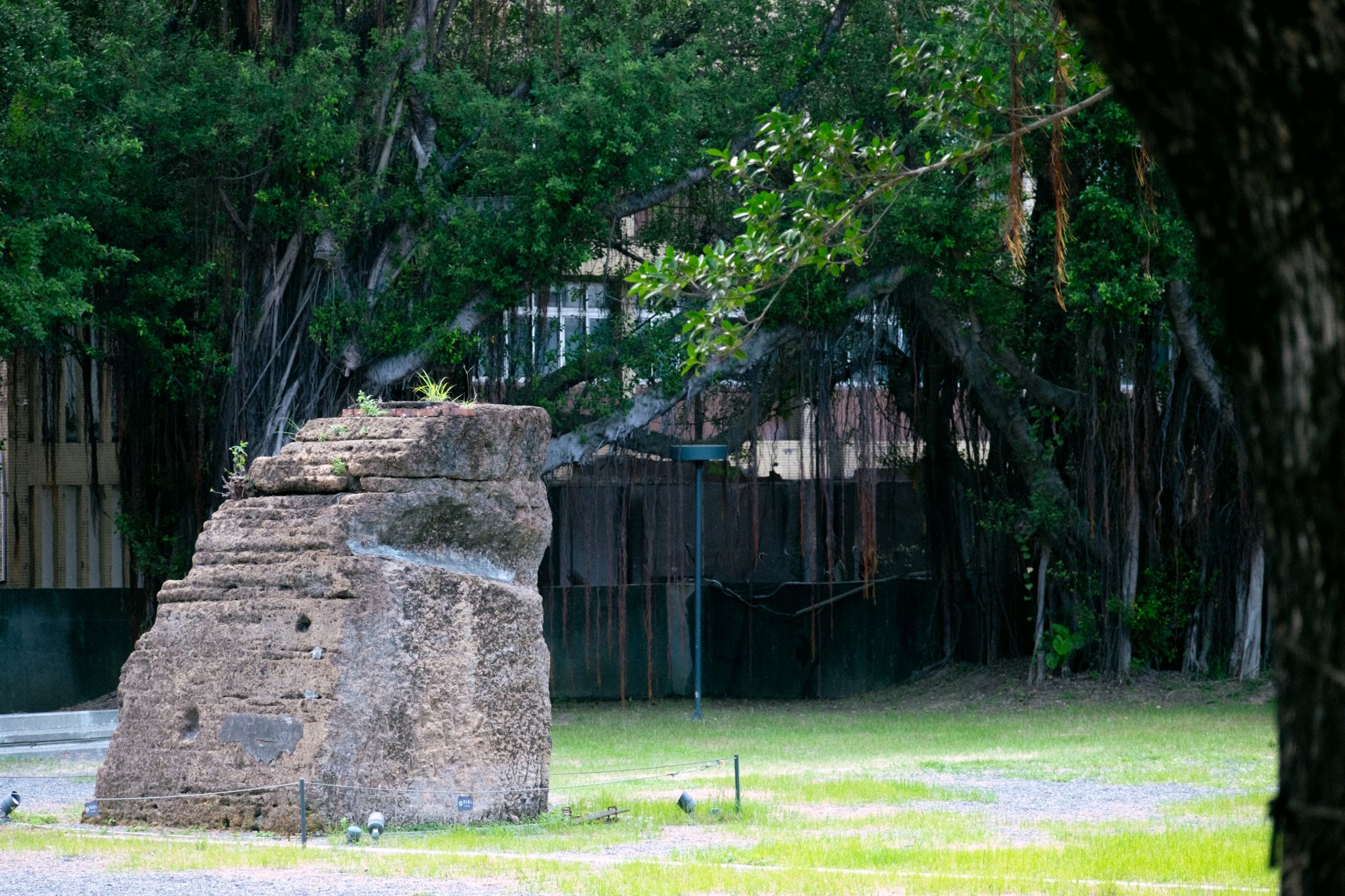
大沙灣石圍遺構 Remains of Dashawan Stone Wall
English Audio Guidance:https://ppt.cc/fOY60x
The English text is located below.
基隆設置砲臺,始自西荷時期,而砲臺位置也因戰事有所更動,尤以沙灣地區為最。大沙灣砲臺的設置可以追溯至1840年(清道光二十年)以前。
大沙灣石圍遺構,是過去沙灣地區砲台的外圍石牆,為防沿岸潮汐、防禦砲台之用。石圍底部以高夯土建構,上方則有層層疊砌的砂岩石版,屬於簡易型設施;石圍間另築有可供兵勇駐守,安置輕砲的土壘,因此現存大沙灣石圍遺構,包括土圍及土壘兩個部份。清法戰爭後,被法軍砲火轟炸,劉銘傳新築高地砲臺,而使大沙灣失去軍事價值,遂廢置於此。當地人也稱之「糯米城」,因下段為夯土構造,有糯米成份而稱之。
大沙灣石圍因北側臨海,南側環山,成為北臺灣海防的重要地帶,周圍更有豐富的文化資產,整體環境承載了諸多基隆的地方歷史記憶。
Remains of Dashawan Stone Wall
Keelung has established coastal batteries since the Dutch colonial period, and the locations of these batteries have changed due to various conflicts, particularly in the area of Dashawan. The establishment of the Dashawan Battery can be traced back to 1840 (the Qing Dynasty).
The remains of the Dashawan Stone Wall were the outer stone walls of the batteries in the Dashawan area, serving the purpose of defending against coastal tides and fortifying the batteries. The base of the stone wall was constructed with compacted soil, while layers of sandstone blocks were stacked above, making it a simple structure. Within the stone walls, there were earthen fortress for soldiers to garrison and deploy light cannons. The existing remains of the Dashawan Stone Wall include both the stone wall and the earthen fortress. During the Sino-French War, the area was bombarded by the French forces, and later Liu Ming-chuan built the highland battery, rendering Dashawan military obsolete and subsequently abandoned. Locals also refer to it as the "Glutinous Rice City", due to the lower section being made of rammed earth with glutinous rice components.
Located on the northern coast with mountains to the south, the Dashawan Stone Wall became a crucial area for coastal defense in northern Taiwan. The surrounding area is rich in cultural heritage, embodying many historical memories of Keelung.
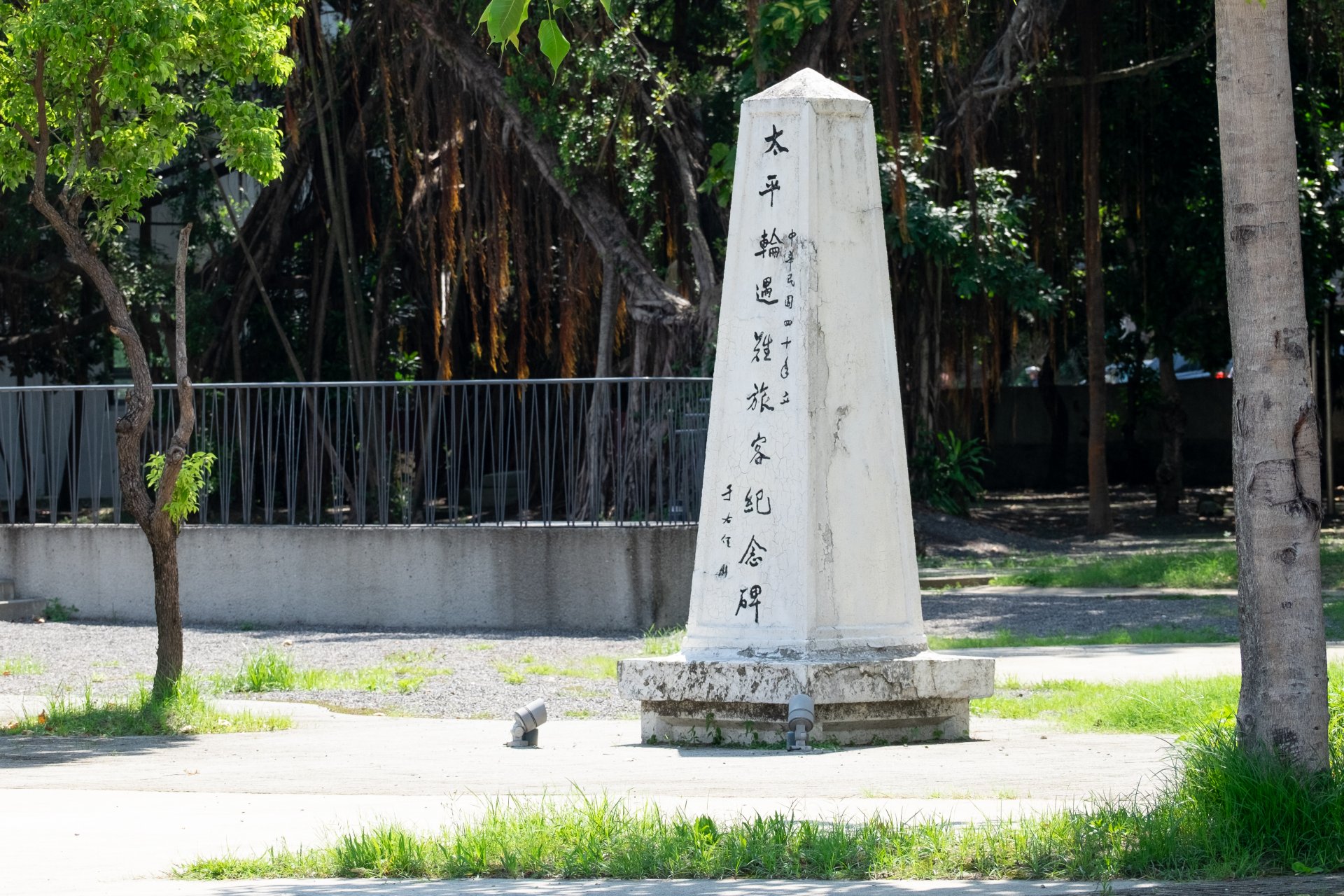
太平輪遇難旅客紀念碑 Taiping Ship Victims Monument
English Audio Guidance:https://ppt.cc/fDCT4x
The English text is located below.
1949年1月27日,中華民國中聯企業公司向太平洋船務公司租用的客輪「太平輪」,因超載、夜間航行沒有開啟航行燈等原因,導致從中國上海開往臺灣基隆的途中,在舟山群島海域的白節山附近與一艘載運煤礦及木材的貨輪「建元輪」相撞。最終造成太平輪共932人罹難,其中包含不少擬自中國地區逃難前往台灣的旅客。
1950年,罹難者家屬發起立碑,希望能在航程終點立碑,藉以表達對未上岸親友的思念與招魂。並於1951年由于右任題字「太平輪罹難旅客紀念碑」,予以悼念當時的罹難者。2018年3月完成「口袋公園」建置,一般民眾及家屬皆可自由參訪憑弔。
Taiping Ship Victims Monument
On January 27, 1949, the Republic of China Central Union Corporation chartered the passenger ship "Taiping Ship" from the China Pacific Shipping and Trading Company. Due to overloading, failure to turn on navigation lights during nighttime sailing, and other reasons, the ship collided with a freighter named "Jianyuan Vessel" carrying coal and timber in the vicinity of Ba Jie Mountain in the Zhoushan Archipelago, on its journey from Shanghai, China, to Keelung, Taiwan. The tragic incident resulted in the loss of 932 lives. This included many passengers who were planning to evacuate from mainland China to Taiwan.
In 1950, the families of the victims initiated the establishment of a memorial to be placed at the end of the voyage, expressing their longing and commemorating the souls lost at sea. In 1951, a monument titled " Taiping Ship Victims Monument " was erected with the inscription by Yu Yo Ren to commemorate the victims of the tragedy. In March 2018, the construction of the "Pocket Park" was completed, allowing the general public and the families of the victims to visit and pay their respects freely.
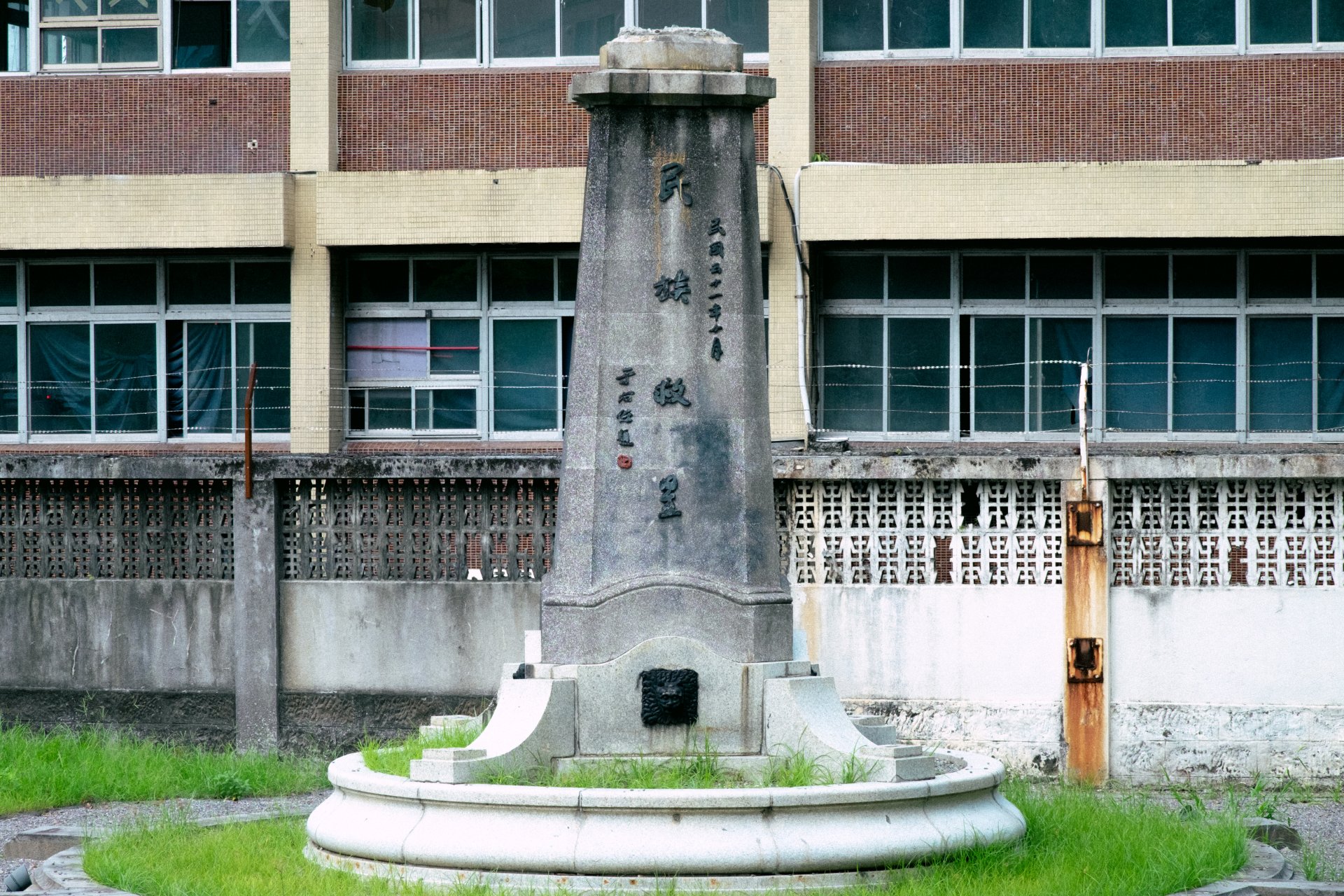
原樺山資紀銅像基座 Base of the Kabayama Sukenori Bronze Statue
English Audio Guidance:https://ppt.cc/ftAqxx
The English text is located below.
1916年(大正5年))辜顯榮等仕紳於基隆驛前籌建臺灣第一任總督樺山資紀銅像,並於隔年正式落成。此銅像之基座兼具水池功能,並有照明的西式燈座、提供休憩的石椅、裝飾植栽,為早年基隆驛前的代表景點。
1949年基座被改為劉銘傳紀念碑,改設置一件臺灣意象的雕飾;1962年則改立蔣介石銅像,並由于右任題字「民族救星」。水池基座逐步失去水池功能成為圓環,直至2020年修築國門廣場時,將銅像遷移至桃園慈湖紀念雕塑公園,並將具文資價值之基作異地保存於此。
Base of the Kabayama Sukenori Bronze Statue
In 1916, prominent figures, including Gu Xianrong, initiated the construction of the first statue of Taiwan's Governor-General Kabayama Sukenori in front of the Keelung Railway Station. The statue was officially completed the following year.The base of this statue served as a water feature, incorporating a Western-style lamp post for illumination, stone benches for relaxation, and decorative plants, making it a representative attraction in front of the Keelung Railway Station in the early years.
In 1949, the base was repurposed for the Liu Mingchuan Memorial, featuring a sculpture with a Taiwanese theme. In 1962, a bronze statue of Chiang Kai-shek was erected, with the inscription "National Savior" by Yu Youren. The water feature gradually lost its functionality and became a roundabout. In 2020, during the construction of the National Gateway Plaza, the statue was relocated to the Taoyuan Cihu Sculpture Memorial Park, and the base, with its cultural heritage value, was preserved at a different location.
清法戰爭紀念園區 Sino-French War Memorial Park
English Audio Guidance:https://ppt.cc/fC6swx
The English text is located below.
清法戰爭發生於1884~1885年(清光緒年間),法軍為取得基隆煤礦,而攻取基隆,但並未成功。之後又因要攻取淡水而攻佔基隆獅球嶺、月眉山,但也始終無法順利進軍台北。戰事造成眾多法軍殉職,因而法國於二個主要戰地澎湖、基隆立碑紀念。
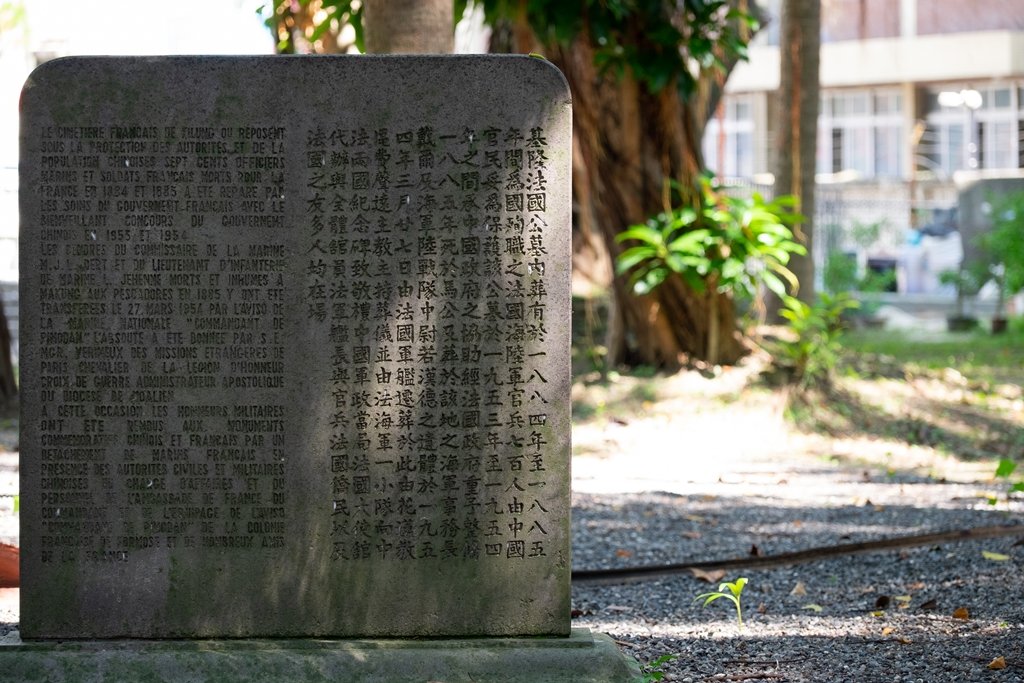
清法戰爭紀念園區創立於清光緒11年(1885年),是為了紀念清法戰爭時犧牲的法國軍人所建,於基隆長存迄今,是唯一直接與此戰爭最具關連之構造物,從墓葬格局而言,也是全台少見自清末以來埋葬西洋人為主之公墓。
園區內共有紀念碑六座,墓塚四門,分屬三個時期建造,分別是清領時期法軍於大沙灣所興建、日治時期,日本政府接受法國委建,以及二戰後,法國政府由澎湖遷建之墓塚,並立遷移記事碑。園區內墓塚及紀念碑全數採用石塊雕鑿疊砌,其渾厚與自然溫潤之質感與肅穆之墓園相稱,除1885年選用砂岩建碑外,餘皆改為較不易風化之花崗岩及安山岩石塊。
1999年核定為市定古蹟「清法戰爭遺址」;2006年定名為「清法戰爭紀念園區」。這處紀念園區,除可緬懷清領時期的清法戰爭歷史、台灣在19世紀的國際處境外;園區內的墓葬設施亦反映了不同文化與不同年代的營造特色。
Sino-French War Memorial Park
The Sino-French War Memorial Park was established in the Chin Dynasty, (1885) to commemorate the fallen French soldiers during the war. It has been existing in Keelung since then and is the only structure directly related to this war that persists. From the layout of the graves, it is also one of the few cemeteries in Taiwan that has predominantly interred Westerners since the late Chin Dynasty.
The park features six monuments and four tomb gates constructed in three periods: during the Chin rule, when the French forces built them in Da shaw wan; the Japanese colonial period when the Japanese government accepted the French request for construction; and post-World War II, when the French government relocated and erected the tomb with a commemorative monument after removing it from Penghu.
All tombstones and monuments in the park are carved and stacked with stones, providing a solid and naturally warm texture, befitting the solemn cemetery. Except for the 1885 monument, which used sandstone, the others are made of granite and andesite to withstand weathering.
In 1999, it was designated as a city-designated historic site, "Sino-French War Remains." In 2006, it was named the "Sino-French War Memorial Park." The memorial park not only allows reflection on the history of the Sino-French War during the chin Dynasty and Taiwan's international situation in the 19th century but also showcases the architectural characteristics of different cultures and eras through its burial facilities.
法國陸海軍人戰死者紀念碑 French Soldiers Monument
English Audio Guidance:https://ppt.cc/fNifMx
The English text is located below.
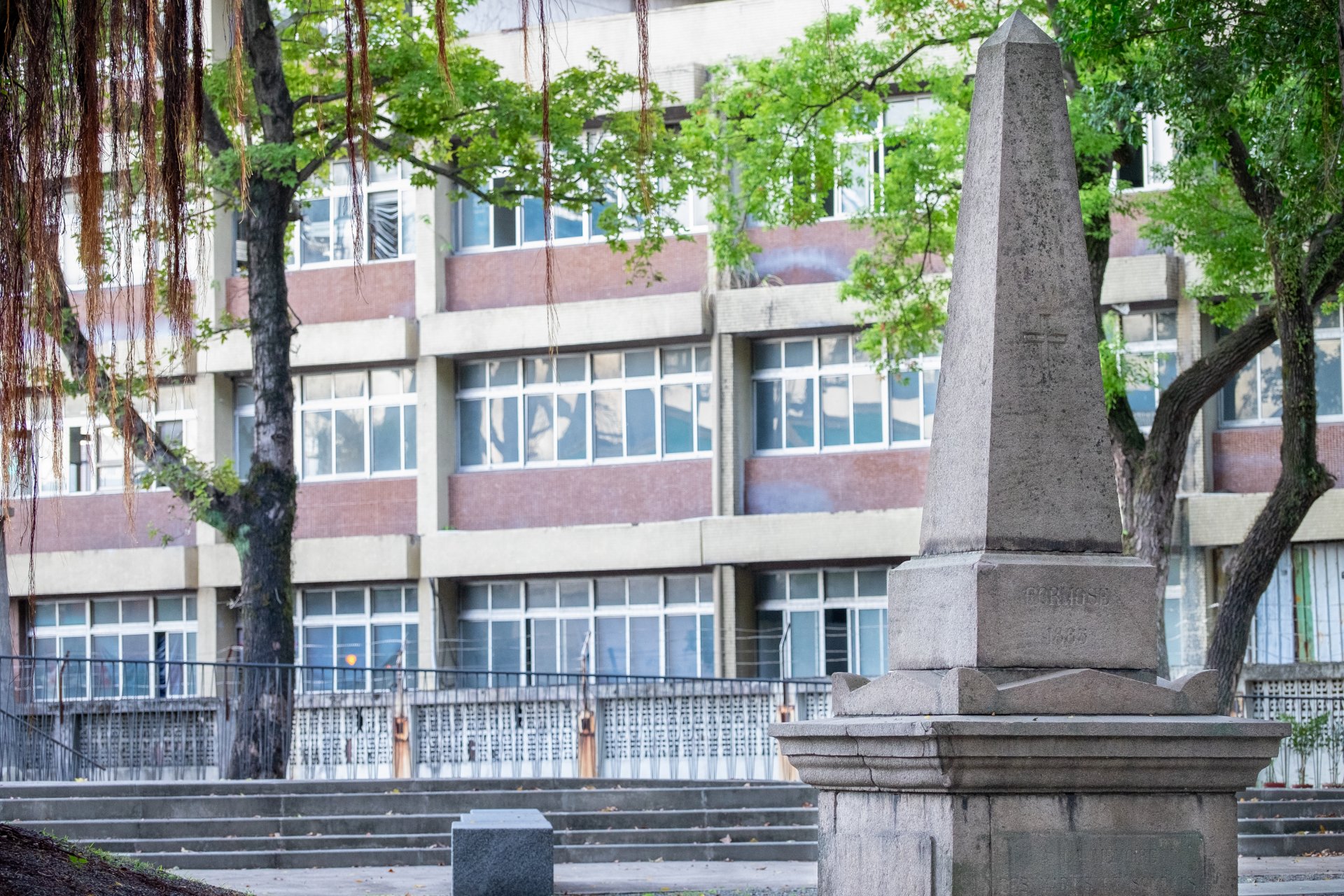
清法戰爭1884年(光緒10年),法軍為取得基隆煤礦,而攻取基隆,但並未成功。之後又因要攻取淡水而攻佔基隆獅球嶺、月眉山,但也始終無法順利進軍台北。戰事造成眾多法軍殉職,因而法國於二個主要戰地澎湖、基隆立碑紀念。二碑皆為清治時期碑碣,形制皆似為寶篋印式塔。
French Soldiers Monument
In 1884, during the Qing Dynasty, the Sino-French War took place. The French forces aimed to attack and seize Keelung for its coal mines but were unsuccessful. Subsequently, they occupied She-qiu ridge and Yue-mei mountain in Keelung, in an effort to take Tamsui, yet they faced difficulties in advancing towards Taipei. The conflict resulted in numerous casualties among the French forces, leading the French government to erect commemorative monuments in the two main battlefields, Penghu and Keelung. Both monuments are steles from the Qing period and exhibit a similar structure resembling that of a pagoda.
法國海軍事務長戴爾與陸戰隊中尉若漢德之墓 Deputy Navy Commissioner Dert and Lieutenant Jehenne
English Audio Guidance:https://ppt.cc/fEe03x
The English text is located below.
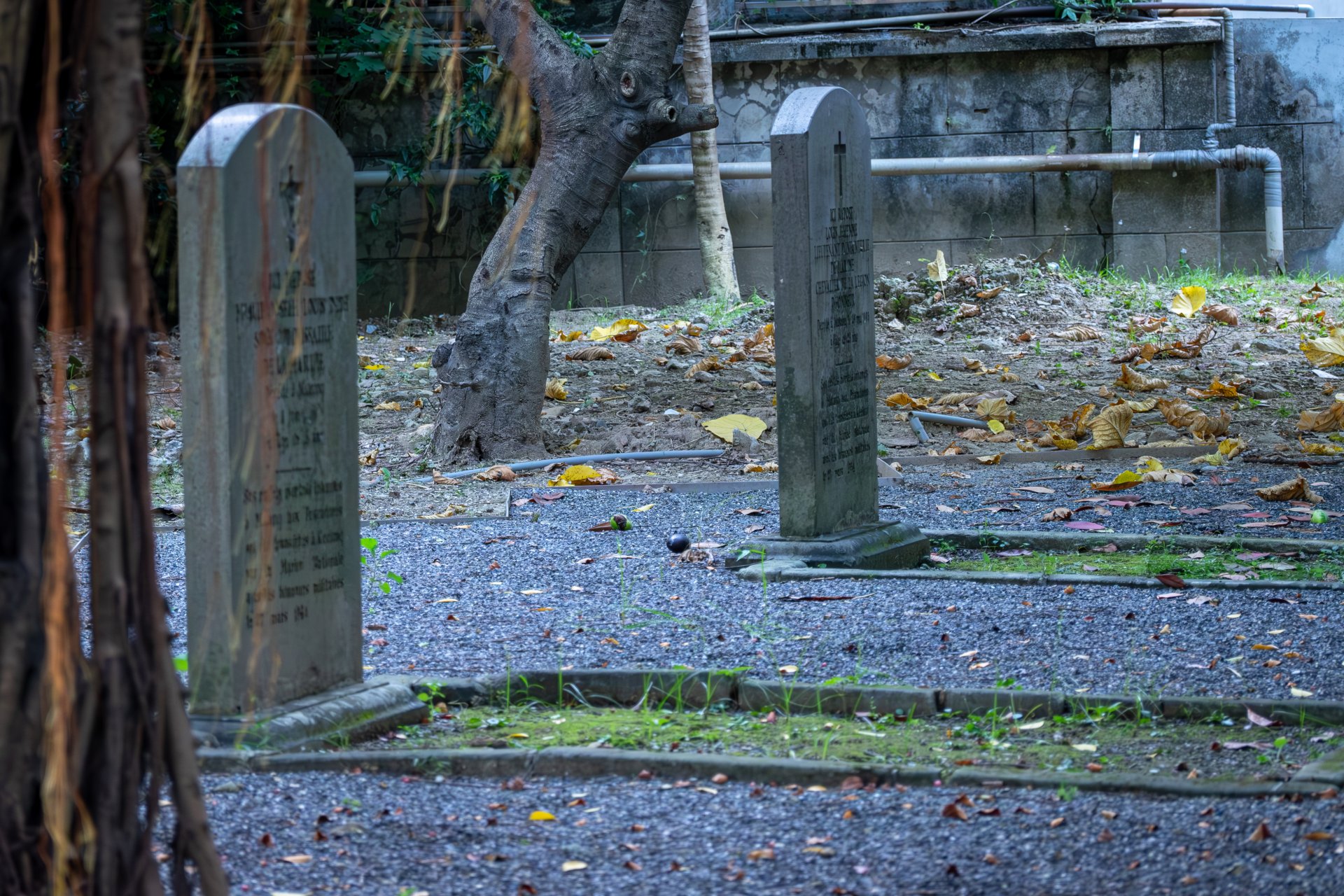
在清法戰爭澎湖之役中捐軀的法國海軍事務長馬里.約瑟夫.路易.戴爾(Marie Joseph Louis Dert)、與海軍陸戰隊中尉路易.若漢德(Lieutenant Louis Jehenne之墓。二者原葬於澎湖馬公法國公墓,後於1954年遷葬於基隆法國公墓,當時由法國國家海軍透過國家護衛艦皮莫丹號(F739),以軍事榮譽儀式運送二人遺體遷葬。
Deputy Navy Commissioner Dert and Lieutenant Jehenne
The graves of Marie Joseph Louis Dert, the French Navy's Chief of Naval Staff, and Lieutenant Louis Jehenne, who sacrificed their lives in the Battle of Penghu during the Sino-French War, were originally located in the French Cemetery in Magong, Penghu. In 1954, their remains were relocated to the French Cemetery in Keelung. The transfer was conducted with military honors and escorted by the French National Navy using the National Guard Ship Pimodan(F739).