Dumbarton Oaks Research Library and Collections
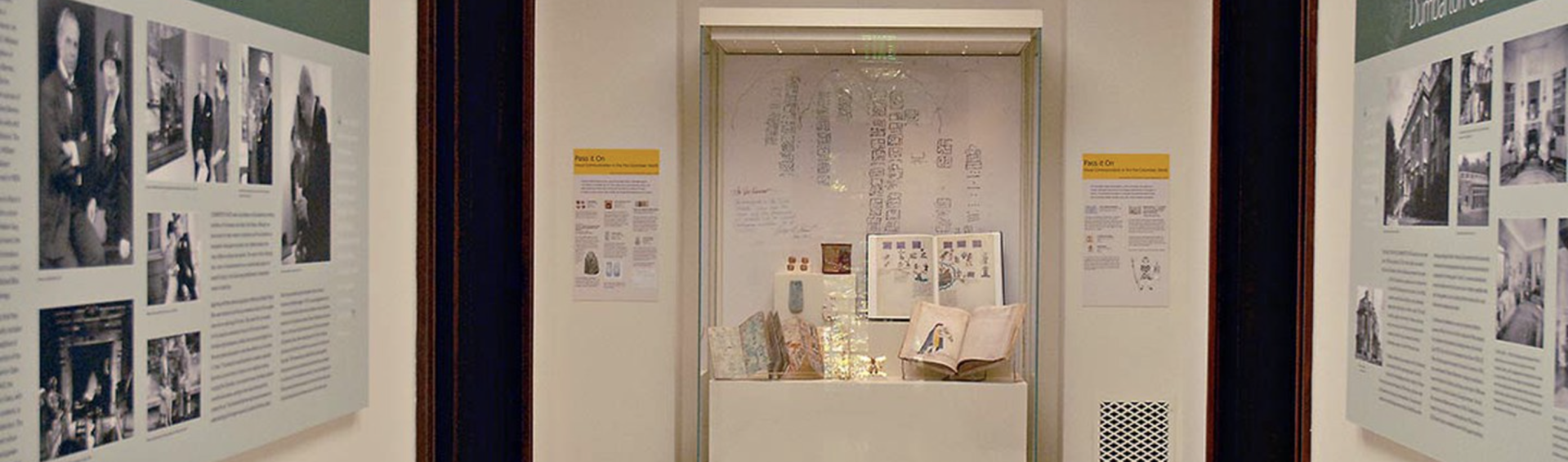
Bliss and Orientation Galleries
A small space located immediately to the right of the Museum lobby, the Bliss Gallery is used for small-scale, rotating exhibitions related to the founders of Dumbarton Oaks, Mildred and Robert Woods Bliss. Selected artworks highlight themes relevant to the collections and institutional research programs, with a particular focus on the Blisses’ collecting practices. The Orientation Gallery hosts occasional special exhibitions of photography and other works.
Avian Pendants
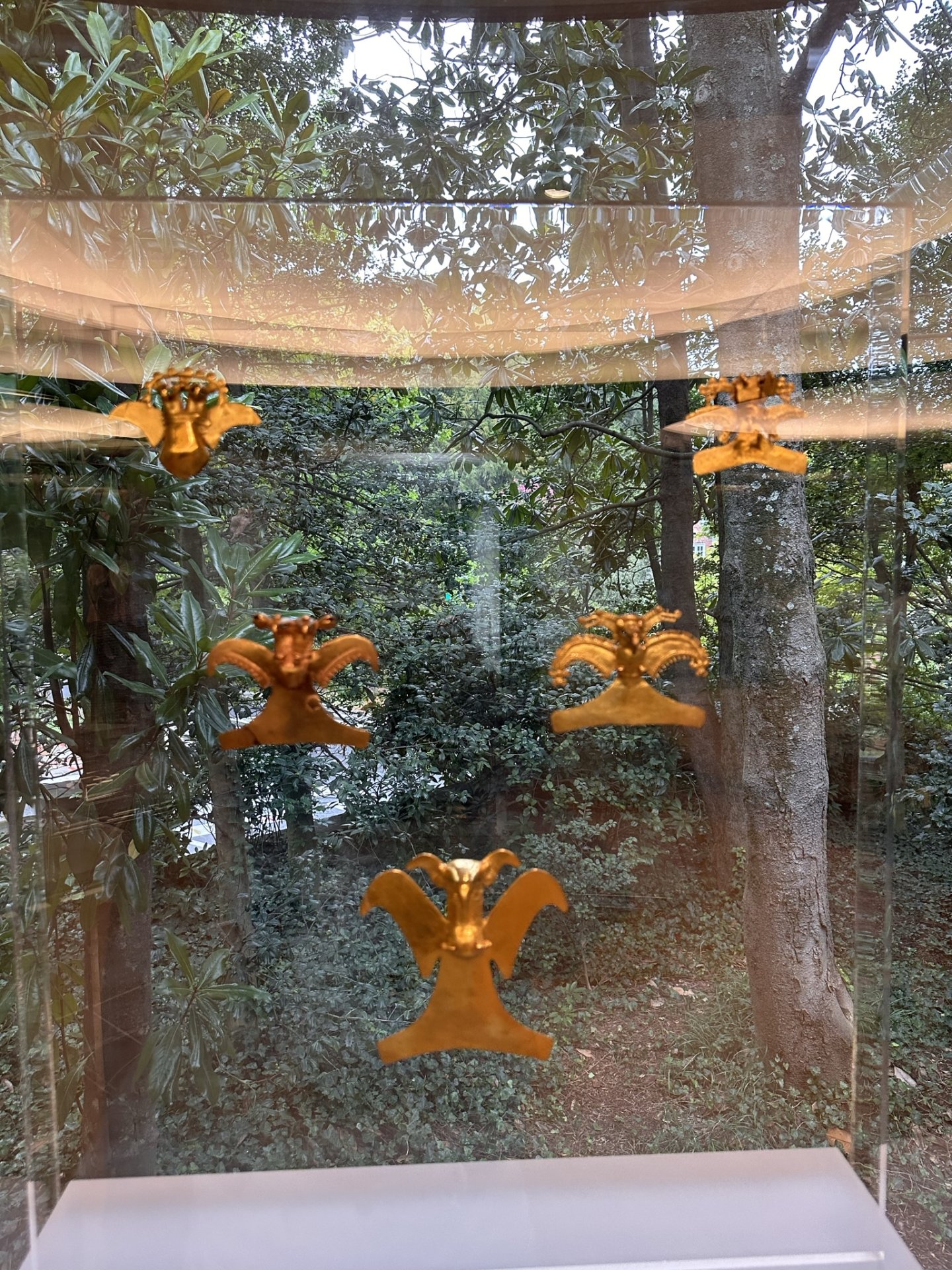
The sharp beaks and claws on these avian pendants are characteristic of eagles, keen-eyed hunters of the sky.
Like crocodiles in the aquatic realm, and jaguars on land, eagles were symbols of strength and power. All three animals share the ability to move between realms, and as such their representations in gold were appropriate ornaments for warriors and chiefs. An early twentieth century photograph shows a Talamanca chief wearing half a dozen such ornaments suspended on a cord on his chest-a veritable flock of power symbols.
An Early Byzantine Altar
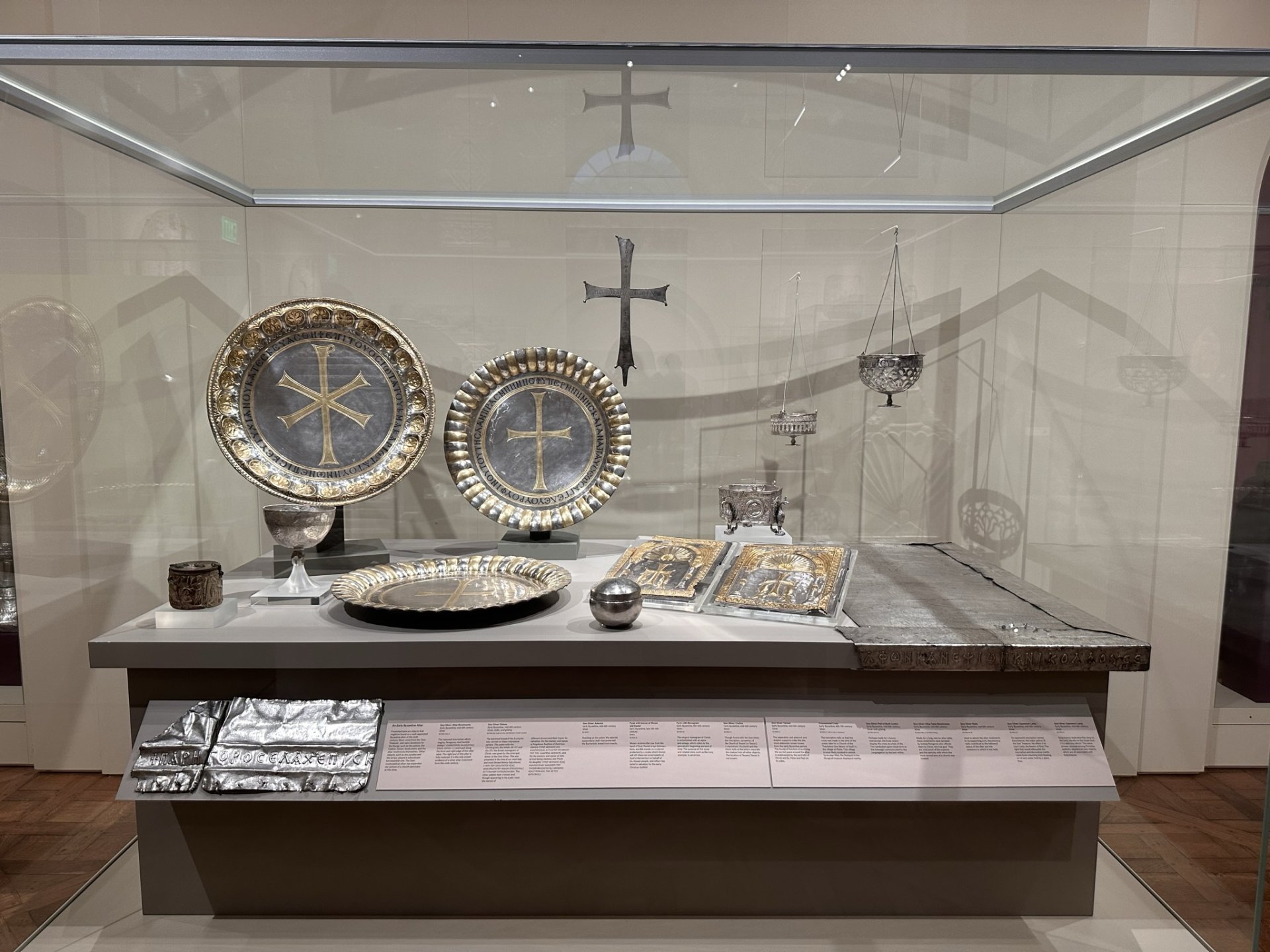
Presented here are objects that might be found on a well-appointed
Byzantine altar of the sixth century. Most come from the 'Sion Treasure', and were donations for the liturgy, such as the patens, the chalice, censer, bookcovers, and the altar revetments themselves. Other objects, such as the pyxides and the lamps, played a subordinate but essential role. The Sion ecclesiastical silver has expanded our picture of a church sanctuary at this time.
The Sion Silver Altar Revetments are a remarkable example of Early Byzantine artistry, dating back to the mid-6th century. Crafted from silver, these revetments feature intricate repoussé work, including an inscription that begins with the words "Paregoros, most humble bishop." This inscription continues along the front and right edge of the altar table, providing valuable historical context. Notably, the right end of this altar has been fully restored. What makes this artifact particularly significant is that it stands as the only extant evidence of a silver altar revetment from the sixth century. The piece, cataloged as BZ.1965.1.10a, b, offers a unique glimpse into the religious and artistic practices of its time.
The Sion Silver collection also includes salvers that were used to carry the leavened bread of the Eucharist, a central element in Christian liturgical practices. One of these patens is particularly noteworthy for featuring a Christogram, a monogram that combines the Greek initials chi (X) and rho (P) to symbolize Christ. This specific paten was donated by the principal benefactor of the Sion Silver collection and bears an inscription indicating that it was presented during the episcopacy of Eutychianos. The inscription reads, "This was presented in the time of our most holy and most blessed bishop Eutychianos," followed by the Greek text "+€ПІ TOY OCITATOY K[ai] EYTYXIANOY KATECKEYACOH," which further emphasizes the historical and religious context of the artifact.
The "Pyxis with Scenes of Moses and Daniel" is an Early Byzantine artifact crafted from ivory and dated to the late 5th to 6th century. Cataloged as BZ.1936.22, the pyxis features carved scenes that include Moses receiving the Law from God, Daniel praying between lions, and the figure of Bel standing on a column guarded by a snake, which Daniel is shown killing. These scenes are not just biblical illustrations but are also symbolic representations of God's intervention on behalf of His chosen people. They reflect the early Christian belief in divine protection and salvation.
A Ceremonial Dance
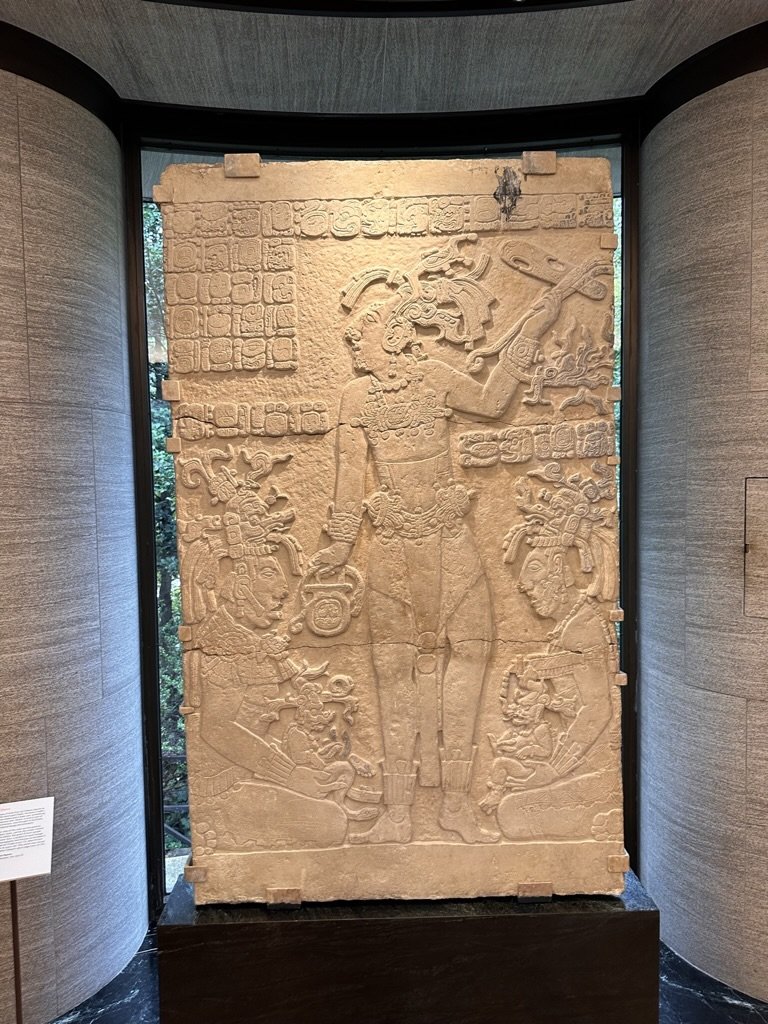
The ruler of Palenque, K'inich K'an Joy Chitam, dances as he impersonates the storm god Chahk. He wears Chahk's costume, and carries snakes and a water pot, symbolizing lightning and thunderous rain. Dance, a central part of many public performances, was thought to facilitate contact with supernatural beings and ancestors. Appearing on either side of the ruler are his parents. His mother carries the snake-footed god while his father holds the Jester God, a symbol of royal lineage.
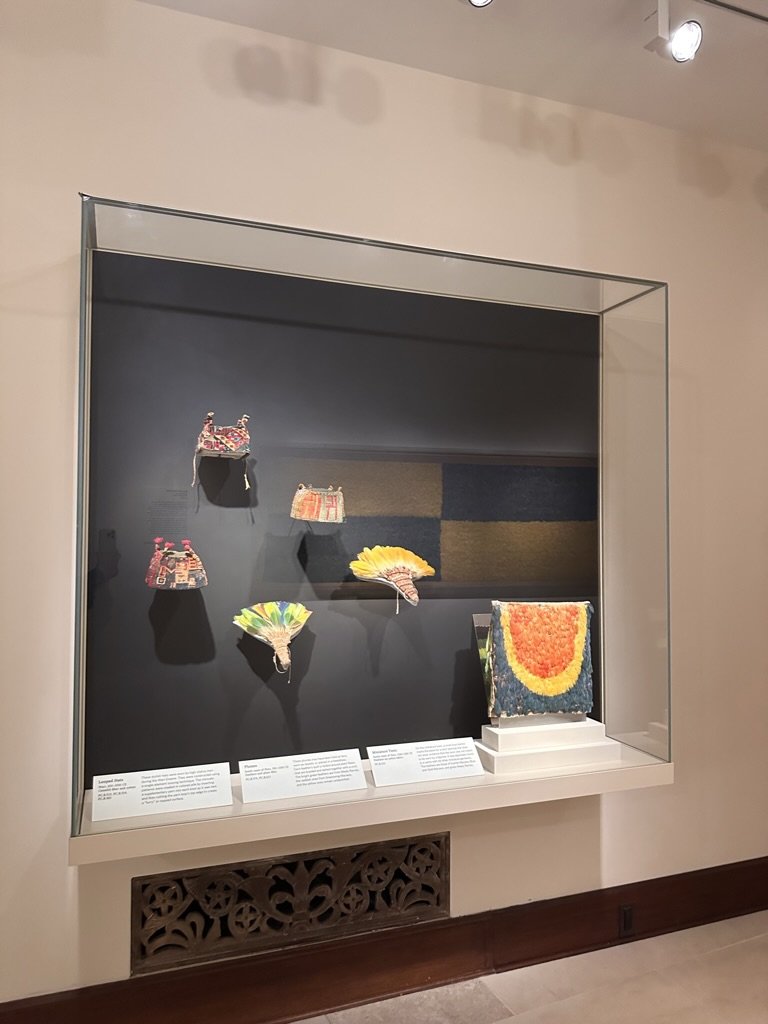
Looped Hats, Plumes, and Miniature Tunic
Looped Hats:
These stylish hats were worn by high-status men during the Wari Empire. They were constructed using a single-element looping technique. The intricate patterns were created in colored pile by inserting a supplementary yarn into each knot as it was tied and then cutting the yarn loop's top edge to create a furry or napped surface.
Plumes:
These plumes may have been held as fans, worn as tassels, or placed in a headdress
Each feather's quill is folded around plant fibers that are braided and lashed together with a cord The bright green teathers are from Mealy Parrots, the reddish ones from Greenwing Macaws and the yellow ones remain unidentified.
Miniature Tunic:
On this miniature tunic, a small blue feather marks the place for a neck opening that does not exist; evidence that the tunic was not meant to be worn by a figurine. It was reportedly found in a cache with 66 other miniature garments. The feathers are those of Scarlet Macaws, Blue-
and-Gold Macaws, and green Mealy Parrots.