基隆七堵鐵道公園週圍智慧導覽Keelung Cidu Railway Park Smart Guide System (Please select the English map for English smart Guide)
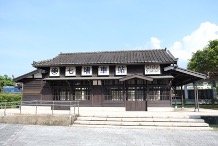
七堵鐵道紀念公園
1887年劉銘傳興建台北至基隆段鐵路,1891年於現址設八堵火車碼頭。日治初期鐵路改線,1897年新設八堵驛後改名為七堵驛,1912年興建日式木造站房。1971年建七堵後站,是全國唯一上行與下行月台分離的火車站。2005年後站、2007年前站停用。
2007年文化局將舊七堵火車站列為歷史建築,拆遷後重建,2009年11月完工;並成立七堵鐵道公園,佔地約1,200坪,規劃月台及鐵軌區域。舊七堵火車站是全國僅存木造車站裡,結構最漂亮的一座,牆身、屋架完整,造型典雅脫俗。
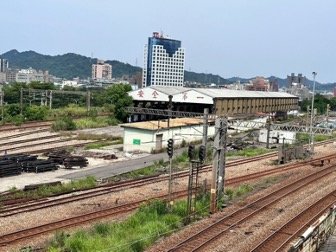
七堵調車場
因樺山、八堵等鐵路站場容量不足,車輛調度困難,限於地勢無法就地擴建,1968年擇七堵興建調車場,1972年3月啟用。每天調車能量最高可達3,000輛,為當時遠東地區,除日本東京附近的郡山調車場外,第二個規模龐大的調車場。
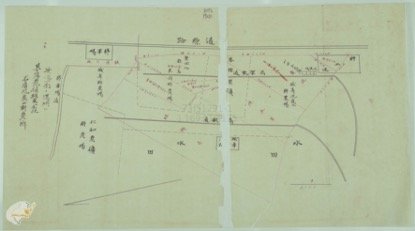
站前貯炭場
七堵地區蘊藏豐富煤礦,日治時期七堵前站即肩負運煤任務,車站前方兩旁都是儲煤場,堆置來自草濫、瑪陵坑、石厝坑方面的煤炭。位於山區的礦場利用索道、輕便軌道擔任轉運工具,戰後則改用卡車,透過七堵前站對外運輸。
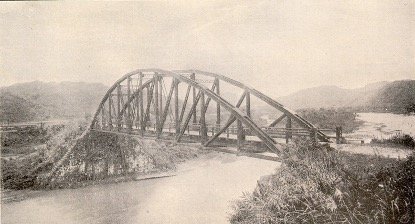
大華橋
1887年劉銘傳興建台北至基隆段鐵路,1891年在此地建跨越基隆河的鐵道橋,稱為八堵鐵橋。日治初期鐵路改線,將鐵橋改為人車通行的公路橋,改稱大和橋,為台北基隆間公路的主要橋梁。戰後改稱大華橋,2007年重建為4線寬之水泥橋。
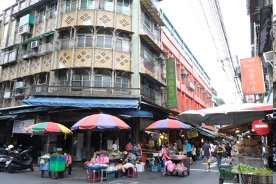
南興市場
戰後七堵市區人口湧入,1952年因應七堵都市計畫,擇南興路37號建市場。後因市場僅是一層樓平房,不敷所需,於1976年改建成四層大樓,是七堵市區主要市場,並擴大至整條南興路。
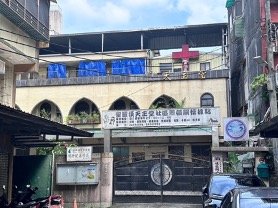
新興戲院
1953年地方人士翁詩生,在七堵市場邊建新興戲院,以播放日本片與野台戲、歌舞劇方面為主。1956年結束營業,戲院轉售給天主教向修楚神父,並改裝成聖堂。1962年成立耀漢幼稚園,1964年將舊屋拆除重建成聖耀漢天主堂。
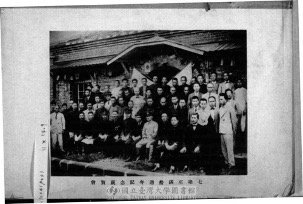
七堵庄役場
1920年地方制度改正,將瑪陵坑區、五堵區、暖暖區合併爲七堵庄,庄役場設於七堵,1923年建造磚式廳舍。1947年改為基隆市七堵區公所,但因年久失修,乃讓由基隆稅捐稽徵處拆除,1969年完工,由七堵分處使用,地址為明德一路93號。
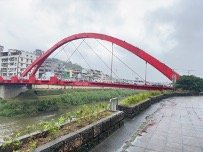
崇智橋(石厝坑吊橋原址改建)
為方便石厝坑居民出入及煤炭運輸,1935年重建石厝坑吊橋,後約於1975年拆除,新建崇智橋,1978年10月完工通車。後因橋面高度低於基隆河200年防洪頻率高度,遂於2004年10月改建,長78公尺,2005年12月完工。
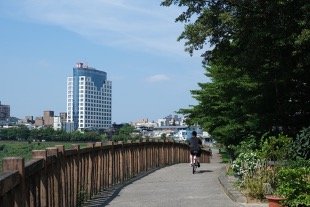
基隆河親水步道
基隆河七堵段從大華橋到崇智橋、七賢橋的兩岸防汛道路,2006年陸續完工後,常吸引民眾在河堤上散步及運動。後由第10河川局闢為自行車道,提供民眾休憩、運動。
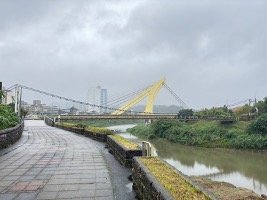
俊德吊橋(金森吊橋)
為運送瑪陵坑方面煤炭至七堵驛,1915年七堵輕鐵合名會社築輕便軌道,8月完工。並自連柑宅建橫跨基隆河至崇孝街底之鐵線橋,日治末期稱為金森吊橋。1961年改稱俊德吊橋,2000年因象神颱風受損,2012年新建景觀吊橋繼續使用。
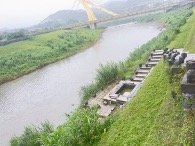
七賢橋下洗衫窟
七賢橋下基隆河畔有兩處天然湧泉,泉水清澈無比,冬暖夏涼,是社區居民洗衣、戲水地點。
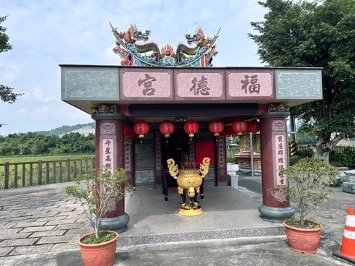
草濫水尾福德宮
原在泰安地下道入口旁。因位處草濫溪下游,且是交通要道,故建置土地公護佑,稱為水尾福德宮。草濫溪口附近山壁陡峭,俗云:「大樹腳,跌死猴」,形容連猴子都難以攀援而易摔落致死,留有土名「拔死猴」。
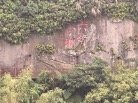
六堵險圳
1817年安溪籍余氏族人入墾六堵,因水源不足,經踏勘測定,決定由草濫溪開闢水圳,引入水源。1834年蜿蜒全長約4.5公里的水圳終告完成,擔負起輸水功能,地方稱為「頂圳」。2005年地方人士在此山壁題字「六堵險圳」,故稱之。
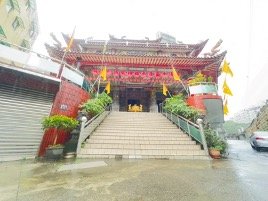
草濫清水巖
主祀清水祖師,原在民家組神明會輪流祭祀,1951年,翁詩生當頭人時將草寮改建為廟。翁氏建廟有功,並精于北管曲樂。1956年始蓋成小廟,1987年重建,1993年完工,近年又予以重修。每年農曆正月初六清水祖師誕辰、三月二十三日媽祖誕辰,會迎往草濫溪一帶的聚落繞境。
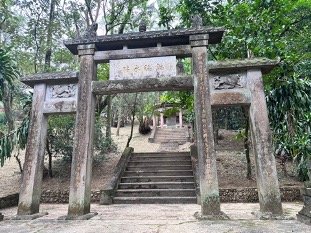
懿園
煤礦巨子李建興之母李白娘墓地,位於太獅山麓,建於1954年,今稱益壽山。該處地勢清幽,墓園巍峨,有石坊、紀念碑及黨政名流題字多處。
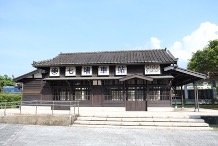
Ci-du Railway Memorial Park
1887 Liu Mingchuan constructed the railway from Taipei to Keelung, and where Ba-du Train Wharf was established at its current location in 1891.
During the early years of Japanese colonial period the railway was rerouted and renamed Ba-du to Ci-du Station in 1897.
In 1912 Japanese-style wooden station building was constructed.
1971 Ci-du Rear Station was built, which was the only train station in the country with separate platforms for inbound and outbound trains. The rear station was discontinued in 2005, followed by the front station in 2007.
In 2007, the Cultural Bureau designated the old Ci-du Train Station as a historical building, and after relocation and reconstruction, it was completed in November 2009. The Ci-du Railway Park was established, covering an area of approximately 1,200 square meters, with planned platforms and railway track areas. The old Ci-du Train Station is one of the few remaining wooden train stations in the country, with an elegant and refined structure, complete walls, and roof frames.
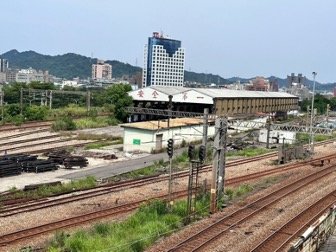
Ci-du Marshalling Yard
Due to insufficient capacity at stations like Huashan and Badu, as well as difficulties in vehicle dispatching, and the limitation of terrain that prevented on-site expansion, the decision was made to construct a marshalling yard in Ci-du. In 1968, construction began, and the marshalling yard was officially opened in March 1972. The daily capacity for marshalling reaches up to 3,000 vehicles, making it the second-largest marshalling yard in the Far East at that time, following only the Fukushima marshalling yard near Tokyo, Japan.
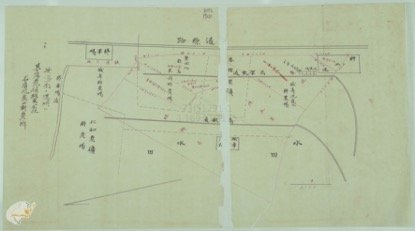
Station Front Coal Storage Yard
The Ci-du area is rich in coal resources, and during the Japanese colonial period, the front station in Ci-du was tasked with coal transportation. On both sides of the front station, there were coal storage yards stacked with coal from areas such as Caolan, Malingkeng, and Shizuokeng. The mountainous mining areas utilized cable cars and light railways as transportation, and after the war, trucks were used for transportation through the Ci-du front station.
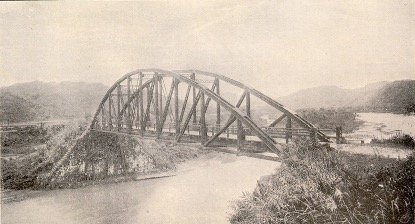
Da Hua Bridge
In 1887, Liu Mingchuan constructed the railway from Taipei to Keelung, and in 1891, a railway bridge spanning the Keelung River was built at this location, known as the Badu Iron Bridge. During the early years of Japanese rule, the railway was rerouted, and the iron bridge was converted into a road bridge for pedestrians and vehicles, renamed Da He Bridge, serving as a major bridge for the highway between Taipei and Keelung. After the war, it was renamed Da Hua Bridge, and in 2007, it was reconstructed as a four-lane wide cement bridge.
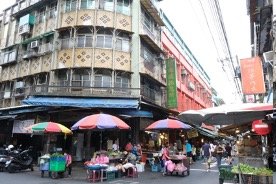
Nanxing Market
After the war, there was a surge in population in the Ci-du urban area. In 1952, in response to the Ci-du urban development plan, a market was established at 37 Nanxing Road. Later, due to the insufficient space in the single-story building, it was reconstructed into a four-story building in 1976. This market became the primary market in the Ci-du urban area and expanded to cover the entire Nanxing Road.
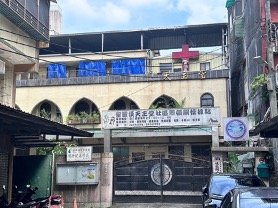
Xinxing Theater
In 1953, local resident Weng Shisheng established the Xinxing Theater near the Ci-du Market. The theater primarily featured Japanese films, outdoor performances, and musicals. It ceased operations in 1956 and was subsequently sold to Father Xiu Chu, a Catholic priest, who converted and renovated it into a church. In 1962, the Yau Han Kindergarten was established, and in 1964, the old building was demolished and reconstructed as the Saint Yau Han Catholic Church.
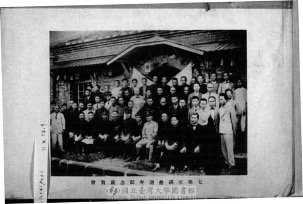
Ci-du Township Office
In 1920, as part of the local government system reforms, the areas of Malinkeng, Wudu, and Nuannuan were merged to form Ci-du Township, with the township office located in Ci-du. In 1923, a brick-style hall was constructed. In 1947, it was renamed Keelung City's Ci-du District Office. However, due to aging and disrepair, it was eventually demolished by the Keelung Taxation and Collection Office in 1969. The new facility, utilized by the Ci-du Branch, was completed in the same year and is located at No. 93 Mingde 1st Road.
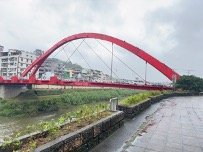
Chongzhi Bridge (Reconstruction at the Original Site of Shizuokeng Suspension Bridge)
In order to facilitate the access of Shizuokeng residents and the transportation of coal, the Shizuokeng Suspension Bridge was reconstructed in 1935. Later, around 1975, it was dismantled, and the new Chongzhi Bridge was constructed. It was completed and opened to traffic in October 1978. However, due to the bridge deck being lower than the flood level with a 200-year return period of the Keelung River, a reconstruction took place in October 2004. The new bridge, spanning a length of 78 meters, was completed in December 2005.
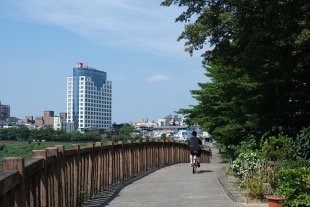
Keelung River Riverside Trail
The Keelung River Riverside Trail in the Ci-du section extends from Da Hua Bridge to Chongzhi Bridge and Seven-Sages Bridge, encompassing flood prevention roads on both sides of the river. After completion in 2006, it has consistently attracted people for walking and exercise along the riverbank. Subsequently, it was developed into a bicycle path by the 10th River Management Office, providing a space for the public to rest and engage in physical activities.
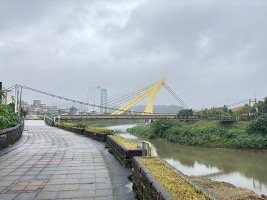
Junde Suspension Bridge (Kinsen Suspension Bridge)
In 1915, the Cidu Light Railway Joint Association was established to transport coal from the Malinkeng area to the Cidu Station. A light railway was constructed, and by August of that year, the project was completed. Simultaneously, a railway bridge spanning the Keelung River to the bottom of Chongxiao Street was built from Liankan House, known as the Kinsen Suspension Bridge during the late Japanese colonial period. In 1961, the bridge was renamed Junde Suspension Bridge. Unfortunately, it sustained damage during Typhoon Nari in 2000. In 2012, a new scenic suspension bridge was constructed and put into use.
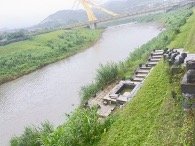
Laundry Pit Under Qixian Bridg
Laundry Pit Under Qixian Bridge along the Keelung River, there are two natural springs with exceptionally clear water. With its pleasant temperatures in both winter and summer, this location serves as an ideal spot for community residents to do laundry and enjoy water activities.
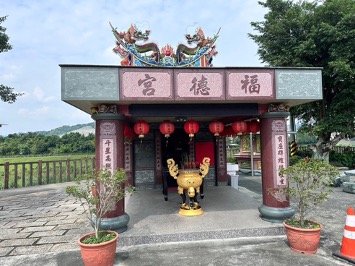
Caolan Shuiwei Fude Temple
Originally located near the entrance of the Tai'an Underpass. Due to its position downstream of the Caolan Creek and being a crucial traffic thoroughfare, a temple was established to seek the protection of the Earth God, named Shuiwei Fude Temple. The nearby steep cliffs at the mouth of the Caolan Creek inspired a local saying: "At the foot of the big tree, monkeys fall to their death," describing the difficulty even for monkeys to climb and the risk of falling from great heights. This area is known by the local name "Ba-si-Hou," translating to "Pull out the dead monkey."
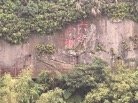
LiuDu Hazardous Weir
In 1817, settlers from Anxi, led by the Yu family, began cultivation in the LiuDu area. Due to insufficient water, after careful surveying, they decided to excavate a canal from the Caolan Creek to introduce a water source. The winding canal, approximately 4.5 kilometers long, was finally completed in 1834, serving the function of water transport and locally known as the "Top Canal" or "Ding Zhen." In 2005, local residents inscribed the words " LiuDu Hazardous Weir " on the mountainside near the canal, giving it its current name.
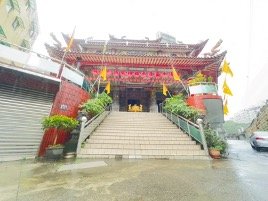
Caolan Qingshuiyan Ancestral Temple
Dedicated to the Qingshui Ancestral Master, initially worshipped through rotating ceremonies organized by local residents, the Caolan Qingshuiyan Ancestral Temple took its present form in 1951 when Weng Shisheng, a prominent figure at the time, transformed a residence into a temple. Weng's contributions to the temple's establishment were significant, and he was also skilled in the performance of Beiguan music. The construction of the temple officially began in 1956, and a small temple was completed. In 1987, reconstruction efforts began, and the project concluded in 1993. In recent years, the temple has undergone further renovations. Annually, on the sixth day of the first lunar month, which marks the birthday of the Qingshui Ancestral Master, and on the twenty-third day of the third lunar month, celebrating the birthday of Mazu, processions are held in the settlements around the Caolan Creek.
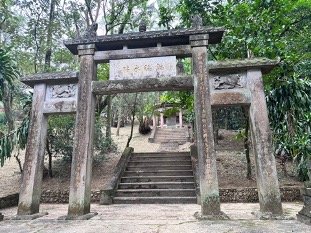
Yi Garden
Yi Garden, the burial site of Li Bai-niang, mother of coal magnate Li Jianxing, is located at the foothills of Taishi Mountain. Established in 1954 and now known as Yishou Mountain, the site boasts a serene landscape with towering tomb structures, stone archways, commemorative monuments, and inscriptions from prominent political figures.