Baguashan
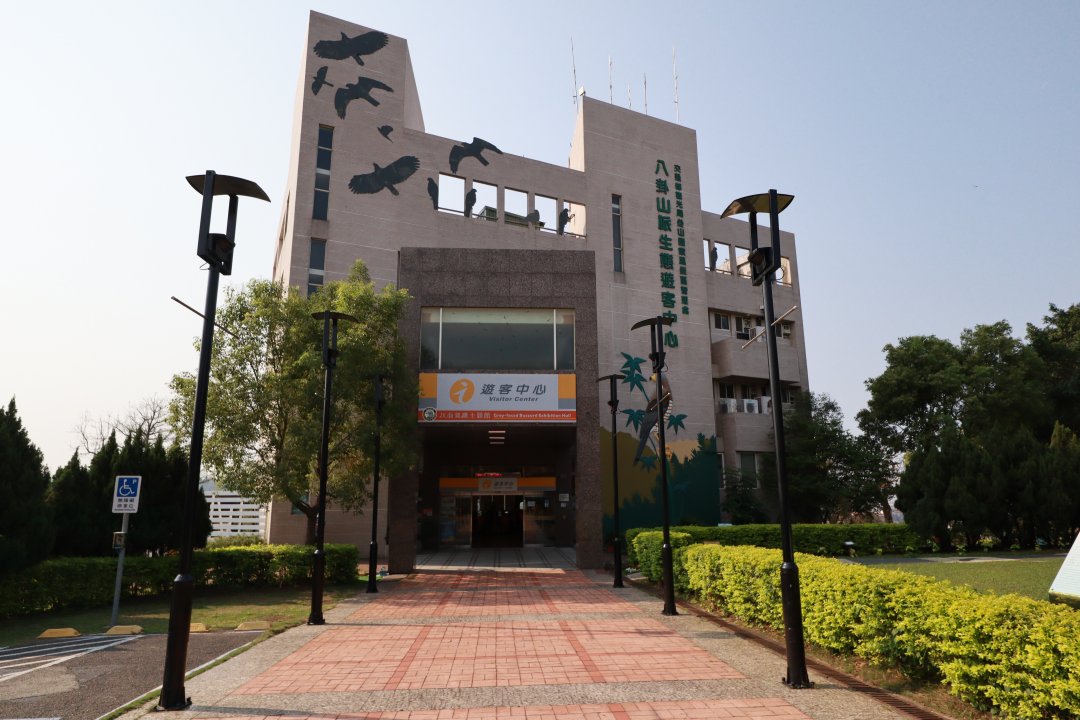
Baguashan Ecological Visitor Center (Grey-faced Buzzard Exhibition Hall)
The Baguashan Ecological Visitor Center is close to the Baguashan Great Buddha statue. The construction of the building was completed on March 17, 2001. The visitor center mainly introduces the grey-faced buzzards that pass by Baguashan mountain range on their way north or temporarily rest here around March each year. It also presents the fauna and flora of the Baguashan mountain range. As the first exhibition center dedicated to grey-faced buzzards in Taiwan, it is also the first environmental education center on such theme to have obtained certification.
The grey-faced buzzard is a raptor with high prey drive and a final consumer on top of its food chain. When the weather gets warmer in the north in the spring, these birds fly back to their breeding grounds from the south around early April; on the way north, they stop by the Baguashan scenic area to rest, which is why they are also given the nicknames “Southern Buzzard”, “Qingming Bird” and “Tomb-sweeping Bird” (Tomb-Sweeping Day is around the same time they migrate).
The external walls of the center are embossed with an enlarged steel grey-faced buzzard based on the paper relief sculpture made by local artist Jen-wen Wang. This decoration allows visitors to clearly capture the grey-faced buzzard theme before entering; it is also a popular Facebook check-in spot for all ages.
The first floor of the internal space includes a big buzzard lantern, an interactive wall of travel information on Baguashan, an AR play zone, a 720 degree VR flight experience, a raptor zone, and an audiovisual room. The second floor provides a grey-faced buzzard display room, ecology and culture special exhibition, Baguashan geology display room, introduction of the common plants of Baguashan scenic area, Formosan rock macaque display room, Story time with Ms. Butterfly, and a common insect zone. So in addition to our main star, the grey-faced buzzard, visitors will get to learn about the many other animals and plants in the flourishing forest.
There are also travel advisors, video screenings, guided tours for group tourists by reservation, tourist information brochures and environmental education excursions available in the center. You are most welcome to visit with your family and friends and get ready to embark on a local ecological journey.
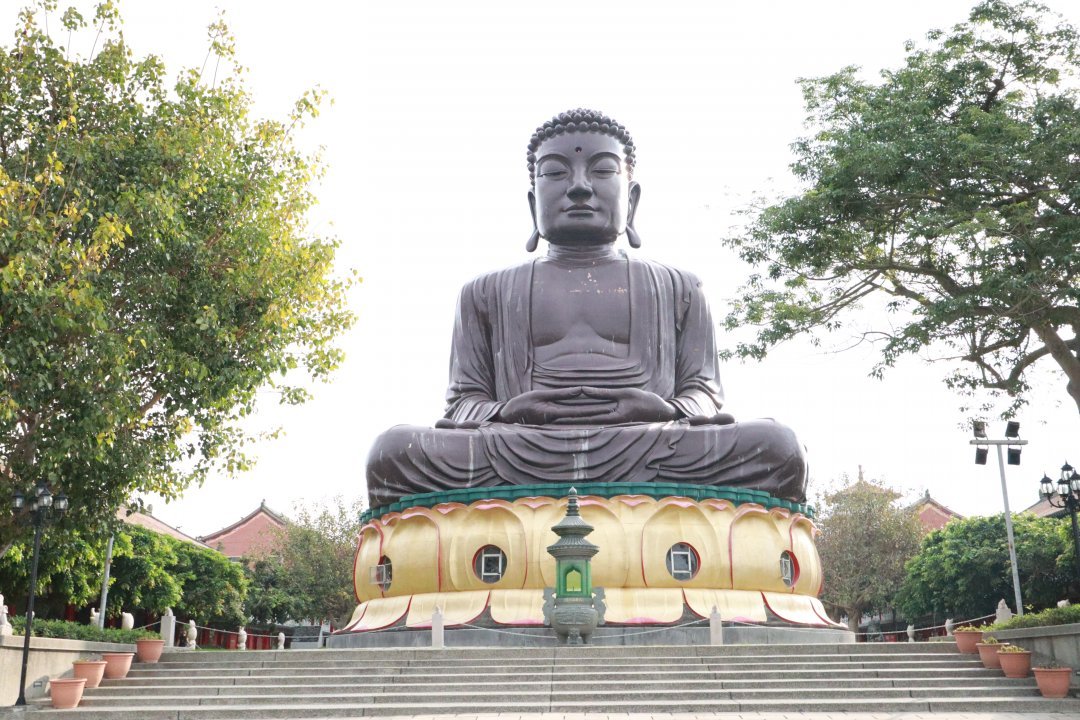
Baguashan Buddha Scenic Area
【Path to Buddhism】
This footpath starts from the Great Buddha archway on Guashan Road, passes by Jiulong Pond and ends at the Great Buddha statue. Along the path decorated with flowers and plants on both sides, there are thirty-two Guanyin stone statues contributed by followers, known as the Representations of All Living Creatures. As you make your way up the stairs, you will feel as if all your worldly worries have disappeared before entering the religious visit area with the Great Buddha statue as the backdrop.
【Jiulong Pond (Nine Dragon Pond)】
Situated underneath the Buddha statue, there is a fountain adorned with relief sculptures of nine dragons. The pond has been transformed into a water show venue with lights shimmering and water dancing during the show at night. Surrounding the pond is a 270-degree ring-shaped scenic path called the literature scenic corridor. It offers an expansive view where you can overlook Changhua City and look up at the Great Buddha Statue. Underneath it, the cultural gallery showcases many calligraphy art pieces by renowned calligraphers. Not far from the square is the entrance to the hiking trail, “Silver Bridge and Waterfall”. The trail is lush with greenery, a perfect place for locals to go for a hike.
【The Great Buddha Statue】
In January 1956, Changhua’s County Mayor Hsi-Ching Chen gathered locals to build the statue in order to rehabilitate the Baguashan Scenic Area. The statue was completed in May 1961.
It was entirely made of reinforced concrete. Sitting cross legged on a lotus seat, the 22-meter-tall statue has a solemn appearance. The shoulders are around 4 meters wide, while the chest circumference is around 13 meters. There are doors on the two sides of the lotus seat leading to the interior of the statue, in which a small Buddhist temple and stories about the Buddha can be found.
The two stone lions in the front guard the two sides of the statue. They are solemn and rustic, yet friendly-looking.
The Great Buddha Temple is situated behind the statue. The patron saint of the first floor, Dachen Hall, is Confucius; the second floor, Enzhu Hall, serves the Five Enzhugongs; the third floor is the Great Buddha Hall, dedicated to the Sanbao Fo (Sakyua-muni, Bhai ajyaguru and Amita-buddha). Throngs of worshippers visit the Temple all year round. Behind the Temple is an exquisite garden landscape and 9-storey twin Bagua pagodas. You can climb up the pagoda for a pleasant view of the surroundings.
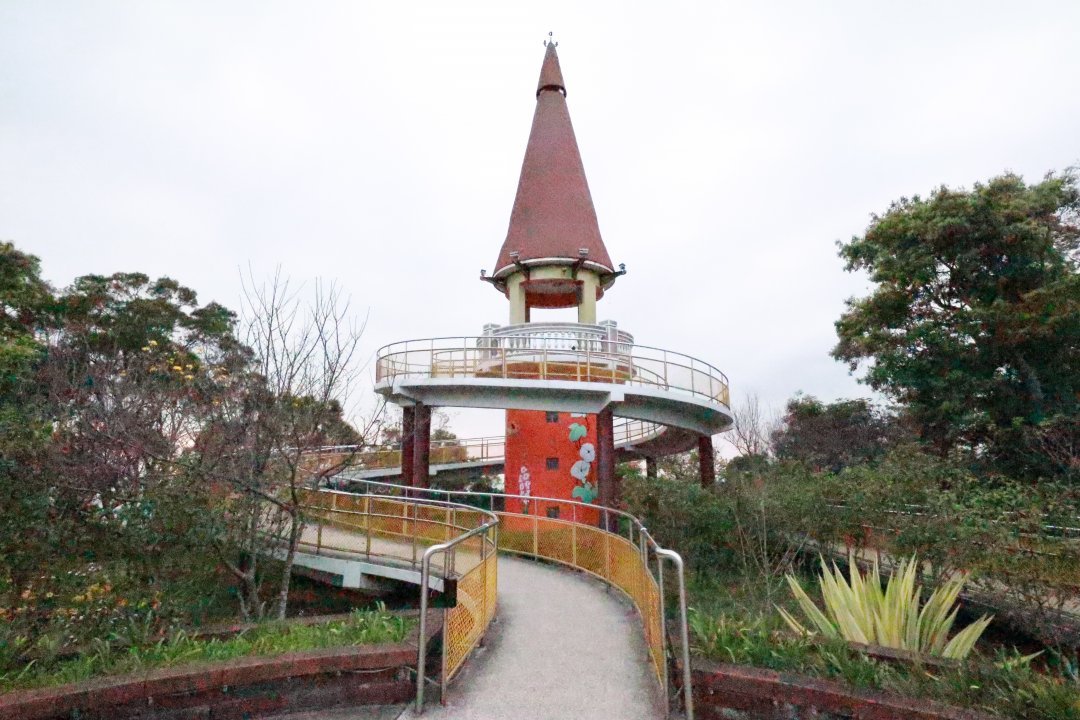
Houtanjing Recreation Area (Panoramic Skywalk)
Located in Fuli Village of Nantou City, Houtanjing Recreation Area is a famous attraction in the Baguashan Scenic Area. The valley here resembles a well, and in front of the valley is a hill that looks like a monkey peering down to the bottom of the well. This is how Houtanjing got its name (monkey peeking at the well).
The Baguashan mountain range spans across Nantou and Changhua. There are two hiking trails on top; one connects the scenic pavilion of the tea plantation, while the other connects to the lookout of Houtanjing. There used to be only the valley between these two trails. Now, the Skywalk connects the two trails, which is not only convenient, but also a highlight of the recreation area.
There are a beautiful garden path and corridor inside the park. At the end of the park is a lookout tower where you can look across the picturesque scenery of Changhua Plain. The tower features a well for mimicking how the monkey peeks down the well.
The Skywalk spans across the two sides of Houtanjing. It is the longest sky stairway in Taiwan and the first suspension bridge staircase. It is 204 meters long with 265 steps. The highest difference between the two ends is 5.65 meters. The bridge can accommodate a maximum of 150 people. You can enjoy the panoramic view of Changhua Plain on the bridge. If the weather is fine, you can even see the beautiful scenery of the Xiluo Bridge and the estuary of Zhuoshui River. When the sun sets, the bridge changes completely with LED lights automatically turned on. When viewed from afar, the lights form a hanging smile in the dark mountains; thus, it is also given the name “Smiling Skywalk”.
There is a lookout on the other side of the suspension bridge. Although it is not in the highest position, it is still a great place to watch the sunset. Houtanjing Recreation Area is also reputed the “Sunset Valley”, so if you happen to be in the area at sunset, why not find a nice spot and stop for a moment to enjoy the golden scenery painted by the afterglow.
In addition to the famous crowd-attracting skywalk, you can also find convenient facilities, including a parking lot and a visitor center in the area.
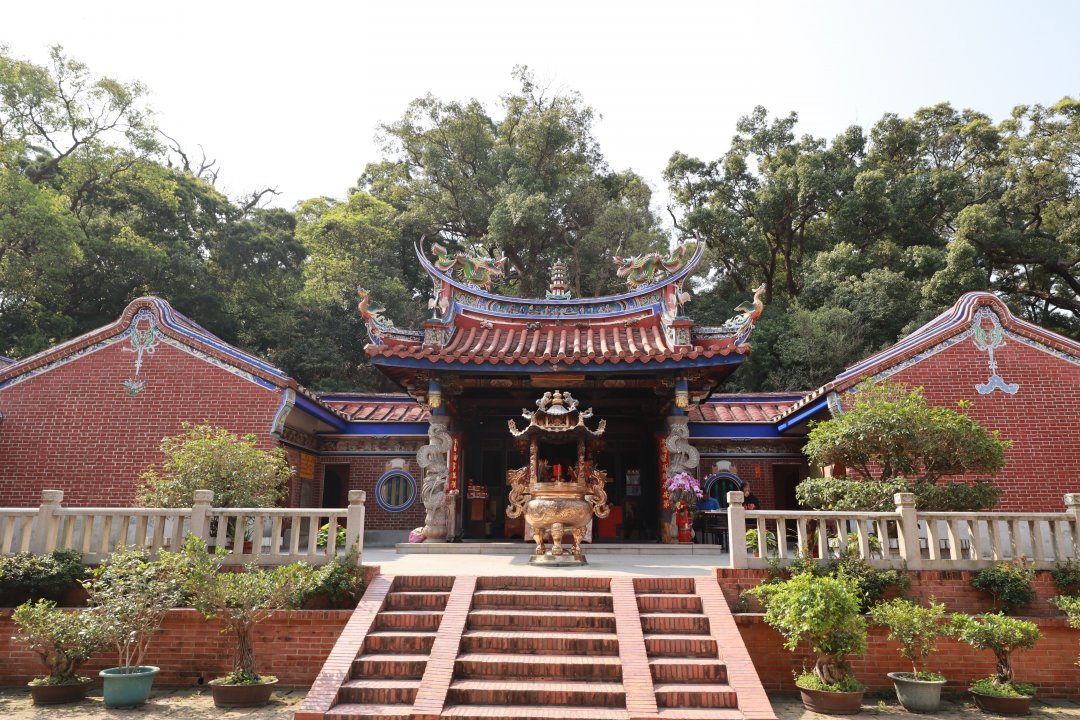
Hushanyan Recreation Area
Situated in Huatan Township of Changhua County, Hushanyan Recreation Area is blessed with unique natural scenery. The “Hushanyan Temple”, busy with worshippers, is also a popular tourist attraction. The “Hushanyan Temple” was built in 1747, and the patron god is Guanyin. It is a Class III national historic monument and one of the two formerly-known “Sanyan” temples in Central Taiwan. The two Chinese banyan trees in front of the Temple are over 200 years old. These luxuriant trees provide shade for people. The cave nearby pays homage to the tiger god. Unlike other temples with only one tiger god, the cave enshrines the entire family of the tiger god. Before you pay tribute to the tiger god, you can exchange your coins with it (one 10 or 50 dollar coin for two to eight 1 dollar coins). It is said that you can make small money turn into big money here!
Apart from being the religious center for locals, the rear of the “Hushanyan Temple” is surrounded by a tranquil hiking trail, where people come to take a stroll or exercise. The over 30,000 orange day-lilies grown on top of the hill next to the temple will turn the place into an orange sea of flowers every April and May. The fairytale-like scene always attracts tens of thousands of visitors.
Hushanyan got its name because the shape of the mountain looks like a crouching fierce tiger with its head pointing toward the east and the face turning toward the north. Hushanyan is located right at the tiger’s jaw. Reputed “Huyan Ting Zhu” (the Tranquil Huyan), Hushanyan is one of the eight wonders in Changhua. In the chorography of Changhua, there is a paragraph stating: “Surrounded by mountains with luxuriant trees and tranquil bamboos, along with green rocks and cliffs, it is a spectacular place to visit and its beauty is equal to that of Bishanyan. Between spring and summer, birds fly, the shadows of bamboo trees sway, breezes blow, and tree shadows pour on the ground; immersing in this atmosphere feels like heaven.”
The Hushanyan Exhibition Center is next to the Temple. Apart from tourist information, it also provides introductions to the relevant religious traditions. The quaintly furnished building is very worth visiting. The plum trees on the hillside behind the building blossom around the Lunar New Year. The white plum flowers and the Hokkien-style exhibition center together create a pleasing scene.
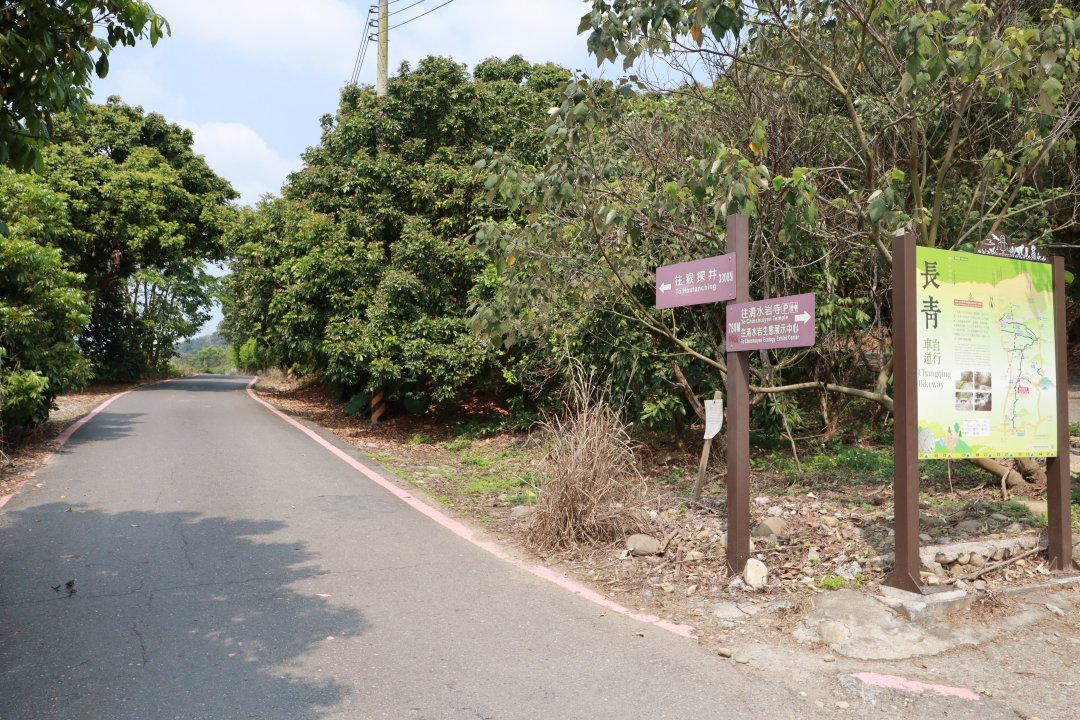
Changqing Bikeway
Changqing Bikeway is approx. 15 km long. According to the smoothness and gradient of the path, it can be divided into two routes: regular and challenging. The 5-km-long regular path pass by Zantian Temple and Qingshuiyan and ends at Hutian Temple. It is smoother and suitable for parents with children or people who want to exercise. The other challenging route is around 10 km and situated at the fork next to Qingshuiyan. At the end of this route is a mark reading “7,100 m”; hence, it is also called the “7100 route”. This route is rough and steep, and physically challenging for bike riding. Bikers are advised to be sufficiently prepared and choose the route that is right for their physical condition. Since the bike path is situated in a low-attitude mountain area, there are abundant ecological resources and diverse forest forms along the way, accompanied by bird singing. Riding through the green boulevard with the gentle wind coming, you will feel soothed and relaxed even in the scorching summer. When you are tired, you can stop and rest at the pavilion in the mountain boasting an expansive view of the boundless plain and forest right before your eyes, and watch the HSR train passing by. This is a place that makes people linger. What is worth mentioning is that groups of grey-faced buzzards pass by the Baguashan mountain range around March each year. The bird watching platform at Hengshan at the end of the bike path is a great place for watching the buzzards soaring in the sky. It is a must-visit attraction for birdwatching.
In late spring and early summer, the snow white Tung flowers bloom. These delicate and lovely flowers decorate the green forest and resemble snow covering the mountain top, creating a breathtaking scene. Riding on the bike path is like entering a romantic painting of the northern landscape. Many bikers come and view the flowers under the trees, and have their photos taken with the scenery, hoping to keep this wonderful memory.
The Changqing Bikeway is not only a beautiful place for bike exercise, but also a great place for weekend outings where one can learn more about the ecosystem.
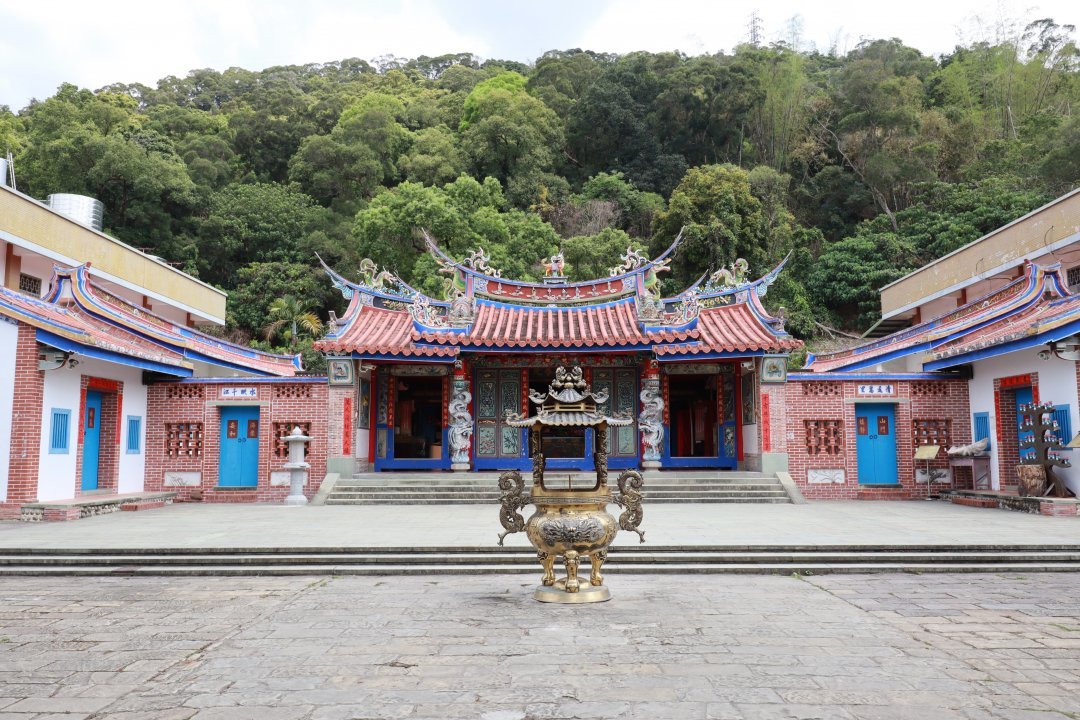
Qingshuiyan (short community trip, ecological park)
Qingshuiyan Recreation Area is a famous attraction in Shetou, Changhua. In addition to the quaint and rustic Qingshuiyan Temple, there is also an ecological park with much to see, drawing throngs of tourists on both weekdays and weekends.
The patron gods of the 277-year old Qingshuiyan (built in 1728) are Sanbao Fo and Guanyin. It also enshrines Qingshui Zushi and the Goddess of Childbirth. Owing to the clear spring next to the Temple and beautiful scenery in the neighborhood, the place is reputed as the “Qingshui Scenery”, and is one of the “eight wonders of Changhua”. You can find the sweet and natural Ganlu spring in the front yard to the right of the Temple. It was known as one of the three famous springs of the Japanese colonial period, together with Beitou's Longevity Spring and Taitung’s Beauty Spring. The small square well beside the spring is engraved with the words “Be content” to remind worshippers that the spring water is hard-won and that one ought to be grateful. There is also an elegant garden with a small bridge surrounded by a stream. The Chunguang Pavilion in the garden offers a full view of Qingshuiyan.
Qingshuiyan Ecological Exhibition Center is next to the Qingshuiyan Temple. In the Center, hundreds of precious insect specimens are displayed. Through detailed explanatory texts, visitors can learn about the importance of ecological conservation. Meanwhile, Qingshuiyan Ecological Park, located on the other side of the Temple, grows a wide variety of nectar plants and food plants, as well as plentiful Griffith’s ash trees, in addition to a Japanese rhinoceros beetle conservation area, rendering it as the top destination for schools promoting environmental education.
In order to provide visitors with the opportunity to further understand the local ecology and the development of cultural and creative industries, Qingshuiyan Ecology and Cultural Association offers many interesting DIY activities and ecological excursions, such as leaf printing, creative Chinese steamed bun-making, and picking guavas, aiming to give visitors a rewarding experience both educationally and recreationally.
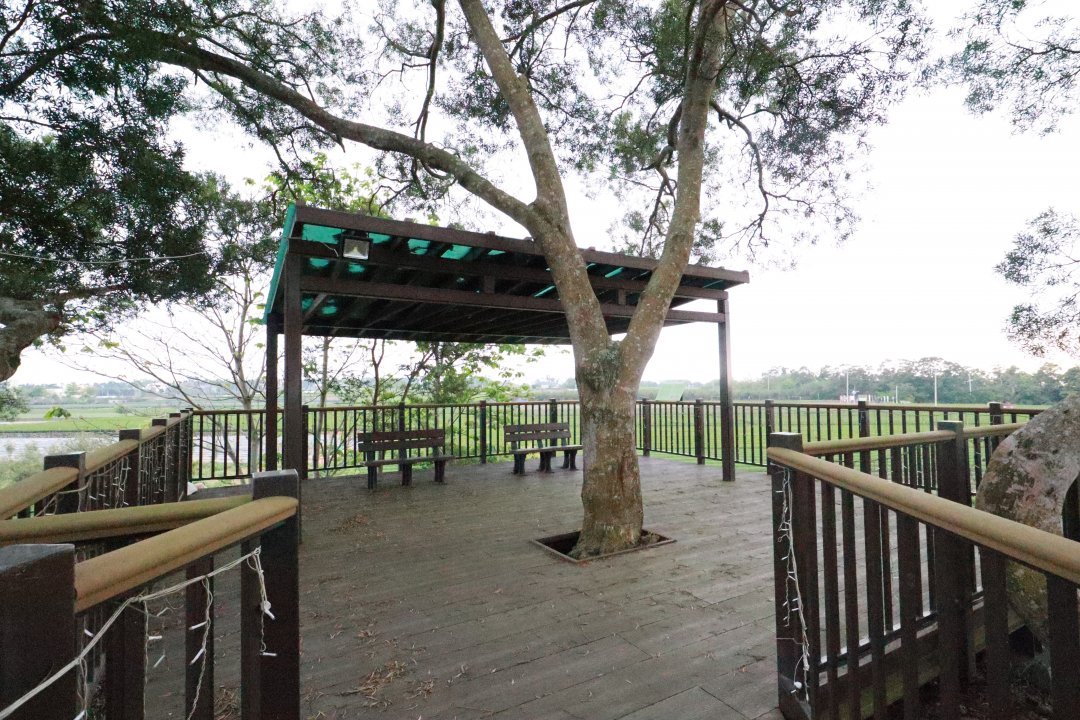
Qixing Army Base Park
Qixing Army Base Park was constructed by the Ministry of National Defense; its purpose was to guard the military base of Zhuoshui River and Changhua Plain in the past, for which over 20 military strongpoints and command posts were built in the Songboling region. Since Songboling is situated to the north of Zhuoshui River, the higher ground of Baguashan Cliff provides the best strategic advantage. As a result, the artillery strongpoints undertook the important mission of military defense. Later, the place was no longer required for military purposes and was left idle for many years. In order to develop local tourism, the Mingjian Township Office (Nantou County) entrusted the Tri-Mountain National Scenic Area Administration to renovate the Park with tourist facilities such as lookout, leisure square, footpath and toilets. The township office also borrowed decommissioned tanks and artillery from the Ministry of National Defense to put them on display next to the pillboxes with explanatory information, successfully turning it into a local tourism spot with distinctive features.
The name “Qixing Zhendi” was derived from Songboling’s local religious center, Shoutian Temple. The temple’s guardian is Xuanwu, the patron god of the north, and its representative constellations are the Big Dipper and Polaris. Since the location of the seven pillboxes match the pattern of the Big Dipper, the pillboxes are respectively named after the stars in the Big Dipper asterism: Tianshu (Dubhe), Tianxuan (Merak), Tianji (Phecda), Tianquan (Megrez), Yuheng (Alioth), Kaiyang (Mizar), and Yaoguang (Alkaid). Accordingly, the place is named Qixing Zhendi (Qixing Army Base Park) Park.
The pillboxes stand in the midst of green fields, creating a unique scene. You can even climb up to the lookout on top of the pillbox for a rest against the backdrop of Zhuoshui River and Changhua Plain spread with tea plantations, pineapple orchards, and ginger plantations. During the tea-making season, the air will be filled with the pleasant aroma of tea. It is the perfect venue for a family bike tour.
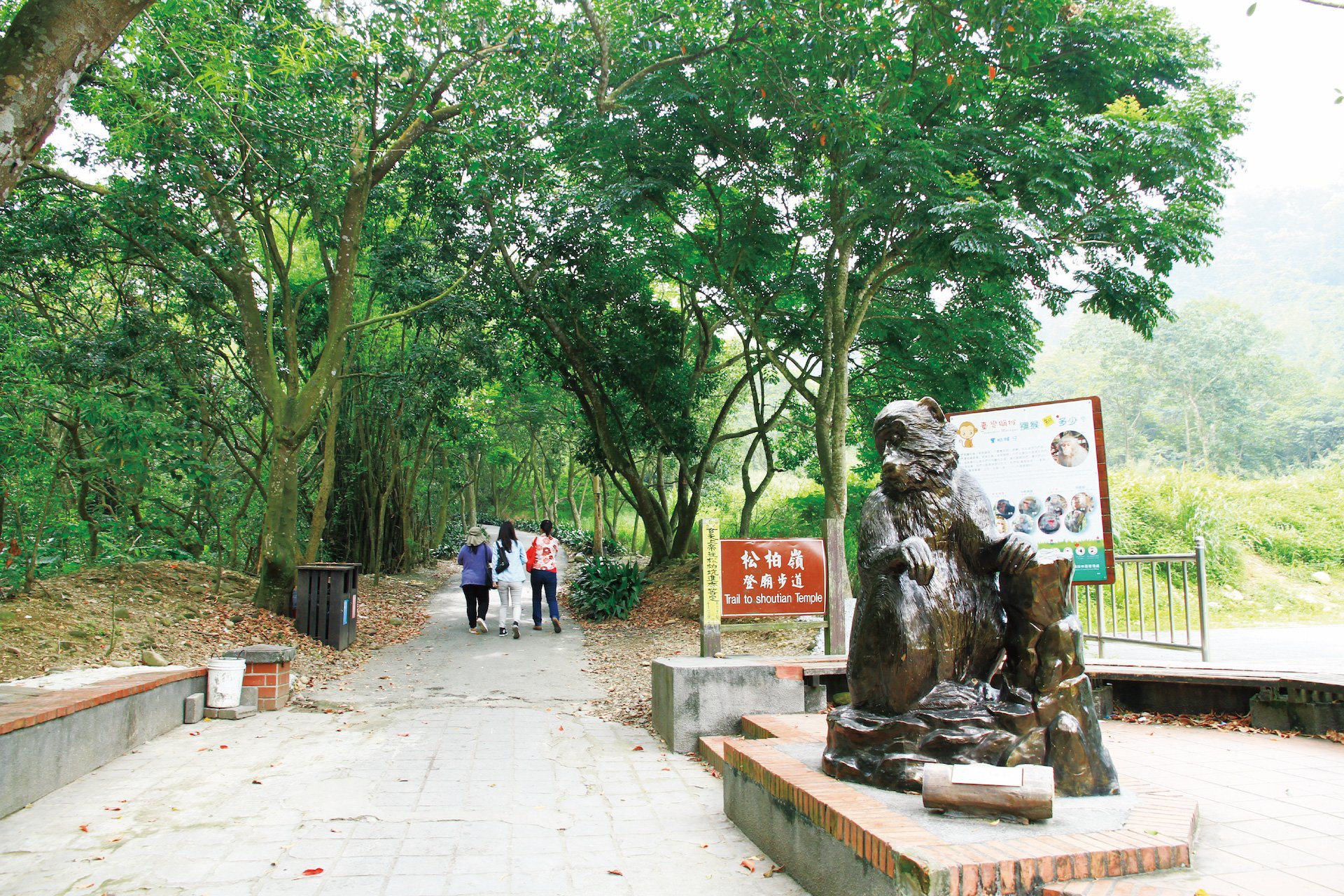
Ershui Dengmiao Trail(Fengbo Square Entrance)
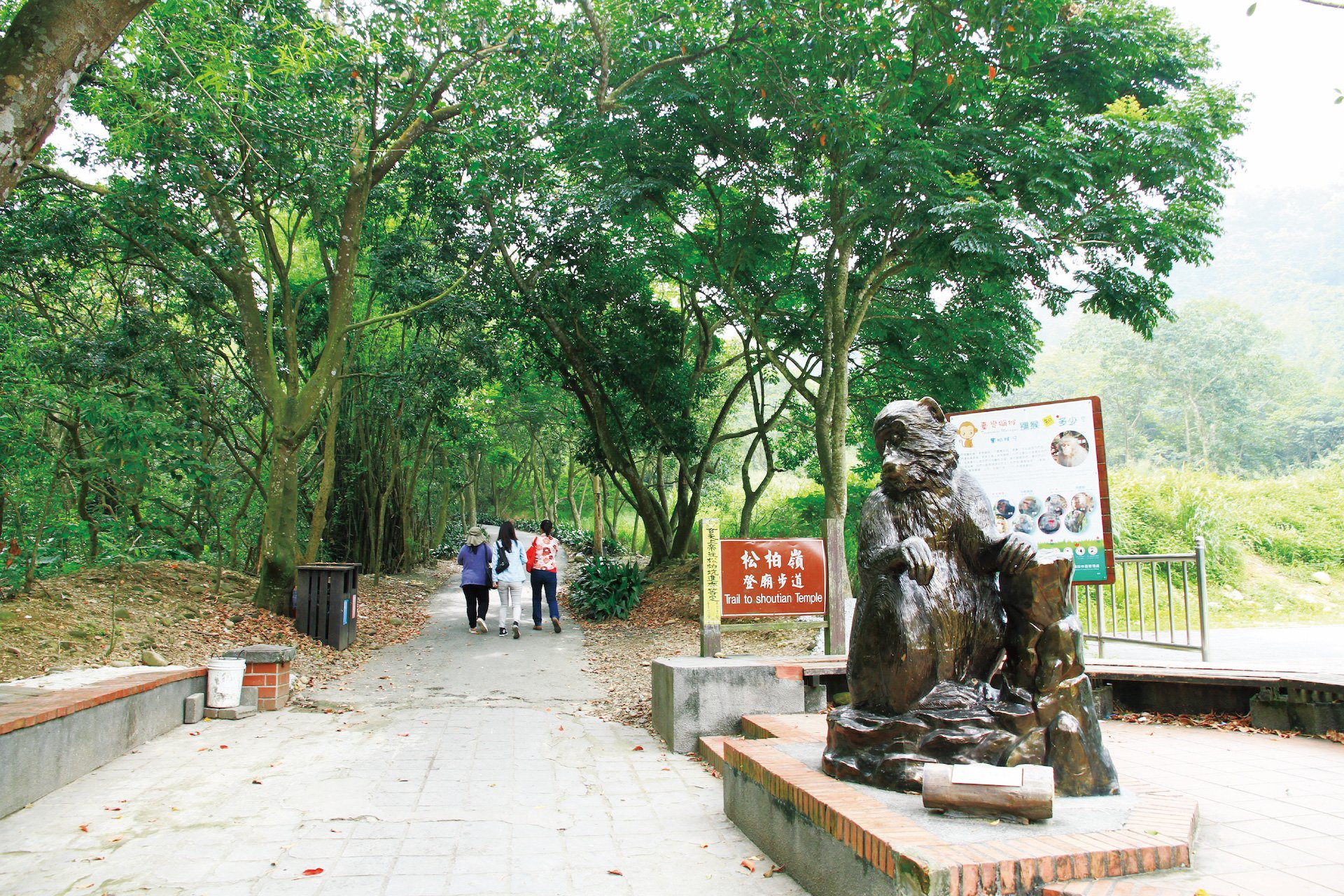
Also known as the Fengbo Ecological Trail, the trail was a trading path connecting Ershui Township (Changhua County) and Songboling, Mingjian Township (Nantou County) in the early days. Now, it is known as the hiking trail leading to Shotian Temple. The trail is 1.8 km long and takes about 50 minutes one way on foot. One end of the trail is the Fengbo Square while the other end is the exit for “Gentleman Alley”. The trail is relatively gentle except for the section near the “Gentleman Alley” and hence is suitable for the general public.
Visitors can park their cars at Fengbo Square and hike to Songboling via the Ershui Dengmiao Trail. Other than the stairs, the trail is largely composed of flat asphalt road. Along with the diverse animal and plant ecology as well as detailed information boards, the place serves as a great location for outdoor education. It is also likely that one may spot packs of Formosan rock macaques near the “Monkey Watching Pavilion”, where they often gather.
There are notices near the entrance to remind the visitors to be aware of the macaques, including not feeding them, not leaving food exposed, not having contact with them and not leaving children alone.
【Monkey Watching Pavilion and Bridge on the Cloud】
There are four pavilions along the trail for the visitors to rest and appreciate the beautiful scenery. There are also two other attractions marked with stone tablets, namely the Monkey Watching Pavilion and the Bridge on the Cloud (Woyun Bridge). There is a possibility that groups of macaques may appear near the Monkey Watching Pavilion. Although the macaques are not scared of humans, we advise visitors to stay away from them and avoid direct contact with them. And don’t forget to slow down your pace when you reach the Bridge on the Cloud (Woyun Bridge), which features pleasant scenic view, to enjoy the beauty of the forest.
【Gentleman Alley (Moru Alley)】
Formerly a trading path, the alley is so narrow that people have to walk sideways to pass each other, hence the name “Gentleman Alley”. As transportation was less developed during the Japanese Occupation, Songboling residents who merchandised in Ershui, had to carry their produce via the mountain path beside Shotian Temple, passing through Gentleman Alley and hiking along the “stone pit road” (now Fengbo Road) in order to reach Ershui. At the end of the day, they would purchase daily necessities and walk back to the mountain using the same path.
With the increase of merchants going to Ershui from Songboling, some passionate citizens expanded the Gentleman Alley to make it easier to walk while carrying loads. This turned the dark narrow mountain passage into a wider and brighter trail.
After the retrocession of Taiwan, the country prospered and transportation became more convenient. Songboling residents no longer need to walk through the mountain trail to Ershui for trading. However, with the increase in the standard of living, people began to place greater value on leisure activities. Now, the people taking the trail are visitors enjoying themselves; the sight of men carrying loads has officially become part of history.
With years of corrosion from the rain, there have been severe landslides near Gentleman Alley. In 2014, the Tri-Mountain National Scenic Area Administration intervened to manage and enhance the safety of the trail. Currently, the trail has become a popular route for individuals passionate about hiking.
Ershui Dengmiao Trail(Moru Alley Entrance)
Also known as the Fengbo Ecological Trail, the trail was a trading path connecting Ershui Township (Changhua County) and Songboling, Mingjian Township (Nantou County) in the early days. Now, it is known as the hiking trail leading to Shotian Temple. The trail is 1.8 km long and takes about 50 minutes one way on foot. One end of the trail is the Fengbo Square while the other end is the exit for “Gentleman Alley”. The trail is relatively gentle except for the section near the “Gentleman Alley” and hence is suitable for the general public.
Visitors can park their cars at Fengbo Square and hike to Songboling via the Ershui Dengmiao Trail. Other than the stairs, the trail is largely composed of flat asphalt road. Along with the diverse animal and plant ecology as well as detailed information boards, the place serves as a great location for outdoor education. It is also likely that one may spot packs of Formosan rock macaques near the “Monkey Watching Pavilion”, where they often gather.
There are notices near the entrance to remind the visitors to be aware of the macaques, including not feeding them, not leaving food exposed, not having contact with them and not leaving children alone.
【Monkey Watching Pavilion and Bridge on the Cloud】
There are four pavilions along the trail for the visitors to rest and appreciate the beautiful scenery. There are also two other attractions marked with stone tablets, namely the Monkey Watching Pavilion and the Bridge on the Cloud (Woyun Bridge). There is a possibility that groups of macaques may appear near the Monkey Watching Pavilion. Although the macaques are not scared of humans, we advise visitors to stay away from them and avoid direct contact with them. And don’t forget to slow down your pace when you reach the Bridge on the Cloud (Woyun Bridge), which features pleasant scenic view, to enjoy the beauty of the forest.
【Gentleman Alley (Moru Alley)】
Formerly a trading path, the alley is so narrow that people have to walk sideways to pass each other, hence the name “Gentleman Alley”. As transportation was less developed during the Japanese Occupation, Songboling residents who merchandised in Ershui, had to carry their produce via the mountain path beside Shotian Temple, passing through Gentleman Alley and hiking along the “stone pit road” (now Fengbo Road) in order to reach Ershui. At the end of the day, they would purchase daily necessities and walk back to the mountain using the same path.
With the increase of merchants going to Ershui from Songboling, some passionate citizens expanded the Gentleman Alley to make it easier to walk while carrying loads. This turned the dark narrow mountain passage into a wider and brighter trail.
After the retrocession of Taiwan, the country prospered and transportation became more convenient. Songboling residents no longer need to walk through the mountain trail to Ershui for trading. However, with the increase in the standard of living, people began to place greater value on leisure activities. Now, the people taking the trail are visitors enjoying themselves; the sight of men carrying loads has officially become part of history.
With years of corrosion from the rain, there have been severe landslides near Gentleman Alley. In 2014, the Tri-Mountain National Scenic Area Administration intervened to manage and enhance the safety of the trail. Currently, the trail has become a popular route for individuals passionate about hiking.
Fengbo Square
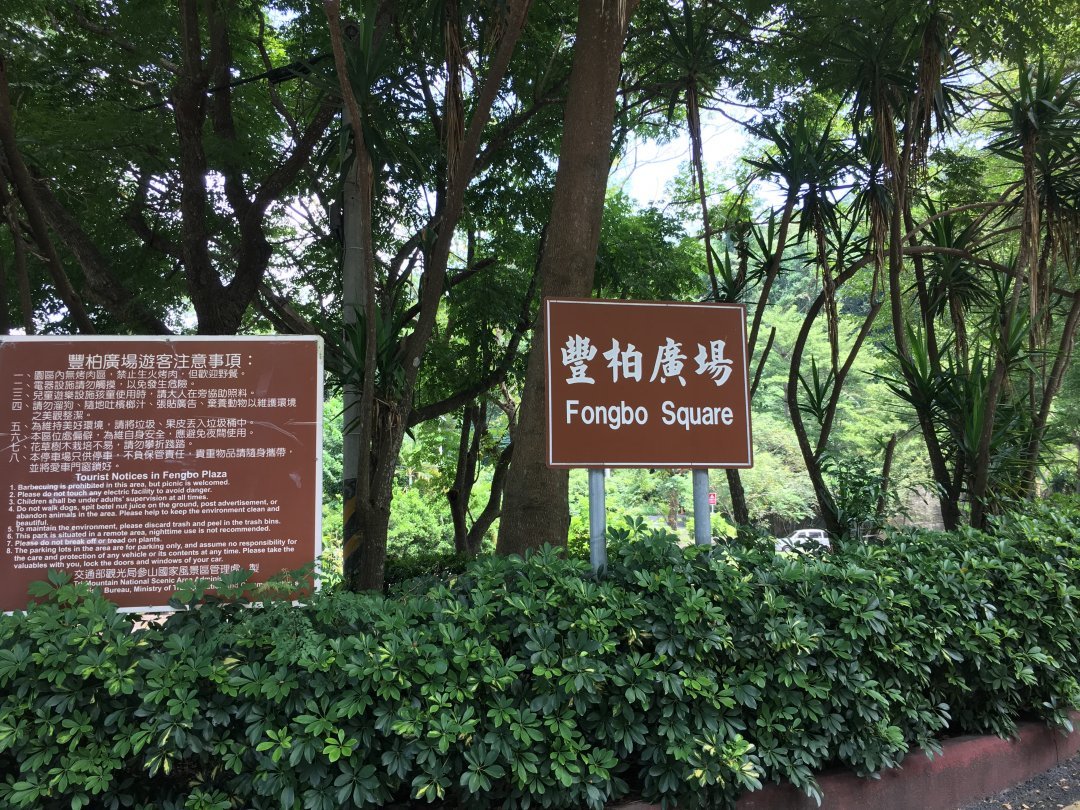
Located near the Shanjiao Road, Fengbo Square is surrounded by trees, serving as an excellent spot to chill and relax. There are a few trails around the square, including Miaoqiankeng Trail and Kengneikeng Trail. The Ershui Dengmiao Trail that connects Fengbo Square and Nantou Shotian Temple has a macaque statue at the entrance. This trail is relatively flat and about 1.8 km long, hence it is an excellent hiking trail for families.
In addition, the Fengbo Square region is rich in ecology. In addition to the wide variety of birds and butterflies, the highlight would be the Formosan rock macaques! By simply looking up, hikers can easily spot packs of them near the trail. Although these macaques are not scared of humans, in an attempt to preserve and protect the precious ecology, visitors need to observe the three NOs rule: no feeding, no touching, and no interference. Watch from a distance and avoid any potential conflict with the macaques, in order to protect yourself as well as these wild animals.
【Suggested Routes】
Visitors can park their cars at Fengbo Square and visit the solemn Shotian Temple to pay respect to God Xuanwu via the Ershui Dengmiao Trail, and then take the Kengneikeng Trail on the return trip. Besides enjoying the two different sceneries, one can imagine the hardship that former Songboling residents underwent in carrying produce such as pineapples, bamboo shoots, tea leaves and fruits to Ershui as merchandise through the mountain route. By appreciating the present-day convenience, one may learn to be content and grateful for our roots. The round trip takes about 100 minutes. The trial is relatively friendly and flat except for some slopes, and is a good choice for a half-day hiking trip.
Songboling Visitor Center
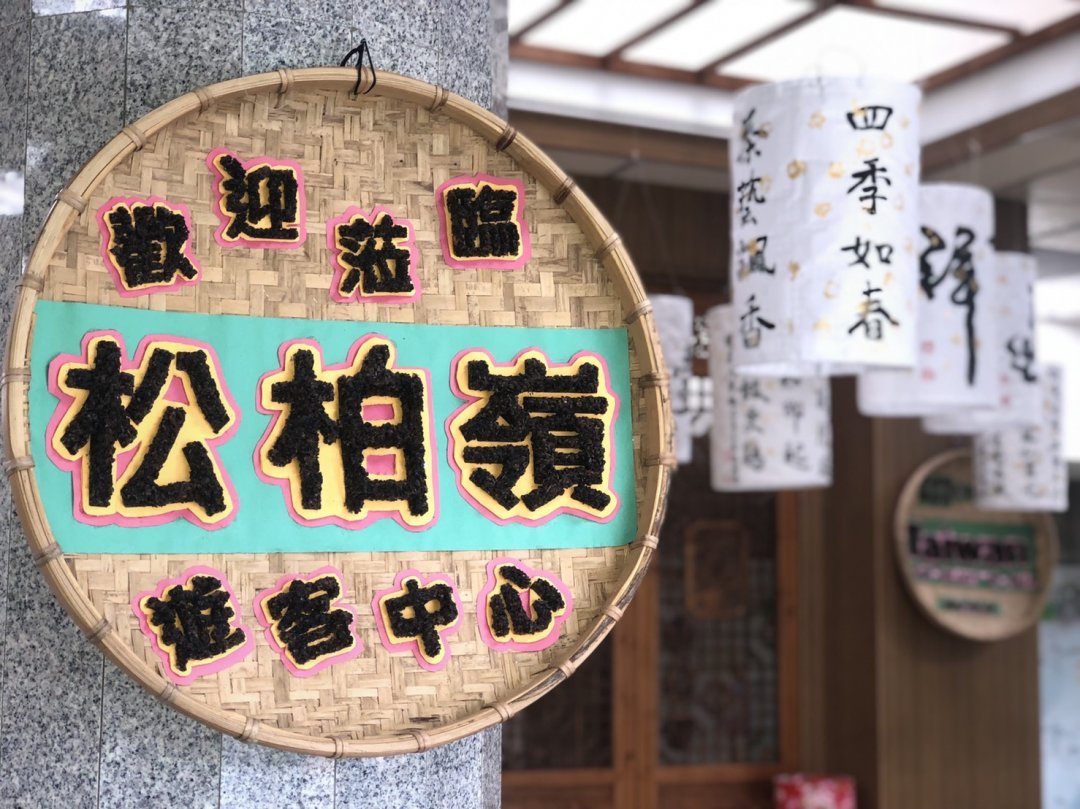
Songboling Visitor Center is located at the south end of Baguashan. The Songboling region tops the country in tea leave production and its “Evergreen Tea” is well-known nationwide. Its unique landscape, weather, and the red soil form the best environment to grow tea leaves and is a tea heaven for visitors.
The visitor center provides recommended attractions in Baguashan and information on tea culture. When walking into the Songboling Visitor Center, one would first see a retro and classy tea tasting space, tempting visitors to make a cup of tea and relax there.
In a place renowned for producing high-quality tea, visitors would certainly be infused with the knowledge of tea. In addition to the explanation on the manufacturing process of tea balls, the Center also showcases “Taiwan’s No. 1 Tea Ball”.
【Nurturing the six senses for tea tasting】
Similar to assessing the “look, smell and taste” of fine foods, the tasting of tea requires full concentration. Satisfying one’s six senses with a cup of tea is not easy; let Songboling tea show you the meaning of the “six senses of tea”.
The six senses include: observing the changes in tea leaves before and after brewing; listening to the sound of nature and the tea leaves uncurling; feeling the texture of the tea leaves; smelling the fragrance of tea; tasting the tea; and feeling the tea warming and nourishing your body.
【Experience life in the tea village】
In addition to the rich information on tea, the visitor center also features many quaint landscapes great for photo-taking. The red brick wall and joyful spring couplet imitate a tea farmer’s house in the early days during the Chinese New Year.
One should always remember one’s roots and the hardship of farmers. After tasting the tea, visitors can go to the experiential area to experience the manufacturing process of tea leaves and the hard work of tea farmers. This will add an additional flavor of gratitude to the tea when you taste it next time.