Living a Cultural Life in Monga
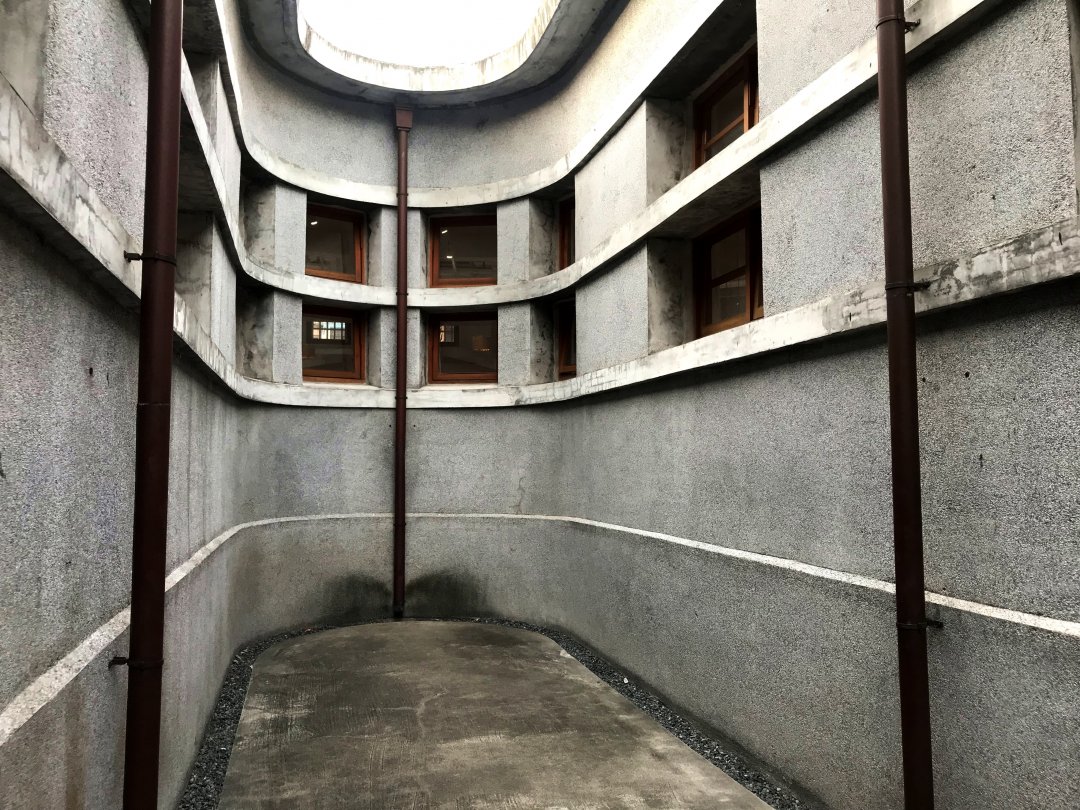
Xinfu Market
Xinfu Market for foodstuffs was established in 1935, completed as a public market during the later period of the Japanese rule. Buildings in the market contain all available building materials at the time. Its U-shaped flat roof is supported by reinforced concrete beams, plus confined masonry walls. Its annex buildings include Japanese wooden dormitories and brick-built public toilets. The sight of public toilets symbolizes the modernization process that the market was going through at the time. It’s a shame that the public toilets were not conserved in its entirety. The unique central courtyard allows for indoor ventilation and daylight to come in.
Since the 1990s, the social structural changes have forced many stalls out of the Xinfu Market owing to survival pressure. The only businesses remaining are grocers, butchers and tailors near the main entrance or next to Dongsanxue St. Market that barely survived due to the geographic proximity. A long pause in development means that the Xinfu Market was able to retain its original architectural from the Japanese colonization period. In 2006, it was designated as a historical site of Taipei City, and had its space renovation completed in 2013. It is now a must-visit photography site for many internet celebrities and arty youths.
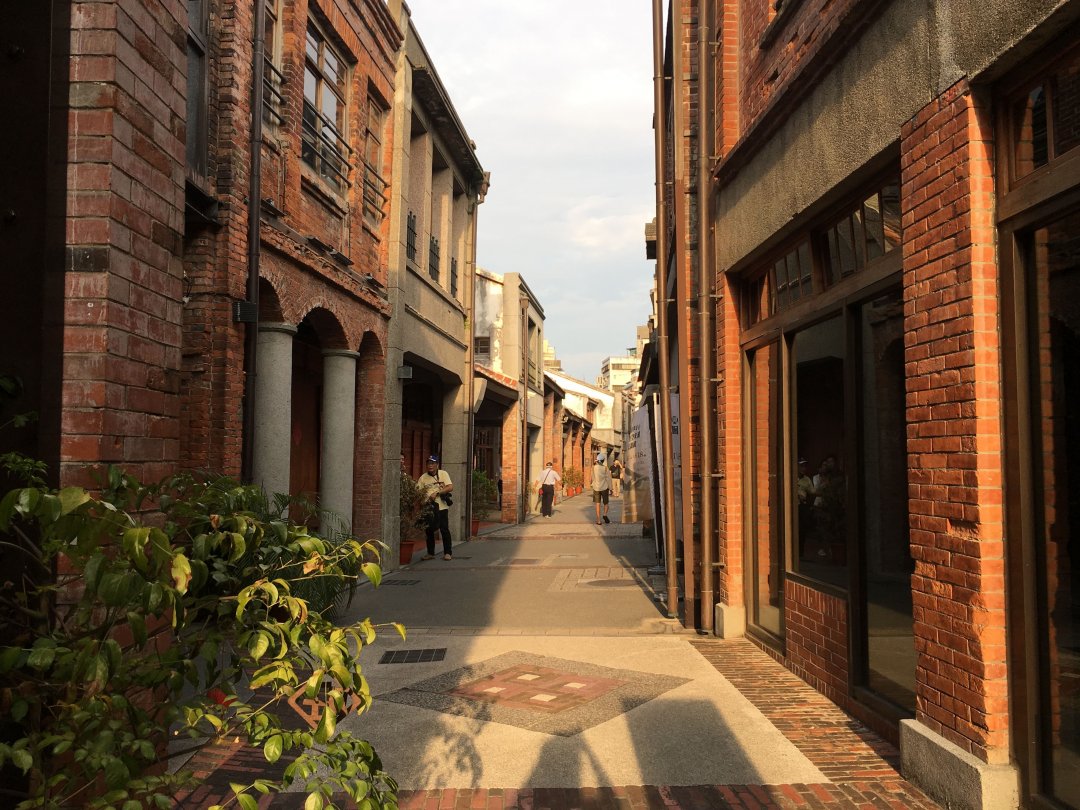
Bopiliao Historic Block
Bopiliao Historic Block is one of Taipei’s few remaining street blocks that was developed over 100 years ago in early Qing dynasty by estimation.
According to local elderlies, the name, Bopiliao, is derived from its historic and geographic background where China fir logs ferried from China’s Fuzhou during the Qing dynasty were gathered and stripped in Monga docks as the transfer hub, hence the name Bopi (meaning “strip off the skin”). Another source has it that the place was called Beipiliao during the Japanese rule, and was later changed to Bopiliao due to their similar Taiwanese pronunciation.
Criss-cross the alleys in Monga, and one can see folk culture and historic traces of Monga’s previous prosperity. Formerly built for commerce mainly, buildings in Bopiliao reserved a roofed space in front of the store façade for pedestrians to walk through or shield from sun or rain. Such space as a shop extension is called Arcade. Within its vicinity are also many stores and historic buildings with commemoration significance. Such retro ambience and dense cultural/historical background has drawn in many internet celebrities and intellectual youths for photo-shoots. The overall architecture serves as a witness to Monga’s historical development.
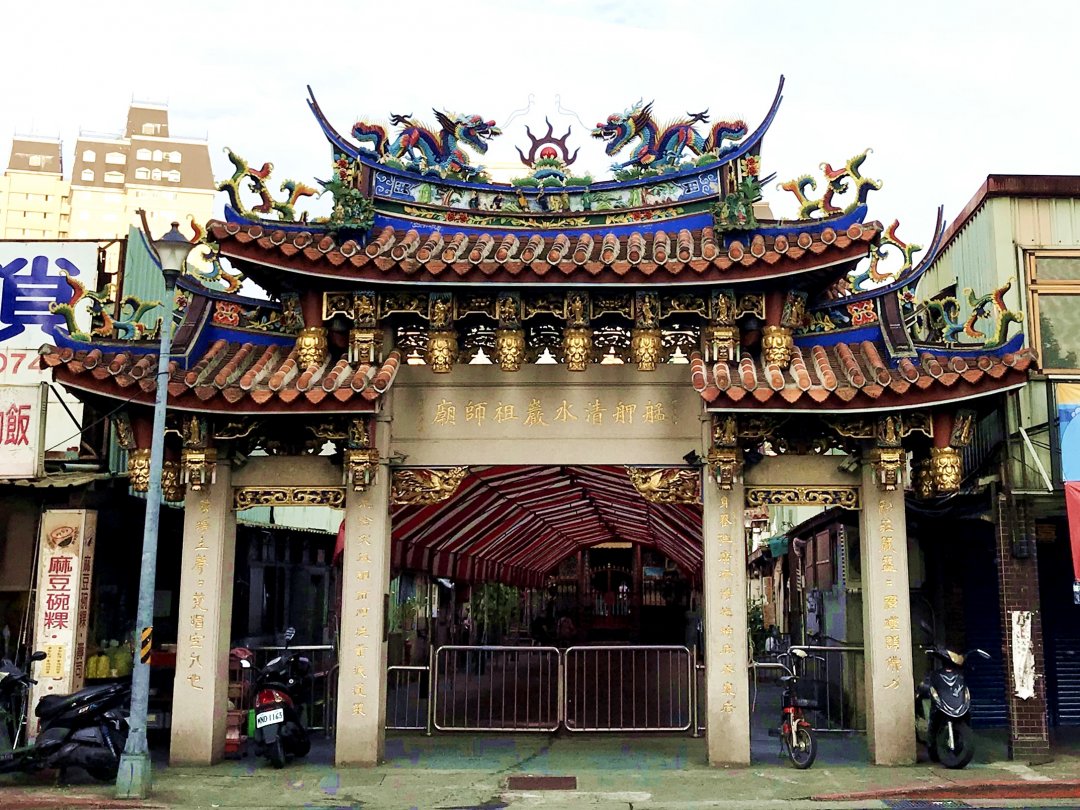
Qingshui Temple
Located on Kangding Rd., the rustic serene Qinshui Temple in Monga is also called Zushigong Temple for worshipping the drooping-nose master, Chen Zhaoying. Considered to be one of the three great temples of Taipei, along with Monga Longshan Temple and Dalongdong Baoan Temple, Qingshui Temple is a designated grade-three national historic monument. Built in 1787 during the reign of Qing’s Qianlong Emperor, Qingshui Temple worshipped deities brought in by immigrants from Anxi in Fujian, China. In 1853, a clash broke out between Sanyi people in Dingjiao and Tongan people in Xiajiao resulting in the Temple being damaged in a fire. Money was later raised by the Temple for renovation. During the Japanese rule, the Temple was at some point used as an auxiliary school to the National Language School at the Taiwan Governor-General's Office. The overall architecture faces the west and exudes a certain aesthetics and rusticity unique to mid-Qing temples. It is the only temple in Taipei that retains its original state as seen in temples of the period between Xianfeng Emperor and Tongzhi Emperor of Qing dynasty, (circa 1831-1875). It is also a filming location for key scenes in the movie, Monga. Over the two hundred plus years, Qingshui Temple has seen Monga residents through man-made and natural disasters like floods and fires. Now the Temple still stands strong with the followers’ steadfast belief. It is a witness to the development of the Monga area.
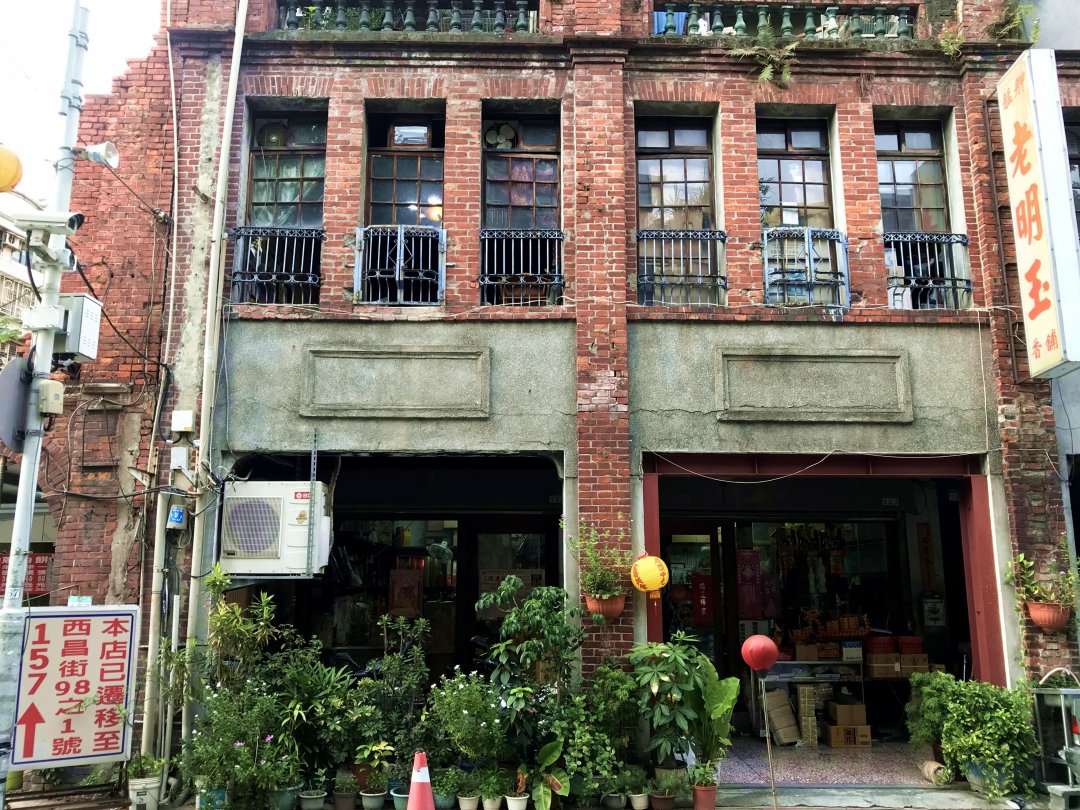
Guiyang Street (Laomingyu Incense Shop)
Guiyang Street is Taipei’s oldest street. With its close proximity to Danshui River, a street block began to take shape in Monga starting from Xiyuan Rd westbound to Huanhe S. Rd. and west of Guiyang Rd., hence earning itself the title, Taipei’s First Street.
In the early days of pioneering in Taiwan, the Ketagelan of the Plains Indigenous Peoples took advantage of its geographic proximity, often came to the area by canoe to trade with the Han people over the sweet potatoes, and the area was thus called Sweet Potato Street. From the mid-Qing dynasty onwards, as the economic center shifted to the north of Taiwan, the population in Monga increased owing to its excellent transport location, and thus became a cargo trading hub in northern Taiwan. Local merchants formed unions to cross the river and conduct trades along the coast. As the pronunciation for the Sweet Potato Street is close to Entertainment Street in Taiwanese, it was renamed Huanci Street during the Japanese rule.
With its long-standing history, Guiyang Street retains its western-style buildings, merchant houses, medicinal stores, and incense shops, of which the most famous one is the Laomingyu Incense Shop with a history of over 100 years.
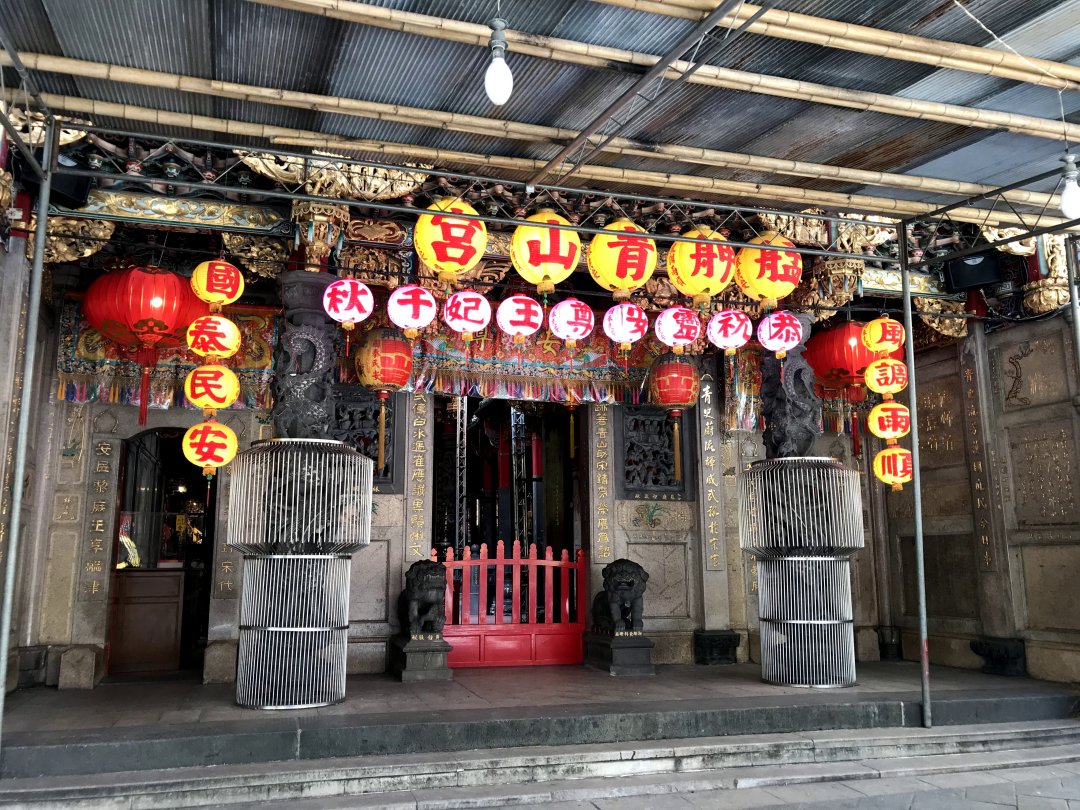
Monga Qingshan Temple
Located on Guiyang Sreet, Monga Qingshan Temple was over 100 years old, built during the reign of Qing dynasty’s Xianfeng Emperor by immigrants from the Huian County in Quanzhou, Fujian, China. Ling An Zun King (also known as Qing Shan King) statute was thus brought over, housed and worshipped in Qingshan Temple. Qing Shan King was worshipped as a guardian for folks from Huian and deemed to perform divine duties of punishing the evil, glorifying the good, protecting the common folks and expelling diseases.
The exterior of Qingshan Temple features a three-tier structure made with a mix of wood and stones. With an octagon-shaped caisson on the outside and the multi-eaved hip-and-gable roof, the temple is now a city-designated Grade-III historic monument. Qing Shan King’s birthday falls on October 23 on the lunar calendar. Legend has it that for two days before his birthday Qing Shan King would conduct “night visits” and patrol the streets along with his generals to ensure safety of the local residents. The festival, known as “Great Monga Sacrificial Ceremony”, is thus held with great fanfare and is named one of the three major temple events in Taipei City, alongside the religious celebrations in Dadaocheng Xiahai City God Temple and Dalongdong Baoan Temple. Qingshan Temple is the religious center for the locals and its Qing Shan King festival is an important local religious event.
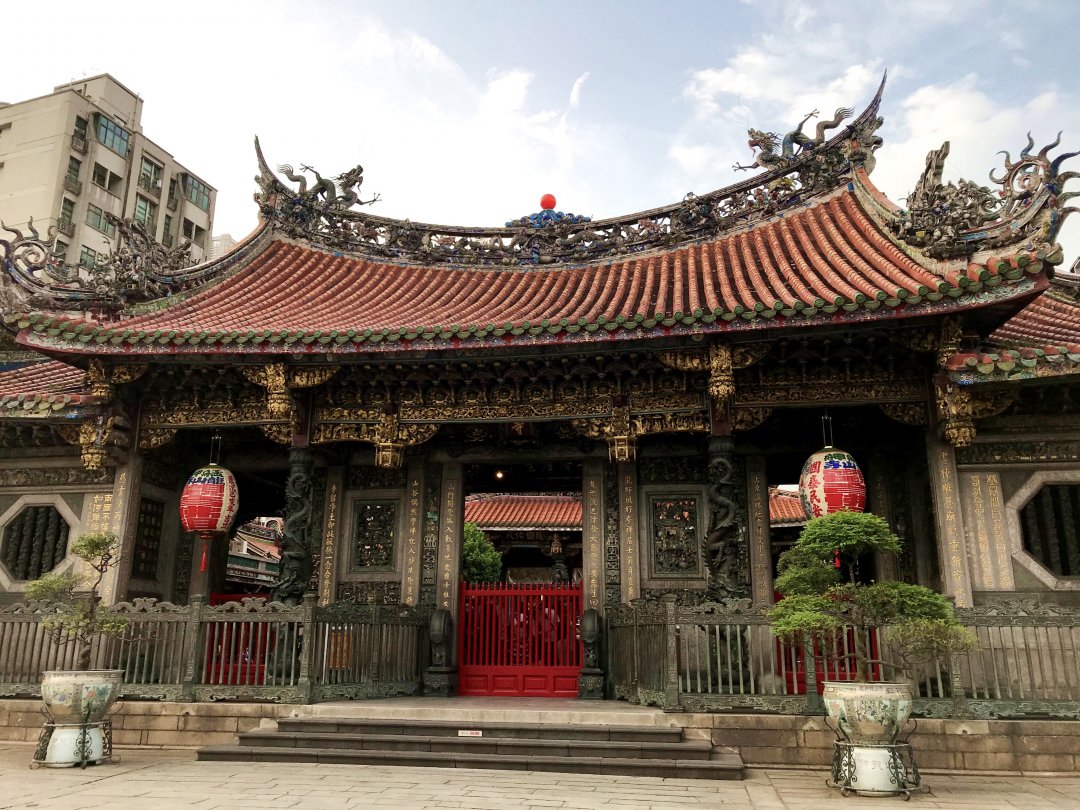
Longshan Temple
Wanhua Longshan Temple, National Palace Museum and Chiang Kai-shek Memorial Hall are the top 3 tourist attractions in Taiwan. Attracting hordes of domestic and overseas visitors every year, the Temple is a designated Grade-II national historic monument. During the reign of Emperor Qianlong in Qing Dynasty, local merchants and their families built a temple to worship the Quanyin deity brought in from the Anhai Longshan Temple in Fujian’s Jinjiang. The Quanyin statute in the Temple’s central hall has survived several natural and man-made disasters nearly unscathed and still stands strong to this day.
Taking up a land of 5,950.413 sq m, the temple is a palace-like architecture following a three-tier courtyard house structure with splendid-painted gates, walls, pillars and beams plus extremely exquisite carvings. Renovated by various artisans across different eras, the Temple embodies an immense value in architecture, culture and craft. On both sides of the Temple courtyard are a mind-purifying waterfall and a fountain. As a gathering place, the square in front of the temple has witnessed many democratic campaigns.
Starting from 2015, to comply with the government’s energy saving and carbon reduction policies, the use of incense sticks and paper money-burning procedures have gradually faded out. Going green has not put off visitors or turned them away from the religion but has highlighted the temple’s ability to keep in step with the times.
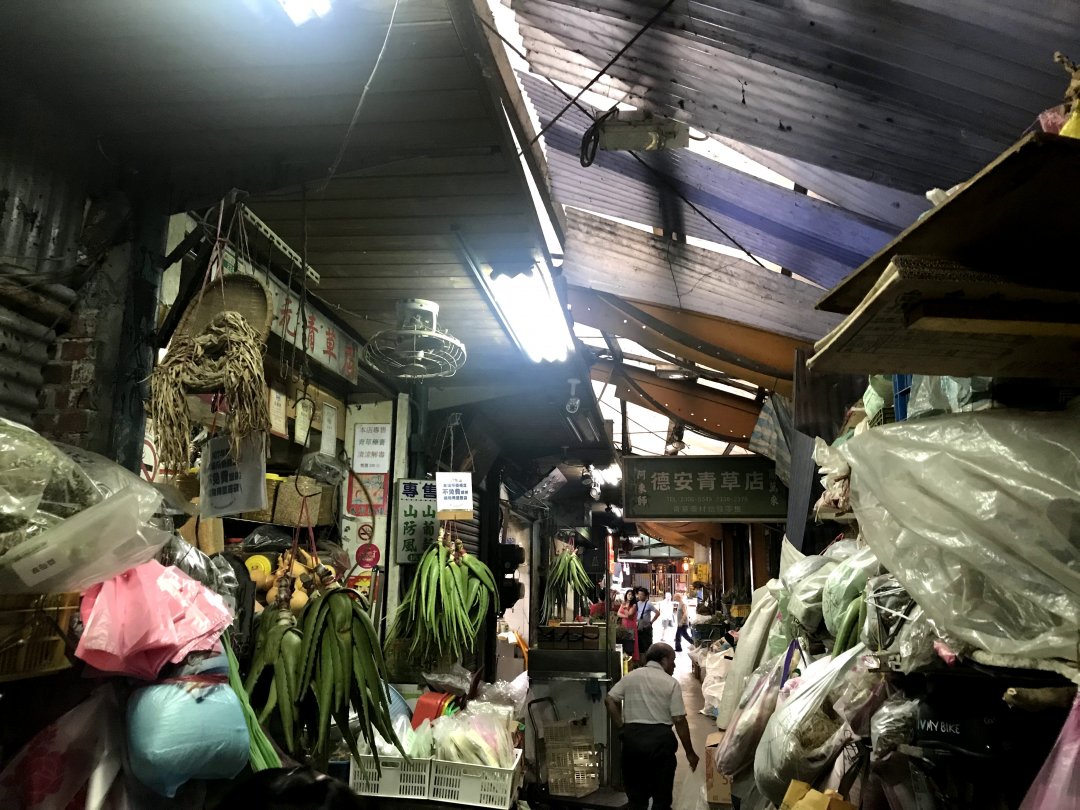
Herb Alley
Cross the Longshan Temple to visit the nearby Xichang Street, and one will be greeted with whiffs of herbal fragrance. This is the legendary Herb Alley 224, also known as Salvation Street where over 10 herb stores are packed selling a dazzling array of dry foodstuffs and herbs. When the forefathers first arrived in Monga, medicine was underdeveloped at the time and epidemics were common. Unaffordable medicine or lack of certified doctors drove people to seek out medicinal oracles from divinities in Longshan Temple. They then took such divine prescriptions to Herb Alley for herbal remedies, i.e. boiled herbal infusions. Many ancient remedies can still be sought from these shops today.
Nowadays, Longshan Temple has cancelled the service of giving out medicinal oracles. To keep in step with the times, the herbal stores have switched the conventional focus of selling herbs for disease treatment to developing a varieties of ready-to-drink packets of heat-dissipating drinks such as herbal teas and bitter teas for the purpose health nourishment & maintenance as is valued by modern folks.
Next time after your visit to Longshan Temple, you can stroll into the Herb Alley for a traditional folk experience and sip an herbal tea.
Monga Park/Longshan Temple Underground Shopping Mall (Monga Longshan Culture &Creative B2)
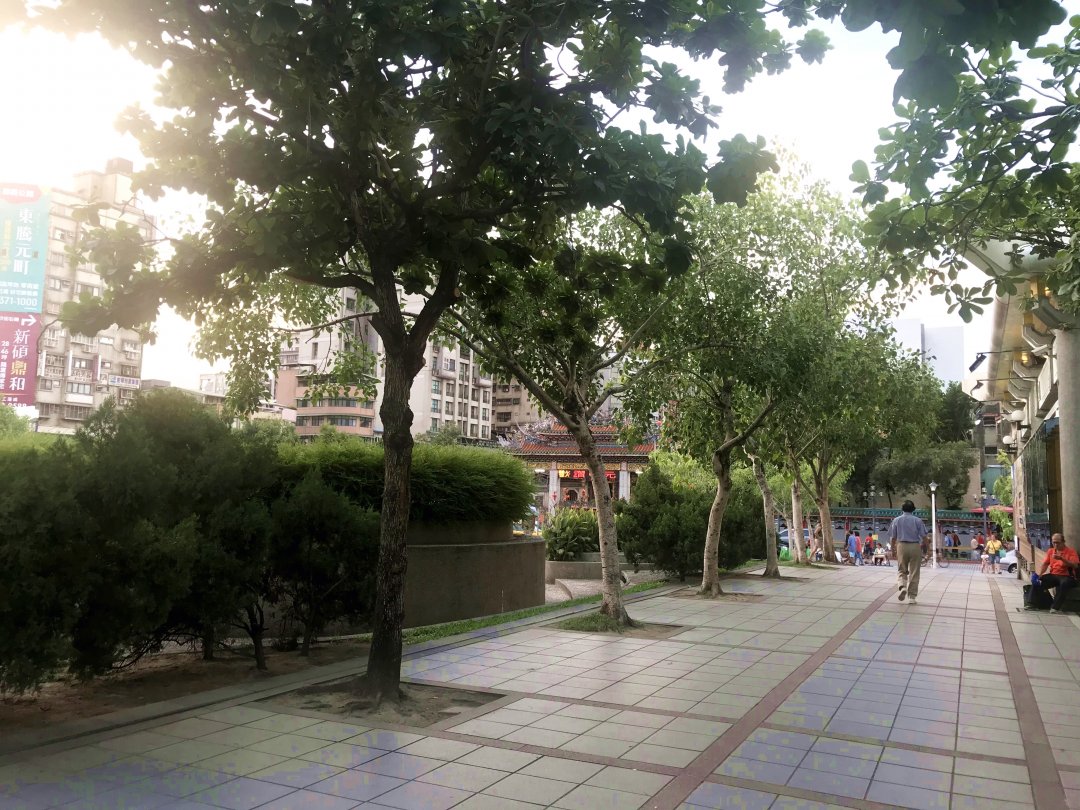
Facing Longshan Temple in the north across Guangzhou St. is Monga Park, formerly called Wanghua No. 12 Park. It is an art-themed folk park developed by Taipei City Government. The park is full of designs imbued with cultural imageries.
Connecting Longshan Temple and the MRT Station Exit 1, Underground Shopping Mall B1 primarily sells religious goods and gifts. Worth noting is its cluster of fortune-telling services manned by fortune-tellers fluent in English. Foreign visitors can give it a try and have your palm read.
Accessible by the escalator, the Monga-Longshan Cultural Creative B2, is established by the Department of Cultural Affairs, Taipei City Government. It started out as a base for experiential learner-centered cultural creative projects aimed at developing local brands. The space also hosts exhibitions and events as an ongoing showcase for the diversity of life in Wanhua.
Today, Monga-Longshan Cultural Creative B2 targets the exploration of the cultural creative industry as its future trend, hoping to drive the transformation of the local craft sector and further establish a matching channel for artists-and-audience interaction.