Lion’s Head Mountain Scenic Area
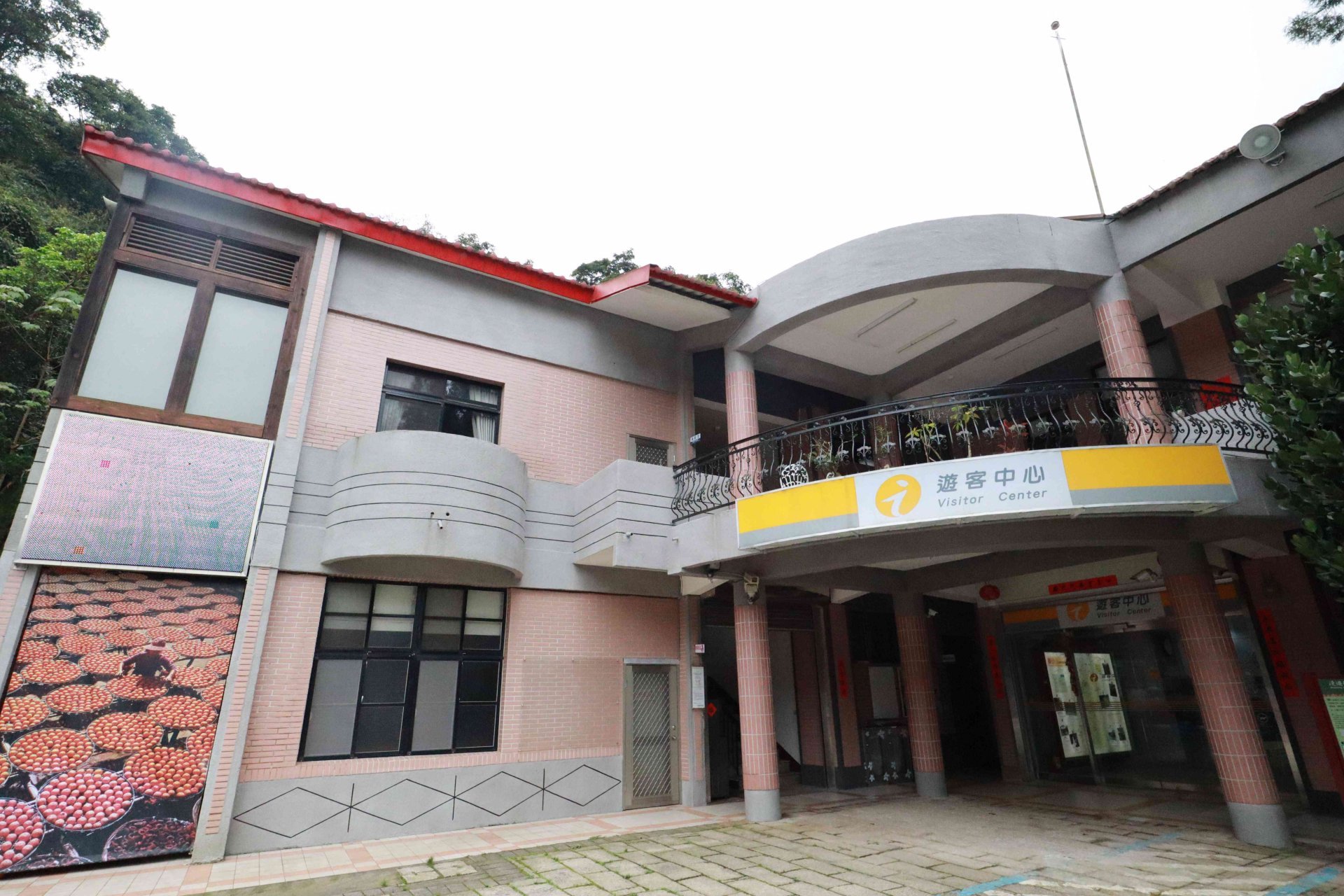
Lion’s Head Mountain Visitor Center
Lion’s Head Mountain got its name from its resemblance to a lion’s head when viewed afar from the bank of Zhonggang River. The front of the Mountain is a lion’s head and the back a lion’s tail, which are located at the Nanzhuang Township, Miaoli County and Emei Township, Hsinchu County, respectively. The peak is 492 m a.s.l. With its rich natural scenery, rural vibes and the mountain landscape, Lion’s Head Mountain is a great choice for trekking.
Among all the facilities, Lion’s Head Mountain Visitor Center is of great help for visitors who wish to rest their feet a while. Established in 2001, the main building was reconstructed from the abandoned former Shishan Elementary School, and still retains the Hakka style after renovation. Despite its small area, the Visitor Center provides diverse quality services. The Shishan classroom has the introduction of the nearby attractions and the map for surrounding trails, allowing visitors to choose a suitable route based on their physical strength and mood. The Visitor Center also provides brochures, introduction of townships, as well as boards displaying photographs of attractions, which are clearly classified by themes, making it easy for visitors to immediately grasp the information. The board for traditional delicacies mentions many well-liked dishes including braised pork with bamboo shoots and stir-fried pig intestine with shredded ginger. The general public may not necessarily know their favorite dishes are Hakka cuisine, but will have a better idea about the dishes through the brief description provided. In addition, the Visitor Center provides various thoughtful services such as phone charging, simple first aid, Wi-Fi, vehicle charging, and postcard mailing, making the hiking trip more pleasant and comfortable.
Along with a cute waterwheel installed outside the Visitor Center, there are various Hakka cardboard cut-outs for visitors to take photographs. Visitors can transform into a beautiful Hakka girl by simply standing behind the cardboard cut-out! Through proper planning, many benches are placed under the trees, making the outdoor square a great resting spot when one is tired from hiking.
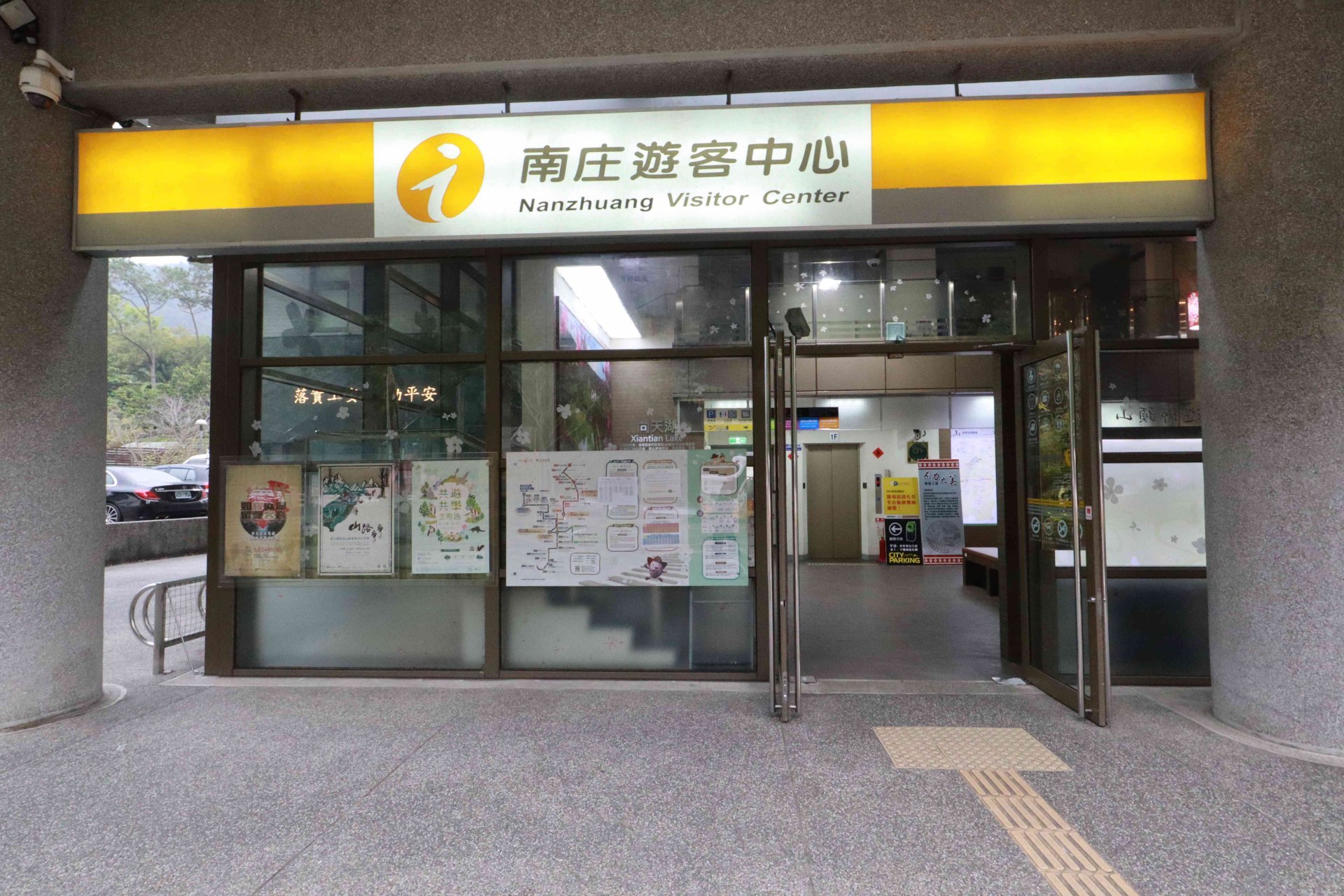
Nanzhuang Visitor Center
Located in downtown Nanzhuang, Nanzhuang Visitor Center is next to the main highway to Xiangtian Lake and near Nanzhuang Old Street. It is also the first visitor center affiliated to the Tourism Bureau to be labeled as a green building. The Visitor Center answers visitors’ queries on attractions and local souvenirs, provides multi-media video guides, and showcases traditional Hakka and indigenous clothes and implements. The indigenous costume is available for visitors to try on and take photographs. A corner of the Center also has indigenous handicrafts for sale. There are public parking lots behind the Visitor Center, offering affordable parking. This is a good parking option for visitors who drive here.
The interior of the Visitor Center is designed with the local features. The lamps hung from the ceiling are shaped like tung flowers. They looks exactly like tung flowers blooming when white light is emitted from the inside. The roof and the back of the service desk are decorated with timber and there are branches sticking out of the bole for hanging red lanterns of flower patterns. The place is rich in Nanzhuang’s local culture. There are also commemorative chops available for visitors to use and go home with great memories of the trip. During the holidays, the square outside the Visitor Center often organizes markets or performances, selling Hakka-style foods and goods. Various plants are found in the square, and different flowers appear in each season. During summer, there are pink and mauve hydrangeas blooming in the square. There are also a variety of plants on the street. Pink cherry flowers show up in spring and the famous Hakka tung flowers are in full bloom in late spring and early summer. It is a great place for people to visit, taking a relaxing walk and admiring the flowers when the season is just right.
The Visitor Center is near attractions like Nanzhuang Old Street, Osmanthus Alley, Xiangtian Lake, Fish Protection Trail, Luchang Donghe Suspension Bridge and Valley of the Gods. Among all, Osmanthus Alley is opposite the Visitor Center and there are various vendors selling snacks and delicacies along the way for visitors to rest their feet and enjoy a good snack.
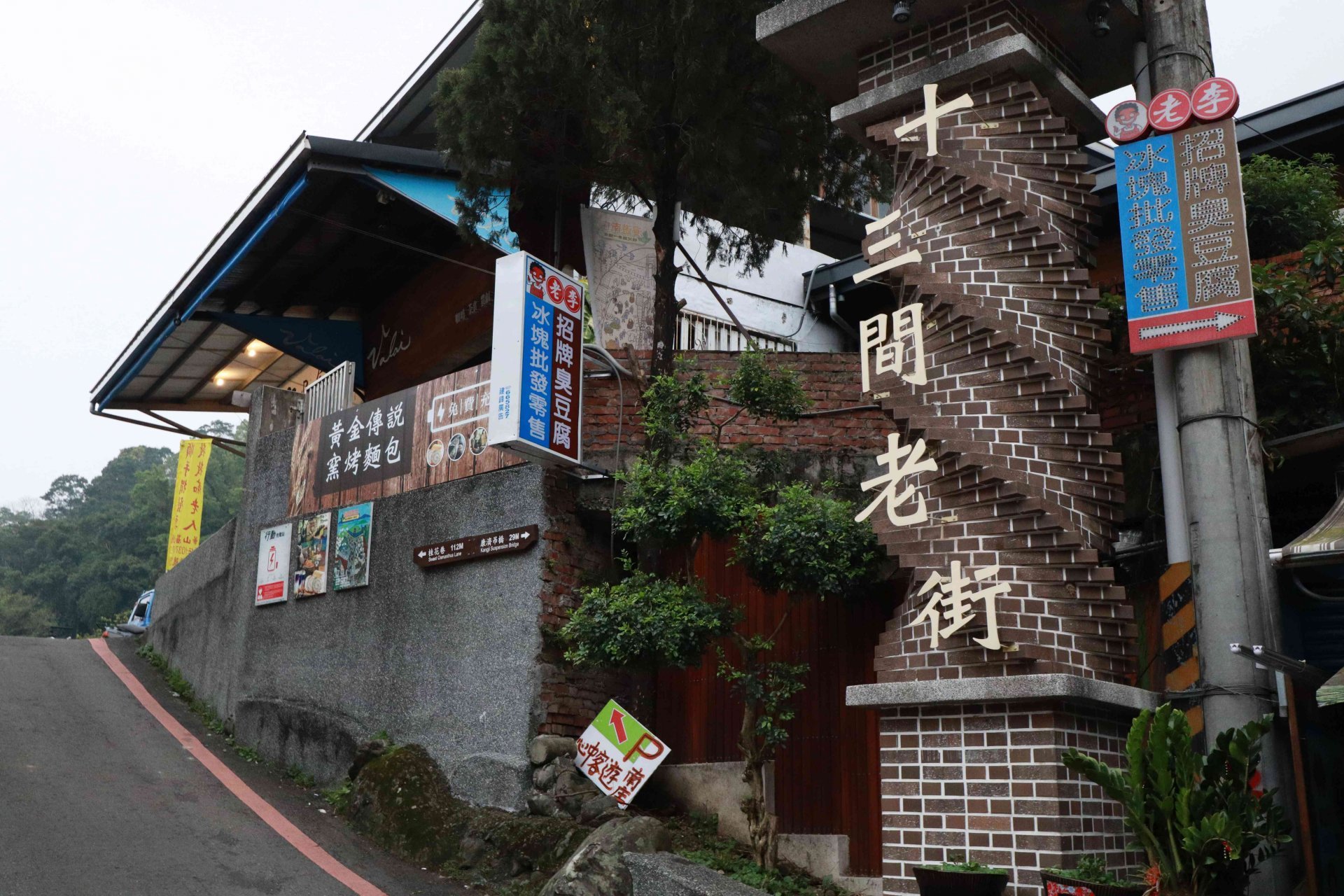
Shisanjian
Shisanjian Old Street used to be the busiest street and the then major thoroughfare in Nanzhuang. In 1963, Typhoon Gloria’s torrential rain flooded the old street and its business declined as the residents were forced to relocate. In recent years, the old street has revived when the young people returned home to apply their effort and the township office worked hard to secure funding for relevant refurbishment.
There are many explanations for the name of the old street and the most common ones are as follows. When an old man walked past the street, he counted 13 shops, thus the name. Another story is that there were 13 buildings connected on the old street and hence the residents named it accordingly.
Shisanjian Old Street spans across No. 60 and No. 144 of Zhongshan Road and both its beginning and end are marked with red brick pillars. In addition, there are kerosene lamp-shaped street lights on the street, recreating the then coal mining atmosphere. In addition, a cute mural depicting people mining coal or logging attracts many visitors to take photographs. Besides the design of coal mining images, each store on the street has a wooden door plate, adding a rustic touch to Old Street. There are different images such as scissors, comb, iron plate, and Taichi on the wooden doorplates, symbolizing the former services the stores provided: barbershop, ironsmith, and fortune-teller. These small yet exquisite symbols serve as identifications of various businesses and are a distinct feature of Old Street.
As Shisanjian is not as well-known as Osmanthus Alley, it attracts fewer visitors. However, the resultant tranquility gives Old Street a more nostalgic feeling. Although it is still under developmental, there are already many unique stores set up to sell soap, kiln-baked bread, and healthful steamed buns through the collective effort of like-minded individuals in the hope of promoting Nanzhuang’s food and culture. It is believed that with the addition of the new ideas, Old Street will be touched up with modernity.
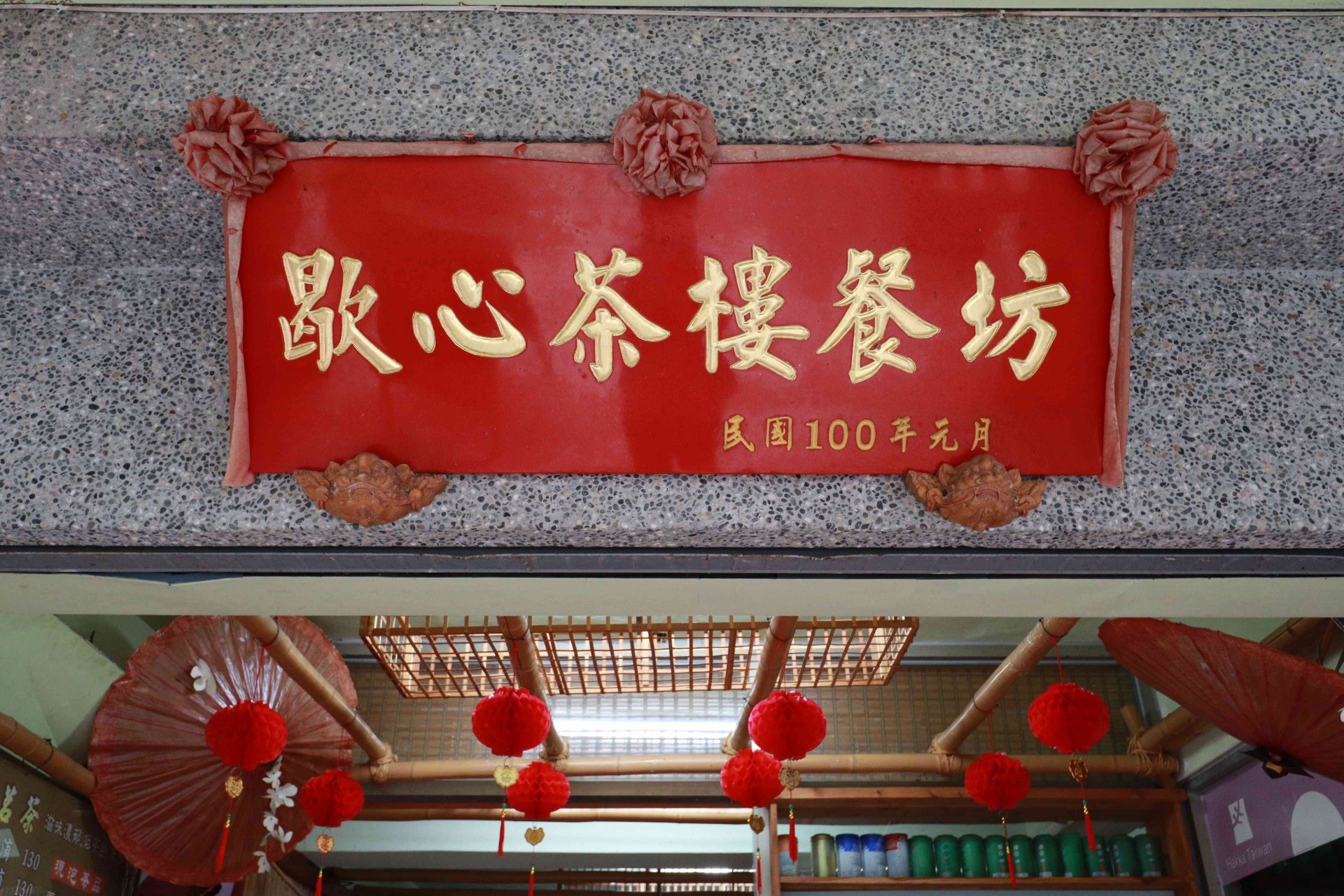
Xixin Tea House
【The old story of a Hakka tea house】
Xixin Tea House is the restaurant outsourced by Tri-mountain National Scenic Area Administration. It was the former dormitory for teachers of Shishan Elementary School and reconstructed into a Hakka tea house by combining the concept the “purity only emerges after the evil has been cleared” and traditional design of slanted roof. Welcoming visitors with its new outlook, the elegant tea house architecture blends in seamlessly with its surrounding, providing a nice spot to rest both body and mind. When you walk to the counter, you can see lantern and umbrella made of floral Hakka cloth and an assortment of tea ware. There are also interesting Hakka sayings written along the staircase. The local stories are told through the display of Hakka artifacts and the food served.
【Taste the local Hakka delicacies】
In addition to the quaint Hakka decoration, Xixin Tea House also provides the individual set meal, Hakka vegetarian dishes and group meals. The signature dish one cannot miss is the tung flower set meal. Served in a retro ceramic pot with tung flower design, there are dishes such as high mountain vegetable, fried shredded pork with cuttlefish and braised pork served with rice. The appearance makes one’s mouth water and all the customers who tried it were amazed by its taste. During the quiet afternoon, you can take a stroll on the Liouliao Trail or Tengping Trail. When you are tired, you can sit at the outdoor dining area and enjoy a pot of cold-brewed oriental beauty tea and handmade Hakka mochi. It certainly provides a different travelling flavor to be able to rest and gaze at the mountains afar. If you don’t wish to part with local Hakka delicacies, you can purchase candied fruits and tea leaves and take them home with you.
【The private attraction for seeing tung flowers】
There are several century-old tung trees near Xixin Tea House, which have become a must-visit attraction for admiring tung flowers during its blooming season in April and May. It is extremely relaxing and romantic to taste Hakka delicacies while enjoying the view of tung flowers falling from the trees. If you wish to avoid the large crowds during holidays, you are advised to visit during weekdays to enjoy its rare ease and tranquility.
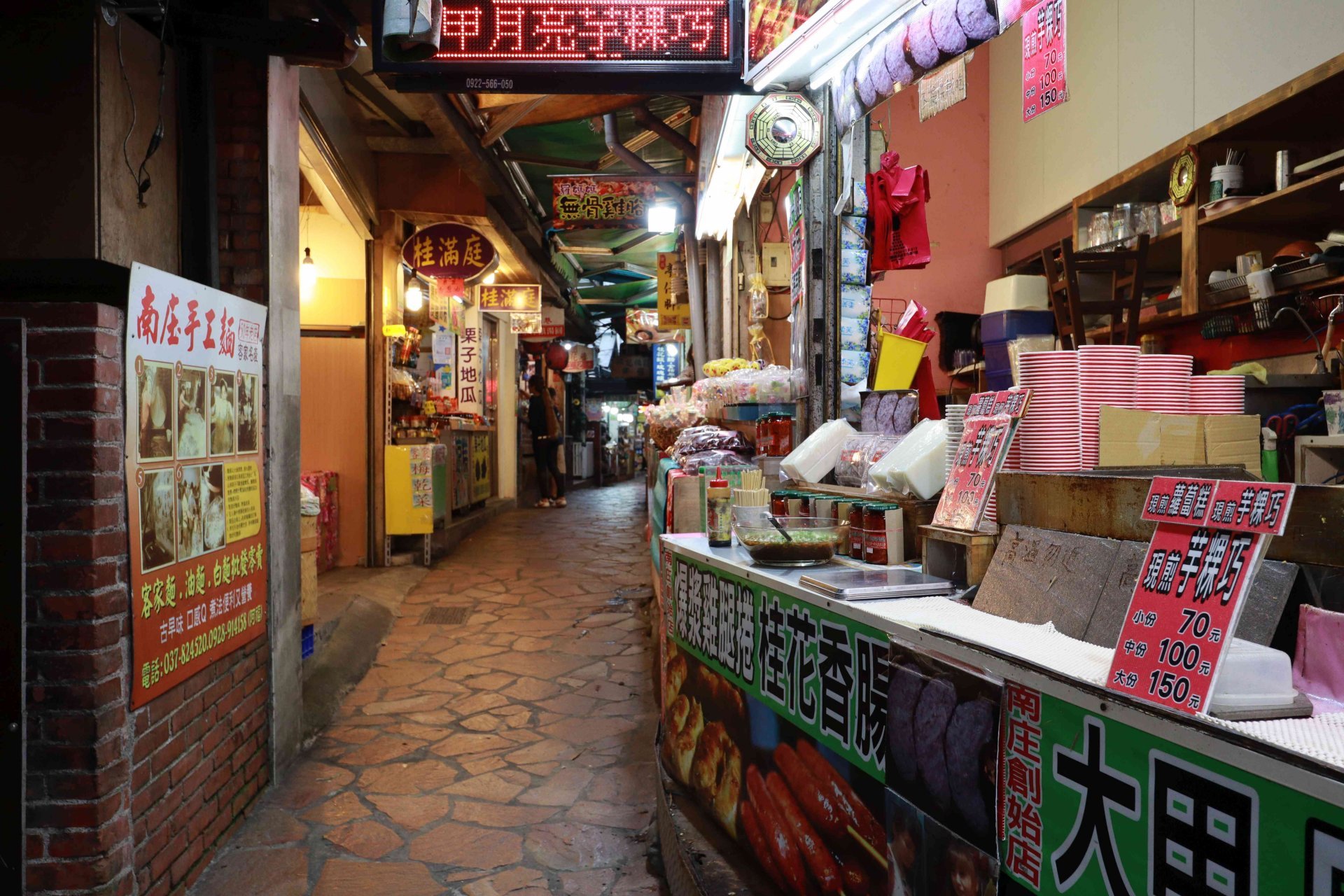
Nanzhuang Old Street
Located on the Zhongzhen Road near Yongchang Temple and the alley nearby, Nanzhuang Old Street is full of stores selling special snacks and goods. There will be large crowds queuing on Old Street every weekend or on public holiday. In addition to the must-try Hakka delicacies such as Hakka radish bun and lei cha, the visitors should stop by Nanzhuang Old Post Office, Nanzhuang Cinema and Nogizaka next to Old Street.
Nanzhuang’s Osmanthus Alley is widely known. The name originated from a local old noodle shop when community infrastructure establishment was promoted in 2001. It has accidentally become the other name for Nanzhuang. The name brought many osmanthus-related business opportunities. Delicious and sweet osmanthus products have become the unforgettable taste of Nanzhuang and the honeyed osmanthus a popular local souvenir.
Shuibiantou is located at the end of Osmanthus Alley on Nanzhuang Old Street and is also known as the “cloth-washing ditch”. It is a natural water channel filled with an atmosphere of nostalgic tranquility different from that of the bustling Old Street. Back when tap water was not yet available, this was the place for local residents to pound and wash clothes, where a dozen or so washboards were set up beside the clear ditch full of water. Hakka ladies chatted while washing clothes at “Shuibiantou,” symbolizing the traditional Hakka hard-working and frugal spirit and harmonious way of living with nature. Nowadays, it is rare to see anyone washing clothes here, but this cultural image has made a deep impression on people.
Despite an ancient century-old post office, Nanzhuang Old Post Office is no longer simple and rustic. It was renovated after the 1935 earthquake and has successfully preserved the simple and distinct features of a quaint Japanese building. It currently serves as Nanzhuang Cultural Hall. Walking down from the opposite side of the old post office, you will be taking a flagstone trail named “Nogizaka” to remember Governor-General Nogi’s goodwill. Based on the documents of Nanzhuang Township Office, the flagstone trail was built during the Japanese occupational period to provide the then residents with more convenient transportation. Count Nogi, the then Governor-General of Taiwan, was the first to donate money in an attempt to encourage more people to come forward with help and money. Thanks to Nogi, enough funds were raised to construct the trail. To show people’s appreciation for Count Nogi Maresuke’s good deeds, the trail was thus named.
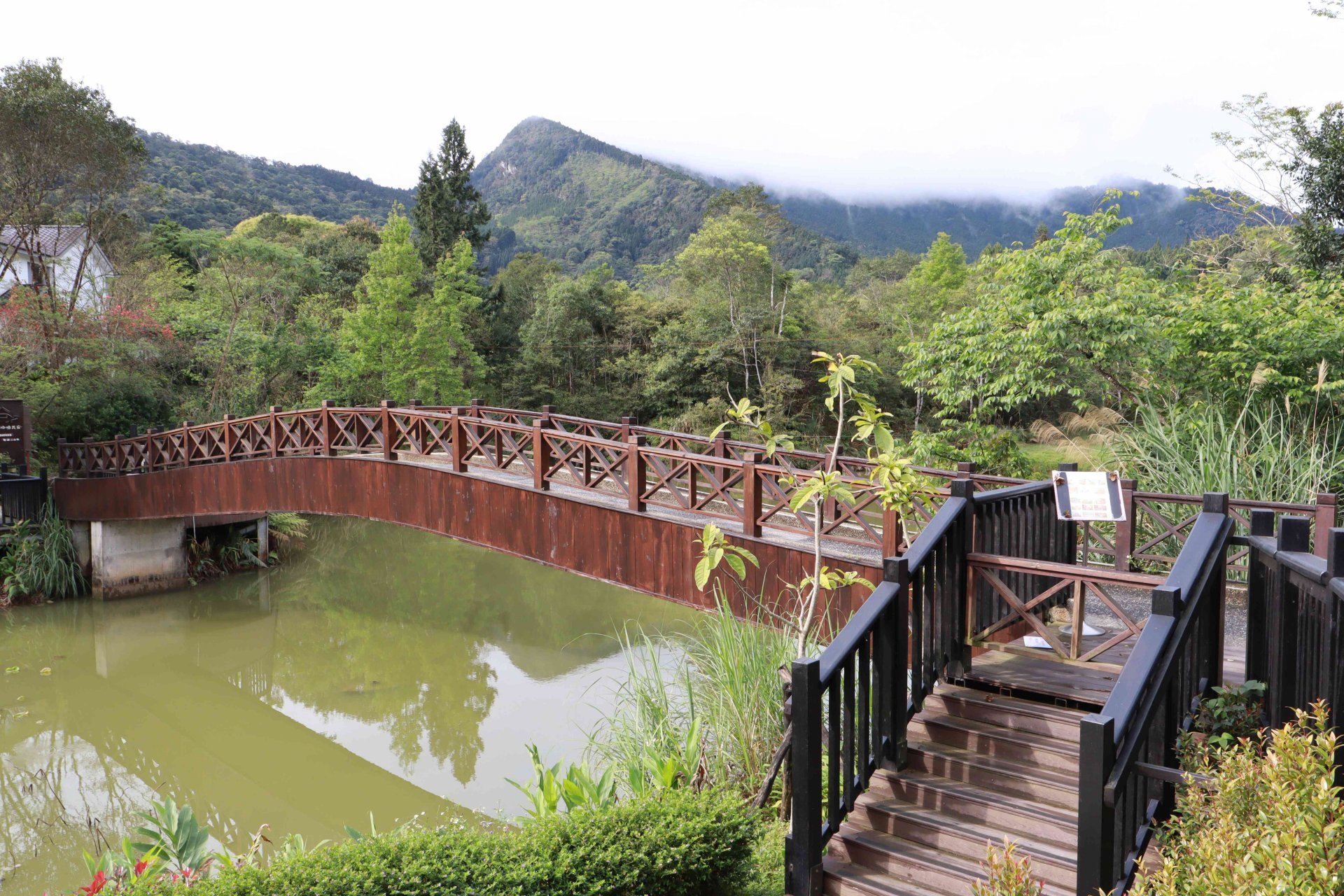
Xiangtian Lake
【Origin of the name】
Xinagtian Lake, which is 738 m a.s.l., is located in Donghe Village, Nanzhuang Township, Miaoli County. It was where the Saisiyat people settled. It is believed that a few centuries ago, the ancestors named the lake “Xiangtian” (towards the sky) as the lake appeared to look up to the sky. Since Xiangtian Lake is located at a higher altitude, its water surface is often shrouded in mist and clouds between winter and spring, making visitors feel like being in the fairyland. With Japanese firs widely planted around, the green basin surrounded by many mountains is an excellent spot to escape the summer heat.
【Preservation of Saisiyat Culture】
The Museum of Saisiyat Folklore sits by Xiangtian Lake; it holds irregular exhibitions of indigenous artifacts such as the clothes commonly worn by Saisiyat people and their traditional tools for daily life, helping visitors to appreciate the wisdom of our ancestors and the long history of these people. The exterior of this historical building is decorated with bamboos and Saisiyat totems to preserve the invaluable tribal culture inside out. It is worth mentioning that Pas-ta’ai involves a minor ritual every two years and a major one every decade taking place beside Xiangtian Lake. It is usually held in the mid-October of the lunar calendar. The tribal people will dance hand-in-hand and swing their ornamental hip bells from sunset until dawn. For those who are interested in finding out more about Saisiyat culture, please take note of the ritual schedule and pay a visit to Xiangtian Lake.
【Having good times among the lake and mountains】
The wooden arch bridge by the museum spans the lake. You can enjoy the views of the lake and mountains by standing on the bridge. Walking ahead, you will go through a tunnel formed by dense vegetation. Not only can you escape from the hassle of the city, but you can also inhale plenty of phytoncides, which is very pleasant and relaxing. Xiangtian Lake Tribal Market is a rural economic activity initiated by the Saisiyat people to promote local produce and indigenous snacks through selling them locally. The honey products, millet wine, and seasonal fruits are all excellent souvenir choices.
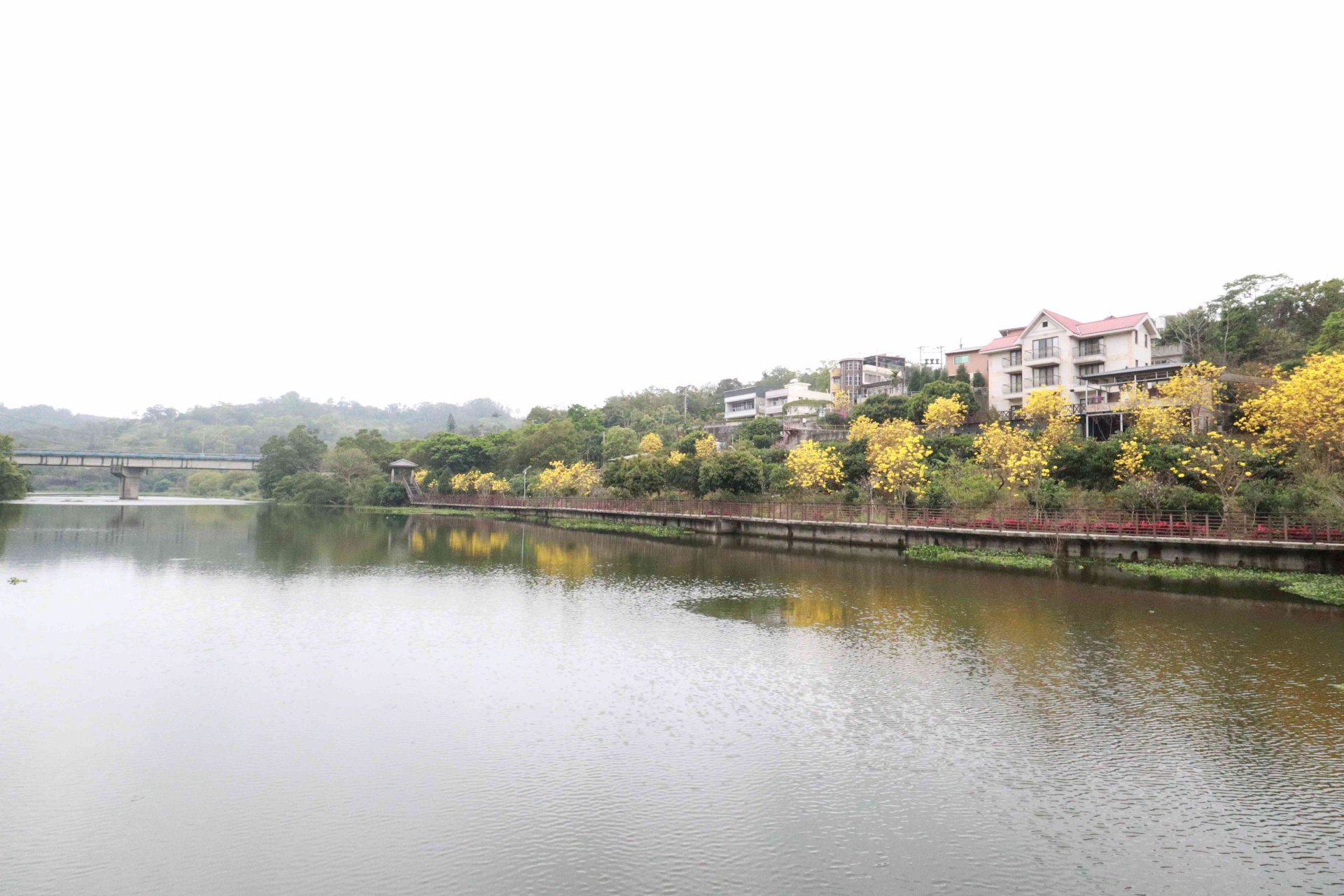
Emei Lake (include trail and arch bridge)
Emei Lake is located at the junction between Fuxin Village and Huguang Village of Emei Township, Hsinchu County. Its main body is the first dam designed and built by Taiwanese and was named Dapu Dam; it mainly provided water for irrigation and industrial use, and also served as flood control. In 2000, the Ministry of the Interior lifted the protection order for dams, allowing the development of tourism to begin at Emei Lake.
When you arrive at Emei Lake, you will first notice the wide lake surface as well as the lakeside trail. If you wish to observe the beauty of the lake from every different angle, you can take a stroll on the trail. The trail is 3.5 km long and the first section of the trail is approximately 1 km, which is ingeniously designed. The completion of the trail was only possible due to the selfless generosity of a local gentleman, Uncle Yu, Jin-Kui. Therefore, a section is dedicated to him and called “Uncle Yu’s Bridge”. Below the bridge, there is a 3D painted river flowing along and the river is dotted with tung flowers and lotus leaves.
When you continue to walk along the trail, you will see a wide variety of aquatic plants along the way, which is just like an ecology classroom, allowing visitors to learn and have fun at the same time through the lakeside explanatory boards. In addition, visitors will also discover a large green patch of common water hyacinths floating on the lake. Although it seems a beautiful scene, this exotic species is a potential threat to native species. Hence, we should stay alert and endeavor to protect our natural environment.
Keeping walking forward, you will see another famous attraction at Emei Lake, Ximaopu Suspension Bridge. There used to be five suspension bridges spanning Emei Lake to help the residents come and go. However, only Ximaopu Suspension Bridge is left now to connect Shierliao Recreational Farm and Fuxin Old Street. Ximaopu Suspension Bridge can bear up to fifty people and its bridge tower is decorated with tung flowers. You can enjoy the lake views from either side of the bridge and observe the countless effects of the changing weather and passing time on the lake surface.
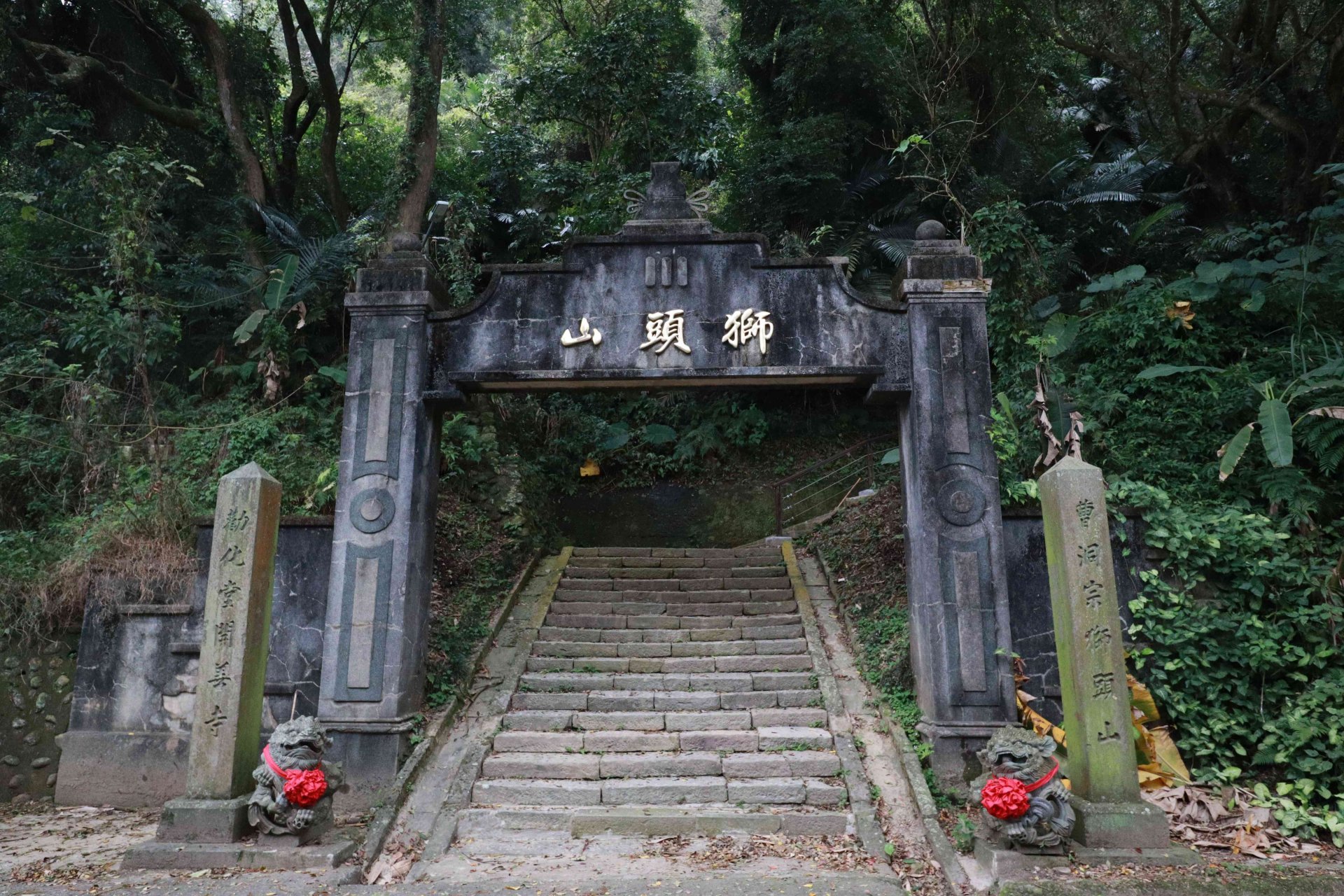
Lion’s Head Mountain Historic Trail
The 5 km long Lion’s Head Mountain Historic Trail is the road connecting the front and back parts of Lion’s Head Mountain. There are two entrances to Lion’s Head Mountain, one at Nanzhuang’s Shishan Village (lion’s head) and the other Hsinchu’s Sheliaoken Bridge (lion’s tail). There are also two entrances to the lion’s head at Nanzhuang, one being the new entrance near Quanhua Temple parking lot and the other the less travelled old entrance with a sign saying “Nanzhuang Line – Lion’s Head Mountain Historic Trail Entrance Station”.
There is an elegant gate at the entrance of the front mountain, which was built in 1940 to commemorate the 2,600th anniversary of the Imperial House of Japan. The words “Lion’s Head Mountain” are gilded, making it look graceful and seem historically important.
You begin ascending from the “Gate of Morals” and will walk past the flagstone trail laid with bluestones. This is also the highlight of this historic trail as it is a footpath of historic importance that was built over a century ago. On the way up, you will pass the dense old woodland and see the famous Large Shishan Stone Wall. Large stone walls are a geological spectacle unique to Lion’s Head Mountain. The temples in Lion’s Head Mountain also use these walls as barriers. As the Large Shishan Stone Wall is located in a steep and narrow region, it suffered fewer human damages and was able to preserve its original look. The only manmade trace is some sutra engravings on the rock wall.
You will then reach the highest point of the Lion’s Head Mountain Historic Trail, the Wangyue Pavilion, which is also the boundary between Hsinchu and Miaoli County. There is also a marker stone indicating the boundary. The pavilion was originally called the “Gaoyang Pavilion” during the Japanese occupational period, but was renamed by General Huang Jie during its reconstruction. One can overlook the beautiful views of the creek at the foot of the mountain from the pavilion, which is the nice place for visitors to take a break and enjoy the beautiful scenery. As the Lion’s Head Mountain is a well-known spot for admitting tung flowers and the Lion’s Head Mountain Historic Trail is relatively flat, it is suitable for the whole family to visit and see tung flowers together.
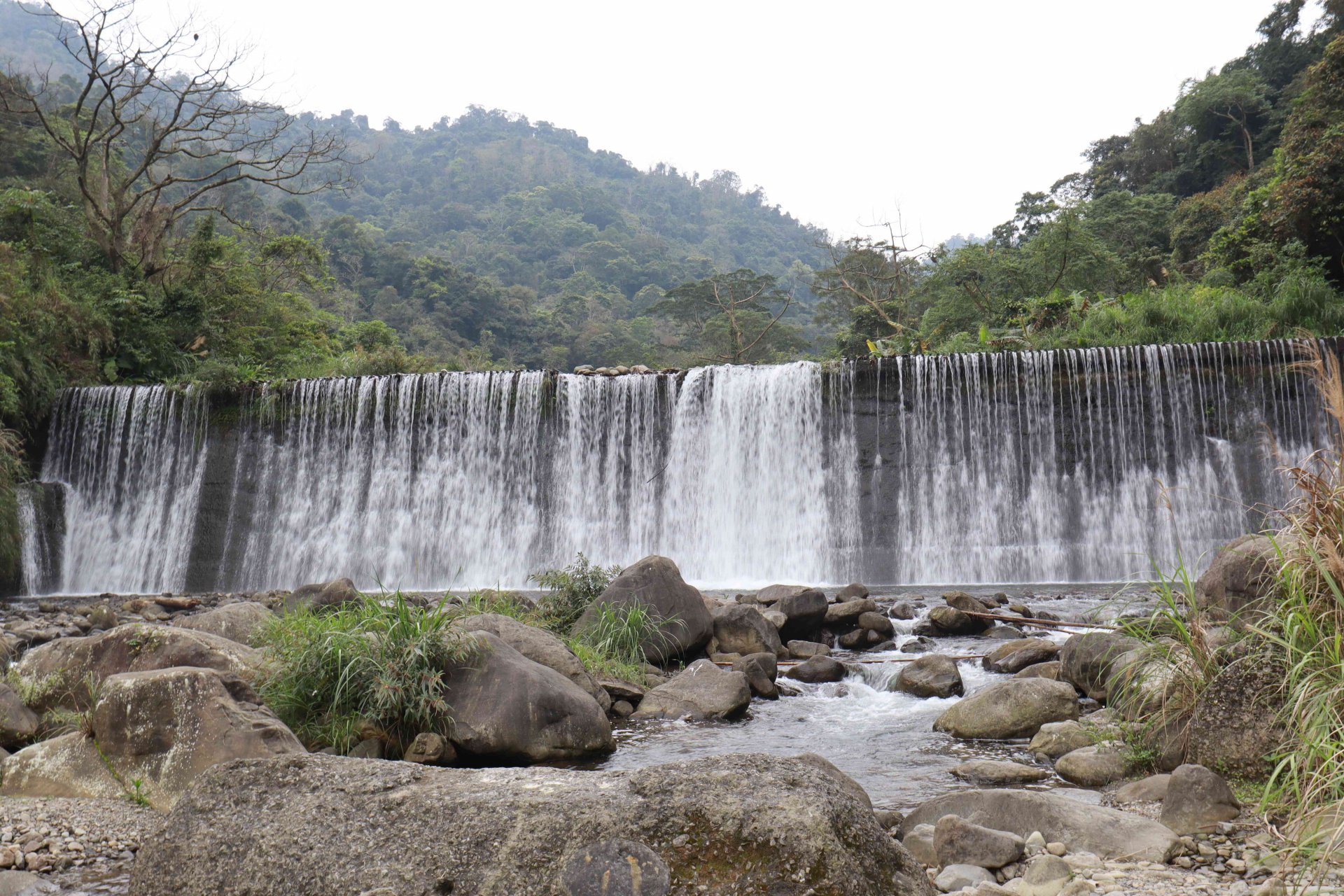
Beipu Cold Spring
Located at Waipu Village of Beipu Township, Beipu Cold Spring is one of the only two cold springs in Taiwan. Su’ao Cold Spring, the other cold spring of Taiwan, has clear water rich in calcium bicarbonate and its temperatures are maintained between 10 and 20℃ all year round. In contrast, Beipu Cold Spring is one of the rare springs containing both carbonic acid and sulfur. The slightly salty spring water is rich in minerals and sulfur that benefit the skin in numerous ways. However, the spring water turns brownish after sunlight exposure. Those who do not know the reason may mistakenly think that the water has been polluted!
【The must-go spot to overcome sweltering heat and enjoy a cool summer】
There are facilities in the park such as suspension bridge, pavilion, foot spa and two spring pools, one deep and the other shallow. The check dam of Daping River at the front is a famous landmark. Visitors can see the magnificent view of the water rushing down from the dam, causing mist to swirl among large valley rocks. Between May and August, the cool spring water attracts many visitors to play with the water and fight the summer heat. In addition, it is a good way to relax both body and mind by overlooking the beautiful scenery from the suspension bridge.
【Touring the quaint Beipu Old Street】
Beipu Old Street is one of the old streets with the highest density of historical buildings and monuments in Taiwan. For example, Chiang A-hsin Mansion and Chin Kuang-Fu Residence are both well preserved. Visiting these historic buildings is like walking through the tunnel of time, allowing visitors to understand the rich local history. In addition to experiencing the different settlement cultures, visitors should never miss local traditional delicacies such as dried persimmon and handmade Lei Cha. That’s why many foodies swarm into Old Street during weekends or public holidays.
【A romantic night trip of firefly watching】
In addition to a natural spot to escape the summer heat, Beipu Cold Spring is where you will visit to watch fireflies. As Beipu developed later compared to other regions, it manages to preserve more primitive natural features, which favor the populations of fireflies. From later April to May, many photography enthusiasts gather here to take photographs of the magical moments of numerous fireflies flying around. Visitors are urged to observe the following rules when planning the trip to watch the fireflies.
※Safety tips for watching fireflies
1. As it can be dewy and chill at night, make sure to keep warm and not catch cold.
2. Please refrain from directing strong light or flashes at the fireflies as they can be badly disturbed.
3. Please cover your torchlight with a piece of red cellophane as red light will minimize the impact of light on the fireflies.
4. It is strictly prohibited to capture and bring fireflies home or damage the environment.
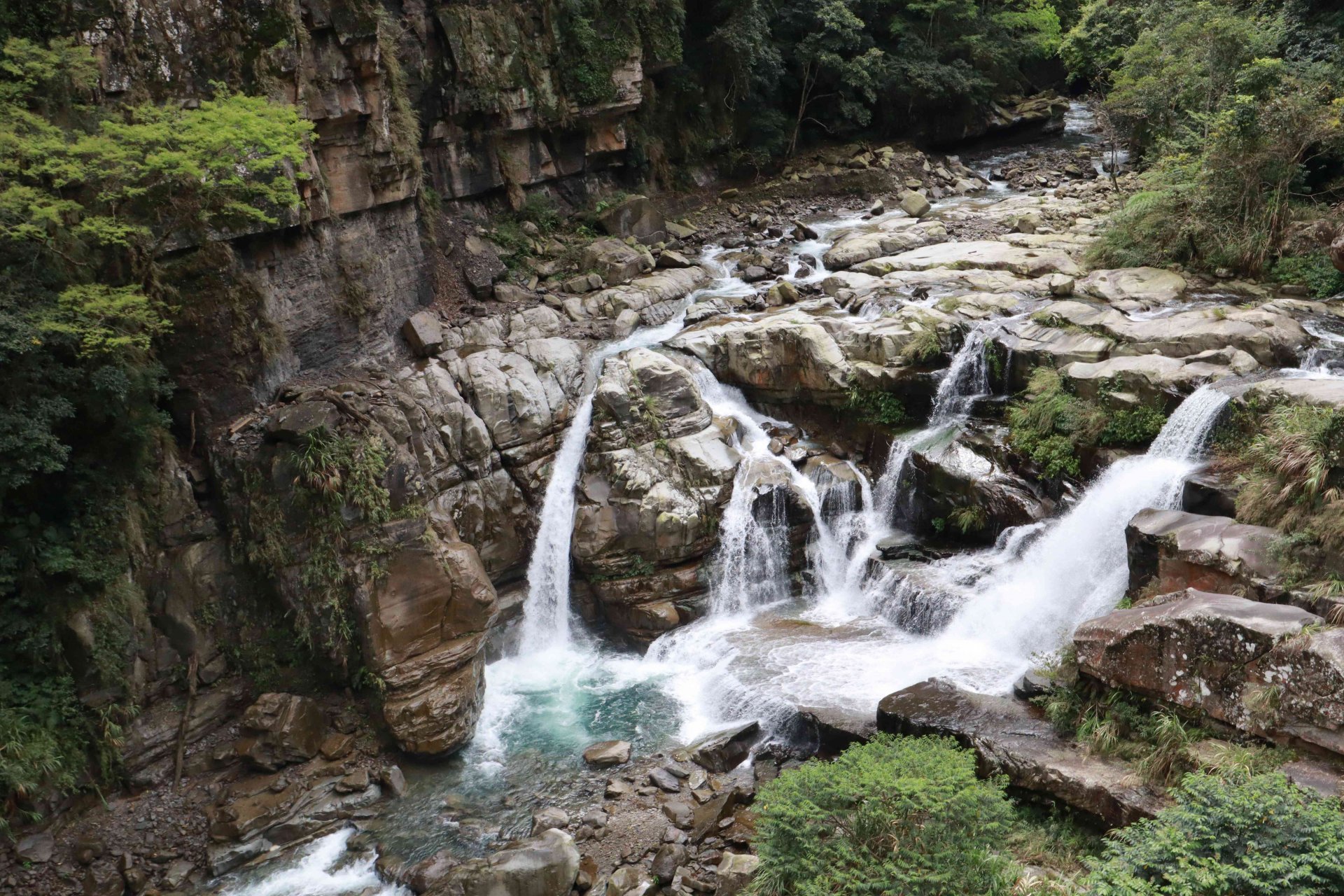
Shenxian Valley
Situated at Nanzhuang, Miaoli County, Shenxian Valley is 650 m a.s.l. and a gorge formed by the cutting of the confluence of Luhu River, Luchang River, and Fengmei River. The faulted rock bed results in the height difference of tens of meters. When the roaring water pours down from the upper rock bed, it creates magnificent cascades. Visitors cannot help but exclaim at the beauty and creation of nature. It is worth mentioning that Shenxian Valley’s unique landscape won the favor of Director Wei Te-Sheng; he used Shenxian Valley as one location when filming the movie, “Warriors of the Rainbow: Seediq Bale”.
【Take a stroll near the Shenxian Valley Waterfall and on the suspension bridge】
Shenxian Valley has been a sacred place for Atayal ancestral spirits. It was known as the valley of death as it was where the nearby Luchang tribe buried their deceased ancestors. It was closed for a long period of time until the refurbishment carried out by Tri-mountain National Scenic Area Administration. The wooden trail and the suspension bridge adorned with indigenous totems were built so that visitors could enjoy the beauty of the waterfall. As the saying goes “It seems to be a range when you look at the mountain from the front, but a peak when you look at it sideways.” Strolling from the trail to the bridge, visitors will see Shenxian Valley Waterfall from various angles. When overlooking from the bridge, the upstream is the magnificent riverbed, while the downstream is the clear and green valley. You can capture all the beauty of Shenxian Valley at one glance!
【Tribal restaurant with a view Enjoy the beautiful waterfall at close range】
After entering the Shenxian Valley Trail, you will see the prominent sign for Seven Layer Waterfall. The restaurant is decorated with a colorful painting and traditional totems, creating a rich tribal atmosphere. In addition to tasting the local indigenous delicacies, customers can enjoy the live singing performance by the restaurant owner. This is indeed an excellent place to relax both your body and mind. When you walk out of the restaurant and down the stairs, you will come to a transparent glass viewing platform, from which visitors can enjoy the magnificent views of the waterfall at close range. The clouds will be swirling around the waterfall after rain, making visitors feel like being in a fairyland. No wonder it was called “Shenxian Valley” (valley of the gods).
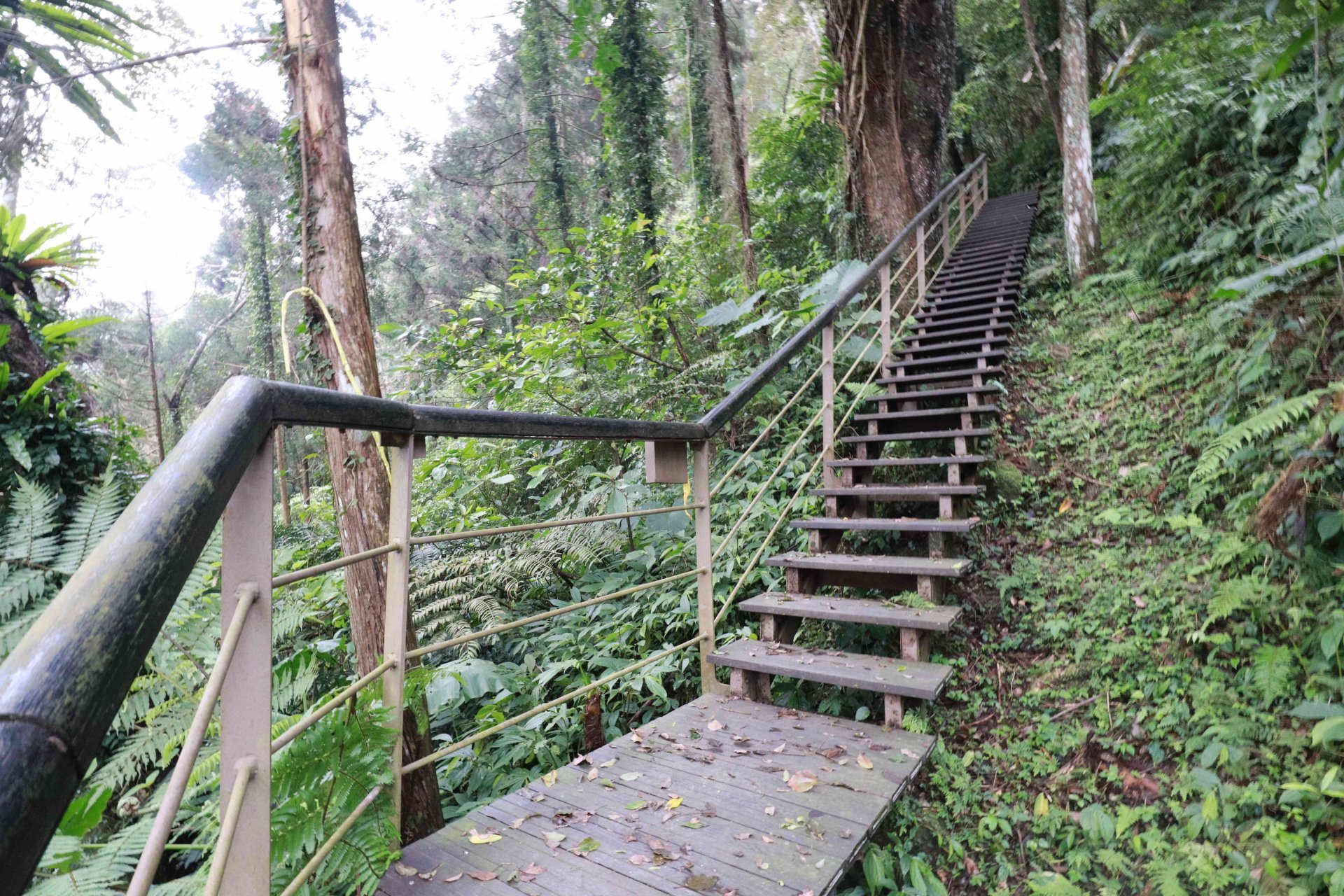
Wuzhishan Scenic Area
Located at the junction for Zhudong Township, Beipu Township and Wufeng Township of Hsinchu County, Wuzhishan is a branch ridge of Xueshan Range. As the connecting peaks resemble five fingers, the mountain was named Wuzhishan (mountain of five fingers). Because of its majestic, solemn and spiritual mountain views, many temples were built here, including Yuhuang Temple, Guanyin Temple, and Yunguang Temple.
During the Qing dynasty, its magnificent view of “fingers pointing through clouds” put Wuzhishan on the list of the eight scenes. It was even voted one of the top twelve scenes of Taiwan during the Japanese occupational period. The trails in Wuzhishan offer beautiful views and rich ecology. The vegetation comprises mainly natural hardwood forest and Japanese fir plantation, and is dotted with tree ferns that are covered with epiphytic ferns.
With its unique geographical conditions, visitors can often see a turbulent sea of clouds after reaching the top of the mountain. There are two trails in the scenic area for visitors to choose from, one steeper and more challenging that leads straight to the peak at the middle finger and the other a horizontal trial that is flatter and more suitable for those who travel for leisure.
As one of 100 minor peaks in Taiwan, Wuzhishan dares many mountaineers to scale it. The most classic route goes from index finger, middle finger, ring finger and pinky, and finally reaches the thumb, which takes approximately a day and goes through various special scenes, including “golden turtle rock,” a turtle-shaped rock covered with golden moss. The rock is also a popular local landmark. As you continue walking, you will suddenly realize that the sky has darkened because large tall rock walls on both sides have blocked the sunlight, forming a trail that is 34 m tall and allows only one person to pass at a time. This is called “Monkey cave one-line sky,” which exemplifies the unbelievable craftsmanship of nature.
The temples in Wuzhishan Scenic Area all have their own characteristics. For example, the nearly century-old Guanyin Temple has its Tianjun Hall (beside the main hall) made by chiseling a giant rock. Along with the solemnity, its uncanny workmanship of nature makes the Temple definitely worth a visit.
When you come to Wuzhishan Scenic Area, not only can you exercise, but also ask Guanyin and Jade Emperor to grant blessings.
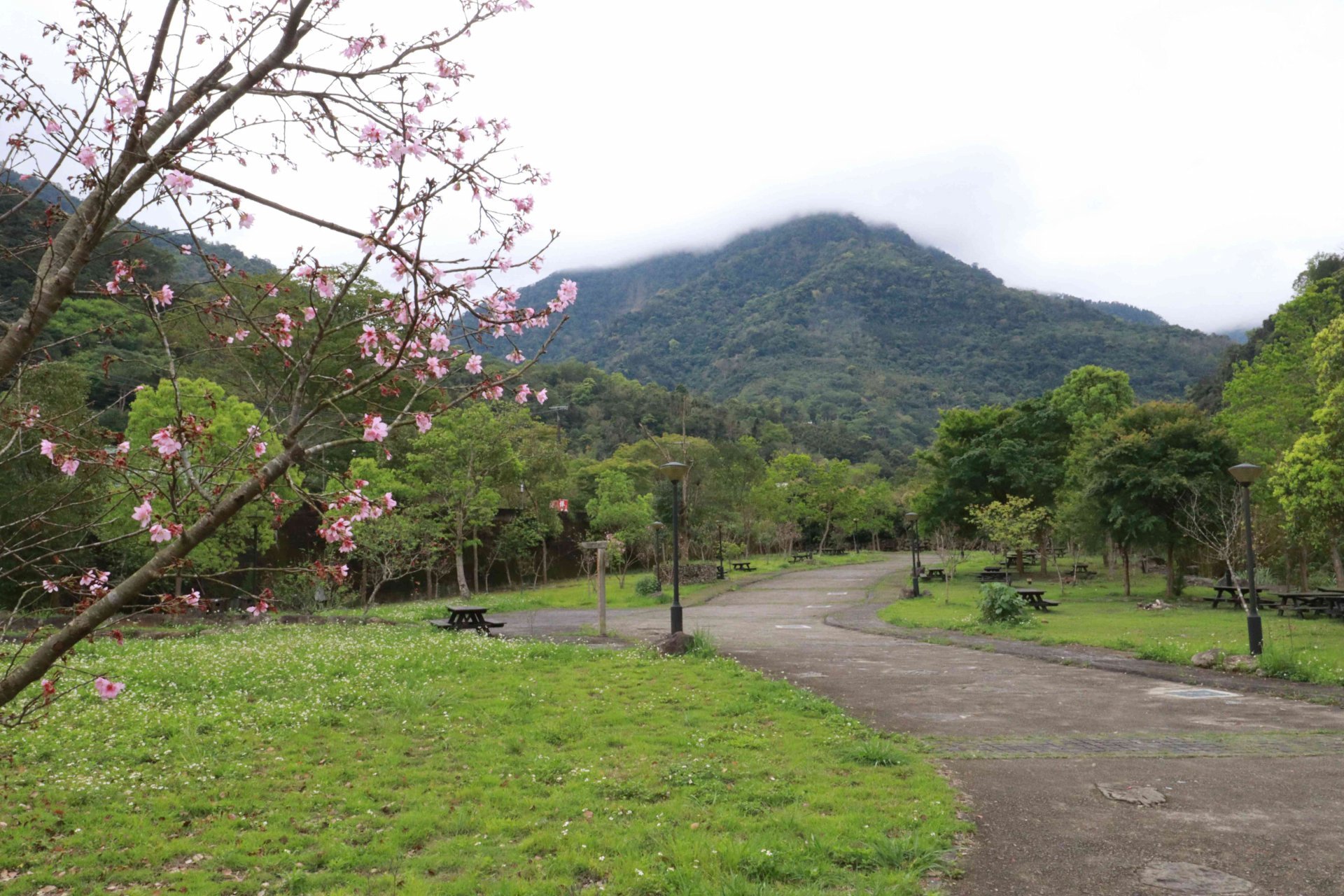
Walo Tribe
Walo is the former name of Donghe, which means “honey and sugar” in Saisiyat language. Walo Tribe has rich and diverse cultures and the majority of its residents are Saisiyat people. When integrating Hakka and Atayal cultures, the tribe still maintains the uniqueness of Saisiyat culture with both the myths and rituals fully preserved. Most of the Saisiyat people live in the Donghe Community of Donghe Village. There is the lowest number of Atayal people. As Atayal used to make their living by hunting and there were herds of deer on the east bank of Dadonghe most of Atayal people lived in Luchang, Luhu, Shibi and Donghe tribes. Being the second largest population, the Hakka lived scattered in Hengpingbei, Luailiao, and Donghe because of their belief center, “Yong Sheng Temple,” in the village. Hakka people used to fight with Saisiyat people side by side against the Japanese. Currently, WALO tribe usually refers to Donghe Village, Nanzhuang Township, Miaoli County.
There are many attractions in Walo region with the most iconic one being the “Donghe Suspension Bridge,” which connects settlements on the two banks of Donghe Village. On this 185m-long bridge, you can overlook the magnificent views of Dadong River Valley as well as the rocky cliff and gorge.
The other end of the bridge is Donghe Elementary School, which has the top tug-of-war team in Taiwan. However, because of a lack of funding, the team members have to raise funds by selling Fuzhou buns at Nanzhuang Public Market. Feel free to show your support if you happen to pass by!
There is another unique building of prominent Japanese style near Donghe Suspension Bridge. It was the former Dadonghe Police Station during the Japanese occupational period. The station was abandoned in 1984 and was transformed into Walo Cultural Property Hall in 2005 through renovation with subsidies from the Council of Indigenous Peoples. The hall showcases artifacts and historical data, documenting the cultural meaning and value of the former police station.
In addition to the obvious attractions mentioned above, there are numerous pieces of installation arts with cultural characteristics patiently waiting for visitors on the streets and in small alleys, which will tell a wide variety of indigenous lore or introduce traditional crafts.