Lishan Scenic Area
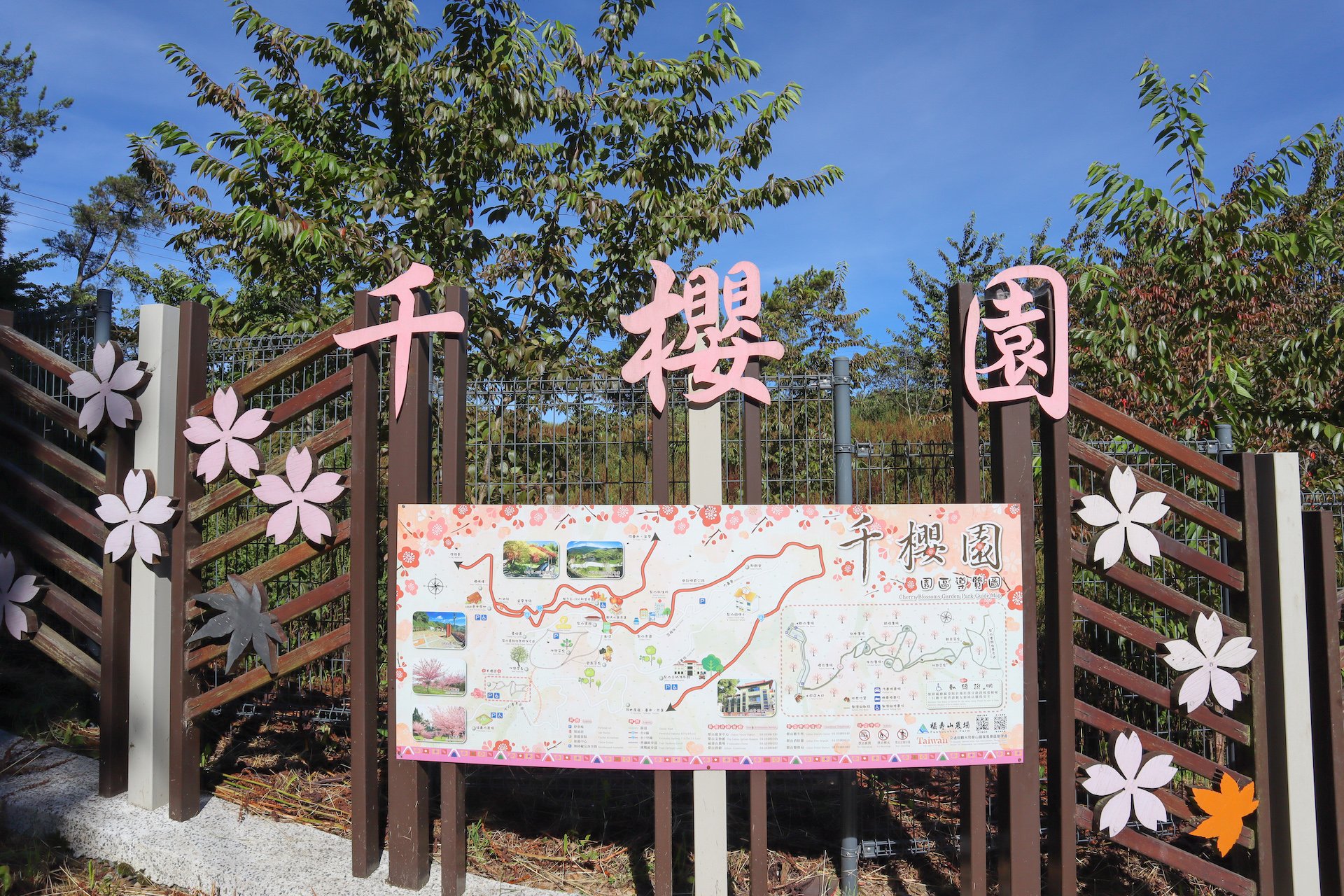
Cherry Garden
【Cherry Garden 】
Fushoushan Farm’s “Cherry Garden”, situated at a high altitude, was officially opened to the public on January 22, 2019. The 8-hectare farm is planted with a wide variety of cherry trees, including Taiwan cherry, Japanese Showa cherry and Fuji cherry that bloom in January and February, as well as Oshima cherry, Ukon and special varieties such as Ichiyo, Kiku and Gioiko that bloom in March and April. There are approximately 6000 cherry trees, each variety blooming in a different season. During the cherry blossom, visitors can enjoy the sea of flowers in different shades of pink, as well as overlook the expansive mountain views. The garden has several pavilions decorated with the word, “LOVE”, in combination with the pink cherry blossoms, making it full of a romantic air. There are well arranged hiking trails and viewing decks in the Cherry Garden ecological landscape park, all of which are nice spots for enjoying the cherry blossoms. The garden also provides barrier-free ramps for visitors with physical disabilities to enjoy the beautiful scenery more easily. As there is no restroom or trash can in the garden, visitors are advised to go to the restroom before entering the garden. Do not litter in the garden, and take away your trash to maintain the garden’s cleanliness and beauty.
【Fushoushan Farm 】
Fushoushan Farm is situated between 2,100 and 2,614 m a.s.l., and surrounded by the mountains of the Central Range and the Xueshan Range. The Farm boasts views varying with changing seasons, and scenes may even change several times within one day. In spring, the pinkish flowers of cherry, plum, peach and apple trees dress up Fushoushan Farm enticingly. When summer comes, flowers bask in the sun, and cat’s ears redress the farm in orange, make everything seem livelier. As autumn sets in, maple leaves become beautiful layers of red, yellow or green, creating a romantic painting accompanied by the autumn breeze. During the cold winter, snow and plum blossom paint the mountain tops a breathtaking white. The farm covers about 800 hectares, and has diverse plants and unique field scenery, making it an ideal recreational area for the public.
Jesus Church
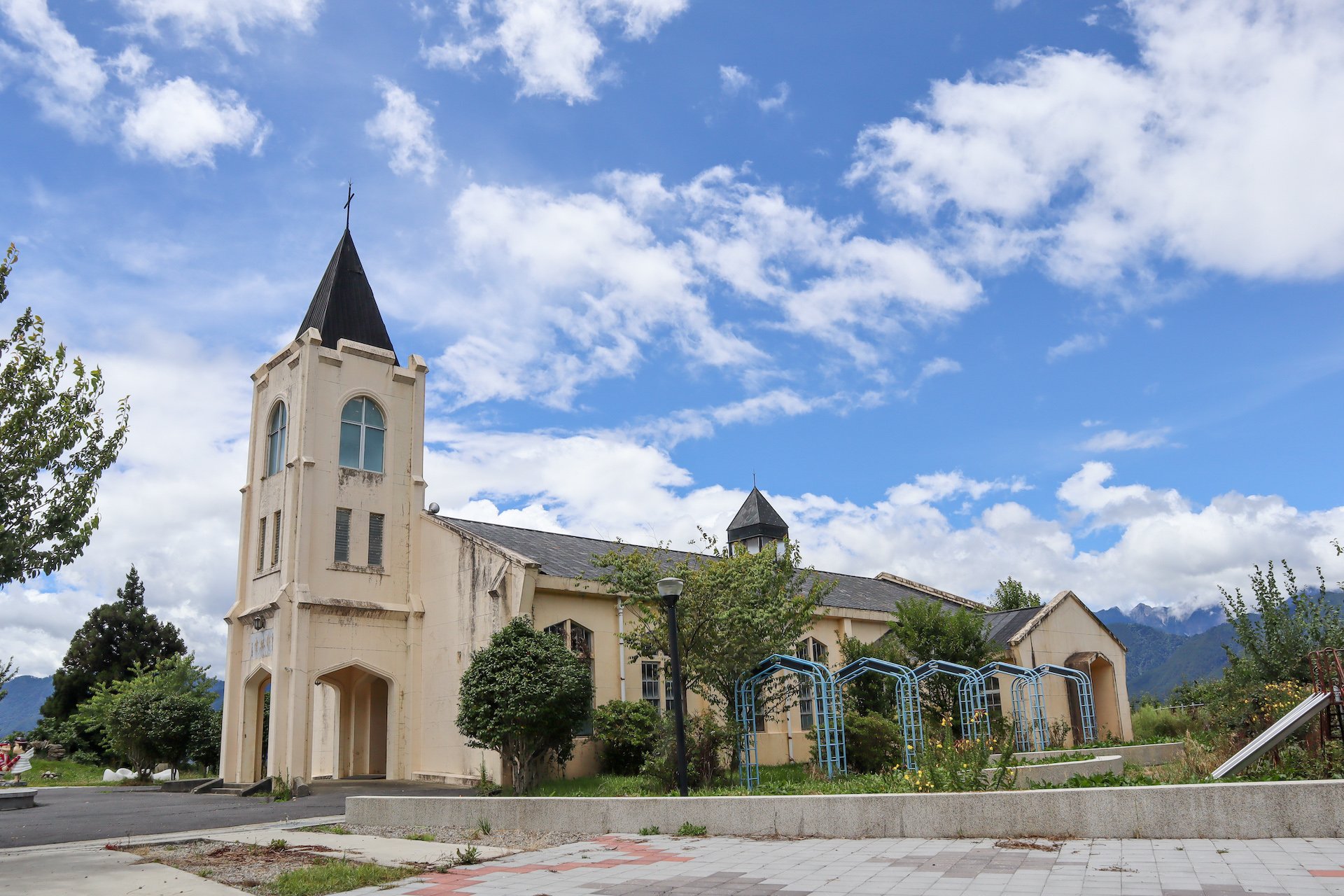
Lishan Jesus Church is situated at the very top of Lishan (2,011 m a.s.l.), making it the church boasting the highest altitude in Taiwan. Built in 1969, it was the private Church of late President Chiang Kai-Shek and his wife. After the 1999 Jiji earthquake, there were cracks on the exterior of the building, and it was open to the public after being renovated by Sun Moon Lake National Scenic Area Administration in 2003. In 2017, it was leased to a private company for management and operations. After renovation and lease, it has now become a popular and romantic instagrammable attraction, and can also be rented for wedding ceremonies. The Church is a prominent European building in the mountains, with six camellias planted on both sides of the entrance to represent the twelve apostles of Jesus. The Church also incorporates Atayal ornaments, with totems and patterns adorning the columns, giving it a style different from those of other churches.
The window right in front of the Church is the only one in the Church with a round top, while the rest have pointed tops. This window represents praying hands, where the arch symbolizes the shape of folded hands when praying. As the roof is made of Taiwan cypress, visitors can smell a faint scent of Taiwan cypress upon entering the Church. The pews are made of camphor timber. Some pews were damaged over the years and hence some front row ones have been removed. The stairs leading to the second floor seem suspended in the air but are actually very sturdy. Each step is made of marble, embedded 20 cm into the wall and then secured with bolts. Another special feature inside the Church is the rope hung at the dome-shaped hollow of the ceiling, where a 2-ton bell was placed previously, but was removed after the earthquake. The wishing deck at the back of the Church is the highlight of Lishan Jesus Church, where visitors can enjoy the panorama of Xueshan.
Guguan Visitor Center cum Hot Spring Culture Center
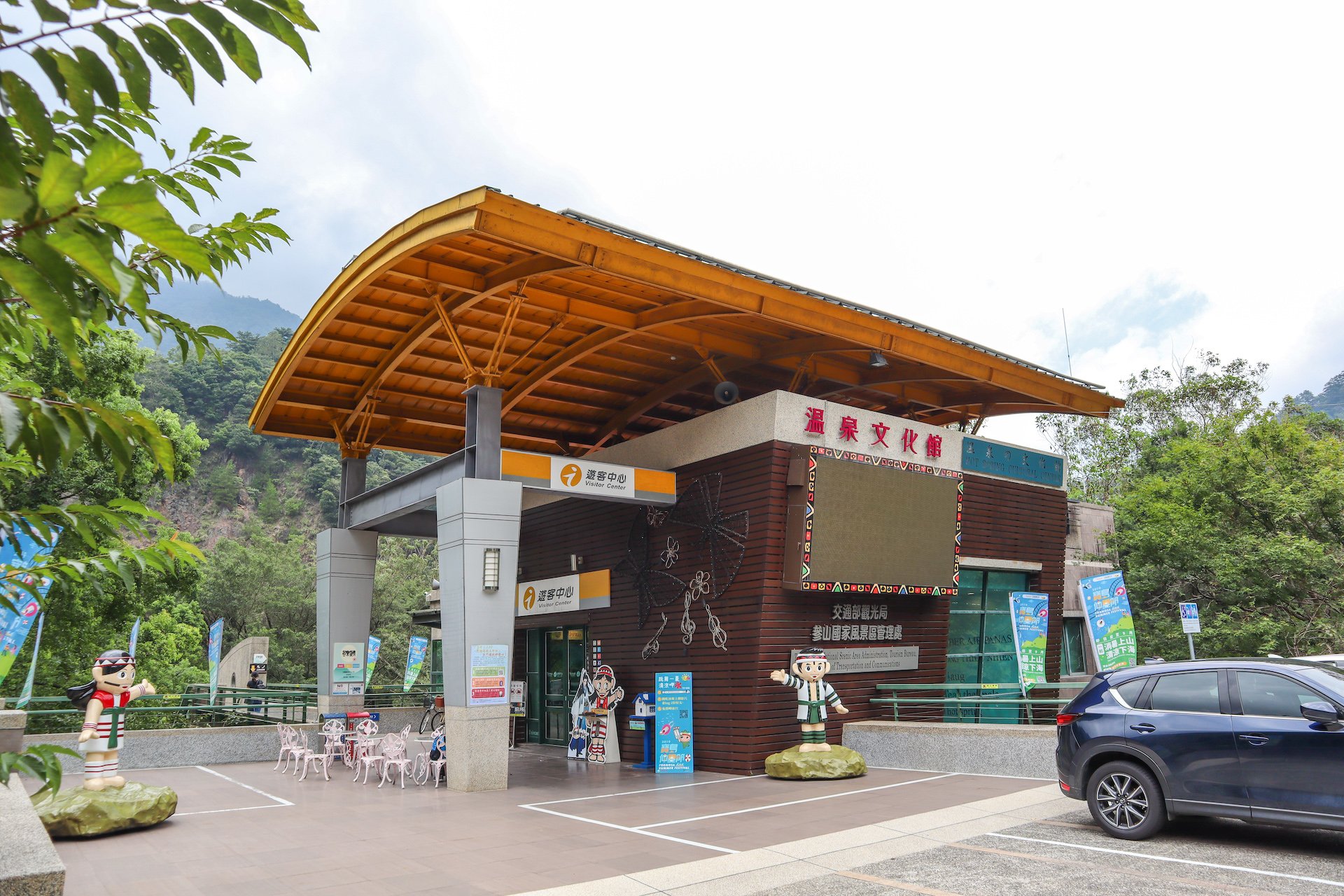
Guguan Visitor Center, which is also a hot spring culture center, is situated 500 meters from the entrance sign of Guguan Scenic Area. The Center’s theme is a hot spring, and it provides information, literature, forming process, types, etiquette, etc., of hot springs. The three-story building comprises first floor, basement 1 and basement 2. Besides information on hot springs, it also provides information on attractions, transportation enquiry, charging facilities, basic medical equipment, Atayal costume experience, etc.
The Center has Taiwan's tourism mascot, OhBear, dressed in hot spring fashion, and provides commemorative chops, where visitors can take pictures and affix the chops to capture the memorable moments of the trip. The seats and tables in the resting area are in soft light green, and face the park. Visitors can feast their eyes on a vast expanse of green by simply looking out, making them feel closer to nature. A painting of people bathing in the outdoor hot spring is hung on the wall of the center, depicting the enjoyable image of bathing in the hot spring while surrounded by the mountains. After learning about hot spring water properties, types and benefits, visitors can appreciate the ease and happiness portrayed by the painting, and be ready to embark on a relaxing hot spring tour.
The outdoor area offers vast greenery, which is suitable for people to chat, rest and picnic. Activities such as singing and dance performances are irregularly held at the square. The outdoor foot spa is the Center’s highlight, making it different from other visitor centers. Visitors can sit by the pool and soak their feet. One pool is pure hot spring, while the other also contains doctor fish, which will nibble and tickle your feet. It shall be noted that large or sudden movements may scare the fish away.
Shaolai Trail
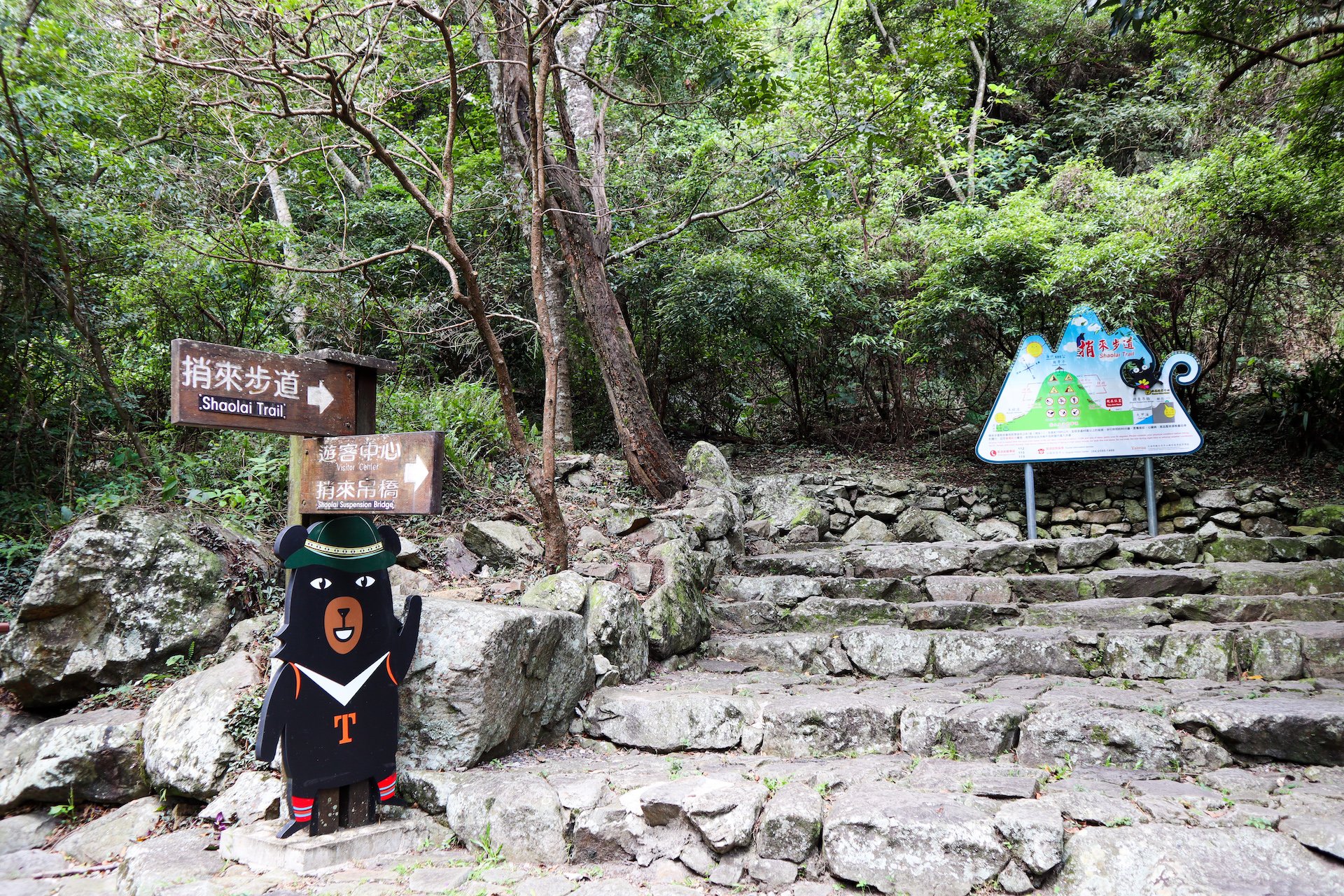
Guguan Shaolai Trail, situated in Heping District of Taichung City, is named after a local tribal chief (“Shaolai”). The 1500-meter trail leads visitors directly to a viewing pavilion at the top. Built along the mountain, the trail is a steep climb, and some parts are much steeper than others. Visitors are advised to consider their own physical condition before taking the trail.
Walking on the trail, hikers can enjoy the lush greenery and beautiful views of Guguan along the way. However, some parts of the trail are geologically weak and prone to crumbling. Though reinforced with wire mesh, visitors are still advised to speed up when passing the area. There are two resting platforms along the way for visitors to rest and enjoy the views. The trail is open throughout the year, offering different scenes in varying season, with never-to-miss views such as cherry blossoms in early spring and color-changing maple leaves in autumn.
There is a viewing deck at the end of the trail for visitors to rest a while. The return trip is a steep descent and requires strong legs. Next to the viewing deck is another trail, which leads to the entrance of Mt. Pojinjia Trail. It shall be noted that as this trail is steeper and more difficult to hike on, it takes at least 7 hours for a round trip.
The trail has two starting points, leading to Guguan Suspension Bridge and Shaolai Suspension Bridge, respectively, and visitors can see the spectacular Dajia River Valley from the bridges. Guguan Suspension Bridge leads to Guguan Bridge, while the other end of Shaolai Suspension Bridge leads to Guguan Hot Spring Park, where there is a free foot spa for visitors to rest their tired legs. Do remember to wash your feet clean before entering the foot spa. When the cuticle is softened after soaking for 10 minutes, visitors may then enter the doctor fish spa. Move slowly and gently so as not to scare away the fish.
Just beside the foot spa is Guguan Visitor Center cum Culture Center, which provides relevant tourist information. There is also a series of guided tours on Hot Spring Park, whereby visitors can gain some new knowledge before and after hiking.
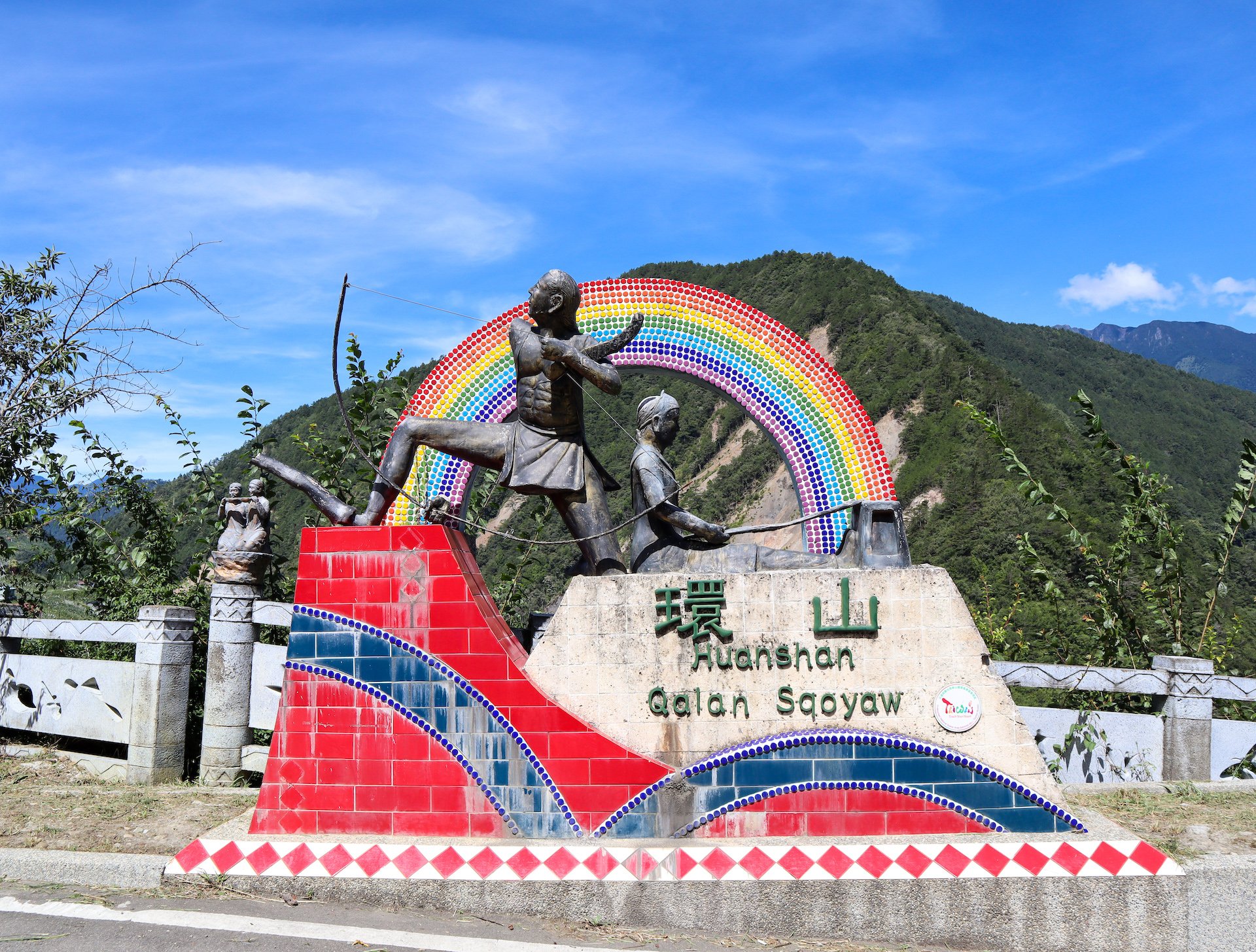
Huanshan Tribal Village
Huanshan Tribal Village is also known as “Sqoyaw” in the Atayal language; it was called “Xinshe” during the Japanese colonial period. Situated at the upstream of Lishan Dajia River, the village belongs to Heping District of Taichung City. It is surrounded by mountains, such as Nanhu Mountain and Xue Mountain, hence the name (Huanshan is literally “surrounded by mountains). Each season has its own characteristics: there are peaches and plums in spring and honey pears in summer, leaves change color in autumn, and sweet persimmons ripen in winter. The tribe consists mainly of Atayal people, and visitors can feel the rich Atayal atmosphere upon entering the village. The bronze statue of Chiang Kai-shek in Pingdeng Elementary School follows the custom by putting on tribal costumes. The residents of Huanshan Tribal Village strive to preserve the traditional culture, which can be seen from the various types of stone carvings on the guardrails at the road entrance, each of them depicting different customs and stories. Atayal Heritage Museum, set up by Atayal princess, Madam Zhan Xiu-Mei, houses Madam Zhan’s personal collections, including sambar deer head specimen, bow and arrow, loom, pictures of facial tattoos from the old times, etc., in the hope of preserving and showcasing the history of Atayal. As its climate is suitable for wisteria growth, the government assists Huanshan Tribal Village in becoming a “Wisteria Mountainous Town.” Though the wisteria tunnel has yet to be completed, the wisterias planted earlier by the tribal people bloom with the sun and rain, decorating Huanshan Tribal Village, whether shrouded in mist or basking in the sun. Besides the adornment of wisterias, there are also painted walls in the village, and the stone carvings on the guardrails complement the theme, bringing out the features of the tribal village like a beautiful young Atayal girl weaving cloth.
Fish Protection Trail is an ecologically-rich creek near Huanshan Tribal Village. The trail travels along Dajia River, and passes by three suspension bridges. The trail will lead visitors to a wide variety of plants and insects as well as alpine fish species such as Taiwan ku fish and Taiwan shovel-jaw fish swimming in the creek. The construction of Fish Protection Trail is an ongoing project, and we hope that the national treasure, Formosan landlocked salmon, will appear on the trail one day.
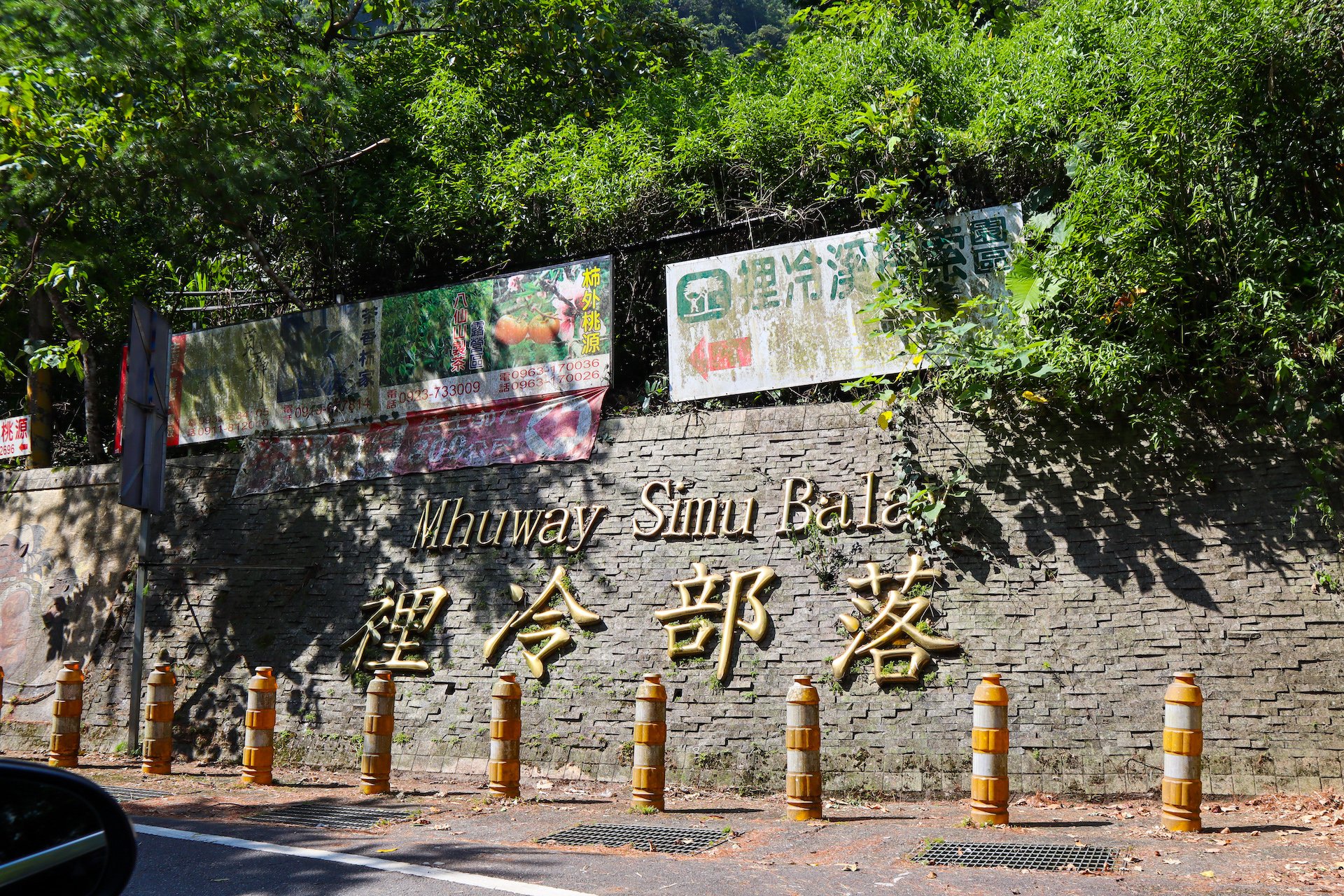
Lilang Tribal Village
“Lilang” means “people from the mountains” in the Atayal language. As the village sits against the mountains and near the creek, its weather is comfortable and pleasant, and water runs steadily in Lilang River all year round, passing various tribal villages. As part of the river bank is near the road surface, it attracts many visitors to engage in water activities during summer. Attractions, such as Seven Heavenly Waterfalls, Four Warriors White Pine Trail, Basianshan National Forest Recreation Area and Lilang Sea of Clouds are popular among hikers. As Lilang Tribal Village was developed much later, it still retains rich and diverse fauna and flora. Lilang Forest Road is a natural ecological classroom, where visitors can easily spot native plant species such as Taiwan red pine, Zuiho machilus and Indian charcoal trema, not to mention numerous insects (e.g. butterflies), birds and frogs.
【Forest road with fluttering butterflies】
The 30-km Lilang Forest Road is situated above the tribal village. The trail is extensively planted with host and nectar plants of butterflies, making it a favorable environment for various species of swallowtail butterflies. During the right seasons, visitors will see the beautiful butterflies flying along the trail. At the 6 km point of Lilang Forest Road, there is a viewing deck in the tea plantation where visitors can overlook Lilang Mountains and may even see mountain fog or a sea of clouds if it’s your lucky day!
【Cultivation of local art 】
Walking in Lilang Tribal Village, you may hear the melodious music of jaw harp lingering in the woods. The sound of music will lead you to tribal musician Cheng Pao-hsiung, who is teaching visitors how to play the jaw harp. Through irregular exchanges and sharing, Cheng is dedicated to passing down Atayal tribe’s unique jaw harp culture. Dwelling privately in Pine Painting house in the tribal village, Master Huang Shun-Liang paints, practices calligraphy and meditates on normal days. Each piece of calligraphy in the studio is the work of Master Huang. The pine grove outside the studio seems to bring visitors into a romantic landscape painting.
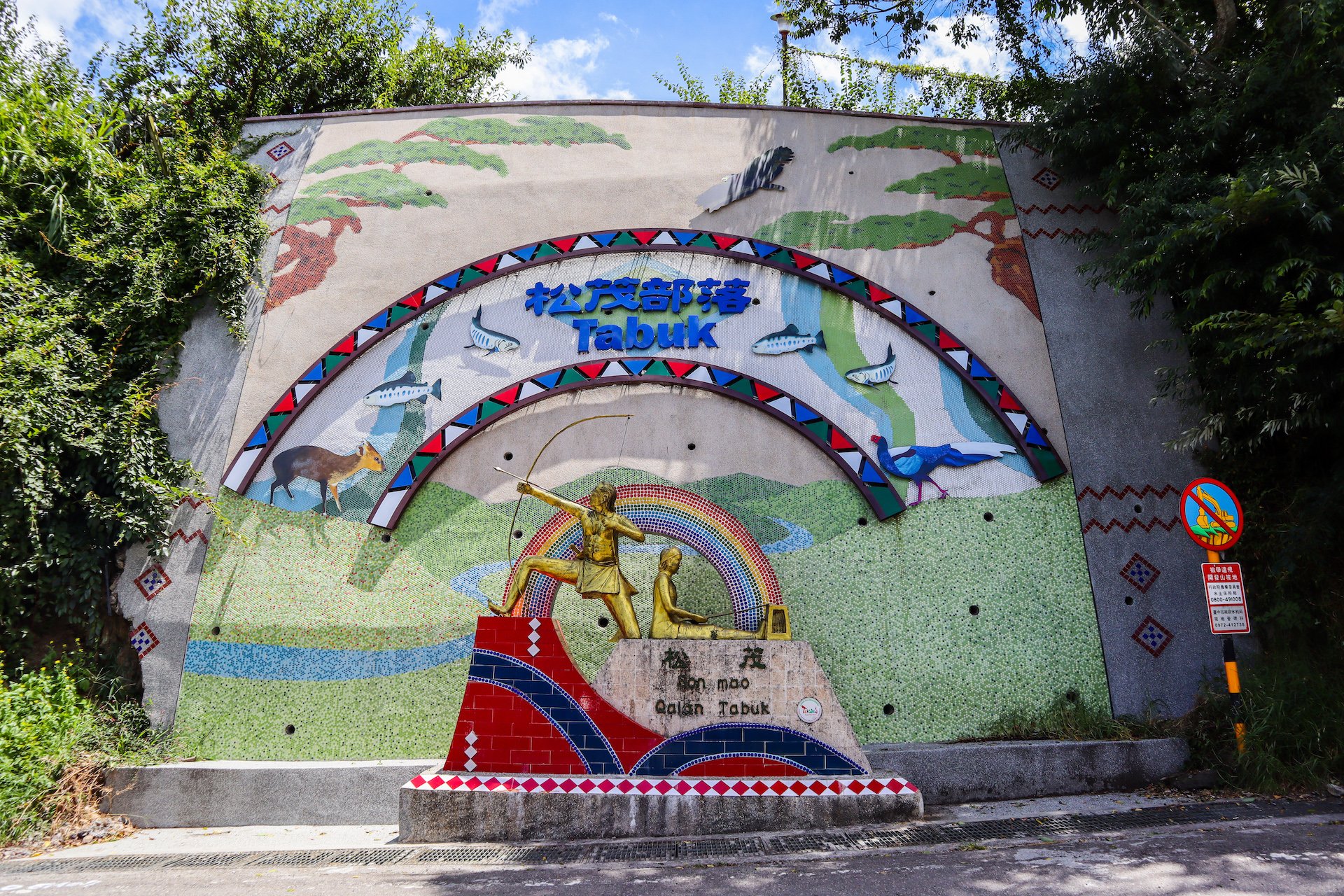
Tabuk Tribal Village
Tabuk Tribal Village is situated at the upstream of Dajia River, at an altitude of about 1,600 m, on a limited piece of land that is long and narrow. The tribal village is densely surrounded by pine trees, hence the name. During the Japanese colonial period, the tribal people settled in Sliant (Pan-shi) (today’s Huanshan Zhongxing Road Intersection of Pingdeng Village), hence also known as “Panshi Tribal Village” or “Rock Tribal Village”.
【Songmao Forest Road, an important habitat for wildlife】
Songmao Forest Road, also known as “Soulu Trail”, is a hunting ground for Tabuk Tribal Village. At the entrance of the trail, visitors can see groups of peacock pansy butterflies flying around, and the floor is romantic to walk on as it’s paved with pine needles. When passing Renshou Bridge along the way and overlooking from the bridge, visitors can see rows of majestic Taiwan Douglas-fir standing tall on the cliff. Songmao Forest Road is currently also an important area for restoring wildlife such as Reeves's muntjac and Formosan landlocked salmon. As you walk deeper along the trail, you will see the magnificent high-altitudinal columnar basalt. Columns and columns of rocks stand tall by the riverbank, which is indeed a work made possible only by Mother Nature.
【Delicious tribal food】
As the saying goes, “mountain dweller lives off the mountain, shore dweller lives off the sea,” Tabuk Tribal Village residents cook delicious and creative tribal cuisine using local ingredients, such as fresh mountain vegetables, free-range chickens and ducks from their own farms, and the famous sweet persimmon and peach. Every visitor will be able to feast on the most memorable tribal dishes.
【Iwan Workshop rediscovers traditional tribal culture】
Iwan Workshop is managed by Tabuk literati, Cai Chang-Guan, and his wife, Madam Song Yu-Lian; it mainly teaches Atayal weaving at present. The business philosophy originated from Madam Song’s weaving learning from many Atayal tribal villages, and her study of different weaving techniques. She hopes to bring the long-lost local weaving techniques and art back to Tabuk Tribal Village based on her extensive self-taught experience. Today, Iwan Workshop has become a must-visit place of the ecological tour in Tabuk Tribal Village, where visitors can have a more profound understanding of Atayal culture.
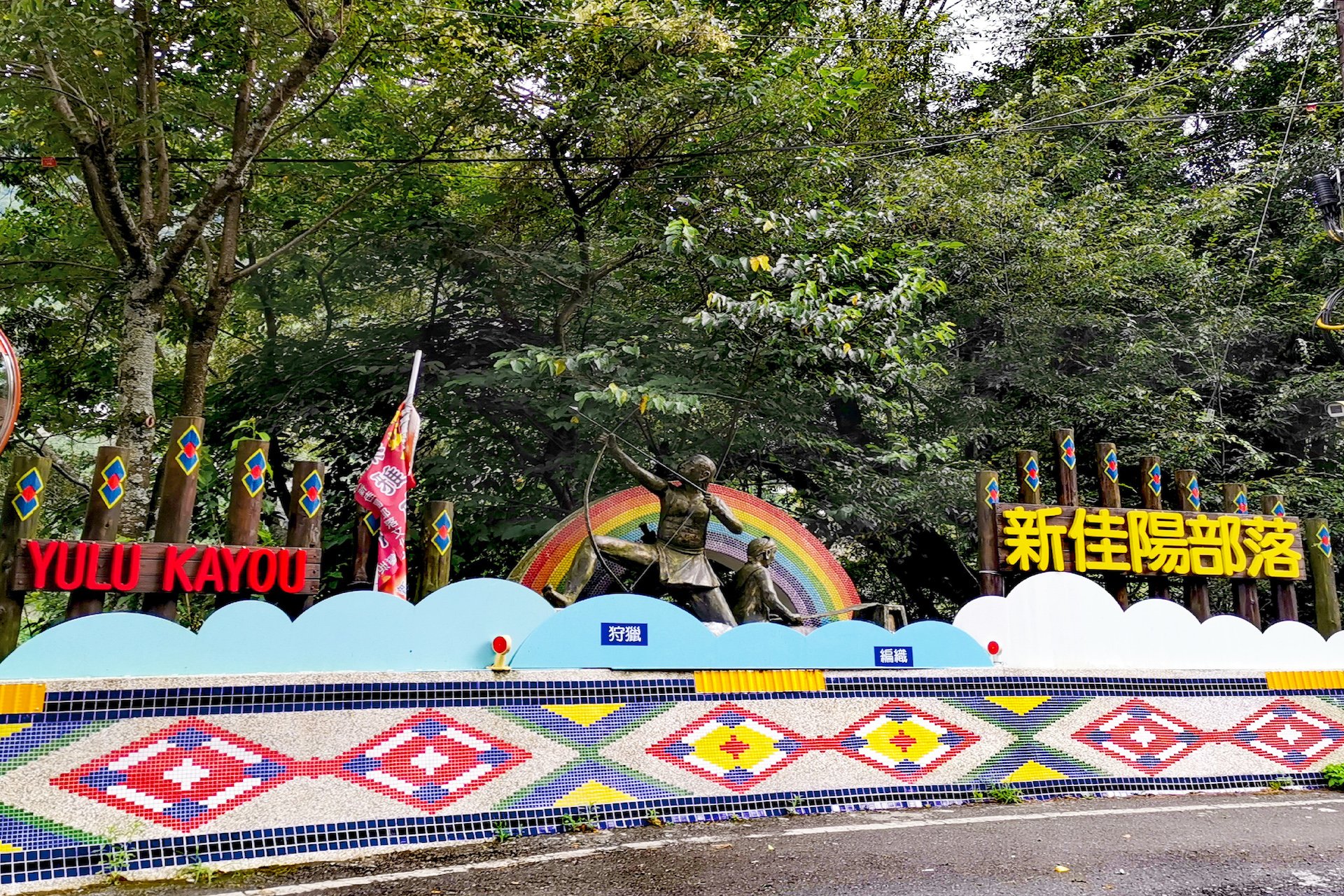
New Kayo Tribal Village
Kayo Tribal Village was formerly situated on a tilted alluvial fan at the opposite bank of Dajia River, a landform left from the last ice age. When the government built Techi Dam in 1969, this place became a catchment area unsuitable for habitation. Therefore, Atayal people were relocated to two places: one group moved up to the side of the highway and the other up slightly eastwardly to become today’s Old Kayo and New Kayo, respectively.
【History and Culture】
During the Japanese colonial period, Lishan’s Atayal people fought tenaciously against the Japanese. In order to conquer the residents and land, the Japanese invited the Atayal warriors to Kayo alluvial fan for peace negotiation. However, after the meeting, they massacred the Atayal people. After the incident, the Japanese were unable to subdue Lishan directly, and the tribesmen were even more distrustful of and angrier at the Japanese. The terrace became an island of demons in the hearts of the tribal people after the massacre. After a long period of resistance, the tribesmen, in consideration of the safety of the entire tribe, became the last indigenous tribe to be naturalized in 1926.
【Atayal Square】
Atayal Square is a square filled with Atayal totems; its buildings and signs are mostly made with wood. The most characteristic is the place where there are wooden signs with wordings, “New Kayo,” “Atayal Square” and “Yulu”, and other signs with Atayal patterns.
The square consists of two main areas connected by Jiayangxin Lane. One area includes a multi-purpose square, outdoor stage and viewing deck, while the other presents the indigenous peoples’ skills and art experience hall, forest knowledge zone and the warriors’ stairs. The restroom entrance is specially designed with doors that can be easily identified by male and female figures dressed in Atayal costumes, presenting a local touch. Besides providing cultural and artistic experience, the Square has a tall conifer to serve as an eye-catching natural landmark.