The Anus Monologues, People's Theater Training Workshop, Co-Creation Exhibition_Connection
Exhibition introduction
Sometimes, a certain sentence, a certain sound, a certain smell, like a portal, quickly pulls us into memories. These memories include farewells, reconciliations, melancholy and nostalgia, and some are encouragement.
Chrysanthemum's monologue, moving from sexual issues in the first year, to exploring the meaning of home in the second, and finally to the "connections" between people in the third year. Here, "connections" represent relationships, while "connections" are the events that occur within those relationships. This isn't just about the flow of personal emotions; it's also deeply etched with the pressures of social structures—class, ethics, gender norms, and the very conception of intimacy... These external norms and expectations, like invisible boundaries, squeeze those who "fall outside the mainstream definition."
Beyond these so-called "typical" situations, we try to open up our relationship with each other, to see and say: What exactly happened between me and the other person?
The most unspeakable and stigmatized things in everyone's heart are like chrysanthemums, burdened with seemingly filthy excretions and unspoken desires.
We believe that only when people begin to listen to one another, finding empathy and common ground, can tolerance and acceptance emerge. This is the starting point for resolving conflicts and discrimination, and the opportunity to move closer. It's not just about understanding the root causes of each other's suffering; more importantly, even if the wounds remain, how can we continue to live together, and even change together?
Do these stories touch upon connections in your life? We invite you to listen.
Story_Suicide Note
When I first discovered carcinoma in situ, I started writing a suicide note.
Every once in a while, I'd write another one.
After a positive test, a follow-up appointment, and finally quitting, I'd write another, always to my mother.
Today's note looks like this:
"To Mom:
I truly love you. It's not your fault that I made this decision. If one day you weren't sad, I would be very happy. I've experienced a life you might not agree with, but I still love you. Thank you for giving birth to me. I don't know how sad you are, but I truly cannot endure the possible suffering in the future. I hate myself for causing you pain. If possible, I would love you again in the next life."
By FAN
Story: Reconciliation with Dad
I knew I was gay very early on. In elementary school and junior high, I heard my parents discussing in their room how a coworker at a restaurant had seen me say I was gay. When they mentioned those three words, they fell silent. They just kept asking me if I was gay, if I was a pervert, and why I didn't get married.
When Ya Ting and I got married, neither of our families came, not even siblings. It was colleagues and friends who showed up, as if we were orphans.
My parents grew up in a rural Hakka village in the mountains. I once heard the village chief ask my father if he wanted to participate in a model father recognition program because he was a social worker and had a doctorate. But he declined. I wondered if he was embarrassed by my homosexuality and worried he wouldn't know how to face it if someone checked my credentials.
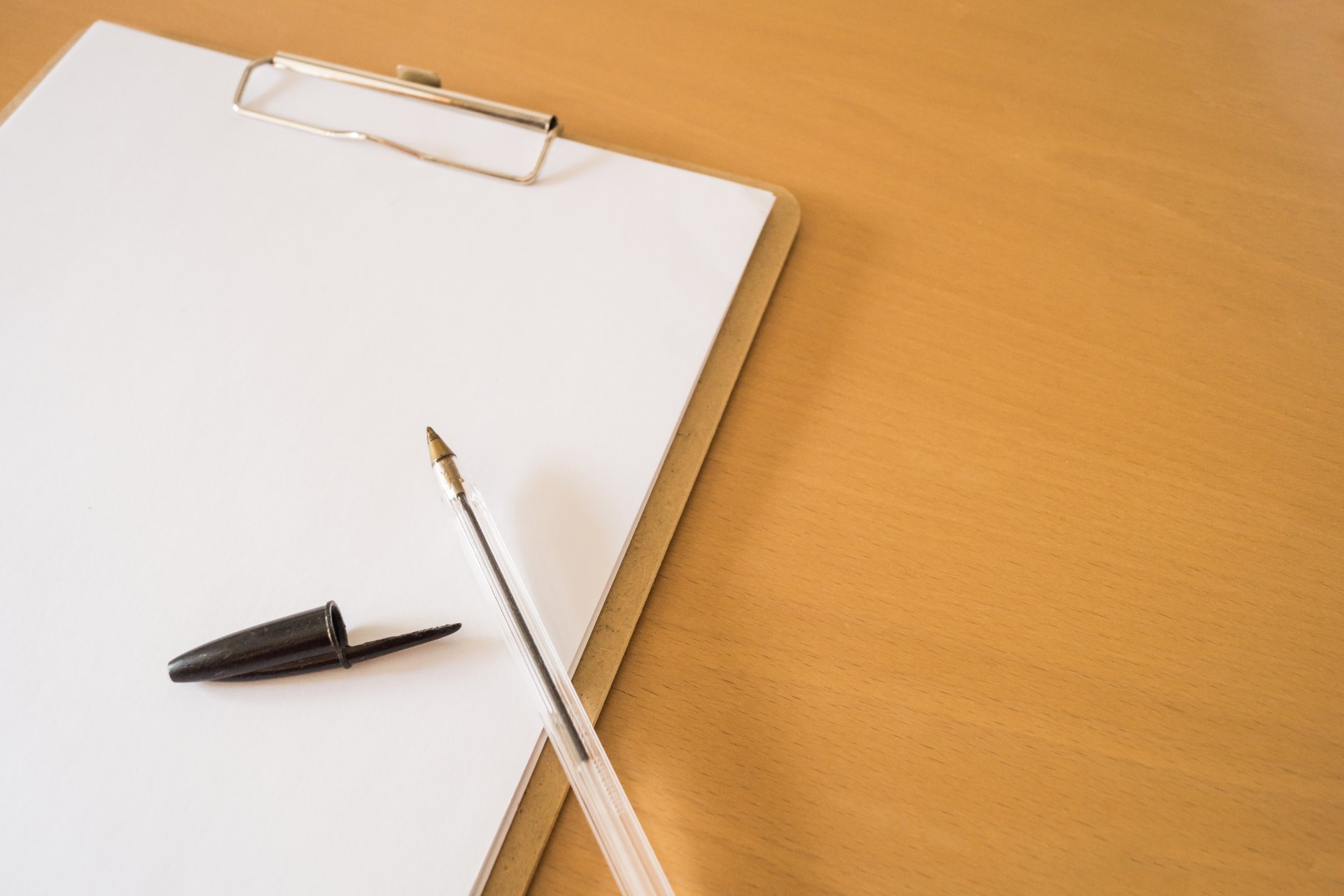
Last year he had a tracheotomy and couldn't speak, so my sister took a clipboard and put a lot of A4 paper on it and asked him to write what he wanted. My father only graduated from elementary school and couldn't read very well, so he often held the pen in his hand, stared at the board for a long time, and wrote down a bunch of phonetic symbols and typos. But in fact, he didn't know how to write phonetic symbols very well, so we often had to guess what he was writing and kept asking him. If he guessed correctly, he would open his eyes wide and look very happy. Sometimes, when we really couldn't guess, he would give up and explain again helplessly.Once, I took Yating to the hospital to see her father. After I left the ward, Yating stayed with him. Later, Yating told me her father had asked her, "Are you happy?" He had asked me about this, too. I told him that Yating's parents were very kind to me, always buying me two gifts, and that I was eating at their house.
That was when I finally understood that it wasn't that my father didn't love me, but rather that his upbringing and traditional culture made it difficult for him to overcome it. In his final moments, his biggest concern was whether his daughter would marry into a family that would treat her well and provide her with a good home. Only then did I truly understand and reconcile with my father.
Story_The Lost Home and Father
My father passed away eight years ago.
A few years ago, I had a dream.
I rode my bicycle from my childhood home to the International House to see an exhibition, but when I came out, I realized my bicycle was gone!
I was so nervous I opened my eyes, only to realize it was all a dream.
The bicycle was gone; it was a dream, a fake one.
What was truly gone was my home.
Last year marked the 30th anniversary of Daan Forest Park.
My childhood home was right where Exit 5 of the current Daan Forest Park MRT station is.
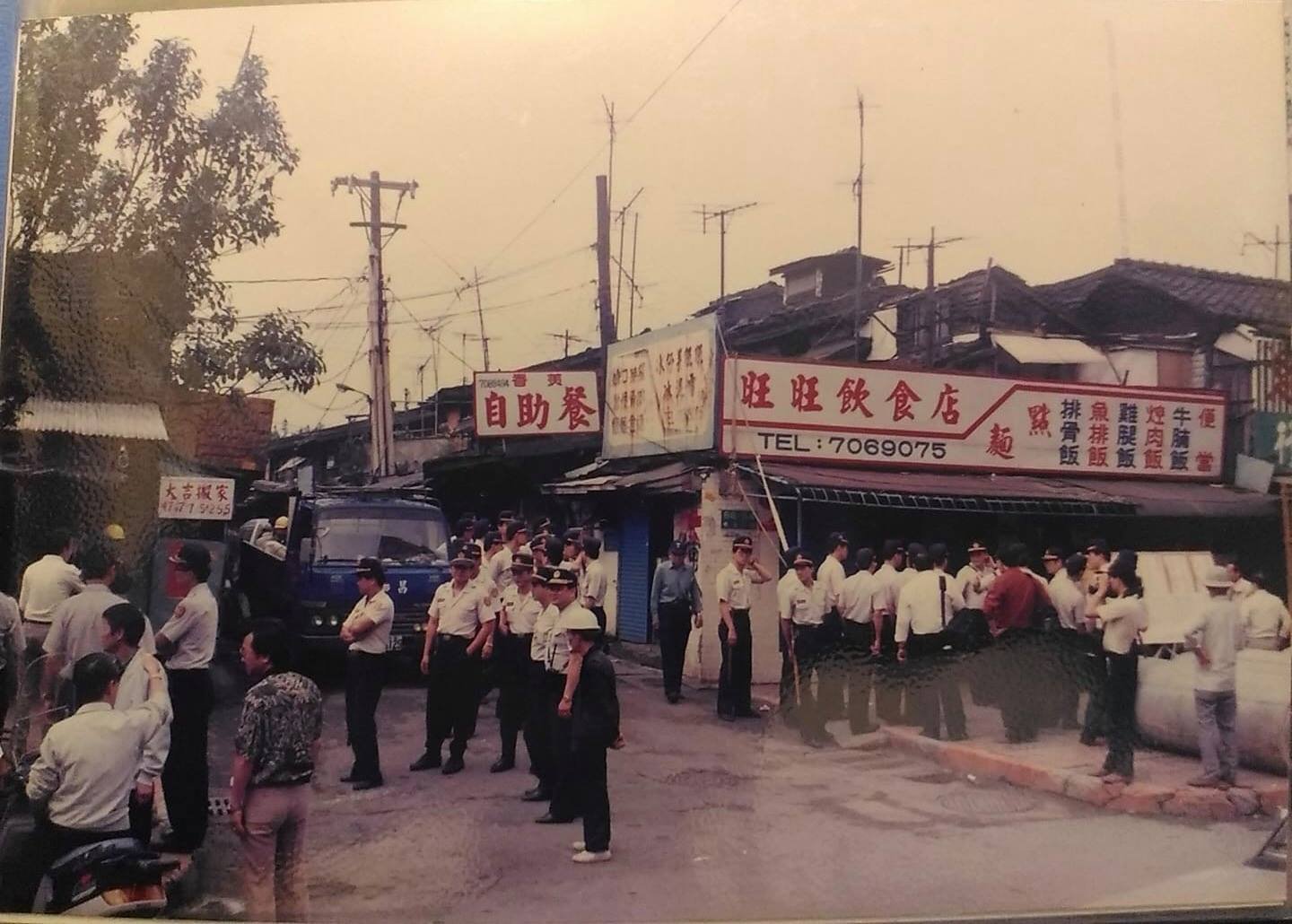
It was a one-and-a-half-story red brick and wood building with a black tile roof, an illegal structure. Across Xinyi Road from it stood the Bank of Taiwan dormitories and luxury apartments. In Daan District, I often remember seeing Japanese children carrying leather backpacks to school and playing baseball with leather gloves. When we played baseball with the neighborhood kids, we used newspapers folded into gloves to catch the ball. The ball was made of a plastic bag tied with rubber bands—very improvisational. When I was in Xing'an Elementary School, I felt a bit self-conscious about living next to an illegal structure. After school, I would go in through Lane 56 and go home through the back door.
My father's ancestral home is in Yangxin County, Hubei Province. At the time, his older brother had a wife and children, so he enlisted in the army in his place. He followed the troops to Northeast China and finally arrived in Taiwan at the age of seventeen. Without veteran status, he became an apprentice laundryman. It was there that he met my mother, working at a large laundry factory. My mother was born in the rural village of Zaoqiao, Miaoli. As the eldest daughter, she began helping the owner of the laundry factory with childcare and cooking before she even graduated from elementary school, earning money to send back home.
My father later opened his own laundry shop. The sign indicated the back door address as No. 5, Lane 5, Alley 5, Lane 56, Section 3, Xinyi Road. After the road was widened, the address became No. 3, Section 3, Xinyi Road. This laundry shop raised my three brothers, and my father was our family's spiritual pillar.
About a hundred meters behind my house, there's a yard that was once the filming location for the TV series "The Wrong Car." Back then, I often saw the lead actor, Sun Yue, coming to film, driving a beat-up Sanyang Ximei, parked in front of my house. The TV series features house fires and demolitions, and Sun Yue plays "Uncle Mute," a veteran from the province who makes a living collecting scrap on a tricycle.
Fires are also a common occurrence near my home, almost at least once a year. After all, most illegal structures are made of wood, so fires or electrical faults can easily catch fire. Therefore, a fire station and a fire truck were stationed at the entrance of Lane 56. The used bookstore next to the fire station is the first generation of "Jiuxiangju."
Once, a fire broke out near my house. I rushed to close the gas tank and drag it out. As I unplugged the gas line, the remaining gas in the line instantly leaked out, creating a fireball that singed my eyebrows and hair, giving me a startling start.
In 1992, the day my house was demolished, I went to take pictures and even took down the house number plate to keep. Perhaps there's a sense of longing, but we boys can't quite articulate it. But this dream brought me back to that place and the stories that happened there.
That home is gone, and my father is gone too, but they will always exist in my memory and in my heart.
The connection between my family's story and the movie "The Wrong Car":
Such a familiar voice, accompanying me through many years of wind and rain. Never needing to recall, never forgotten. Without heaven, there would be no earth. Without earth, there would be no home. Without home, there would be no you. Without you, there would be no me. If you hadn't raised me and given me a warm life, what would my fate have been if you hadn't protected me? You raised me and spoke my first words with me. You gave me a home, letting me share it with you.
Excerpt from the lyrics of "Do you have any empty bottles to sell?", the theme song from "The Wrong Car."
Story_The Skin of Isolation
I've always had a repulsive and unfamiliar relationship with my nipples. You could say I actually hate them and don't know how to deal with them.
I've heard of a condition called "Sad Nipple Syndrome," and I think these are what I have!
My story goes back to my fifth and sixth grade homeroom teacher. Back in those days, before corporal punishment was banned and gender equality and body awareness were at a high level, there were a wide variety of punishment methods. However, the method my teacher used left a deep shadow on me for the rest of my life...
When the boys made a mistake, he would gather them in a row. The teacher would then reach out and, between his thumb and index finger, pinch their nipples, twisting and pulling them forward. Thus, my nipples became a symbol of guilt and punishment.
To this day, I'm still ashamed to touch them, ashamed to expose them to the light of day.
Especially for me, raised in a Christian family, realizing I was gay after that elementary school experience. The Christian anti-gay attitude and sexual chastity imposed upon my body, mind, and spirit made my nipples the most filthy object in my own explorations of my body and my own experiences with homosexuality.
I absolutely avoid clothes that accentuate my breasts, but when I have to wear thin workout clothes for exercise, I either wear something underneath or use breast stickers...
I hate it.
But, even more, I hate the feeling of hating it.
Story_Live Fearlessly as Yourself
For so long, I've carried so many labels, so many expectations, both from others and from myself. Sometimes, I can't even tell what kind of person I truly like.
I need to prove to my family and society that I'm worth living. I need to be "useful," "well-behaved," and "successful." Yet, after repeatedly trying to conform to society's values, I've failed again and again, and I'm unhappy. I apologize for being born human.
As a queer person (non-heterosexual), I have been labeled "feminine" and "perverted" by my family and society, and have been subjected to various humiliating words, actions, and expressions in different places because of my Asian identity. I feel so tired and afraid. Why are so many people telling me how to live?
I wanted to find myself again.
When I encountered the art of drag, I saw the fearlessness of these performers.
When I was faced with the loss of my job, my marriage, and my self-worth, it was this group of drag queens who derisively called themselves "bitches" who gave me the light of life; when I felt like a loser, the queens laughed at their own and each other's failures, whether it was family, relationships, or makeup skills. Every real and powerful joke was accompanied by tears, hugs, and love. I felt that a group of people who were not accepted by the mainstream were still strong in facing the world and had warmth in their hearts, because we are all human beings, no matter who we love, what gender we are, no matter what we look like or what our physical characteristics are, we all deserve to live well in this moment.
Amidst countless tears, laughter, and moving moments, during my drag queen performances on television and in live shows, the inner self that once felt so sorry, so defeated, and so guilty has slowly, bit by bit, come back to life in this emotionally charged and vibrant journey. This time, I'm still practicing how to become a fearless and resilient queen. I feel that who I am right now is enough, and that life is worth experiencing, enjoying, and learning from in this moment. I'm grateful for all the failures and courage, and I'm grateful to the queens who have shown me how to believe in myself and strive to live my life to my fullest.
Hand In Hand Association of Taiwan
We come from every corner of society, and we have also fallen into the bottom of life on the road of life. Therefore, everyone has the experience of "receiving help" at different times and years. From this experience, we gradually move to helping each other and helping each other. Through studying together, we got to know each other through the process of "physical and mental addiction" and gathered this helping energy to establish the Hand In Hand Association of Taiwan.
We all receive help from each other, learn from each other, and then help others, but the process is a continuous cycle. There is no pure helper and no pure recipient. In life, we all move forward together. When we fall, someone will always Some people stop to wait for each other and lend a helping hand. The name "fellow travelers" means "walking side by side with life" and "moving forward, life is transformed, and travelers have no boundaries." I hope that in the process, we will continue to give to ourselves and others. The warmth, vitality and hope of life gradually give rise to the power of inner transformation.
We look forward to you growing, learning and changing the status quo together with us, and gradually breaking through yourself.
Since its establishment in accordance with the law in 2017, Travelers has started from the self and cared for life (self and others), through prison counseling, detoxification assistance, anti-drug propaganda, volunteer training, community companionship and groups, human rights education courses, etc. , in schools, prisons and communities, to convey positive self-worth, gender-friendliness, awareness and understanding of physical and mental addiction, thereby developing life education such as understanding of drugs, diseases (physical and psychological), and gender-friendly education.
Let us all be nourished in body, mind and spirit, establish good interpersonal relationships, and build a positive future.
If you agree with the philosophy of fellow travelers, you are welcome to support our courses and service plans