遙感林園(English)
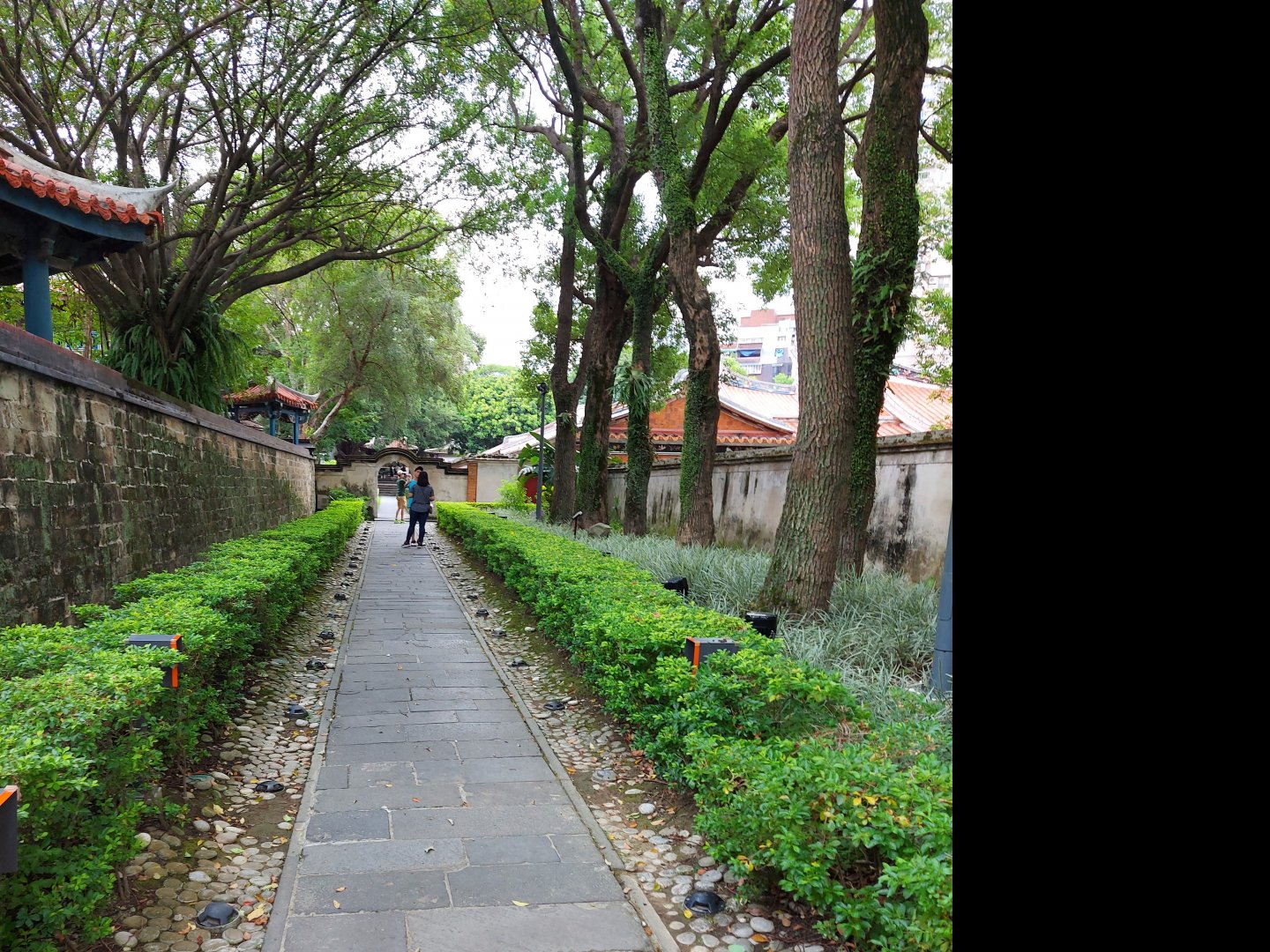
方亭 Square pavilion
The square pavilion at the end of Yingbin Avenue at the gate, you can see Yingbin Avenue, Jigu Bookstore, Paved Square, etc.
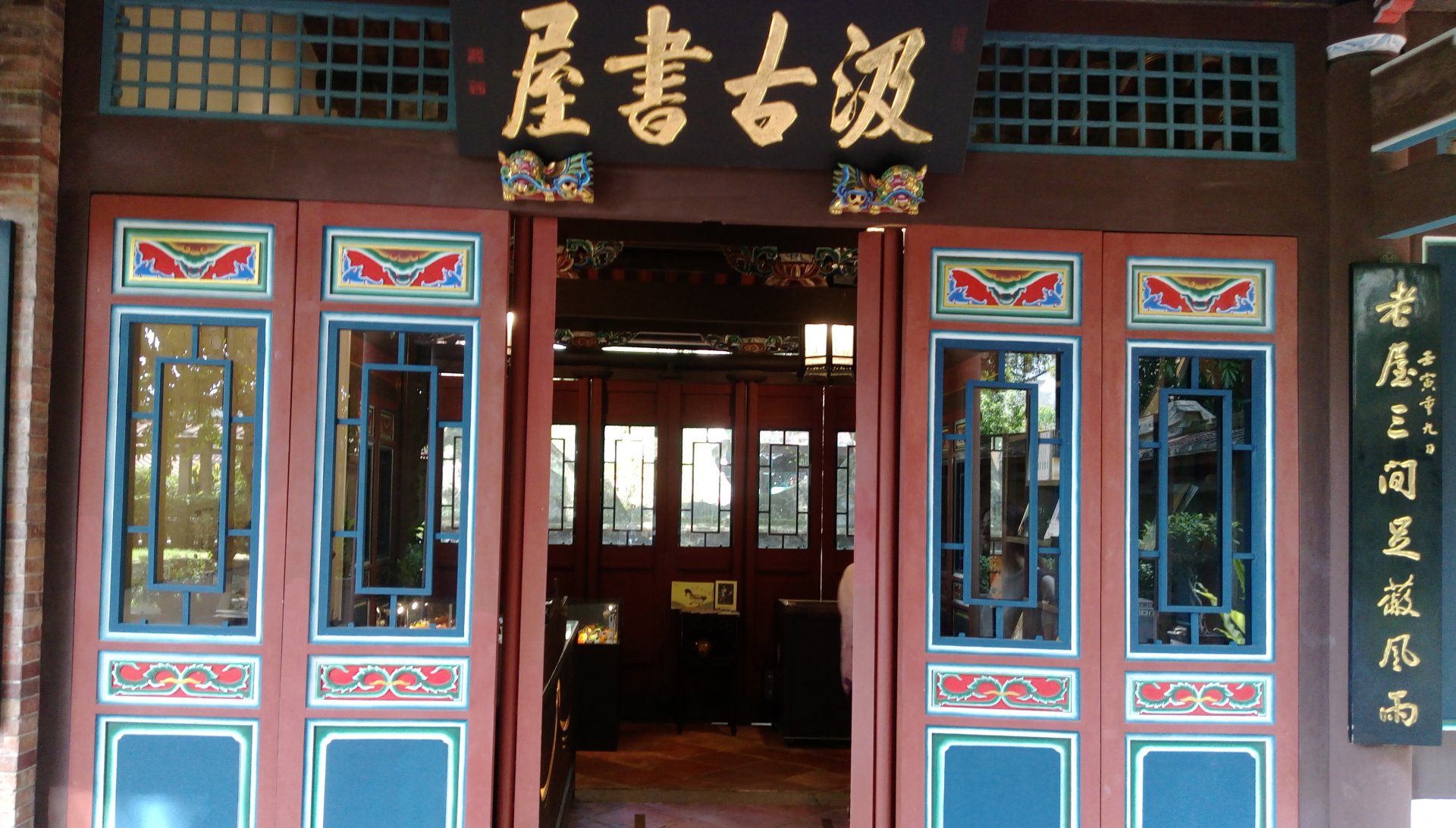
汲古書屋 Jigushuwu
Jigushuwu is a library for collecting books and study named after Jigu Pavilion of Mao, Tzu-Chin in the Ming dynasty.
The library is a three-yard building with a kiosk. In the rear there are lattice doors on which a slide guard is designed to block water from entering on rainy days and maintain indoor ventilation on sunny days. It is a mechanism for indoor humidity control. The lattice windows have a neat design to match the library purpose. The kiosk in front of the library is tall. It is said that the scroll roof design was influenced by south Asian cultures.
The bead tree grown outdoors flowers sharply in mid-March. When the wind blows by, flowers fly across like snowflakes elegantly and lovely, attracting many people to take photos. As a common endemic species, the bead tree is a deciduous tree found across Taiwan. In Chinese, the name of the tree is homophonous to “bitter romance”, making it an element for many writers to tell their sad love stories.
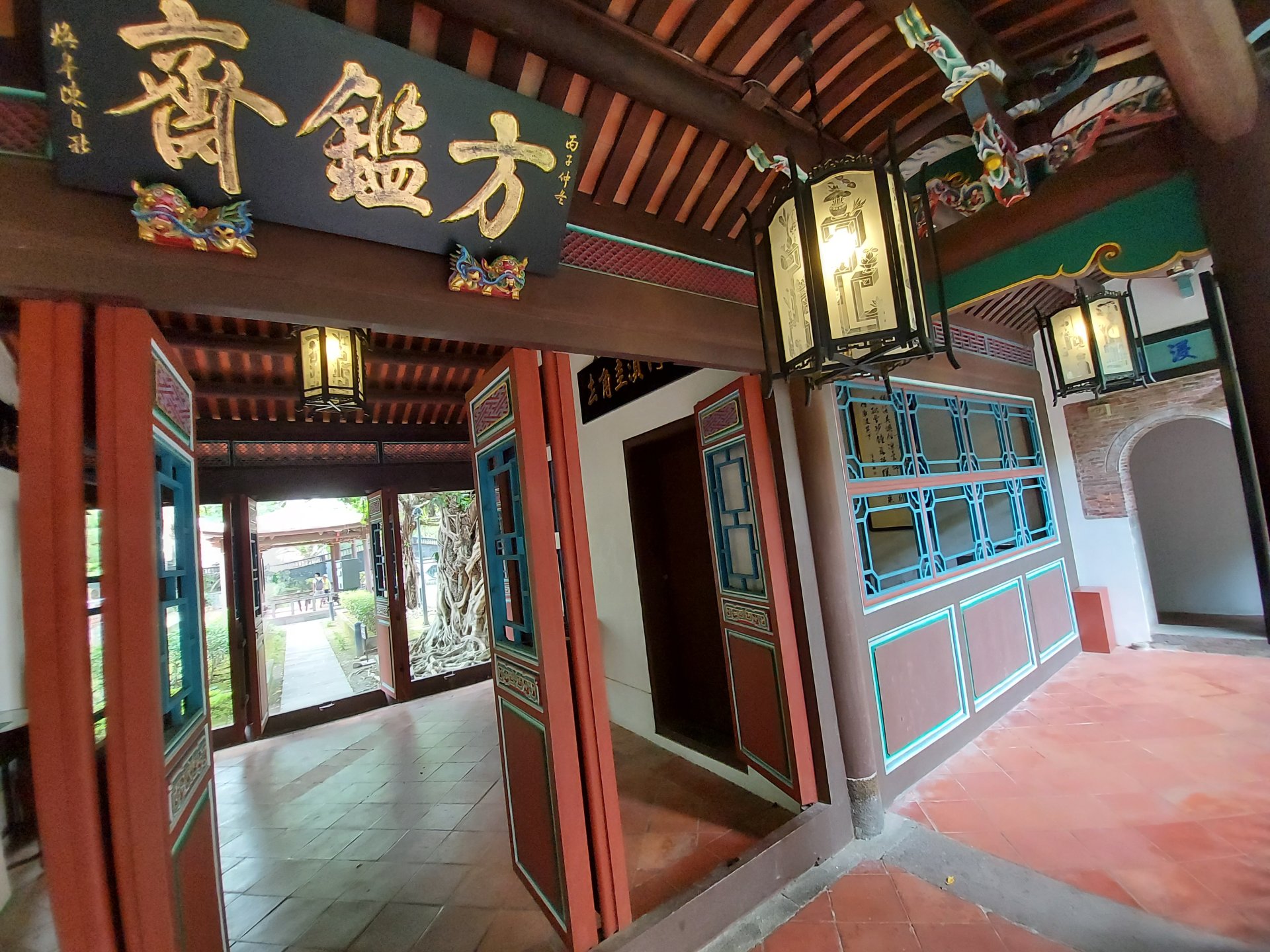
方鑑齋 Fangjian Study
A study, office, room, and chamber are auxiliary spaces attached to a main structure. These structures are very common and have different changes in traditional Chinese garden architecture.
Fangjian Study (lit. oblong mirror library) was named based on two lines in “Reflection of Reading”, a poem by neo-Confucianism master Chu, Hsi of the Song dynasty: The half-acre oblong pond spreads like a mirror, where the light and shadow of clouds float upon the surface”. It was the place where brothers Wei-Yuan and Wei-Jang of the Lin family studied.
With a pool as the center, the area is surrounded by the chamber, performing stage, cloister, curved bridge, and rockery. In the pool lying in front of the study stands a small stage. In the water, the reflections of the study and the stage interact, demonstrating the “scene matching” technique in traditional Chinese garden design. In addition, the square pool is surrounded by walls to trap sounds and voices in the stage to enhance the stage’s acoustic effect.
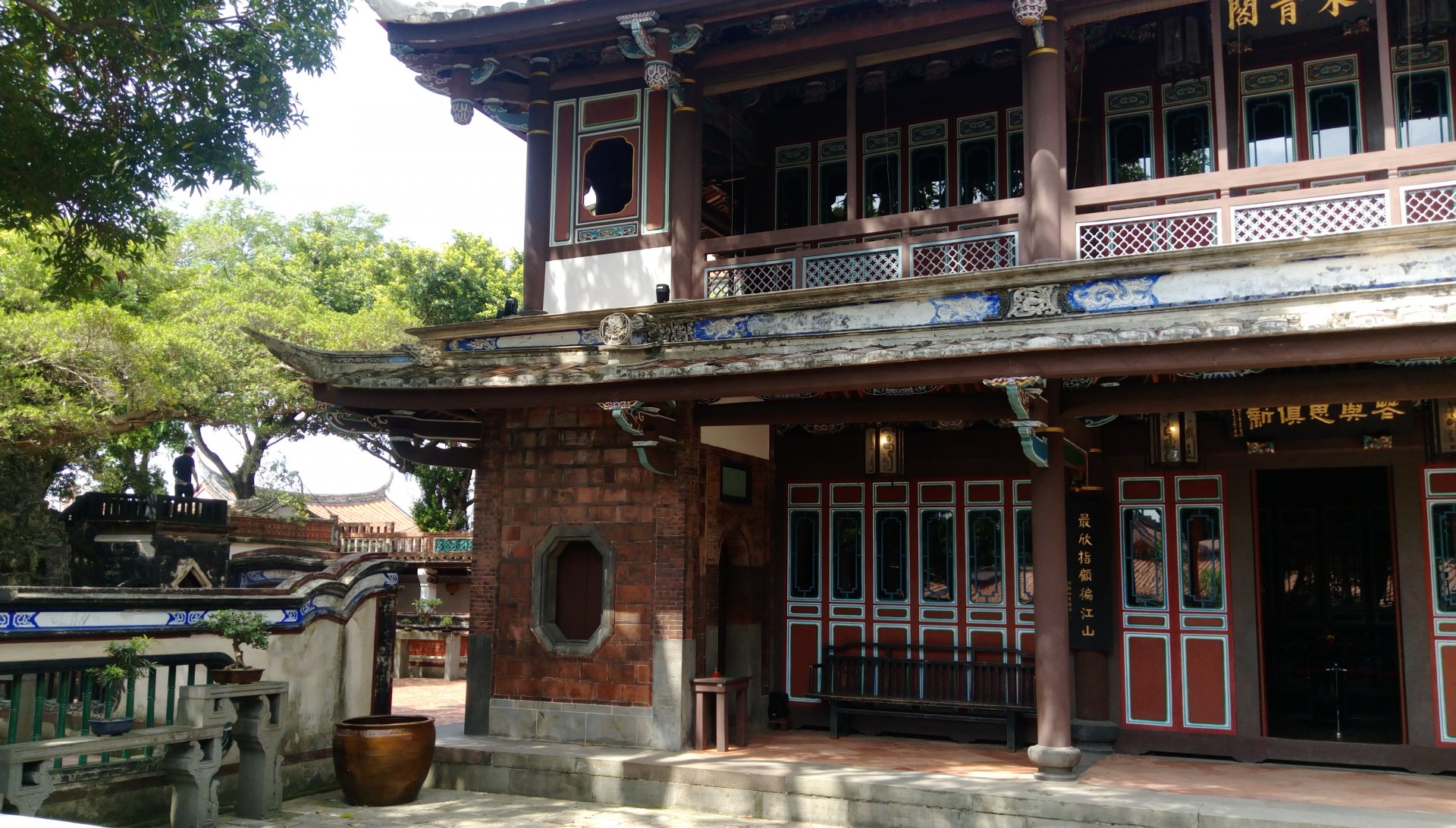
來青閣 Laiqing Hall
The “hall” is a tall building in traditional Chinese garden architecture. As it brings high visibility, most halls are gorgeously decorated, and there are different styles. It is an important sight in the garden, such as Guanjia Hall and Laiqing Hall.
Laiqing Hall here was a reception place in those days. Besides being a place for a short stay for guests, the two rooms on the second floor are ideal locations for an aerial view of the Rainbow-Moon Arched Bridge, Dingjing Hall, and Xiangyuyi.
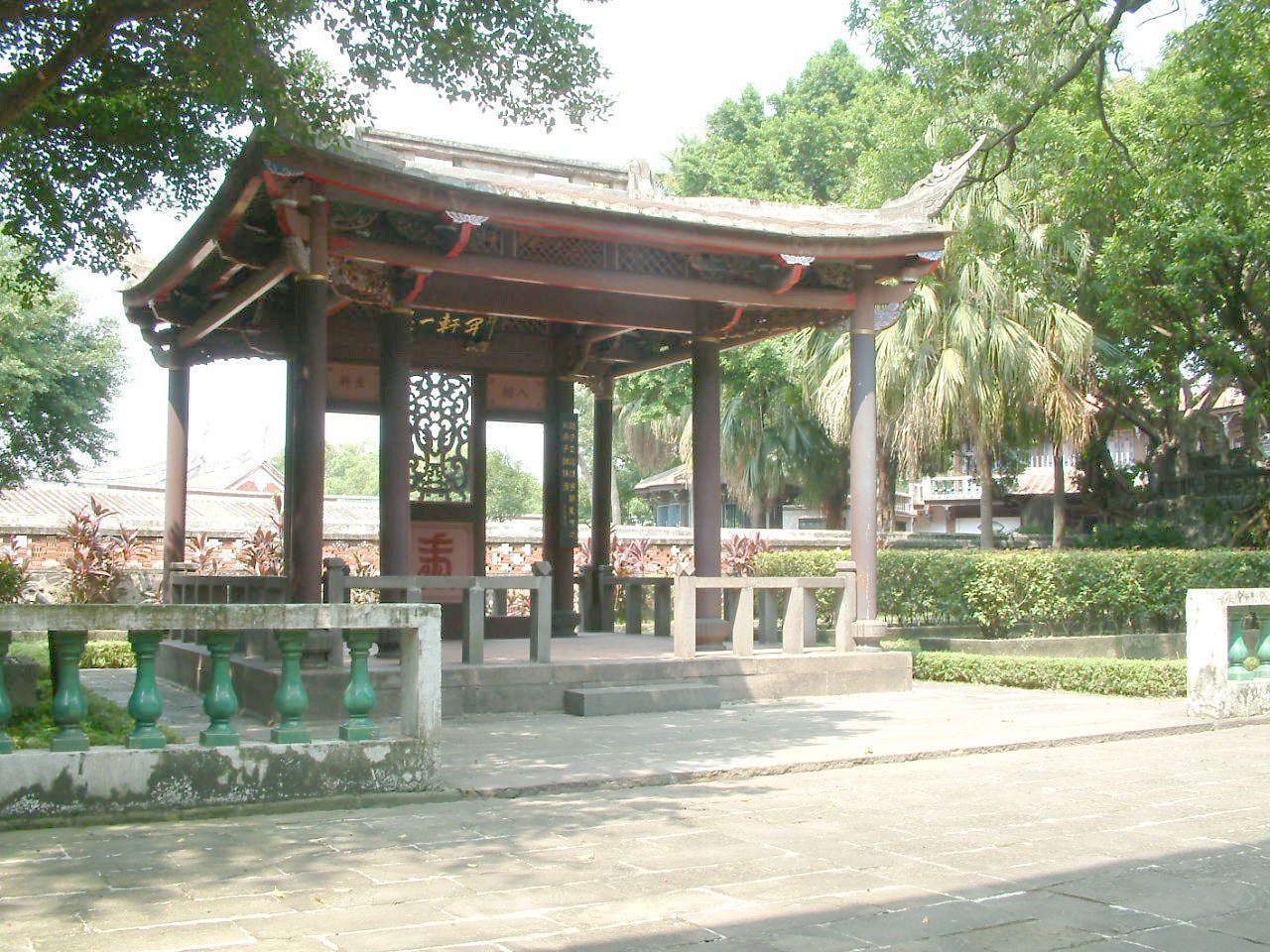
開軒一笑 Open the Windows With a Smile
In the past, people used to visit Laiqing Hall, the most beautiful building in the region, to look at the Datun and Guanyin mountains from afar. That is why they named the building “Laiqing”, meaning watching the green. Right in front of the building there sits a stage called “Open the Windows with a Smile”. As Laiqing Hall was the Lin family’s reception house, guests could live in the guestrooms on the second floor and watch Chinese opera being performed on the stage. As both the host and guests would praise great performances, the Lin family thus called the stage “Open the Windows with a Smile".
Apart from being supported by eight columns, double that of Fangjian Study, the stage is bigger for martial art scenes with more action. Today, the administration of the Lin Family Mansion and Garden often invites artists and performing groups to give performances on the stage for visitors to experience the beauty of history and culture.
The front garden and left and right courtyards of Laiqing Hall are separated by a cloud wall. On the wall, there are decorative open work windows of different patterns carrying different implications, such as the cauldron over fire symbolizing a “flourishing household”, and lotus in a bottle symbolizing “probity and integrity as government officials”. The decorative open work windows also provide a “less enclosed” partition of space. In addition, a leak window allows people to been seen indirectly to protect privacy to certain level.
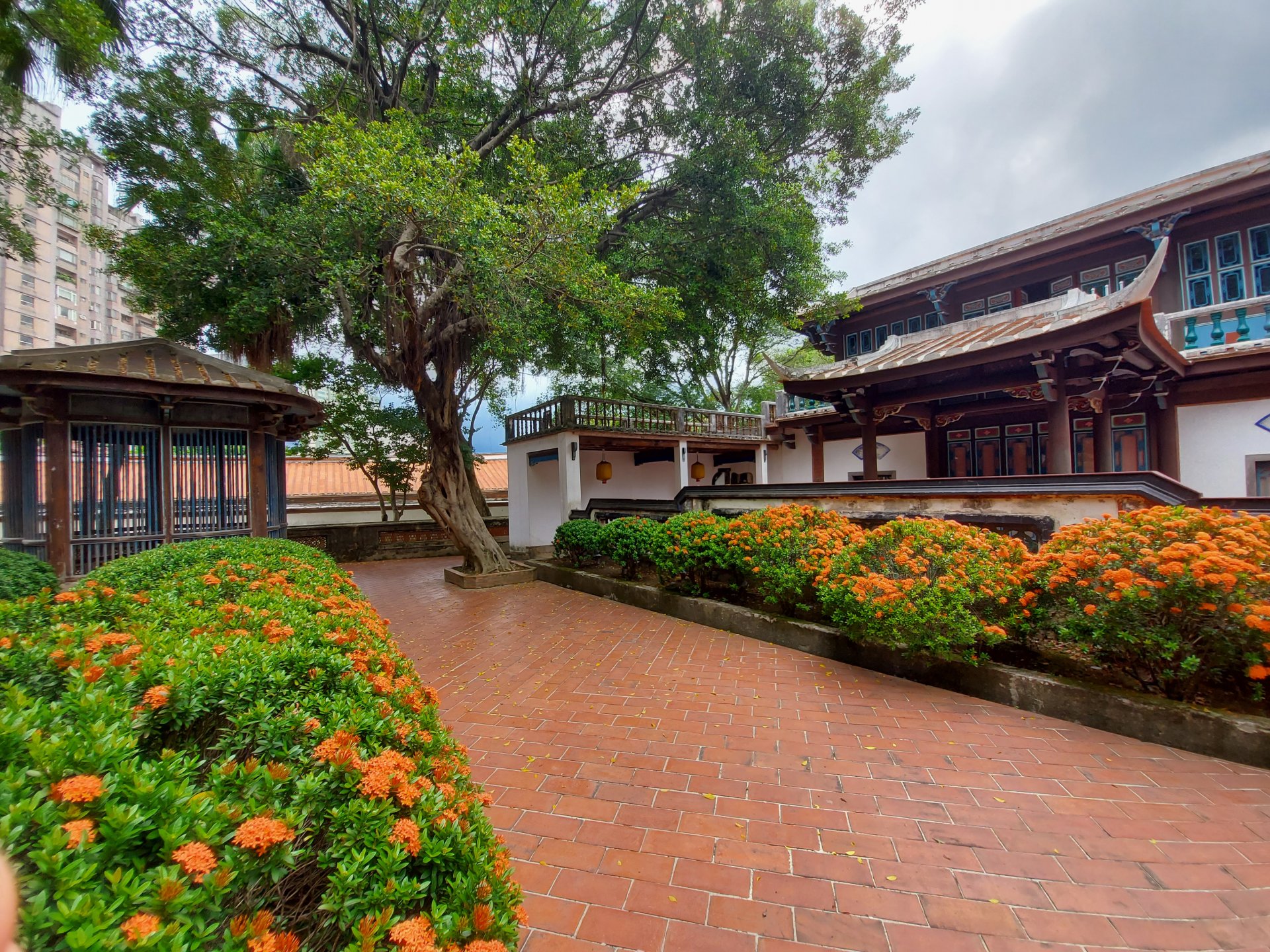
觀稼樓 Guanjia Hall
As the second-largest building of the mansion, Guanjia Hall is a two-story building with a balcony on the second floor to look at the Guanyin and Datun mountains from afar and the field linked by ridges at the mountain foot. The scroll wall in the front yard symbolizing the benefits of reading reminds descendants that only reading can continue the century-old family business. In 1905 the building was destroyed by a typhoon. After the Lin family donated the monument to the government, experts, scholars, and architects reconstructed the hall after researching its look based on valuable old photos.
In front of the hall stands an octagonal gate and a Chinese crabapple pond. This narrow-shaped pond is designed with curvy stone railings and an arch bridge. The small yard in front of the hall is surrounded by scroll walls with octagonal gates on both sides. The contour of these octagons and the curve of the scroll walls bring about an interesting contrast. On the scroll walls, there are four types of fruit-patterned decorative open work window: guava, calabash, pumpkin, and peach. Homophonically, these fruits symbolize many blessings, fortune and fame together, longevity, and other propitious implications, both interesting and auspicious.
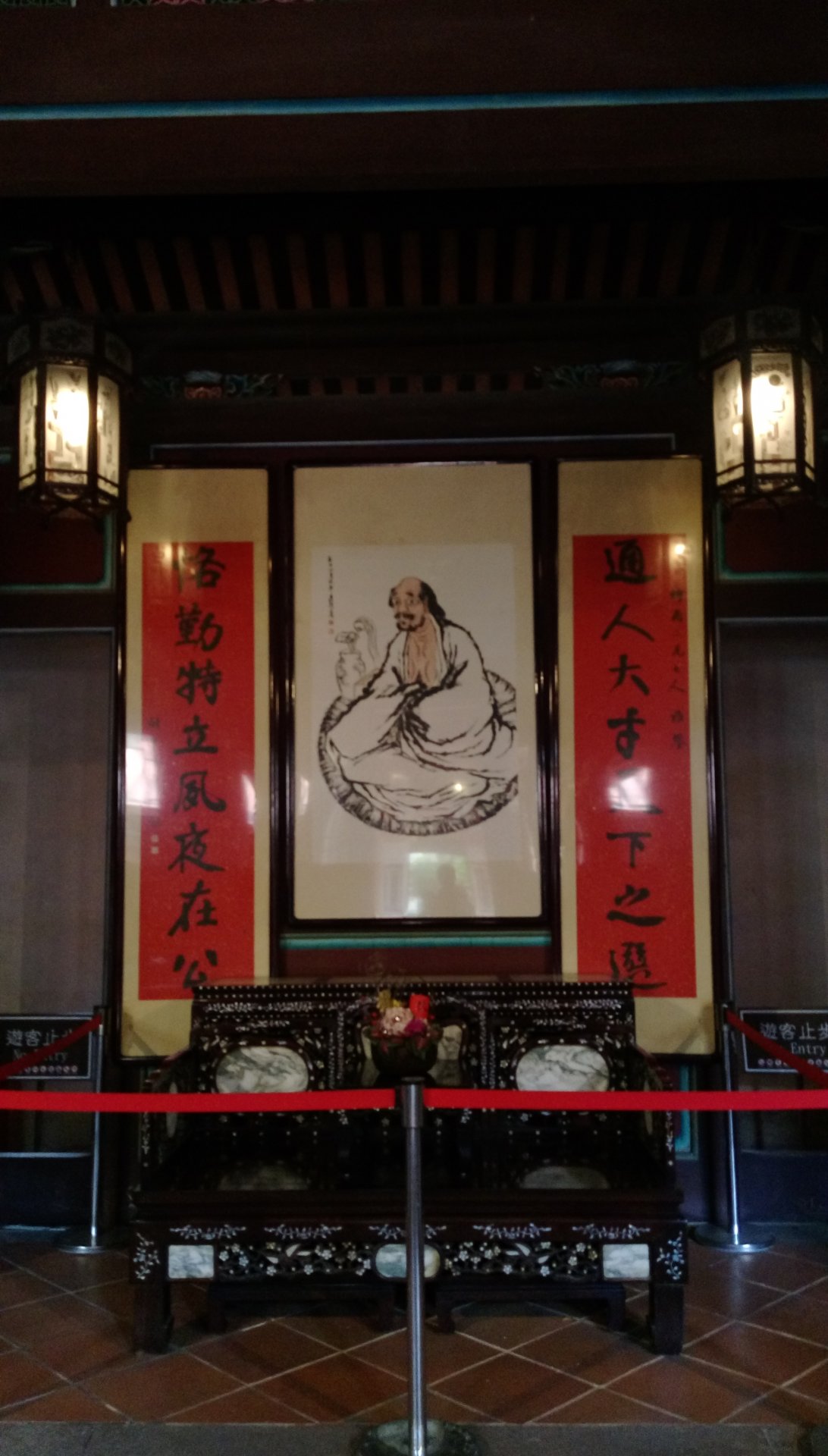
定靜堂 Dingjing Hall
A hall is the common area of a house with a larger space, a more regular shape (usually rectangular), an elevated ceiling, better decoration, a front garden, and a back yard. As a function room for holding banquets, rituals, and gathering activities, the hall is often designed in an important location with a good view of garden architecture. Dingjing Hall is a typical example. It is the largest building for guest reception and holding banquets in the Lin family. In the past, the owner used to hold banquets for a hundred guests in the cloister area.
In addition to being a socialization venue, antiques and paintings were displayed in the hall. Inspired by Great Learning: “The point where to rest being known, the object of pursuit is then determined; and, that being determined, a calm unperturbedness may be attained to. To that calmness there will succeed a tranquil repose. In that repose there may be careful deliberation, and that deliberation will be followed by the attainment of the desired end” (James Legge, trans.), the Lin family named the hall in this way to hope that their descendants could “be determined”, “attain calm unperturbedness”, and seek “tranquil repose”. In the atrium stands a gable-roofed cloister with three doors at the entrance to lead guests of different social status to the main hall. All doors would be opened only for guests of higher social ranks. Entering the inner hall, the portrait of Bodhidharma is in sight. It is a finger painting made by Weng, Tung-He, the mentor of Emperor Guangxu of the Qing dynasty, witnessing the prominence of the Lin family.
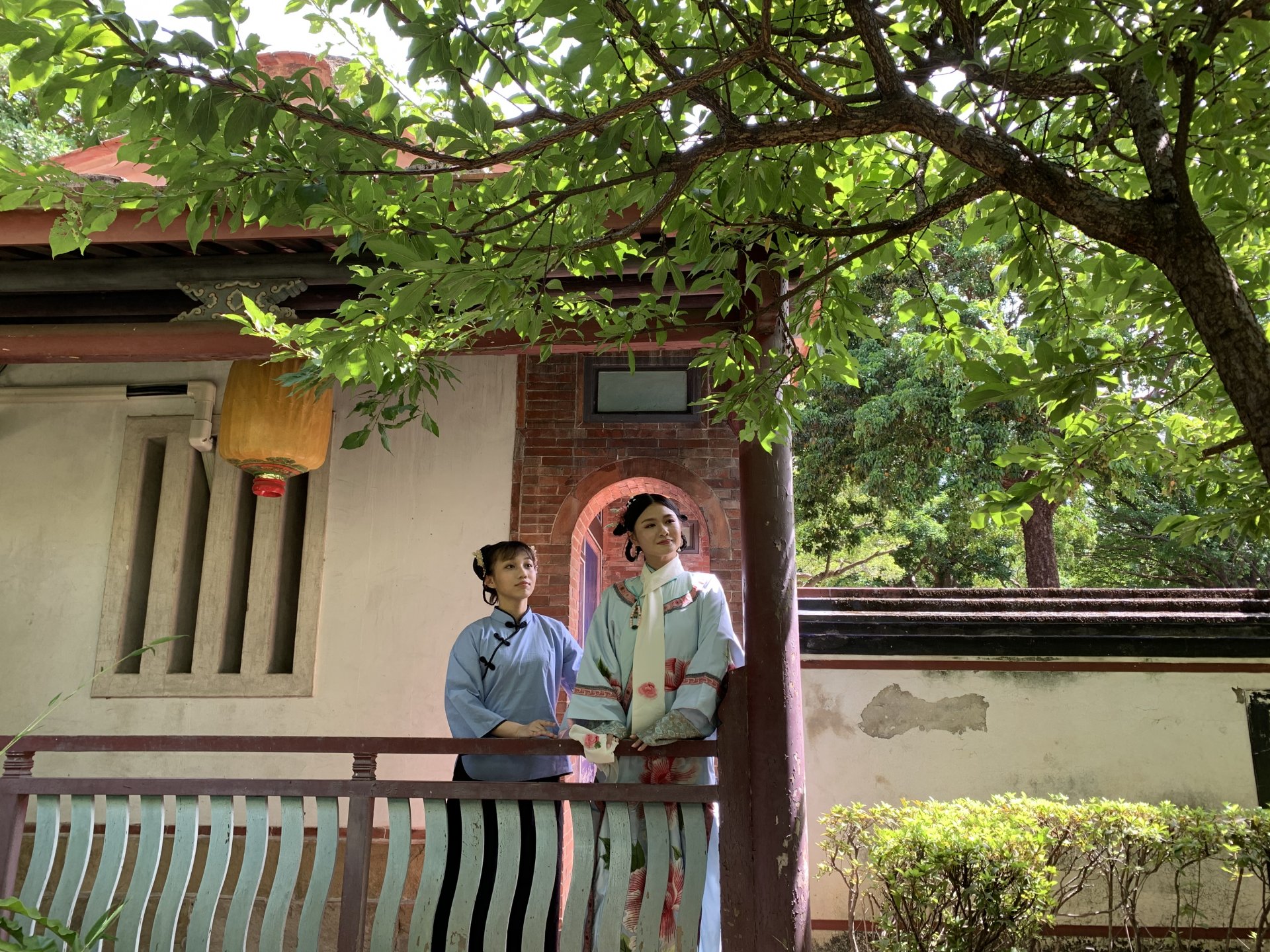
香玉簃 Xiangyuyi
In Chinese, “yi” means a small house connected to a large one. It is also a place for watching flowers. Xiangyuyi is a small court formed by a long, twisted cloister with the entrance in the south. The rhythmic change when one walks along the cloister increases the depth and gradation of the garden view. Flowers in the large parterre lying in front of the court blossom in the flowering season to shine with the pavilions and kiosks around them, creating a romantic scene.
According to history, the Lin family hired gardeners to take care of the chrysanthemums and other potted plants in the garden. During important festivities, such as the Spring Festival, the family purchased more types and quantities of chrysanthemums to show the financial power of the richest family in Taiwan. Today, the garden continues to hold a chrysanthemum show at Spring Festival to re-present the glamorous view of blooming chrysanthemums in the square and nursery in Xiangyuyi for visitors to wander back to the late Qing dynasty and the beginning of the republican period by combining with the characteristics of the ancient architecture and decorative open work windows to feel the flower watching atmosphere of ancient scholars and gentries.
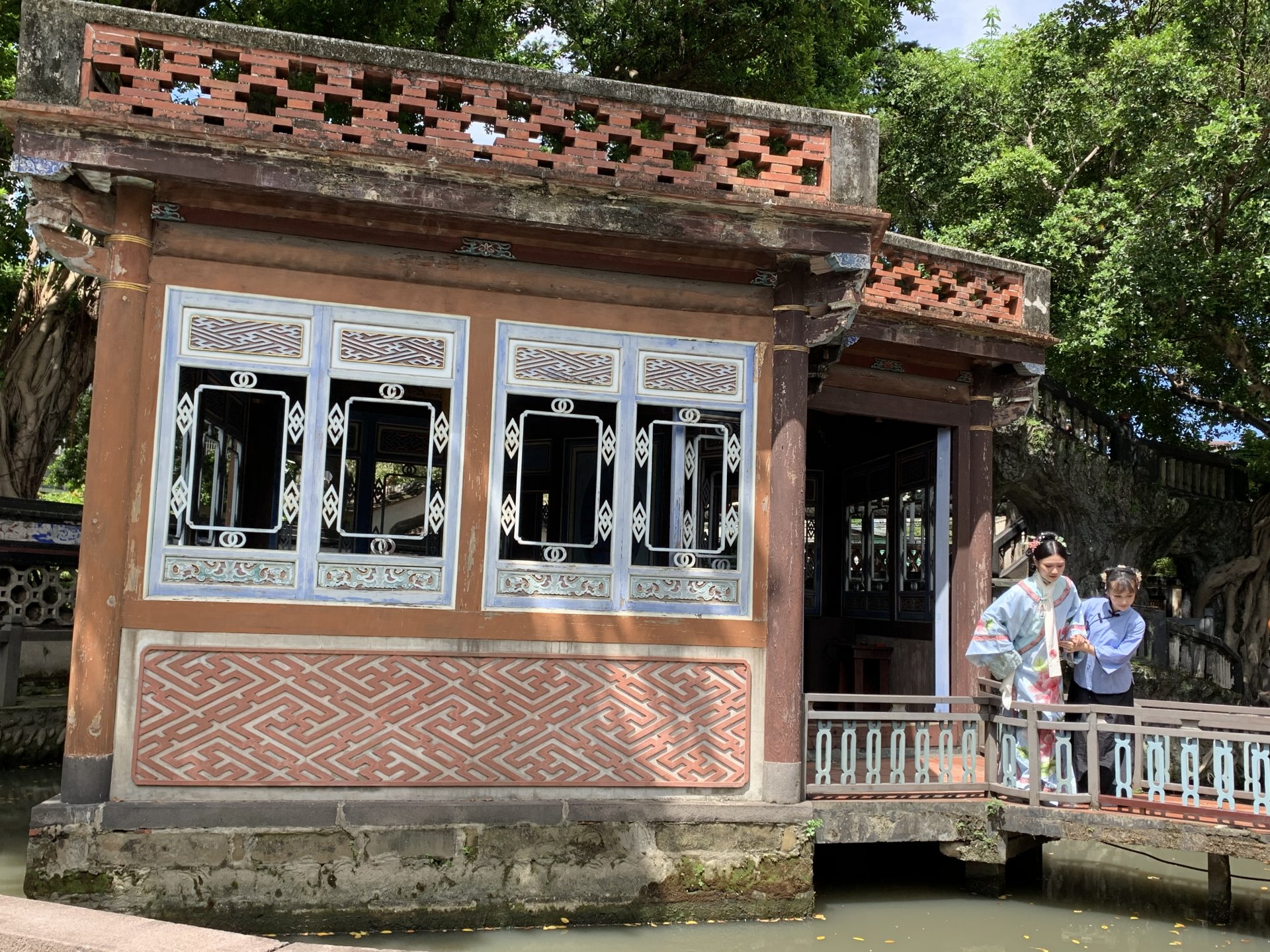
月波水榭 Moon-Viewing Terrace
Etymologically, terrace suggests a “raised area” or “platform”, meaning a place coming out of something, such as water, a bush, or the ground. This is the case of the Moon-Viewing Terrace in the garden. It resembles a pavilion in a less formal style.
As an accessory to Dingjing Hall, the terrace is a double-diamond platform in the water for ladies of the Lin family to fish from. On the right-hand side of the platform is a spiral stone staircase. In the past, there was a bayan tree and stairs magically combined together, with an inscription of the characters “picking stairs”, suggesting climbing up the stairs to the platform. Although the platform is low, its style is attractive. A tall wall erected in the north of the platform sheltered the privacy of ladies. It is said that when ladies and gentlemen of the Lin family watched the moon on the platform, men stayed outside staring at the moon, while women could only see the moon’s reflection in the water in the pavilion. Each gender had a different view.
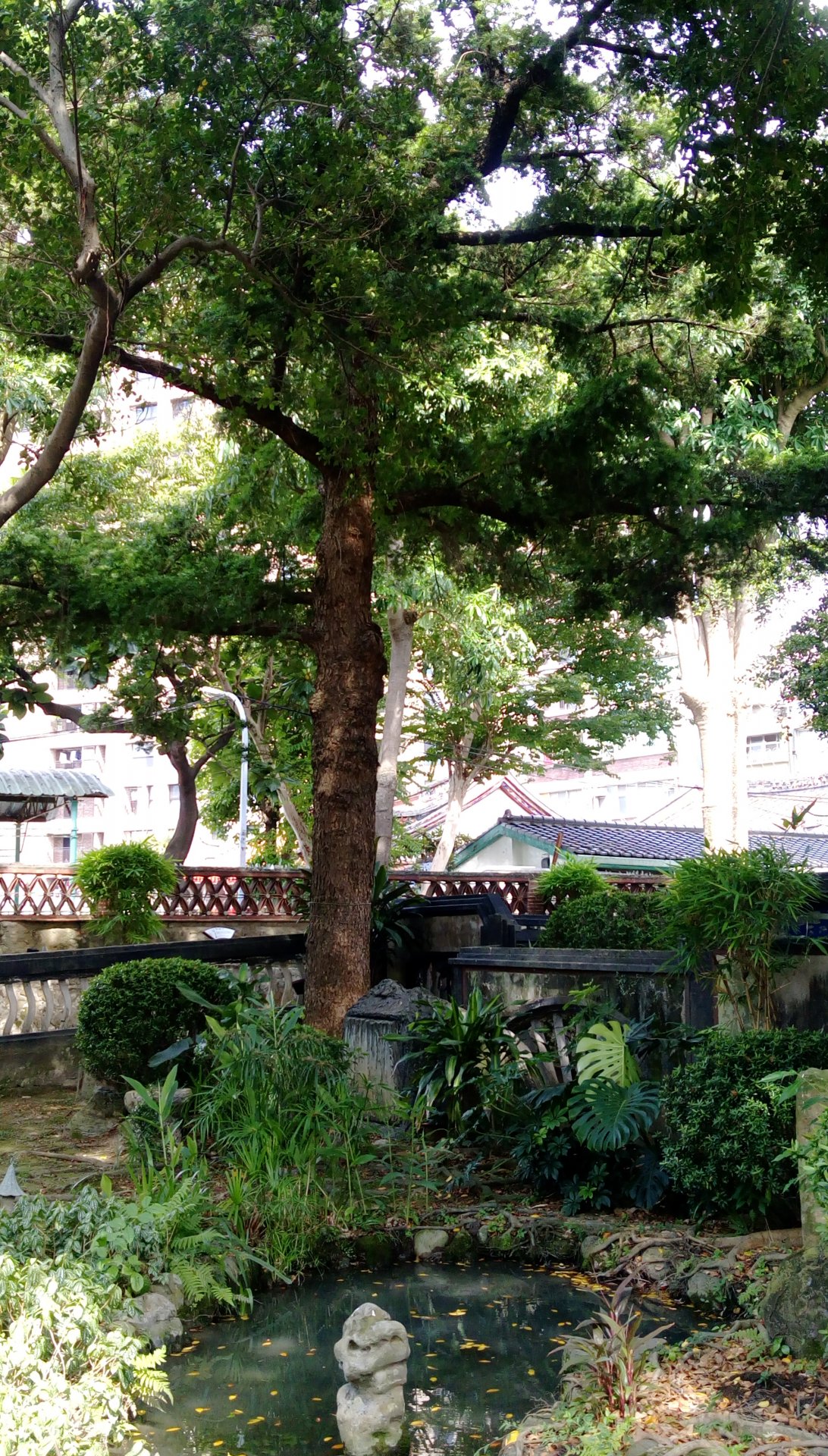
如意池與月洞門 Ruyi Pond and Moon Gate
Although the garden in traditional Chinese garden architecture may not be big, the “obstructive scenery” technique is employed to deliberately “block” the sight. With the twists and turns formed by hidden paths, a rich gradation effect is produced to surprise visitors, as if they have entered a different time-space after a twist and a turn.
Therefore, the route for visiting the Lin Family Mansion and Garden twists, turns, rises, and falls. Sometimes, visitors must cross a bridge; other times, they may need to pass through bushes and wood, and the view is always “blocked”. For example, at the cave gate on both sides of the patterned wall in the yard of Dingjing Hall, you will find that the “cave” has framed a parallel view for you as you move around. This is the landscaper’s crafty design. Passing through the Moon Gate, the Ruyi Pond in sight brings a Buddhist sense as found in a Japanese garden. The pond is also an ecological pond specially designed in the garden in 2018 for water quality improvement by growing water-purifying plants. The stone standing by the pond was a popular type of monument during the Japanese rule.