Establishment of Outdoor English Learning Scenarios in Hualien County - General Guide - Meilunshan Park/ 花蓮縣戶外英語學習場域建置一般版導覽 - 美崙山公園
Park Positioning and Space Introduction / 園區定位與空間簡介
Meilunshan is located in Hualien City, at an altitude of about 108 meters, and is a small hill rising at the northern end of the East Longitudinal Valley. The area is approximately 76 hectares. Former names of the place include "Aoyu Mountain," "Bali Mountain," "Baluo Mountain," "Milun Mountain," and others. As early as the Qing Dynasty, maps had already marked the name as "Milun." It was officially named "Meilunshan" around 1951 and has remained so to this day.
During the Qing Dynasty and the Japanese colonial period, Meilunshan was a strategic stronghold because of its high terrain and excellent views, guarding Hualien Port and the mouth of the Hualien River, and featured military facilities such as bunkers and air-raid shelters.
In the 1980s, the entrance to Meilunshan Park was renovated, and the abandoned military bunker was replaced by a 4-meter-high Mickey Mouse created by sculptor Yu Wang-chiu. The large Mickey Mouse, with a big smile and hands flashing a "V" sign to welcome guests, has guarded Meilunshan for 30 years, becoming a shared memory for the people of Hualien.
The vast Meilunshan Park is a very famous landscape and mountain-side leisure area in Hualien. Integrating nature, ecology, exercise, and family spaces, it is a great place where Hualien residents and tourists often come to walk, exercise, and relax.
美崙山位於花蓮市區,海拔約108公尺,是花東縱谷北端隆起的小丘陵。面積約76公頃。地名舊稱有「鰲魚山」、「八利山」、「八螺山」、「米崙山」等。在清朝時期的地圖已有標示名為「米崙」。民國四十年左右正式以「美崙山」命名至今。
在清代與日治時期,美崙山因為地勢高、視野佳,扼守花蓮港與花蓮溪出海口,是戰略要地,有碉堡、防空洞等軍事設施。
1980年代,美崙山公園入口處重新整頓,原先廢棄的軍事碉堡被雕塑家余望秋打造的4公尺高米老鼠所取代,大大的米老鼠滿面笑容,手比「V」字迎賓,30年來守護著美崙山,成為花蓮人共同的記憶。
佔地遼闊的美崙山公園是花蓮非常著名的景觀與親山休閒區。這裡融合自然、生態、運動與親子空間,是花蓮居民與遊客常來散步、運動與放鬆的好地方。
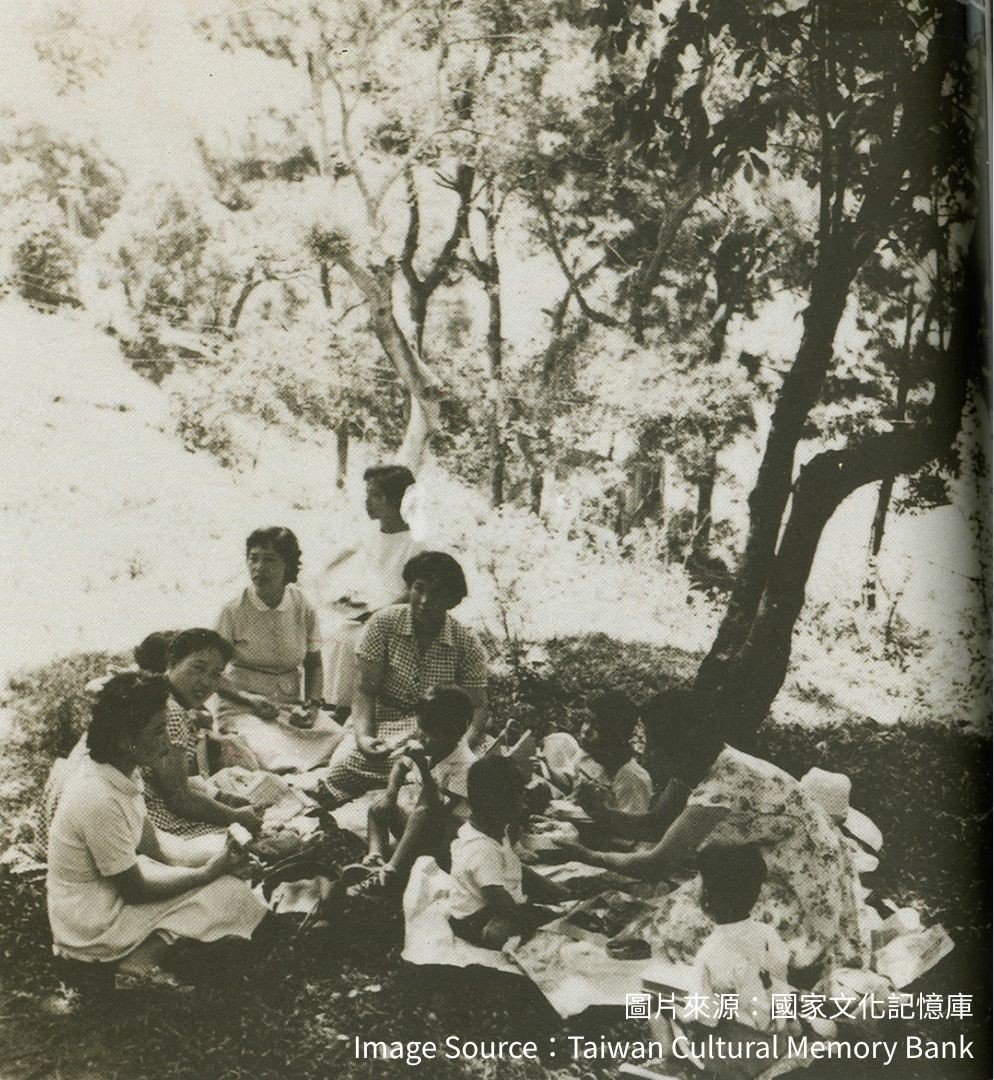
美崙山麓野餐 / 創作者:花蓮縣立文化中心 / 數位物件授權:OGDL 1.0 / 建檔單位:花蓮縣文化局 @ 國家文化記憶庫
Image Source: National Cultural Memory Bank
美崙山中正公園米老鼠 / 創作者:更生日報 / 數位物件授權:CC BY-NC 3.0 TW + / 建檔單位:花蓮縣文化局 @ 國家文化記憶庫
Image Source: National Cultural Memory Bank
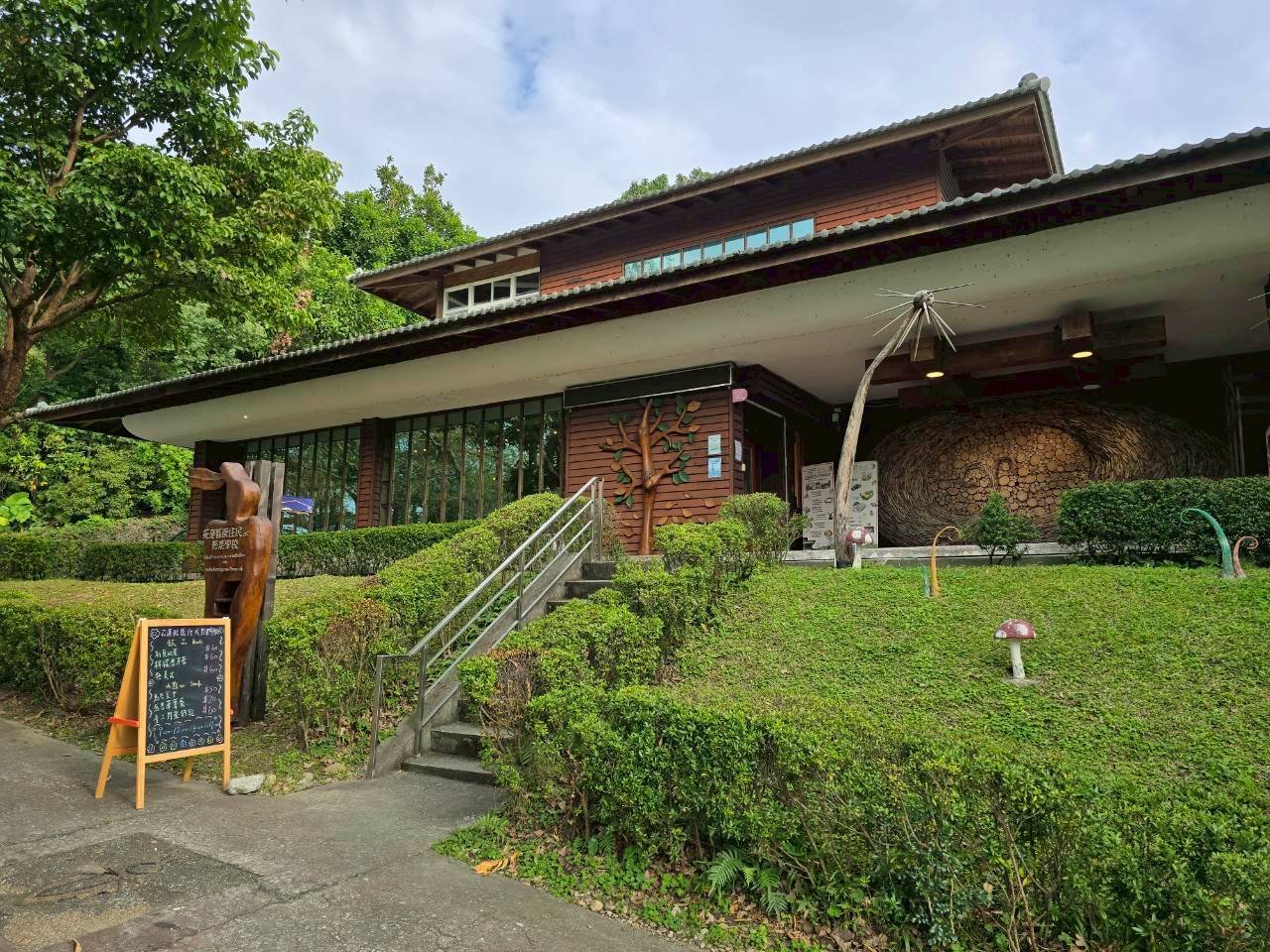
Indigenous Wild Vegetable Center — Welcome to the Earth's Seed Conservation Base! / 野菜學校-歡迎來到大地的保種基地!
Cradled in the green embrace of Meilunshan, the first school in Taiwan centered on "wild veggies" is located here. This is an educational space that coexists with nature, leading everyone into this hall of knowledge of the earth.
Here, the profound forest and culinary wisdom of the Amis people of Hualien is shared. Wild veggies possess extremely strong vitality, thriving whether it rains or shines; through the gathering and cooking experiences passed down through tribal generations, the flavors of the land are transformed into daily delicacies on the dining table. This wisdom teaches us how to identify seasons and respect nature, serving as our most important cultural foundation.
To pass down traditional food culture, this place is dedicated to seed conservation and restoration, preserving various native seeds like treasures so that diverse ecology and traditions can continue forever.
Look up at the surrounding "edible landscapes" and explore the food culture on Meilunshan together! We invite you to use your eyes, nose, and mouth to rediscover the connection between the land and your palate through a slow food experience, feeling the most authentic gifts of nature.
在美崙山的綠色懷抱下,全台第一座以「野菜」為核心的學校就在這裡。這是一處與自然共生的教育空間,帶領大家走進這座大地的知識殿堂。
這裡分享著花蓮阿美族深厚的山林與飲食智慧。野菜擁有極強的生命力,無論晴雨都能茁壯成長;透過部落代代相傳的採集與烹調經驗,將土地的味道轉化成餐桌上的日常美味。這份智慧教導我們如何辨識時節、尊重大自然,是我們最重要的文化根基。
為了傳承傳統的飲食文化,這裡致力於保種復育,將多種原生種子如珍寶般留存下來,讓多元的生態與傳統能一直延續下去。
快抬頭看看周圍的「可食地景」,一起探索美崙山上的飲食文化!歡迎透過眼睛、鼻子和嘴巴,在慢食體驗中,重新找回土地與舌尖的連結,感受大自然最真實的賜予。
The Long-standing Back Garden for Locals / 歷史悠久的在地人後花園
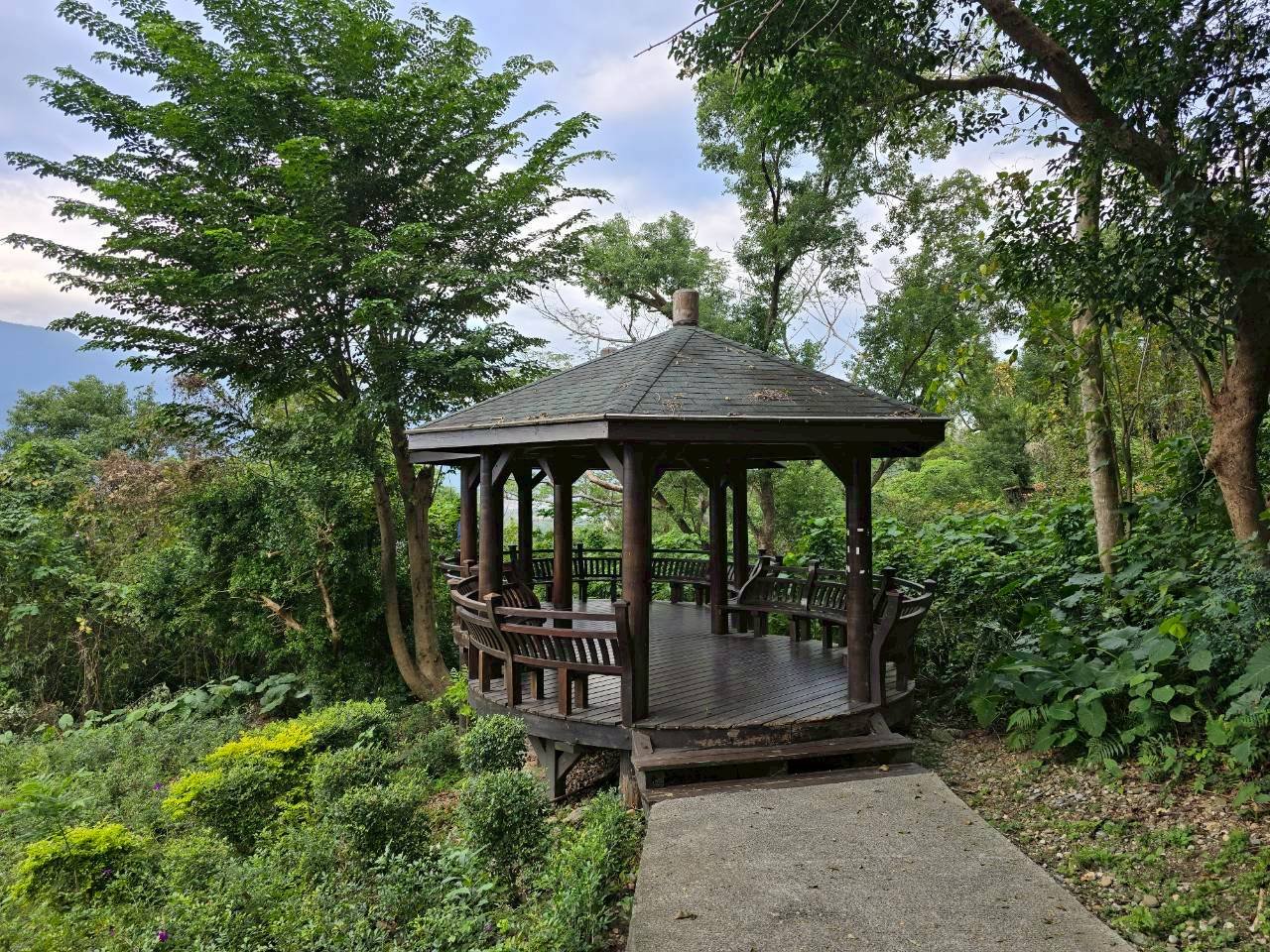
Meilunshan is located on the eastern side of the Central Mountain Range, running north to south. From the observation deck, one can overlook the blue Pacific Ocean to the east, while to the west, the Meilun River can be seen winding through, forming a magnificent mountain and sea landscape. This is not only a great place for locals to go hiking but also the best position to view Hualien City and the coastline.
For the people of Hualien, Meilunshan Park is more than just a park; it is an urban forest integrated into daily life. In the early morning, residents exercise and stroll among the trees; in the evening, families play on the grass, chat, and rest. From school field trips and nature observation to climbing high for the views, Meilunshan has accompanied generation after generation as they grow, continuing to carry the lifestyle of Hualien people coexisting with nature.
Meilunshan also has many historical relics. The Martyrs' Shrine at the foot of the mountain was built in 1905, originally a shrine dedicated to Amaterasu, Prince Kitashirakawa Yoshihisa, and the three deities of cultivation. In the 1980s, it was rebuilt into a Martyrs' Shrine in the style of a Chinese palace, enshrining national heroes and martyrs such as Zheng Cheng-gong, Liu Yung-fu, and Chiu Feng-chia, as well as military and civilian martyrs. The main hall, with its yellow tiles and vermilion walls, features elegant architecture and is filled with a solemn atmosphere; a pavilion and stone tables and chairs are provided nearby for tourists to enjoy the shade and rest. Most of the original shrine buildings, torii gates, and stone lanterns no longer exist. Here, one can not only appreciate the beauty of the architecture but also feel a special sense of tranquility and stability.
The bronze horse next to the Martyrs' Shrine was built along with the shrine during the Japanese colonial period, and the photograph is an image taken in 1949 of a group of teenagers in front of the bronze stallion next to the Hualien Port Shrine (now the Meilunshan Martyrs' Shrine). The predecessor of the Meilunshan Martyrs' Shrine was the Hualien Port Shrine built during the period of Japanese rule in Taiwan, and this bronze stallion should have been built at that time. In the early post-war period, the Hualien Port Shrine was renamed "Hualien Martyrs' Shrine," and the main deities were changed from the original Amaterasu and others to Zheng Cheng-gong and revolutionary martyrs. The original stone lanterns also disappeared with the changes, and even the roof of the main shrine hall and the torii gates were changed to the appearance of Northern Chinese palaces.
Meilunshan Park is home[A1.1][A1.2] to abundant military relics, including bunkers, air-raid shelters, and tunnels. These facilities were built from the Japanese colonial period to the Nationalist Government period in response to Meilunshan's important strategic position, as the mountain is a lookout point for Hualien Port and the Pacific Ocean. These relics are still visible today and are important cultural assets for understanding Hualien's military history, while also allowing tourists to see the defense systems of the past.
美崙山位於中央山脈的東側,呈南北走向,瞭望台可遠眺東邊蔚藍的太平洋,西邊則可見美崙溪蜿蜒流經,形成壯麗的山海景觀。這裡不僅是在地人登山健行的好去處,也是觀賞花蓮市區與海岸線的最佳位置。
美崙山公園對花蓮人而言,不只是一座公園,更是一座融入日常生活的城市山林。清晨,有居民在林間運動、散步;傍晚,親子在草地遊戲、聊天休憩。從校外教學、自然觀察,到與登高望景,美崙山陪伴一代又一代人成長,持續承載著花蓮人與自然共生的生活方式。
美崙山也有著許多歷史遺跡,山腳下的忠烈祠,興建於1905年,原供奉天照大神、北白川宮能久親王及開拓三神的神社。1980 年代改建為採中國宮殿式的忠烈祠,內供祀鄭成功、劉永福、邱逢甲等民族英雄及軍人、民眾先烈。黃瓦朱牆的正殿,建築典雅,充滿莊嚴肅穆之氛圍,一旁設有可供遊客乘涼歇息的涼亭和石桌椅。原有神社建築與鳥居、石燈籠等多已不存。在此不但可以欣賞建築物之美,還特別有一分寧靜安穩的情懷。
忠烈祠旁銅馬為日治時期與神社一同建造,照片為民國38年(1949)一群少年在花蓮港神社(今美崙山忠烈祠)旁的銅造駿馬前所拍攝之影像。美崙山忠烈祠其前身為日本治理臺灣時期所建造之花蓮港神社,而此銅造駿馬應為當時所建造。戰後初期,花蓮港神社被更名為「花蓮忠烈祠」,而與其相關之主祀神由原先的天照大神等改為了鄭成功與革命先烈。原先之石燈籠隨著變革也消失不見,更甚至是將神社本殿之屋頂與鳥居均改為了中國北方宮殿樣貌。
美崙山公園亦擁有豐富的軍事遺跡,包括碉堡、防空洞和地道等,這些設施是日治時期至國民政府時期,因應美崙山重要的戰略位置而建造的,因為該山是守望花蓮港與太平洋海域的眺望點。這些遺跡至今仍可見,是瞭解花蓮軍事歷史的重要文化資產,也讓遊客能見到過去的防禦體系。
An Ecological Paradise at Low Altitude / 低海拔的生態小樂園
Meilunshan is about 108 meters above sea level and belongs to a typical subtropical low-altitude secondary forest. This lush hill is not only a landmark of Hualien City but also acts as a "green stepping stone" for organisms moving through the city. It possesses a rich broad-leaved forest composition (such as Acacia, Phoebe, and Ficus trees), providing a stable food source and habitat for birds, insects, and reptiles.
The high temperatures of summer make all the creatures want to sing; the various cicada calls and frog sounds make Meilunshan Park very lively. During the day, the deafening sound of cicadas can be heard, while at night, frogs such as the black-spectacled toad and Brauer's tree frog can be seen.
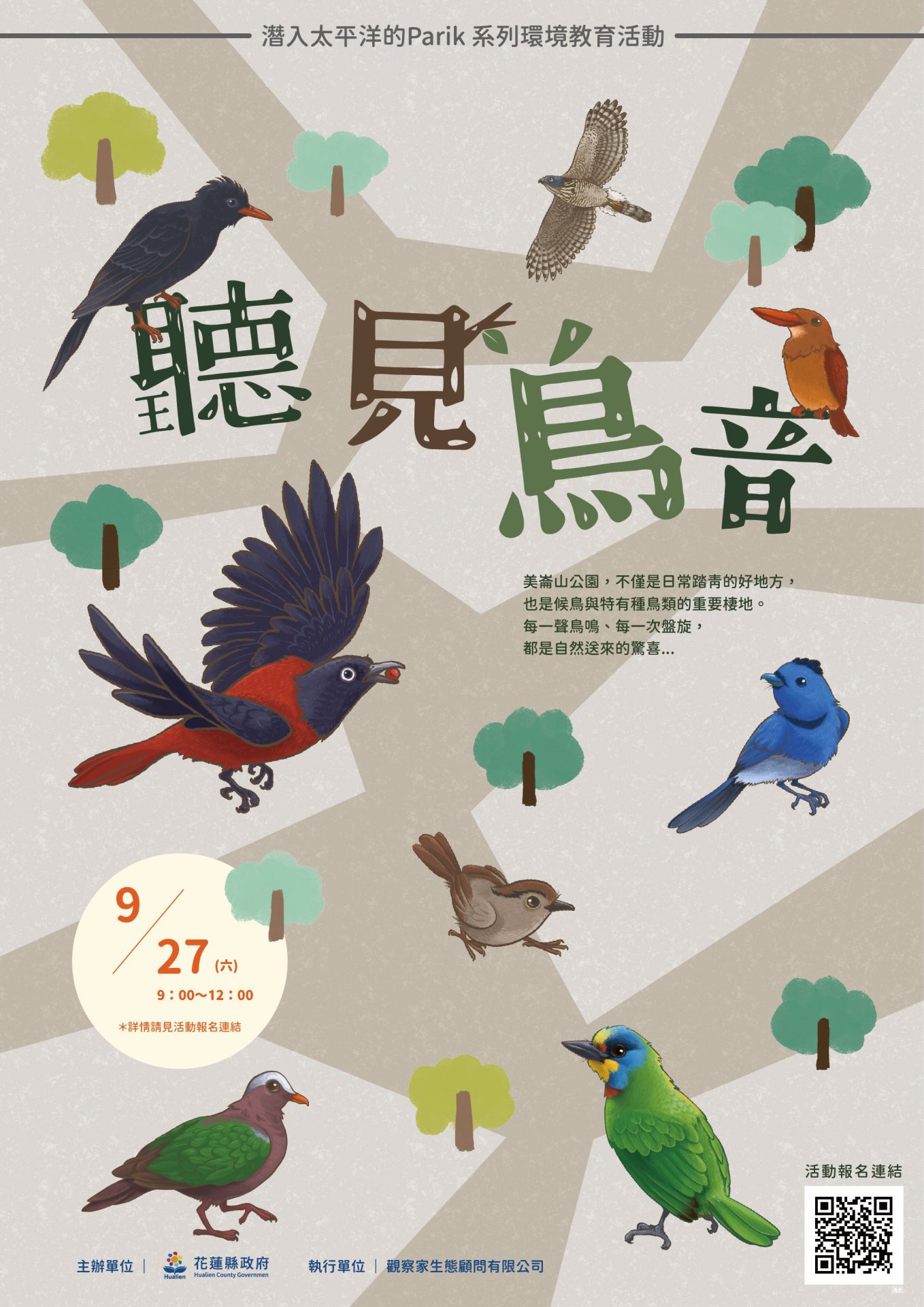
Meilunshan in autumn and winter is not desolate; many plants bear fruit at this time, becoming a granary for animals; meanwhile, migratory birds from the north also stop here to rest. Every autumn and winter, not only do rare bird species like the ruddy kingfisher and lemon-rumped warbler visit and stay, but common endemic species such as the gray-cheeked fulvetta, Taiwan bulbul, Taiwan bamboo partridge, and Taiwan barbet can also be seen flitting through and inhabiting the park.
美崙山海拔約108公尺,屬於典型的亞熱帶低海拔次生林。這座蔥鬱的丘陵不僅是花蓮市的地標,宛如生物在城市中移動的「綠色跳島」。這裡擁有豐富的闊葉林相(如相思樹、楠木、榕樹),為鳥類、昆蟲與爬蟲類提供了穩定的食物源與棲息地。
夏季的高溫則是讓了生物們都想高歌一曲,各式的蟬鳴及蛙響,讓美崙山公園好不熱鬧。白日可聽見蟬聲震耳欲聾,夜間則可以看見黑眶蟾蜍、布氏樹蛙等蛙類。
秋冬的美崙山並不蕭瑟,許多植物在此時結實,成為動物們的糧倉;同時,來自北方的候鳥也會在此暫歇。每年秋冬之際,不僅有赤翡翠、黃腰柳鶯等稀有鳥種停棲造訪,也可見繡眼畫眉、烏頭翁、臺灣竹雞與五色鳥等常見特有種在園區中穿梭棲息。
圖片來源:花蓮縣政府
Image Source: Hualien County Government
An Urban Park Coexisting with Nature / 與自然共生的城市公園
Meilunshan is located on the edge of Hualien City, at an altitude of about a hundred-odd meters, belonging to a low-altitude hilly forest environment. Influenced by the eastern maritime climate, it is warm and humid year-round, providing good conditions for the growth of diverse plants. Its forest composition is dominated by broad-leaved trees, presenting a typical low-altitude secondary forest landscape.
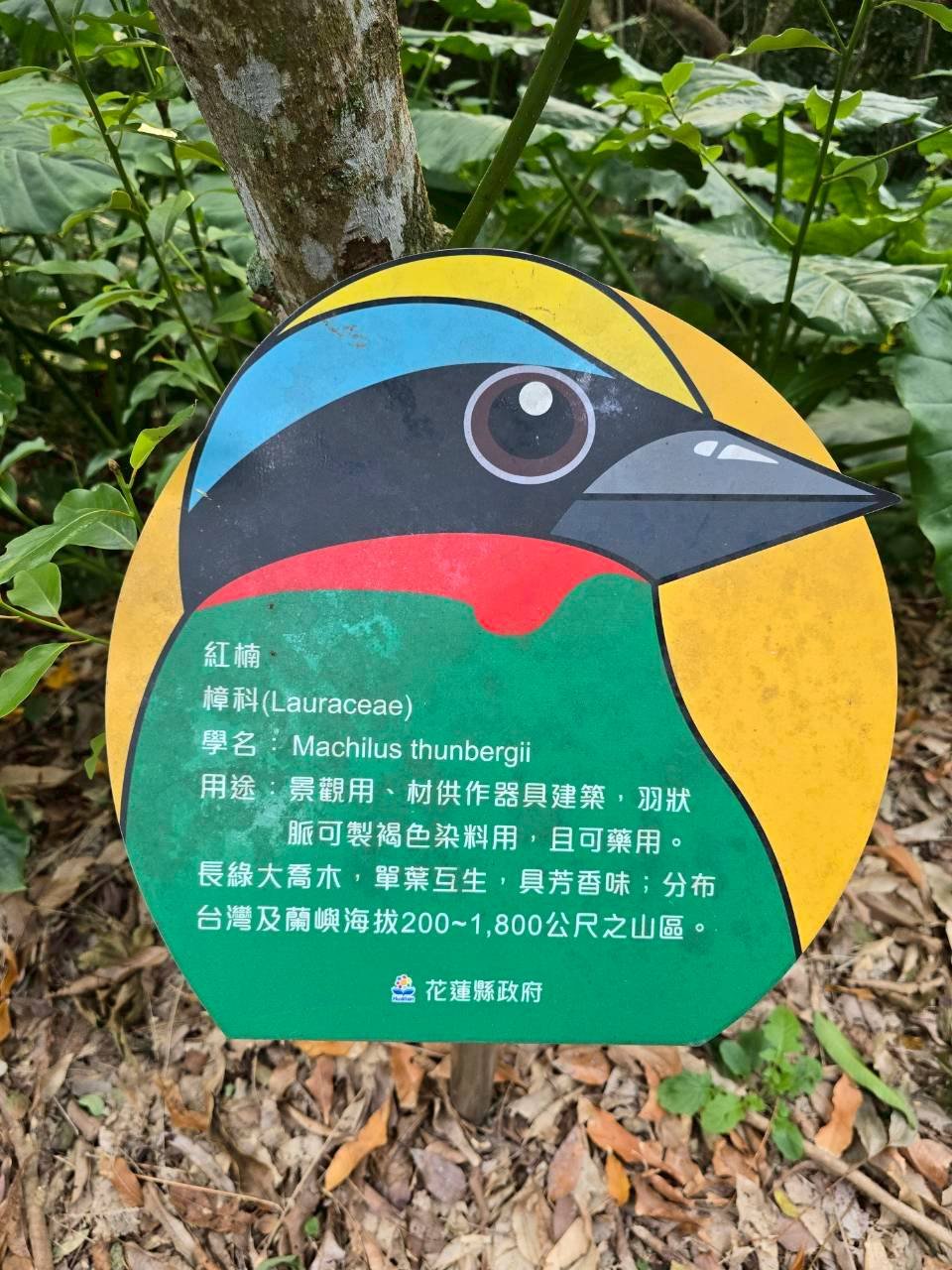
Mountain vegetation mostly consists of evergreen broad-leaved trees and species resistant to wind and salt, common examples being Ficus species, Lauraceae, Moraceae, and some coastal species, combined with shrub layers, herb layers, and climbing plants to form a clearly layered forest structure. Such a forest composition not only helps stabilize the soil and reduce rainwater erosion but also provides habitat and foraging space for insects, birds, and small animals.
The forest of Meilunshan is not a primary forest but a secondary forest gradually formed under long-term human use, military control, and subsequent natural recovery. This type of forest reflects the process of natural restoration and demonstrates how plants re-establish ecological balance after interference. Over time, the understory environment has gradually stabilized, and biodiversity has increased accordingly.
As a green barrier in the city, the forests of Meilunshan not only regulate temperature and improve air quality but also connect the urban area with natural ecology, serving as an important ecological node for Hualien City and reminding people of the inseparable relationship between forests and human life.
The forest composition of Meilunshan is rich. There are artificially planted Acacia forests, as well as species dispersed by birds or wind, such as Macaranga, paper mulberry, and silver-back treasure tree.
美崙山位於花蓮市區邊緣,海拔約百餘公尺,屬於低海拔丘陵型森林環境。受東部海洋性氣候影響,全年溫暖濕潤,為多樣植物生長提供良好條件,其林相以闊葉樹為主,呈現典型的低海拔次生林景觀。
山區植被多為常綠闊葉樹與耐風、耐鹽性的樹種,常見如榕屬植物、樟科、桑科及部分海岸性樹種,搭配灌木層、草本層與藤本植物,形成層次分明的森林結構。這樣的林相不僅有助於穩定土壤、減少雨水沖刷,也為昆蟲、鳥類與小型動物提供棲息與覓食空間。
美崙山的森林並非原始林,而是在長期人為使用、軍事管制與後續自然恢復下逐漸形成的次生林。這類森林反映出自然復育的過程,也展現植物如何在干擾後重新建立生態平衡。隨著時間推移,林下環境逐漸穩定,生物多樣性亦隨之增加。
作為城市中的綠色屏障,美崙山山林不僅調節氣溫、改善空氣品質,更連結了都市與自然生態,是花蓮市重要的生態節點,也提醒人們森林與人類生活之間密不可分的關係。
美崙山的林相豐富。有人工栽植的相思樹林,也有經由鳥類或風力傳播的樹種,如血桐、構樹、山黃麻等。