啟航.焰光──李錫奇紀念特展(Embark and Blaze: The Inheritance of the Art of Lee Shi-Chi)
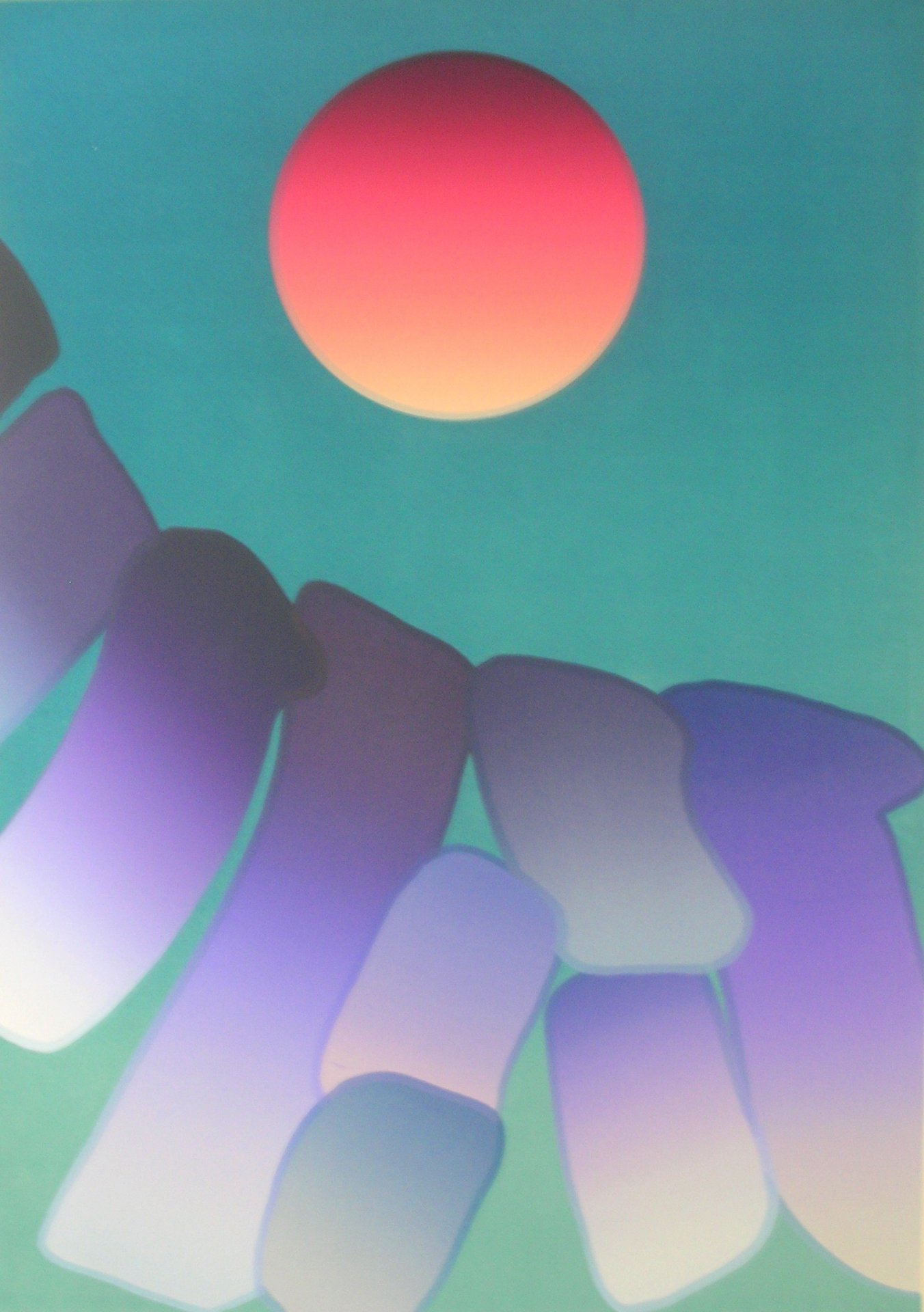
月之祭系列(Rite of the Moon Series)
1969年美國太空人登陸月球,掀開了詩人千古以來歌頌神往的月亮面紗;藝術家和詩人妻子古月,以詩畫結合,表達對這個美好傳說破滅的一份美麗哀愁,也成為時代的一個印記。
When American astronauts landed on the moon in 1969, they unravelled the sibylline veil that once shrouded the moon, a marvel that poets have exalted for millennia. The artist and his wife Gu Yue, a poet, collaborated in this series, using poetry and painting in conjunction to lament the shattering of this enduring legend, marking the bittersweet end of an era.
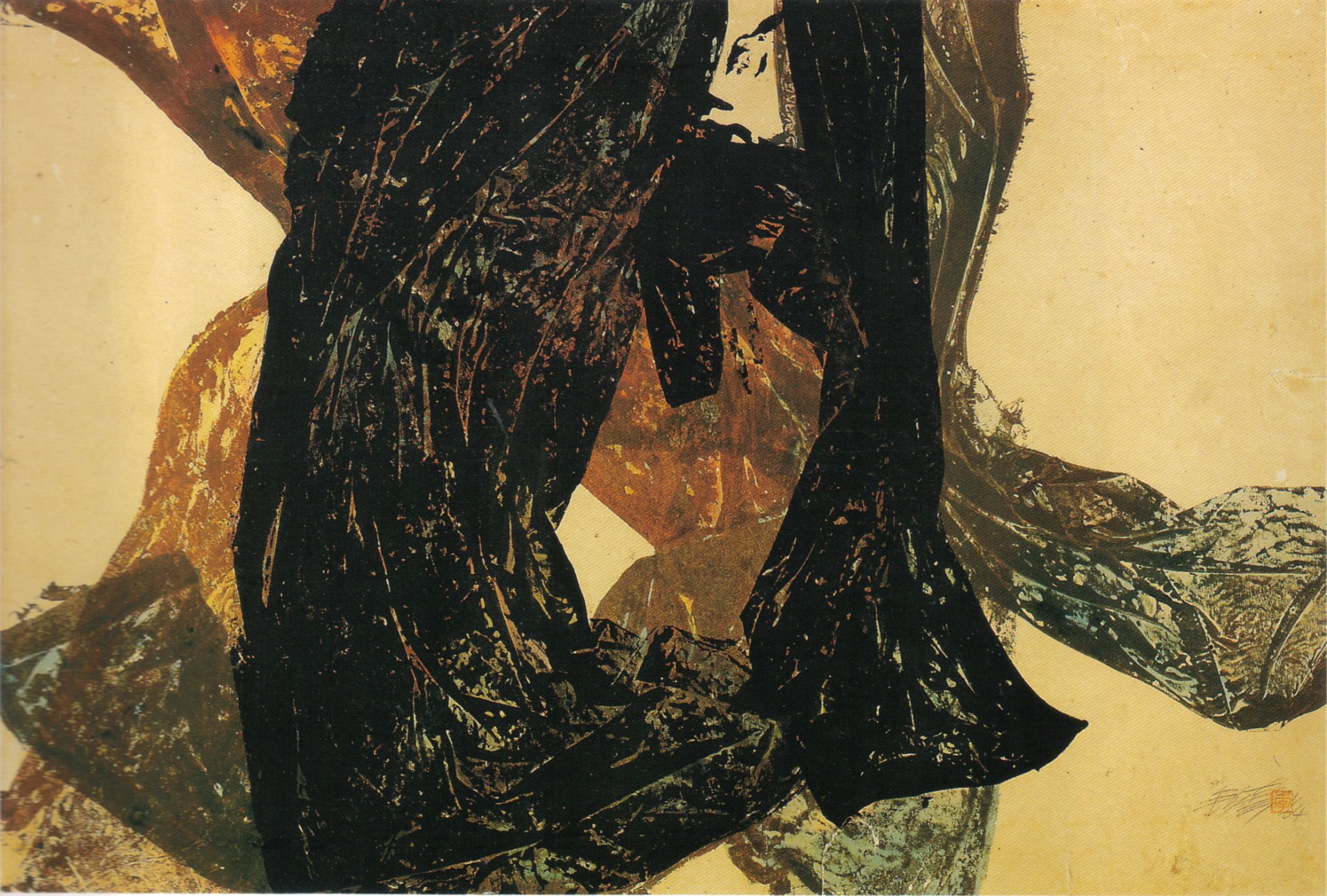
降落傘系列(Parachute Series)
李錫奇在服役期間利用軍中廢棄的降落傘布進行抽象創作的實驗,將簡陋的傘布剪成長條形,沾染各色顏料,在布面上拍打、壓疊、滴甩等,產生具衝擊力與爆發性的視覺張力,是直覺與材料碰撞後的直接結果。
During his military service, Lee used the abandoned parachute cloth in the army to carry out abstract creation experiments. He cut the simple parachute cloth into strips, stained it with various pigments, patted, pressed and dripped onto the canvas to produce visual tension with impact and explosion, which was the direct result of the collision between intuition and material.
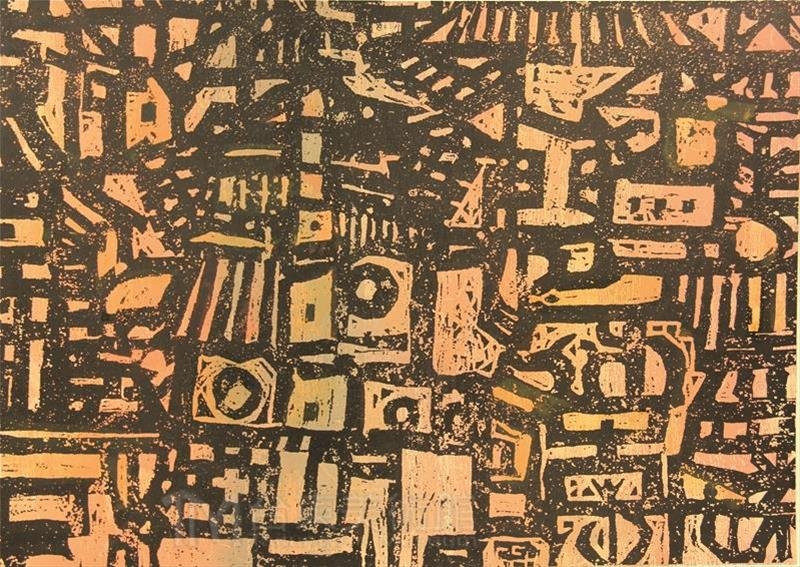
早期系列(Early Works)
從北師求學時期,到入伍服役,藝術家以木刻版畫表達對故鄉及歷史的一份想像與懷念,時而粗獷、時而典麗;甚至運用降落傘的粗布拓印,創造出一種深具爆發與酣暢的生命力。
From the artist’s student days to his time in the military, he used block prints to express the sentiments of nostalgia and yearning for his hometown; at times rugged and at times polished, these works were Lee’s attempts at reimagining history. Notably, his technique of monoprinting on parachute fabric created particular dynamic and vitality.
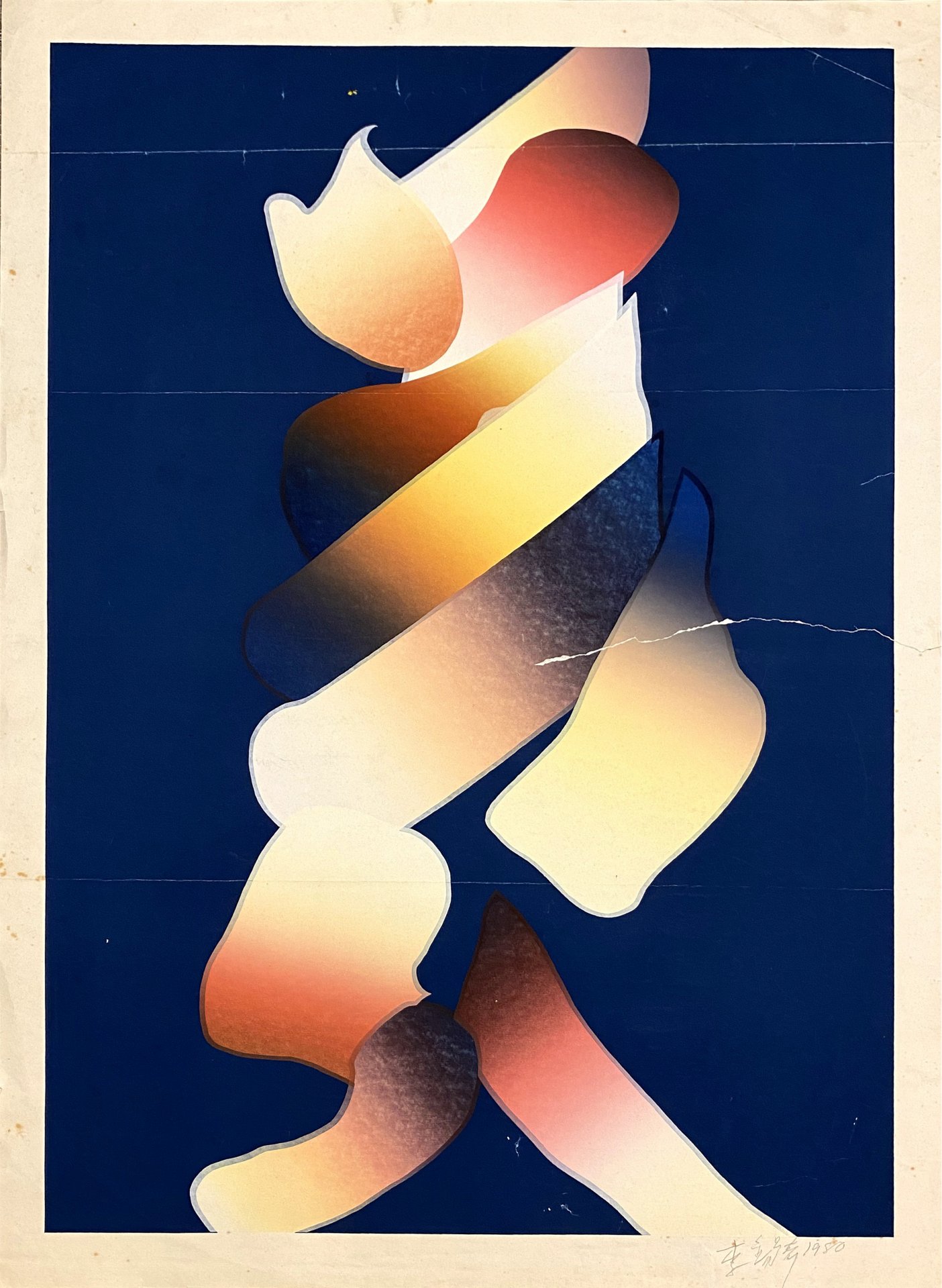
書法系列(Calligraphy Series)
書法系列是藝術家由民間活力,轉化為文學之美的一個重要轉折。取自漢字的字形筆劃,或草書流暢的線條,以漸層的色彩變化,呈顯了藝術家脫離年少狂野,邁入中年成熟、婉約的生命階段。
This period marks a transitional point in the artist’s career: whereas previous works were often inspired by the liveliness of folk art, it is here that the emphasis on the beauty of words became a prominent theme. Taking inspiration from the brush strokes of Chinese characters to the fluid lines of cursive script, as well as using gradient colors to create variations, the art pieces reflected the artist’s departure from his more carefree and wild days of youth to his more mature and subdued middle years.
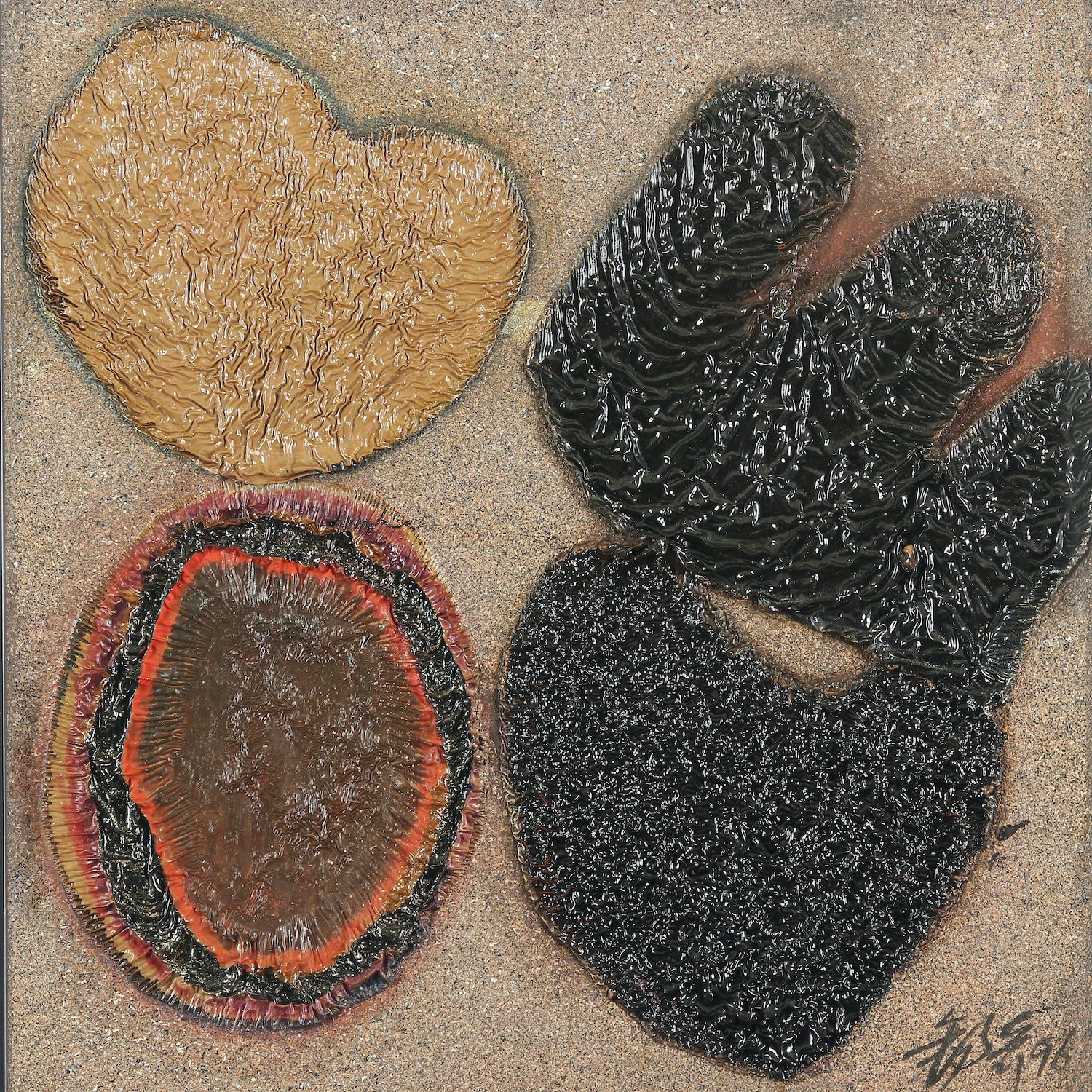
鬱黑系列(The A Passage to Solitary Darkness Series)
1990年,藝術家結束長達十餘年的現代畫廊經營,重新全力投入個人創作;一趟中國湖北之旅,乍見楚文化的漆畫之美,也自此展開「老媒材.新創意」的探索之旅。鬱黑系列正是日後漆畫系列的最初嘗試,在暗黑、皺褶的肌理中,猶如遙遠而古老的祭儀鼓聲。
In 1990, Lee ended his decade-long engagement in managing modern art galleries, once again plunging into more personal artistic endeavors. During a trip to Hubei, China, he was struck by the beauty of lacquer painting in Chu culture, thus embarking on an adventure to “use old materials, but make it new.” A Passage to Solitary Darkness is the bud that came to fruition in the later Lacquer Series. From the dull and wrinkled texture, one could faintly make out the rumbling of ancient ceremonial drums.
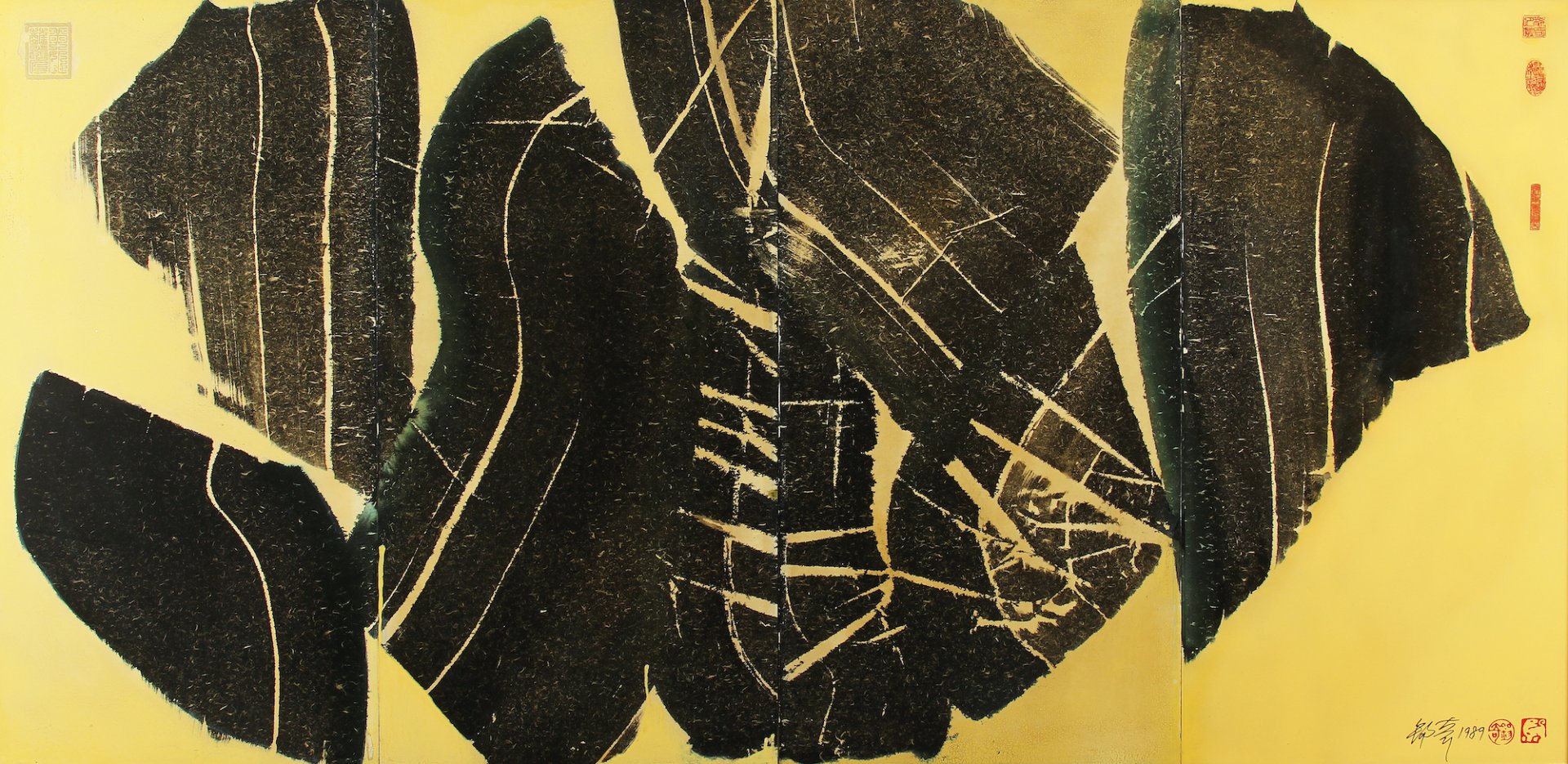
墨語系列(The Splash Ink Series)
在中國傳統水墨尋求現代化表現的時代浪潮中,藝術家以別樹一格的技法,利用油、水交疊、相斥的原理,呈顯出一種歲月流痕、蒼老斑駁的質感,成為當代水墨創作中,別無類同的獨特表現。
Amidst the waves of artists seeking to reconceptualize Chinese brush painting as to make it more modern, Lee differentiated himself by utilizing a basic principle in physics — that oil and water separates. Taking advantage of this feature, he was able to create a weathered, abraded appearance on canvas that was irreplicable amongst contemporaneous ink paintings.
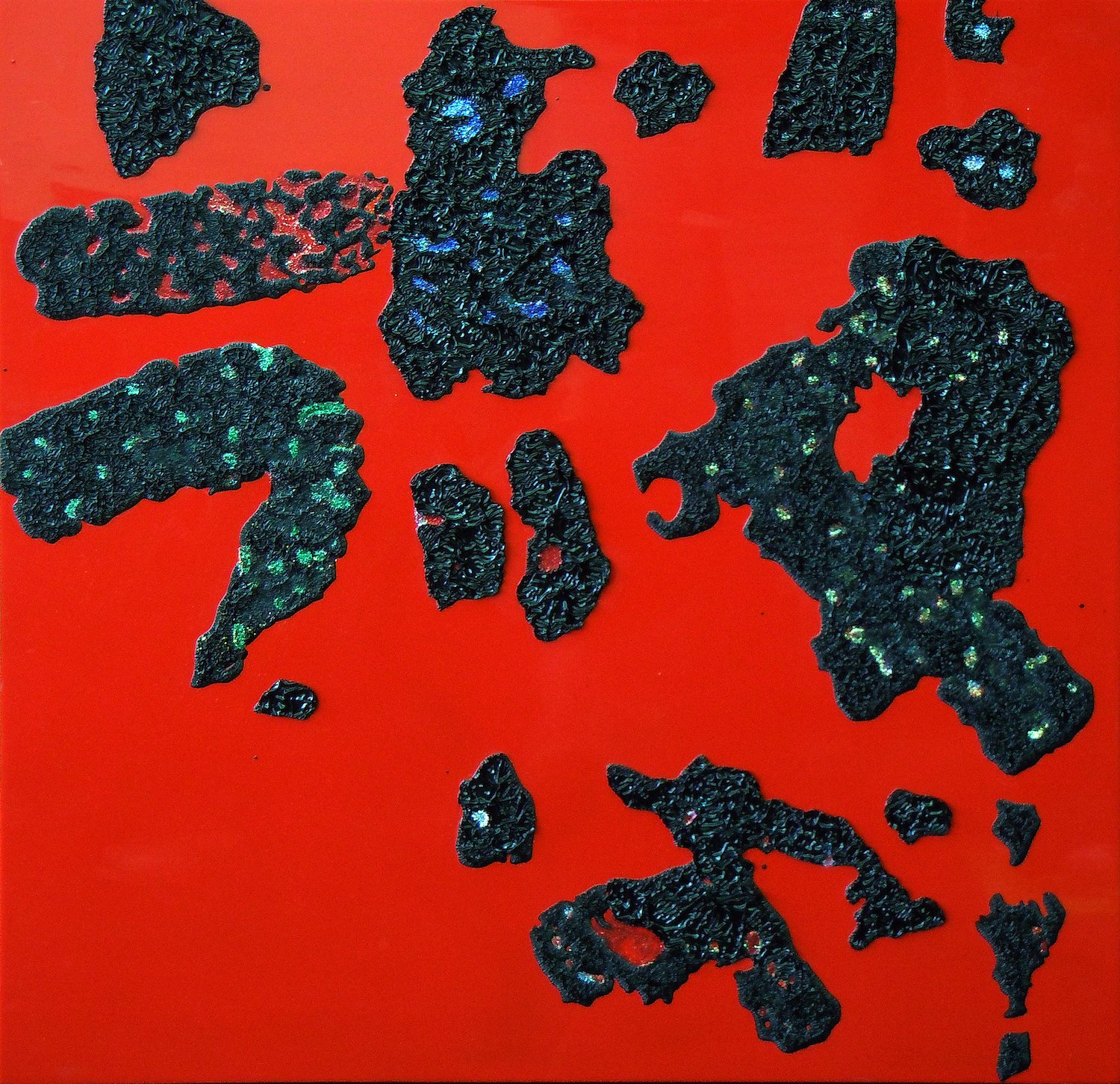
本位‧淬鋒系列(The Tempered Edge • Orientation)
以漆畫象徵戰火的糾結與無情。李錫奇特意保留生漆的自然面貌,風乾後表面形成肌理和皺摺,密佈如溝渠般的浮凸紋理,表現金門身處戰爭之下的滄桑記憶。
The Series of The Tempered Edge • Orientation uses lacquer painting to symbolize the entanglement and ruthlessness of war. Lee Shi Chi intentionally retained the natural appearance of raw lacquer, therefore after air-drying, textures and wrinkles formed on the surface, densely covered with ditch-like convex textures, reflecting Kinmen's vicissitudes of life under the war.
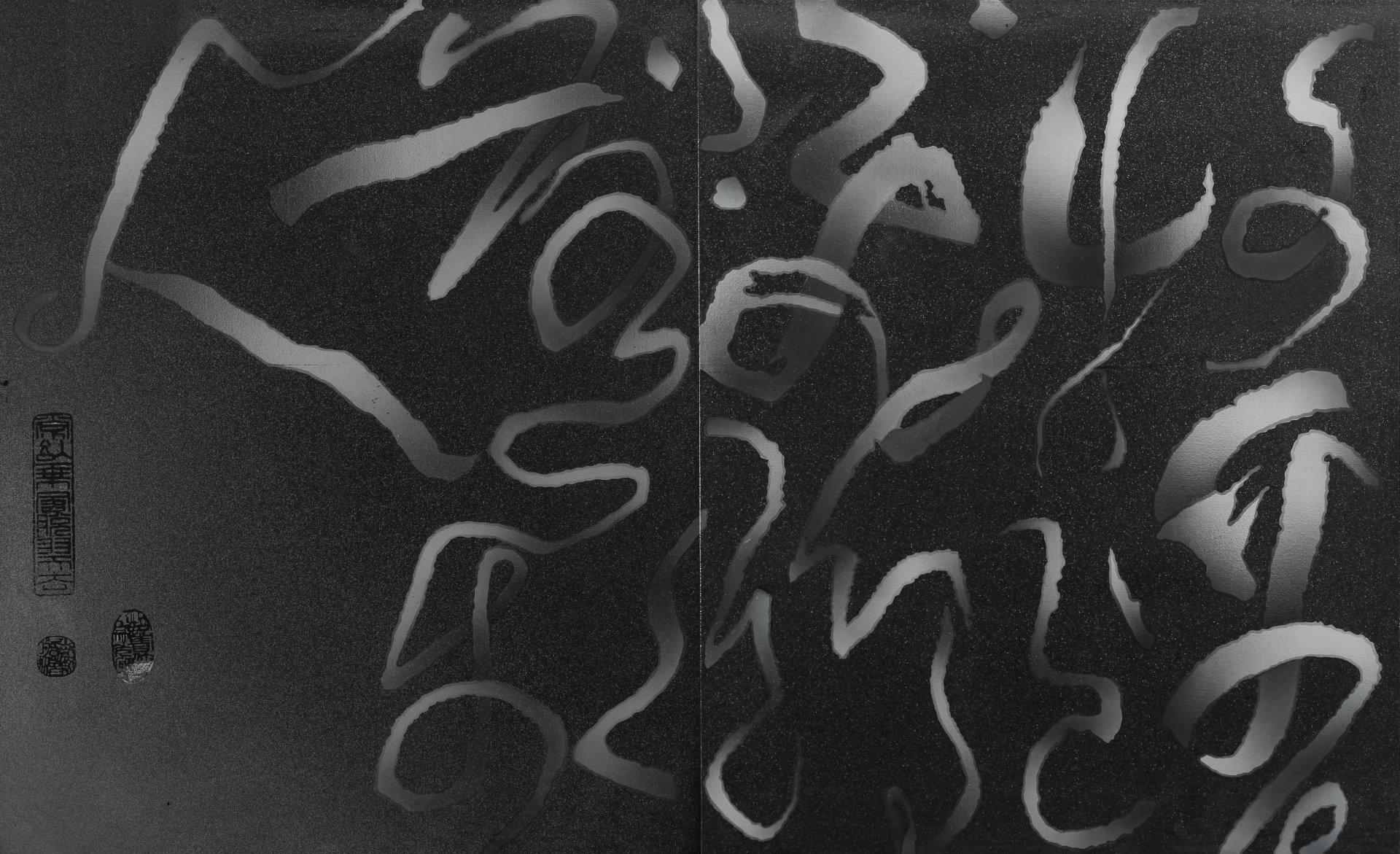
大書法系列(The Large Calligraphy Series)
不同於運用絹印版畫手法所形成的「書法系列」,「大書法系列」是運用噴槍搭配裱貼的技法,所形成的一批作品。他巧妙地將懷素的草書化為彩色的線條,既如敦煌壁畫中的飛天彩帶,也像童年廟宇線香光點的搖曳……,在靜寂的諾大時空中,散發文明的奧秘與魅力。
Different from the method of screen printing, which was used in the Calligraphy Series, the Large Calligraphy Series was created by adopting such methods as
spray painting and mounting. Lee deftly transformed Huaisu’s cursive into colorful lines, reminiscent of the soaring ribbons in the Dunhuang cave paintings, or the wavering flickers from the incense seen in temples. In these works, the enigmatic and charismatic features of an ancient civilization proliferate across the vast solitude of space and time.

本位系列(The Orientation Series)
來自〈清明上河圖〉時空延展變化的靈感,藝術家以最單純的方圓變化、排列,創作出宇宙相生相滅、循環不息的時序意象;也以這樣的作品,獲得日本、菲律賓的國際大獎。
This series takes inspiration from the time-space distanciation exemplified in Along the River During the Qingming Festival. The artist devised varying arrangements using the simplest shapes, squares and circles, evoking the notion of samsara, life in the universe engaged in a cyclical loop of birth, death, and rebirth. Orientation won numerous international awards in Japan and in the Philippines.
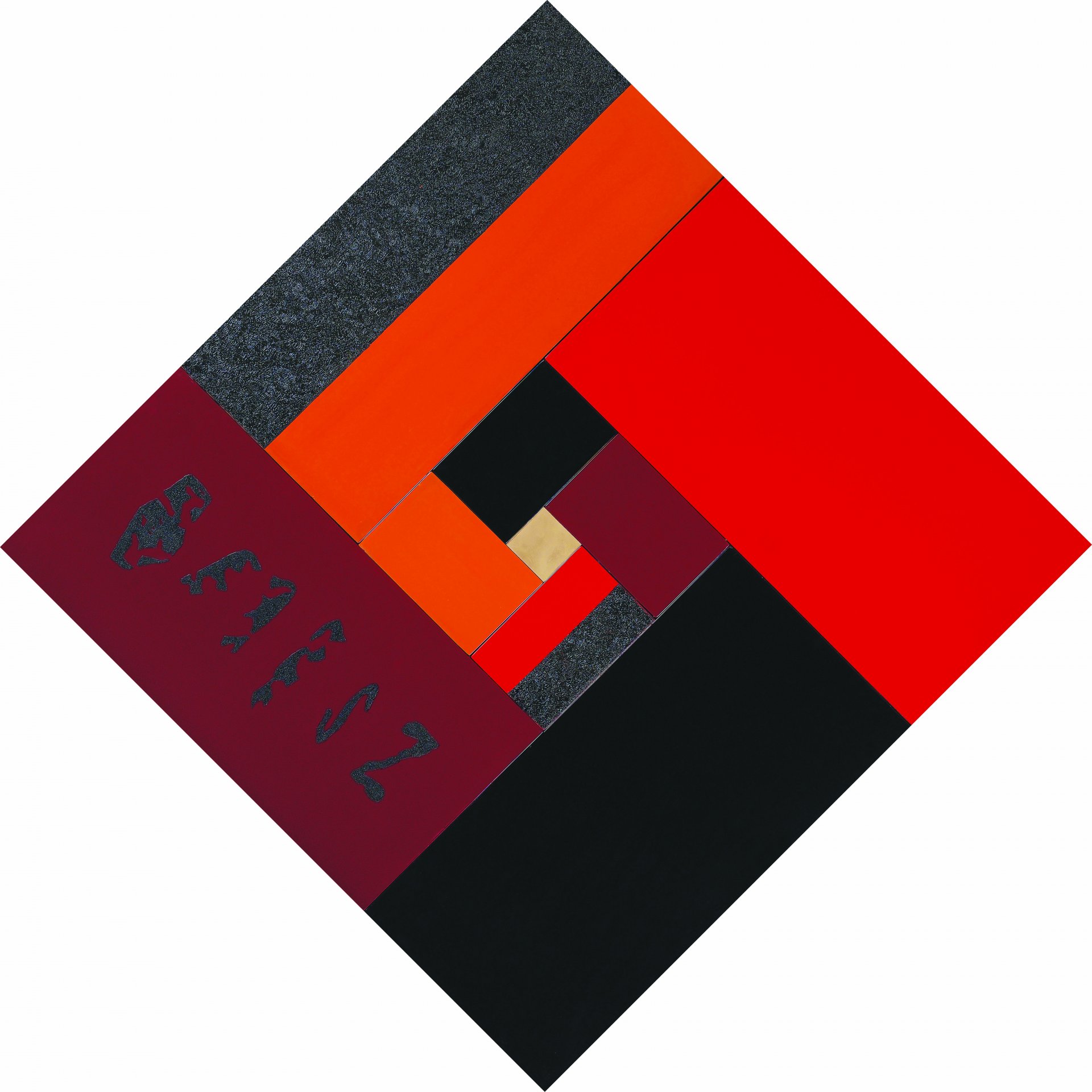
漆畫系列(The Lacquer painting Series)
1990年,藝術家在湖北荊州美術館首見楚文化漆器之美,之後,又在福建發現「閩漆」的趣味與技巧;自此展開他後半生的「漆畫系列」創作。利用漆的光滑平面與堆疊皺摺的質感,搭配紅、黑、金、藍等原始的色彩,乃至拼合、解構的觀念與手法,成為藝術家最具強烈震撼力與變化性的晚期作品。
In 1990, after seeing the beautiful lacquerwares displayed at the Jingzhou Museum in Hubei Province for the first time, Lee next delighted in discovering the intricacies of Fujian lacquer painting. These incidents opened up a new chapter that continued in the latter half of his artistic career — the Lacquer Series. Characterized by the juxtaposition of the smooth flat surface of the lacquer with the more textured and wrinkled layers upon multiple applications, the use of more primitive colors such as red, black, gold, and blue, alongside the employment of varying approaches of assembling and deconstructing, Lee Shi Chi’s later works were transformative and full of impact.