Yeh Shyr-Tau Literary Memorial Museum
Venue Introduction
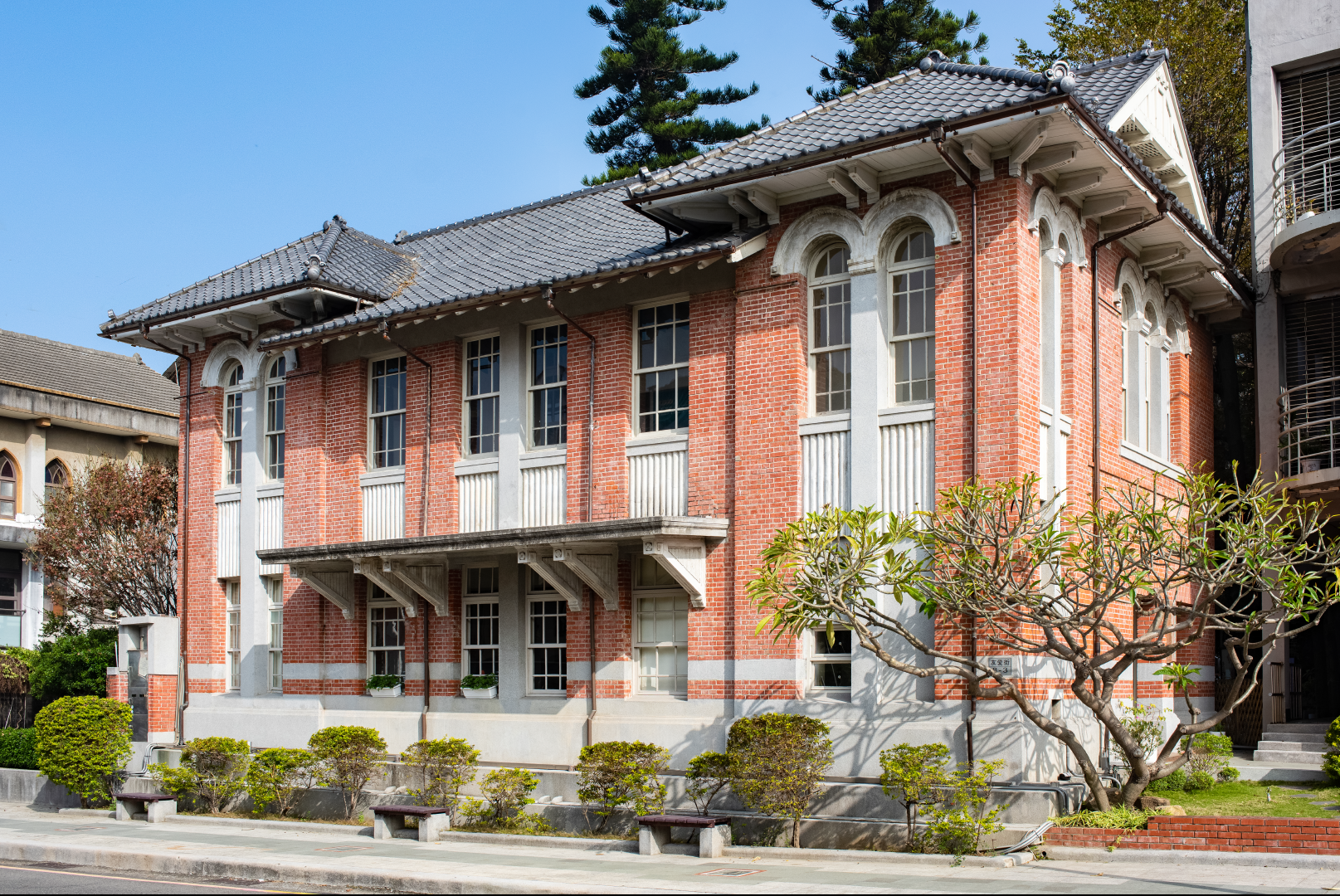
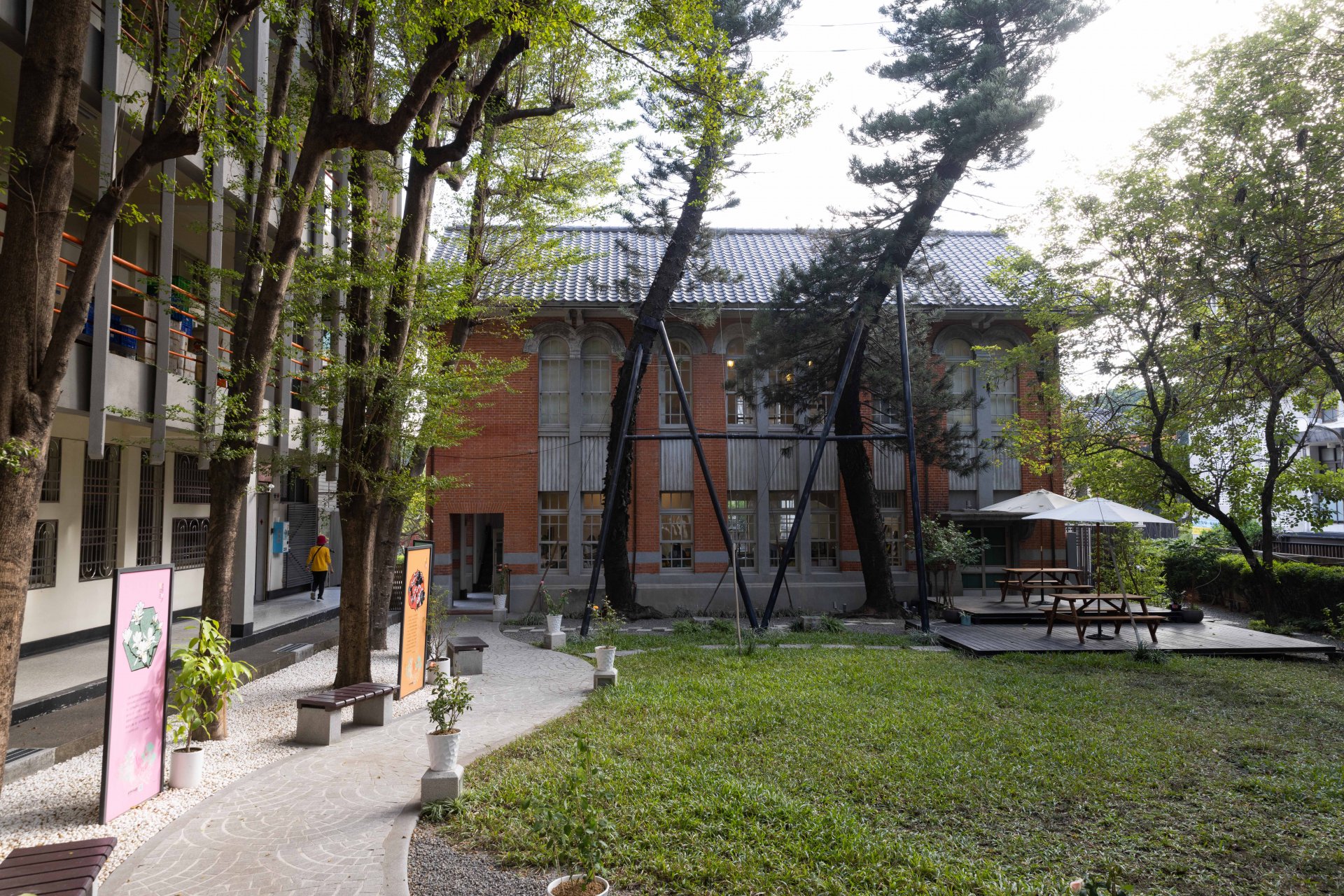
This building is a historic site built during the Showa period of Japanese rule. The former Forestry Affairs Office was dedicated to cultivating and managing the forestry industry. A surrounding wall approximately two meters high lies on the west side of the building. The Old Tainan Prefecture Hall lies to the east, while the library is to the north. Together, they shape the central courtyard, which is adorned with lush green grass and several tall trees. Among the trees , two towering hoop pines, planted around 1951, have withstood years of wind and rain and earned the nickname ‘ The Husband-and-Wife Trees.’ The building's overall architecture consists of a washed stone foundation, red brick walls, and a roof.
The Yeh Shyr-Tau Literary Memorial Museum opened in 2012, showcasing the life, works, and related archives of the esteemed Taiwanese literary figure Yeh Shyr-Tau. Yeh's literary works are the focus of the museum's first floor, which offers visitors a space for reading his novels. The second-floor houses Yeh's collection of books, his writing desk and chair, a timeline of significant events in the author's life, interview videos, and special featured exhibitions. The museum offers virtual tours in Mandarin, English, Japanese, and Taiwanese for your convenience and enjoyment.
Taiwan's Literary Apostle, Yeh Shyr-Tau
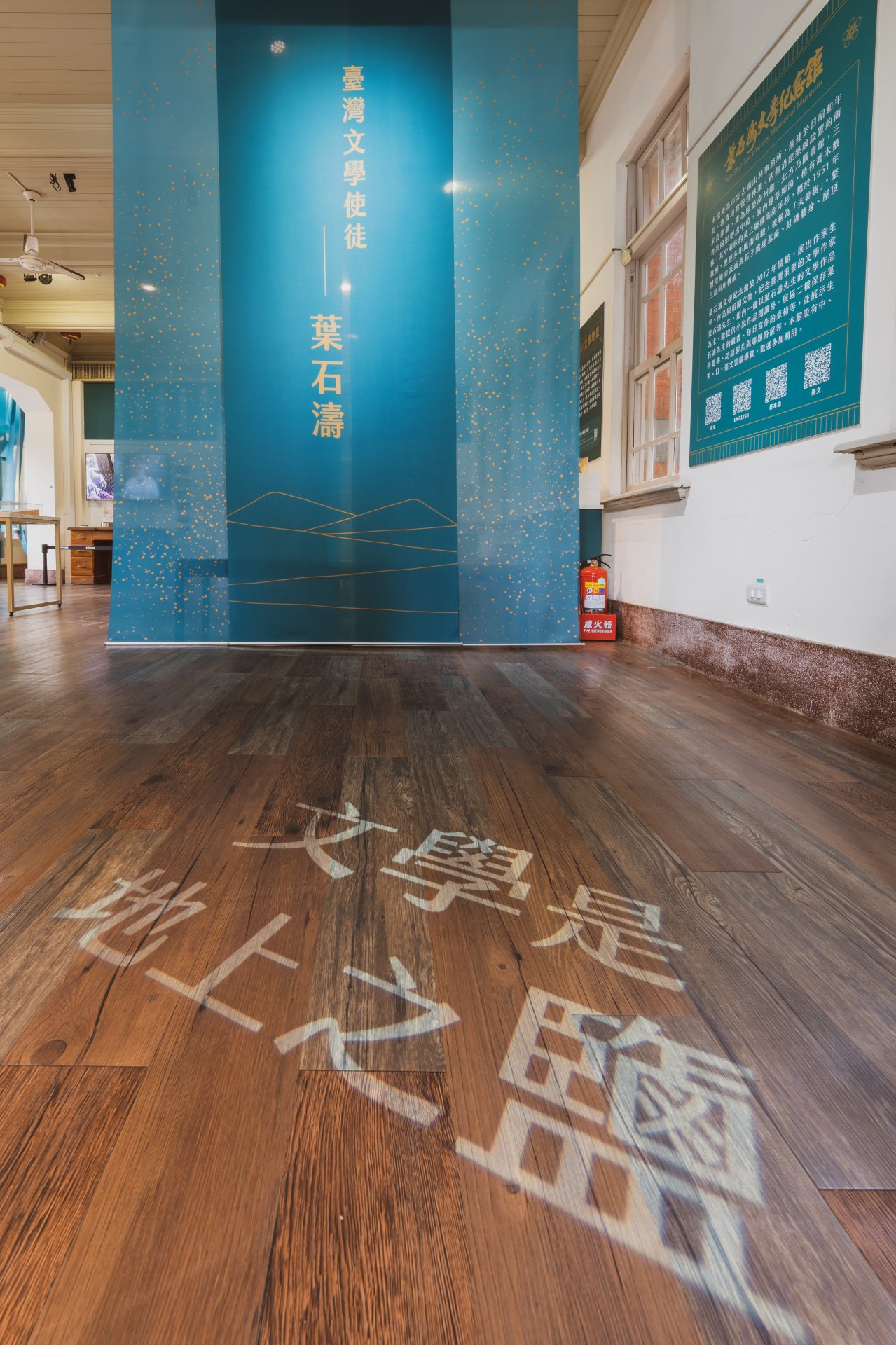
"Our generation of Taiwanese writers can only be regarded as apostles, paving the way for future generations." This quote is from a letter sent by Yeh Shyr-Tau to Chung Chao-Cheng.
After experiencing political upheavals, language transitions, and imprisonment during the White Terror, Yeh Shih-tao transformed from a precocious and romantic youth from a prominent family into a literary apostle who set a benchmark for Taiwanese literature.
Yeh Shyr-Tau: Timeline of Life Events
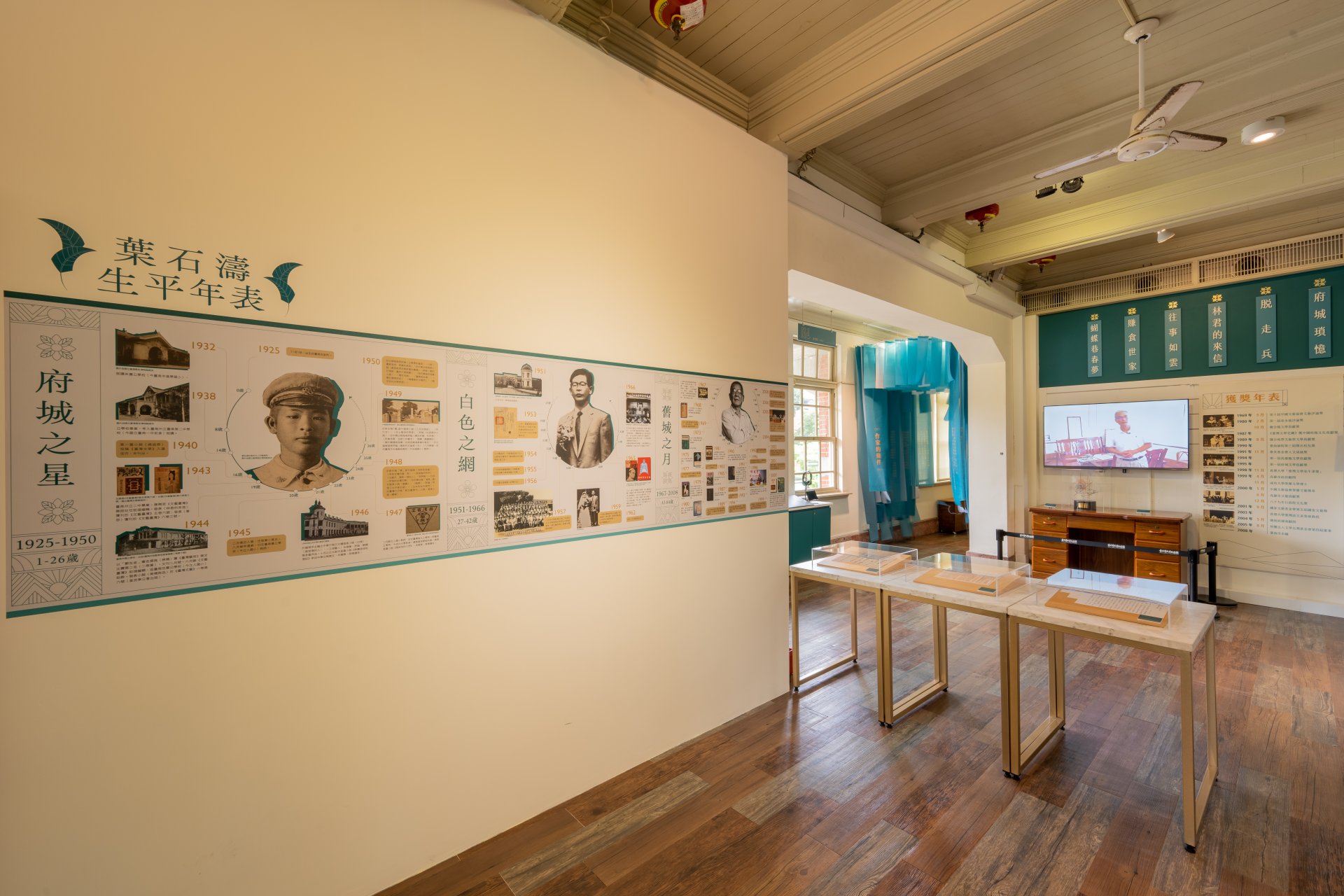
In this section, you can find an essential timeline of Yeh Shyr-Tau's achievements and life events, as well as various related relics (replicas), giving you an insight into the significant experiences Yeh Shyr-Tau had over the course of his life.
【Displayed Relics】
Yeh Shyr-Tau's graduation certificate from the Tainan Second Senior High School, Tainan Prefecture.
Yeh Shyr-Tau's handwritten copy of the Taiwan Province's Security Headquarters’ verdict.
The manuscript of Yeh Shyr-Tau's commentary“The Isolated Writer, the Haughty Literary Critique of Wu He's 'Picking Bones.'”
Further Vidio: https://www.youtube.com/watch?v=kCCTPsCrG-U
Chronology of Yeh Shyr-Tau: https://culture.tainan.gov.tw/theme/table/index?Parser=4,47,307,294
Music and Yeh Shyr-Tau
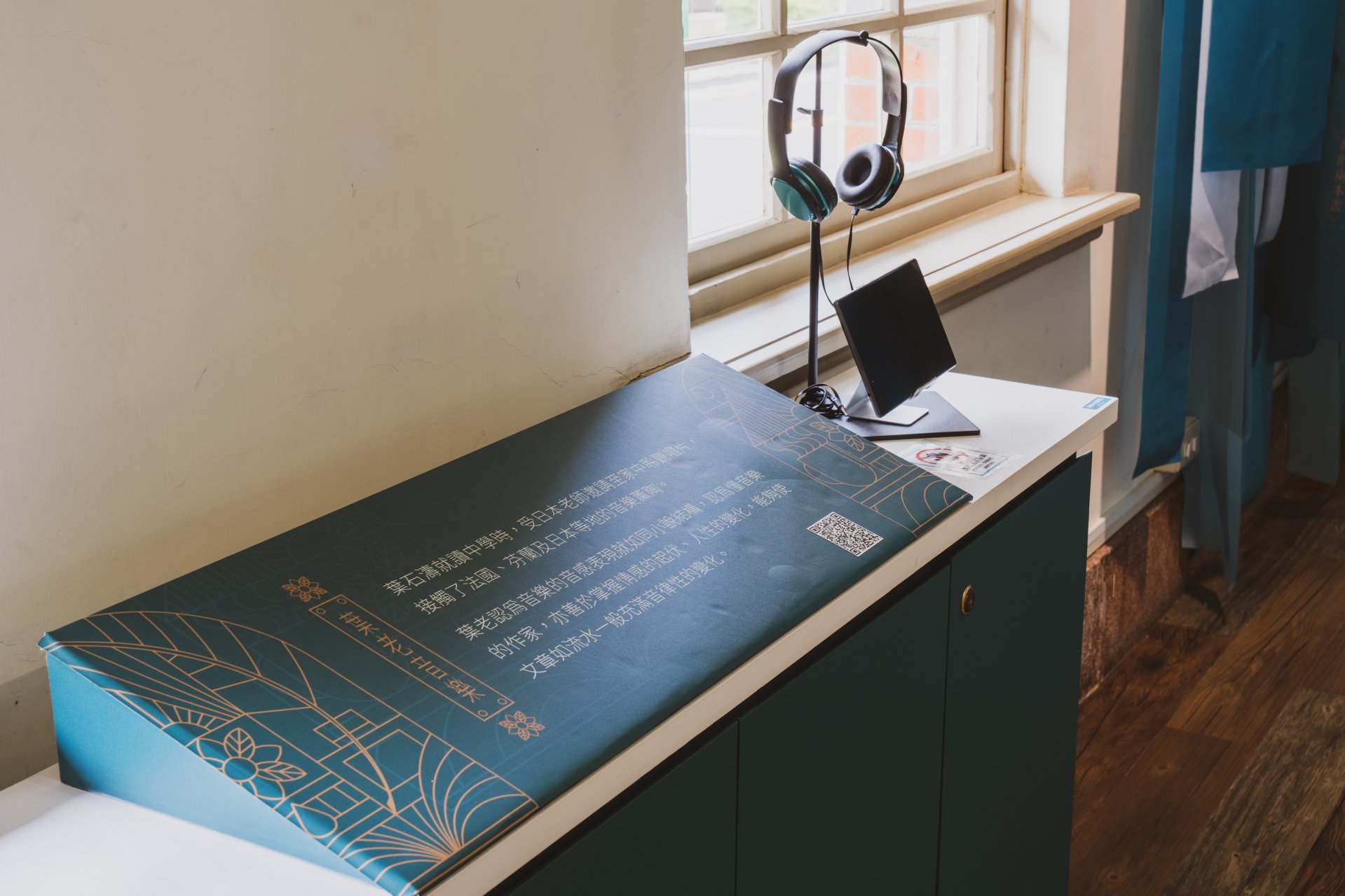
Once, when Yeh was studying at middle school, he was invited to a Japanese teacher's home and was introduced to the music of France, Finland, Japan, and other places.
Yeh considered the expression of music as being the same as the structure of a novel. He thought that a writer who understood music could also master the flow of emotions and the changes in people's character, making the text fluid and allowing it to develop with a musical temperament.
In a 2001 interview with Zhuang Zi-Rong, Yeh mentioned his love for Debussy’s music, viewing it as containing a kind of impressionistic disharmony. This, he thought, was similar to the dissonant harmonies of Japanese Kagura, a style of ceremonial Shinto music, and he was reminded of this whenever he listened to Debussy.
Further reading:
The Lonely Writer Wrestling with Himself - An Exclusive Interview with Yeh Shyr-Tau
http://www.twcenter.org.tw/thematic_series/character_series/taiwan_litterateur_interview/b01_13101/b01_13101_1_
Yeh Shyr-Tau also learned to play the piano. He could play Claire de Lune by Claude Debussy and Gabriel Urbain Fauré, as well as Moonlight Sonata by Beethoven.
【Music Introduction】
The headphones found in this section play the following music on a loop:
Claire de Lune by Claude Debussy (Aug 22nd, 1862 – Mar 25th, 1918)
Claire de Lune, the third movement of the Suite Bergamasque, is Debussy's most well-known work. It was inspired by the French Symbolist poet Paul Verlaine. The poem depicts the dancer with a mask, dancing and singing under the moonlight. Debussy used a straightforward rhythm to narrate the moving scene.
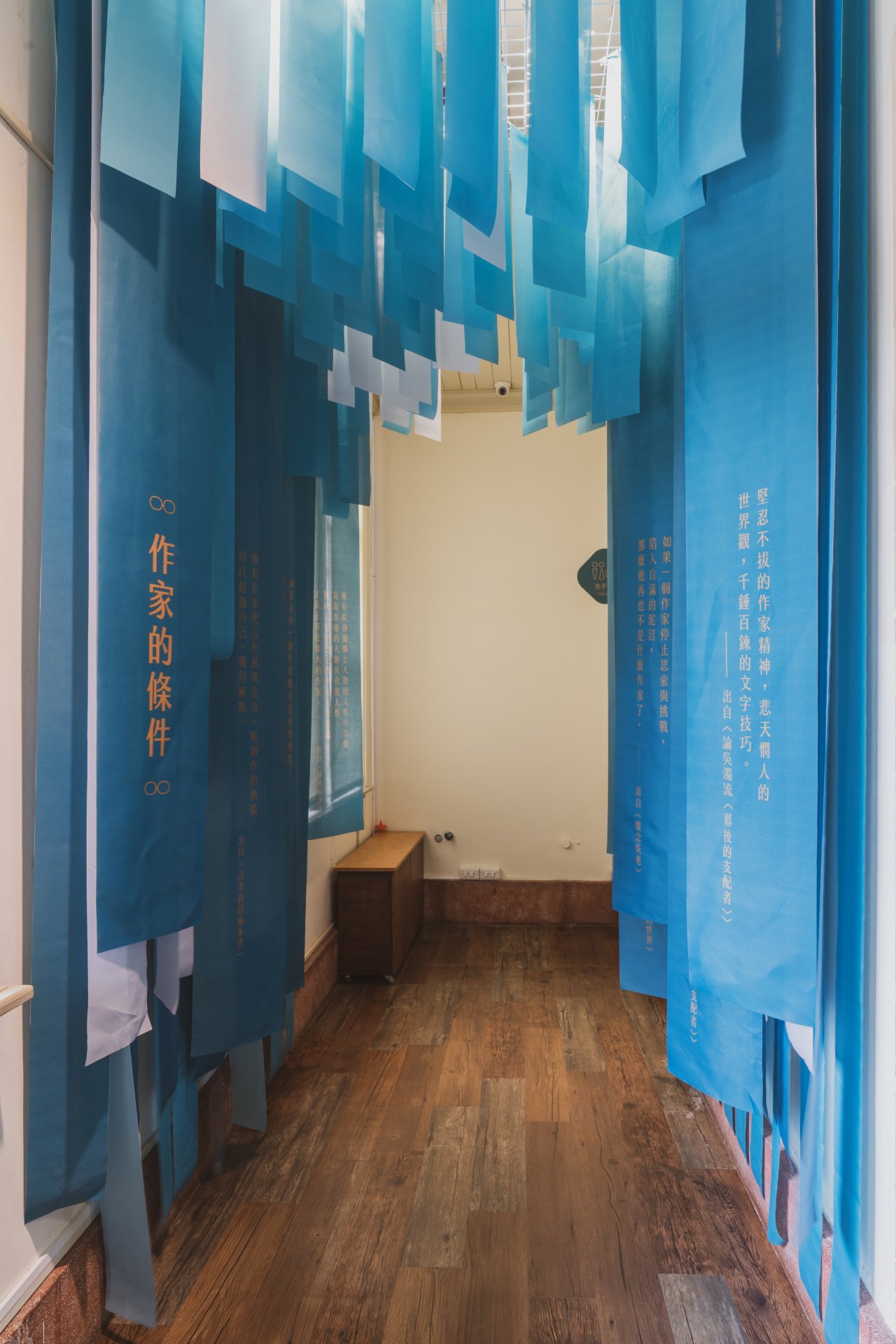
According to Yeh Shyr-Tau, what qualities should a writer have?
"A writer must have the unique 'writer's eye,' which means that they should have the ability to observe and reflect upon the various phenomena in the human world." (From Requirements for Being Writers)
"A successful writer must believe that their work contributes to human society and tirelessly continue writing to reflect the times and society." (From On Wu Zhuo-Liu's 'The Hidden Ruler Behind the Scenes’)
"A writer must be the barometer of the times." (From On Wu Zhuo-Liu's 'The Hidden Ruler Behind the Scenes')
"The unwavering spirit of a writer, a compassionate worldview, and the finely honed skills of writing." (From On Wu Zhuo-Liu's 'The Hidden Ruler Behind the Scenes’)
"The path of literature is always a thorny one. If a writer ceases to question and challenge, and falls into the trap of complacency, then they are no longer a true writer." (From In Memory of Wu Zhuo-Liu)
"Only by delving into the humanity of local characters, seeking the common humanity shared by ordinary people, and contributing to the ideals of humanity can one truly be considered a great writer." (From A Review of Zhong Lihe)
"Honesty is the attitude that every writer should possess, because only through honesty can a writer avoid being blinded by the biases of society and of the times. Only then can they accurately grasp truth and reality, and fearlessly use a solid realism to portray the various aspects of the real world." (From A Review of 'Coconut Trees in the Campus')
"If a writer wants to portray modern life faithfully, they must possess extensive knowledge, a variety of acute senses, and the ability to capture or interpret human behavior from the depths of the subconscious." (From Joyce Weng's World)
"Profound psychological traumas, after years of repression and fermentation, can erupt with enough force to drive someone mad and bring about destruction, or to leave a person sorrowful, desolate before they ultimately perish. Only a writer can transform these traumas into a creative passion that transcends themselves and allows them to achieve liberation." (From A Review of Li Qiao's Two Books)
Yeh Shyr-Tau Short Story Literature Award
To commemorate the renowned contemporary Taiwanese author Yeh Shyr-Tau, the Tainan City Government's Cultural Affairs Bureau has named an award in his honor, the 'Yeh Shyr-Tau Short Story Literature Award.' The first ceremony of this award was held in 2021.
Yeh Shyr-Tau is often known as ‘the King of Short Stories.' Through his short stories, he offered various narrations about his life in Taiwan. With over 120 short stories depicting Tainan's landscapes, characters, and events, it is evident that his hometown held a special place in Yeh's heart , and had a profound influence on him. Tainan is his birthplace, and the cradle that nurtured his literary works.
The Tainan City Government's Cultural Affairs Bureau hopes that writers living in Taiwan will carry on with Yeh's spirit and use the medium of the short story to continue telling their own stories. Given the historical placement of the Yeh Shyr-Tau Short Story Literature Award, the judging committee unanimously agreed that the first prize should be awarded to a work of an exemplary nature. However, as the submissions at the inaugural event did not meet the judging committee's expectations it was decided that the first prize slot would be left vacant.
In order to carry forward with Yeh's principle: Without land, there is no literature; to introduce to the public the remarkable literary contributions and treasures that Yeh's short stories represent; and to encourage Taiwanese writers to create their own short stories in this land, the first-prize trophy from the inaugural Yeh Shyr-Tau Short Story Literature Award has been placed in the Yeh Shyr-Tau Literary Memorial Museum. It serves as a symbol within the museum, representing Yeh's relentless pursuit of the spirit of Taiwanese literature.
【The Yeh Shyr-Tau Short Story Literature Award Trophy】
This trophy was specially designed and produced by the distinguished artist Su Hsiao-Meng from Tainan. Zhang Liang-Tse, a senior Taiwanese literary researcher, created the inscription on the trophy.
The design concept of the trophy revolves around Yeh Shyr-Tau's Beast of Dreams. The base of the trophy is made of stone, representing the way in which literature emerges from the land. It also relates to the character 'stone' in Yeh Shyr-Tau's name.
The main structure of the trophy consists of a curved copper and iron lattice fixed with rivets with intersecting pathways, representing Taiwan's urban scenery and cultural style. The medal (brooch) was crafted with silver using filigree techniques. Its shape combines the imagery of plants, flowers, and butterflies, symbolizing the writer's life journey, which bears the fruit of creativity after being tempered by fate.
'Writers were originally dream-creatures who feasted on dreams. How could they have known that these creatures also needed bread to survive, and that bread could not be obtained just by dreaming all day!' - Yeh Shyr-Tau
'The creature that feeds on dreams' is woven from stainless steel and copper wire, forming an infinitely extending composite structure, symbolizing the accumulation of time and the creators' determination to constantly pursue the nourishment of creative life.
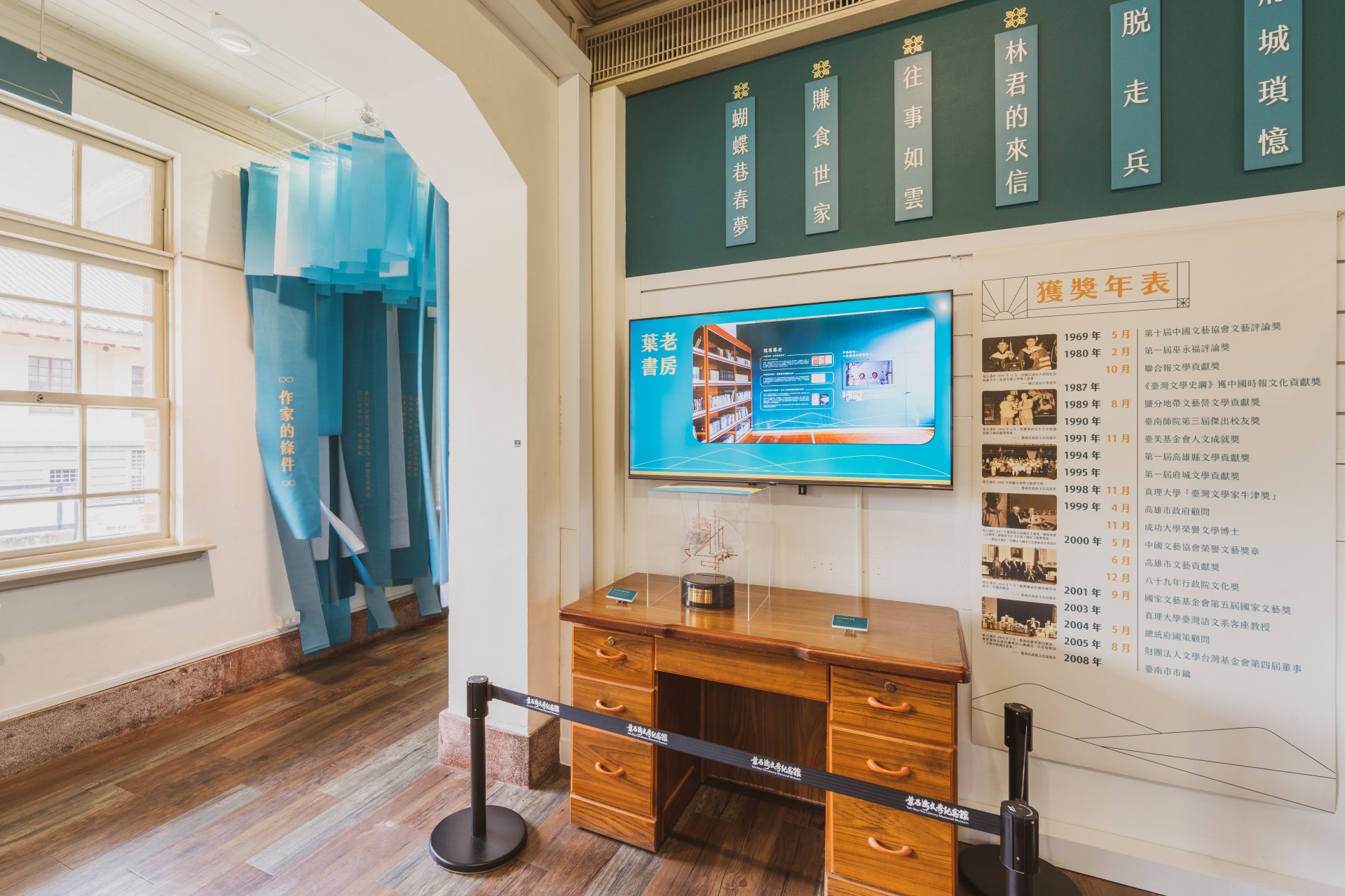
Award Chronology
May 1969: 10th Literary Criticism Award (awarded by the Chinese Writers’ and Artists’ Association)
February 1980: 1st Wu Yongfu Criticism Award
October 1980: United Daily News Literary Contribution Award
1987: China Times Cultural Contribution Award (Taiwan Literary History)
August 1989: Salt Zone Literary Camp Literature Contribution Award
1990: 3rd Outstanding Alumni Award (Tainan Normal University)
November 1991: Humanities Achievement Award (the Taiwanese American Foundation)
1994: 1st Kaohsiung County Literary Contribution Award
1995: 1st Fu-Cheng Literary Contribution Award
November 1998: Oxford Literary Award (Aletheia University)
April 1999: Advisor to Kaohsiung City Government
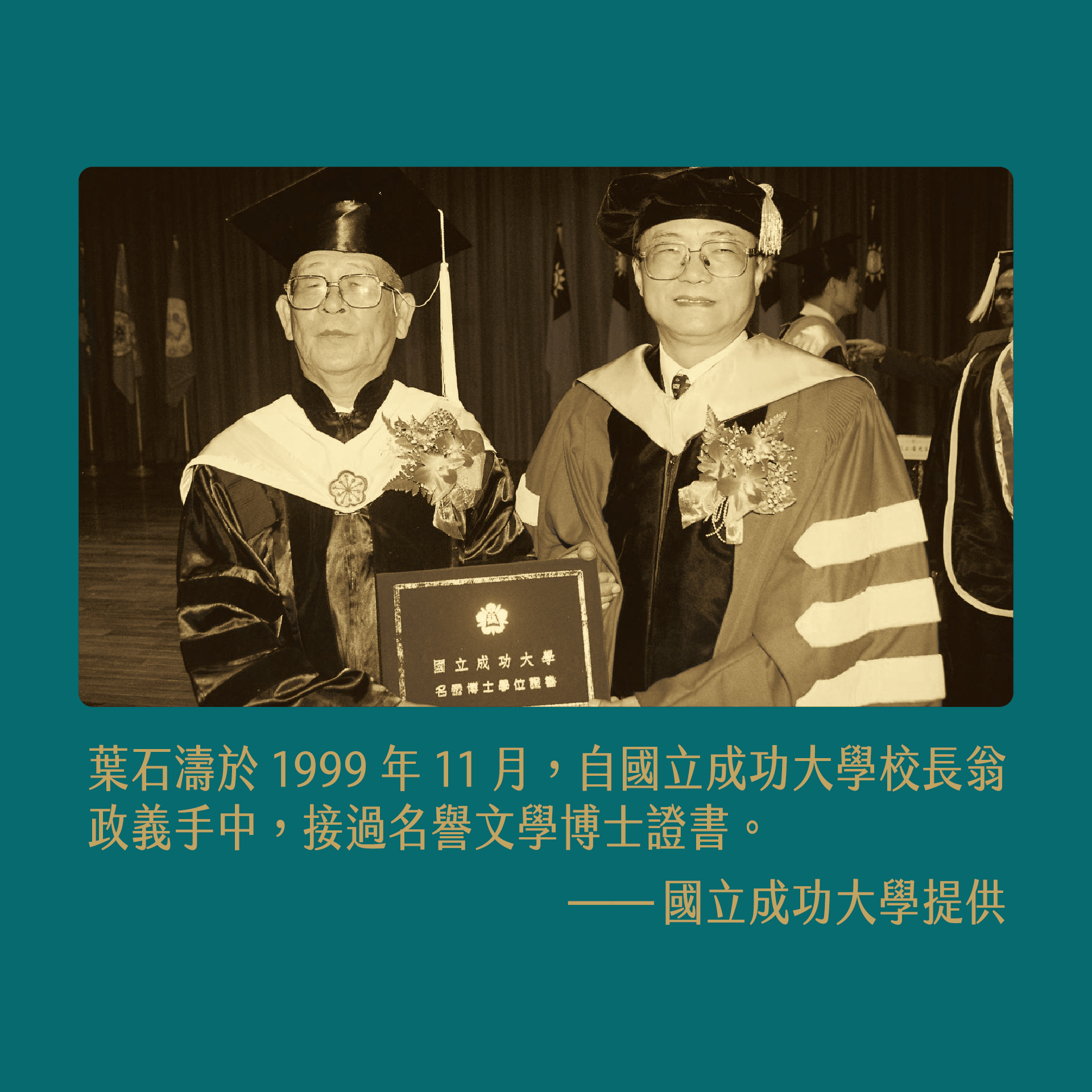
November 1999: Honorary Doctorate in Literature (National Cheng Kung University)
May 2000: Honorary Literary Award(Chinese Writers’ and Artists’ Association)
June 2000: Kaohsiung City Literary Contribution Award
December 2000: Cultural Award (Executive Yuan for the Year 1989)
September 2001: 5th National Literary Award (National Culture and Arts Foundation)
2003: Visiting Professor in the Department of Taiwanese Language and Literature at Aletheia University
May 2004: Advisor to the Office of the President
August 2005: 4th Board member of the Culture Taiwan Foundation
2008: Key to the City of Tainan
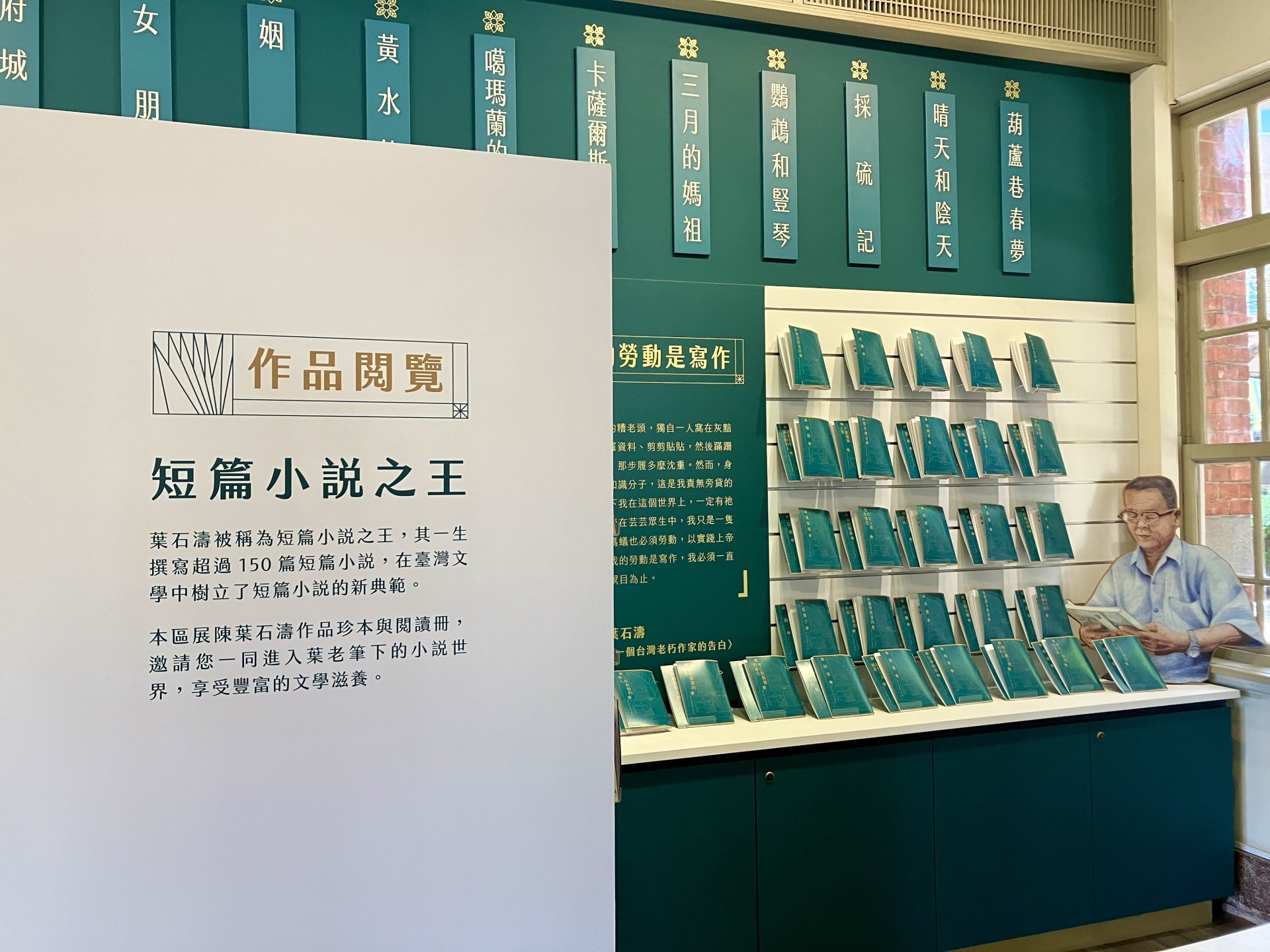
The King of Short Stories
Yeh Shyr-Tau was hailed as ‘the King of Short Stories’ in Taiwan, having written over 150 short stories throughout his life. We have prepared over 50 short story collections in this exhibition area, including Yeh's out-of-print works. We invite you to pick up a book, immerse yourself in the fictional worlds crafted by Yeh, and savor the rich literary nourishment it offers.
For more information, please visit our website:
https://culture.tainan.gov.tw/theme/form/index?Parser=2,47,314,297
Further discussions:
Yeh Shyr-Tau Literary Memorial Museum Podcast: [The Creature that Feeds on Dreams] EP.2 Yeh Shyr-Tau - Literary Works
https://open.firstory.me/story/ckpgwgi6ylw4k0812waaqp8vn
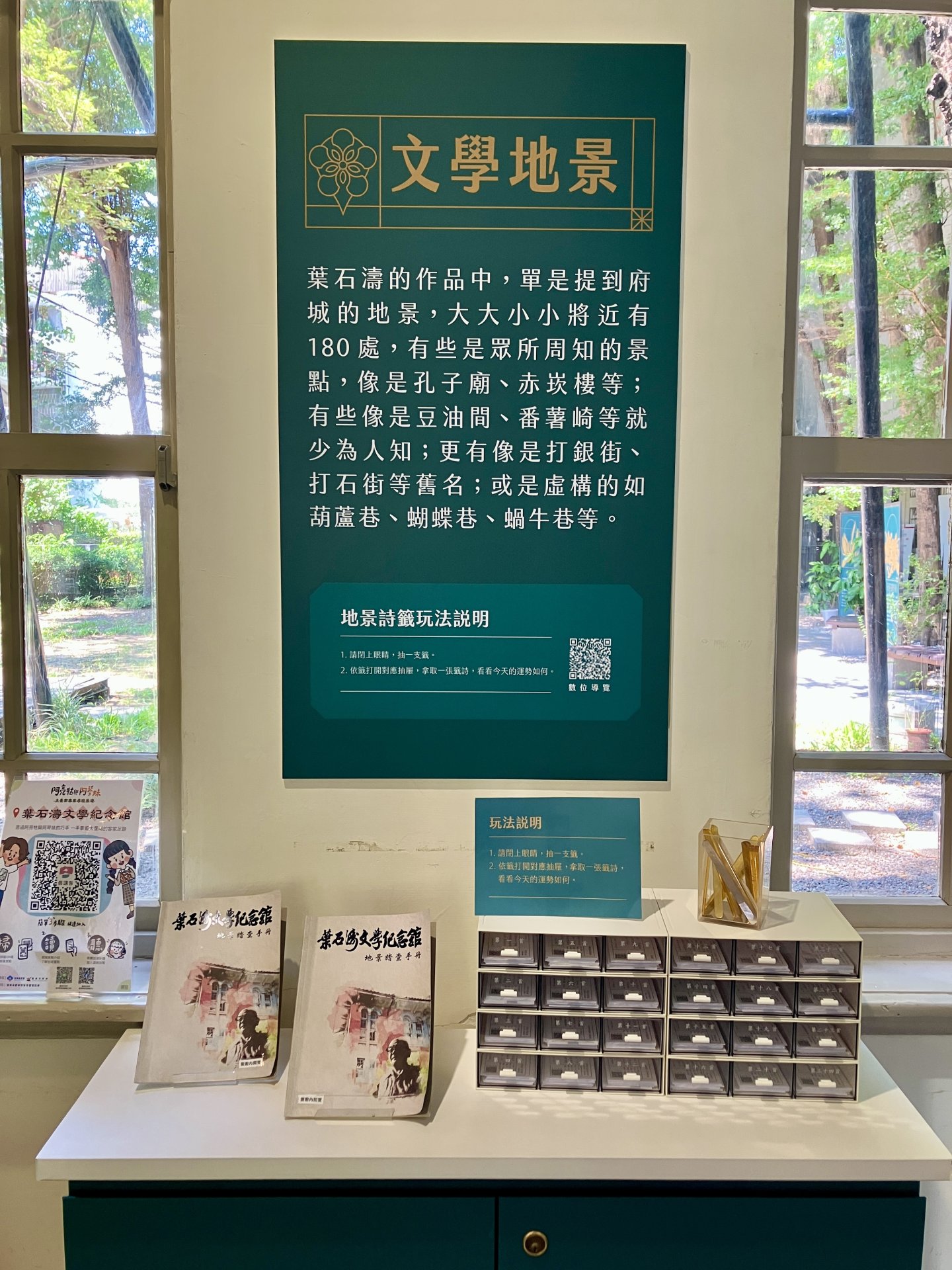
Featured Map: Literary Guide
Featured Map: Literary Guide There are nearly 180 spots in Tainan mentioned by Yeh in his writings. Some are well-known, such as the Confucius Temple and Chikan Tower, while others are less-frequented: for example, Soysauce Place and Sweet Potato Hill. Some places are mentioned by their old names like Dayin Street and Dashi Street, while some are fictional places like Gourd Valley, Butterfly Valley, Snail Valley, and others.
This museum has planned out four three-hour routes through the city which go through the real and fictional places found within Yeh's writings. Along the road you’ll be able to sample local cuisine such as vegetable rice dumplings and migao, and immerse yourself in Tainan’s unique literary landscape.
◆The Romantic Heart Tour
Yeh Shyr-Tau Literary Memorial Museum → Police Station → Tainan Prefectural Government → Tainan City Council → Taisho Park → Fire Bureau → Ginza Street → Du Hsiao Yueh → Hayashi Department Store → Quanshan Temple → Dashi Street → Tainan Chief Post Office → Tian Gong Temple → Floral Street → Shoes Street → Bamboo Street → Blacksmith Street → Puppet Valley → Wanfu Temple → House of Shi Family → Bachelor Fan Street → House of Yeh's Stepmother → Chikan Tower → Stone Mortar → Tainan Grand Matsu Temple → Gourd Valley → Martial Temple → Queen Theatre → Snail Alley → Blessing Elementary School
◆The White Network Tour
Yeh Shyr-Tau Literary Memorial Museum → Mango Trees → Liang Huang Temple → Little West Gate → Ximen Ting → Miyako-za Theatre → Butterfly Alley → Baomei Building → Rice Street → Hardware Store → Joss Paper Store → Da Chong Street → Bao Public School → Big Stage → Shingnan Bus Terminus → Puji Temple → Fo Tou Gang Street → Shuixian Temple → KSK Church → Niou Mo Hou → Soysauce Place → Asakusa Market → Sweet Potato Port → Sakariba → Canal → Xing Ting
◆The Black Light Tour
Yeh Shyr-Tau Literary Memorial Museum → Confucius Temple → Suehirocho Public School I → Martyrs' Shrine → Bing Ma Ying Street → Big South Gate → Suehirocho Public School II → First Girls' Senior Middle School, Tainan Prefecture → Water Corporation → Second Girls' Senior Middle School, Tainan Prefecture → Koxinga Shrine → Magpie Valley → Shun Sheng Hospital → Wan-Chuan Hao Bing Pu → Takasago Ting → Public Hall → Tai Peng Keng Church
◆The‘Creature that Feeds on Dreams’Tour
Yeh Shyr-Tau Literary Memorial Museum → Xilai Temple → Cheng Huang Temple → Gu Fu Ma Temple → Tainan Magistrate Residence → Jesus School → Great East Gate → Private school of Home Economics and Sewing → Takezono Ting → Tainan Second Senior High School → Train Station → China Daily News → Tainan Hospital → Seven Star Goddess Temple → Sheng Huei Dentist → Yeh Shyr-Tau Literary Memorial Museum
Online Map:
https://www.google.com/maps/d/u/2/edit?mid=1E0mHme2DknqhiYm7Oi7j2DQhOB5yq7Pr&usp=sharing
◆◆◆●●●【Tour Fortunes】●●●◆◆◆
Need a suggestion for your tour? Try your luck with a fortune poem to see how your day will go!
Further Reading:
Strolling between Reality and Fiction in the City - Yeh Shyr-Tau's Tainan
https://yehtainan.nmtl.gov.tw/#
What is Tainan? A Perspective Through Yeh Shyr-Tau’s Eyes
https://eyesonplace.net/2019/03/22/11140/
How to play:
1. Draw one fortune stick at random .
2. Open the drawer that corresponds to your fortune stick to get your fortune.
Yeh’s Universes
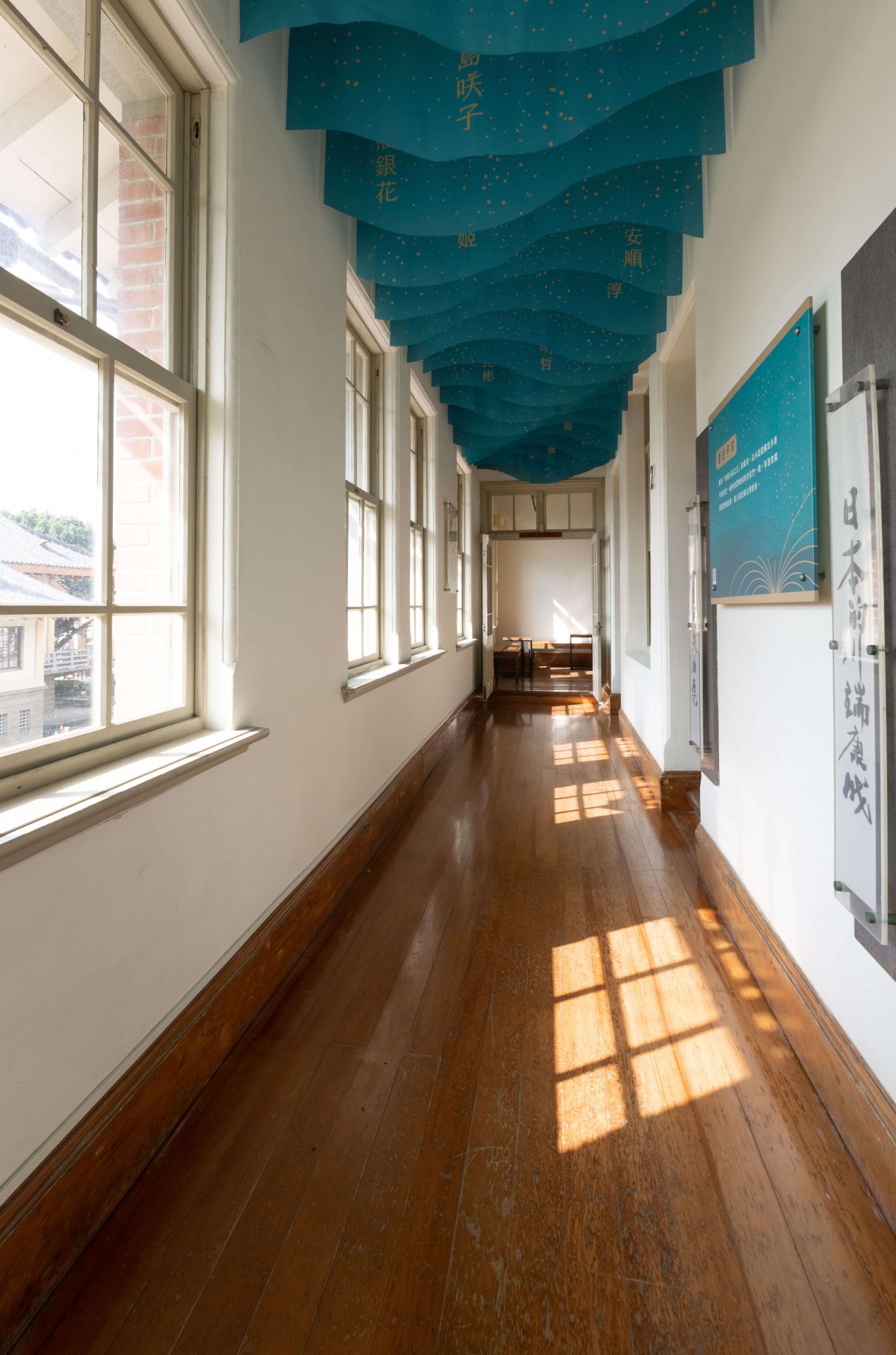
◆◆◆●●●【Yeh’s Universes】●●●◆◆◆
Yeh was called the "King of the Short Stories" in Taiwan. He built multi-time and space universes in novels, and the characters are like the stars and doors in space as invitations to their stories and Yeh's literary world.
Extended Reading:
Novels
https://culture.tainan.gov.tw/theme/form/index?Parser=2,47,314,297
The Secret Identity of Yeh Shyr-Tau in Fiction: Reflecting Personal and Historical Struggles in the Realm of Novelistic Creation
https://content.teldap.tw/index/blog/?p=3430
Yeh’s Study Room
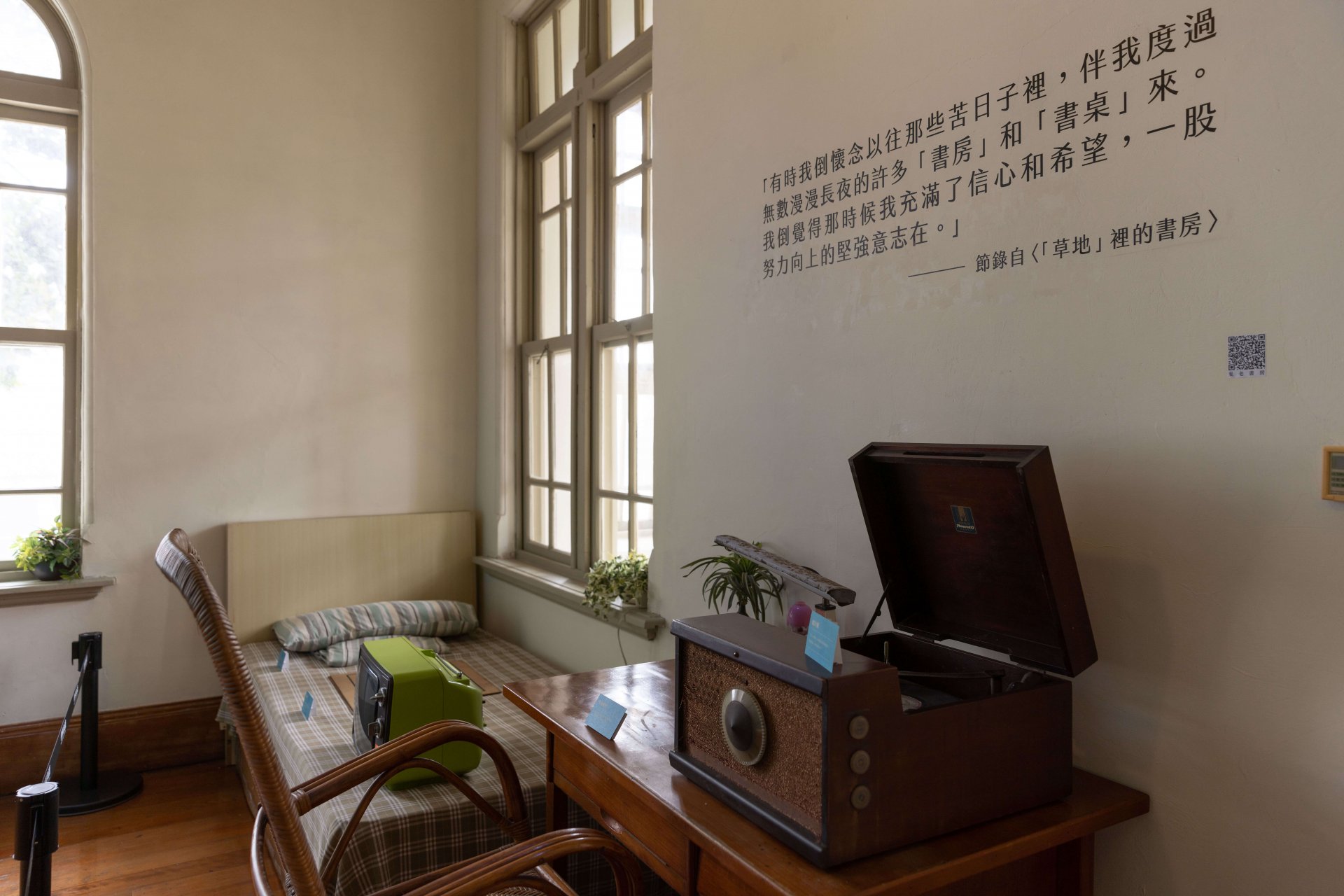
◆◆◆●●●【 Yeh’s Study Room 】●●●◆◆◆
The exhibition section restores the atmosphere of Yeh's study room. Yeh's phonograph, rattan chair, single bed, TV, chessboard was putting on legs to write, and his books and collections.
Further Talks:
The Creature that Feeds on Dreams, the podcast by Yeh Shyr-Tau Literary Memorial Museum
Ep. 3 Yeh Shyr-Tau's Study Room and Literature
https://open.firstory.me/story/ckpgwg4jplw360812117mn6co
Extended Reading:
Chen Lingyang: Always Present, Yet Unnoticed - The Rattan Chair and Its Yeh Shyr-Tau Connection
https://www.tlvm.com.tw/Create/CreatePlatformCont?Createid=44
A Profile of Yeh Shyr-Tau
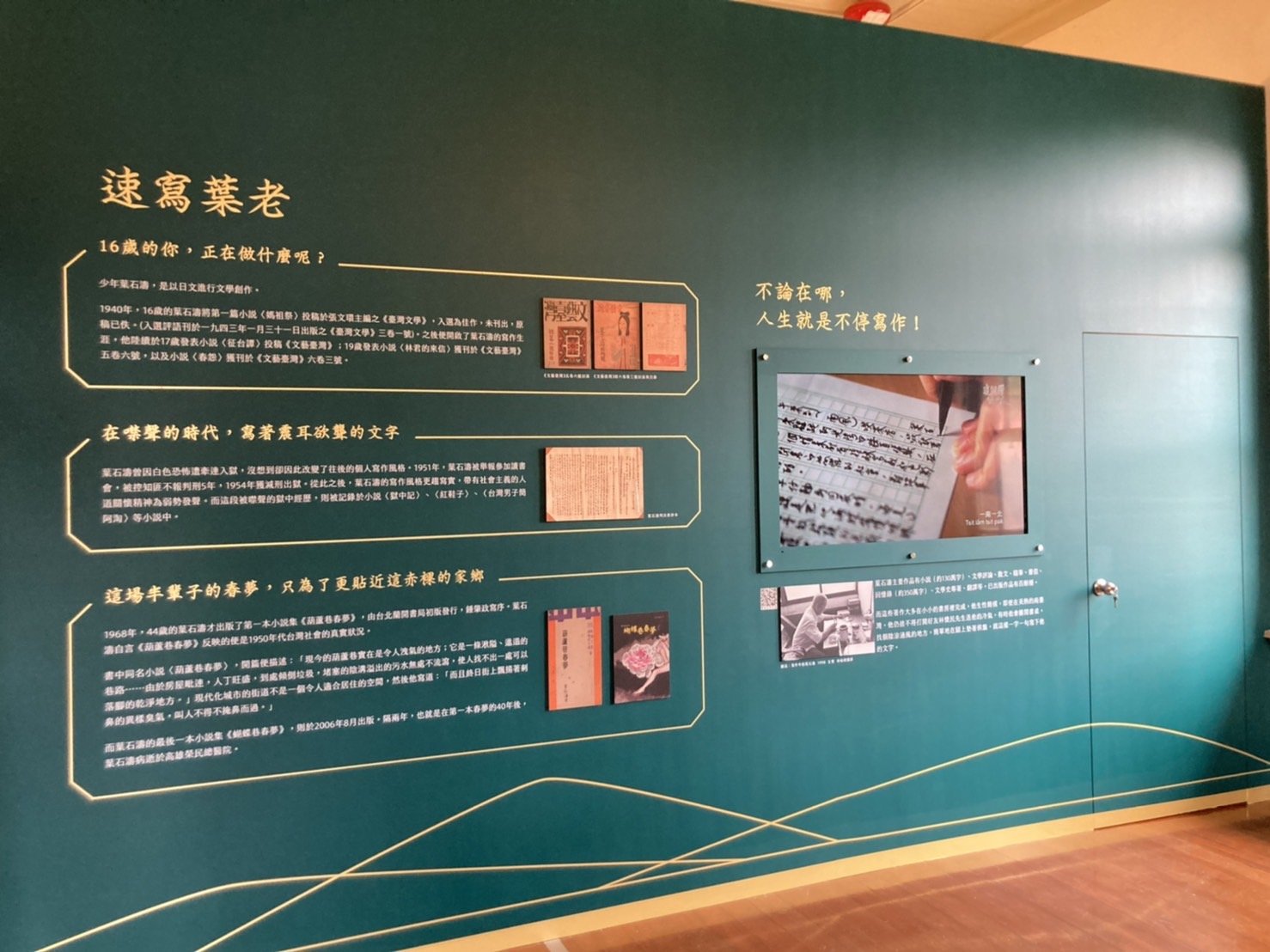
◆◆◆●●●【 A Profile of Yeh Shyr-Tau 】●●●◆◆◆
◆
• What was Yeh Shyr-tau doing at the age of sixteen?
When he was teenager, Yeh Shyr-tau would write in Japanese. In 1940, at the age of sixteen, he submitted his first novel Mazu Festival to the magazine Taiwanese Literature, which featured Zhang Wen-huan as its editor-in-chief. The work received an honorable mention from the publication (featured in Vol. 3, No. 1 of the magazine, published on January the 31st 1943) but was never published, and the original manuscript has since been lost.
This marked the start of Yeh Shyr-tau’s literary journey. He went on to submit the short story The Taiwanese Expedition to the magazine Literary Taiwan at the age of seventeen, and when he was nineteen the short story Lin Jun’s Letter was published in Volume 5, Issue 6 of the magazine. Later, the short story Spring Resentment was also published in Volume 6, Issue 3 of Literary Taiwan.
◆Deafening Words in a Time of Silence
Yeh Shyr-tau was implicated and imprisoned during the period of the White Terror, an experience that drastically altered his writing style. In 1951, he was reported for participating in a reading group and charged with the crime of “Failure to report Communist activities” resulting in a five-year prison sentence. He was granted parole in 1954.
After this period, Yeh Shyr-tau's writing style became more realistic, and was infused with a socialistic humanism, advocating for the voiceless and marginalized in society. Additionally, the things he experienced during his time in prison were recorded in novels such as A Prison Story, Red Shoes, and Jian A-Tao, The Taiwanese Man.
◆A Spring Dream of Home
In 1968, aged 44, Yeh Shyr-tau finally published his first collection of short stories, Spring Dreams in Hulu Lane. It was initially released by the Taipei Lankai Bookstore and featured an introduction by Chung Chao-cheng. Yeh claimed that the book reflected the true social conditions of Taiwan in the 1950s.
The eponymous short story, Spring Dreams in Hulu Lane, begins with the passage: "Today, Hulu Lane is truly a disappointing place; it is a narrow, messy lane… Due to the adjoining houses and a thriving population, garbage is dumped everywhere, and the overflowing sewage from blocked drains flows unchecked, making it impossible to find a clean place to rest." The streets of the modern city are not suitable for habitation, as he further writes: "Moreover, there is a constant foul odor in the air that forces people to cover their noses as they pass by."
Yeh Shyr-tau's final collection of short stories, Spring Dreams in Butterfly Lane, was published in August 2006. Two years later, 40 years after his first “spring dream,” he passed away at the Kaohsiung Veterans General Hospital.
Further Vidio: https://www.youtube.com/watch?v=kCCTPsCrG-U
Chronology of Yeh Shyr-Tau: https://culture.tainan.gov.tw/theme/table/index?Parser=4,47,307,294
Further Talks:
The Creature that Feeds on Dreams, the podcast by Yeh Shyr-Tau Literary Memorial Museum
Ep. 1 Yeh Shyr-Tau's Lives
https://open.firstory.me/story/ckpgwgys1lw6408129rq251lv
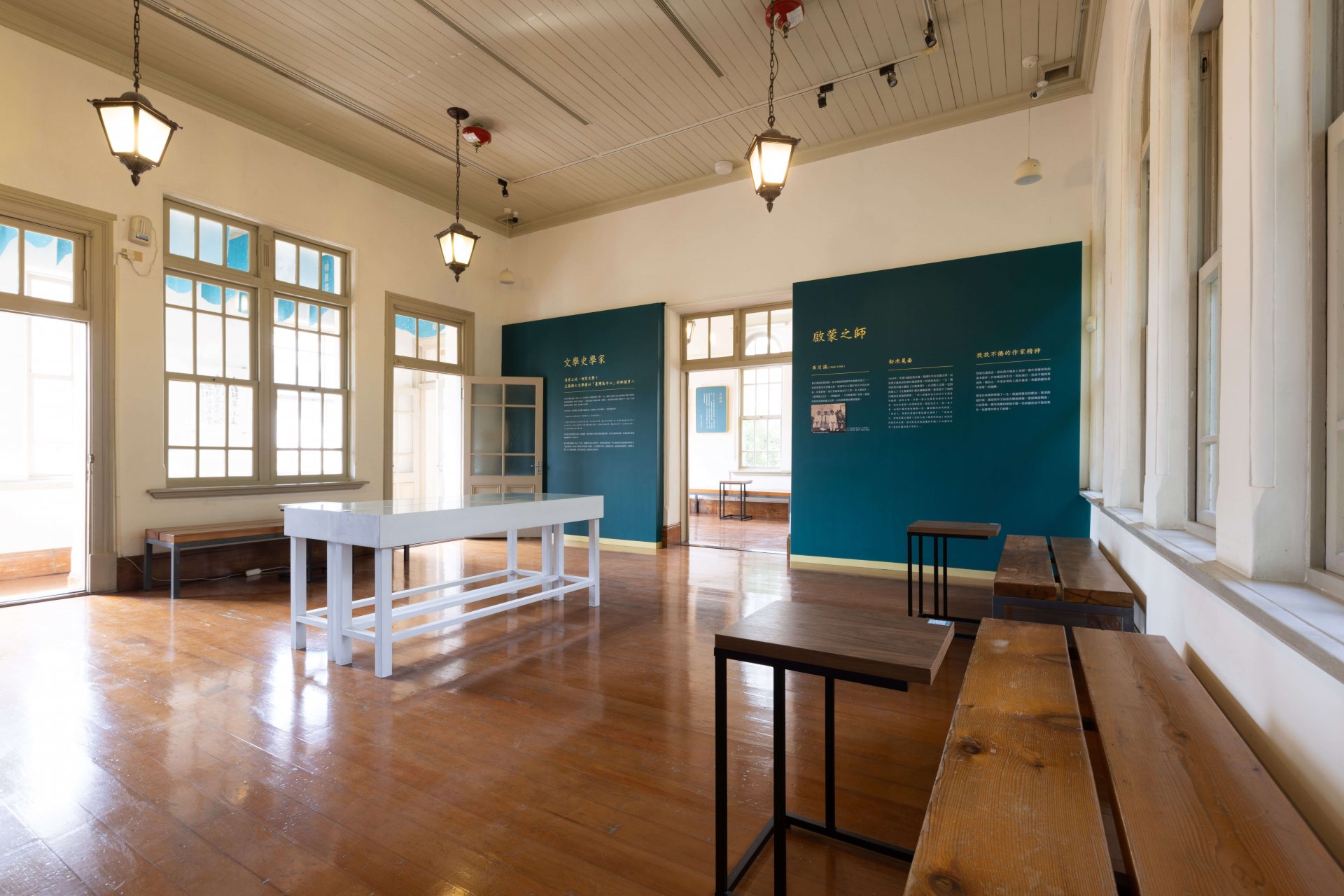
A Literary Historian
◆◆◆●●●【 A Literary Historian 】●●●◆◆◆
“Without land, there can be no literature.” This was Yeh Shyr-tau’s assertion, and throughout his life he advocated for the idea that local Taiwanese literature should revolve around Taiwan itself.
In 1965, Yeh Shih-tao published the article "Taiwan's Native Literature" in Issue 97 of Wenxing, sparking a trend in the study of new literature and authors during the Japanese colonial era in Taiwan.
In April 1977, he published: "An Introduction to the History of Native Taiwanese Literature" in the magazine China Tide. In this essay, he asserted that "Taiwan's native literature should be centered around Taiwan." This statement embroiled him in a debate over local literature, and led to accusations of him being a separatist who harbored thoughts of Taiwanese independence. Yeh, who had long been under surveillance and faced discrimination, chose to step away from this literary battle and focus on his writing.
During this period, martial law had not yet been lifted, and non-party organizations had not yet been established. It is difficult to imagine the risks he took with his advocacy, as well as the courage he showed in the face of such accusations. Nevertheless, his arguments established a crucial point of reference in the world of Taiwanese literature, and significantly influenced research in the field for years to come.
◆◆◆●●●This section showcases overseas translations of Yeh's works●●●◆◆◆
◆ 『台湾文学史』(A History of Taiwan Literature)
Publisher: 2000 Kenbunsha, Toyko
Translators: Nakajima Toshiro, Sawai Noriyuki
◆ 대만문학사 (A History of Taiwan Literature)
Publisher: 2013 Baum Communication, Seoul
Translator: Kim Sang-ho
◆ Giấc mộng xuân trong ngõ Hồ Lô(Spring Dream at Gourd Alley: A Collection of Short Stories by Yeh Shih-tao)
Publisher: Van Hoc Publishing House, Hanoi2017
◆ シラヤ族の末裔.潘銀花 :葉石濤短篇集(The Last Descendant of Siraya, Pan Yin-hua)
Publisher: 2014 Kenbunsha, Toyko
Translators: Nakajima Toshiro, Sawai Noriyuki
◆ 台湾男子簡阿淘
Publisher: 2020 Hosei University Press, Tokyo
Translator: Katsutoshi Nishida
◆ MIMPI BERAHI DI LORONG LABU (Spring Dream at Gourd Alley: A Collection of Short Stories by Yeh Shih-tao)
Publisher: 2019 Malaysia
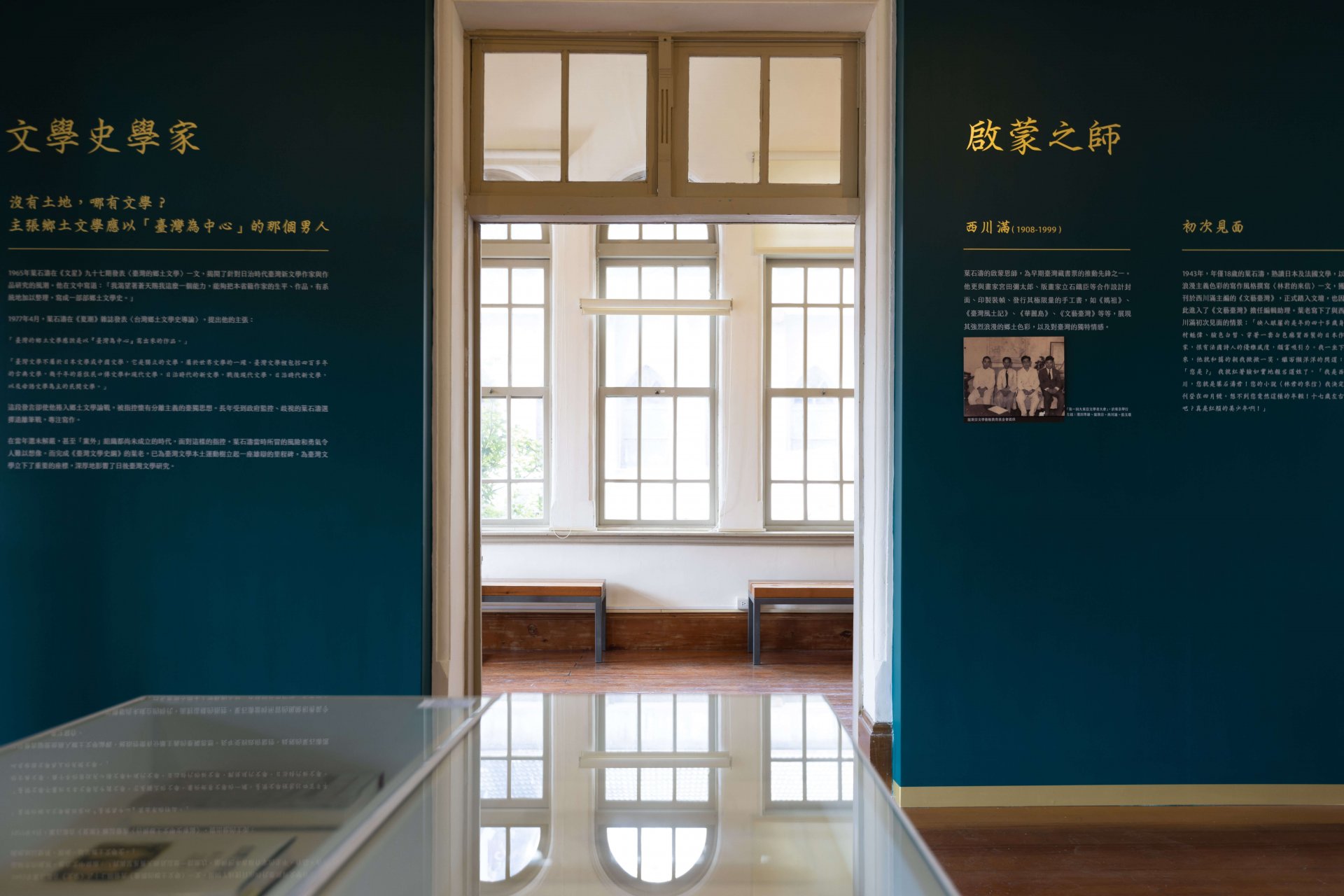
Yeh’s Teacher: Nishikawa Mitsuru
◆◆◆●●●【 Yeh’s Teacher: Nishikawa Mitsuru 】●●●◆◆◆
Nishikawa Mitsuru, Yeh's enlightenment teacher, was also one of the pioneers of bookplates promotion in Taiwan. He also published a limited edition of handmade books with the collaboration of artist Yataro Miyata and printmaker Tateishi Tetsuomi covers design and binding; for example, Mazu, Notes on Taiwan, Huali Island, Literary Taiwan, and others. Those works presented intense and romantic regional styles and unique emotions in Taiwan.
Praises of Huali Island, The Curse, and Yao Tiao were books Nishikawa gifted to Yeh. Praises of Huali Island was a book of poems with illustrations by Tateishi Tetsuomi to memorize his artist friend Tateishi Tetsuomi published on Sept 9th, 1996.
◆ First Encounter
As Yeh was 18 years old in 1943, he studied Japanese and French literature. His romantic writing, Letters from Lin, was published in Literary Taiwan edited by Nishikawa Mitsuru. He officially stepped into the literature circle and was invited to be the assistant editor of Literary Taiwan.
Yeh wrote the first meeting with Nishikawa Mitsuru, "I saw a strong man with fair skin, around forty years old. He was a Japanese writer wearing a white linen suit with an elegant attitude and charm as a French poet. As I sat down, he smiled and asked, 'What's your name?' I answered my name and flushed. He said, 'I'm Nishikawa Mitsuru. You are Yeh Shyr-Tau! I have decided to publish your novel, Letters from Lin, in the April edition. It surprised me that you are such young! Seventeen years old? What a handsome young man!"
◆The hardworking Writer Spirits
Yeh saw a writer's fundamental conditions on Nishikawa Mitsuru: a writer should live seriously and hard and keep writing to death. For short, a writer should be a humanitarian; dedication and devotion are the writer's only rewards.
Yeh lived with the spirit through his life no matter how suppressive reality was. He crossed the boundaries of languages among Japanese, Taiwanese, and Mandarin, been through wars, the White Terror, prison, and other complicated experiences. He still worked on writing and set a milestone in Taiwan literature.
◆◆◆●●●This section showcases items exchanged between Yeh and Seikawa Mitsuru●●●◆◆◆
◆ Poetry collections gifted by Nishikawa Mitsuru to Yeh Shyr-Tau:
• "Curses" (with book cover)
• "Graceful and Charming" (with book cover)
• "Hail to the Beautiful Island" (with book cover)
◆ Yeh Shyr-Tau's account of his acquaintance with Nishikawa Mitsuru: From "Oral History: Taiwanese Literary Giants - Interview Records of Yeh Shyr-Tau" published by the Kaohsiung Historiography Commission, 2002.
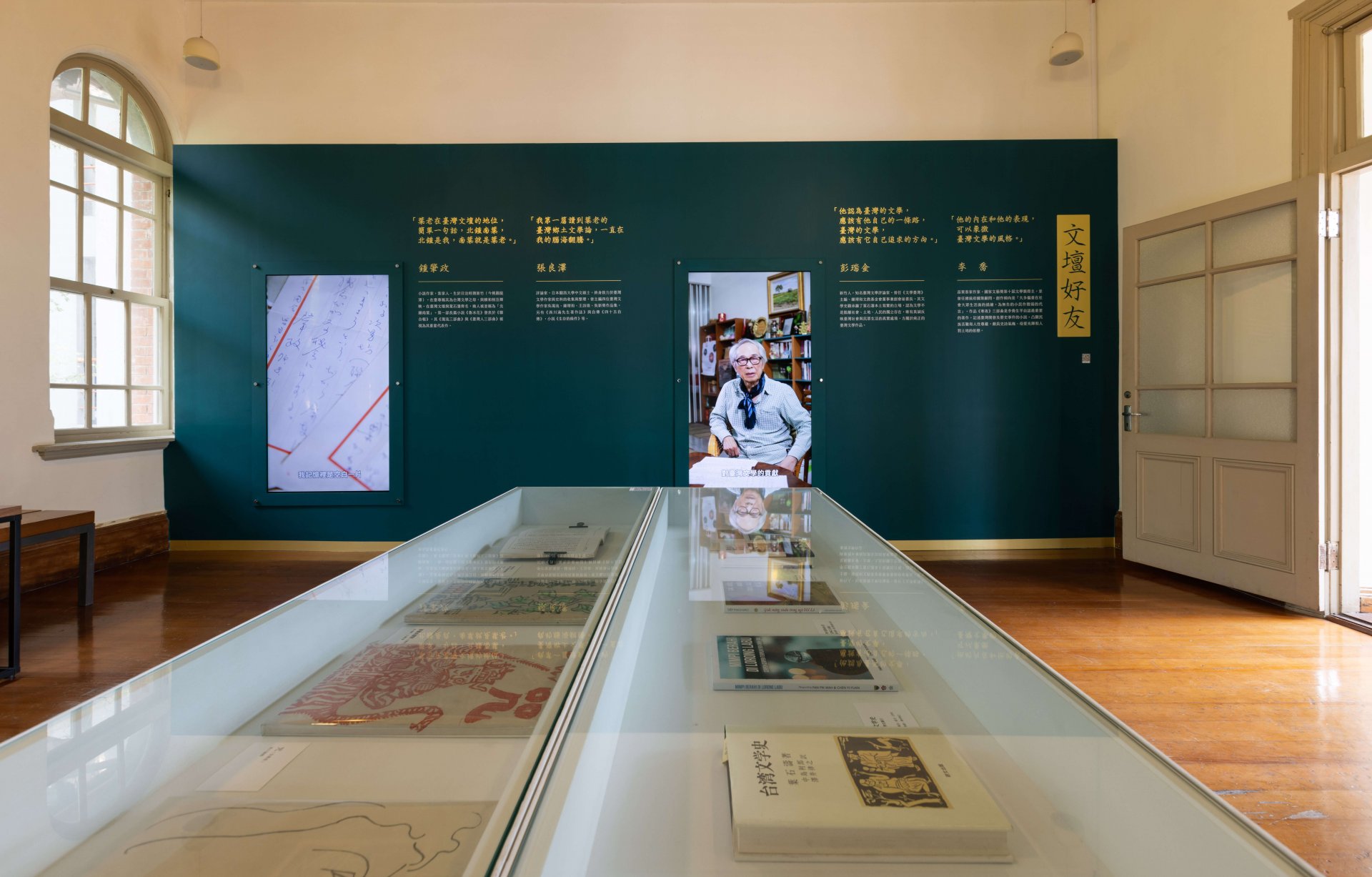
Friends in Literature Circle
◆◆◆●●●【 Friends in Literature Circle】●●●◆◆◆
The literary Status of Yeh Shyr-Tau, let's see how the critical writers take on Yeh.
◆Chung Chao-cheng
"The Literary Status of Yeh Shyr-Tau. For short, North Chung and South Yeh. I'm the North Chung and Yeh Shyr-Tau is the South Yeh."
A Taiwanese Hakka novel writer. Chung was born in Hsinchu( Longtan, Taoyuan today) under Japanese rule. He was named the Mother of Taiwan Literature, corresponding with Lai Ho. Chung is listed with Yeh and called "North Chung and South Yeh." Chung's first long novel, The Dull Ice Flower, was published in United Daily News, and other vital works include Muddy Water Trilogy and Taiwanese Trilogy.
Video online: https://www.youtube.com/watch?v=oX3aI3mAhW8
● Chang Liang-Tse
"The first Yeh article I read on Taiwanese Nativist Literature; it keeps running in my mind."
Critics Chang Liang-Tse received BA from Kansai University. He dedicated himself to collecting and researching Taiwanese literary writers and history. He edited the works of four writers: Wu Zhuoliu, Chung Li-ho, Wang Shi-lang, Wu Hsin Jung, and the editor of Nishikawa Mitsuru's Writing. His works include his autobiography, My Forty-Five Years, the novel, The Good Conditions of Living, and others.
Video online: https://www.youtube.com/watch?v=evK2A5wgi9o&t=3s
◆Lee Chiao
"Having a word to describe Yeh is the real literary writer."
"Yeh in person presents the style of Taiwan literature."
The Miaoli Hakka writer, the receiver of the Literature, National Awards for Arts, Lee Chiao, had also been the advisor to the president. His works focused on narrating the public's social life and as the weak spokesman. Lee takes the Cold Night trilogy as the most critical work in his life. The novel depicts the development and historical events in Taiwan. It epically presented the suffering of people, the dignity of humans, caring for the mother, and love of people and land.
Video online: https://www.youtube.com/watch?v=dwMuQsgw5QY
◆Peng Ruijin
"He thinks Taiwan literature should have its way, and the Taiwan literature should have the direction it pursues."
Taiwan literary critic lives in Hsinchu. Peng Ruijin had been the chief editor of Literature Taiwan, the board member, and the founding secretary-general of Zhonglihe Culture and Arts Foundation. His historical aspect of literature inherited Yeh's nativism. He considers literature as not an independent being without society, land, and people. Only the writings sincerely reflect the realness of Taiwan society, lives, and people are the Taiwan literature works.
Video online: https://www.youtube.com/watch?v=Qk1aafZSsfE&t=8s
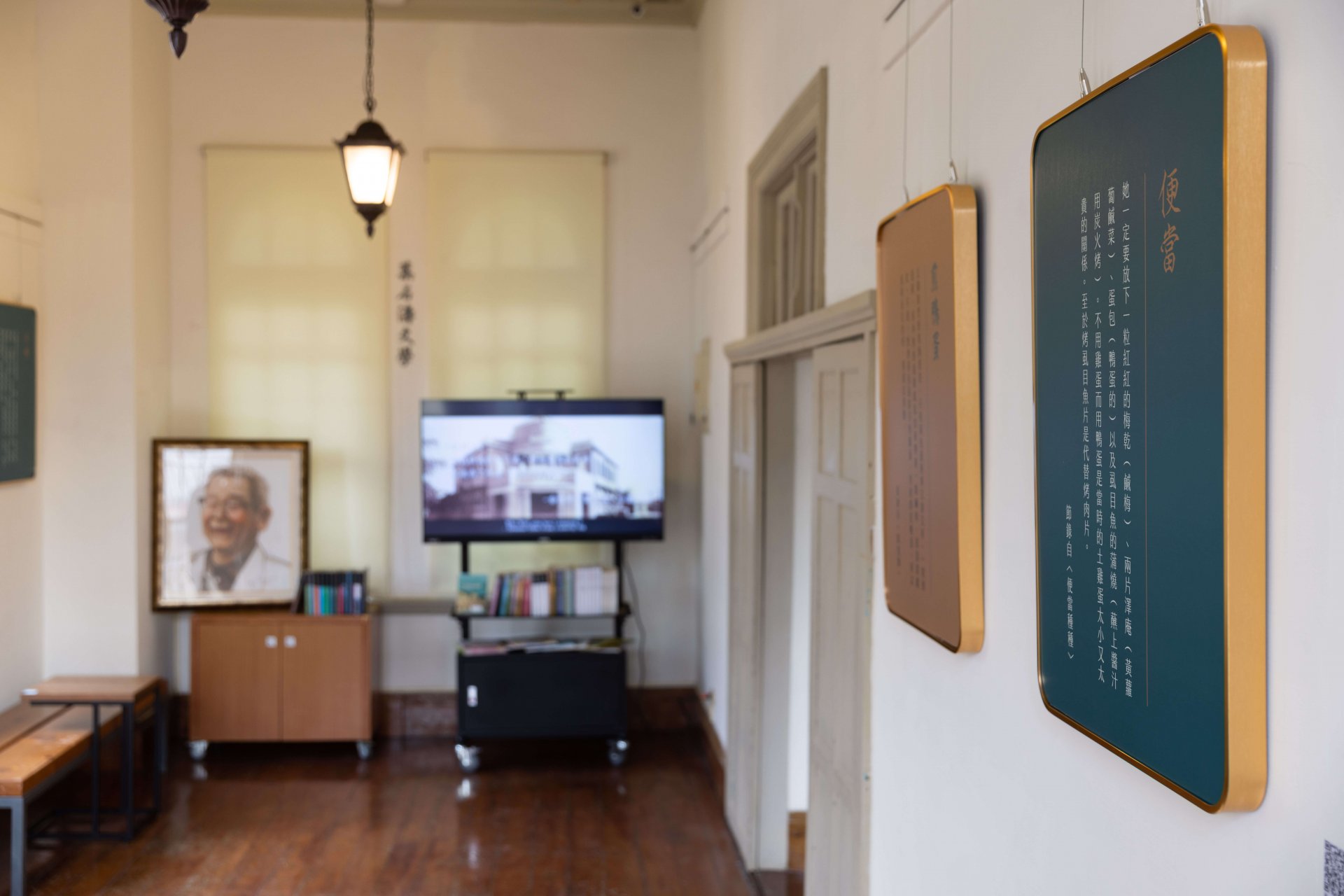
Yeh’s Meeting Room
◆◆◆●●●【Yeh's Reception Room】●●●◆◆◆
This exhibition continuously presents activities and feature exhibitions. Visitors are welcome to attend.
Displayed next to the screen is an unfinished oil painting created by the late artist Chen Guo-jin in 2012, specifically for the opening of the Yeh Shyr-Tau Literary Memorial Museum. This painting represents Chen Guo-jin's final work before his passing. In the picture, Yeh is depicted wearing glasses, with a warm and amiable expression, as if he is opening his arms to welcome an old friend, never indeed leaving. Whether it is sculptures, paintings, or calligraphy, they reveal Yeh's significance in the literary world, and the fond memories and tributes people have for him.
Past feature exhibition: "Will You and I Strive Together Until the End?: Epistolary Feature Exhibition of North Chung and South Yeh."
https://popworld.cc/guide/9688/preview
Further Talks:
The Creature that Feeds on Dreams, the podcast by Yeh Shyr-Tau Literary Memorial Museum
https://open.firstory.me/user/ystlmm-culture
Literature Garden
The Yeh Literary Garden transforms Yeh’s literary world into a reality, by selecting those plants from Yeh's works that are suitable for cultivation and planting them in the garden. The garden also features five of Yeh’s classic novels matching the flowers in the garden, novels included: Spring Dreams in Hulu Lane, The Legend of Zhai Hall, White Champaca, The House where Pomegranates Bloom, and Wanfu Temple. These stories contain narratives that revolve around the pursuit of free love, legendary love stories born in ruins, childhood friendships that become romantic later in life, the impossibility of pursuing love, escaping traditional female roles and constraints, as well as unintentional love. We invite you to take a leisurely stroll through the garden and discover the flowers of love that adorn Yeh's literary works.